The statute defines the job in one sentence, and the word that matters is noninvasive
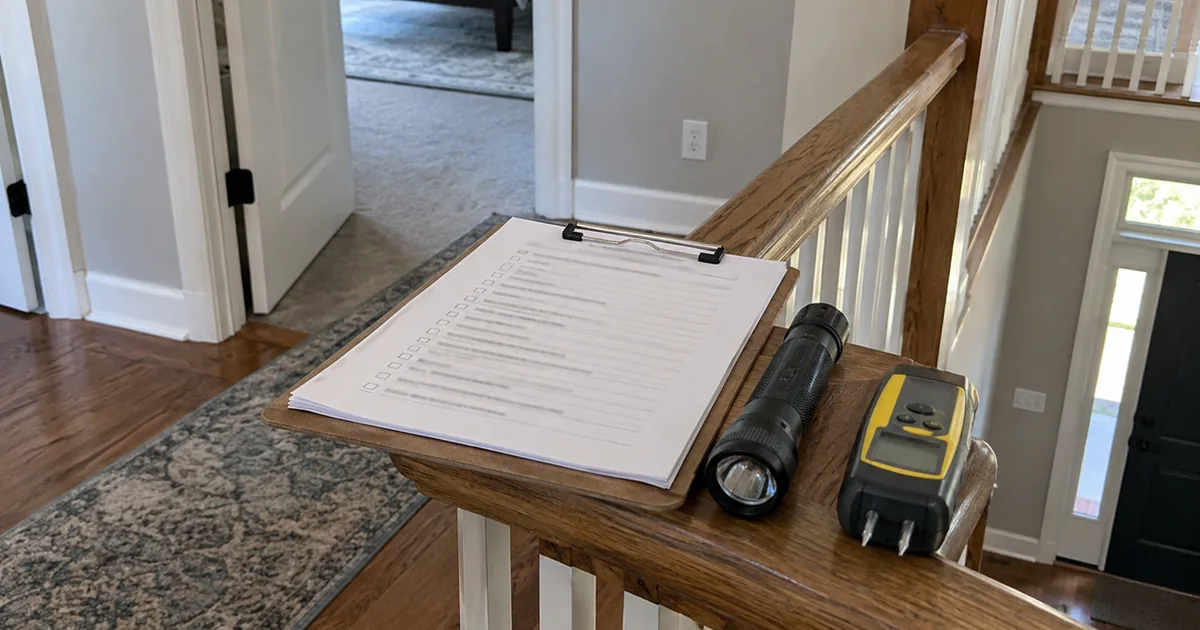
California Business and Professions Code section 7195(a)(1) defines a home inspection as a noninvasive physical examination, performed for a fee in connection with a transfer of real property, of the mechanical, electrical, or plumbing systems, or the structural and essential components, of a residential dwelling with one to four units, designed to identify material defects.
Noninvasive has a plain meaning. No holes. No drilling. No dismantling of finished components.
The California Residential Purchase Agreement carries the same limit into the contract. The buyer cannot make or cause to be made invasive or destructive investigations without the seller’s prior written consent, and the one exception is minimally invasive testing required to prepare a Pest Control Report, which still cannot include holes or drilling through stucco.
California does not license home inspectors at all. Section 7196 sets a standard of care instead, and the way it is phrased tells you how the system is built. It applies to an inspector who is not licensed as a general contractor, structural pest control operator, or architect, and not registered as a professional engineer, and requires that person to work with the care a reasonably prudent home inspector would exercise. The statute assumes the inspector is none of those other things. Which is why every gap has a differently qualified person behind it.
What a California home inspection actually covers
The report has work to do too. It must clearly describe and identify the systems, structures, or components inspected, identify the material defects found, and recommend further evaluation where another specialist is needed. Section 7195(b) defines a material defect as a condition that significantly affects the value, desirability, habitability, or safety of the dwelling. Aesthetic or style considerations do not, by themselves, make something a defect. A dated kitchen is not a defect.
Pools and spas are in the statute, and most people do not know it. If the property has a swimming pool or spa, section 7195(a)(2) requires the inspection to include the structure and to identify which of the drowning prevention safety features listed in Health and Safety Code section 115922 are present and functioning. The report must state which of those features are present, and must include a statement that the American Academy of Pediatrics considers isolation fencing the most effective drowning prevention feature.
The purchase agreement goes wider than we do. Its investigation paragraph says the buyer’s investigations include, but are not limited to, a general home inspection, an inspection for lead-based paint and other lead-based paint hazards, an inspection specifically for wood destroying pests and organisms, and any other specific inspections of the physical condition of the land and improvements. Four categories, and only the first is ours.
The full package included with every inspection shows what we add to that baseline, and the report format and what it looks like shows how findings and limitations get presented.
What the standards do not require, stated plainly
The inspection standard is not technically exhaustive, and it will not identify concealed or latent defects.
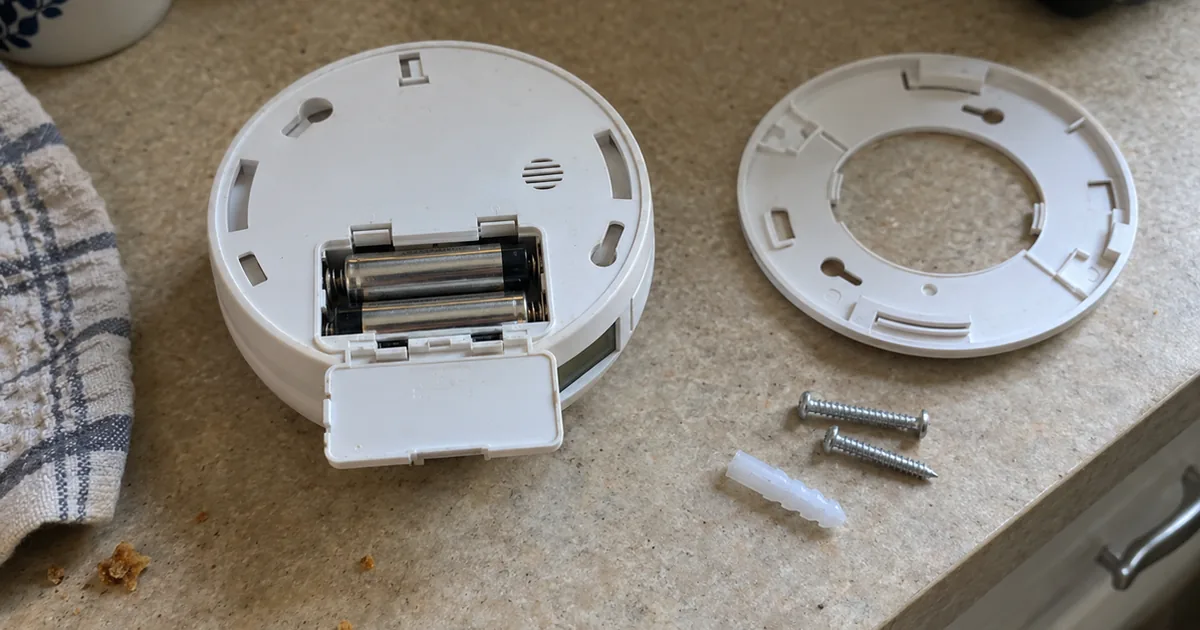
Under the standards most of the industry works to, the inspector is not required to determine the service life expectancy of a component, the capacity or performance of a system, the cause of a condition, compliance with codes, the presence of pests, mold, or environmental hazards including lead and asbestos, manufacturer recalls, or repair cost estimates. The inspector is not required to operate anything shut down or malfunctioning, low-voltage systems such as phone, cable or satellite, valves, disconnect devices, alarm systems, or moisture and gas detection equipment. The inspection does not extend to property boundaries, anything underground, multi-unit common areas, or property history research, and the inspector does not move obstructions, dismantle components, or enter unsafe areas. Manufacturer recalls are a good example of the limit: a report can photograph a detector’s label, but checking it against the 2026 CPSC warnings on combination smoke and CO detectors is a step the owner or agent takes.
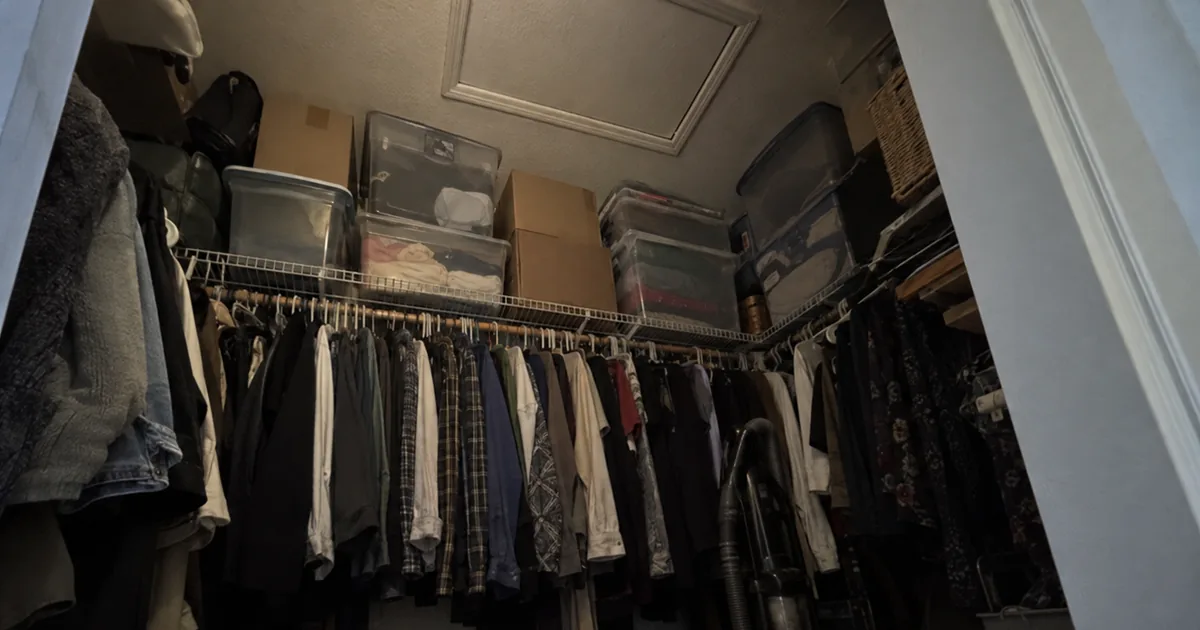
Here is what that looks like on a real job. A garage stored wall to wall blocks the water heater, the electrical equipment, or a length of the foundation. A panel that cannot be opened safely does not get opened by force. A crawl space with an access hatch too small for a body is reported as inaccessible, because it is. An honest inspector would rather write that sentence than one that sounds better and means less. What to do with that sentence once it is in the report, and why nobody in the contract is obligated to clear the obstruction, is the subject of our guide to “not inspected” lines.
The life expectancy exclusion is the one agents push back on most. We will quote an industry range for a roof or a furnace, clearly labeled as a range, but a prediction dressed up as a finding is not something the standards ask for.
Give the inspection enough runway to hand off whatever it uncovers. Book while the calendar is still open rather than at day twelve of a seventeen day window.
Termites are a different license, and the report goes to a state board
A wood destroying pest inspection has to be performed by a licensed Branch 3 field representative or operator employed by a registered company.
Business and Professions Code section 8516 puts it directly: only those people may commence work or issue inspection documents regarding wood destroying pests. The report must then be filed with the Structural Pest Control Board no later than 10 business days after the inspection commences or upon completed work. A company that fails to report faces fines up to $2,500 and disciplinary action, and registered companies must keep all inspection reports, field notes and activity forms for three years. The report itself is prescribed in detail, down to a diagram of the foundation showing infested and vulnerable areas and a statement of whether the exterior surface of the roof was examined.
That state filing creates a tool almost nobody uses. The Board runs a public wood destroying organism property search, so an agent can look up whether a report was ever filed on an address. On a house that has changed hands before, that is five minutes well spent.
The purchase agreement defines the scope in its own words, and they surprise people. A pest inspection “shall be prepared by a registered Structural Pest Control company; shall cover the main building and attached structures; may cover detached structures; shall NOT include water tests of shower pans on upper level units unless the owners of property below the shower consent; shall NOT include roof coverings”.
Roof coverings are excluded. Detached structures are optional. In a condominium the inspection covers only the separate interest and exclusive-use areas being transferred, not common areas. And the familiar split comes from the contract rather than the pest company’s habit: Section 1 for evident infestation or infection, Section 2 for conditions likely to lead to it.
Mold: what a test can tell you, and what no test can
A mold test can tell you that something is growing and roughly where, and it cannot be compared against a legal exposure threshold, because no such threshold is in force for California homes. We include mold testing in every inspection, and it is worth being precise about what that buys you.
The EPA states the practical position bluntly: “in most cases, if visible mold growth is present, sampling is unnecessary.” It also says that “Standards or Threshold Limit Values (TLVs) for airborne concentrations of mold, or mold spores, have not been set.”
California asked the same question and left the answer conditional. Health and Safety Code section 26103, added by the 2001 Toxic Mold Protection Act, says that if the department determines that adopting permissible exposure limits to mold in indoor environments is feasible, it shall adopt limits that avoid adverse effects on health. That feasibility finding is the condition on the whole duty, and no permissible exposure limit is in force for a California home today.
So what is the test for? The useful finding is almost always the moisture source. A weeping supply connection. A roof detail letting water past. Condensation on a cold surface in a closed room. Grade running toward the house instead of away. The spore count repairs none of that. The EPA’s own advice points the same way: find and fix the moisture, clean up what is visible. It does identify one real use for surface sampling, which is confirming an area was properly cleaned after remediation.
Radon, septic, well, lead and asbestos: five questions, five separate reports
Radon is a measurement taken over time with a device, not something a visual inspection can see, and it is always a separate engagement. The EPA action level is 4 picocuries per liter, which is 150 becquerels per cubic meter. The agency says there is no known safe level and suggests considering mitigation between 2 and 4. For scale, the average American home runs around 1.3, and outdoor air about 0.4.
Wells and septic systems are separate too, and neither appears in the statutory definition. Each runs on its own timeline with its own specialist, which is the problem on a rural escrow, where the general inspection, the well test and the septic inspection all have to fit inside one contingency period. Sequencing a rural escrow before the clock runs out is its own piece of work.
Lead is a separate specialist engagement. For residential property built before January 1, 1978, the purchase agreement requires lead-based paint disclosures and gives the buyer the opportunity, inside the investigation period, to conduct a risk assessment or to inspect for lead-based paint hazards. We report deteriorated paint as a condition. A risk assessment is a different document by a differently qualified person, and there is more on what deteriorated paint means on pre-1978 stock.
Asbestos sits outside what the standards require an inspector to determine, because identification takes sampling and a laboratory. We can tell a buyer that a material is of a type and era commonly associated with asbestos, and we will, but why a suspect material is not a laboratory conclusion is worth holding onto. Never assume one report has quietly answered another report’s question.
The two exceptions the Legislature wrote in: roof certification and the sewer lateral
California’s conflict rules make it an unfair business practice for a home inspector, or the inspector’s company, to perform or offer to perform, for an additional fee, any repairs to a structure on which they prepared a home inspection report in the past 12 months. The same section bars inspecting for a fee any property in which the inspector has a financial interest, and bars paying the owner, the broker or the agent for a referral.
The fourth prohibition is the one agents should care about most. An inspector may not accept an engagement in which the employment itself, or the fee, is contingent upon the conclusions in the report, preestablished findings, or the close of escrow. Nobody can pay an inspector on condition that the deal closes.
Senate Bill 484 amended that section in 2021, effective January 1, 2022, and wrote in two narrow exceptions.
The first covers roof certification. A roofing contractor holding a C-39 license may perform repairs arising from their own roof inspection, where that inspection was done for the specific purpose of providing a roof certification, provided three conditions hold. Different employees must perform the two inspections. The roof inspection must be ordered before or at the same time as the home inspection, or completed before it begins. And the consumer must receive a written disclosure before authorizing the home inspection, stating that the same company performs both, that only the repairs identified in the roof report are authorized, and that the consumer may seek a second opinion.
The statute also defines the product. A roof certification is a written statement by a licensed C-39 roofing contractor who has performed a roof inspection, made any necessary repairs, and warrants that the roof is free of leaks at the time the certification is issued and should perform as designed for the specified term. Free of leaks at one moment in time is a much narrower promise than most buyers hear in that word.
The second exception covers a plumbing contractor holding a C-36 license, performing repairs arising from an inspection of the sewer lateral pipe connecting a residence or business to a sewer system, with the parallel written disclosure required before the buyer authorizes the home inspection. What the camera is looking for down there is covered in the piece on root intrusion in an original buried lateral.
Timing is the part that gets missed. The disclosure has to arrive before the buyer authorizes the home inspection, not once a report has already turned into a repair conversation.
Who pays for the report is not who pays for the work
The purchase agreement says the cost lines for inspections, reports, tests and certificates only determine who is to pay for the inspection, report, test, certificate or service mentioned. They do not determine who is to pay for any work recommended or identified in any such document.
That single sentence prevents a fight that otherwise starts every few weeks. A seller who agreed to pay for the pest report has not agreed to pay for the Section 1 work it recommends.
There is a duty running the other way too. The buyer must give the seller complete copies of the investigation reports obtained, at no cost, by the investigation deadline or three days after receiving the report, whichever is later, and that obligation survives termination of the agreement.
Quick answers
Does a home inspection include mold?
Ours does. A result identifies growth and roughly where it is, and the finding that matters is the moisture source feeding it. There is no California exposure limit to compare a laboratory number against.
Do you do termite inspections?
No. A wood destroying pest inspection must be prepared by a registered Structural Pest Control company through a licensed Branch 3 field representative or operator, and it gets filed with the Board.
Is a roof certification the same as a roof inspection?
No. A certification is a written statement from a licensed C-39 roofing contractor that the roof is free of leaks at the moment it is issued and should perform as designed for a specified term. That is much narrower than a promise the roof will stay dry.
Who pays for the repairs the pest report finds?
The cost allocation in the purchase agreement decides who pays for the report, not who pays for the work it recommends. That is a separate conversation with a separate form.
Do I need all of these on every house?
No. Radon, well, septic, lead, asbestos, sewer lateral and pest reports each answer a different question, and the property decides which need answering. A 1962 house on a septic system asks for a different set than a 2018 condominium.
The honest summary
The general inspection is a floor with a named specialist behind every gap in it. It does not see through finished surfaces, and it does not quietly become a pest report, a laboratory result or an engineering opinion. The laboratory result is the one buyers most often expect to do more work than it can, and the narrow questions an air sample or a surface sample actually closes is the honest version of that.
We put more than the baseline into every job at no extra charge: a Matterport 3D virtual tour with inspection tags, a LIDAR floor plan, an infrared thermal scan, a drone roof inspection, mold testing, and the report in your hands the same day, within 6 to 8 hours. The list of what comes standard sets that out, and the answers to the questions we field most often covers the recurring scope arguments. Infrared scanning and what it can and cannot see is a good example of the difference between a better tool and a wider scope. The model is the same in San Francisco, Oakland, San Jose, Danville, Clayton or Pittsburg.
The agent who knows which report answers which question runs a better escrow. Work out which reports the property needs, confirm who will prepare them, and put their timing inside the investigation window rather than at the end of it. Watching how the contingency clock actually runs is half the battle, knowing what a buyer is really giving up by waiving that contingency is the other half of the same conversation, reading the report your client receives is most of the rest, and remembering that the electrical disclosure is a notice rather than an inspection saves one awkward conversation a month.
Two of these referrals come up more than any others, and both deserve a straight answer rather than a reflex. Whether the buried line is worth a camera is set out in when a sewer scope earns its fee, and whether any kind of mold testing is worth ordering starts with understanding what a hardware store mold kit can and cannot measure.
Then get the inspection on the calendar early enough that the report and the referrals fit inside the deadline you actually agreed to.
Is a Pre-Listing Inspection Worth It?. The same scope question from the seller’s side, and what the disclosure code says about reports from licensed professionals.
Two more lines worth knowing: we do not certify defensible space compliance, which our guide to the adopted Zone 0 rule explains, and we do not sample for contamination, which comes up on any surviving house near a burn scar in smoke damage in a house that did not burn.
A Drone Sees the Roof, the Attic Says Whether It Leaked. Where the roof section of a general inspection stops, and what aerial imagery adds to it.
Appliance data is one of the places that boundary gets tested, because a rating plate reading is inside our scope while a replacement decision is not. The 2027 Bay Area water heater rule shows exactly where the line falls.
- Who Decides What the Building Code Means. Code compliance sits outside the statutory scope described here, and after the September 2026 veto of AB 306 the answer still comes from the local building department.
- When the Flood Map Under Your House Changes. Flood zone determination is another question an inspection does not answer, though the building’s own water history is very much in scope.
- Soil Gas Is an Environmental Consultant’s Scope. Where a home inspection stops when the property sits near a landfill.
- Reserve Adequacy Is Not an Inspection Question. What a condo inspection covers, and where the association’s own documents take over.
- AB 1738 Is Signed: Here Is What Actually Changes. A permit inspection, remote or in person, answers a narrower question than a home inspection does, and this is where that line gets drawn for solar, heat pump, and reroof work.
- The FAIR Plan Says Smoke Damage Must Be Seen or Smelled. What documentation an insurance claim needs is a related but separate question from what a standard home inspection scope covers.
- Home warranties sold through utility bills. What AB 1931 requires those contracts to disclose, and why a plan is not an inspection.
Soil and ash on a cleared fire lot are another specialist question. Our guide to SB 1263 and disaster debris removal covers the records a buyer can request instead.