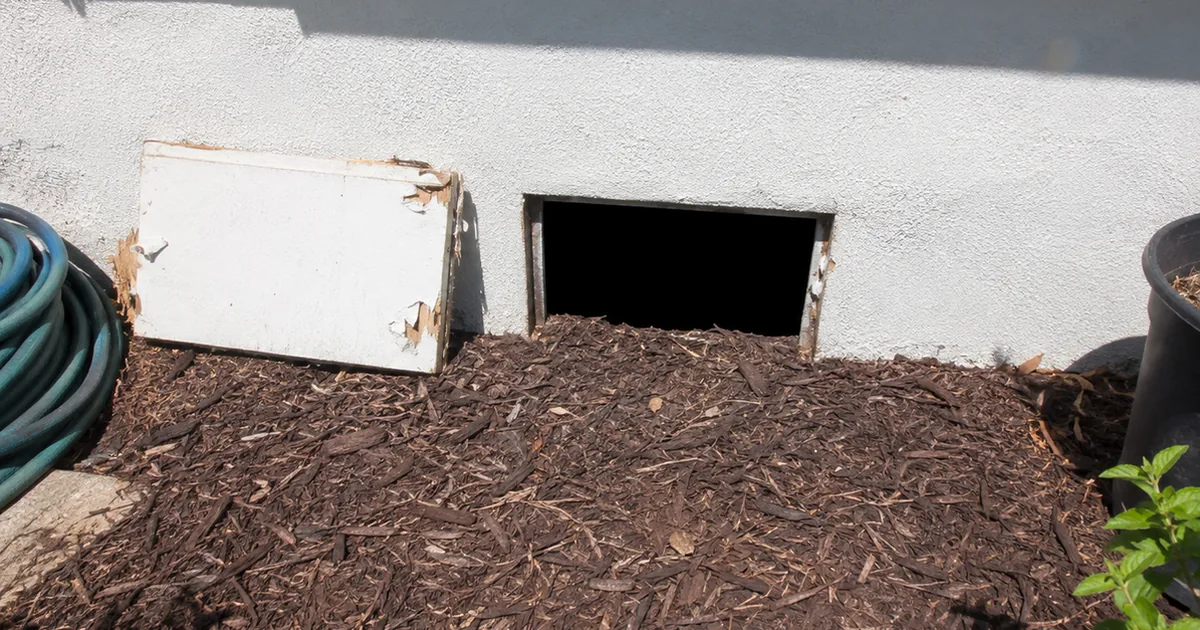
The listing went into escrow in six days, over asking. On day eight the buyer’s inspector came out of the crawlspace with photographs of a water heater that had been replaced without a permit, vented into an abandoned flue, and left unstrapped. There was also a subfloor stain under the hall bathroom, and a meter reading against the joist that was high enough to be worth a sentence in the report.
The request for repairs arrived at a number well above what the work would have cost the seller to arrange in advance. It was a negotiation now, not a purchase. There was no time to get competing bids and nothing to push back with, because the buyer could walk and the listing would come back on the market looking stale after nine days off.
This is a composite of a situation we meet often rather than any one identifiable job, and it contains the whole argument in one paragraph. The seller did not lose money because the water heater was wrong. The seller lost money because of when they found out.
A pre-listing inspection is the same inspection, ordered earlier
It is not a special product, a softer product, or a marketing document. It is the identical scope of work, ordered by the other side of the table and several weeks sooner.
California Business and Professions Code section 7195 defines a home inspection as “a noninvasive, physical examination, performed for a fee in connection with a transfer… of real property, of the mechanical, electrical, or plumbing systems or the structural and essential components of a residential dwelling.” It defines a material defect as “a condition that significantly affects the value, desirability, habitability, or safety of the dwelling,” and a home inspection report as “a written report prepared for a fee and issued after a home inspection” that describes the systems inspected and identifies defects.
Notice what is missing. Nothing in the statute says the buyer has to be the one who orders the inspection. The definition is tied to the transfer, not to who pays. Section 7196 applies the same standard of care either way, requiring a home inspector to “conduct a home inspection with the degree of care that a reasonably prudent home inspector would exercise.”
The work is the same. The timing is not, and the timing is the entire product. If you want the mechanics of the scope itself, our guide to what a general inspection includes and where a specialist takes over covers the same ground from the buyer’s side.
The objection that stops most sellers, answered directly
The objection is always the same sentence. If I find it, I have to disclose it, so I am better off not knowing.
That trade is worse than it sounds, and it fails for three separate reasons rather than one. The first is the simplest. The buyer is going to inspect anyway. In practice the defect gets found. The only real variable is who finds it and on what day.
The second is about bargaining position. Found on day eight of a contingency period, a defect arrives with a deadline attached to it. You cannot shop the repair, you cannot get a second opinion, and you cannot separate a two hundred dollar item from a real one, because they are all on the same list and the list is now a demand.
The third is the one most sellers have never heard. California Civil Code section 1102.4(a) provides that a seller is not liable for an error, inaccuracy or omission in the required disclosures where the information was not within the seller’s personal knowledge, was based on information timely provided by public agencies or by other persons as specified, and ordinary care was exercised in obtaining and transmitting it. Section 1102.4(c) provides that information furnished by a licensed professional acting within the scope of that license, delivered as specified, is sufficient compliance for that protection.
That is what the code says. It is not legal advice, we do not give legal advice, and how any of it applies to your particular transaction is a question for your own attorney or your broker. We raise it because sellers routinely assume the opposite, which is that getting information is the risky choice. The code is at least worth reading before you decide that.
What you are actually buying is lead time
The product is not information. You already suspect most of what the report will say. You have lived with the house.
The product is time, and time converts into three options that do not exist once a request for repairs is on the table. You can get three bids instead of one from whoever can come Thursday. You can schedule work in a normal sequence, plumber before drywaller and drywaller before painter, rather than all three inside a ten day window. And you can decide item by item whether to repair the condition, disclose it and price accordingly, or leave it alone and expect it to come up.
Those three choices are worth more than the inspection fee on almost any house with some age on it. They are worth nothing at all on day nine of escrow.
Late disclosure is expensive because the buyer has a written exit
The Real Estate Transfer Disclosure Statement is required under Civil Code section 1102 and the sections following it for transfers of single-family residential property.
Civil Code section 1102.3 requires delivery “as soon as practicable before transfer of title.” Where the disclosure arrives after the offer has been signed, the buyer has three days after personal delivery, or five days after delivery by mail, to terminate the offer by written notice.
That termination right is why timing has a dollar value. A defect disclosed in the listing package is a term of the deal, priced into the offer that arrives. The same defect disclosed late is a reason to leave, and it does not have to be a large defect to work that way, because a buyer who is already nervous will use whatever the disclosure hands them.
For the same clock from the buyer’s chair, see our pieces on how a California inspection contingency actually runs and on what a buyer gives up by waiving it.
Your listing agent’s own duty stops at the crawlspace hatch
A pre-listing inspection helps the agent too, and not for the reason most people assume.
Civil Code section 2079 places a duty on a real estate broker or salesperson, for residential property of one to four dwelling units, to conduct “a reasonably competent and diligent visual inspection” of the property and to disclose to a prospective buyer “all facts materially affecting the value or desirability of the property that an investigation would reveal.”
Civil Code section 2079.3 then draws the boundary. That inspection “does not include or involve an inspection of areas that are reasonably and normally inaccessible to this type of an inspection,” nor an affirmative inspection of areas off the site, nor of public records or permits concerning title or use.
So the agent’s duty is real, and it is a walking-around duty. An inspector goes into the crawlspace and into the attic. Those are the two places the agent’s obligation explicitly does not reach, and in our experience they are where a disproportionate share of the expensive findings live. A listing agent who has a report in hand is not replacing their own duty. They are no longer guessing at the half of the house they are not required to enter.
What the report usually finds on a California listing
The same items keep showing up, and most of them are cheap to fix on a seller’s schedule and costly to concede as a credit.
Water heaters replaced without a permit, vented into a flue that was abandoned when the furnace changed, or sitting on a stand with no seismic strapping at all. Three-prong receptacles on older two-wire circuits with no equipment ground behind them, which we test for rather than assume. Double-tapped breakers in the panel, where two conductors share a terminal rated for one. Missing or non-functional GFCI and AFCI protection in the locations where it is now expected.
Then the water items, which are the ones that grow. Grading that falls toward the house instead of away from it, often because a patio was poured level with the slab twenty years ago. Downspouts discharging within a foot of the foundation. Missing kick-out flashing where a roof plane dies into a wall, which is a small piece of metal and a large amount of concealed damage. A dryer vent run in flexible foil and packed with lint. Fungal decay at a post or girder bearing in a crawlspace that has been damp for years.
We are careful about what each finding means. An elevated moisture reading tells us there is moisture in that wood on the day we were there. It does not tell us the source, and it does not always tell us the history. We report the condition, we photograph it, and we say what we could not determine, because that is often the most useful sentence in the report. The same goes for what we could not reach. A hatch behind stored boxes becomes a “not inspected” line that nobody in the contract is obligated to clear, which is one more reason to open everything up before listing.
When a pre-listing inspection is not worth the money
We sell pre-listing inspections. We would still rather tell a seller not to buy one than sell one that changes nothing.
Skip it on a recently built house still inside a builder warranty, where the systems are all original and the documentation exists. There is very little for the report to convert from unknown to known, and the warranty already handles the things it would find. Our guide to inspections on new construction explains where that logic stops applying, which is sooner than most people think.
Skip it on a property being marketed explicitly as a teardown or a major rehab, where the buyer is pricing the structure at land value. A defect list does not move a number that was never about the structure.
And skip it if you have already decided you will not repair or credit anything, priced the home on that basis, and said so up front. In that case the money is better spent on a thorough disclosure package. The report is only worth buying if it can change a decision you have not yet made.
How to use the report once you have it
Do not hand a buyer a raw report and hope. Sort it first.
Triage the findings into three piles. Safety items, which are the ones you fix. Items a lender or an insurer will care about, which are the ones you fix or price, because they can stop a transaction that would otherwise close. And cosmetic or maintenance items, which you disclose and leave alone. If the roof is old but sound, read what SB 1301 changes about roof age and insurance before deciding it has to be replaced.
Fix the safety items properly and get written invoices. Attach them. An invoice from a licensed contractor next to the line item it resolves is worth more in a negotiation than any amount of explanation.
Then expect the buyer to inspect anyway, and do not take it personally. A buyer’s inspector works for the buyer, and a second set of eyes finding the same conditions you already disclosed is the best outcome a seller can get, because it makes the whole disclosure package credible. If you want to know how the buyer will read what they receive, our guide to reading a California inspection report is the same document from the other chair.
One practical note on keeping the paperwork. Business and Professions Code section 7199 provides that the time for commencement of a legal action for breach of duty arising from a home inspection report shall not exceed four years from the date of the inspection. That is a useful thing to know when you are deciding how long to hold on to the file.
The inspector cannot sell you a friendly report
This matters more on a pre-listing inspection than on a buyer’s inspection, for the obvious reason. The seller is the party who might want a gentle one.
Business and Professions Code section 7197 makes it an unfair business practice for a home inspector to perform repairs on a property they inspected within twelve months, to inspect a property in which they have a financial interest, to pay or accept compensation for referrals, or to accept an engagement where the fee is contingent on the conclusions reached in the report. Section 7198 provides that contractual provisions purporting to waive the duty owed, or to limit the inspector’s liability to the cost of the report, are contrary to public policy and invalid.
Read together, those two sections describe an inspector with no financial reason to soften a finding. That is the inspector a seller actually wants, even though it is not the inspector a nervous seller thinks they want. The useful report is the one that names the water heater vent, the ungrounded receptacle and the crawlspace decay while there is still time to do something about them.
What we do differently on a seller’s inspection
The work is the same, but the delivery matters more when there is a listing timeline attached to it.
Our reports come back the same day, within six to eight hours, so a seller who inspects on Monday is calling contractors on Tuesday rather than waiting out a week they do not have. Every inspection includes drone roof imagery, which means roof condition arrives as dated frames of every plane that a roofer can bid from, rather than as a sentence. Infrared scanning gets used where a temperature difference might reveal moisture behind a finished surface, with its limits stated plainly, as we explain in our piece on what infrared scanning can and cannot show.
Our inspectors hold InterNACHI Certified Professional Inspector credentials and work to the InterNACHI Standards of Practice, which is the same written standard the buyer’s inspector will most likely be working to. And a seller can use pay-at-closing, so the fee moves into the closing statement rather than coming out of pocket before the proceeds arrive.
If you want a specific fix list rather than a decision framework, our article on what San Diego sellers should fix before listing is the practical companion to this one. That piece tells you what to do with a house. This one is about whether to find out in the first place.
Order the inspection before the photographer
That is the whole recommendation, and it is a scheduling decision rather than a financial one.
Book the inspection before the photographer, not after the offer. Give the report to your broker and, if you use one, your attorney. Sort it into safety, lender and insurer concerns, and cosmetic. Fix what you choose to fix and keep the invoices. Disclose the rest and price the home with the information actually in view rather than in the back of your mind.
Then let the buyer inspect, and let their inspector confirm what you already told them. A buyer finding what you disclosed is not the failure case. The failure case is the one at the top of this page, where you learn about the water heater on day eight and the only currency you have left is a price reduction.
We run pre-listing inspections across California, including our home region in the Bay Area. If you are selling an older house in Albany, a waterfront property in Discovery Bay, or anything in San Francisco, Oakland or San Diego, the report arrives the same day.
See what is included in every inspection, look at a sample inspection report, or read through our frequently asked questions before you book.
A seller of a house still inside its first decade has an extra reason to look early, because several of the standards that govern a new build expire on their own schedule. Those deadlines are set out in a new California home comes with several clocks.
- Who Decides What the Building Code Means. Unresolved permit history is the item most worth chasing before a listing, because the building department’s reading may not match the one the work was done to.
- When the Flood Map Under Your House Changes. A mapped status that shifted during your ownership is the other thing better discovered before listing than during escrow.
- What a Condo Seller Already Has to Hand Over. The statutory package is the seller’s obligation, not the association’s goodwill.
- Replacement Windows Under SB 908. New windows with no permit behind them are one of the most common paper gaps a pre-listing inspection surfaces.
- Before You Call a Listing “Fire Hardened”. Until California’s certification program exists, a seller’s dated list of hardening work is the only evidence a buyer can check.