A buyer looking at a newly rebuilt foothill home may find a thick file of building permits and a final for the new house. The file may say nothing about who removed the burned structure, ash, contaminated material or damaged trees before the slab was poured.
That is a composite of a pattern we see on fire-area rebuilds. It is not one identifiable property or client. Nobody necessarily did anything wrong. The record simply lives somewhere else.
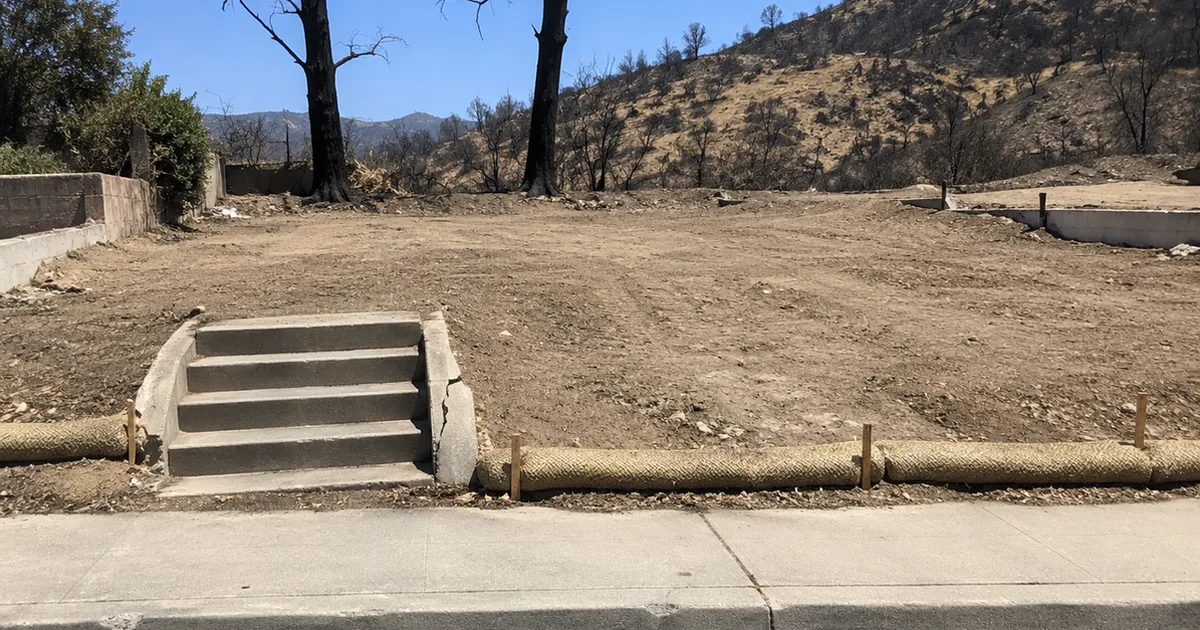
The same gap appears on a cleared lot. The old house is gone. The new house has not started. The work that made the lot buildable came first, under a different permit and often under a different program.
SB 1263 starts on January 1, 2027
SB 1263 creates a state license rule for covered hazardous disaster debris removal beginning January 1, 2027.
Governor Gavin Newsom approved the bill and it was filed with the Secretary of State on September 27, 2026. It is Chapter 688, Statutes of 2026. There is no urgency clause, so the effective date is January 1, 2027.
Senator Mike McGuire authored the bill. Its title is “Contractors: debris removal.” The Contractors State License Board sponsored it. The Senate passed it 36-0. The Assembly passed it 78-0.
SB 1263 adds one new section to the Business and Professions Code: Section 7058.9.
That timing matters for the file in front of you. Debris removal done after the January 2025 Los Angeles fires was not governed by SB 1263. Those projects were handled under Los Angeles County permit conditions and government cleanup programs. The new state rule applies to covered work starting January 1, 2027.
The bill is not a general rule for every cleanup job. It reaches debris removal that includes hazardous materials, including ash out and muck out, on residential or commercial property damaged or destroyed by a natural disaster. The disaster must have a Governor’s state of emergency declaration or a presidential emergency or major disaster declaration. The rule also applies only when a permit is required for the debris removal.
For buyers, the date and the permit requirement belong together. A contractor’s work may look like the same kind of cleanup, but Section 7058.9 does not cover every pile, haul-away job or property repair.
California law had no fixed debris-removal license list
Before SB 1263, Contractors Law did not designate who could perform debris removal during a declared disaster.
The Senate floor analysis states: “Currently, there is no designation in Contractors Law as to who can perform debris removal during a declared disaster. Out of necessity, CSLB has made this determination on an ad hoc basis during recent declared disasters, but a permanent solution is needed.”
That is the gap the statute closes. CSLB had to make decisions during individual disasters. The new section places the license classifications and training requirements in the statute instead.
The committee analyses also describe a safety question behind the bill. CSLB received inquiries about whether contractors digging to remove contaminated materials in disaster areas were qualified to do that work safely.
The existing hazardous substance removal certification did not cover this entire setting. Before SB 1263, the certification was required only for underground storage tank work or sites on state or federal lists. The related exam was limited to those issues.
The Assembly Business and Professions analysis says the exam covers safe removal, transport and disposal of hazardous materials, “but not the identification of hazardous substances.” That wording matters because the new statutory definition of debris removal starts with “identification.”
The statute does not treat removal as only the final truck trip. It defines debris removal as “appropriate identification, encapsulation, transportation, and disposal of debris.”
Five CSLB classifications can perform the covered work
Section 7058.9 allows five license classifications for covered debris removal.
The list is:
- A, General Engineering Contractor.
- B, General Building Contractor.
- C-12, Earthwork and Paving.
- C-21, Building Moving/Demolition.
- C-49, Tree and Palm, limited to tree service and removal only.
The C-49 limit is specific. A C-49 license does not become a general authorization for ash out, muck out or every form of hazardous debris removal. The statutory limit is tree service and removal only.
The rule applies “notwithstanding Section 40520 of the Public Resources Code.”
Section 40520 is the existing law requiring CalRecycle, or another state agency tasked by the Office of Emergency Services, to prequalify contractors for state-managed wildfire debris cleanup contracts. SB 1263 operates despite that separate prequalification requirement.
The license list also gives agents and buyers a concrete item to check. Ask who performed the work. Look up that contractor on the CSLB website. Check the license classification, not only the company name.
The C-49 addition came after the California Special Districts Association raised hazard tree removal in rural, wooded areas. The final law reflects that narrower tree-removal role.
The contractor also needs certification and HAZWOPER training
A listed license classification is not enough by itself.
Every licensee doing covered work must have passed the CSLB hazardous substance certification examination under Business and Professions Code Section 7058.7. The licensee must also comply with the hazardous waste operations and emergency response requirements in Title 8, California Code of Regulations, Section 5192, commonly called HAZWOPER.
During Assembly consideration, the Southern California Contractors Association opposed the HAZWOPER requirement for non-hazardous debris unless the bill was amended. The chaptered text applies only to debris removal that includes hazardous materials. The final Senate floor analysis lists the association as a supporter.
The statutory combination is therefore clear. For covered work, the contractor needs one of the listed classifications, the CSLB hazardous substance certification, and compliance with HAZWOPER requirements.
The author’s statement in the Assembly analysis put the concern plainly: “Improper handling of hazardous debris can create significant risks to public health, worker safety, and the environment.”
CSLB’s support statement says: “In the aftermath of a natural disaster, safe debris removal and disposal is critical to avoid additional health and environmental problems.”
The local agency’s final sign-off switches the restriction off
The Section 7058.9 restrictions apply when a permit is required and stop applying once the debris removal is deemed completed or finalized by the local permitting agency.
That remains true whether or not the emergency proclamation or disaster declaration is still in effect. The local agency’s completed or finalized determination is the event named in the statute.
This is the most useful record point for a buyer. Ask for the local debris removal permit and the local agency’s completed or finalized sign-off. The permit shows the work was authorized. The later local record shows how the agency marked the debris removal as complete or final.
The statute defines “debris” as debris from, or located on, residential or commercial property as a result of a natural disaster. It does not include materials unrelated to the declared emergency or disaster.
Residential and commercial property does not include property owned, operated or leased by a state, federal or local government or a utility. The law is not written for government or utility property.
“Ash out” is the wildfire version of this work. “Muck out” is the flood version. The Senate floor analysis places the rebuilding context in areas damaged by floods, fires and earthquakes.
The local sign-off is not a substitute for every other record. It is the particular record the new statute makes useful because it marks when the Section 7058.9 restrictions stop applying.
The 2025 Los Angeles cleanup used county rules, not SB 1263
The cleanup after the Eaton and Palisades fires ran in two phases and followed Los Angeles County requirements, not SB 1263.
More than 2.5 million tons of debris were removed from more than 9,000 properties.
In phase one, the United States Environmental Protection Agency removed household hazardous waste from residential properties at no cost to owners. The listed materials included batteries, fertilizers and pesticides, paints and oils, cleaners and solvents, and propane tanks.
In phase two, owners could opt in to a government program. The U.S. Army Corps of Engineers removed structural debris, including damaged foundations, hazardous trees, asbestos, ash, contaminated soil and destroyed vehicles.
Owners who opted out had to hire a certified consultant to check for asbestos, hire a licensed specialized contractor and obtain a Los Angeles County fire debris removal permit.
Los Angeles County issued those permits to contractors holding A, B, C-12 or C-21 licenses. The county also required the CSLB hazardous substance removal certification and required contractors’ employees to complete 40 hours of HAZWOPER training. CSLB reported that more than 1,500 contractors met those county requirements.
SB 1263 takes that county-level approach and writes it into state law for future declared disasters. The comparison is useful, but the dates must stay separate. The 2025 Los Angeles cleanup was not performed under SB 1263.
Agents working the Pasadena and Altadena foothills see this history on Eaton Fire lots. Buyers also see heavy rebuilding in Pacific Palisades, homes rebuilt since the 2018 Woolsey Fire in Malibu, and foothill houses in Sierra Madre. None of those locations replaces the local permit record.
Ask for these six items before treating the lot history as complete
Ask for six specific things on a cleared lot or a finished rebuild.
-
The local debris removal permit. Ask the seller for the permit issued for the ash out, muck out or other covered debris removal. If the seller does not have it, ask the local permitting agency where the record is held.
-
The local completed or finalized sign-off. Request the record showing that the local permitting agency deemed the debris removal completed or finalized. This is separate from the building permit and final for the replacement house.
-
The contractor’s identity. Get the legal name of the contractor that performed the work. A program administrator, property owner or later builder may not be the debris-removal contractor.
-
The CSLB license and classification. Look up the contractor on the CSLB website. Check whether the classification was A, B, C-12, C-21, or C-49 limited to tree service and removal only, as applicable to the work.
-
The hazardous substance removal certification. Check the CSLB license information for the hazardous substance removal certification required by Section 7058.7. Ask for the available license record rather than relying on a contractor’s verbal description.
-
Government program documentation. If the lot went through a government debris-removal program, request whatever program documentation the seller has. That file may be different from a privately hired contractor’s file.
These are document requests. They are not legal conclusions about whether a project complied with every requirement. After January 1, 2027, a permitted ash out or muck out done by a contractor outside the listed classifications, or without the certification, is a question to raise with the seller and the local agency.
A buyer may also want the inspection agreement and report kept with the debris file. Our page on what every inspection includes sets out the inspection scope, and the inspection does not recreate missing disposal records.
A rebuild still needs a serious home inspection
A new house on a cleared lot still needs inspection.
A California home inspection is a noninvasive, visual, physical examination. On a rebuild, Inspection.re looks at framing, waterproofing and systems with the same attention given to an older home. The inspection also considers grading and drainage around the rebuilt pad, fire-hardening features such as vents, eaves and roof covering, and the noncombustible zone immediately next to the house.
That zone has its own California Zone 0 guide. Fire-hardening questions in a foothill town may also call for the Sierra Madre agent guide. A rebuild inspection is still a building inspection. It is not a debris-removal investigation.
Inspection.re provides same-day reports with photos. InterNACHI-certified inspectors perform the inspections. Drone roof images and 3D Matterport documentation can add useful views of the finished property. Those tools do not identify hazardous material in soil or ash.
FLIR infrared is used as a moisture screening tool. That matters most after a muck out because new drywall can hide water in framing that was flooded. Moisture and mold questions are referred for testing. The mold testing comparison explains that separate issue.
The inspection does not include soil, ash, asbestos or lead testing. Those questions go to the appropriate environmental professional. For the broader boundary between a home inspection and specialist work, see what a home inspection covers and what needs a specialist.
A standing house that survived a nearby fire presents a different question involving smoke residue and smoke damage testing. That is separate from a burned structure removed before rebuilding. See the California smoke damage testing article and the separate insurance discussion of smoke damage claims.
Quick answers
When does SB 1263 take effect? January 1, 2027.
Did SB 1263 apply to the 2025 Los Angeles cleanup? No. That cleanup was governed by Los Angeles County permit conditions and government program requirements.
Does it apply to a homeowner clearing ordinary yard debris? The statute applies to contractors, to debris that includes hazardous materials, from a declared natural disaster, when a permit is required.
Can a home inspector test the soil? No. Inspection.re does not test soil, ash, asbestos or lead.
Does it cover flood cleanup? Yes. Muck out is named in the statute as covered debris removal.
The local debris file belongs beside the building file
SB 1263 gives future declared disasters a fixed license and training rule for permitted debris removal that includes hazardous materials. It does not turn the debris permit into a building permit, and it does not make a home inspection an environmental investigation.
The practical change is the record trail. A rebuilt house may have a building permit, inspections and a final. The cleared lot beneath it has a separate history. Ask for the debris removal permit and the local agency’s completed or finalized sign-off before treating that history as complete.
If the property went through a government cleanup program, request the program documents. If a contractor performed the work, check the CSLB classification and hazardous substance removal certification. Then arrange the rebuild inspection separately. Review the new-construction inspection guide and keep later new-home defect time limits questions separate from debris removal.
For a fire-area or flood-area file, put those requests in writing before the inspection date. Use the Inspection.re FAQ and sample inspection report information for the inspection side. Call Inspection.re at 1-888-88-INSP-9.