The FAIR Plan says smoke damage must be visible or smellable
The California FAIR Plan defines covered smoke damage as “direct physical loss.” Its policy defines that phrase as “any actual loss or physical damage evidenced by permanent physical damages or changes to the covered property caused by smoke damage.”
The policy then gets more specific. It says covered damage includes “airborne particles like soot, ash, or char debris that are visible to the ‘unaided human eye’, or ‘odors detectable by the unaided human nose’.”
The policy also says the FAIR Plan will not rely on laboratory testing or “individual subjective senses” to establish damage.
That language is now the subject of a court ruling, a California Department of Insurance enforcement action, and unresolved smoke damage complaints tied to the Palisades and Eaton wildfires.
This article is not about the 2026 laws AB 1642 and AB 1795. Our separate article, “The House Did Not Burn. That Is Not the Same as Clean”, covers those laws. They address the burden of proof and testing costs in a real estate sale.
This article addresses a different issue. It concerns one insurer’s policy language and what that language covers when a FAIR Plan policyholder files a smoke damage claim. The claim issue applies whether or not the house is being sold.
That difference matters to homeowners, buyers, agents, contractors, and inspectors. A sale may turn on statutory disclosure rules. A claim may turn on what the policy calls permanent physical damage, and what the inspection record shows.
This affects more than a handful of high-risk homes
The FAIR Plan is California’s property insurance safety net. It was created in 1968 as an insurer of last resort for urban commercial property. After the 1994 Northridge earthquake homeowners’ insurance crisis, it expanded statewide.
It now absorbs almost 6 percent of California’s property insurance market.
As of December 2025, the FAIR Plan had 668,609 policies in force. That was a 146 percent increase from September 2022. Its total exposure was $724 billion, a 230 percent increase from September 2022.
Many homeowners in or near recent wildfire areas carry FAIR Plan policies because private insurers would not renew them. Some buyers encounter the same issue when they try to insure a home after closing. The FAIR Plan may be the available safety net when a regular company will not write the policy, and that is common in hillside and canyon markets like Simi Valley and Wildomar.
The scale of the recent fire losses shows why the smoke language matters. The FAIR Plan handled roughly 5,400 claims from the Palisades and Eaton fires combined. It paid nearly $3.5 billion to policyholders.
On February 11, 2025, the FAIR Plan assessed its member insurance companies $1 billion to help meet its claim obligations from those fires. Those costs can ultimately pass back to non-FAIR Plan policyholders through a recoupment surcharge over up to 24 months.
This is not only a dispute between one homeowner and one insurer. The policy language affects a large and growing group of California households, and the claims affect the insurance market beyond the FAIR Plan.
The policy turns on a permanent physical change
The FAIR Plan’s language puts the proof question in a narrow frame.
The policy does not simply ask whether a property was near a wildfire. It does not simply ask whether a homeowner noticed a smoke smell. It asks whether smoke caused “permanent physical damages or changes to the covered property.”
The policy gives two examples of evidence:
- Soot, ash, or char debris visible to the “unaided human eye.”
- Odors detectable by the “unaided human nose.”
The policy specifically excludes reliance on laboratory testing or “individual subjective senses.”
That creates the central conflict. A lab report may identify smoke material a person cannot see. An odor one person notices, another may not. The FAIR Plan’s wording limits the claim evidence it will use.
For a homeowner, a general statement such as “the house smells like smoke” leaves important questions unanswered. Where is the odor detected? When was it recorded? What physical surfaces show soot, ash, char debris, or another change? What did the property look like before and after the event? What work did a contractor perform, and why?
The policy language makes a dated physical record important. A professional inspection or post-fire damage assessment can record the condition at a specific time. It can identify locations, describe visible conditions, and preserve photographs for the claim file.
That record does not decide coverage by itself. It gives the homeowner evidence tied to the words in the policy.
Alif rejected the FAIR Plan’s narrower definition
On June 27, 2025, the Los Angeles Superior Court ruled in Alif v. California Fair Plan Association.
The court held that the FAIR Plan’s definition of “direct physical loss” unlawfully restricted coverage compared with the standard California fire policy required under Insurance Code sections 2070 and 2071.
The court found that the FAIR Plan definition violated Insurance Code section 2070 because it provided coverage “less favorable than, and not substantially equivalent to,” the coverage required by the standard form fire policy.
That finding focused on the contract language itself. The issue was not whether smoke damage can exist after a wildfire. The issue was whether the FAIR Plan could define covered direct physical loss so narrowly that coverage depended on visible particles or odors detectable without instruments, while excluding laboratory testing and individual subjective senses.
The court’s ruling tested the FAIR Plan’s attempt to define its coverage in its own policy. It also placed the FAIR Plan’s smoke claims in a regulatory dispute that was still active in the most recently verified record.
A court ruling does not turn every smoke complaint into an automatically covered claim. The policyholder still needs to present the claim and the property evidence. The coverage dispute concerns what the policy can require when deciding whether smoke damage exists.
The state received about 220 smoke claim complaints
Following the Alif ruling, the California Department of Insurance brought an enforcement action against the FAIR Plan in July 2025.
The action concerned denials of smoke damage claims from the Pacific Palisades and Eaton wildfires in January 2025. The department’s data showed that it received approximately 220 smoke claim complaints tied to the FAIR Plan.
As of the Assembly Insurance Committee hearing background document prepared for its January 28, 2026 hearing, a number of those cases had been filed and had not yet been decided.
That date matters. The January 2026 hearing document is the most recently verified status used here. The dispute was not presented as finally resolved. The complaints were not all described as paid, denied, or decided in the same way.
The record also shows how the claim dispute fits into the larger fire response. The FAIR Plan handled roughly 5,400 Palisades and Eaton claims and paid nearly $3.5 billion. It assessed its member companies $1 billion on February 11, 2025 to help meet its obligations.
Those figures are not proof any one claim will be paid. They show the scale, and how many policyholders share this policy language.
For a homeowner with a disputed claim, the practical issue remains specific. What did the property show? What was documented? Which part of the policy definition does the evidence address?
A disputed claim can go to an umpire
The FAIR Plan policy sets out a dispute process when the parties disagree about whether smoke damage exists.
Under Method 1, each side appoints a neutral party. Those two neutrals jointly select a third person as umpire. The three-person panel inspects the property and decides by majority vote whether smoke damage exists.
That decision is binding.
Under Method 2, the parties agree on a single neutral umpire instead. The neutral umpire addresses whether smoke damage exists under the policy.
The two methods are different ways to put the existence question before a neutral decision maker. Both focus on an inspection of the property and a decision about whether smoke damage exists.
If damage is confirmed but the parties disagree about the dollar amount, the claim moves to a separate appraisal process under the policy’s appraisal provision.
That sequence separates two questions:
- Does covered smoke damage exist?
- If it exists, what is the amount of the loss?
A homeowner should not treat a disagreement over the repair amount as the same dispute as a disagreement over whether damage exists at all. The policy assigns those questions to different procedures.
The inspection record matters before that process begins. A panel or umpire needs a property condition to inspect and evidence to review. Photographs, dated reports, location-specific descriptions, and contractor records give the dispute a factual record rather than a series of competing general statements.
Your claim file should show the property, not just the smell
The FAIR Plan language points directly to the type of documentation a home inspection or post-fire assessment produces.
Start with the date. Record when the property was inspected and when each photograph was taken. A dated record shows the condition at a specific point in time.
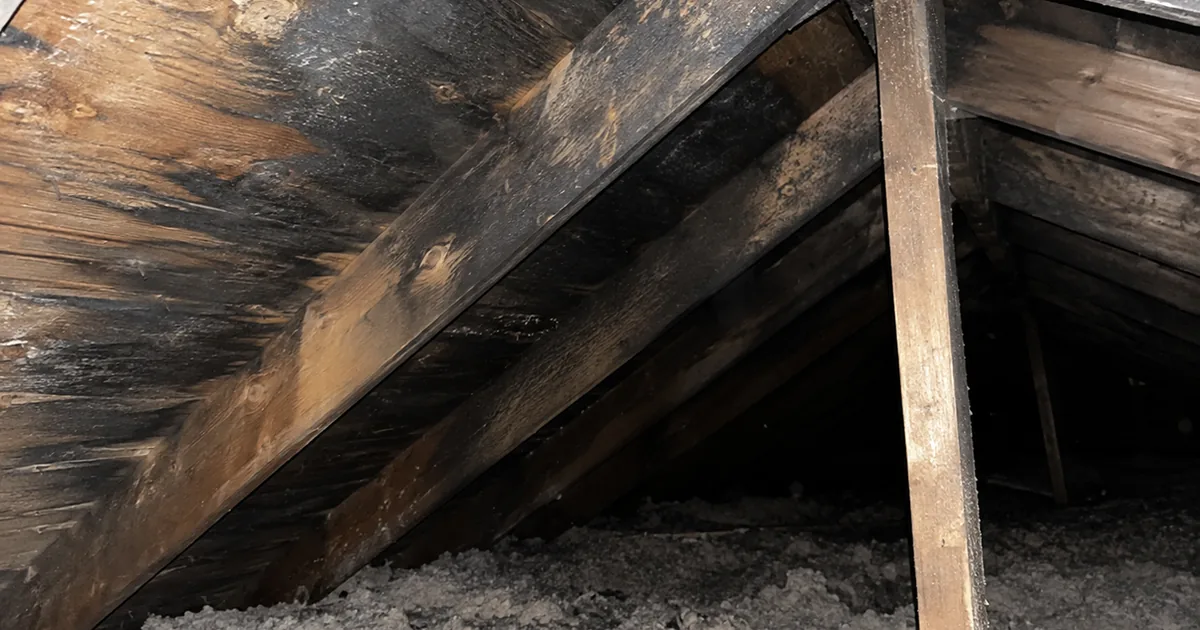
Photograph each affected area. Include the room or exterior location, the surface involved, and the visible condition. Photograph soot, ash, or char debris when it is visible. Record permanent physical damage or changes to the covered property.
Write descriptions that identify the place and the condition. “Smoke damage throughout” is less useful than a location-specific record that identifies the room, surface, visible residue, odor location, or physical change.
Record odor observations separately from visible conditions. The policy refers to odors detectable by the unaided human nose, but it also excludes “individual subjective senses.” A report should not present an unsupported odor statement as laboratory proof. It should document where an odor was detected, when it was detected, and by whom.
Preserve contractor documentation. Have the contractor identify the affected materials, the observed condition, the work performed, and the reason for the work. Keep photographs taken before cleaning or removal when those photographs exist. Keep the dated inspection report and the contractor record together.
Laboratory testing alone will not carry a FAIR Plan claim under the policy language described in the hearing document. The policy specifically excludes reliance on laboratory testing. That does not mean a test result has no place in the claim file. It means the homeowner should not treat a lab result as a substitute for documentation of the physical property condition required by the policy.
InspectionRE’s FLIR infrared scanning and same-day digital reporting can create a dated, photographed record of property conditions for a claim file. That record can help show what was observed at the inspection time and where it was observed.
FLIR does not test for smoke residue specifically. It does not decide whether the FAIR Plan owes coverage. Do not present infrared scanning as proof of smoke damage. Use it as one part of a documented inspection record, alongside photographs and written descriptions of visible conditions and physical changes.
The same record can help in a different insurance decision. Under the state’s Sustainable Insurance Strategy, FAIR Plan policyholders who comply with the Safer from Wildfires regulation, Title 10, CCR, Section 2644.9, receive first priority to transition back into the normal, non-FAIR Plan insurance market.
That is separate from the Alif coverage fight. It is also a separate reason to preserve home-hardening and defensible-space documentation. Records may matter once when you seek better coverage and again if a fire occurs while the home remains on the FAIR Plan.
See the related discussion of California wildfire insurance laws, home hardening, AB 1, AB 888, and AB 226, along with the requirements discussed in California Zone 0 and the ember-resistant zone.
Five questions California homeowners keep asking
What is the FAIR Plan?
The FAIR Plan is California’s property insurance safety net. It was created in 1968 as an insurer of last resort for urban commercial property and later expanded statewide after the 1994 Northridge earthquake homeowners’ insurance crisis.
As of December 2025, it had 668,609 policies in force and $724 billion in total exposure.
Is my smoke damage claim automatically covered?
No. A FAIR Plan policy defines covered smoke damage as “direct physical loss,” including permanent physical damages or changes caused by smoke. The policy refers to visible soot, ash, or char debris and odors detectable by the unaided human nose.
The Alif ruling found that the FAIR Plan’s definition unlawfully restricted coverage compared with the standard California fire policy. That ruling does not mean every smoke claim is automatically covered. The property condition and the policy dispute still matter.
What if the FAIR Plan and I disagree about whether damage exists?
The policy provides two dispute methods. Each side can appoint a neutral, with those neutrals selecting a third person as umpire. The three-person panel inspects the property and decides by majority vote.
The parties can also agree on one neutral umpire. If damage is confirmed but the amount remains disputed, the claim moves to the separate appraisal process in the policy.
Does this affect homes insured by a regular company?
The policy language and dispute described here are specific to the FAIR Plan. The issue is the FAIR Plan’s own definition of covered smoke damage.
A home insured by a regular company may have different policy language and a different claims process. Do not assume the FAIR Plan ruling controls every insurer’s smoke claim. For a different insurer decision, whether a policy renews at all, see the 2028 nonrenewal rules in SB 1301.
How is this different from AB 1642 and AB 1795?
AB 1642 and AB 1795 address smoke damage testing in a real estate sale. That legal framework concerns the statutory burden of proof and testing costs in a transaction.
This article concerns the FAIR Plan’s policy definition for an insurance claim. It applies whether or not the property is being sold.
Read the separate AB 1642 and AB 1795 article for the sale-related rules. Do not combine the sale disclosure question with the FAIR Plan coverage question.
A FAIR Plan home needs two records, not one
A FAIR Plan household has a claim reason to document the property. It also has an insurance-market reason to document home hardening and defensible space.
The Sustainable Insurance Strategy gives FAIR Plan policyholders who comply with Title 10, CCR, Section 2644.9 first priority to transition back into the normal, non-FAIR Plan market. The rule concerns the Safer from Wildfires regulation, including home-hardening and defensible-space measures.
That is not the same legal issue as the smoke damage dispute. One concerns access to the regular insurance market. The other concerns the definition of a covered loss under the FAIR Plan policy.
Keep those records separate but organized. A home-hardening record supports the insurance transition question. A dated post-fire inspection and contractor record supports the claim question. The hardening record may eventually carry a state tier as well, since AB 1934 orders a voluntary home hardening certification program by January 1, 2029; see how California’s hardening certificate will work.
For a home in a wildfire-exposed community, both records can matter. A buyer or agent reviewing the property should ask what documentation exists before a fire, not only what someone remembers after one.
For more property inspection questions, see the InspectionRE FAQ and what is included in an inspection. If the home is in a high-risk coastal fire community, see the InspectionRE service area for Malibu.
The next step is concrete. If a FAIR Plan property has smoke exposure, schedule a documented inspection promptly. Ask for dated photographs, location-specific descriptions, and a digital report. Preserve contractor records before cleaning or removal when possible. Do not submit a lab report as the only evidence. Build the claim file around the physical property and the exact words of the policy.
Where the structure was destroyed instead, the cleanup record matters. SB 1263 sets which licensed contractors may remove hazardous disaster debris from 2027.