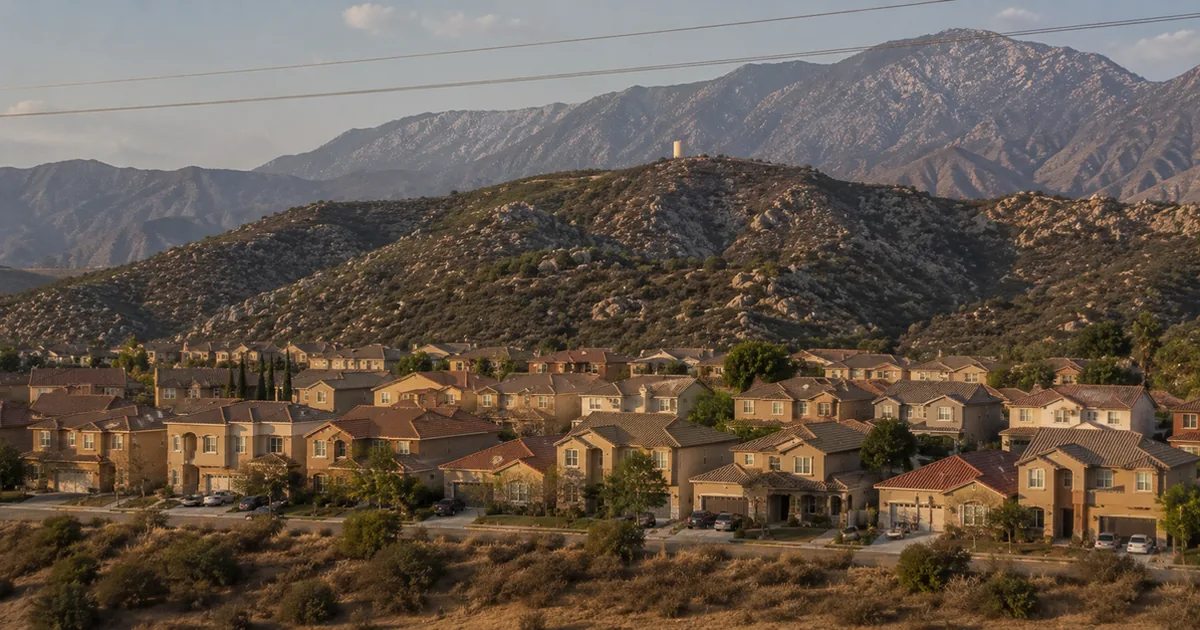
Premium Home Inspection in San Jacinto
Fault zone, floodplain, and boom-era construction in one valley.
San Jacinto carries the name of one of California's most active fault systems, sits partly in a river floodplain, and added most of its housing in one 2000s building sprint. That combination of seismic exposure, water exposure, and boom-era construction is exactly the inspection profile we built our process around. Every inspection includes 3D Matterport, drone roof survey, FLIR infrared, LIDAR floor plan, and same-day report delivery.
San Jacinto Fault Zone and Alquist-Priolo disclosure
Parts of San Jacinto fall within Alquist-Priolo Earthquake Fault Zones, which carry mandatory disclosure obligations from the seller. That is the legal side. The physical side is what we inspect: water-heater strapping, foundation and slab crack patterns, cripple-wall bracing on pre-1980 homes, gas shutoff accessibility, and chimney separation. The San Jacinto Fault system is one of the most active in California, and the valley's alluvial soil amplifies ground motion. We document everything with photos and measurements so the buyer can evaluate retrofit costs with real numbers, not assumptions. For a deeper look at seismic readiness in the Inland Empire, see our Murrieta seismic readiness agent guide.
Boom tracts vs pre-boom core
The inspection changes depending on whether you are buying a 2005 production tract home or an older property in the downtown core. Both sit in the fault zone, but the systems, the construction era, and the risks are different.
2000s boom tracts and master plans
Areas: Ramona Expressway tracts, Cottonwood/Quandt Ranch, Soboba foothills master-planned sections
Build era: 2001 through 2009 production-builder tracts. The bulk of San Jacinto's current housing stock. Fast-built during the boom on previously agricultural land.
- Chinese drywall import window. San Jacinto built heavily during the 2001 to 2009 exposure era. We check for corrosion signatures on copper, HVAC coils, and gas appliance components on every inspection of that vintage. Our detection guide covers the full method.
- Production-builder shortcuts that passed minimum code inspection. Framing, insulation, drainage, and flashing details that met the letter of the code but not the intent. We check what the city inspector approved at production speed.
- HVAC systems now 15 to 20+ years old in extreme valley heat. Original builder-grade equipment reaching end of life. The thermal scan shows duct leaks, insulation gaps, and uneven cooling that the thermostat reading alone does not reveal.
- Post-tension slab construction on expansive soils. Crack patterns, floor levelness measured with digital levels, and garage slab separation documented with photos.
- Landscape drainage that sends water toward the foundation instead of away. Builder grading can settle over time, and additions like patios and walkways alter the original drainage plan.
- Stucco cracking at window corners and garage transitions on 15 to 20-year-old homes. We distinguish settlement cracks from cosmetic cracks.
Pre-boom core and manufactured stock
Areas: Estudillo/downtown, Park Hill, and older valley neighborhoods
Build era: Pre-2000 mix: midcentury ranch homes, 1970s and 1980s stock, manufactured homes, and some older valley properties with original systems.
- Original electrical panels on 1960s and 1970s homes, including Federal Pacific and Zinsco. We open every panel, identify the brand and conductor types, and document conditions insurers ask about.
- Galvanized steel supply lines on pre-1980 homes. Corroding from the inside, restricting flow, and invisible until the pressure drops enough to notice.
- Manufactured homes with HUD certification, foundation, and bracing questions. Same scope as Hemet: data plates, permanent-foundation conversions, earthquake bracing, undercarriage condition.
- Additions of uncertain permit history on older properties. Converted garages, added rooms, and enclosed patios with electrical and plumbing of mixed origin.
- Aging HVAC and evaporative coolers on older stock. San Jacinto summers match Hemet for heat. We test what is installed and assess whether it can actually cool the home in peak conditions.
- Sewer lateral age on the oldest core neighborhoods. We recommend a sewer camera scope from a licensed plumber on any home with original drain lines.
- Cripple-wall bracing on raised-foundation homes. Pre-1980 construction in a fault zone carries retrofit considerations that we document.
What San Jacinto buyers miss
Five patterns that surprise buyers in escrow. Each one changes the deal if it surfaces late.
Alquist-Priolo zone is a disclosure, not an inspection
The seller discloses the fault-zone designation. That is a legal requirement. It does not tell you whether the home is seismically ready. Water-heater strapping, foundation crack patterns, cripple-wall bracing, chimney attachment, and gas shutoff accessibility are physical conditions that we inspect and document. The disclosure tells you the fault is there. The inspection tells you what the home would need to survive it.
Chinese drywall is not history in San Jacinto
The 2001 to 2009 build window is the exposure era for contaminated Chinese drywall imports, and San Jacinto built heavily inside it. The corrosion signatures are specific: blackened copper pipes, failing HVAC evaporator coils, and sulfur odor in closed spaces. We check for these on every inspection of boom-era stock. See our Chinese drywall detection guide for the full method.
Boom-era construction passed code at production speed
City code inspections during the 2003 to 2007 building sprint were volume operations. A home that passed final inspection met minimum code at the speed the city was processing permits. It does not mean the framing is perfect, the drainage is ideal, the insulation is complete, or the flashing was installed correctly. We check what the city inspector approved in 30 minutes with a 3-hour inspection.
Expansive soils stress slabs and footings
The San Jacinto Valley shares the same expansive clay soil family as Menifee next door. Seasonal swell and shrink cycles stress post-tension slabs and conventional footings. We run digital levels across floors, document crack patterns, and assess drainage direction. For more on this soil type, see our Menifee expansive clay foundation guide.
The river floodplain is not just a FEMA line on a map
The San Jacinto River's FEMA flood zones cut through parts of the valley. Properties near the floodplain boundary carry real water exposure in wet years. We check for evidence of past intrusion, slab moisture signatures with the infrared scan, and grading that sends water toward the structure. Flood-zone designation comes from the NHD disclosure and lender side. We inspect the physical consequences.
Neighborhood by neighborhood
We cover all of San Jacinto. Here is what we focus on in each area.
Estudillo / downtown
The oldest part of San Jacinto. Midcentury ranch homes, manufactured stock, original systems. Full panel, plumbing, and seismic scope.
Park Hill
Established residential area with a mix of older and newer homes. System-age findings on the pre-1980 stock, builder-quality focus on the newer homes.
Ramona Expressway tracts
2000s boom construction along the main corridor. Chinese drywall exposure window, production-builder scope, HVAC age, post-tension slab assessment.
Cottonwood / Quandt Ranch
Newer master-planned sections. Builder-quality details, drainage, HVAC sizing for extreme heat, and expansive soil awareness.
Soboba foothills
Newer tracts toward the foothills. Similar boom-era scope plus hillside grading, retaining walls, and fire-zone proximity on the upper parcels.
We also serve nearby Hemet, Menifee, Perris, and Murrieta. Same premium package, same same-day report, same $300 discount.
Every inspection includes premium tech. No add-ons
3D Matterport
Walk every room from anywhere. Tagged findings link to exact locations. Essential for remote buyers and investors evaluating San Jacinto properties.
Drone roof
Documents every roof slope on two-story boom-era tracts. Catches flashing details, mortar cracks, and debris that ground-level inspection misses.
FLIR infrared
Catches moisture behind stucco, duct leaks in extreme-heat attics, insulation gaps, and the heat signatures of Chinese drywall corrosion patterns.
LIDAR floor plan
Accurate square footage and digital floor-level measurements. Detects slab settlement patterns across the home.
Same-day report
Full report by email the same day. Photos, drone imagery, infrared callouts, 3D tour link, and floor plan.
Pay at Closing available
Defer the inspection fee until escrow closes. The $300 discount still applies. Useful for first-time San Jacinto buyers managing tight transaction budgets. Built for buyers, sellers adding a pre-listing inspection, and agents who want to remove cost friction from the transaction.
Learn more →San Jacinto questions
The listing says Alquist-Priolo zone. What does that mean for my inspection?
Was Chinese drywall really used here?
Do you inspect new construction in the master plans?
How long does a San Jacinto inspection take?
Do you cover both San Jacinto and Hemet in one trip for investors?
What about flood-zone properties near the river?
Can I pay at closing?
Inspection guides
Moreno Valley Backflow Prevention: Agent Guide
Larger lots, irrigation, and wells raise the same cross-connection questions across this part of the valley.
Chinese Drywall Detection Guide
How we check for contaminated drywall in 2001 to 2009 construction. Directly relevant to San Jacinto's boom-era stock.
Murrieta Seismic Readiness Agent Guide
Fault-zone awareness and seismic retrofit scope for the Inland Empire.
Menifee Expansive Clay Foundation Agent Guide
Same soil family as San Jacinto. Slab stress, footing movement, and drainage assessment.
How to Read a Home Inspection Report in California
For buyers reading their first report.
Other service areas
Murrieta, CA
Master-planned community specialists. Bear Creek to Spencer's Crossing. HOA-aware reporting, Chinese drywall checks.
Menifee, CA
Sun City 55-plus accessibility scope, Audie Murphy Ranch master plan, Mello-Roos CFD awareness, and hot-summer HVAC sizing checks.
Perris, CA
Two markets in one city. Historic Downtown Perris railroad stock and new tracts on expansive clay. Post-tension slabs, hot-summer HVAC.
Hemet, CA
55+ communities and manufactured homes alongside 1960s-80s ranch stock moving through investor flips. San Jacinto Fault proximity, extreme-heat HVAC.
See all areas →Ready to inspect your San Jacinto home?
Same-day reports. Fault-zone documentation. Boom-era construction experience. Full premium tech. $300 off. Pay at closing available.
Questions? Call 1-888-88-INSP-9 or message us online.