Home Inspection in Beverly Hills
Three very different markets, one fault line, and homes where price never equals condition.
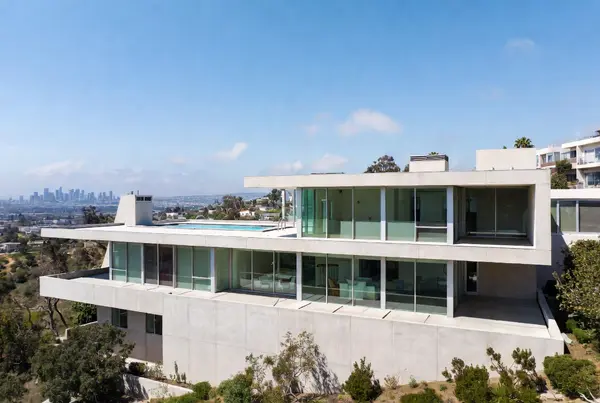
Beverly Hills is not one inspection job. The Flats hold 1920s Spanish and Mediterranean Revival estates with century-old systems behind restored finishes. Trousdale Estates is 1950s mid-century modern on the foothills, where flat roofs and floor-to-ceiling glass are the signature and the weak point. The hillsides and gated enclaves sit on slopes inside a designated landslide zone. And a strand of the Santa Monica Fault runs straight under the shopping district. We built the inspection around that reality.
The Santa Monica Fault runs under the Golden Triangle
A strand of the Santa Monica Fault Zone cuts through the heart of Beverly Hills, between Santa Monica and Wilshire boulevards, directly beneath the Rodeo Drive shopping district. The California Geological Survey has designated Alquist-Priolo Earthquake Fault Zones across parts of the city, and strands of the Hollywood and Newport-Inglewood fault systems run nearby. On top of the fault risk, an earthquake-induced landslide zone covers roughly 20% of the Beverly Hills quadrangle, concentrated in the Santa Monica Mountains hillsides above Sunset. For older estates and hillside homes, this changes the inspection. We check chimney and foundation condition, signs of prior seismic movement, water heater strapping, and on slope properties the retaining walls, drainage, and any indicators of soil instability. We do not issue geotechnical certifications, but we flag every condition a structural or geotechnical engineer should evaluate before you close.
The inspection changes by where you buy
A 1920s Flats estate, a Trousdale mid-century, and a hillside contemporary need three different inspections. Here is what we focus on in each.
1920s-30s Spanish & Mediterranean Revival estates
Build era: Built largely in the 1920s and 1930s on the flat lots south of Sunset. Spanish Colonial and Mediterranean Revival by architects like Wallace Neff and Elmer Grey.
- Original galvanized steel supply lines and cast-iron drains well past service life behind landmark finishes
- Knob-and-tube wiring remnants and undersized service in homes that were never fully rewired, which can complicate insurance
- Clay tile roofs where the tile looks intact but the underlayment beneath has aged out
- Plaster-and-lath walls that make rewiring and repiping delicate and expensive, and that hide moisture until it is advanced
- Aging sewer laterals on these pre-1940 lots. We recommend a camera scope
- Decades of high-end remodels of varying quality. Fresh finishes routinely sit on top of original systems
1950s-60s mid-century modern in the foothills
Build era: Developed from 1955 by Paul Trousdale on former Doheny ranch land. Single-story mid-century and contemporary homes on hillside lots, many rebuilt or expanded since.
- Flat and low-slope roofs, the signature mid-century detail and the most common leak source. We document membrane condition, ponding, and flashing at every penetration
- Floor-to-ceiling single-pane glazing with failed seals, fogging, and poor thermal performance
- Post-and-beam construction where exposed beams and connections need a careful structural read
- Hillside foundations, caissons, and grade beams. Slope drainage and retaining walls are priority items
- Original or aging pools, spas, and equipment that come with most Trousdale lots
- Dramatic glass-and-view design that takes wind-driven moisture on the canyon-facing side
Contemporary hillside homes and gated estates
Build era: Beverly Hills Post Office area, Coldwater and Benedict Canyon edges, and gated enclaves like Beverly Park. Mixed eras, contemporary builds, large parcels.
- Slope stability is the headline. We document retaining walls, drainage paths, visible movement, and deck and caisson supports on the Santa Monica Mountains hillsides
- The earthquake-induced landslide zone covers much of this terrain. Geotechnical history matters as much as the house
- Wildfire exposure on the canyon edges. We check vent screening, eave construction, roof class, and defensible space
- Long private driveways and remote access that complicate fire-department reach and insurance
- Estate-scale systems: multiple HVAC zones, pools, guest houses, screening rooms, elevators, and generators all add inspection time
- Newer custom and spec builds where build quality needs independent verification, not the developer's word
What Beverly Hills buyers miss
An eight-figure home still hides defects
Price does not equal condition, and the gap is widest at the top of the market. We routinely find aging systems, deferred maintenance, moisture intrusion, flat-roof leaks, and remodel shortcuts on Beverly Hills estates that show flawlessly. The bigger the home, the longer the inspection and the more systems there are to fail. We give every property the same scrutiny, whether it lists at two million or twenty.
Beverly Hills is not a salt-air market, but it has its own envelope risks
The city sits inland, about nine miles from the coast, so the aggressive salt-air corrosion of a beach town is not the main story here. The envelope risks are different: flat-roof and skylight leaks on mid-century homes, plaster cracking and moisture on 1920s estates, and wind-driven intrusion on canyon-facing hillside glass. We scan for all of it with the thermal camera, which surfaces moisture behind a wall before it shows.
Fault and slope are the questions a glossy listing never raises
A strand of the Santa Monica Fault runs under the shopping district, and the hillsides above Sunset sit in a designated earthquake-induced landslide zone. Our inspection documents chimney and foundation condition, retaining walls, drainage, and visible movement, then tells you when a structural or geotechnical engineer should weigh in. On a hillside estate, that documentation is the difference between an informed purchase and an expensive surprise.
Historic estates hide century-old systems behind designer finishes
The Flats estates from the 1920s and 1930s often carry original galvanized plumbing, knob-and-tube wiring remnants, and aging sewer laterals behind beautifully restored interiors. A remodel that updated the kitchen rarely touched the wiring feeding it. We trace every system to its source and recommend a sewer scope on these older lots. For the older-electrical hazard in detail, see our Coronado knob-and-tube guide, and our Culver City electrical panel guide for agents on the Federal Pacific and Zinsco panels found across the era.
Every inspection includes premium tech — no add-ons
3D Matterport
Walk every room from anywhere. Beverly Hills draws international and out-of-area buyers, and the tour respects the privacy these transactions often require.
Drone roof
The only way to fully document flat and low-slope mid-century roofs, clay tile estates, and hillside homes where ladder access is unsafe.
FLIR infrared
Catches flat-roof and skylight leaks, moisture behind 1920s plaster, and insulation gaps that a visual check cannot see.
LIDAR floor plan
Accurate to-scale plan, valuable on large estates with additions, guest houses, and irregular hillside layouts.
Same-day report
Full report by email the same day. No 24-hour wait on a tight, high-value escrow.
Pay at Closing available
Defer the inspection fee until escrow closes. The $300 discount still applies. Practical on a high-value Beverly Hills purchase where cash is committed through escrow.
Learn more →Beverly Hills questions
Do you inspect historic estates in The Flats?
What do you focus on in Trousdale Estates?
Is Beverly Hills in an earthquake fault zone?
Do you inspect hillside and gated estates in BHPO and Beverly Park?
How long does a Beverly Hills inspection take?
Can I pay at closing?
We also serve nearby Los Angeles, Santa Monica, Malibu, Pasadena, and Long Beach. Same premium package, same same-day report, same $300 discount.
Inspection guides
Pool and Spa Safety Agent Guide
Barrier, drain-entrapment, and equipment problems on the estate pools that are nearly universal here, and the escrow playbook.
Knob-and-Tube Wiring Agent Guide
The older-electrical hazard common in 1920s-30s estates, and what it does to insurance.
Why Infrared Scanning Matters in California Homes
How thermal imaging catches flat-roof leaks and moisture behind 1920s plaster.
Wildfire Defensible Space Agent Guide
Fire-zone rules and insurance for the canyon-edge hillside homes above Sunset.
West Hollywood SB 326 Balcony Guide
SB 326, condo associations, and the elevated-element inspection that shapes nearby WeHo deals.
Palm Springs Evaporative Cooler Guide
A different pool-and-desert market's own mechanical story, roof-mounted swamp coolers instead of central AC.
Other service areas
San Jose, CA
Bay Area. Postwar tract housing at scale, annexation-era permit gaps, downtown and creek-corridor liquefaction, Willow Glen Eichlers, no city pre-sale requirement.
Santa Clara, CA
Bay Area. 1950s stock reaching end of life together, Silicon Valley Power service rules, citywide liquefaction zone, expansive clay, condos and townhomes.
Fremont, CA
Bay Area. Five historic townships with five build eras, the Hayward Fault through the middle of town at its junction with the Calaveras, no lateral ordinance.
San Mateo, CA
Bay Area peninsula. Mandatory point-of-sale sewer lateral inspection, bay mud settlement, no fault zone, 2024 flood-map revision, six housing eras.
San Francisco, CA
Bay Area headquarters. Wood-frame Victorian and Edwardian stock, ~45% pre-1940, fog-belt moisture, soft-story garage openings, re-clad walls, and the 3R records gap.
Oakland, CA
Bay Area. Pre-war flatland bungalows and Victorians, hillside downslope construction, Hayward Fault creep, 1991 fire rebuild areas, sewer lateral certificate at sale.
See all areas →Ready to inspect your Beverly Hills home?
Same-day reports. Full premium tech. $300 off. Pay at closing available.
Questions? Call 1-888-88-INSP-9 or message us online.