An industry update from Inspection.re, premium home inspections across California.
A buyer is in escrow on a house a mile or two from a landfill, active or long closed. The home inspection covers the house. It says nothing about what the ground on the other side of the fence is doing, and neither does the statutory hazard form the buyer signs in the same week.
That is a framed typical situation, a composite of a question that comes up in several California markets. It is not one identifiable property or client.
On September 20, 2026, Governor Gavin Newsom signed Assembly Bill 28. California now has a legal definition for a landfill that is running hot underground, a number that triggers it, and a penalty attached to ignoring it.
AB 28 turns underground landfill heating into a defined state event
The statute creates a statewide rule for something called a subsurface elevated temperature event at a solid waste landfill.
Assemblymember Pilar Schiavo of Santa Clarita authored the bill. Its formal title is “Solid waste landfills: subsurface temperatures.” It amends the California Integrated Waste Management Act of 1989, administered by the Department of Resources Recycling and Recovery, which everyone calls CalRecycle.
It was a two-year bill. Introduced December 2, 2024, enrolled August 27, 2026, approved by the Governor and filed with the Secretary of State on September 20, 2026.
One detail in that history is worth a sentence. An earlier version carrying the same bill number was titled “Relocation assistance: Chiquita Canyon.” It began as relocation help for one community and ended as a statewide monitoring statute. If you search the bill number and find a description that does not match, that is why.
The 131 degree threshold gives CalRecycle a line to apply
A subsurface elevated temperature event means, in the bill’s words, “an event where subsurface gas or waste temperatures at a solid waste landfill persistently exceed 131 degrees Fahrenheit over a substantial area,” along with other performance criteria determined by the department.
The number is the point. Before this, an operator and a regulator could argue at length about whether anything was happening underground, because the statute contained no threshold to argue against. Now there is one.
The two qualifiers do real work. The temperatures have to persistently exceed the level, not touch it once, and they have to do it over a substantial area rather than at a single probe. CalRecycle defines the additional performance criteria.
When such an event occurs, the owner or operator must notify CalRecycle. Notification also runs to the State Water Resources Control Board, the State Air Resources Board and local health departments.
The law attaches plans, penalties and public money to the event
CalRecycle may require the owner or operator to prepare a corrective action plan that includes “a cost assessment for fully implementing the corrective action plan.” That last clause is not decorative. A plan without a price attached is a plan nobody has to fund.
Failure to comply can bring an administrative civil penalty of up to one hundred thousand dollars per day, imposed by CalRecycle or by a local enforcement agency.
The penalties go into a new Landfill Subsurface Fire Mitigation Community Fund in the State Treasury, continuously appropriated to the California Alternative Energy and Advanced Transportation Financing Authority, and paid out to counties where an event occurred to mitigate harm to affected people and communities.
Around that sit several other duties. The Secretary for Environmental Protection may select and coordinate a multiagency coordination group to investigate an event and recommend how to resolve it. A local health department must initiate community health needs assessments to identify and collect information about the effects of an event on an affected community, and must share what it finds. On request from the coordination group, the operator must implement an air monitoring and sampling plan, and must reimburse the group members and the local health department for all reasonable and necessary expenses incurred. CalRecycle may take over as the enforcement agency for a landfill experiencing an event, and may adopt emergency regulations to do it.
Chiquita Canyon is the event named in the statute
The bill’s own findings state that “The Chiquita Canyon Landfill, a 639-acre facility in Castaic, is currently experiencing a subsurface elevated temperature event.”
The findings record that the event has been known since 2022 and has grown to roughly 100 acres. They describe the release of noxious and poisonous gases, the generation of toxic leachate, and runoff affecting surrounding neighborhoods and the local environment within a five-mile radius or more.
Those are the Legislature’s stated findings, and they are reproduced here as findings rather than as an assessment of any operator. What they explain is why the statute exists and why the question in front of a buyer has changed shape. It is no longer whether a landfill feels uncomfortably close. It is whether the site has reported an event that now has a legal definition.
Landfill gas moves through the spaces an inspector already opens
Landfill gas is roughly 50 percent methane, the primary component of natural gas, roughly 50 percent carbon dioxide, and a small amount of non-methane organic compounds, according to the Environmental Protection Agency’s Landfill Methane Outreach Program.
The methane half is the one that carries an explosion hazard. The federal Agency for Toxic Substances and Disease Registry, in its Landfill Gas Primer, puts methane’s lower explosive limit at 5 percent by volume and its upper explosive limit at 15 percent. Below 5 percent the mixture is too lean to ignite. Above 15 percent it is too rich. The window between those two numbers is the problem, and an enclosed space is how a mixture gets into it.
The same primer describes how gas reaches a building. Houses with basements generally provide the easiest access for gases migrating through soil, and the entry points it lists are foundation cracks and gaps, pressure differences between the inside and outside of a home, mechanical ventilation systems, utility entry points, construction joints and floor drain systems. It states that accumulation of methane in structures both within and beyond a landfill, including basements, crawl spaces and utility ducts, has resulted in explosions and fires causing personal injury and death.
Read that list again as an inspector reads it. Crawl spaces. Utility ducts. Floor drains. Foundation penetrations. Those are not environmental terms, they are ordinary inspection terms, and they are why this subject belongs in a conversation about a house rather than only in a conversation about a landfill.
One more line from the primer explains the geometry. Sand and gravel offer the least resistance to gas movement and create preferred pathways for migration. A utility trench backfilled with clean sand is a pathway, which is the practical reason “utility entry points” keeps appearing on the list.
What a home inspection contributes, and where it stops
A California home inspection is defined in statute as “a noninvasive, physical examination, performed for a fee in connection with a transfer” of real property, reporting on conditions that amount to a material defect, meaning “a condition that significantly affects the value, desirability, habitability, or safety.”
Noninvasive is the operative word. A home inspection does not sample soil gas, does not measure methane concentration in the ground, and does not evaluate a landfill. We say that in the report rather than letting a buyer infer a coverage that was never there. The same boundary shows up on every scope question worth asking, and we have written about where our scope ends and a specialist’s begins in more general terms.
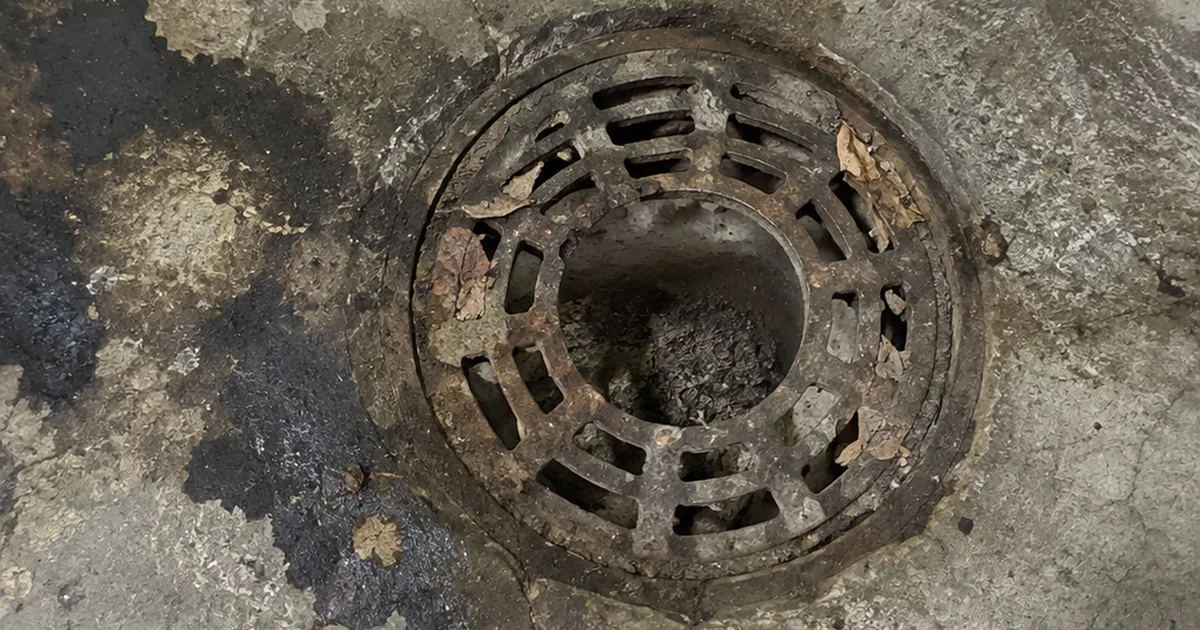
What the inspection does contribute at a property near a landfill is the condition of every path the primer describes. Whether the crawl space is genuinely ventilated or whether the vents have been blocked by stored material, landscaping or a later addition. Where utilities penetrate the foundation, and whether those penetrations were sealed or left open around the conduit. Whether floor drains and sumps are trapped, and whether the traps still hold water rather than having dried out over a vacant summer. Whether a sub-slab depressurization or vapor system already exists on the property and looks like it is still operating. Whether there is gas monitoring equipment anywhere on the lot, which on some parcels near closed landfills there is.
Our reports carry FLIR infrared imaging and same-day turnaround, and infrared is genuinely useful for finding the moisture and air movement that go with an unsealed penetration. It is not gas detection, and we do not describe it that way.
If soil gas is the actual question, the scope belongs to an environmental consultant who performs soil gas surveys. That is a different license, a different instrument and a different report. The methane conversation in Torrance, where the source is idle and abandoned oil wells rather than buried waste, runs on the same boundary for the same reason, and so does the liquefaction and methane picture on the flat coastal ground in Huntington Beach.
The statutory hazard form does not list landfills
California’s Natural Hazard Disclosure Statement covers a list of six items and only six: a special flood hazard area designated by FEMA, an area of potential flooding shown on a dam failure inundation map, a high or very high fire hazard severity zone, a wildland area that may contain substantial forest fire risks and hazards, an earthquake fault zone, and a seismic hazard zone.
A landfill is not on that list. Neither is a former landfill. The form most buyers treat as the hazard form was never built to answer this question, and AB 28 did not add it. The condominium side of California disclosure law runs on a completely different statute and is a useful contrast, because there the physical information a buyer is owed is spelled out item by item and the problem is simply that nobody requests it. Nothing on that page will tell a buyer whether a nearby site is active or closed, whether its subsurface temperatures exceed 131 degrees Fahrenheit, or whether an event has been reported.
What remains is the seller’s duty to disclose material facts known to them that affect the value or desirability of the property, plus whatever the buyer thinks to ask. Whether a particular off-site condition must be disclosed in a particular transaction is a question for a California real estate attorney, not for an inspector and not for this article. The related point about redrawn federal mapping is worth reading alongside it, because a FEMA map change works the same way: the document moves, and the obligation it creates does not follow automatically.
Five questions, asked before the contingency closes
Find out whether an active or closed landfill sits within a couple of miles of the property, and do it early enough that the answer can still change the deal. CalRecycle maintains the permitted facility records, and the local enforcement agency, usually the county environmental health department, holds the operating file.
Ask that agency directly whether the site has reported a subsurface elevated temperature event. Use those words. AB 28 supplied a defined subject for a question that previously had none, and a general inquiry about whether a landfill is safe will get a general answer.
Ask whether the site has a gas control system with perimeter monitoring, and whether any probe has exceeded its limit. Perimeter probes are where off-site migration shows up first.
Ask the seller in writing about odors, prior complaints and any prior testing at the property, and keep both the questions and the answers with the transaction file. This does not turn a seller into an investigator. It creates a record of questions that otherwise go unasked.
If any of that comes back concerning, engage an environmental consultant for a soil gas survey while the contingency is still open. Ordering a longer home inspection instead does not cover it, and the calendar here is unforgiving in exactly the way we described in the guide to how a California inspection contingency actually runs and the one on what waiving it really gives up.
The honest summary
AB 28 gives the state a trigger, a notification duty and a penalty. It gives a buyer something more modest but still useful, which is a question with a defined answer on the other end of it.
It does not put a landfill on a disclosure form. Until something does, the only person who will raise it is the buyer, or the agent who knows the question exists. If you work Porter Ranch, Sylmar, Granada Hills or Torrance, you already have clients who have asked some version of it about a different underground source.
Keep the home inspection focused on the house and keep its limits written down. If you want to see exactly where those limits fall before you book, our what’s included page lists the scope line by line, and the frequently asked questions page covers the specialist referrals we make and why. When a property genuinely needs a soil gas survey, the fastest path is an inspection report that says so plainly on the day of the visit rather than a week later.
Quick answers
Does AB 28 require anyone to tell a home buyer about a landfill? No. It creates notification duties running from the landfill owner or operator to state and local agencies, and it adds enforcement tools. It does not create a buyer-facing disclosure and it does not amend the Natural Hazard Disclosure Statement.
What does 131 degrees Fahrenheit actually measure? Subsurface gas or waste temperatures inside the landfill, not air temperature and not anything at a neighboring property. The statutory definition requires those temperatures to persistently exceed the threshold over a substantial area, with additional performance criteria set by CalRecycle.
Can a home inspector test for landfill gas? No. A California home inspection is noninvasive by definition. We document crawl space ventilation, unsealed foundation and utility penetrations, floor drain and sump traps, and any existing vapor or monitoring system, then refer the soil gas question to an environmental consultant.
Is this only a Los Angeles County issue? The named event in the bill’s findings is in Castaic, but the statute is statewide and applies to solid waste landfills generally. Closed landfills exist in most California counties, and a closed site is not automatically a quiet one.
Who is the local enforcement agency? In most California counties it is the environmental health department, certified by CalRecycle to issue and enforce solid waste facility permits. Ask CalRecycle which agency holds the file for a specific site if you are not sure.