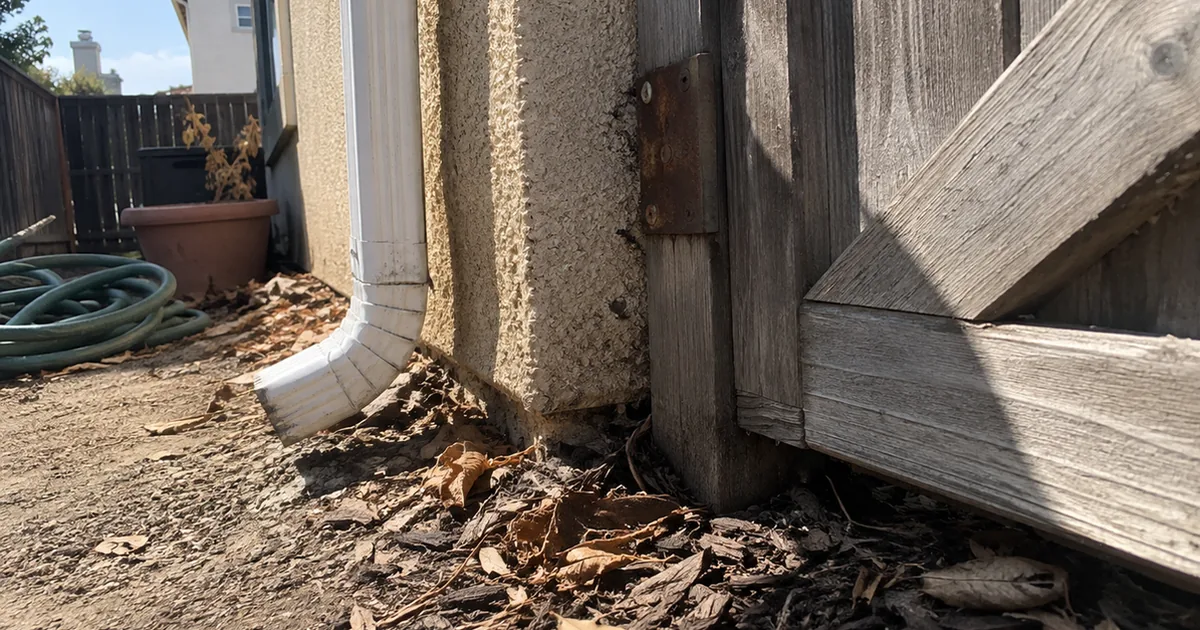
Fresh bark mulch sits against the stucco on all four sides of a single-story house. A cord of firewood is stacked under the kitchen window. A wooden side gate is screwed directly into the frame of the house. A mature juniper touches the fascia. The gutters carry a season of needles.
Nothing on that list is a defect in a home inspection sense. Every item on it is named in the new Zone 0 rule text. This is a composite of a situation we meet often rather than any one identifiable property.
The owner had read a headline saying Zone 0 was now law and assumed the clock had started. The headline was wrong, and the reason it was wrong changes what a seller should do this year.
The Board adopted Zone 0, and adoption is not the effective date
The Board of Forestry and Fire Protection adopted the Zone 0 emergency regulations at its regular meeting on August 19, 2026. That adoption did not make them enforceable.
The Board’s Notice of Proposed Emergency Action, dated August 20, 2026, says the Board “has adopted emergency regulations to establish an ember-resistant zone within five feet of a building or structure as required by changes to Public Resources Code section 4291 and within five feet of an occupied building as required by Government Code section 51182.” It also says the Board planned to submit them to the Office of Administrative Law on or after August 28, with a public comment period closing September 2.
That office is a separate agency, and its review is a real step rather than a formality. As of this writing the Zone 0 filing does not appear on its published list of emergency regulations under review, and no effective date has been published. We will not print one here, because there is not one we can verify. Check the Board, check the Office of Administrative Law, and check whether your local jurisdiction has adopted something of its own on a separate clock. Some have.
The requirement itself is six years old. Governor Newsom signed Assembly Bill 3074 on September 29, 2020, amending Government Code sections 51182, 51186 and 51189 along with Public Resources Code section 4291, and directing the Board to create the zone “on or before January 1, 2023.” That deadline passed. After the January 2025 Los Angeles fires the Governor issued Executive Order N-18-25, and in October 2025 he signed Assembly Bill 1455, confirming the Board’s authority over Local Responsibility Areas and directing emergency adoption if the ordinary process would miss the deadline. AB 3074 put the reasoning plainly: “Ember ignitions are responsible for the majority of wildland fire home ignitions.”
The rule reaches fewer properties than most people assume
Zone 0 does not apply everywhere in California, and its two halves have different reach.
Sections 1298.01 through 1298.04 of Title 14 of the California Code of Regulations apply to the Very High Fire Hazard Severity Zone of Local Responsibility Areas. Sections 1299.01 through 1299.03 apply to the State Responsibility Area. The Board’s informative digest says the regulations “only apply to occupied structures in those parts of the LRA that are designated as Very High Fire Hazard Severity Zones,” and that the rule reaches all buildings within the State Responsibility Area regardless of the fire hazard classification of the land. That area is defined under Public Resources Code section 4125 as the part of California where the state carries primary financial responsibility for wildfire, and it excludes land inside city limits and federal land. Fire Hazard Severity Zones are set by the State Fire Marshal under Government Code section 51178, adopted locally under 51179, and reviewed every five years under 51181.
So inside a city, ask whether the parcel is in a Very High Fire Hazard Severity Zone. Outside city limits in the State Responsibility Area, the classification does not change the answer. A listing that says “high fire area” has not answered the question. In a city like Piedmont, where over a third of the residential area sits in a fire hazard severity zone and over nine percent is in the very high zone, the answer changes street by street.
Zone 0 includes walls, roofs, decks and pergolas
Zone 0 is the area within five feet of an occupied structure, measured to include surfaces most people do not think of as ground.
Section 1298.04 covers “the area within five feet around an occupied structure including the exterior wall, roof, attached deck, stairs, or pergola,” extending five feet from the structure or to the property line, whichever is closer. So the roof and the rain gutters are inside Zone 0, and so is the ground beneath attached decks and stairs. The definition of “Occupied Structure” treats a self-supporting deck, stair or pergola sitting within one foot of a building as attached, so it does not have to be bolted to the house to count. A neighbour adding a structure on their own property does not change Zone 0 compliance on yours.
On a narrow lot the property line is frequently closer than five feet, so Zone 0 stops at the fence. That is the ordinary condition in dense hill communities like Kensington, where the county’s community profile describes small lots, narrow winding roadways and a Very High Fire Hazard Severity Zone designation in the same breath.
The prohibited items are ordinary things close to the house
The prohibitions are specific, and most of them concern small, cheap, ordinary items.
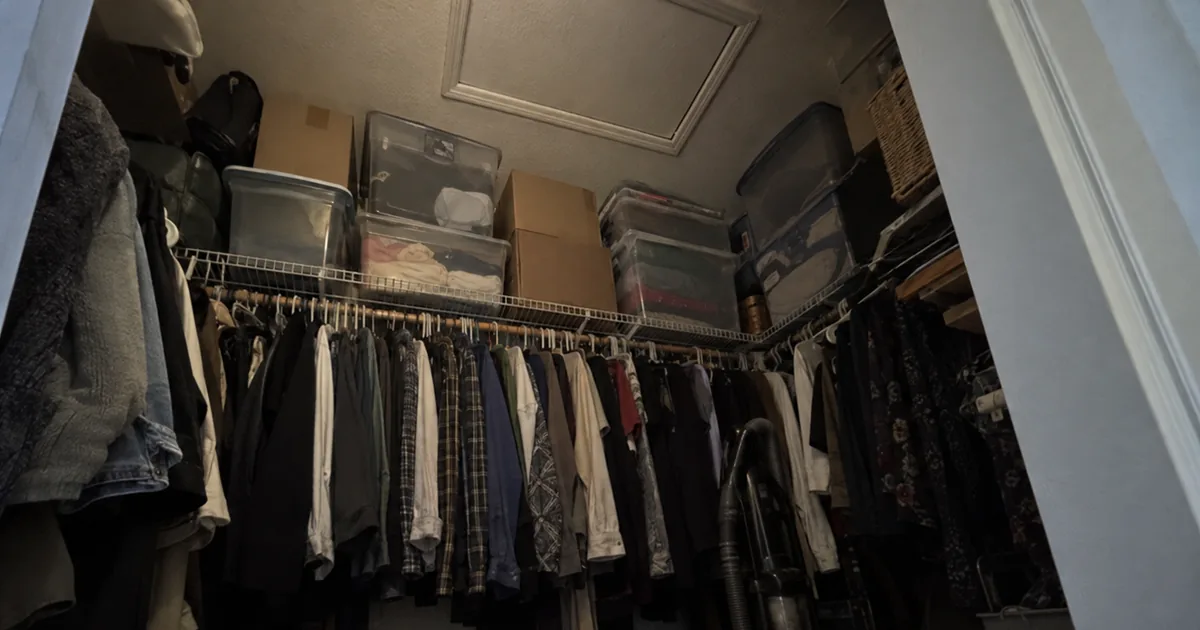
Small flammable vegetative materials cannot remain within five feet of an occupied structure, including fallen leaves, tree needles, combustible mulches and other combustible debris. The same limits apply to the roof and the rain gutters, so a gutter holding a season of needles is not outside the rule because it is above the ground. The areas under decks, balconies, pergolas and stairs must be kept free of vegetation and combustible items, and firewood cannot be stored in Zone 0.
Trees must have no dead or dying branches. Living branches must be at least ten feet from chimneys and stovepipe outlets, and cannot sit under eaves. Ladder fuels must be removed, including fuels in the first six feet or one third of the tree’s total height, whichever is smaller, and fuels within five feet above a roof where they create a high risk of flame transmission. Where there is no eave, living branches must stay at least one foot from the wall.
Bark mulch against a wall is the single most common condition we see, and it is usually the most recent thing done to the property, often laid for listing photographs. It is also frequently the same condition behind our grading and drainage findings, because material piled against stucco is a moisture problem and a fuel problem at once.
The immediate safety zone protects the first openings
Inside Zone 0 there is a narrower band where no vegetation at all is permitted. The rule calls it the immediate safety zone.
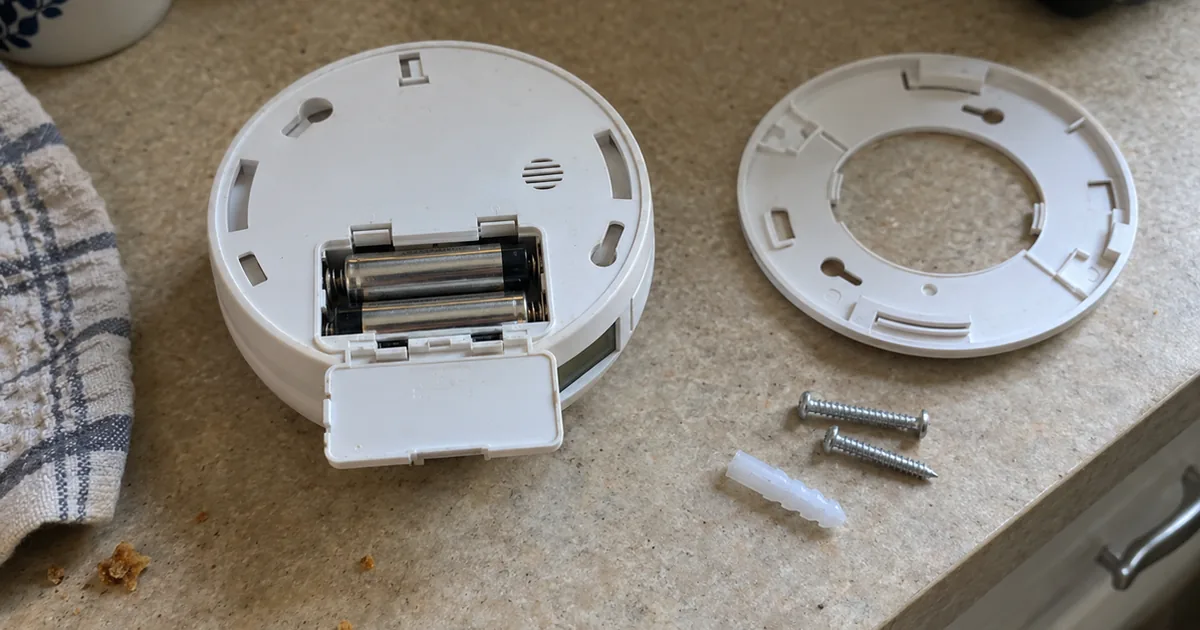
No vegetation is allowed under eaves, less than one foot from an occupied structure, less than five feet from an attached deck, stair or pergola, or within two feet of windows, doors, posts or vents. Those are the openings and the slender members. Vents and window assemblies are where we find ember entry paths on older houses, and a shrub two feet from a gable vent is a delivery system. Screening at the attic and foundation vents is one of the highest-value, lowest-cost items on any house at the wildland edge, and our attic insulation and ventilation guide covers how that path is meant to work.
The Board’s research explains the five-foot number. The Insurance Institute for Business and Home Safety placed burning materials simulating ember-ignited vegetation three feet and five feet from a building and measured the exterior wall. At three feet the wall consistently reached over 200 degrees Celsius, which the Board describes as the minimum temperature for structure ignition. At five feet, none of the readings reached that threshold. A National Institute of Standards and Technology case study of a community affected by the Witch and Guejito fires found that in over 40 percent of structure ignitions, embers ignited vegetation immediately next to the structure, and the structure then ignited from those flames.
The house often does not ignite from the wildfire. It ignites from the garden.
The rule allows small plants and rewrites the fence line
Zone 0 is not a gravel mandate, and the allowances are specific.
Outside the immediate safety zone the rule allows well-maintained non-woody plants under three inches tall, and non-woody plants between three and eighteen inches when they carry no dead or dying material, sit in plantings under one square foot, and are set apart by one and a half times the height of the tallest plant. The same plants are allowed in noncombustible pots under five gallon capacity with that spacing. The Board acknowledges there is no standardized method for judging plant flammability species by species, which is why the rule regulates size, spacing, maintenance and woodiness instead of publishing a plant list.
Fences and gates change more than most homeowners expect. Combustible fences and gates cannot be attached to an occupied structure, and any that are attached must have a five-foot noncombustible space at the point of attachment. After the effective date no new combustible fence or gate may be placed within Zone 0, though a combustible fence may be repaired with noncombustible materials. Outbuildings are not permitted unless built entirely of noncombustible materials, a term defined by the ASTM E136 test method.
A wooden gate latched into the side of a house is one of the most common conditions we photograph. It is a direct flame path into the wall, which is exactly why the rule singles it out.
Existing houses get more time than new houses
New and existing occupied structures are on different timelines, and both run from an effective date that does not exist yet.
New structures must comply with everything upon the effective date, but under Public Resources Code section 4291(g)(1) and Government Code section 51186(b)(2)(A) those requirements do not take effect until the Board updates and posts a defensible space guidance document.
Existing structures must comply immediately with the pieces that are already statutory: firewood storage, and the tree rules requiring no dead or dying branches, ten feet between live branches and chimneys or stovepipe outlets, and no limbs under eaves.
Within three years of the effective date, existing structures must meet the requirements for small flammable vegetative materials, the areas under decks, and the tree rules on ladder fuels, eave clearance and clearing fuels five feet above the roof. Within three years, or within five on a timeline set by the local fire protection agency, they must also meet the immediate safety zone, vegetation, fence and gate, and outbuilding requirements. The Board cites Government Code section 51182(c)(2) as the basis for staging the work, and the staging is about cost, not about the conditions being acceptable in the meantime.
Local fire agencies can also depart from the state rules. Section 1298.03 lets a local agency responsible for fire protection develop alternative practices built on factors including fire risk, lot size, structure density, exterior construction under Government Code section 51183, topography and home-hardening compliance under the California Wildland-Urban Interface Code. The city council or board of supervisors must approve them, and the fire agency must find they provide “substantially similar practical effects” to the Board’s rules. That is why two houses a mile apart can end up under different rules, and why the answer to “what applies to my house” is a phone call rather than a web search. The existing obligations under Public Resources Code section 4291 are worth understanding first, and our Wildomar defensible space guide walks through how those already play out in escrow.
A home inspection cannot certify Zone 0 compliance
A home inspection is not a defensible space compliance inspection, and we will not pretend otherwise.
Inspection.re does not issue defensible space certifications and does not determine compliance with 14 CCR 1298 or 1299. That determination belongs to the local fire agency or to CAL FIRE. We also do not give legal advice, and nothing here is legal advice.
What we document is ordinary inspection work that sits exactly on this ground: the roof covering, debris in valleys and behind chimneys, gutters carrying needles, attic and foundation vent screening, whether the eave is open or boxed, siding, attached decks and what is stored beneath them, fences and gates where they meet the wall, grading and whatever has been spread against the stucco, and branches touching the roof and fascia. Drone roof imagery is part of the standard package and reads gutter and valley debris better than any ladder position, the report comes the same day, and what it includes is set out in advance.
We report condition on the day we are there. Vegetation grows, mulch gets delivered, and firewood arrives in October. A photograph of the first five feet is a snapshot, not a certificate.
For a seller, almost everything on the prohibition list is cheap and reversible. Clear the gutters. Pull the mulch back. Move the woodpile. Cut the branch off the fascia. Clear out under the deck. Waiting for a published deadline is the expensive choice, because the work has to happen eventually. On an older house at the wildland edge the list runs longer, and our guide to fire-hardening a historic home in Sierra Madre covers the roof, vent and eave items just outside the five feet.
Quick FAQ
Is Zone 0 the law right now?
No. The Board adopted the emergency regulations on August 19, 2026, but adoption is not the step that makes them enforceable. The Office of Administrative Law reviews the filing, and no effective date has been published. Check the Board and that office rather than a headline, and check your local jurisdiction separately.
Does Zone 0 apply to my house?
It applies to occupied structures in Very High Fire Hazard Severity Zones within Local Responsibility Areas, and to all buildings within the State Responsibility Area regardless of classification. Inside a city, check the mapped very high zone. Outside city limits, the classification does not change the answer.
Do I have to rip out my whole garden?
No. The rule allows well-maintained non-woody plants under three inches tall, and non-woody plants between three and eighteen inches when they carry no dead or dying material, occupy plantings under one square foot and are spaced by one and a half times the tallest plant’s height. Small plants may also sit in noncombustible pots under five gallons.
Does my home inspection tell me whether I comply?
No. We do not certify defensible space compliance or determine compliance with 14 CCR 1298 or 1299. Contact the local fire agency or CAL FIRE for that. What we give you is a documented record of conditions in the first five feet, and our inspection FAQ explains where our scope ends.
Should I do the work now anyway?
Yes, for the cheap reversible items. Clear gutters, pull mulch away from the wall, move firewood, clear combustible items from under decks, and trim branches touching the fascia. Those changes help now and do not depend on which effective date eventually lands.
The honest summary
The Board has written down what the first five feet has to look like, and that document is specific enough to act on even though it is not yet enforceable. The gap between “adopted” and “in effect” is real, and it is being reported badly.
A seller who handles the cheap items this season is ahead regardless of the date that eventually lands. A buyer looking at a house in a mapped Very High Fire Hazard Severity Zone now has a concrete list for the first five feet, and it is a better list than anything that existed a year ago.
Look at the gutters, under the deck, and at the gate where it meets the wall. Then call the local fire agency for the rule that actually applies, and read it against what the 2026 California laws affecting inspections already ask of a seller.
Related reading
- The House Did Not Burn. That Is Not the Same as Clean, what a fire leaves inside a house that survived.
- California’s 2026 Wildfire Insurance Laws and Home Hardening, what carriers are rating and discounting on the same ground.
- Wildfire Defensible Space in Wildomar, how the existing section 4291 obligations play out in escrow.
- What a Home Inspection Covers, and What Needs a Specialist, the line between our report and a compliance determination.
We inspect across California, including Sierra Madre, La Canada Flintridge, Malibu, Piedmont and Kensington.
- When the Flood Map Under Your House Changes. Mapped hazard zones drive insurance and disclosure on the fire side and the flood side alike, and neither one describes how a particular building has actually behaved.
- The FAIR Plan Says Smoke Damage Must Be Seen or Smelled. Complying with Zone 0 gives a FAIR Plan household priority back into the normal insurance market. It is a separate question from what the FAIR Plan’s own policy requires to pay a smoke claim.
- AB 1964 and AB 1934: a state hardening standard and certificate. Zone 0 covers the first five feet. These two laws set out to define the house itself as hardened, with a standard due in 2028 and a voluntary certification program in 2029.
On a rebuilt fire lot, the record of what was removed before the new house went up is separate. See SB 1263 on disaster debris removal and the local sign-off.