When we finish walking a buyer through our report, one of the next questions is whether the termite inspection was part of it.
It was not, and it cannot be. In California, a wood destroying pest inspection is issued by a registered Structural Pest Control company through a licensed Branch 3 field representative or operator. We are a home inspection company.
A California escrow usually runs three kinds of document on three different clocks: the general home inspection, the Pest Control Report, and the specialist evaluations our report refers out. Most of the trouble comes from ordering them late or assuming someone else ordered them. For the scope of each discipline, see what a home inspection covers and what needs a specialist. This one is about who orders, who pays, and when.
Three documents, three different people, one contingency deadline
The buyer or buyer’s agent usually orders all three documents, but the contract can assign the pest report to the seller and can change who pays.
| Document | Who prepares it | Who usually orders it | Who pays under the printed form | Delivery timing | What it answers |
|---|---|---|---|---|---|
| General home inspection | A home inspector, California sets a standard of care, not a state license | Buyer or buyer’s agent | Buyer, “unless Otherwise Agreed” | Ours: same day, within 6 to 8 hours | Condition of the systems and components |
| Pest Control Report, wood destroying pests and organisms | A registered Structural Pest Control company, Branch 3 licensee | Buyer or seller, negotiated | Buyer, unless the contract assigns it | Within 10 business days from the start of the inspection | Infestation or infection, Section I, conditions likely to lead to it, Section II, and further inspection |
| Specialist evaluation, roofer, electrician, plumber, sewer scope, engineer | The licensed specialist | Buyer, after the home inspection | Buyer | Depends on the specialist’s calendar | Cause, scope and written price of one finding |
The C.A.R. Residential Purchase Agreement, revision 12/22, gives the buyer the right, within the Investigation of Property period, “at Buyer’s expense unless Otherwise Agreed, to conduct inspections, investigations, tests, surveys and other studies.”
The form lists a general home inspection, a lead-based paint inspection, and “an inspection specifically for wood destroying pests and organisms.” The printed default Investigation of Property period is 17 days after Acceptance. The parties can change it.
Those answers do not arrive together unless you order them together.
The current purchase agreement has no preprinted pest line, so write one in
The 12/22 purchase agreement does not have a separate printed pest-report line. If you want the contract to assign that report to the seller, buyer, or both, write it into the offer or a signed addendum.
In the 12/22 RPA cost allocation table, paragraph 3Q has a line for the Natural Hazard Zone Disclosure report. It then has two blank lines, 3Q(2) and 3Q(3), each reading “_______ Report” with boxes for Buyer, Seller or Both.
There is no separate printed line for a pest report.
If nobody fills one in, the default in paragraph 12A applies. Buyer investigations are at the buyer’s expense unless Otherwise Agreed.
The form defines “Otherwise Agreed” as “an agreement in writing, signed by both Parties and Delivered to each.” Local custom and a phone call between agents are not that.
If Both is checked, the form says the cost is split equally unless Otherwise Agreed.
Paragraph 10A also limits what the cost line does. Those lines “only determines who is to pay for the inspection, report, test, certificate or service mentioned; it does not determine who is to pay for any work recommended or identified in any such document.”
The party paying for the pest report does not automatically agree to pay for Section I work, Section II work, repairs, fumigation, replacement, drainage work, or anything else listed in the report.
Agreements to pay for work go elsewhere in 3Q, in 3R, or in a separate agreement such as a Request for Repair, C.A.R. Form RR. The form’s definition of “Repairs” expressly includes pest control: “any repairs (including pest control), alterations, replacements, modifications or retrofitting of the Property.”
The offer is the cheapest place to settle who orders and pays for the pest report. Customs differ across California. An agent who assumes the other side’s custom is how a deal ends up with no pest report or two.
Once the reports come in, the request itself is covered in how to ask the seller for repairs or a credit.
If the seller already has a pest report, check three things before you rely on it
A seller’s pest report can inform you, but read its date, scope and open items first.
If the seller is responsible for a report under paragraph 10, such as when the seller box is checked on a 3Q line, paragraph 14A requires the seller to deliver it within the time in 3N(1). The default is 7 days after Acceptance.
If that seller-responsible report arrives late, paragraph 14B(3) gives the buyer 5 days after delivery, or the 3L contingency time, whichever is later, to remove the contingency or cancel. But if the report arrives after the related contingency was already removed, delivery “does not revive the contingency.”
Check these three things:
-
How old is the report? A report from months ago describes the house as it was then. After four months, a return visit counts as an original inspection, not a reinspection.
-
Who ordered it, and is it complete or limited? A limited report covers only part of the structure under 16 CCR section 1993.
-
Does it have further inspection items still open? A report can identify areas that were not accessible or could not be inspected.
The Structural Pest Control Board runs a public Property Address Search. It checks Board records for any California address “to determine if a WDO inspection was completed within the last two years.” Copies of filed reports can be requested from the Board in writing.
Every company must file the address with the Board within 10 business days of starting an inspection or completing work under Business and Professions Code section 8516(b).
Every report must carry a boldface notice that reports on the same structure by different registered companies “should list the same findings” and that “You have a right to seek a second opinion from another company.”
A buyer may still order a report and compare it with the seller’s report. The seller’s side of the process is discussed in the seller’s side of reports done before listing.
The pest report’s 10-business-day clock is the one that runs out
Book the pest company the same day you book the home inspection.
Section 8516(b) requires the report to be “prepared and delivered to the person requesting the inspection and the property owner, or to the property owner’s designated agent, within 10 business days from the start of the inspection.”
Ten business days is usually two calendar weeks, longer when a holiday falls inside them. Against a 17-day contingency, a pest inspection started on day 5 can legally deliver on day 19.
Specialist visits come after our report and need their own calendar slots, so the pest company should never be the last call.
Use this as a working sequence:
-
Day 0 to 2: Book the home inspection and the pest inspection. Confirm who pays in writing.
-
Day 1 to 4: Have the home inspection and pest inspection happen, on the same day or close to it.
-
Day 2 to 8: Read our report and book every specialist it refers out.
-
Day 8 to 12: Pest report and specialist write-ups arrive. List the open further inspection items.
-
Day 12 to 15: Have written quotes in hand and draft the request.
-
Before the deadline: Remove the contingency or cancel.
This is an illustrative plan, not a set of legal deadlines.
A repair request does not stop the contingency clock. Under paragraph 14B(2), the seller “has no obligation to agree to or respond.”
Paragraph 12D requires the buyer to give the seller complete copies of all investigation reports, at no cost, by the investigation deadline or 3 days after receiving each report, whichever is later. That duty survives cancellation.
Do not hold a report because a specialist has not finished. Send the report on time and track the specialist’s answer separately. The date-ordered California home inspection checklist follows the same timing problem from the buyer’s side.
Where the two reports overlap, and which one owns the finding
The pest report owns wood destroying organisms and gives a price for each recommendation. Our report owns the building’s systems and usually points to the water or grade that caused the damage. The specialist owns the fix.
| Finding | What the pest report does | What our report does | Who prices the fix |
|---|---|---|---|
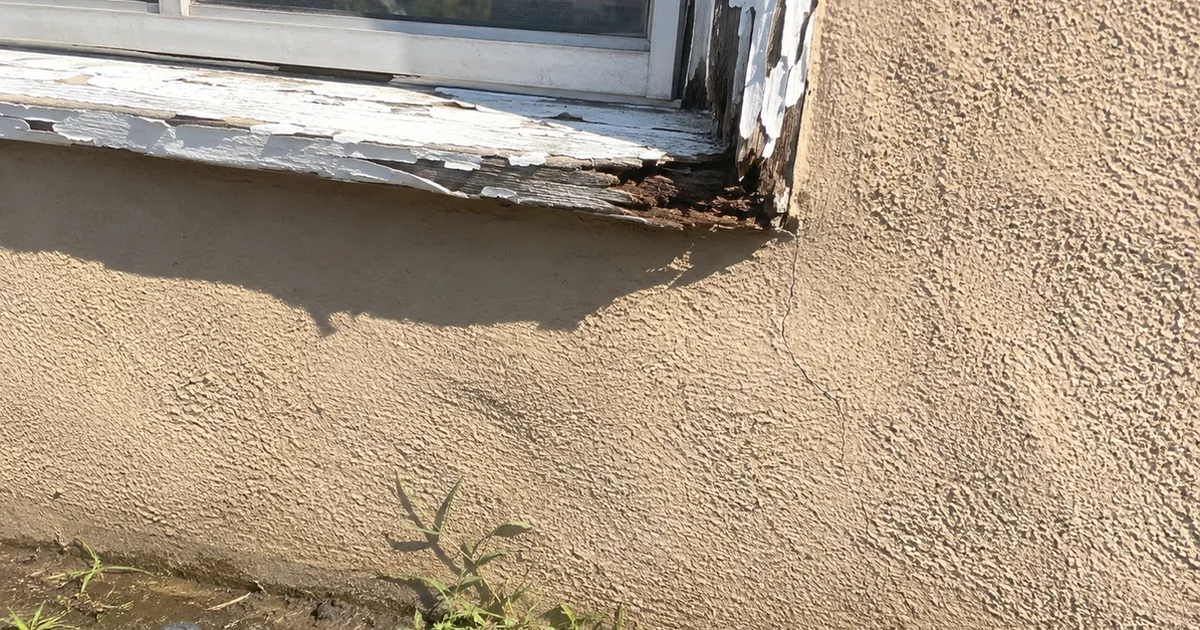
| Rotted window sill or trim | Fungus damage is reported, usually in Section I if active. Damaged members are listed. | Notes the condition and the water source, such as sprinkler overspray or failed paint and caulk. | Pest company, whose report must “specify a price for each recommendation,” or a carpenter |
| Roof | Excludes roof coverings under the purchase agreement. The report must state in bold whether “The exterior surface of the roof was not inspected” and point readers to a licensed roofing contractor. | Inspects the roof covering. Our inspections include drone roof imaging. | Licensed roofer |
| Stall shower | May include a water test of the shower pan, but not on upper level units unless the owners below consent. | Checks visible leaks, staining and fixtures. | Plumber or pest company |
| Deck or stairs touching the house | Must report wooden decks, stairs or landings in contact with the structure, and list hidden parts as inaccessible. | Checks guards, handrails, attachment and condition. | Pest company, carpenter or engineer |
| Low crawl space or earth against wood | Reports conducive conditions such as earth-wood contact, faulty grade, excessive moisture, and subareas with less than 12 inches of clearance under the floor joists. | Notes grading, drainage and access. | Pest company, drainage contractor |
| Stucco cracks, wiring, water heater, panel | Not its scope. | Ours. | Licensed contractor in that trade |
The purchase agreement requires a pest inspection to cover the main building and attached structures. It says detached structures may be covered. In a condominium, it covers only the separate interest and exclusive-use areas, not common areas. See condo inspections, unit versus association.
Section II conditions cannot be called “defects” or “active” infestations under section 8516(e). They cannot be required before a certification. If the owner chooses not to correct them, the company is not liable for resulting damage under section 8516(d), though it stays liable for negligence or fraud.
Wood can decay without termites. The mechanism is explained in why wood decays without any termites. The insects are covered in drywood and subterranean termites in older homes. Our roof scope is shown in what a drone roof inspection sees.
Further inspection items are neither Section I nor Section II
A further inspection item is an unresolved access question, not a finding.
Under 16 CCR section 1990(f), every separated report opens with a definition: “Section I contains items where there is visible evidence of active infestation, infection or conditions that have resulted in or from infestation or infection.” “Section II items are conditions deemed likely to lead to infestation or infection but where no visible evidence of such was found.”
Further inspection items are recommendations to inspect areas the inspector could not access, and “cannot be defined as Section I or Section II.”
The areas commonly not inspected under 16 CCR section 1990(d) include furnished interiors, inaccessible attics or portions of them, the interior of hollow walls, spaces between a floor or porch deck and the ceiling or soffit below, stall showers over finished ceilings, built-in cabinet work, floors beneath coverings, and areas where storage or locks make inspection impracticable.
If those areas are opened later, the company makes a supplemental report under section 8516(b)(9) and 16 CCR section 1993(d).
The buyer cannot open walls on their own. The purchase agreement bars invasive or destructive investigations without the seller’s written consent, except minimally invasive testing to prepare a Pest Control Report. Even that cannot include holes or drilling through stucco or similar material.
A further inspection item therefore needs a seller conversation before the deadline, not after. Our own report has the same kind of line for areas we could not reach. See what “not inspected” means in a home inspection report. For the full anatomy of a termite report, see Section 1, Section 2 and the further inspection box explained.
Specialist referrals belong to the buyer, and the clock does not wait for them
When our report recommends further evaluation by a licensed contractor, that evaluation is the buyer’s to order inside the same Investigation of Property period. The useful product is a written finding with a price.
The correct license for the referral is covered in which contractor license matches each referral. A sewer scope answers a separate question, explained in when a sewer scope earns its fee.
Our report arrives the same day, within 6 to 8 hours, which leaves more of the period for specialists. Our Matterport 3D tour shows findings tagged in place, so a roofer, plumber or pest company that was not at the inspection can see exactly where the item is before they visit.
FLIR infrared scanning and drone roof imaging are part of every inspection. Our inspectors are InterNACHI certified.
Pest company follow-up has its own rules. If a pest company gave an estimate or bid, its report must disclose that a reinspection will be done on request. A reinspection covers only items previously listed, must be completed within 10 business days after it is ordered, and costs no more than the company’s original inspection price.
After contracted work, the company gives the owner a notice of work completed and not completed within 10 business days. The notice includes the cost of completed work and the estimated cost of work not completed under section 8518.
On request, the company issues a certification. The wording is narrow: the property “is now free of evidence of active infestation or infection in the visible and accessible areas” under section 8519.
“Visible and accessible areas” is the limit. It matches the further inspection items above. Proof of completed work before closing is covered in proof that agreed work was done before close of escrow.
What the buyer’s agent should do on day one
-
At the offer, write who orders and who pays for the Pest Control Report on a 3Q line or in an addendum signed by both parties. Say whether Section I and Section II work is a separate negotiation.
-
Book the home inspection and the pest inspection together, on the same day if possible.
-
Ask the listing agent whether a pest report already exists. Run the Board’s two-year address search and request copies if one was filed.
-
Ask the pest company for a separated report. Under section 8516(c), the company must tell whoever orders the report that a separate report is available, with evident infestation or infection split from conditions likely to lead to it.
-
When both reports are in, list every further inspection item and every “not inspected” line. Decide which ones need seller consent to open.
-
Get written specialist quotes before drafting the request, and send the seller copies of the reports on time.
If a quote comes back high, the next step is deciding whether to walk away, re-price or proceed.
Quick answers
Does a home inspection include a termite inspection in California?
No. It is a separate report by a registered Structural Pest Control company.
Who pays for the termite inspection?
Whoever the contract says. Under the 12/22 form, the buyer pays unless a 3Q line or a signed agreement says otherwise. Paying for the report does not mean paying for the work.
Can the seller’s old pest report replace mine?
It can inform you. Check its date, whether it was complete or limited, and its further inspection items. You can order your own.
What is a termite clearance?
Usually the section 8519 certification that the property is free of evidence of active infestation or infection in the visible and accessible areas. It does not cover areas nobody could see.
Do I need every specialist the report mentions?
No. Each referral answers one question. Order the ones tied to safety, water, structure or a lender or insurer, and order them early.
The honest summary
Three documents, three clocks, one deadline. Settle the pest report’s payer in the offer, book it with the home inspection, and treat further inspection items as open questions, not paperwork.
Call 1-888-88-INSP-9 or schedule an inspection. See what is included, the questions buyers ask us most, and a sample same-day report.
We inspect across California, including Los Angeles, San Diego, Temecula, Monrovia and San Francisco.
When our report lands first, start sorting it with which findings are worth asking the seller about while the pest company finishes its write-up.
For what to do with all three documents on the first day, see the buyer’s agent routing script for report day.
A seller holding the buyer’s copies of these documents can read how to sort the list and answer it.