The Inch That Protects an Eastvale House: A Stucco and Weep-Screed Guide for Agents
The home was in one of the newer Eastvale tracts, maybe fifteen years old, and it looked exactly like every buyer wants a house to look. Fresh two-tone stucco, mature landscaping the sellers had clearly put money into, raised planter beds full of color running along the front of the house. It showed like new construction, and to a buyer walking up the path it might as well have been.
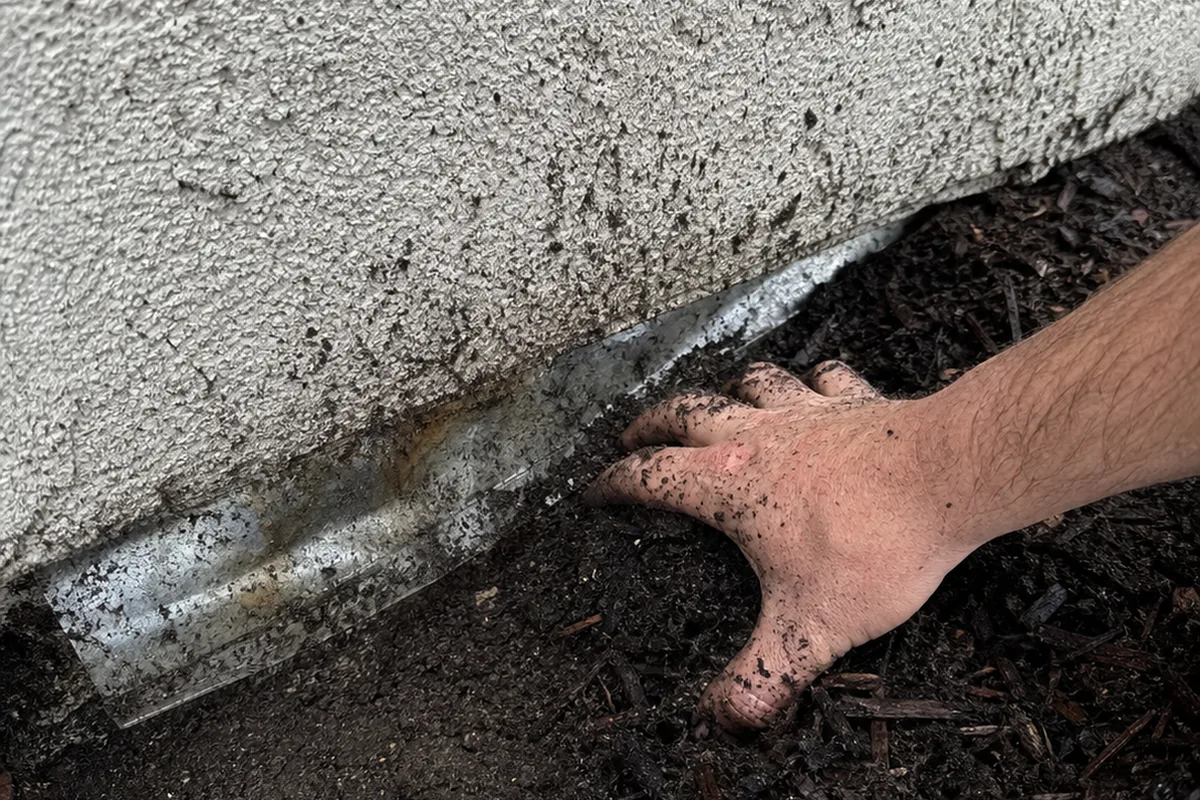
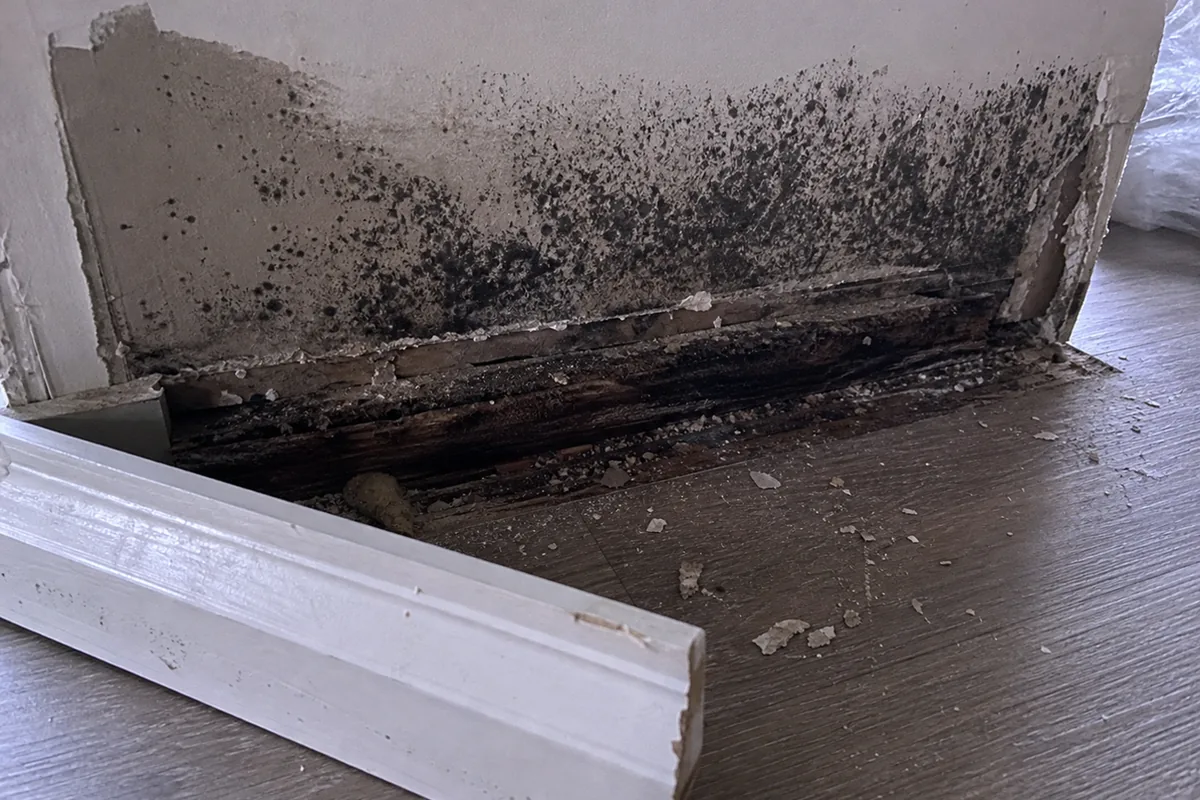
The problem was in the planter beds. Somebody had built them up over the years, adding soil and bark until the beds sat several inches deep against the base of the wall, and the stucco simply disappeared into the dirt. There was no gap, no line of metal, nothing between the wall and the soil. When we probed the bottom of the wall in two places, the moisture meter climbed, and behind a section of baseboard inside, the bottom plate had the soft, dark look of wood that had been damp for a long time. The house was fifteen years old and the framing at the base of one wall was already going.
None of that showed from the curb. It never does. It is one of the most common serious findings we write up on Eastvale’s newer homes, and the same first-generation stucco stock runs through neighboring Corona and Chino Hills too. It is the one agents are most likely to walk right past, because there is nothing to see except a nice-looking flower bed.
Why this matters for the agent
Here is what is at stake. Eastvale is a young city built almost entirely of stucco production homes on graded pads, most of it going up between the mid-2000s and the mid-2010s. That first generation of stucco is now fifteen to twenty years old, which is exactly the age when the details that keep water out of the wall start to matter. Buyers assume a newer home does not have moisture problems. That assumption is what makes this expensive.
Water in a wall is slow and quiet and costly. It does not announce itself the way a roof leak does. It sits at the base of the framing, it rots the bottom plate and the lower studs, it feeds fungal decay behind finishes that look perfect, and by the time anyone sees a stain inside, the repair has grown from a landscaping correction into opening up a wall. The fix, caught early, is cheap: pull the soil back, cut the hardscape away from the wall, restore the clearance. Caught late, it is framing repair and mold remediation. An agent who understands the base of a stucco wall is protecting the buyer from inheriting a problem that gets worse every irrigation cycle, and protecting the deal from a renegotiation that did not need to happen.
What a stucco wall actually is, and what the weep screed does
The thing to understand is that stucco is not a raincoat. It is a reservoir. Stucco absorbs water when it rains and when the sprinklers hit it, and it always has some moisture in it. The system was never designed to keep every drop out of the wall. It was designed to manage the water that gets in and give it a way back out.
Behind the stucco is a weather-resistant barrier, usually two layers of building paper or a house wrap, and that barrier is the actual water control layer. Water that gets through the stucco runs down the back of it, hits the barrier, and drains down. At the very bottom of the wall, where the framing meets the foundation, there is a piece of bent metal flashing called a weep screed. Its whole job is to let that water escape at the bottom of the wall instead of pooling against the wood. The stucco stops at the weep screed, and the water weeps out through it, which is where the name comes from.
For that to work, the weep screed has to be above the dirt. The building code is specific about this, and the number is easy to carry in your head. The weep screed has to sit at least four inches above the earth, or at least two inches above a paved surface like a walkway or a patio. That clearance is the gap the water drains into. Bury the weep screed, and there is nowhere for the water to go. It backs up behind the stucco, soaks the barrier and the bottom plate, and the drainage system that the whole wall depends on is now pointed into the framing instead of out of it. One inch of buried screed can undo the design of the entire wall.
What actually goes wrong in Eastvale
The failures repeat, and once you have seen them you cannot stop seeing them.
Buried weep screed is the headline. Raised planter beds, added soil, decorative rock, and bark mulch get piled against the base of the house over the years, almost always with good intentions, and they swallow the clearance. This is the single most common version of the defect in this market, because Eastvale homes came with landscaping and HOAs and owners who kept adding to the beds.
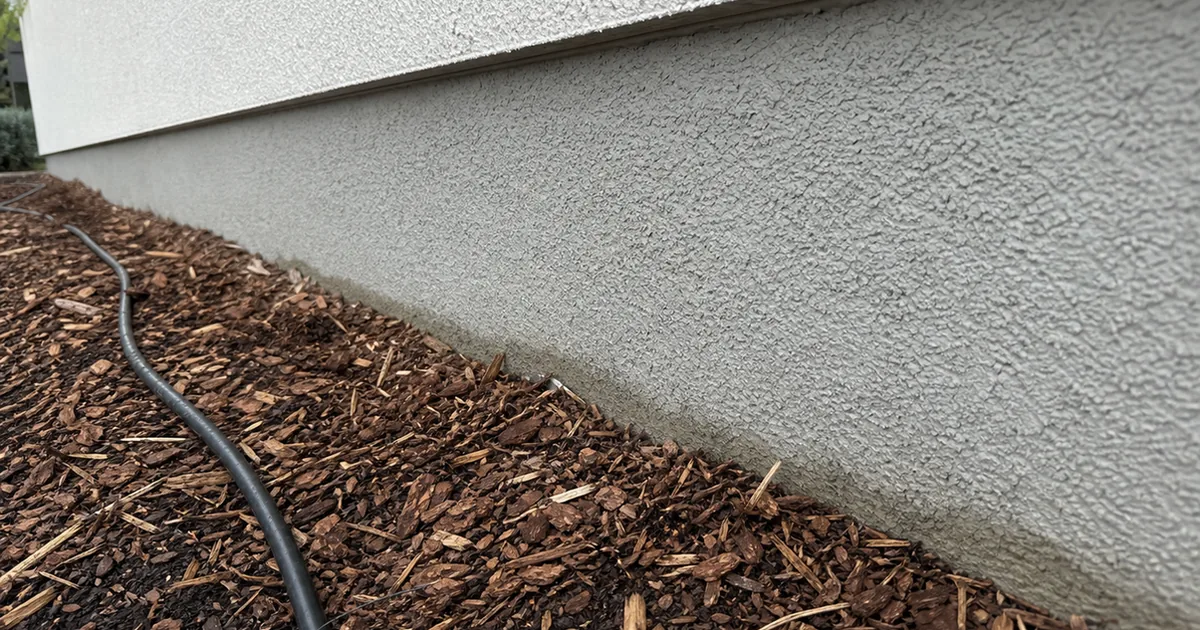
Hardscape poured to the wall is the second. Patios, walkways, and slab extensions added after the house was built are frequently poured right up to the stucco, or higher than the original grade, wiping out the two-inch clearance a paved surface is supposed to leave. Concrete does not move once it is set, so this one is permanent until somebody saws a gap.
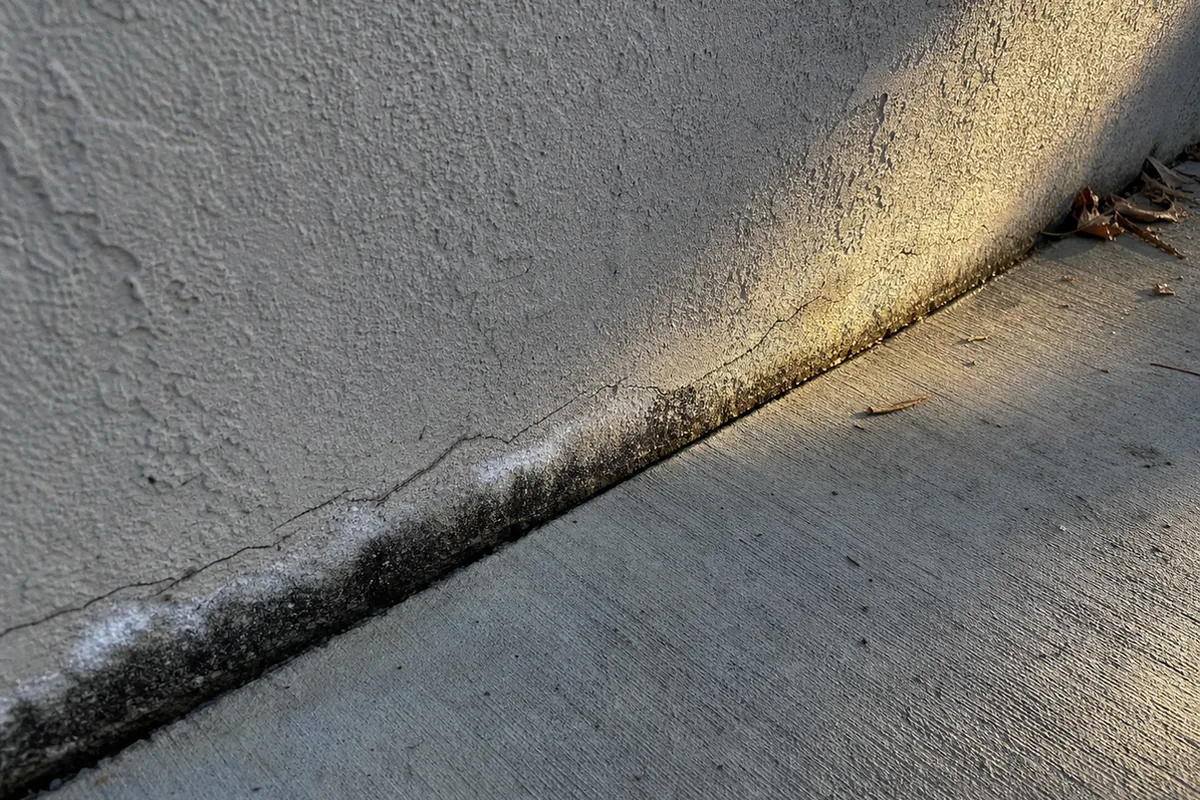
Stucco carried down to grade is the third, and it is a builder or remodel error rather than a landscaping one. Sometimes the stucco was troweled all the way down over the weep screed, or down to the soil with no screed at all, so there is no drainage exit by design. You see it on additions and garage conversions constantly, and sometimes on the original build.
Cracks and open joints are the fourth. Stucco cracks at the corners of windows and doors and wherever the control joints were skipped or have failed, and every crack is a place bulk water gets behind the cladding. On a fifteen-year-old house these are ordinary, but they matter more when the water they let in cannot drain out the bottom.
Failed sealant and flashing at the openings is the fifth. Windows, hose bibs, electrical penetrations, dryer vents, and especially the kickout flashing where a roof edge meets a wall all rely on sealant and metal that ages. First-generation production-home sealant is now well past its prime, and a missing kickout flashing can dump an entire roof valley’s worth of water behind the stucco of the wall below it.
Irrigation against the wall is the quiet sixth. Sprinkler heads aimed at the stucco or drip lines run through the beds against the house keep the base of the wall wet year round in a climate that is otherwise bone dry. It is the easiest item on this list to correct and the one nobody thinks about.
Two things this article is not about, so the boundaries are clear. Water coming up from the ground, from a high water table or damp soil under the slab, is a different mechanism entirely, and our Camarillo ground-moisture guide covers that one. And where the yard itself is graded to send surface water at the house, that is a grading-and-drainage problem about the ground, not the wall, covered in our Tarzana grading and drainage guide. Here we are talking specifically about the cladding on the wall and the strip of metal at its base.
Schedule an Eastvale inspection →
What agents should tell every buyer
When a buyer is under contract in Eastvale, give them these points before the inspection.
- Look at the bottom of the wall, not the top. A stucco house can look flawless at eye level and be failing at the base where the wall meets the dirt.
- There should be a visible gap. You want to see a line of metal and a few inches of clear foundation between the stucco and the soil. If the stucco vanishes into a planter bed, that is the finding.
- A newer home is not exempt. Fifteen years is old enough for this, especially where landscaping has been built up over time.
- Beautiful landscaping can be the problem. The nicer the beds look, the more likely soil has been added against the wall.
- Follow the sprinklers. If they are watering the stucco three times a week, the base of that wall never dries.
- Know the cost order. Pulling soil back and sawing a gap in a patio are small jobs. Opening a wall to replace rotted framing is not. The whole point is to spend the small money first.
A buyer who hears this stops admiring the flowers and starts reading the base of the wall, which is where the answer is.
Red flags during showings
You can catch most of this without any tools at all. Watch for these in Eastvale homes.
- Stucco that runs straight down into soil, mulch, or rock with no visible weep screed and no gap at the bottom of the wall.
- A planter bed, lawn, or decorative rock built up so it sits against the base of the house.
- A patio, walkway, or slab poured tight to the wall or higher than it should be.
- Staining, a chalky white efflorescent line, or bubbling paint along the bottom foot or two of the exterior wall.
- Soft or hollow-sounding stucco near the base, or crumbling at the very bottom edge.
- Sprinkler heads pointed at the wall, or drip line running through a bed against the stucco.
- Interior baseboards or drywall that look freshly painted in only one spot, low on the wall.
- Cracks radiating from window and door corners, especially with staining below them.
If we see these, we document them and tell the buyer what they mean.
The negotiation playbook
When stucco and weep-screed findings surface in Eastvale, the deal usually moves one of a few ways.
The first path is seller-corrects-the-easy-ones. Pulling the soil and mulch back off the wall to re-establish the clearance, turning the sprinklers away from the stucco, and resealing failed joints at windows and penetrations are small jobs. A cooperative seller will handle them, and they should, because these are the corrections that stop the water from continuing while everyone works out the rest.
The second path is a credit for the corrective work. Where the fix means sawing a relief gap in a patio poured to the wall, adding a proper kickout flashing at a roof-wall intersection, or regrading a bed away from the house, that is a modest contractor bid. Take the credit and do the work before the wet season. On this kind of finding it is worth insisting on.
The third path is investigate-before-you-close. When the moisture meter is high at the base of a wall and there is staining or soft framing behind the finishes, the honest next step is to open a small area or bring in a specialist to see how far the damage runs. A buyer should know whether they are buying a clearance problem or a framing-repair problem before the contingency period ends, not after.
The fourth path is when the water has already done its work. If the bottom plate is rotted, if there is fungal growth on the framing, if a section of wall has to come open, the conversation has moved past landscaping. Now the buyer needs a contractor’s scope and a real number, and the clearance correction still has to happen too, so the repair does not simply happen again. We will say so plainly when we see it. We have watched buyers fix the rot and skip the soil, and the new framing starts getting wet the very next winter.
How the inspection actually catches it
This is one of the findings an inspection catches well, because the evidence is physical and it is at ground level if you know to look. We walk the entire base of the house and read the bottom of the wall, not the middle of it. We look for the weep screed and the clearance, and we note every place the stucco disappears into soil or hardscape.
We check the openings, the penetrations, and the roof-wall intersections for the flashing and sealant that are supposed to be there. Then we go looking for what the base of the wall is hiding. We take moisture readings at the bottom of walls where the clearance is gone, and thermal imaging picks up the cool signature of damp framing behind stucco and behind interior finishes that a visual walk-through slides right past. Our guide on infrared scanning explains what those scans actually show. Where the readings and the staining line up, we say what they mean and what the next step is.
What we do not do is tear open your walls or certify how the stucco was originally installed. A home inspector reads the visible condition and the moisture behind it and tells you where the water is getting in and what it has done. When the finding needs a wall opened or a stucco specialist, we say so rather than guess, and we would rather flag it honestly than bury it on page forty of the report. The reason a newer home still earns a real inspection is exactly this kind of finding, which is why we cover it in our new-construction inspection guide as well.
Quick FAQ
How much clearance is the weep screed supposed to have? The California Residential Code asks for the weep screed to sit at least four inches above the earth, or at least two inches above a paved surface such as a walkway or patio. That gap is what lets water drain out of the bottom of the wall. Bury it and the drainage backs up into the framing.
The house is only fifteen years old. Can it really have moisture damage? Yes, and Eastvale’s age profile is exactly why. The first generation of these stucco homes is now old enough for aged sealant, settled landscaping built up against the walls, and added hardscape to have quietly buried the weep screed. Newer does not mean immune.
Is a buried weep screed always a big repair? No, and that is the good news when it is caught early. If the clearance is gone but the framing behind it is still sound, the fix is pulling the soil back or cutting a gap in the hardscape. It only becomes a framing repair when the water has been trapped against the wall long enough to rot it, which is why finding it during the inspection matters.
The stucco looks perfect. Why would anyone worry? Because the failure is at the base and inside the wall, not on the face. Stucco absorbs water by design and drains it at the bottom, so a wall can look flawless while the framing at its foot is wet. The condition of the stucco you can see tells you very little about the drainage you cannot.
Is this the same as a drainage or high-water-table problem? No. Those are about water in the ground. This is about water in the wall cladding and whether the metal screed at the base can drain it. A house can have one problem, the other, or both, which is why we read the grade, the ground, and the base of the wall as separate questions.
The honest summary
Eastvale sells the idea of a newer home, and mostly it delivers one. But a stucco wall is a water-management system, and the part that makes it work is a strip of metal at the very bottom that has to stay above the dirt. On a lot of these homes it does not, because fifteen or twenty years of landscaping, added soil, and new hardscape have quietly buried it, and the wall that looks brand new is draining into its own framing.
This is not a dramatic finding and it does not photograph like a cracked beam. It is just the thing that becomes the rotted bottom plate, a few winters from now, on somebody else’s dime. We will read the base of every wall, find the weep screed or the place it should be, take the moisture readings, and show your buyer on a thermal scan what the water has already been doing. Restore the clearance and keep the water off the wall, and the expensive version of this problem mostly never arrives. That is the job.
See what every inspection includes → · Read our FAQ → · Explore Eastvale home inspections →
Related reading
- Aliso Viejo Shower Pan and Tile-Shower Leaks. Interior fixture waterproofing, the indoor cousin of a buried weep screed.
- Who Owns That Wall: A Mission Viejo Tract Slope and Retaining Wall Guide: another newer master-planned tract where a building detail buried by grading becomes the finding, this time a retaining wall instead of a weep screed.
- Where the Water Goes in Tarzana: the surface-grading half of the water story, upstream of the wall itself.
- Why Infrared Scanning Matters in California Homes: how thermal imaging finds hidden moisture behind stucco and interior finishes.
- What a Home Inspection Says (and Doesn’t) About Mold in National City: a buried weep screed is exactly the kind of wall-cladding moisture entry referenced there as a mold-risk condition, without duplicating this article’s technical mechanism.
- What’s Behind the Siding: An Imperial Beach Housewrap and WRB Guide: the lap-siding version of this same underlying problem, a taped and lapped membrane system instead of a screed, worth understanding as a direct comparison.
- How to Read a Home Inspection Report in California: what the findings mean and how to prioritize them.
- Missing kick-out flashing on re-roofed Whittier homes: another stucco-wall water entry point, this time at the roof-to-wall transition rather than at the base.
- Efflorescence and Spalling on Concrete and Masonry in La Mesa: the concrete and masonry material’s own surface deterioration, distinct from this guide’s wall-cladding drainage-plane moisture.
- Wood Siding on San Francisco Homes. Stucco applied over existing wood siding, a different assembly from stucco built as the original cladding.