What a Home Inspection Does (and Does Not) Say About Mold: A National City Guide for Agents
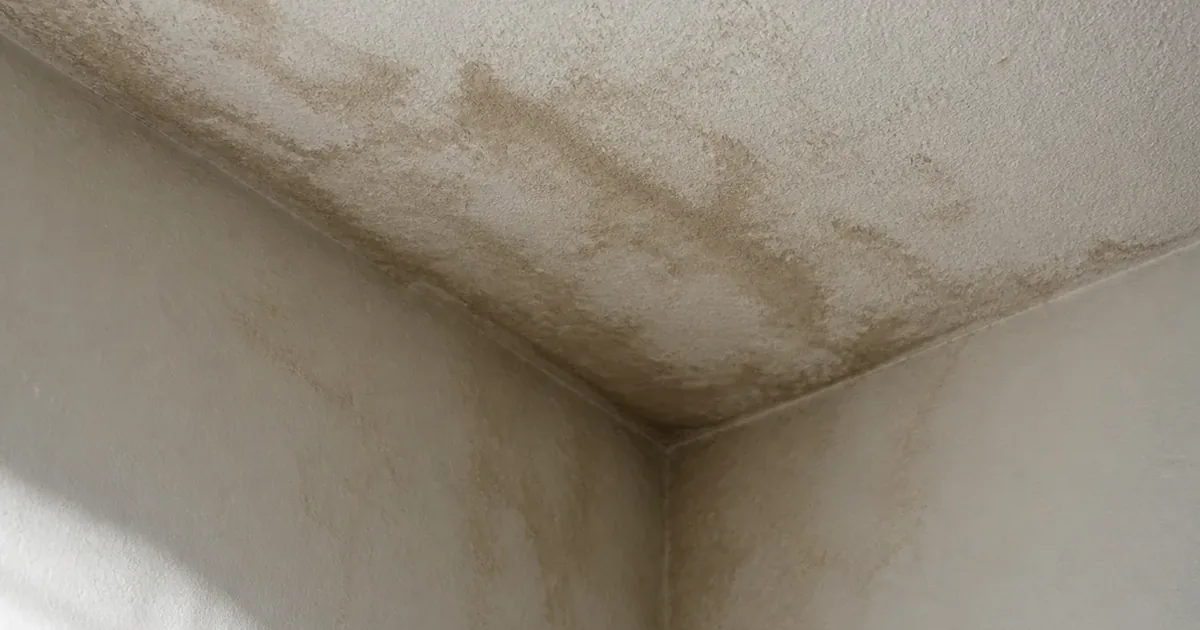
A buyer stood under a stained ceiling corner in the back bedroom of an older National City home and asked the one question every agent has heard before: “Is that mold?” It is a fair question, and it is also the wrong one to answer with a guess. The stain had a clear moisture source, a roof penetration two feet away with a cracked pipe boot, and the surface discoloration was consistent with what happens when a ceiling gets wet repeatedly over time. Whether the specific substance on that ceiling was mold, mildew, or simple water staining was not something a visual inspection could determine on the spot, and saying otherwise would have been a guess dressed up as an answer.
We are describing this as a composite of a pattern we see across National City, not one identified property or job. National City’s mix of older construction, coastal humidity, and homes with limited ventilation in some units means mold questions come up often during a sale, and the honest answer starts with being clear about what a general home inspection actually covers and what it does not.
This guide is for the agent working National City and the surrounding communities we also serve, including Chula Vista, San Diego, and Coronado, where mold questions are common enough during escrow that agents deserve a clear, honest answer about scope before the question comes up on a walkthrough. Here is what a general inspection visually assesses, what it explicitly does not do, why the distinction matters, and when a buyer should proactively order a separate assessment.
Why this matters for the agent
National City’s housing stock spans decades of construction, older bungalows and postwar homes alongside newer infill and multi-unit product, and a real share of that stock has limited ventilation, aging bathroom exhaust systems, or a documented history of a leak somewhere in its life. Add in coastal Southern California humidity, and the conditions that allow mold to grow, a moisture source plus organic material plus time, show up often enough that the question is not rare.
The problem is that “is this mold” gets asked as if a general inspector can answer it with certainty on the spot, the same way we can tell a buyer a water heater is unstrapped or a panel is a Federal Pacific brand. Mold identification does not work that way. A general home inspection is a visual, non-invasive assessment of a property’s systems and components. Determining whether a specific substance is mold, and if so, what species and at what concentration, requires sampling and laboratory analysis, a different service performed by a different kind of specialist. An agent who understands that distinction can set the right expectation before the inspection even happens, instead of fielding a surprised or frustrated buyer afterward.
What a general home inspection actually assesses regarding mold
A visual home inspection looks at exactly what its name says: what can be seen, without moving furniture, opening finished walls, or testing air or surfaces. Within that scope, we document visible suspected microbial growth wherever we find it, discoloration or fuzzy or spotted growth on a surface that has the visual characteristics associated with mold or mildew. We document moisture staining, the tide lines, discoloration, and water marks on ceilings, walls, and floors that indicate water has been present, whether recently or in the past. We note musty odors, a genuine and useful indicator even where no visible growth is present, since smell can pick up on a moisture problem inside a wall cavity or under flooring before it becomes visible. Most importantly, we identify and document the moisture source that would allow mold to grow in the first place, a plumbing leak, a roof leak, condensation, or poor ventilation, because the source is what actually needs to be fixed, whether or not the surface growth turns out to be mold under a microscope.
That last point is worth emphasizing to a buyer. Even where we cannot confirm a suspected substance is mold, documenting and correcting the moisture source that created the conditions for it is the more actionable finding in almost every case.
What a general inspection explicitly does not do
A standard visual home inspection is not a mold inspection, and it is worth being direct about that with every buyer who asks. It does not include air sampling, the collection of air to test for mold spore concentration and type. It does not include surface or tape sampling, physically collecting material from a suspect area for laboratory identification. It does not include any laboratory identification of mold species. A general inspector typically cannot definitively identify a suspected substance as mold versus another substance, mildew, dirt, a mineral deposit, or simple discoloration, without that kind of testing. What looks like mold to the eye sometimes is not, and what is not visually obvious sometimes is present anyway, inside a wall cavity, under flooring, or above a ceiling.
Why this distinction matters to a buyer. A specialized mold assessment, performed by a certified mold inspector or an industrial hygienist, is a separate, opt-in service, not a standard part of a general home inspection and not something most inspectors are trained or equipped to perform to a defensible standard. That distinction matters because results from a limited visual observation should never be treated as a clean bill of health regarding mold specifically. A general inspection report that does not flag visible mold is not the same thing as a report that clears a property of mold risk. It means we did not see obvious visual evidence of it in the areas we could access and view, which is a narrower and more honest statement.
Being clear about that scope protects everyone in the transaction. A buyer who understands the difference can make an informed decision about whether to order a separate assessment. An agent who explains the distinction up front avoids a harder conversation later, when a buyer assumes a passed general inspection meant mold was ruled out.
The common conditions that create mold risk, and that we do flag
Even without testing, a general inspection catches the conditions that create mold risk, and those findings are genuinely useful on their own. A bathroom with no functioning exhaust fan, or a fan that vents into the attic rather than outside, leaves moist air with nowhere to go after every shower. A roof or plumbing leak with visible staining tells a buyer exactly where water has been getting in, whether or not surface growth has developed yet. A crawlspace or attic with poor ventilation and visible moisture, condensation on framing, damp insulation, standing water, creates the kind of sustained damp environment mold needs to establish itself. Ongoing condensation problems, on a cold-water pipe, a poorly insulated duct, or a window that fogs and drips regularly, point to a moisture source that will keep recurring until it is addressed, regardless of what is or is not growing there yet.
We document all of these plainly, with photography, because fixing the moisture source is the actual solution in nearly every mold-adjacent finding, whether or not a lab would confirm mold is present.
When a buyer should proactively order a separate mold assessment. We recommend a buyer consider a specialized mold assessment in a few specific situations. Visible staining with an unclear source, discoloration that does not obviously trace back to a leak, a roof penetration, or a plumbing fixture, is worth a closer look, since an unresolved source means the problem is likely ongoing. A musty smell without an obvious visible cause is one of the more reliable reasons to test, since smell often picks up on hidden growth before it becomes visible anywhere accessible. Any known history of water intrusion in the seller’s disclosures, a past leak, flood, or documented water damage, even if repaired, is worth confirming was fully remediated rather than simply covered over.
None of these situations require alarm. They are simply the specific, practical circumstances where a general inspection’s visual scope reaches its natural limit, and a specialized service picks up where it leaves off.
What agents should tell every buyer
- A general home inspection is not a mold inspection. It documents visible growth, staining, odor, and moisture sources, not lab-confirmed mold species or concentration.
- A clean general inspection report regarding mold means no obvious visual evidence was found in accessible areas, not that mold has been ruled out.
- The moisture source behind a stain or a musty smell is usually the more useful and more actionable finding, whether or not the substance itself is confirmed as mold.
- A specialized mold assessment by a certified mold inspector or industrial hygienist is a separate, opt-in service, worth requesting when the situation calls for it.
- National City’s mix of older construction and coastal humidity makes ventilation and known leak history genuinely worth asking about during a showing.
- A musty smell without a visible cause is one of the strongest practical reasons to order a separate assessment, since it can indicate hidden growth.
Red flags during showings
- A musty or damp smell in any room, especially one that persists after opening windows and airing the space out.
- Visible staining or discoloration on a ceiling, wall, or floor with no obvious, recent explanation.
- A bathroom with no visible exhaust fan, or a fan that sounds weak or does not appear to vent outside.
- Any mention in disclosures of a past leak, flood, or water damage, regardless of whether it was reportedly repaired.
- Peeling paint, bubbling drywall, or a soft spot on a wall or ceiling near a plumbing wall or roof valley.
- A crawlspace access point that has clearly not been opened in a long time, worth asking whether it has been inspected recently.
The negotiation playbook
When a mold-adjacent finding surfaces in a National City escrow, the deal usually moves down one of a few paths.
The first path is no action at all, appropriate when the only finding is an old, dry stain with a clearly identified and already-repaired source, and no odor or ongoing moisture evidence.
The second path is repairing the moisture source directly, appropriate when we identify an active leak, a disconnected exhaust fan, or a ventilation gap, since fixing the source is the real solution regardless of what a lab would find on the surface.
The third path is a specialized mold assessment before close, warranted whenever there is a musty smell without a clear cause, staining with an unclear source, or disclosed water-intrusion history, so the buyer has an actual, defensible answer rather than a guess before removing contingencies.
The fourth path is a credit or informed acceptance, appropriate once the moisture source and any assessment findings are known and priced, and the buyer is comfortable proceeding with a clear understanding of the scope of what needs to be done.
How the inspection actually catches it
We walk every accessible room, attic, and crawlspace looking specifically for staining, discoloration, and any visual evidence of past or ongoing moisture, and we document odor observations as part of the same walk-through.
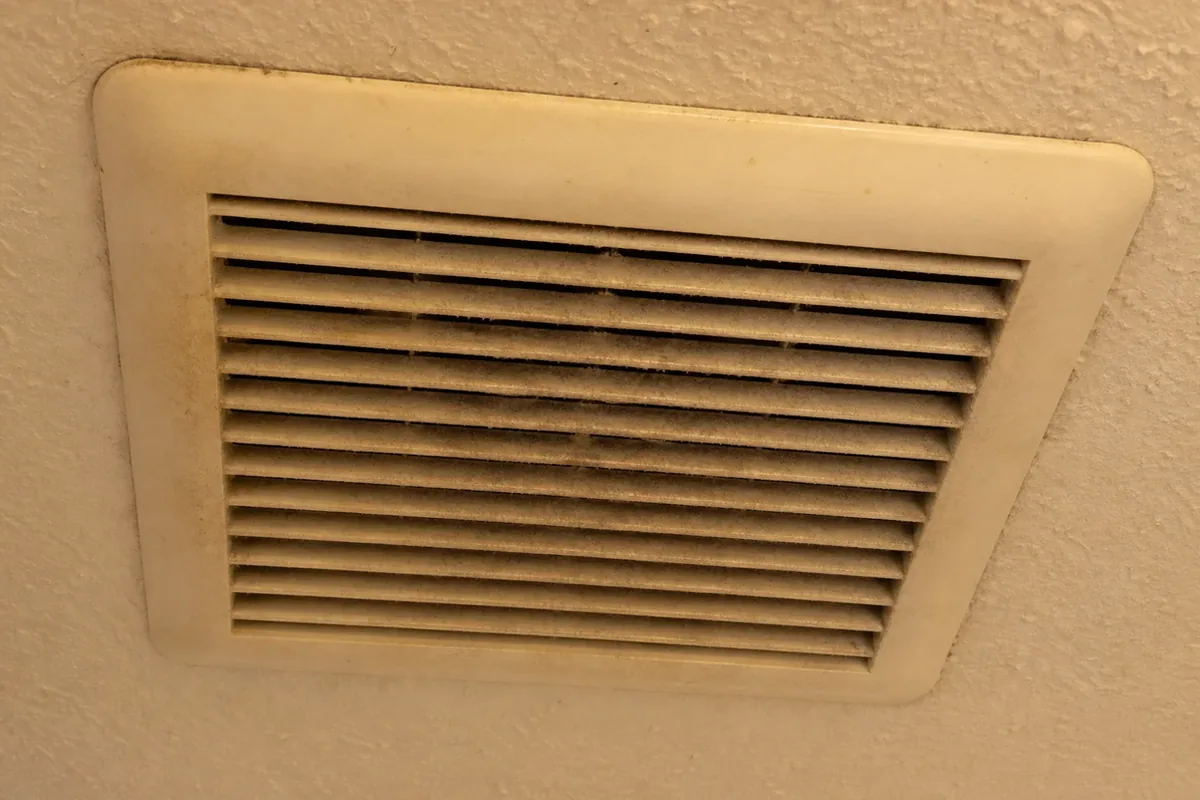
Where we find staining, we trace it back to its likely source, a roof penetration, a plumbing line, a window, or an HVAC condensation point, and we document that source clearly, because it is the finding that actually drives what happens next.
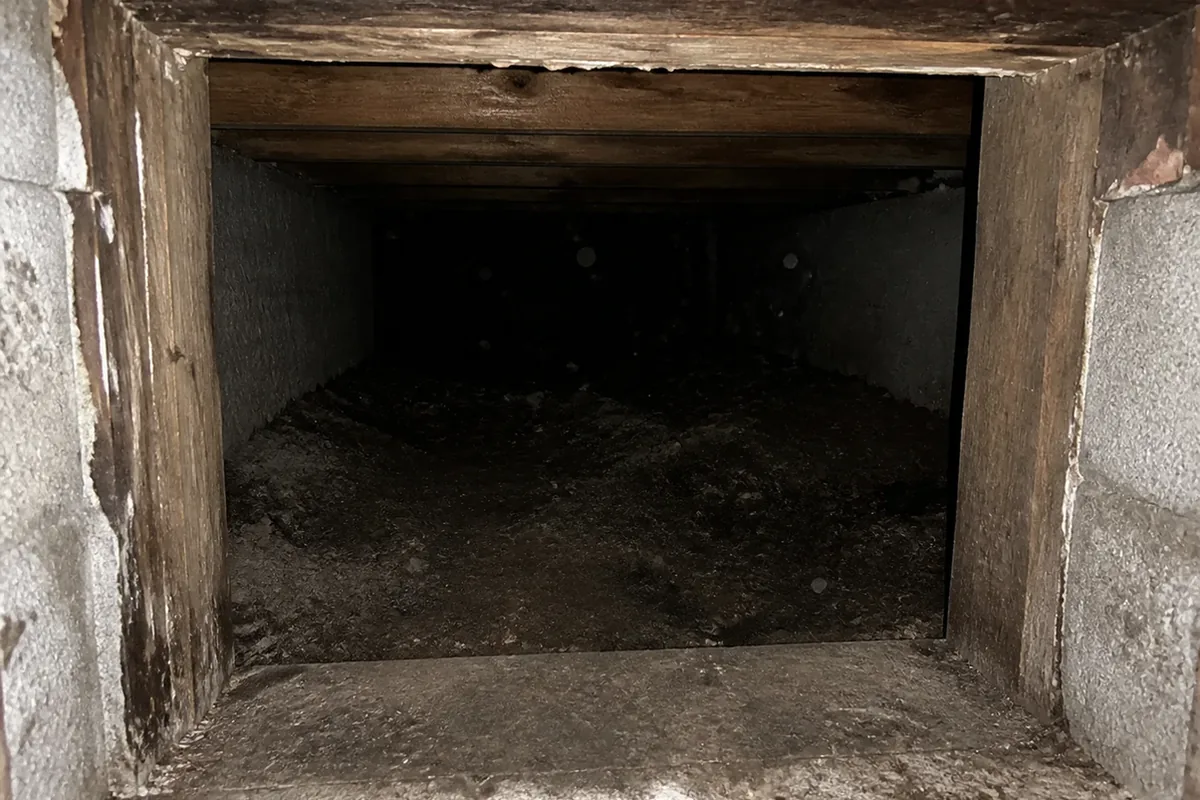
Where a finding falls outside what a visual inspection can resolve, a musty odor with no visible cause, or staining without a clear source, we say so plainly and recommend a certified mold inspector or industrial hygienist rather than guessing.
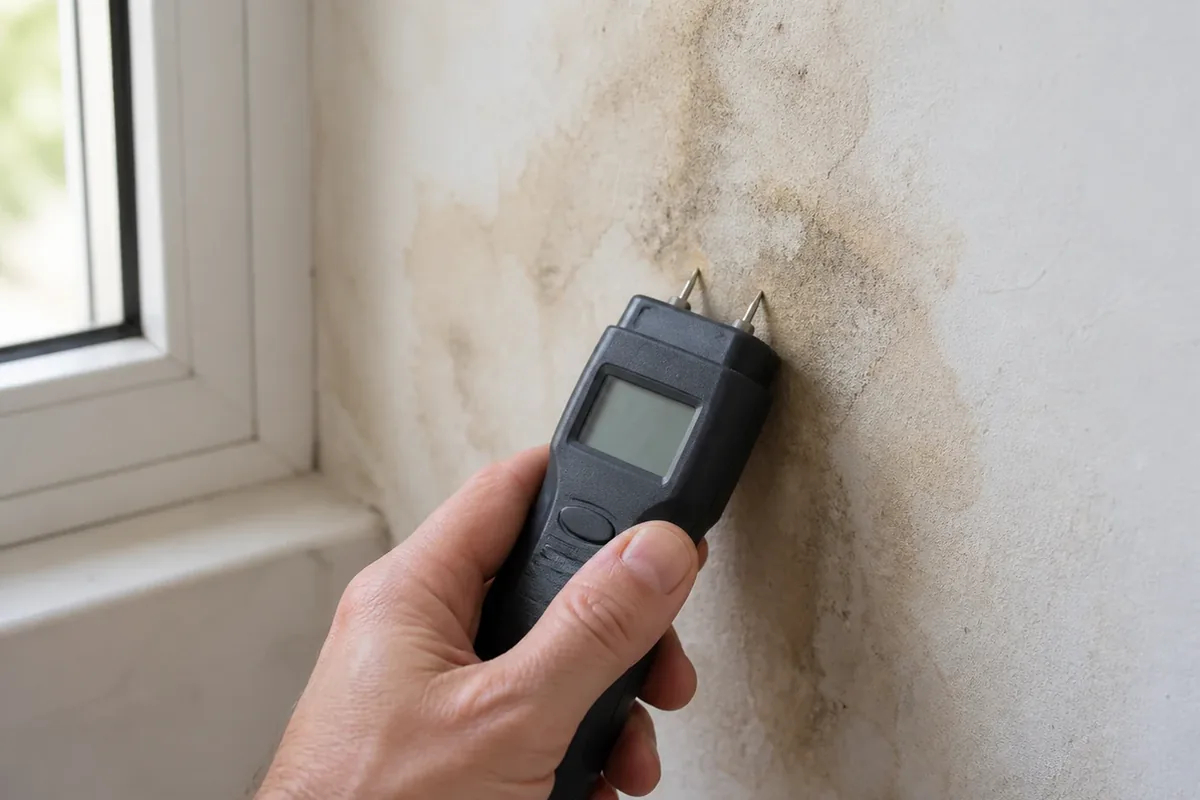
Our what’s included page covers the full interior-moisture scope of every National City inspection, including infrared imaging that can help identify moisture patterns not yet visible to the eye.
Quick FAQ
Does Inspection.re test for mold? No. A general home inspection documents visible growth, staining, odor, and moisture sources. Air sampling, surface sampling, and laboratory species identification are performed by a certified mold inspector or industrial hygienist as a separate, specialized service.
If the inspection report does not mention mold, does that mean the house is clear? No, and this is the single most important thing to tell a buyer. It means no obvious visual evidence was found in the areas we could access and view. It is not a substitute for a specialized assessment where one is warranted.
Is this the same topic as the Santa Monica crawlspace, Camarillo high-water-table, Eastvale stucco, or Imperial Beach housewrap articles? No. Each of those articles covers a specific moisture-producing building condition, a below-floor crawlspace environment, groundwater from below a slab, a wall-cladding drainage plane, and a siding membrane system. This article covers something different: the scope and limitation of what a general home inspection assesses regarding mold specifically, referencing those kinds of conditions only as examples of what creates mold risk, not duplicating their technical content.
How much does a specialized mold assessment cost? It varies by scope and by inspector. We do not perform this service or estimate its cost; a certified mold inspector or industrial hygienist should be contacted directly for that scope and pricing.
Should a buyer walk away over a mold-adjacent finding like a stained ceiling? Rarely on its own. Most findings trace back to an identifiable, fixable moisture source. The real question is whether the source has been addressed and, where warranted, whether a specialized assessment confirms the extent of any growth before the buyer commits.
The honest summary
A general home inspection is a genuinely useful first step on the mold question, and it is not the last step when the evidence calls for more. We document what we can see, staining, odor, moisture sources, and the ventilation and leak conditions that create risk, and we tell a National City buyer plainly when a finding falls outside what a visual assessment can resolve.
We walk every accessible space on every National City inspection looking for exactly these signs, and where the evidence calls for more, we say so rather than guessing.
See what every inspection includes → · Read our FAQ → · Explore National City home inspections →
Related reading
- Air Testing Versus Surface Testing for Mold. What each sampling method actually answers, why an indoor spore count needs an outdoor control, and what California’s own health department says about measuring at all.
- Marine-Layer Crawlspace Moisture in Santa Monica. A specific below-floor moisture condition, one of the kinds of environments referenced here as a mold-risk example.
- High Water Table and Ground Moisture in Camarillo. Groundwater rising from below a slab, a different mechanism than the interior conditions this article covers.
- Stucco and Weep-Screed Moisture in Eastvale. A wall-cladding drainage-plane failure that can introduce moisture into a wall cavity, referenced here as context rather than duplicated.
- Housewrap and WRB Failures in Imperial Beach. A siding membrane system with its own moisture-entry mechanism, another example of the building conditions that create mold risk.
- Formaldehyde and Engineered Wood in Fountain Valley. A different hazard class entirely, chemical off-gassing rather than biological growth, sharing this article’s general-inspection-scope-versus-specialized-testing framing.
- California’s Thirdhand Smoke Disclosure Law. The same scope split applied to nicotine residue: what a general inspection documents visually versus what a surface or dust sampling firm quantifies. For another place where the type of assessment decides the answer, and a general inspection cannot substitute for a certified one, see the 2026 dust-lead clearance rules. And where a client arrives at the inspection already holding a supermarket test result, what a consumer mold kit actually measures explains why that dish cannot carry the weight being put on it.