What’s Behind the Siding: An Imperial Beach Housewrap and WRB Guide for Agents
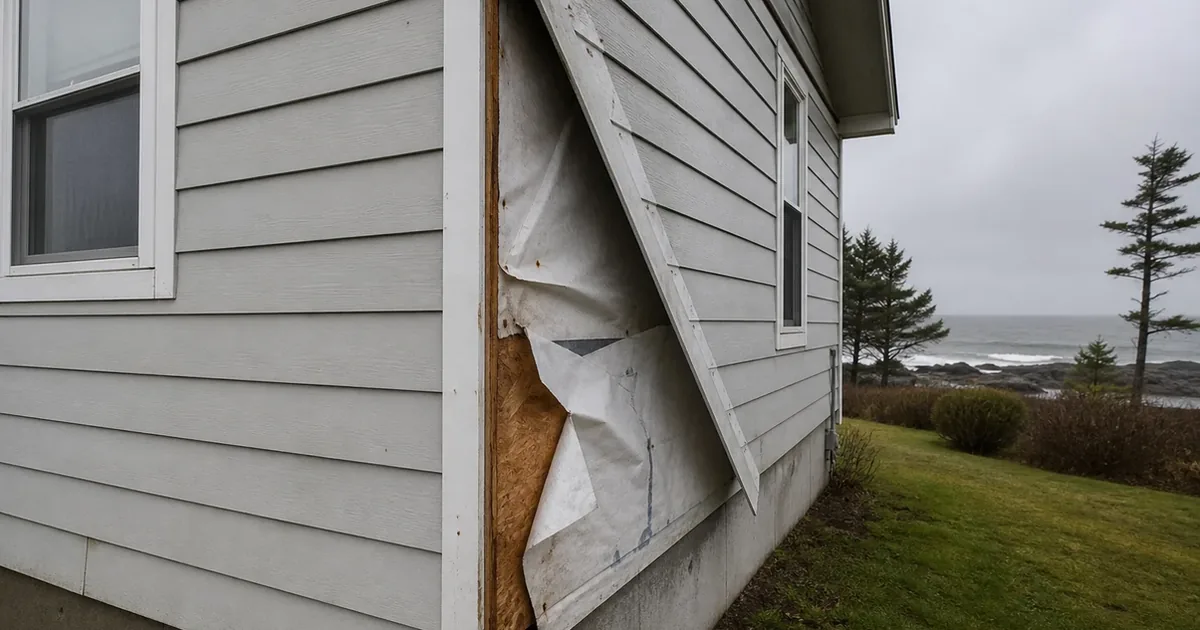
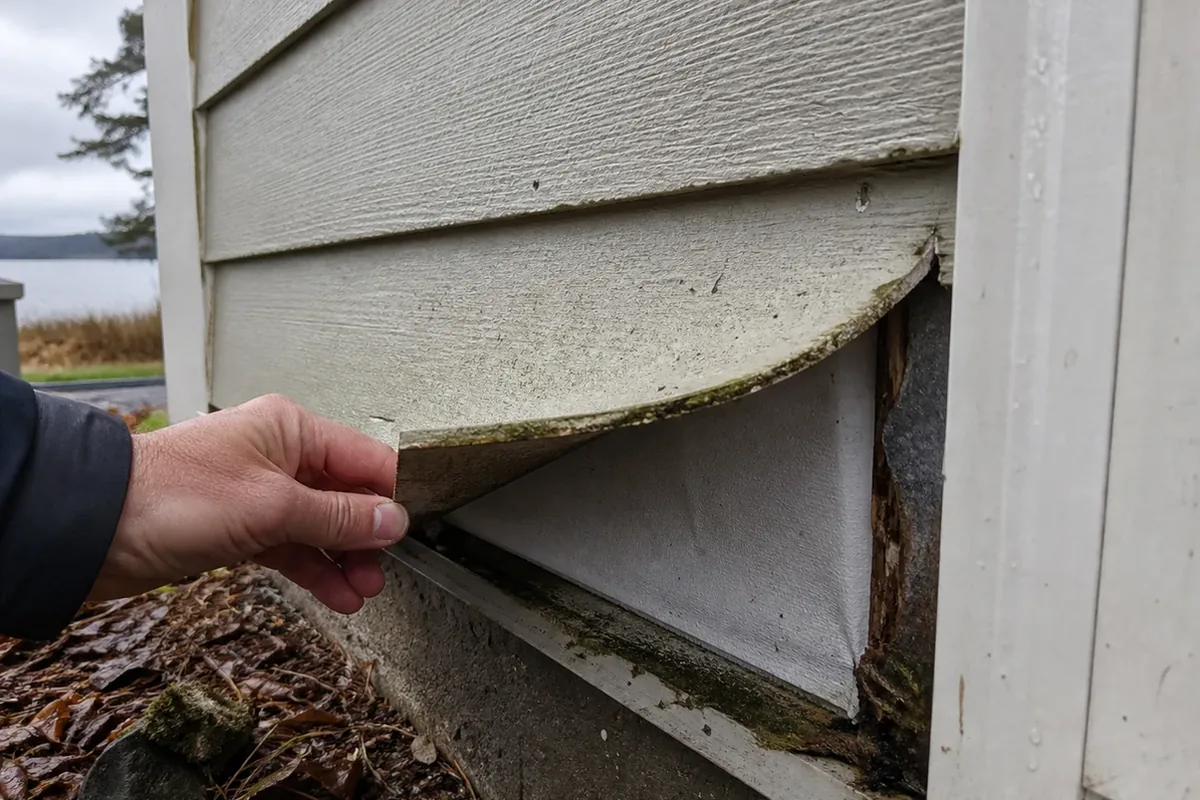
The siding at the corner of the garage looked fine from six feet away, a clean butt joint sealed with a bead of caulk like every other seam on the house. A gloved hand pulling the bottom edge back gently told a different story. The housewrap underneath was torn at the corner, lapped backward so water would run behind it instead of over it, and the wood sheathing directly beneath the tear carried a soft, darkened patch the size of a dinner plate. None of it was visible with the siding in place, and none of it had shown up yet as a stain on the interior wall.
We are describing this as a composite of a pattern we see in Imperial Beach’s wood and fiber-cement siding homes, not one identified property or job. The membrane behind the siding rarely gets a second thought from a buyer walking a showing, and in a coastal marine environment like this one, it is worth understanding before escrow.
This guide is for the agent working Imperial Beach and the surrounding South Bay communities we also serve, including Coronado and Chula Vista, where wood and fiber-cement lap siding sits alongside the same salt-laden marine air. Here is why the housewrap layer matters in Imperial Beach specifically, what it actually is and does, how it fails, what an inspector can and cannot see, and how it differs from the stucco moisture story an agent may already know.
Why this matters for the agent
Imperial Beach sits at San Diego County’s southwest corner, the most low-lying coastal city in the region, and its housing runs from older beach cottages to newer infill, a meaningful share of it finished in wood or fiber-cement lap siding rather than the stucco that dominates most Southern California moisture-envelope conversations. That distinction matters because lap siding and stucco manage bulk water in genuinely different ways, and the coastal marine environment here, persistent humidity, salt-laden air, and driving onshore weather, makes whichever system is behind the siding a real and consequential detail rather than an academic one.
Most of what protects a lap-sided wall from water is not visible once the siding goes up. The housewrap is doing the actual work of shedding water that gets past the siding, and a buyer, and often an agent, has no reason to think about it unless something has already gone wrong enough to show through.
What housewrap actually is and does
Housewrap, also called a weather-resistive barrier or WRB, is a membrane installed over the wall sheathing and under the siding. It does two things at once, and the balance between them is the entire point of the product. It sheds bulk water, meaning any rain that gets past the siding hits the housewrap and is directed down and out rather than into the wall. At the same time, it stays vapor-permeable, meaning water vapor that finds its way into the wall assembly from the interior, or from moisture trapped during construction, can still pass through and dry outward rather than getting trapped between two impermeable layers.
That second property is easy to overlook but it is why housewrap is not simply “plastic sheeting.” A fully waterproof membrane with no vapor permeability would trap moisture inside the wall just as effectively as it keeps bulk water out, and a wall that cannot dry eventually rots regardless of how well the outer barrier performed on the day it was installed.
Correct installation, in plain terms
A housewrap only works if it is installed the way water actually flows, which is down. Proper installation means each horizontal run of the membrane laps over the run below it, shingle-style, the same way roof shingles overlap, so that any water running down the wall’s surface is always directed onto the layer below rather than up and under an edge. Seams and penetrations, the vertical joints between rolls, and every point where a pipe, vent, or wire passes through the wall, are meant to be taped or sealed so water cannot find a path in at those transitions.
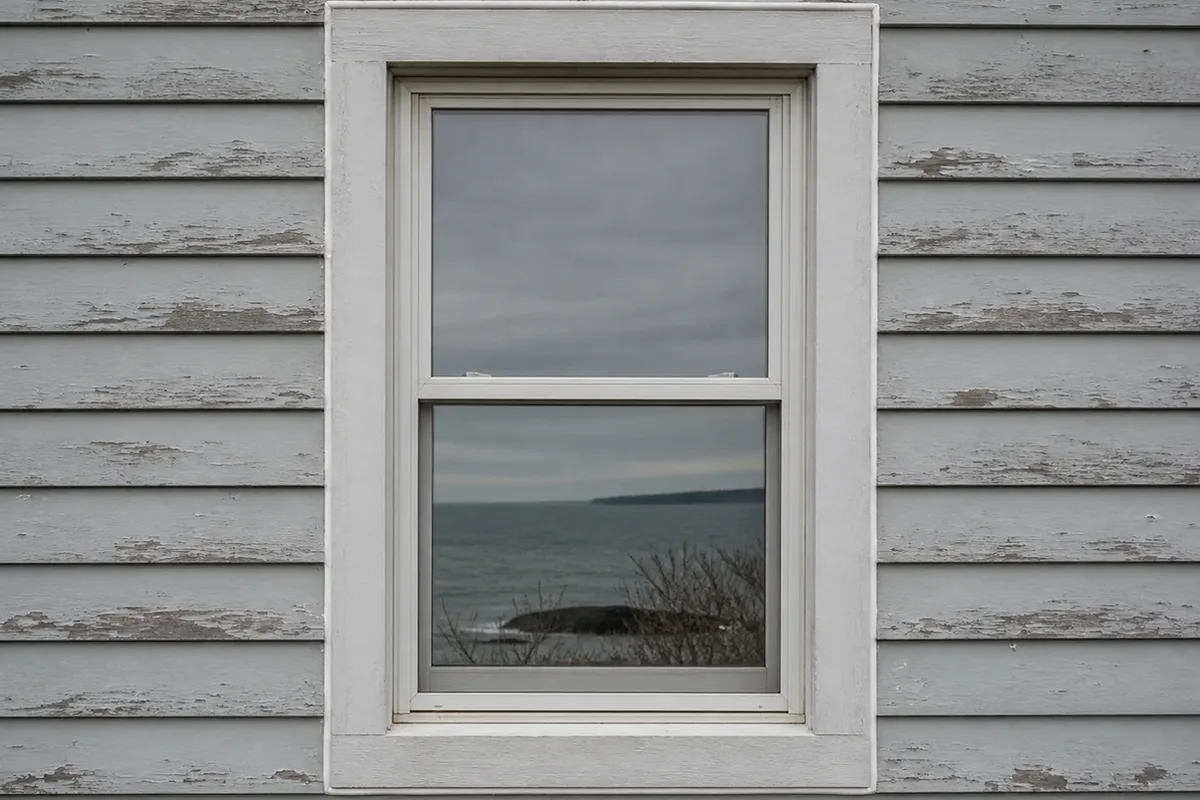
The detail that fails most often in practice is how the housewrap integrates with window and door openings. Correct flashing at a window ties into the housewrap so that any water that gets past the window frame is directed out onto the surface of the WRB, the same way water sheds off the wall generally, rather than behind it into the wall cavity. When that integration is missing or reversed, a window can look properly caulked and sealed from the outside while still funneling water directly behind the drainage plane every time it rains.
The real defects an inspector actually sees
Torn, missing, or improperly lapped housewrap at an edge or corner
The most direct evidence comes from wherever the siding happens to be pulled back, whether from age, an added fixture, a repair, or simple deterioration at a vulnerable corner. What is underneath tells the real story: housewrap that is torn, missing outright, or lapped the wrong direction so water runs behind rather than over it. This is rarely visible without the siding disturbed, which is exactly why it goes unnoticed for years.
Staining or rot at the base of siding
Water that has been getting behind the siding for a while announces itself at the bottom, where gravity eventually brings it. A dark stain running along the base of a wall, siding that has gone soft or spongy near the ground, or a slight outward bow at the bottom course are all secondary evidence of a housewrap or flashing failure somewhere above, even when the failure point itself is hidden under intact siding higher up the wall.
Caulk used as the only water management strategy
At a butt joint between siding boards, around a hose bib, or at any other wall penetration, a bead of caulk with no flashing behind it is a defect worth naming directly. Caulk is a maintenance item, not a water-management system on its own, and it eventually cracks, shrinks, or separates from age and UV exposure. When it was the only thing keeping water out at that joint, its failure sends water straight to whatever is behind it, with no housewrap or flashing to intercept it.
A window without integrated flashing into the WRB
A window that was set into the rough opening and caulked around the trim, without its flashing actually tied into the surrounding housewrap, can look complete and weathertight from outside while still directing water behind the drainage plane at every sill and jamb. This is one of the more common and consequential installation defects in a wood or fiber-cement-sided home, because a window is both a frequent water target and a frequent site of poor integration.
What’s visible, what’s concealed, and how this differs from stucco
Most of the housewrap itself is hidden once siding goes up, and that is by design; it is not meant to be a visible finish surface. That means an inspector is largely working from secondary evidence rather than a direct view of the membrane: staining patterns, soft or bowed siding, gaps at trim and penetrations, and caulk that has failed or was clearly asked to do a job flashing should have done. Where siding happens to be pulled back for another reason, damaged, recently repaired, or simply loose, that is a genuine opportunity to look directly at the housewrap underneath, and we document what we find there closely.
How this differs from stucco’s screed system
It is worth an agent understanding this distinction directly, because it comes up often in a region where stucco dominates the conversation about wall moisture. Stucco assemblies use a screed-based system, a metal weep screed at the base of the wall designed to let any moisture trapped behind the stucco drain out at a specific, engineered point, and the common failure there is a buried screed, soil or hardscape built up over it so it can no longer drain. Lap-siding assemblies, the kind common in Imperial Beach, rely instead on this taped and lapped housewrap membrane running the full height of the wall behind individual siding boards or panels. Both are addressing the same underlying problem, keeping bulk water out of the wall while still letting it dry, but they are two different building science approaches with different installation details, different failure points, and different things an inspector looks for.
What agents should tell every buyer
- The housewrap behind lap siding is doing real, active work managing water, even though it is invisible once the siding is installed.
- A section of siding that has been pulled back, repaired, or is visibly loose is worth a direct look at what is underneath, since that is one of the few chances to see the membrane itself.
- Staining or soft siding at the base of a wall is secondary evidence of a housewrap or flashing problem somewhere above, not necessarily at the same spot.
- Caulk alone at a joint or penetration, with no flashing behind it, is a real defect worth naming, not a minor cosmetic detail.
- A window that looks well caulked from outside can still be poorly integrated with the housewrap underneath, directing water behind the wall rather than out onto its surface.
- This is a different system from the stucco weep-screed story an agent may already know, worth understanding on its own terms rather than assuming the same fix applies.
Red flags during showings
- Siding pulled back, loose, or visibly repaired at any corner, edge, or seam.
- Dark staining or a soft, spongy feel to siding low on a wall, especially near grade.
- A caulk bead as the only visible water-management detail at a butt joint or penetration, with no flashing evident.
- A window trimmed and caulked with no visible flashing integration at the sill or head.
- Any bow, gap, or separation in the siding plane that was not there in earlier listing photos.
- A musty smell or visible interior staining on a wall opposite an exterior siding concern.
The negotiation playbook
When a housewrap or WRB finding surfaces in an Imperial Beach escrow, the deal usually moves down one of a few paths.
The first path is a targeted siding and flashing repair, appropriate when the finding is isolated to one corner or joint with no confirmed sheathing damage, since correcting the lap or adding proper flashing at that single point is a well-defined job.
The second path is a broader exterior contractor’s evaluation before close, warranted whenever staining, soft siding, or a caulk-only detail shows up in more than one location, so the buyer understands the actual scope before removing contingencies.
The third path is a sheathing or framing repair estimate, appropriate once rot is confirmed behind the siding, since that scope is materially larger than a housewrap correction alone.
The fourth path is a credit or informed acceptance, appropriate when a finding is real but limited and well documented, and the buyer is comfortable addressing it on their own timeline.
How the inspection actually catches it
We walk the full exterior of every Imperial Beach inspection looking specifically for the secondary evidence a housewrap problem leaves behind: staining, soft or bowed siding, gaps at trim, and caulk asked to do a job it cannot do alone.
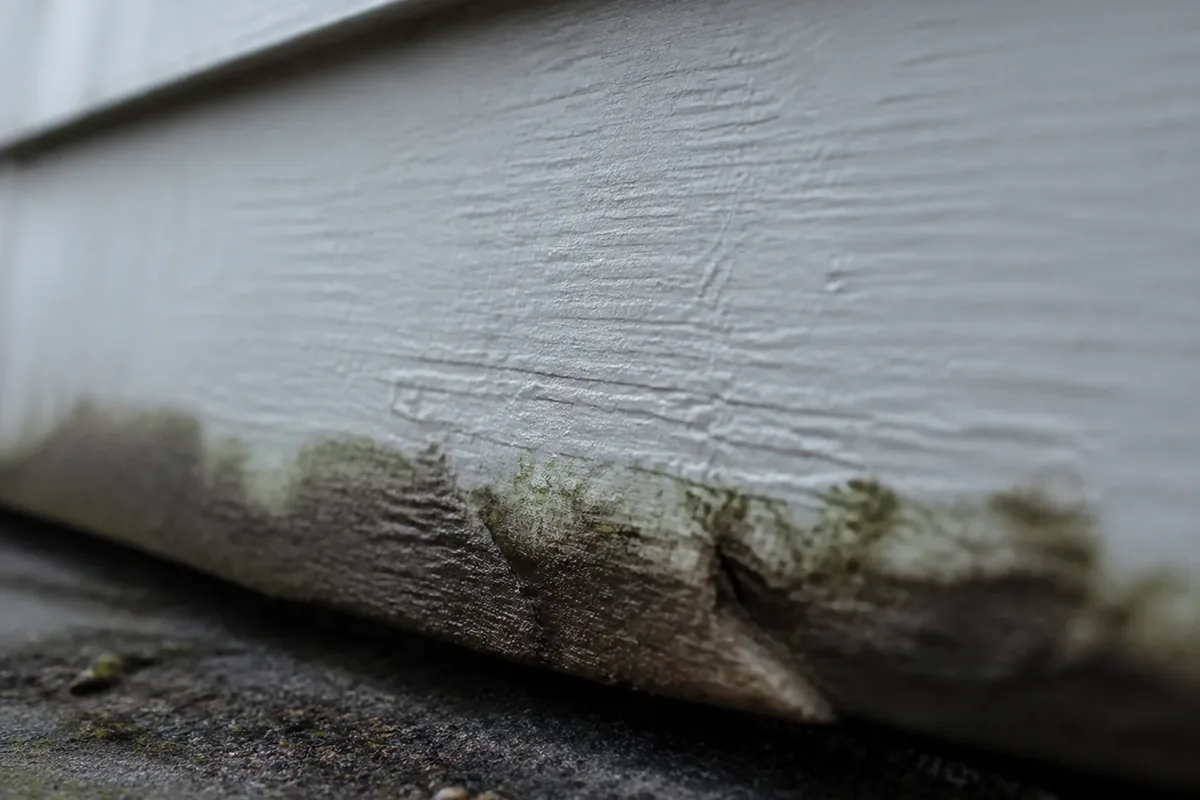
Where siding is already loose, damaged, or pulled back for any reason, we document what is visible underneath directly rather than guessing at the condition of a membrane we cannot otherwise see.
Our what’s included page covers the full exterior-envelope scope of every Imperial Beach inspection, including the infrared scan that can help locate a moisture pattern before it becomes visible on a wall.
Quick FAQ
Is this the same as Eastvale’s stucco and weep-screed article? No. That article covers a stucco-specific metal screed detail at the base of the wall and the failure that comes from burying it under soil or hardscape. This article covers the taped and lapped membrane system behind wood and fiber-cement lap siding, a different cladding assembly with a different failure mode entirely.
Is this the same as the Santa Monica marine-layer crawlspace article? No. That article covers humid air condensing below the floor, in the crawlspace. This article covers the wall-cladding drainage plane above grade, a different location and a different mechanism.
Is this related to Solana Beach’s HVAC condensation article? No. That article covers condensation forming directly on cold HVAC equipment and ductwork indoors, an interior mechanical-system issue unrelated to water management at the exterior wall.
Can a buyer just re-caulk a failed joint and move on? Caulk alone does not restore proper drainage behind the siding. Re-caulking over a housewrap or flashing problem can mask the symptom without addressing what is actually letting water in.
Should a buyer walk away over a housewrap finding like this? Rarely on its own. Most housewrap findings are isolated and correctable. The negotiation usually turns on whether sheathing damage is present, which is worth confirming before removing contingencies.
The honest summary
Imperial Beach’s coastal marine air and its real share of wood and fiber-cement lap siding put genuine weight on a layer most buyers never think about. Most of what we find is isolated, torn housewrap at one corner, a caulk-only joint, a poorly integrated window, correctable without a major repair. A smaller share points to sheathing damage that has been building quietly behind intact siding.
We look for the secondary evidence a housewrap problem leaves behind on every Imperial Beach inspection, and we tell you plainly whether what we found is a minor detail or worth a contractor’s further look before you close.
See what every inspection includes → · Read our FAQ → · Explore Imperial Beach home inspections →
Related reading
- Stucco Cladding and Weep-Screed Moisture in Eastvale. A different cladding system managing the same underlying problem, useful as a direct comparison to this article’s lap-siding housewrap story.
- Marine-Layer Crawlspace Moisture in Santa Monica. A different coastal moisture mechanism, below the floor rather than behind the wall cladding.
- HVAC-Driven Condensation in Solana Beach. An unrelated interior mechanism worth knowing as a companion coastal-moisture topic.
- Why Infrared Scanning Matters in California Homes. How thermal imaging can help locate hidden wall moisture before it becomes visible.
- What a Home Inspection Says (and Doesn’t) About Mold in National City. A failed housewrap system is exactly the kind of moisture entry referenced there as a mold-risk condition, without duplicating this article’s technical mechanism.
- Wood Siding on San Francisco Homes. What happens on an older house where no drainage plane was ever installed behind the cladding at all.