White Powder, Crumbling Edges: A La Mesa Efflorescence and Spalling Guide for Agents
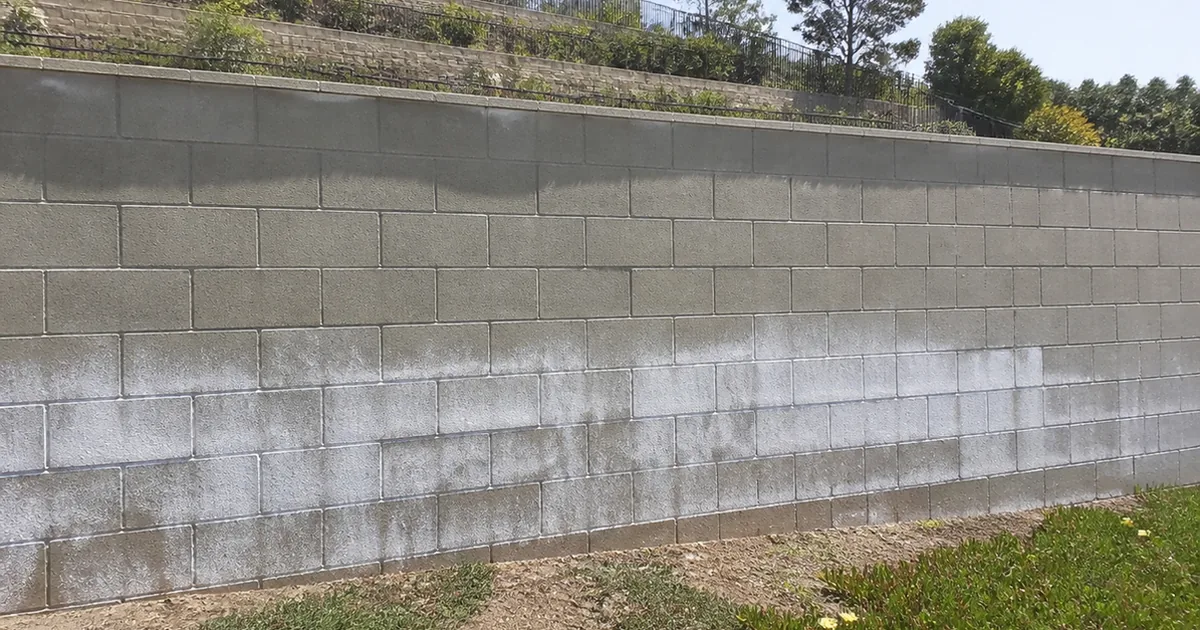
The house sat on a terraced lot in the hills above University Avenue, the kind of grading that gave the backyard three separate levels held apart by concrete block walls built sometime in the 1960s. The lowest wall, the one closest to the house, had a broad chalky white stain running across its bottom three courses, the kind of thing a seller’s agent waves off as a pressure-washing problem. Twenty feet away, a second, shorter wall near the driveway had a very different look: a rust-colored crack running diagonally through the block, a hollow sound where the surface had begun to pop loose, and a thin gray line of exposed steel visible at the crack’s widest point. Both walls looked, at a glance, like they had “the same white stuff.” They did not have the same problem, and treating them the same is exactly how a buyer misses the one that actually matters.
We are describing this as a composite of a pattern we see repeatedly across La Mesa’s hillside retaining-wall and stem-wall stock, not one identified property or job. It comes up often enough in this specific market that every agent working here should be able to tell the two conditions apart before a report lands in an inbox.
This guide is for the agent working La Mesa and the surrounding East County communities we also serve, including nearby El Cajon, Santee, and Lemon Grove, where the same hillside grading and decades-old concrete and masonry work show up on lot after lot. Here is why this is a real, checkable pattern in La Mesa, what the two conditions actually are, and how a finding usually plays out in escrow.
Why this matters for the agent
La Mesa earned its “Jewel of the Hills” nickname honestly. The city is built across a series of mesas and slopes east of San Diego, and a large share of its housing, especially the ranch and split-level stock built from the 1950s through the 1970s, sits on graded, terraced lots. Terracing means retaining walls, and East County La Mesa has an unusually high concentration of them: concrete block garden walls between yards, taller segmental or poured walls holding back a slope behind or beside the house, exposed concrete foundation stem walls visible in a crawlspace or garage, and decades of concrete flatwork, patios, walkways, and driveway aprons, poured directly on grade.
All of that concrete and masonry has now had fifty to seventy years of exposure to irrigation runoff, seasonal rain, and everyday moisture cycling. Two very different things can happen to a concrete or masonry surface over that kind of time span, and a buyer who cannot tell them apart either panics over a cosmetic stain or waves off something that genuinely needs an engineer.
What efflorescence actually is
Efflorescence is the white or grayish, chalky or crystalline deposit that shows up on the surface of concrete, block, brick, or mortar. It forms when water moving through the material carries dissolved mineral salts, mostly calcium compounds from the concrete or mortar itself, to the surface. When that water evaporates, the minerals stay behind as a visible crust or bloom.
Efflorescence itself is not structural damage. It does not weaken the wall or the slab it is sitting on. What it is, is an indicator: a visible sign that moisture has been passing through that material at some point, sometimes recently, sometimes long in the past and now dried up entirely. A wall with efflorescence deserves a look at where that moisture is coming from, but the white deposit itself is a symptom, not the disease.
Efflorescence is typically wipeable or brushable to some degree, though it often reappears if the moisture source is still active. A one-time bloom that has not returned in years, on a wall with no other symptoms, is a low-concern finding. A fresh, actively forming, or recurring bloom is worth tracing to its source, whether that is a broken irrigation line, a downspout discharging against the wall, or grade sloped the wrong direction.
What spalling actually is, and why it is a different category
Spalling is the surface layer of concrete or masonry flaking, popping, chipping, or breaking away in chunks or sheets, exposing the material underneath. Unlike efflorescence, spalling is a genuine durability and, in some cases, structural concern, because it means the material itself is failing rather than just carrying moisture through.
Spalling usually has one of two underlying mechanisms, and telling them apart matters:
- Rebar corrosion. Reinforcing steel embedded in concrete corrodes when moisture and oxygen reach it, and rusting steel expands, physically pushing the surrounding concrete apart from the inside. This is the mechanism behind most of the serious spalling an inspector finds on a structural wall, a foundation stem wall, or a retaining wall built with embedded rebar. It tends to show a rust-colored stain radiating from a crack, a section that sounds hollow when tapped, and, in advanced cases, exposed or near-surface reinforcing steel visible at the break.
- Freeze-thaw and salt-crystallization pressure. Less relevant to La Mesa’s mild coastal-influenced climate than in colder regions, but surface-level expansive pressure from repeated wetting, drying, and salt crystallization at the very surface of the concrete can also cause flaking and popping without any rebar involvement at all, usually shallower and more cosmetic than rebar-driven spalling.
On a typical La Mesa house, both show up in the same handful of places: retaining wall faces, especially the lower courses of a hillside terracing wall where runoff concentrates and soil stays damp longest; foundation stem walls, visible in a crawlspace access or along the exposed perimeter of a raised-foundation home; concrete block garden walls and fences, particularly at the base where sprinkler overspray hits the same few feet of wall for decades; exterior concrete flatwork, patios, walkways, and driveway aprons, where surface spalling often shows up as popped-out aggregate or a flaking top layer distinct from a simple hairline crack; and slab-on-grade edges, at the visible perimeter where the slab meets grade.
Telling surface efflorescence from rebar-driven spalling
The practical distinction an inspector draws, and the one every agent should be able to repeat to a buyer standing in front of a stained wall, comes down to a short checklist.
Likely surface efflorescence, a watch item:
- Flat, chalky, wipeable white or gray deposit
- The wall surface underneath is intact, no popping, no flaking
- No rust staining, no hollow sound when tapped
- No visible or near-surface steel
Likely rebar-driven spalling, a referral:
- A rust-colored stain radiating outward from a crack
- Chunks or flakes of the surface actually missing, not just discolored
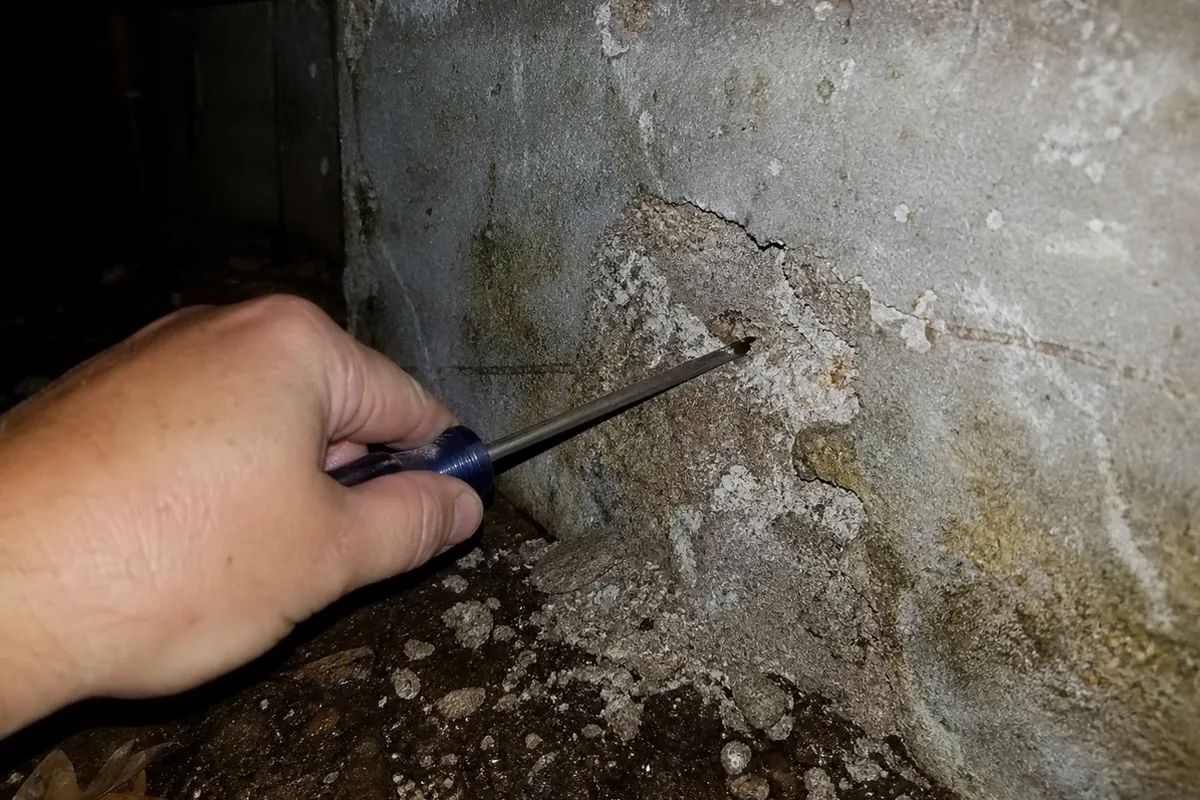
- A hollow or dull sound where a solid wall should sound sharp when tapped
- Exposed or near-surface reinforcing steel visible in the damaged area
A small patch of surface efflorescence on a garden wall, with no other symptoms, is something we note and move on from. Spalling with exposed rebar on a structural retaining wall or a foundation stem wall is a different category entirely, and it is where a home inspection stops and a specialist referral starts.
Before we get to what agents should tell buyers, one CTA worth keeping handy: see what every inspection includes →
What agents should tell every buyer
- White staining on a concrete or masonry wall is not automatically a red flag. Efflorescence is common, mostly cosmetic, and worth tracing to its moisture source rather than panicking over.
- Spalling, meaning the surface actually flaking or breaking away, is a different and more serious category, especially when it shows rust staining or exposed reinforcing steel.
- A retaining wall holding back a graded slope carries more consequence than a garden fence wall of the same material, so the same-looking defect deserves a closer look on a structural wall.
- A home inspector documents the condition visually and flags the pattern; a structural engineer determines whether a spalled wall’s remaining reinforcement and structural capacity are adequate.
- The moisture source behind active or recurring efflorescence, irrigation, grading, or a downspout, is usually the more actionable and less expensive fix, and worth chasing down regardless of the wall’s overall condition.
- Waterproofing contractors and structural engineers serve different roles here: a waterproofing contractor addresses ongoing moisture entry and coating failure, while a structural engineer evaluates whether corrosion-driven spalling has compromised load-bearing capacity.
Red flags during showings
- A retaining wall with a rust-colored crack and a section that looks like it has popped away from the surface.
- Any visible reinforcing steel on a wall face, especially discolored or rusted steel.
- A hollow sound when a wall or slab edge is tapped, distinct from a solid, sharp tap elsewhere on the same surface.
- Fresh, wet-looking efflorescence that appears to be actively forming rather than an old, dried bloom.
- Irrigation heads or downspouts discharging directly against a wall base that also shows staining or spalling.
- Spalling concentrated near the bottom of a wall or column, where moisture and load both tend to concentrate.
The negotiation playbook
When an efflorescence or spalling finding surfaces in a La Mesa escrow, the deal usually moves down one of a few paths.
The first path is monitor and address the moisture source, appropriate when the finding is limited to surface efflorescence with no spalling, and correcting an irrigation head, downspout, or grading issue is a reasonable, inexpensive fix that a buyer can plan for after closing.
The second path is a structural engineer’s evaluation, warranted whenever spalling shows exposed or near-surface reinforcing steel on a wall with any structural or retaining function, since the engineer’s assessment of remaining capacity drives whatever repair scope follows.
The third path is a waterproofing contractor’s scope, appropriate when moisture is clearly getting into a stem wall or crawlspace-adjacent foundation wall and coating or drainage correction, not structural repair, is the actual need.
The fourth path is a credit or informed acceptance, appropriate when the finding is a small, stable, cosmetic patch of efflorescence with no spalling anywhere nearby, and the buyer wants to proceed while budgeting a modest cleanup.
How the inspection actually catches it
We walk every retaining wall, garden wall, foundation stem wall, and section of exterior flatwork on every La Mesa inspection, tapping suspect areas and looking specifically for the rust-stained crack pattern, hollow sound, and exposed steel that separate spalling from simple efflorescence.
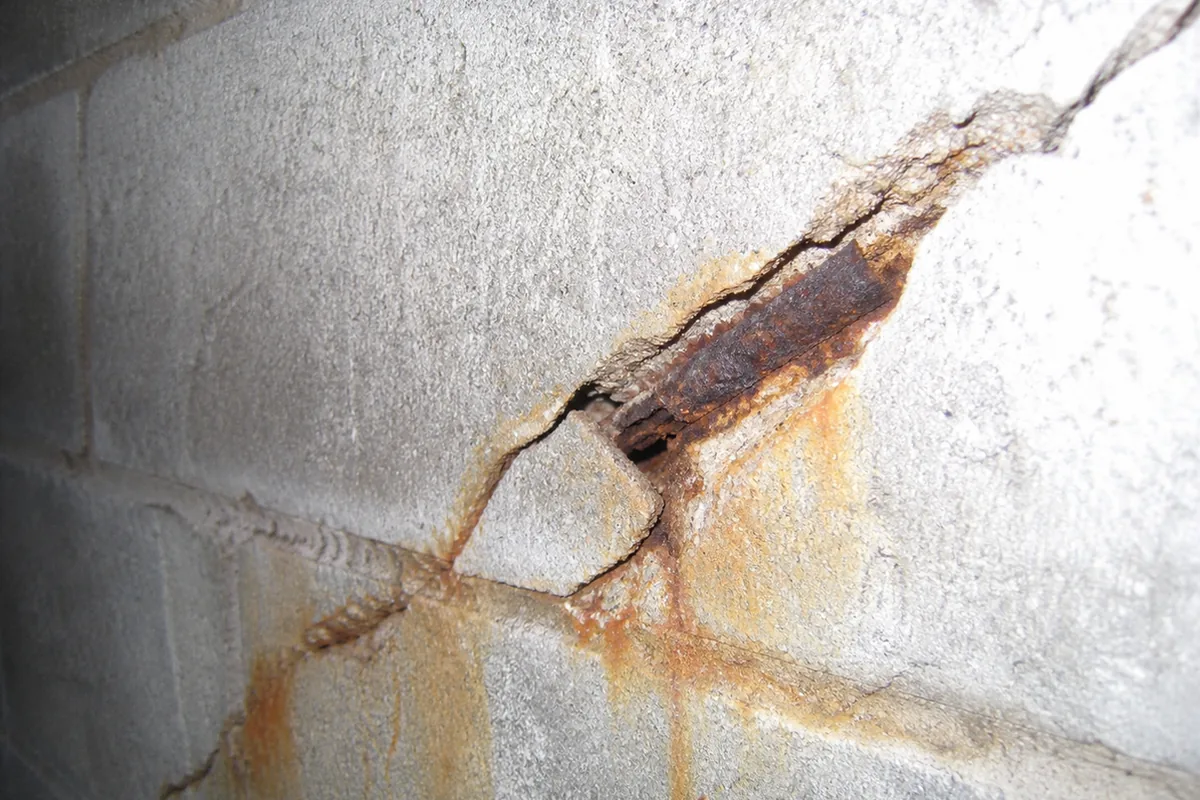
Where we find efflorescence alone, we document its extent and note it as a watch item, along with any obvious moisture source nearby, an irrigation head, a downspout, or grading sloped toward the wall. Where we find spalling with any indication of exposed or near-surface reinforcing steel, particularly on a structural retaining wall or a foundation stem wall, we say so plainly and recommend a structural engineer’s evaluation before the buyer relies on that wall.
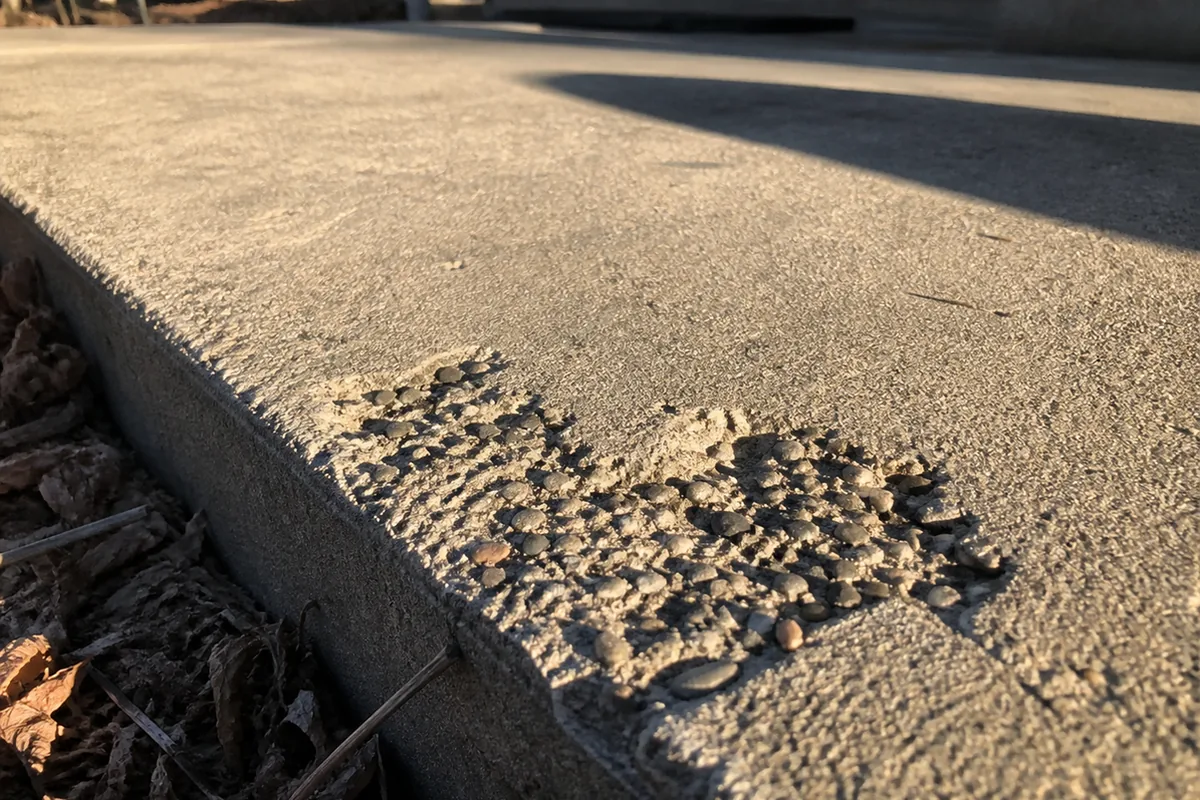
We do not determine remaining structural capacity, specify a repair method, or certify a wall’s engineering adequacy. That is structural-engineer and waterproofing-contractor work, the same specialist boundary we describe in our foundation dampproofing and waterproofing guide. Our what’s included page covers the full foundation and exterior scope of every La Mesa inspection.
Quick FAQ
Is efflorescence always a sign of a leak? Not always. It means moisture has passed through the material at some point, which can be a one-time event, seasonal irrigation overspray, or an ongoing source. A single old bloom with no other symptoms is a lower-concern finding than fresh or recurring efflorescence.
Is this the same topic as Eastvale’s stucco and weep-screed article, or Downey’s foundation waterproofing article? No, all three are different mechanisms. Our Eastvale stucco and weep-screed guide covers moisture entering behind exterior wall cladding at a buried weep screed, a drainage-plane assembly issue, not the concrete or masonry material itself. Our Downey foundation dampproofing and waterproofing guide covers the coating or membrane applied to a foundation wall and whether it matches the site’s moisture conditions. This guide covers the concrete or masonry material’s own surface deterioration, efflorescence and spalling, independent of any cladding or coating question.
Is this the same as Camarillo’s high water table article? No. Our Camarillo high water table and ground moisture guide covers groundwater rising broadly from below a site. This guide covers a specific surface phenomenon on concrete and masonry, which can occur with or without a high water table present.
Can spalling be repaired without replacing the whole wall? Sometimes. A structural engineer determines whether patch repair, additional reinforcement, or full replacement is appropriate based on the extent of corrosion and remaining structural capacity. A home inspection does not make that determination.
Should a buyer walk away over a spalled retaining wall? Not automatically. Many spalling findings lead to a defined repair scope rather than a deal-ending discovery. The negotiation usually depends on the wall’s structural role, the extent of the damage, and the engineer’s assessment once one is obtained.
The honest summary
La Mesa’s decades of hillside terracing, retaining walls, block fences, and exposed stem walls give this city more concrete and masonry surface area than most flatland tract suburbs, and more time for both efflorescence and spalling to show up. Most of what shows up is efflorescence, a cosmetic moisture indicator worth tracing but not worth panicking over. A smaller share is spalling with exposed or corroding rebar, and that is where a buyer needs a structural engineer’s read before relying on the wall.
We check every retaining wall, garden wall, foundation stem wall, and section of flatwork on every La Mesa inspection, and we tell you plainly whether what you are looking at is a watch item or a referral.
See what every inspection includes → · Read our FAQ → · Explore La Mesa home inspections →
Related reading
- Foundation Dampproofing and Waterproofing in Downey. The coating and membrane specification on a foundation wall, distinct from the concrete material’s own surface deterioration covered here.
- Stucco and Weep-Screed Moisture in Eastvale. Wall-cladding drainage-plane moisture, a different building assembly entirely from exposed concrete or masonry surfaces.
- High Water Table and Ground Moisture in Camarillo. Groundwater rising from below a site broadly, distinct from this specific surface material phenomenon.
- Expansive Clay Foundation in Menifee. Soil movement pressuring a foundation, a different mechanism from concrete or masonry surface deterioration.
- Footings and Foundation Reinforcement at Room Additions in Santee. Concrete as structure rather than as a deteriorating surface, and what an untied addition footing does over time.