An industry update from Inspection.re, premium home inspections across California.
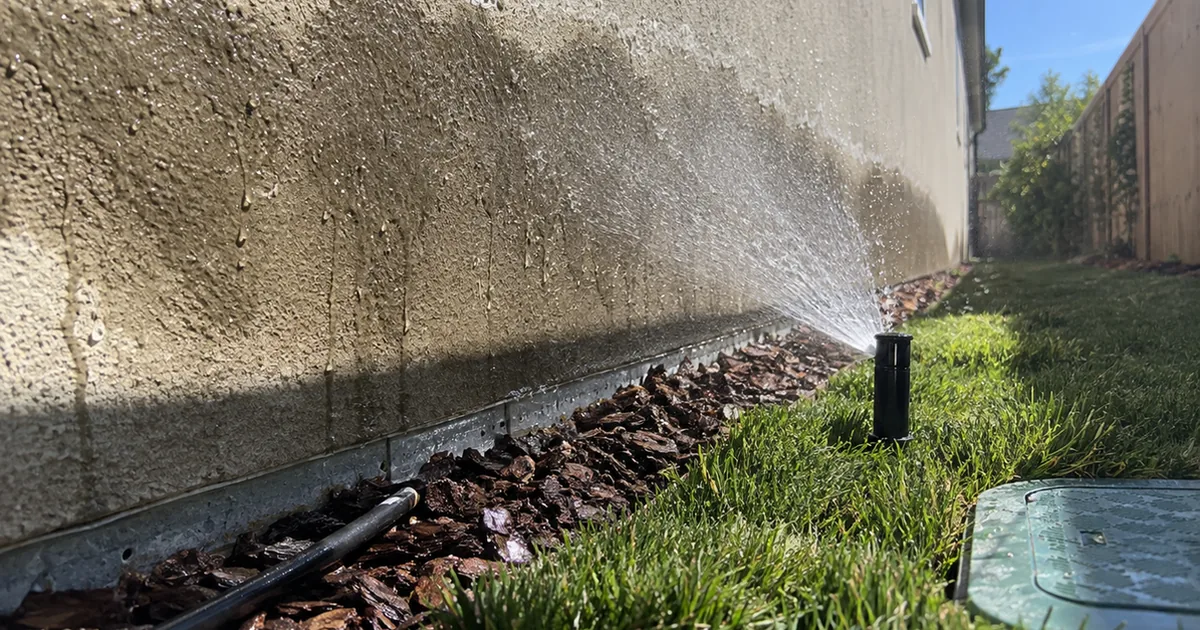
A composite, not a real job: a house thirteen months past close of escrow. Hairline cracking at two stucco corners above the garage door. A landscape irrigation head throwing water directly onto the north wall, with a dark band in the stucco below it. A dryer duct running up into the attic and stopping short of the roof jack, lint visible on the insulation around it. Paint peeling on the south-facing fascia.
The buyer’s assumption is simple. “The house is only a year old, all of this is under warranty.”
That assumption misses the clocks. Three of those four conditions sit on different statutory timelines, and one of them has already expired. This is a composite of conditions we meet often at Inspection.re, not one identifiable property.
The 2026 construction defect reform passed the Senate and stopped at the Assembly desk
Assembly Bill 1903 did not change the framework described here. The bill passed the Senate without a single no vote, then was held at the Assembly desk without the concurrence vote that would have sent it to the Governor.
The bill is from the 2025 to 2026 session and its title is “Construction defects.” Assembly Members Wicks and Wilson authored it, with Senator Becker as a principal coauthor. It was introduced February 12, 2026 and amended repeatedly, most recently in the Senate on August 28, 2026.
The Legislature’s record shows this action on August 31, 2026: “Read third time. Passed. Ordered to the Assembly. (Ayes 40. Noes 0.).”
The last recorded action is September 2, 2026: “In Assembly. Held at Desk.” The bill’s status still reads “Active Bill - In Desk Process,” and its location reads “Assembly.”
That distinction matters. No concurrence vote was taken, so nothing in the framework below changed. A future session could take up the subject again.
AB 1903 would have revised construction defect standards covering water, structural, soil, and fire protection issues. It also would have changed prelitigation procedures, allowed builders to obtain releases for repair work with a claimant’s agreement, and prohibited insurers from denying repair cost deductions effective July 1, 2027. Those proposed changes did not become the rules described in this article.
Civil Code section 895 and following still set the statutory standards
The governing framework is Civil Code section 895 and following, known as the Right to Repair Act. Senate Bill 800 enacted it in 2002. It generally applies to new residential units sold on or after January 1, 2003.
This is not one warranty with one expiration date. The statute sets functional standards a new home is supposed to meet, then attaches a specific time limit to many of those standards. The limits differ by component.
That is the part most buyers do not expect. A new home can carry a one-year clock for one condition, a two-year clock for another, a five-year clock for another, and an outside limit tied to substantial completion rather than to the buyer’s closing.
The statute is also not the builder’s own warranty. Most builders issue a written warranty with its own terms and claims process, and a warranty desk may run a form, an online portal or a customer service procedure. That process can matter under the builder’s documents. It does not erase the statutory clocks described here. Read both texts.
A home inspection can identify cracked stucco, a wet-looking wall, or a duct that stops in the attic. It does not decide whether that violates a statutory standard or a warranty term, and questions about your own house belong with a California real estate attorney. If you are still deciding whether to inspect a brand new build at all, start with do you need a home inspection on new construction in California.
Three statutory items run out after roughly one year
Fit and finish, irrigation and drainage, and interunit noise for attached units have one-year limits under the provisions described here.
Civil Code section 900 requires that “As to fit and finish items, a builder shall provide a homebuyer with a minimum one-year express written limited warranty.” The statute describes those items as including cabinets, mirrors, flooring, interior and exterior walls, countertops, paint finishes, and trim. If the builder fails to provide the required express warranty, the warranty period still extends for one year.
Section 896(g)(7) states: “Irrigation systems and drainage shall operate properly so as not to damage landscaping or other external improvements. However, no action shall be brought pursuant to this paragraph more than one year from close of escrow.”
That irrigation head throwing water onto the north wall is the one-year item in the composite. It is also the exact mechanism behind buried weep screeds and trapped stucco moisture, where irrigation against a wall does its damage behind the finish rather than on it.
For attached units, section 896(g)(6) sets a noise standard tied to the building code in effect at original construction. It also provides that “no action shall be brought pursuant to this paragraph more than one year from the original occupancy of the adjacent unit.”
The trigger there is original occupancy of the adjacent unit, not your close of escrow. That difference matters for a condominium buyer who is not the first owner.
The dryer duct and two landscaping provisions carry two-year limits
Three more provisions have two-year limits from close of escrow. They cover untreated wood posts in contact with soil, landscaping systems, and dryer ducts.
Section 896(g)(8) states: “Untreated wood posts shall not be installed in contact with soil so as to cause unreasonable decay to the wood based upon the finish grade at the time of original construction. However, no action shall be brought pursuant to this paragraph more than two years from close of escrow.”
Section 896(g)(12) states: “The landscaping systems shall be installed in such a manner so as to survive for not less than one year. However, no action shall be brought pursuant to this paragraph more than two years from close of escrow.”
That paragraph contains two different numbers. The survival standard is one year. The time limit on an action is two years.
Section 896(g)(14) states: “Dryer ducts shall be installed and terminated pursuant to manufacturer installation requirements. However, no action shall be brought pursuant to this paragraph more than two years from close of escrow.”
The dryer duct stopping short of the roof jack is the two-year item in the composite. It is also the kind of condition most likely to remain unnoticed until somebody opens the attic hatch. Lint on insulation is a physical finding. It is not, by itself, a legal conclusion about the duct or the builder. What the failure actually looks like, and why a short or crushed run matters beyond the statute, is covered in dryer exhaust routing and lint accumulation.
Plumbing and electrical get four years, while paint gets five
Plumbing, sewer, electrical systems, and untreated steel fences have four-year provisions. Paint and stains have a five-year limit under the quoted provision.
Section 896(e) requires that “Plumbing and sewer systems shall be installed to operate properly and shall not materially impair the use of the structure by its inhabitants,” and adds that “no action may be brought for a violation of this subdivision more than four years after close of escrow.” Section 896(f) sets the same standard and the same four-year limit for electrical systems. Untreated steel fences carry a four-year limit as well, tied to a standard about preventing unreasonable corrosion.
Section 896(g)(10) states: “Paint and stains shall be applied in such a manner so as not to cause deterioration of the building surfaces for the length of time specified by the paint or stain manufacturers’ representations, if any. However, no action shall be brought pursuant to this paragraph more than five years from close of escrow.”
The peeling south-facing fascia paint is the five-year item in the composite. A failing finish can have several causes. A home inspection reports the condition, not the cause of a manufacturing or application failure. The four-year plumbing clock is worth reading alongside is a sewer scope worth it, because the buried lateral on a new build is the part of the plumbing system nobody looks at until year five.
The ten-year outside limit runs from substantial completion
The outside limit is not measured from your closing. Civil Code section 941(a) provides that “No action may be brought to recover under this title more than 10 years after substantial completion of the improvement but not later than the date of recordation of a valid notice of completion.”
The trigger is substantial completion of the improvement, not the buyer’s close of escrow. On a phased subdivision, a house can sit finished for months before it sells. A second or third owner can inherit a clock that started before that person existed as a buyer.
Section 941(d) states that Code of Civil Procedure sections 337.15 and 337.1 do not apply to actions under this title. Section 941(c) provides that a person in actual possession or control of the improvement cannot assert the limitation as a defense while the deficiency exists.
Those provisions require legal interpretation in a specific situation. Speak with a California real estate attorney about how any of this applies to your house.
Written notice to the builder starts the statutory prelitigation process
The statute sets out a prelitigation process that starts with written notice to the builder. Civil Code section 910 provides that “Prior to filing an action against any party alleged to have contributed to a violation of the standards set forth in Chapter 2 (commencing with Section 896), the claimant shall initiate the following prelitigation procedures.”
The notice must go by certified mail, overnight mail, or personal delivery to the builder, and it must carry the claimant’s name, address and preferred method of contact, a statement alleging a violation of the standards, and a description of the claim “in reasonable detail sufficient to determine the nature and location, to the extent known, of the claimed violation.”
The section also says its notice requirements “do not preclude a homeowner from seeking redress through any applicable normal customer service procedure” set out in the builder’s documents. Using that process does not, by itself, satisfy the statutory notice requirement. Calling the warranty desk is not the same act as giving statutory notice.
The sequence and timing after that point belong with a California real estate attorney, not a home inspector. Do not rely on an inspection report as legal notice.
The eleventh month catches the shortest clocks while they are open
An inspection in the eleventh month after closing sweeps the house while the one-year items are still live and well before the two-year items expire. It gives you a dated condition record at a point when small exterior and installation issues may be easier to see.
The sweep includes irrigation heads and spray patterns against walls, hardscape, and the weep screed. It includes where downspouts and area drains discharge. Those are the same surface-water questions set out in grading and drainage around a house, and on a first-year lot they change as the soil settles.
It includes dryer duct routing and termination, including whether the duct terminates outdoors and whether the run has been crushed or disconnected above the ceiling. It includes grading and surface drainage away from the foundation, and whether the first season of settlement has undone it.
Exterior finishes get close attention: cracking at stress points, sealant at penetrations, and paint or stain condition on exposed elevations. In the attic and on the roof it is flashing, boot condition, insulation disturbed by trades, and whatever a subcontractor left behind.
A house shows movement after its first wet season and first dry one. Sometimes the clue is a hairline crack at a stucco corner. Sometimes it is a changed drainage path or a gap at a penetration. On graded pads over clay, that first-cycle movement is the normal pattern described in expansive clay and foundation movement. These are observations, not automatic statutory violations.
An inspection documents condition on the day. It does not establish a cause, determine whether a statutory standard has been violated, or serve as an expert opinion prepared for a claim. Our what’s included page sets out the scope, and the sample inspection report shows the form the record takes.
A photograph nobody can date or place is worth very little two years later. Inspection.re delivers same-day reports, so the record exists while the condition is fresh, and a 3D Matterport tour carries report findings tagged to their actual locations, so a finding can be placed in the house rather than argued about. Drone imagery records roof surfaces and elevations that cannot be walked. FLIR infrared scanning shows a wet band behind stucco or a missing insulation batt as a temperature difference rather than as an opinion, the same method described in why infrared scanning matters. For a buyer who already closed, an eleventh-month report can be issued as an update referencing the same tagged photographs and the same tour, so a warranty desk can see what changed between move-in and month eleven instead of arguing about which condition existed when. We run this on new subdivisions across the state, including the Tri-Valley cities of Dublin, Pleasanton and Livermore. Inspection.re is not a party to a claim, does not write demand letters, and does not tell a homeowner whether to pursue one. For your own situation, speak with a California real estate attorney.
Quick FAQ
Did California change its construction defect law in 2026?
Not in the framework described here. Assembly Bill 1903 passed the Senate with 40 ayes and no noes, then was held at the Assembly desk without a concurrence vote sending it to the Governor. The record still lists it as an active bill in the desk process.
How long is a new California home covered?
There is no single period. The Right to Repair Act has standards with limits that include one year, two years, four years, five years, and an outside limit of ten years from substantial completion. A builder’s written warranty may have its own terms and claims process.
Does the ten-year period start when I bought the house?
No. Civil Code section 941(a) measures the outside limit from substantial completion of the improvement, but not later than the recordation of a valid notice of completion. A later buyer may inherit a clock that began before the purchase.
Is the builder’s warranty the same as the Right to Repair Act?
No. The statute sets functional standards and time limits. The builder’s written warranty is a separate document with its own terms and claims process.
When should I get a new-construction home inspected?
An eleventh-month inspection checks the house while one-year items are still within that period and before two-year items expire. It documents conditions on the inspection date, but it does not decide whether a statutory standard has been violated. Our FAQ page answers the scheduling questions that usually follow.
The statutory framework did not change this year
A new California home comes with standards that carry different clocks. Some are one or two years long. The outside limit is ten years from substantial completion, not from a buyer’s closing. Written notice under the statute is a separate step from calling the warranty desk.
The part you control is the record. Document the house while the short clocks are still open. Send legal questions about your house to a California real estate attorney.
Related reading
-
Do you need a home inspection on new construction: the decision itself, and what a brand new house actually gets wrong.
-
Buried weep screeds and stucco moisture: irrigation against a wall, and where the water goes.
-
Grading and drainage: surface water on a lot that has just finished settling.
-
Expansive clay and foundation movement: first-cycle movement on a graded pad, and how to read it.
-
Who Decides What the Building Code Means. Statutory standards have fixed deadlines. Whether a given detail satisfies an adopted building standard is still a local interpretation question.
-
The Condo Document Package, Item by Item, where the Section 6000 list of defects is one of eleven items a seller owes a prospective purchaser
-
SB 996 and Manufactured Homes. How California is lining up with the federal decision to drop the steel chassis requirement.
New factory-built homes add their own approval layer. See what AB 1815 and AB 2058 change for modular construction.
A rebuilt home on a disaster lot also carries a debris removal record that is separate from the construction file. See what SB 1263 requires of contractors doing ash out and muck out.