From January 1, 2028, an old but sound roof gets a way past an age-only refusal
This is a composite of a pattern we see, not a specific job.
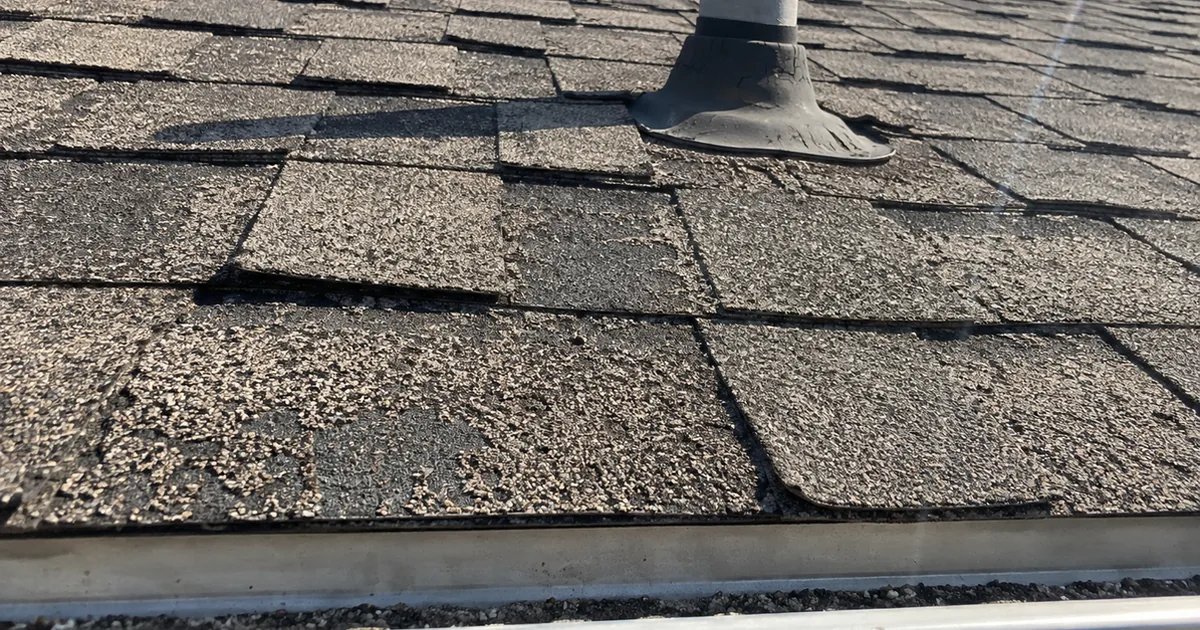
A house built in the 1990s has a composition shingle roof roughly 20 years old. The shingles still lie flat. There are no active leak stains visible in the attic. The homeowner receives a nonrenewal letter that names roof age as the reason.
Under the rules in place in 2026, that letter can arrive 75 days before the policy expires. It may provide little detail about what the homeowner can do next.
After January 1, 2028, the result is different. If the insurer is refusing coverage solely because of roof age, the homeowner can obtain and pay for an independent roof inspection confirming at least five years of useful roof life remaining. The insurer cannot refuse to issue or renew the policy, or determine eligibility, solely on that age.
The insurer also must provide more information about the decision. That includes a detailed explanation, the nonaerial imagery relied upon, and property inspection findings or reports upon request.
Senate Bill 1301 is a California statewide law about residential property insurance nonrenewals. Senator Benjamin Allen authored it. Governor Gavin Newsom approved it on September 27, 2026. The Secretary of State chaptered it the same day as Chapter 693, Statutes of 2026.
Nearly every provision is operative January 1, 2028. Nothing changes for a policy renewing before January 1, 2028.
The calendar moves from 75 days to 90 days
Beginning January 1, 2028, an insurer must deliver a notice of nonrenewal at least 90 days before the policy expires. The existing rule requires at least 75 days.
If the insurer fails to deliver the notice within the required period, the policy stays in effect for 90 days from the date the notice is delivered or mailed. Before SB 1301, the continuation period was 75 days from delivery or mailing.
The fixable-condition process starts even earlier. Insurance Code section 678, as amended, and new section 676.11 address a condition that can be remedied by the policyholder.
The statute says:
“If an insurer finds that a policy does not meet its underwriting guidelines due to a condition that can be remedied by the policyholder,” the insurer must provide notice at least 120 days before expiration.
That notice must include:
- “a detailed, plain language explanation of any remediation, additional information to provide, or other change to the property” that would qualify the policy for renewal.
- “A period of not less than 90 days to perform the necessary remediation or other change to the property or to provide additional information.”
The timing creates three separate dates. The insurer must identify the fixable condition at least 120 days before expiration. The policyholder gets at least 90 days to complete the work or provide information. A nonrenewal notice must arrive at least 90 days before expiration.
A dated inspection record can matter during that 90-day period. So can photographs showing that the requested work was completed. Keep the report, the photographs, the contractor records, and the communication with the insurer together.
Roof age alone cannot decide eligibility
New Insurance Code section 676.14 states:
“Beginning January 1, 2028, an insurer shall not refuse to issue or renew, or determine eligibility for, a residential property insurance policy solely on the basis of the age of the roof if the policyholder obtains and pays for an independent inspection of the roof that confirms at least five years of useful roof life remaining.”
The word “solely” controls the rule.
An insurer can still decline coverage because of roof condition. Active leaks, damage, or missing material can still matter. The statute limits age alone as the reason. It does not make an old roof immune from review.
The rule applies to issuing a policy, renewing a policy, and determining eligibility. That makes it relevant to a buyer shopping for insurance during escrow, not only to a homeowner trying to keep an existing policy.
That does not turn an old roof into a new roof. A composition roof, tile roof, or other roof covering still needs to be evaluated for its observed condition. Agents working with older roofs can also review the Northridge composition roof guide or the Murrieta tile roof guide for inspection issues that may not appear from the street.
The statute leaves “independent inspection” undefined
SB 1301 does not define “independent inspection.” It does not say who may perform it. The text does not choose a roofer, home inspector, engineer, or another professional.
It also does not define “useful roof life.” It does not prescribe a form, a certificate, a report template, or a set of photographs. The statute does not say what report form an insurer must accept.
Do not pay for a report first and ask questions later. Ask the insurer in writing what inspection or report it will accept for the purpose of Insurance Code section 676.14. Keep the response with the policy file.
Ask what credentials, report content, and signature the insurer requires. Do not assume a report accepted by one insurer will be accepted by another. The homeowner obtains and pays for the inspection; the law does not require the insurer to order it.
This is separate from wildfire underwriting. The California wildfire insurance update covers home hardening and wildfire risk. A wildfire risk review is not the same thing as a roof-life confirmation. Nor is it the same as the voluntary whole-house certificate the state will build under AB 1934, covered in our article on California’s home hardening standard and certification.
A standard home inspection does not certify five years of roof life
A standard pre-purchase inspection documents roof condition. It does not automatically confirm five years of useful roof life.
InspectionRE works to the InterNACHI Standards of Practice. That standard says a home inspection is not required to “predict the service life expectancy” of a roof. It also is not required to “determine the life expectancy of the property or any components or systems therein.”
The same standard says:
“The fact that a system or component is near, at, or beyond the end of its normal, useful life is not, in itself, a material defect.”
The roof section still requires a meaningful inspection. It covers roof-covering materials, gutters, downspouts, vents, flashing, skylights, chimneys, and other penetrations. The inspector describes the roof-covering type and reports “observed indications of active roof leaks.”
That work answers a different question: what is visibly wrong today. SB 1301 asks for a confirmation of at least five years of useful roof life remaining when roof age is the sole reason for refusing coverage. A standard home inspection report does not make that promise. InspectionRE does not issue roof certifications or life-remaining guarantees.
A buyer or homeowner may need a separate roof-specific evaluation, commonly from a licensed roofing contractor, to satisfy the insurer’s requested report. The statute does not say which professional the insurer must accept. Ask first.
A condition inspection still has real value. It can include photographs of every accessible roof slope, flashing, penetrations, and the attic underside for staining. It creates a dated record.
That dated record can help a policyholder dispute inaccurate or incomplete information relied upon by the insurer. It can also show that a repair or other change was completed inside the 90-day period described in the notice.
InspectionRE offers roof imaging of every slope, FLIR infrared scanning of ceilings under the roof for moisture, and same-day digital reports with photographs through InterNACHI-certified inspectors. Those services document observed conditions. They do not promise that an insurer will renew a policy or accept a particular report. Our roof imaging explanation shows what that imaging can and cannot document.
The insurer must show more of the information behind a nonrenewal
Insurance Code section 676.11 requires an insurer that refuses to renew to provide “a detailed, plain language explanation of the grounds for the nonrenewal.”
The insurer also must provide “all nonaerial imagery relied upon as a basis for the decision.”
That is the automatic imagery handover stated in the verified text. The statute does not say that aerial imagery must be handed over. Do not tell a homeowner that it does.
Upon request and within 15 days of that request, the insurer must provide any property inspection findings or property inspection reports relied upon as a basis for the decision.
If the nonrenewal is due in whole or in part to wildfire risk, the insurer must provide the policyholder’s “wildfire risk score or other wildfire risk classification.” It must also provide a plain language description of the characteristics of the property and surrounding area used for that classification.
The new records let a homeowner compare the insurer’s material against a dated inspection record, one slope, flashing and attic photo at a time.
The policyholder also receives a dispute right. The statute says:
“The insurer shall provide a policyholder a reasonable opportunity to dispute, or to correct or amend any inaccurate or incomplete information relied upon by the insurer.”
A policyholder “may request that the insurer conduct an onsite physical inspection of the property to verify the information relied upon by the insurer.”
The insurer “shall acknowledge receipt of any dispute, correction, or amendment within 10 days and shall issue a written determination within 30 days of the acknowledgment.”
Use writing. Identify the exact statement, photograph, inspection finding, or classification being disputed. Attach the dated material that supports the correction. Ask for the onsite physical inspection if the dispute concerns a condition that cannot be resolved from documents alone.
The law sets response periods. It does not guarantee that the insurer will change its decision.
Some claims and inquiries cannot be the only reason
Insurance Code section 676.13 bars refusal to renew solely because of several claim or inquiry categories.
The prohibited sole bases include:
- A claim that was not paid or was not payable.
- A claim within the deductible.
- A claim for an uncovered loss.
- A claim on property the applicant no longer owns.
- A claim where the loss was not the direct result of intentional conduct or gross negligence and the hazard was mitigated.
- The policyholder’s previous inquiry about coverage.
The word “solely” matters here too. These reasons cannot stand alone, but other underwriting facts still count. Keep claim correspondence, coverage inquiries, and mitigation records in one dated file.
Homeowners dealing with wildfire claims face a separate set of rules, covered in our FAIR Plan smoke damage discussion.
The same-day article about home repair plans sold through utility bills covers a different Insurance Code change. Those repair plans are not homeowners insurance.
Buyers and agents should ask about the roof before the contingency deadline
Before January 1, 2028, SB 1301’s new roof-age protection is not operative. A policy renewing before that date is not changed by the new law.
A buyer should ask about insurance early in the contingency period, not after the inspection contingency deadline approaches. Request a quote or eligibility decision. Ask whether roof age, roof condition, wildfire risk, or another property characteristic is affecting the result.
If the roof is old, ask the insurer in writing what report it will accept before ordering a roof-life evaluation. A buyer who waits until the last few days may have too little time to arrange a separate evaluation, review the findings, and decide how to proceed under the purchase contract.
The California inspection contingency timeline explains why those dates matter in escrow. SB 1301 does not change a buyer’s contract deadlines.
A seller can assemble a dated roof record before listing. Keep prior repair invoices, permits if available, roof photographs, and reports together. Do not describe a roof as having five years of useful life unless a qualified report actually says that and the insurer has confirmed it will accept the report.
Agents should use precise language. A standard inspection documents observed condition. It does not guarantee renewal.
The process is the same whether the house sits in the hills above Orinda, in Pacific Palisades, under an aging tile roof in Murrieta, or in Thousand Oaks: ask the insurer what it requires, in writing.
Insurers will also report nonrenewal and remediation outcomes to the Insurance Commissioner by April 1 each year beginning in 2029, by county and ZIP Code, and the Commissioner will publish an aggregated report by September 1.
Five questions homeowners and agents will ask
Does SB 1301 protect every old roof from nonrenewal?
No. It limits refusal to issue or renew, or an eligibility decision, when roof age is the sole basis and the policyholder obtains and pays for an independent inspection confirming at least five years of useful roof life remaining.
The insurer can still consider roof condition, active leaks, damage, missing material, wildfire risk, and other reasons allowed by the statute and underwriting rules. The law does not make an old or damaged roof insurable.
Can a regular home inspection report prove five years of useful roof life?
Not automatically. The InterNACHI Standards of Practice do not require a standard home inspection to predict roof service life or determine the life expectancy of a component.
A standard inspection can document observed condition and active leak indications. Ask the insurer in writing whether it will accept that report. If not, ask what roof-specific evaluation it requires before paying for one.
Who is allowed to perform the independent inspection?
The statute does not say. It does not define “independent inspection” or identify a roofer, home inspector, engineer, or other professional.
Ask the insurer for its requirements in writing. Do not rely on an assumption about who will be accepted.
What must an insurer provide after a nonrenewal?
The insurer must provide a detailed, plain language explanation of the grounds. It must provide all nonaerial imagery relied upon. Upon request and within 15 days, it must provide property inspection findings or reports relied upon.
For a wildfire-risk nonrenewal, it must also provide the wildfire risk score or other wildfire risk classification and a plain language description of the relevant property and surrounding-area characteristics.
How fast must the insurer respond to a dispute?
The insurer must acknowledge receipt of a dispute, correction, or amendment within 10 days. It must issue a written determination within 30 days of the acknowledgment.
The policyholder may request an onsite physical inspection to verify information relied upon by the insurer. Put the dispute in writing and attach dated evidence.
Ask the insurer what report it will accept before ordering a roof inspection
SB 1301 gives homeowners more time, more explanation, and a way to challenge inaccurate property information beginning January 1, 2028. It does not turn every standard inspection into a roof-life certification. It does not define useful roof life. It does not identify the professional or report form an insurer must accept.
For a policy renewing before January 1, 2028, the new provisions do not apply. For a buyer shopping for coverage after the operative date, roof age can still matter, but age alone cannot control the decision when the statutory inspection requirement is met.
Do three things differently. Ask the insurer in writing what roof report it accepts. Keep dated photographs and inspection records. Separate a condition inspection from a roof-life confirmation.
Review the InspectionRE inspection services, frequently asked questions, and sample inspection report information. Call 1-888-88-INSP-9 before ordering the inspection so you know what the report can document and what it cannot promise.