A 1980s composition-shingle house sits on a hillside above dry brush. The seller has done real work. There is a newer Class A roof, ember-resistant mesh on the gable vents, and mulch pulled back from the stucco. The listing says “fire hardened.”
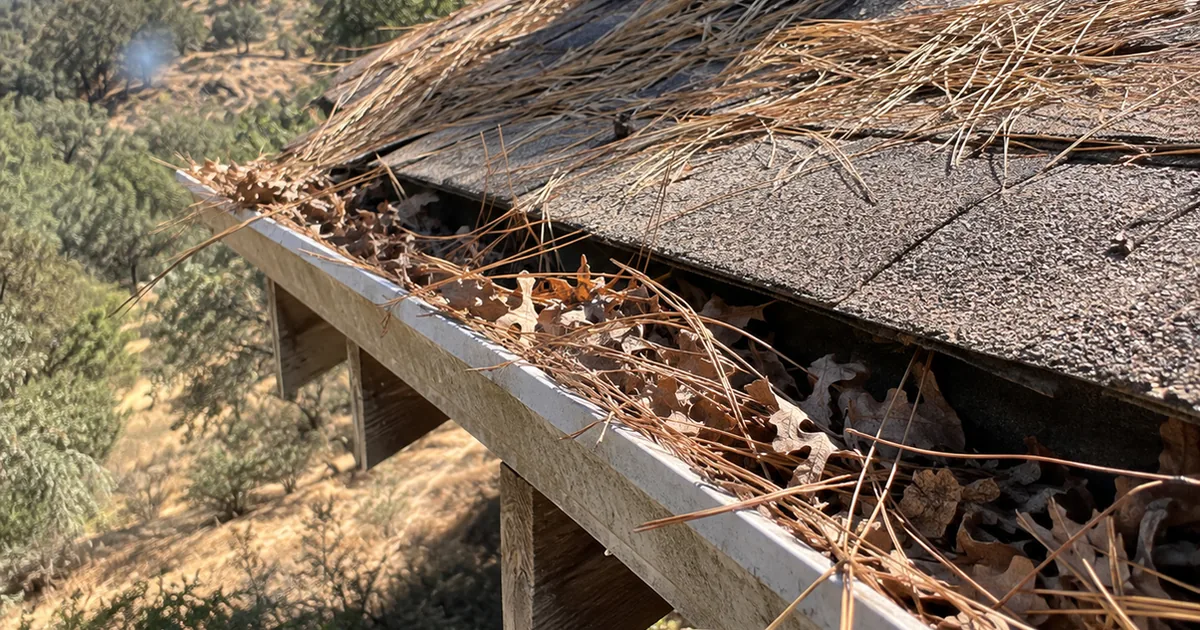
From the ladder, the rain gutters are packed with pine needles and oak leaves. The eaves are open, with exposed wood rafter tails. The downhill windows are original single-pane aluminum. Is the house hardened? In California, there is no single official answer as of September 2026. Nobody the buyer can call will stamp it yes or no.
This is a composite of a situation we meet often, not any one identifiable property. On September 29, 2026, Governor Newsom signed two bills by Assemblymember Steve Bennett that set out to change that. One tells the State Fire Marshal to write the standard for what a hardened home is. The other tells the state to build a voluntary certification program around it, with inspectors. Neither happens quickly, and both matter before a listing uses the word.
AB 1964 and AB 1934 were signed on September 29, 2026
Two separate bills, AB 1964 and AB 1934, were signed by Governor Newsom on September 29, 2026 as part of a wildfire package.
Both bills were authored by Assemblymember Steve Bennett of Ventura. The Governor’s office listed AB 1934 as “State Fire Marshal: home hardening certification program implementation plan” and AB 1964 as “State Fire Marshal: home hardening.” They were two of seventeen bills in that day’s wildfire announcement.
As ordinary statutes signed in 2026, both take effect January 1, 2027. That date matters, but it is not the date homeowners will receive a certificate. The bills order work that runs through 2030.
AB 1964 creates the standard. AB 1934 creates the certificate.
Those are different jobs. The state must first describe what counts as sufficiently hardened. Then it must build a program that lets a homeowner seek certification against that description. The standard is due by January 1, 2028. The certification program is due by January 1, 2029. A statewide report is due in 2030.
This article is not legal or insurance advice. Inspection.re does not give legal or insurance advice.
AB 1964 tells the State Fire Marshal what to define
AB 1964 orders the Office of the State Fire Marshal to write home hardening standards by January 1, 2028.
The bill adds Health and Safety Code Section 13133.5. It says the Office of the State Fire Marshal “shall develop home hardening standards to determine whether a home is sufficiently hardened to effectively reduce fire risk during an ember shower or when directly exposed to flames and radiant heat.”
Those are three different exposures.
Embers get into gaps, vents and debris. They can travel ahead of the main fire and collect in places a person does not see from the front yard. Radiant heat can break glass and ignite materials through a window. Direct flame reaches a wall when something burning next to the house makes contact with it.
A roof, window, vent or wall can perform differently under each exposure. A standard that addresses only one of them would not answer the question the bill asks.
AB 1964 also adds Health and Safety Code Section 13134. By January 1, 2030, the State Fire Marshal must compile a report on homes in moderate, high and very high fire hazard severity zones. The report must cover both state responsibility areas and local responsibility areas.
It must estimate the total number of homes in each zone. It must also estimate how many meet the new standard and how many need additional hardening. Those figures must be broken down by responsibility area and county.
The report must be posted on the State Fire Marshal’s website and submitted to the Legislature by July 1, 2030.
For inspectors, that deadline carries a plain consequence. For the first time, the state will try to count, county by county, how many existing houses would fail the standard. Nobody has that number today.
AB 1934 builds a voluntary certificate around that standard
AB 1934 tells the State Fire Marshal’s Wildfire Mitigation Advisory Committee to design a voluntary home hardening certification program by January 1, 2028, and tells the State Fire Marshal to launch it by January 1, 2029.
The implementation plan must identify home hardening measures, including defensible space, that homeowners can voluntarily complete during renovation or property improvement projects to reduce the risk of loss in a fire.
The committee must recommend “multiple tiers of home hardening certification with at least one tier defined as ember resistant.”
It must also recommend the qualifications necessary for individuals tasked with inspecting a home and confirming its compliance. The committee must recommend how long a certification stays valid.
These details are found in Health and Safety Code Section 13159.5, new subdivisions (e) and (f), and in the amendment to Public Resources Code Section 4209.4. The committee must report to the Legislature by January 1, 2028. The State Fire Marshal must establish the program on or before January 1, 2029.
The minimum tier must be consistent with, and no less stringent than, standards from a nationally recognized wildfire prepared standard-setting organization, including the Insurance Institute for Business and Home Safety. The minimum tier may also be based on an actuarial finding that it provides a meaningful reduction in ember-based ignitions.
The advisory committee’s membership under Public Resources Code Section 4209.4 includes the Insurance Commissioner or a designee. That is a fact about the committee. It does not answer what insurers will do with a certificate.
The word “voluntary” matters. Nobody will be required to certify their house.
Multiple tiers will make “hardened” more specific
Multiple tiers mean the certificate is expected to say how hardened a home is, not simply issue a yes or no.
The entry point must be at least one tier defined as ember resistant. That focus reflects how many homes catch fire during wildfires. Embers can land in vulnerable vents, gutters and debris against the house, even when the main flame front has not reached the property. Our Wildomar guide to defensible space and vent mesh shows what that looks like on an older house.
That does not make the other exposures irrelevant. AB 1964 separately names direct flames and radiant heat. The certification plan under AB 1934 must fit within the standard the state creates.
The Insurance Institute for Business and Home Safety already operates a program called Wildfire Prepared Home. It has two designation levels, Base and Plus. A third-party evaluator visits in person to document the work, and the program is offered in California.
The law uses IBHS as a floor benchmark. We do not know what the California tiers will look like until the committee publishes its recommendations.
That distinction matters in a listing. A seller may have completed work that resembles one existing program or another. That does not make the property certified under a California program that does not yet exist.
Tiers, inspector qualifications and certification length are all recommendations still to be written. Anyone describing the final California program in detail before 2028 is guessing.
The existing rules count actions, not a whole-house certificate
As of September 2026, the closest thing to an official hardening credential is an insurance discount regulation that counts individual actions, not a certificate for the whole house.
California’s Safer from Wildfires regulation, Title 10, California Code of Regulations, Section 2644.9, requires insurers to recognize specific mitigation actions with discounts, action by action. Our guide to California’s 2026 wildfire insurance laws explains how that regulation works and why no single certificate sits underneath it.
That is a different structure from the program AB 1934 directs the state to create. A homeowner may have completed one recognized action, several recognized actions, or many actions. The regulation does not create a state certificate for the entire house.
Separately, Zone 0, the ember-resistant first five feet around a house, was adopted by the Board of Forestry as emergency regulations in August 2026 and is on its own track. Our Zone 0 explainer covers what that rule requires.
California’s wildland-urban interface building standards already govern how new homes in fire hazard areas are built. The gap AB 1934 targets is the existing house. That is why the bill discusses measures completed “during renovation or property improvement projects.” The Legislature has kept that wildfire code free to keep changing, as our piece on the residential building code freeze under AB 130 explains.
The distinction is simple. A discount regulation rewards pieces. The new program is meant to certify a whole house to a tier.
Those programs may end up connected, but the bills do not say they will be.
A standard inspection records hardening conditions without certifying them
A standard home inspection already records most of the conditions a hardening standard will care about, but it is not a hardening certification and we do not issue one.
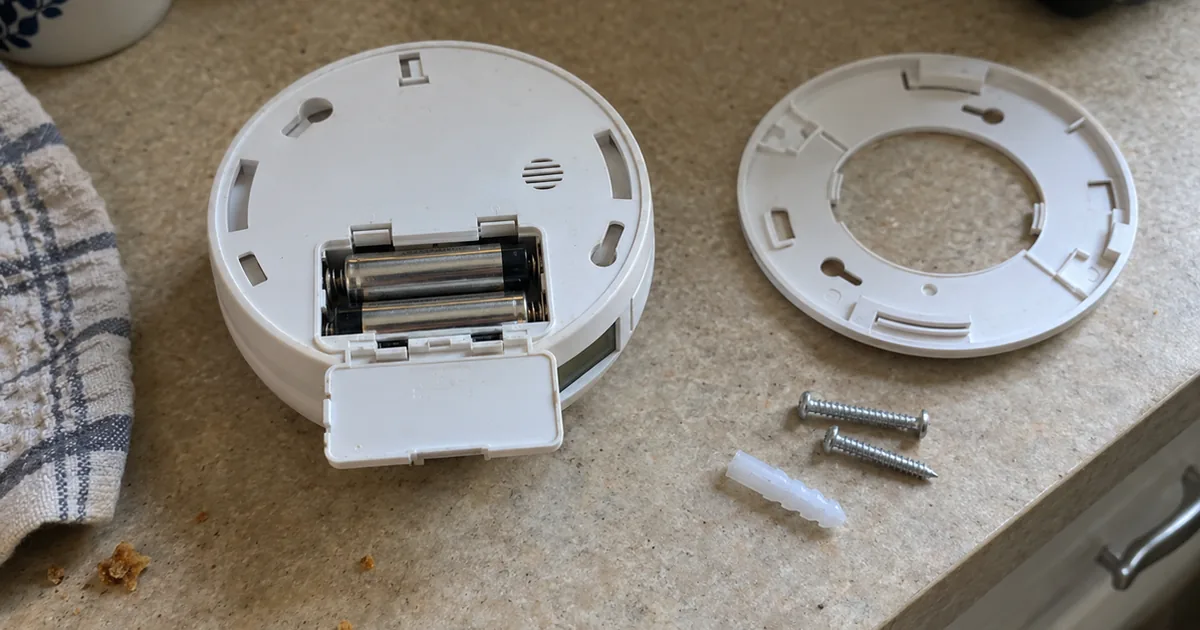
We document the roof covering type and condition. We look for debris in valleys and gutters. We note open or boxed eaves and exposed rafter tails. We inspect attic, gable and foundation vent screening, including torn or missing mesh.
We record siding material and its condition near grade. We distinguish single-pane from dual-pane windows. We inspect attached wood decks and what is stored underneath them. We look at wooden fences and gates fastened to the house. We report vegetation and branches touching the roof or fascia. The full list is on our what’s included page.
Drone roof imagery is part of our standard package. It reads gutter and valley debris across a whole roof better than a single ladder position, as our guide to drone roof inspections explains. The report comes the same day with photographs.
The most common gap we see on a house marketed as hardened is maintenance, not construction. A Class A roof with a gutter full of needles is a Class A roof with a fuel bed at its edge.
That condition can change after a roof replacement, vent upgrade or eave enclosure. A home can have expensive improvements and still present visible maintenance problems on the day of inspection. On older and historic houses the construction side is harder too, which our Sierra Madre fire-hardening guide covers.
Inspection.re does not certify homes as hardened. We do not determine defensible space compliance. We will not claim to do either until there is a state standard and we meet whatever inspector qualifications the program sets.
We report condition on the day we are there.
A fire-hardened listing needs dated details before 2029
Until the state program exists, “fire hardened” in a listing is a description, not a credential, and it should be backed by specifics.
Sellers should list what was actually done, with dates and paperwork. That can include a roof replacement, vent mesh, eave enclosure, window upgrades and clearing. Specifics are checkable. The word “hardened” on its own is not. Roof records matter for insurance as well, which our article on SB 1301 and roof-age nonrenewals covers.
Buyers should ask for that list and verify it against the inspection. Look at the maintenance items that change month to month, including gutters, debris on the roof, mulch and firewood against the house.
An agent should tell every buyer looking at a house in a mapped fire hazard severity zone these six things:
-
Check the parcel’s zone on the state map.
-
Ask for dated documentation of each hardening item.
-
Read the inspection for vents, eaves, windows and gutters.
-
Treat maintenance items separately from construction items.
-
Do not rely on the word “hardened.”
-
Expect a state standard in 2028 and a voluntary program in 2029.
The date on a document matters. So does the condition visible at the inspection. A roof invoice can show when the roof was replaced. It cannot show whether the gutters were clear on the inspection date.
The same distinction applies to vent work, windows and vegetation clearing. A seller can document the improvement and still need to address current maintenance, whether the house is in the hills above Orinda, in the canyons of Malibu, or on the edge of the brush in Wildomar.
The program’s most useful details are still unwritten
Most of what homeowners will actually want to know is still unwritten.
The state has not yet published how many tiers there will be or what each tier will require. The committee still must recommend who will qualify as an inspector under the program and what training those inspectors will need.
The length of a certificate is also open. So is the question of whether a certificate follows the house when it is sold.
The Insurance Commissioner sits on the advisory committee, but the bills do not require any insurance discount. Whether insurers will price a certificate is not answered by the legislation.
The cost to a homeowner is also unknown. The bill text we reviewed does not set a fee.
Those gaps are not minor details. They affect the homeowner deciding whether to complete work, the buyer deciding what a certificate means, and the agent describing a property for sale in places like Sierra Madre or Thousand Oaks.
We will update this article when the committee’s plan is published.
Quick FAQ
Can I get my house certified as hardened today?
No state program exists. The program is due by January 1, 2029.
Will certification be required?
No. The law calls the program voluntary.
Will certification lower my insurance?
The laws do not say so. The Safer from Wildfires regulation is what governs discounts as of 2026.
Does my home inspection count as a hardening inspection?
No. A home inspection records conditions such as roof covering, gutter and valley debris, eave construction, vent screening, siding, windows, decks, fences and vegetation. It does not certify the home under a hardening program. Our FAQ covers the rest of the inspection’s scope.
What should a seller in a fire zone do before 2028?
Handle the cheap maintenance items and keep dated records of every upgrade. That includes clearing gutters and roof debris, pulling mulch and firewood away from the house, documenting roof and vent work, and keeping records of window or eave improvements. If windows are part of the plan, our article on SB 908 and window replacement approvals covers the new permit rules.
The honest summary
California is about to write down, for the first time, what a hardened existing home is, then build a voluntary certificate on top of it with qualified inspectors.
That is useful because “hardened” is a word anyone can put in a listing. It is also slow. The standard is due January 1, 2028, the program January 1, 2029, and the county count July 1, 2030.
Until then, the useful evidence is specific, dated and checkable. A gutter full of needles undoes a lot of expensive work. See how those conditions show up in our sample inspection report, or call 1-888-88-INSP-9 to book an inspection.