An industry update from Inspection.re, premium home inspections across California.
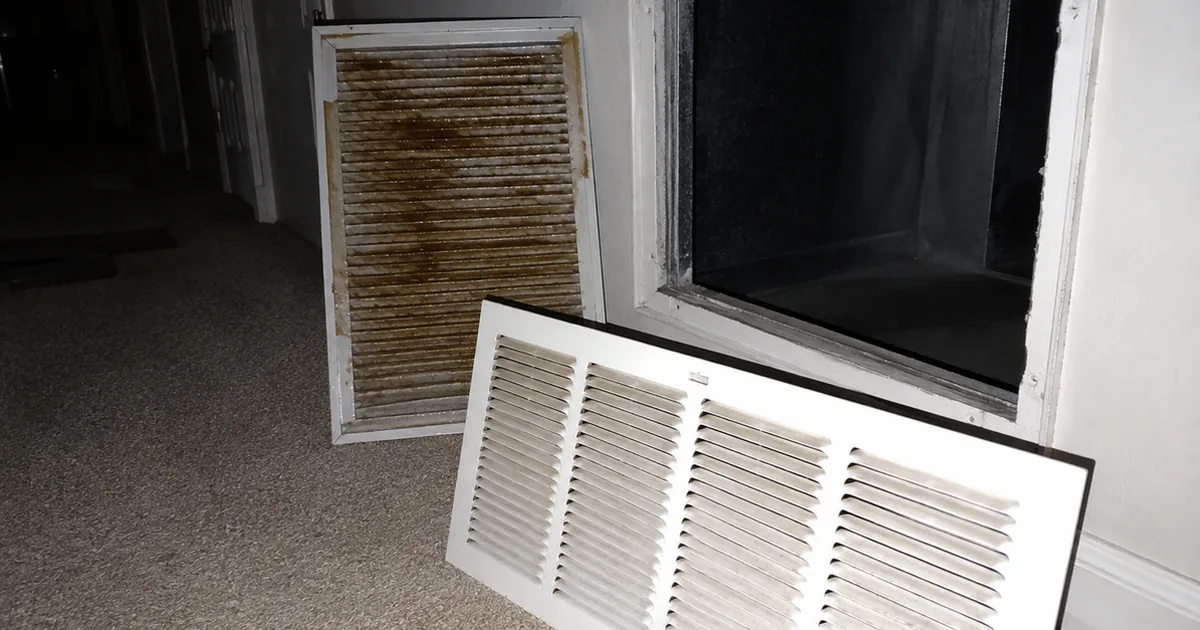
Every inspector who has worked long enough in California has walked into a house that looked clean and smelled like a bar at closing time. Usually it is the same set of clues. The ceiling above the doorways is a shade warmer than the ceiling in the middle of the room. The inside faces of the kitchen cabinet doors are amber where the outside faces are white. There is a rectangle of clean paint behind where a picture hung. Pull the return grille off the furnace and the filter frame has a sticky brown film on it that a dry rag does not lift.
None of that used to be a required disclosure item in California. As of January 1, 2026, part of it is.
Assembly Bill 455, signed by the Governor on October 3, 2025 as Chapter 263 of the Statutes of 2025, adds Section 1102.6k to the Civil Code. It puts residue from smoking tobacco and nicotine products into the same category of things a seller of a single-family home has to tell a buyer about in writing. It also quietly rewrites the state’s homeowner hazards booklet. Here is what the statute says, what it deliberately does not say, and where a home inspection fits.
What AB 455 actually requires
The core requirement is one sentence, and it is narrower than most of the coverage has suggested. The statute makes it the sole responsibility of a seller of a single-family residential property who has actual knowledge of the existence of any residue from smoking tobacco or nicotine products, or any history of occupants smoking tobacco or nicotine products on the property, to disclose that knowledge to the buyer in writing.
Two separate things trigger the duty. The first is knowledge of residue itself. The second is knowledge of a history of smoking on the property, whether or not the seller believes any residue was left behind. A seller who never smoked but who knows the prior owners did, or knows a long-term tenant did, has knowledge of a history of smoking on the property.
The obligation sits inside Article 1.5 of the Civil Code, the same article that governs the Transfer Disclosure Statement and the rest of California’s residential disclosure framework. That placement matters more than the sentence length suggests. It means the duty attaches to the same transactions the TDS attaches to, and it means the existing law about how and when those disclosures are delivered carries over rather than being reinvented.
What the statute defines as residue, and what it leaves open
The bill defines residue from smoking tobacco as a chemical accumulation resulting from the smoking of tobacco or nicotine products, and says it may be indicated by the smell of tobacco smoke or by test results that indicate elevated levels of nicotine on surfaces or in dust.
That definition is doing two useful things at once. It names smell as a legitimate indicator, which is how the issue actually surfaces in almost every transaction. And it names surface and dust nicotine testing as the other indicator, which is the analytical method researchers use, without requiring anyone to run that test.
Note what it does not do. It sets no numeric threshold. There is no parts-per-square-centimeter figure in the statute above which a house is legally affected and below which it is not. That is a deliberate gap rather than an oversight, and it is worth understanding, because it means a dispute about this law will almost always be a dispute about what the seller knew, not about a lab number. Researchers publishing on indoor nicotine loading have proposed reference levels, but the Legislature did not adopt one.
The term most people use for this, thirdhand smoke, does not appear in the operative disclosure sentence at all. The statute describes the thing rather than naming it.
The half of the bill almost nobody is reading
AB 455 is not only a disclosure bill. It also amends Business and Professions Code section 10084.2 and adds Health and Safety Code section 25417.2, and those two changes reach further than the disclosure sentence does.
Section 10084.2 governs the booklet California calls the Homeowners’ Guide to Environmental Hazards, the consumer publication a seller can deliver to satisfy certain hazard disclosure duties. AB 455 expands what it has to cover, adding sections on wildfires, climate change and sea level rise, and directing the Department of Toxic Substances Control to consult departments within the Natural Resources Agency in writing them. The new Health and Safety Code section 25417.2 requires the department to add a thirdhand smoke section to that same guide, covering what the residue is, why it matters, how it can be mitigated, and where to find more. To hold the cost down, the bill has the department rely on the Center for Tobacco and the Environment at San Diego State University to draft the content and then review it for adequacy. No deadline is set, so that booklet language will land when it lands rather than on January 1.
For an agent, the practical read is that the disclosure packet you hand a buyer in 2027 will look different from the one you handed them in 2025, and not only because of the smoking line.
Why “actual knowledge” is the hinge of this whole law
Everything turns on the phrase actual knowledge, and it is misread in both directions.
AB 455 does not require a seller to investigate. No duty to sample surfaces, no duty to interview prior owners, no duty to test dust. A seller who genuinely does not know whether anyone ever smoked in a house they bought four years ago is not required to find out. The statute reaches what the seller knows, not what the seller could have discovered.
At the same time, actual knowledge is not the same as written proof, and sellers who assume the standard is higher than it is tend to get into trouble. A seller who lived in the house for eleven years while a family member smoked in the den knows. A seller who repainted a ceiling specifically because of nicotine staining knows. A landlord who charged a departing tenant a smoke remediation fee knows. In each case the knowledge is real even though nobody ran a test.
The general California rule for disclosure applies here as it does everywhere else in Article 1.5: disclosing something costs less than litigating whether you should have. That advice predates AB 455 and has not changed.
What a home inspection can and cannot tell you here
A standard home inspection is a visual, non-invasive examination of the accessible systems and components of a house. It is not an air quality test, and it is not a chemical assay. An inspector cannot hand you a nicotine number, and any inspector who offers to is describing a laboratory service, not an inspection.
What a good inspection does do is document the physical evidence, which is often more decisive in a negotiation than a number would be. On a house with a real smoking history we are writing down and photographing things like these:
- Differential staining. Nicotine and tar deposit on cooler surfaces and in still air. The classic pattern is a ceiling darker in corners, above door casings and in the shadow of ceiling joists, with sharper contrast wherever something hung on a wall. Repaint a room without a stain-blocking primer and the discoloration often bleeds back within a year or two as a faint uneven warm cast rather than a defined stain.
- Cabinet and hardware interiors. Insides of upper cabinets, the backs of doors and the tops of trim get missed during a cosmetic clean and show the original condition.
- HVAC condition. The return plenum, filter rack, blower wheel and accessible sides of the coil are where circulating residue collects. A blower wheel with a tacky uniform brown coating on the fin faces is a strong indicator, and a real serviceability finding independent of smoke, because a loaded wheel loses airflow.
- Duct interiors at accessible registers. Not a duct inspection, and we say so, but the first two feet inside a register boot tell you something.
- Soft materials still in place. Carpet pad, underlayment and original window coverings hold residue far longer than hard surfaces, and they are why a house can smell fine on a dry January morning and strongly on a humid afternoon.
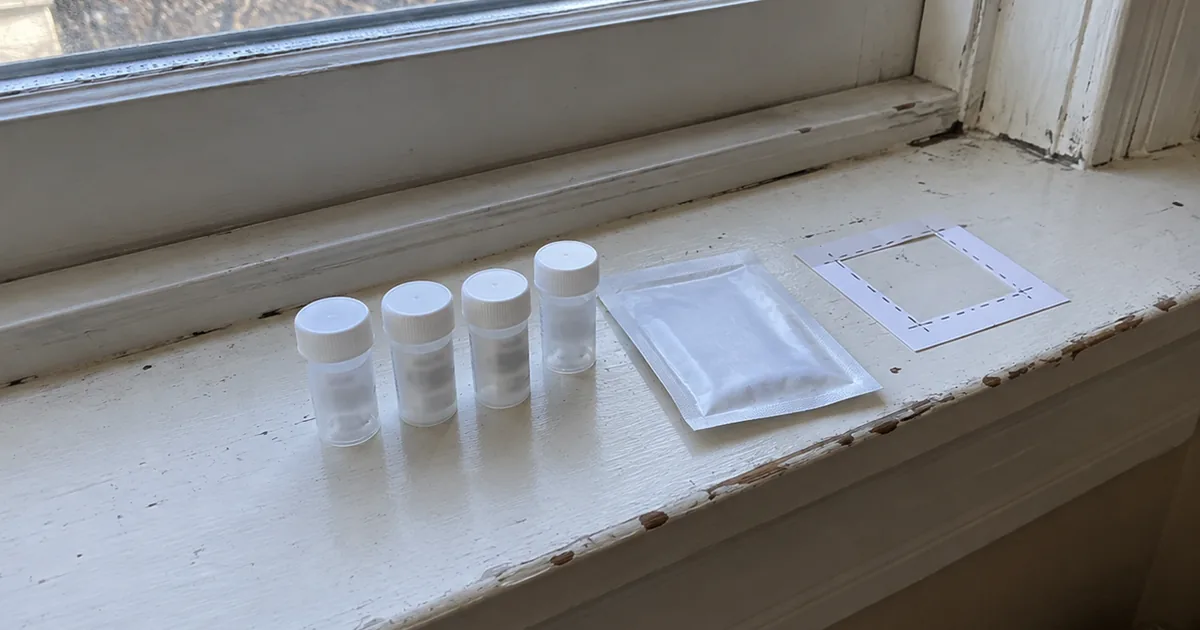
We report those as observations with photographs and let the buyer decide what they mean. Where the evidence is significant and the buyer wants a number, the right referral is a firm that performs surface wipe or dust sampling for nicotine. That split between what a general inspection documents and what a specialist quantifies is the same one we draw in our guide to how mold assessment scope actually works.
Our reports also carry infrared thermal imaging as standard rather than as an upgrade, which matters here. Odor that persists after a full repaint is frequently a moisture problem wearing a smoke costume, or a smoke problem made worse by a moisture problem, and a thermal scan is how you separate the two. Our overview of what thermal scanning actually finds covers the method.
What buyers should do with a disclosure like this
A disclosure that says yes is a starting point, not a verdict. Houses with smoking histories sell in California every day and most are fine after the right work. The question is scope, and scope depends on materials.
Hard, sealed surfaces clean and seal well. Painted drywall holds if it is primed with a genuine stain-blocking shellac or oil-based primer rather than a standard latex. Sealed hardwood, glass, tile and metal all clean. Porous and absorbent materials usually get replaced rather than cleaned: carpet and pad, unsealed subfloor under heavily affected carpet, popcorn and heavy-texture ceilings, aged fiberglass batts in an attic with a leaky ceiling plane, and original fabric window coverings show up on remediation scopes again and again.
The HVAC system is the item buyers most often forget and most often regret. A cleaned house with a coated blower wheel and a loaded coil will re-scent itself within weeks of the first heating cycle. Getting a licensed HVAC contractor to quote a proper cleaning, and to say honestly whether the ductwork is worth cleaning or replacing, belongs in the contingency period rather than after close. And ask when the last repaint happened and what primer was used. A repaint two weeks before listing with no stain-blocking primer is a cosmetic cover, and it will tell on itself.
What agents and sellers should do differently in 2026
For listing agents, the workflow change is small and worth making routine. Put the question into your seller intake conversation rather than waiting for it to surface: has anyone smoked or vaped in this house, to your knowledge, ever. Ask about tenants and prior owners, not just the current seller, because the statute reaches knowledge of a history of smoking on the property rather than only the seller’s own conduct. Then get the answer into the disclosure package in writing, not into an email thread.
For sellers whose answer is yes, the strategic move is almost always to do the work before listing rather than argue about it in escrow. A buyer walking a house that has been primed, repainted, recarpeted and had its HVAC serviced is evaluating a finished house. A buyer walking one that still smells is doing arithmetic on a remediation bid, and their number is always higher than the seller’s would have been. A pre-listing inspection is the usual way to get ahead of that.
For buyer’s agents, treat a yes as a reason to widen the inspection conversation rather than to walk, and tell your inspector before the appointment. It changes what gets photographed and how much attention the HVAC system gets.
Where AB 455 sits among California’s other 2026 changes
AB 455 arrived in a cluster. Balcony and exterior elevated element inspection reports now travel inside condominium disclosure packages under SB 410. Fire hazard zone sellers face expanded fire hardening disclosure under AB 38. Pool and spa safety features have to be itemized under SB 442. Our roundup of the 2026 California laws that touch inspections covers those in detail, and the separate AB 723 listing photo disclosure law took effect on the same date, as did the 2025 California Building Standards Code.
The through line across all of them is the same. California keeps narrowing the gap between what a buyer can see on their own and what the seller already knows. AB 455 is the version of that aimed at something a buyer often can smell but cannot easily prove, and cannot price without help.
We inspect across the state under all of it, from the older housing stock in San Francisco and Oakland, through the Marin canyon housing around Mill Valley where a closed-up shaded house holds odor longest, out to the newer Solano subdivisions in Fairfield, and down through San Diego and the Inland Empire.
Frequently asked questions
Does AB 455 apply to condominiums and multi-unit buildings? The disclosure sentence in Civil Code section 1102.6k is written around a seller of a single-family residential property, which is the same scope language the surrounding Article 1.5 disclosure framework uses. Whether a particular condominium unit or small multi-unit sale falls inside that scope is a question for your broker’s compliance team or a real estate attorney rather than one to assume either way.
Does vaping count? The statute reaches residue from smoking tobacco or nicotine products, and a history of occupants smoking tobacco or nicotine products. Nicotine products is broader language than tobacco alone. Sellers with knowledge of heavy vaping in a property should treat the safer course as the obvious one and disclose it.
Can a seller avoid the duty by not looking into it? The statute reaches actual knowledge and does not create a duty to investigate. It also does not protect a seller who knows and stays quiet. Deliberately avoiding a question you already know the answer to is not the same as not knowing.
Will my home inspection report say whether a house has thirdhand smoke? It will say what we observed and photographed: staining patterns, HVAC condition, odor noted at the time of inspection, and the condition of the materials most likely to hold residue. It will not report a nicotine concentration, because a general home inspection is a visual examination rather than a laboratory test. Where the evidence warrants it, we say so plainly and tell you what kind of specialist quantifies it.
Is a house with a smoking history worth buying? Frequently yes, at the right price, with the right scope. The failure mode is not the smoking history. It is buying one and budgeting only for paint.
The bottom line
AB 455 is a small statute with a wide reach. It adds one honest question to California’s disclosure framework, and it does it in the narrow, knowledge-based way the rest of that framework already works: tell the buyer what you know, in writing, and do not pretend not to know it.
For buyers, the disclosure is useful but incomplete on its own. It tells you a history exists. It does not tell you what it left behind, which materials hold it, or what the HVAC system is going to do about it on the first cold night. That part still takes somebody standing in the house with a flashlight, a camera, and enough experience to know that the amber line above the door casings is not a lighting artifact.
Schedule an inspection · See what’s included · Sample report · FAQ · Same-day report · Pay-at-closing available
Related reading
- ASHI’s 2026 Standard of Practice: What Actually Changed. What a home inspection is required to cover, what it never was, and the tools the standard treats as optional.
- California’s Flipper Disclosure Law: What AB 968 Requires. The 18 month resale disclosure, the contractor threshold that moved, and what a fast renovation looks like at inspection.
This update is provided for general information and is not legal advice. For questions about how AB 455 applies to a specific transaction, consult a qualified real estate attorney or your broker’s compliance department. For inspection questions, our team is always glad to help.