Formaldehyde and Engineered Wood: What a Fountain Valley Remodel Really Means for Air Quality
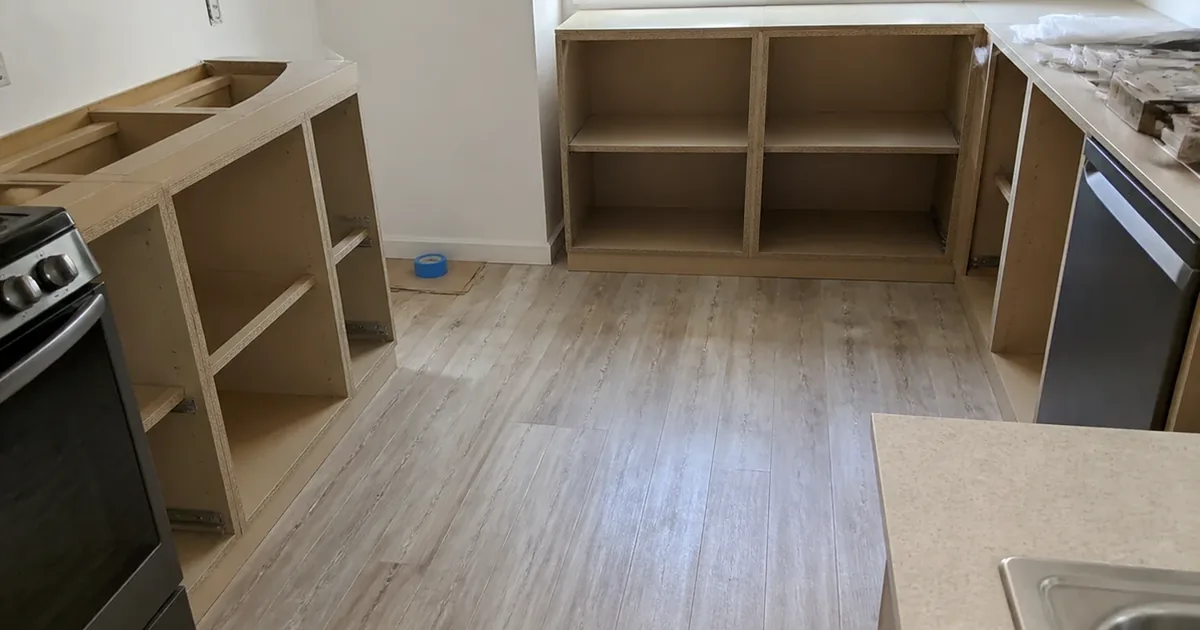
A buyer touring a recently flipped Fountain Valley tract home noticed a faint chemical smell as soon as the front door opened, strongest in the kitchen where every cabinet box was brand new particleboard and the entire main floor had just been laid with new laminate flooring. The agent had described the remodel as a full upgrade, and it was, new cabinetry, new counters, new floors throughout. What the listing did not mention, because it is not the kind of thing a listing typically covers, was that fresh engineered-wood products off-gas formaldehyde at their highest rate when they are new, and a house this freshly remodeled was still in the middle of that release period.
We are describing this as a composite of a pattern we see across Fountain Valley’s active remodel market, not one identified property or job. Fountain Valley’s tight, consistent 1960s and 70s tract housing stock and its genuinely active kitchen and flooring remodel culture, homes updated with new particleboard and MDF cabinetry, new laminate flooring, and other engineered-wood products, is exactly the scenario where this becomes a real and relevant question for a buyer rather than an abstract concern.
This guide is for the agent working Fountain Valley and the surrounding communities we also serve, including Costa Mesa, Huntington Beach, and Garden Grove, where a recently remodeled kitchen or a house with all-new flooring comes up often enough during a sale that agents deserve a clear, honest answer about what that fresh construction actually means for indoor air. Here is what formaldehyde is and where it comes from in a house, why a recent remodel is a real risk-elevation factor, what a general inspection actually assesses versus what it explicitly does not, and practical guidance for a buyer moving into a heavily remodeled home.
Why this matters for the agent
Fountain Valley’s housing stock is unusually uniform, built almost entirely in one tight construction window in the 1960s and 70s, which means the remodel cycle across the city tends to move in waves as those original kitchens and floors reach the end of their useful life at roughly the same time. That creates a real, active market for kitchen and flooring remodels, and a lot of that remodel work involves engineered-wood products: particleboard or MDF cabinet boxes, laminate flooring, and in some cases engineered-wood or laminate countertop substrates, all of which are commonly manufactured using formaldehyde-based resins.
The problem is that “freshly remodeled” reads as an unambiguous selling point to most buyers, newer is better, nothing to worry about. What that framing leaves out is that engineered-wood products off-gas formaldehyde at their highest rate when they are new, tapering down over time as the resin cures and stabilizes. A house that was remodeled a few weeks or months before a buyer moves in is, for a real if temporary period, in an elevated off-gassing window that an older, unremodeled home simply is not. An agent who understands that distinction can set the right expectation with a buyer, especially one with respiratory sensitivities, rather than letting “recently remodeled” stand in as an unqualified positive.
Why a recent remodel is a real risk-elevation factor
What formaldehyde is and where it actually comes from in a house. Formaldehyde is a chemical used in the resins that bind wood particles and fibers together into engineered-wood products, particleboard, medium-density fiberboard, and some types of plywood and laminate flooring. Solid lumber does not contain these resins, but the manufactured products that have largely replaced solid wood in modern cabinetry and flooring, because they are cheaper and more dimensionally stable, commonly do. Once installed, these products release formaldehyde gas slowly over time as the resin continues to cure and as temperature and humidity changes cause small amounts of the chemical to escape from the material’s surface and edges. The release rate is highest immediately after manufacture and installation and gradually decreases over months to years, though it does not necessarily stop entirely.
This is the detail that makes the topic genuinely relevant to a Fountain Valley buyer rather than a generic health disclaimer. A kitchen remodeled with new particleboard cabinet boxes, or a house with wall-to-wall new laminate flooring, has a meaningfully higher concentration of fresh, actively off-gassing engineered-wood material than a home with the same products installed years earlier. The off-gassing curve is steepest in the first weeks and months after installation, which means a buyer moving into a just-remodeled house is, for a real if temporary period, living with elevated formaldehyde emission compared to what that same house will have a year or two later.
This is not a reason to avoid a remodeled home. It is a reason to treat the timeline of the remodel as a genuinely relevant piece of information, the same way an agent would flag a fresh coat of oil-based paint or new carpet adhesive as something worth ventilating before move-in.
What a general inspection assesses, and what it explicitly does not
A standard visual home inspection can identify the presence of new engineered-wood products, cabinetry, flooring, and similar finish materials, note their apparent condition and installation quality, and assess general ventilation adequacy, whether the kitchen has a functioning range hood vented to the exterior, whether windows operate, and whether the home has any obvious ventilation deficiency. We also document a noticeable strong chemical odor if one is present at the time of the inspection, the same way we would document any unusual smell.
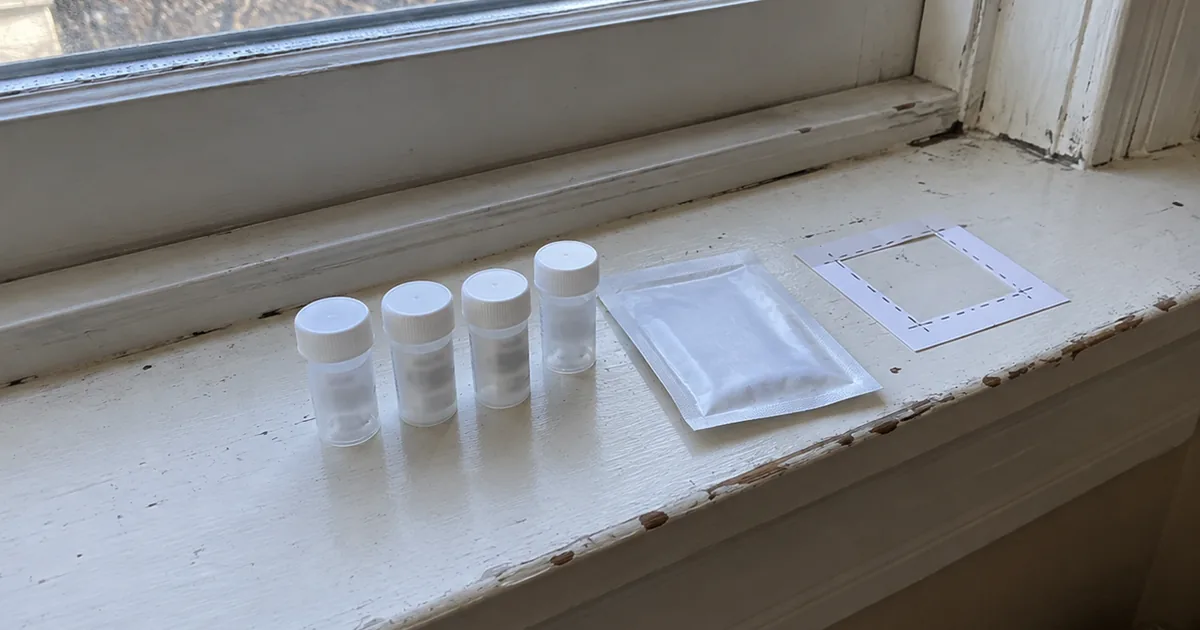
What a standard inspection explicitly does not do is measure air quality or formaldehyde concentration. That requires specialized equipment, typically a passive sampling badge or an active air-sampling device left in the home for a defined period and then sent to a lab for analysis, a separate, opt-in service that a general home inspection is not equipped or scoped to perform. This is the same scope-limitation logic that applies to mold: a visual inspection that does not flag an obvious odor or visible material is not the same thing as a report that clears a property of an air-quality concern. It means we did not observe an obvious problem in the areas we could access and assess visually, a narrower and more honest statement than a clean bill of health.
Practical guidance for a buyer moving into a heavily remodeled home
A few practical steps genuinely reduce a buyer’s exposure during the elevated off-gassing window without requiring specialized testing. Ventilating the house before move-in, running exhaust fans, opening windows, and airing out newly finished rooms for several days to weeks before occupying them, meaningfully accelerates the release of trapped formaldehyde into moving air rather than a closed room.
Looking for compliance labeling is a real, verifiable step a buyer or agent can take during a showing. Cabinetry and flooring manufactured to meet CARB Phase 2 or federal TSCA Title VI formaldehyde emission standards carry a compliance label or a manufacturer’s documentation stating the product meets that standard, a genuine low-formaldehyde certification a buyer can ask a seller or contractor to confirm, rather than an unverifiable marketing claim.
For a buyer with known respiratory sensitivities, asthma, or other conditions where indoor air quality is a real health consideration, considering a specialized air-quality test in a heavily remodeled house is a reasonable, proactive step, the same category of decision as ordering a specialized mold assessment when a moisture-adjacent finding calls for one.
See what every Fountain Valley inspection includes →
What agents should tell every buyer
- Formaldehyde comes from the resins in particleboard, MDF, and some plywood or laminate products, released as a gas over time, at the highest rate when the material is new.
- A recently remodeled kitchen or newly floored home has a real, if temporary, elevated off-gassing period compared to the same materials a year or two later.
- A general home inspection identifies engineered-wood products present, assesses general ventilation, and documents a noticeable strong chemical odor, but it does not measure air quality or formaldehyde concentration.
- CARB Phase 2 and TSCA Title VI compliance labeling on cabinetry or flooring are real, verifiable low-formaldehyde standards worth asking a seller or contractor to confirm.
- Ventilating a recently remodeled house before move-in, exhaust fans running and windows open for several days to weeks, meaningfully reduces a buyer’s exposure during the elevated period.
- A buyer with respiratory sensitivities moving into a heavily remodeled home is a reasonable candidate for a specialized air-quality test, the same category of proactive decision as a specialized mold assessment.
Red flags during showings
- A noticeable chemical or “new construction” smell that is strongest near new cabinetry or fresh flooring, especially in a kitchen or a recently converted room.
- A remodel disclosed or apparent as very recent, within the last few weeks or months, without any indication the home has been ventilated since.
- No compliance labeling visible on new cabinet boxes or flooring packaging left behind by a contractor.
- A kitchen range hood that does not appear to vent to the exterior, or windows that do not open, limiting the home’s ability to ventilate off-gassing materials.
- A buyer or family member who mentions asthma, chemical sensitivity, or other respiratory concerns during a showing of a heavily remodeled home.
The negotiation playbook
When a formaldehyde-adjacent question surfaces in a Fountain Valley escrow, the path usually depends on how recent the remodel is and how sensitive the buyer’s household is.
The first path is no action at all, appropriate when the remodel is not recent, general ventilation is adequate, and no household member has a specific sensitivity, in which case the elevated off-gassing window has likely already passed.
The second path is a ventilation plan before move-in, appropriate for any recently remodeled home regardless of sensitivity, simply airing the space out for a defined period before occupying it full time.
The third path is a specialized air-quality test before or shortly after close, warranted whenever a household member has a known respiratory sensitivity and the remodel is recent enough that off-gassing is plausibly still elevated, so the buyer has an actual answer rather than a guess before committing to the home.
The fourth path is confirming compliance labeling directly with the contractor or seller, a straightforward paper-trail step that resolves the question for a buyer who wants documentation rather than a test.
How the inspection actually catches it
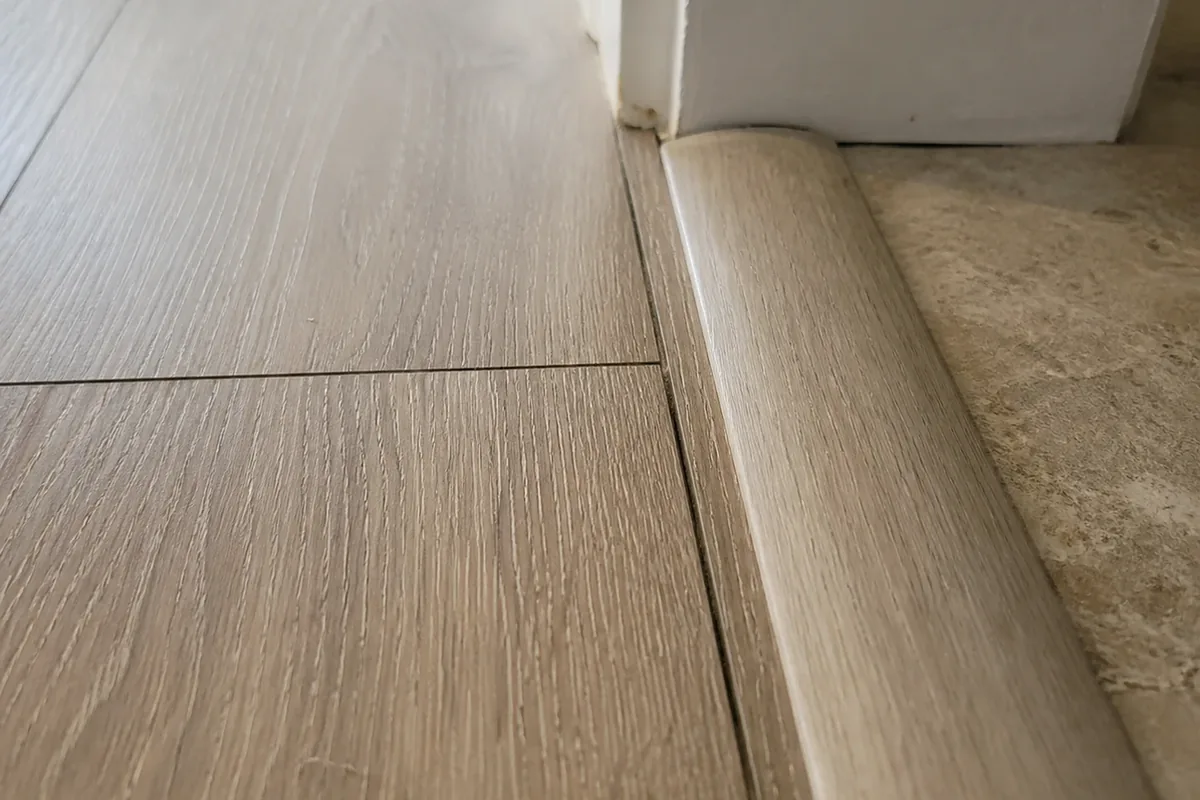
We walk every accessible room noting the presence and apparent age of engineered-wood cabinetry, flooring, and similar finish materials, and we document any noticeable chemical odor as part of the same walkthrough.
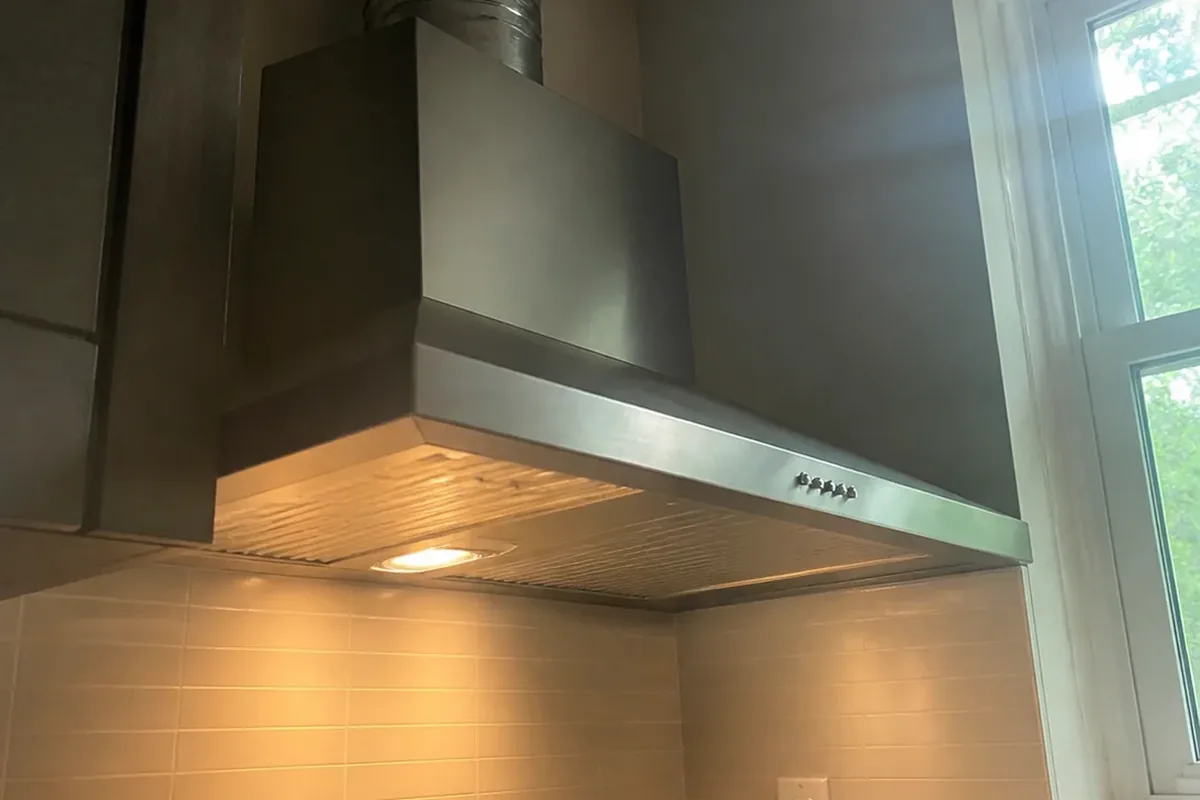
We assess general ventilation, whether the kitchen exhaust vents to the exterior and whether windows throughout the home operate normally, since ventilation is the practical factor that most directly affects how quickly off-gassing clears.
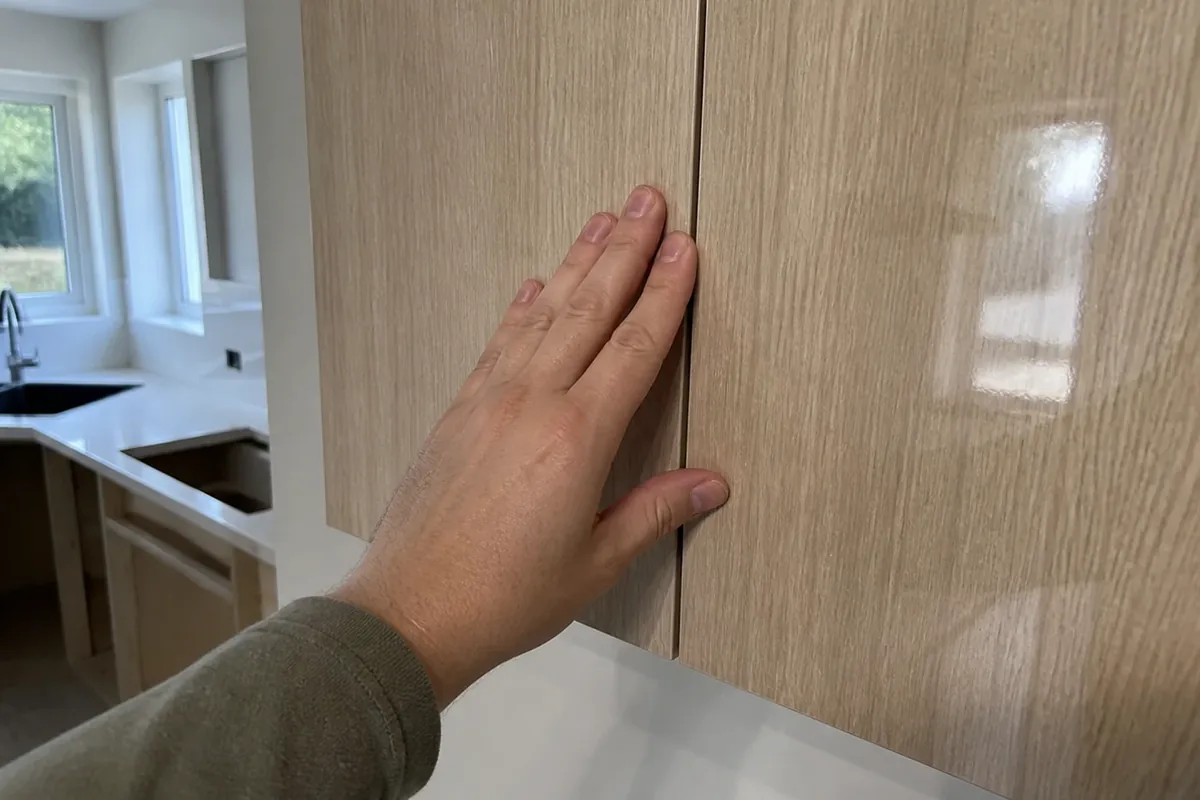
Where the evidence calls for more than a visual assessment, a strong persistent odor, or a household with a known sensitivity moving into a heavily remodeled home, we say so plainly and recommend a specialized air-quality test rather than guessing at a result we are not equipped to measure.
Our what’s included page covers the full interior-systems scope of every Fountain Valley inspection.
Quick FAQ
Does Inspection.re test for formaldehyde or air quality? No. A general home inspection identifies the presence of engineered-wood products, assesses general ventilation, and documents a noticeable chemical odor if present. Air sampling and laboratory formaldehyde analysis are performed by a specialized air-quality testing service, a separate, opt-in service.
Is this the same topic as National City’s mold-assessment-scope article? No, and the distinction matters. That article covers mold, a biological growth hazard tied to moisture. This article covers formaldehyde off-gassing from engineered-wood building materials, a chemical hazard with a completely different source and mechanism. Both articles share the same structural device, general inspection scope versus a specialized, opt-in test, but the underlying hazards are unrelated.
How long does formaldehyde off-gassing actually last? It varies by product and installation conditions, but the release rate is highest when a material is new and tapers over time, generally over a period of months. We do not assert a specific duration as a guarantee; a buyer with a specific health concern should consult a specialized air-quality testing service.
What does CARB Phase 2 or TSCA Title VI compliance actually mean? Both are formaldehyde emission standards that engineered-wood products can be manufactured to meet, and compliant products carry a manufacturer label or documentation confirming it. Checking for that labeling on new cabinetry or flooring is a real, verifiable step, not a marketing claim.
Should a buyer walk away over a strong chemical smell in a remodeled home? Rarely on its own. Most situations resolve with ventilation before move-in or, where a household sensitivity is involved, a specialized air-quality test. The real question is how recent the remodel is and whether the home has had a chance to air out.
The honest summary
A recently remodeled kitchen or a house with new laminate flooring is a genuine improvement, and it also comes with a real, temporary elevated off-gassing period that a Fountain Valley buyer deserves to understand rather than assume away. We document what we can see, the presence of new engineered-wood materials, general ventilation adequacy, and any noticeable chemical odor, and we tell a buyer plainly when the situation calls for a specialized air-quality test rather than a guess.
We walk every accessible room on every Fountain Valley inspection looking for exactly these signs, and where the evidence calls for more, we say so rather than guessing.
See what every inspection includes → · Read our FAQ → · Explore Fountain Valley home inspections →
Related reading
- What a Home Inspection Does and Does Not Say About Mold in National City. A different hazard class, biological growth tied to moisture, sharing this article’s general-inspection-scope-versus-specialized-testing framing.
- Why Infrared Scanning Matters in California Homes. How thermal imaging can help identify moisture and ventilation issues relevant to a healthy indoor environment.
- Garden Grove Ducted HVAC Returns Agent Guide. How undersized return-air ductwork in tract-home additions affects whole-house air circulation, a companion consideration for ventilation.
- Home Inspection Checklist for Los Angeles Buyers. The regional issues that matter most and how to negotiate with your report.