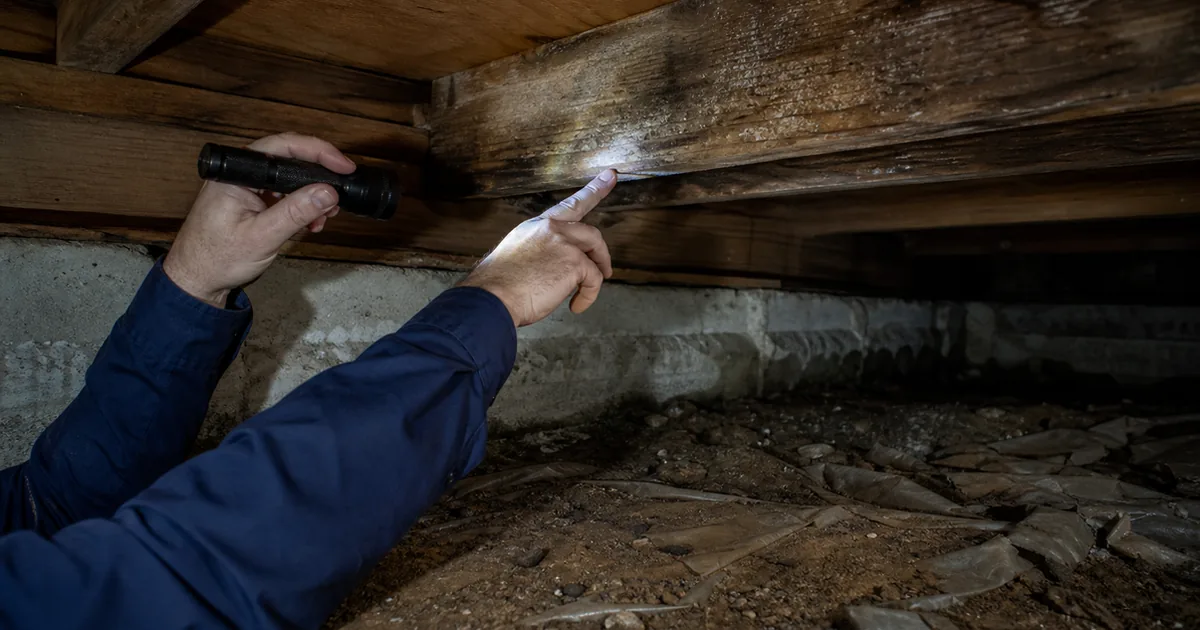
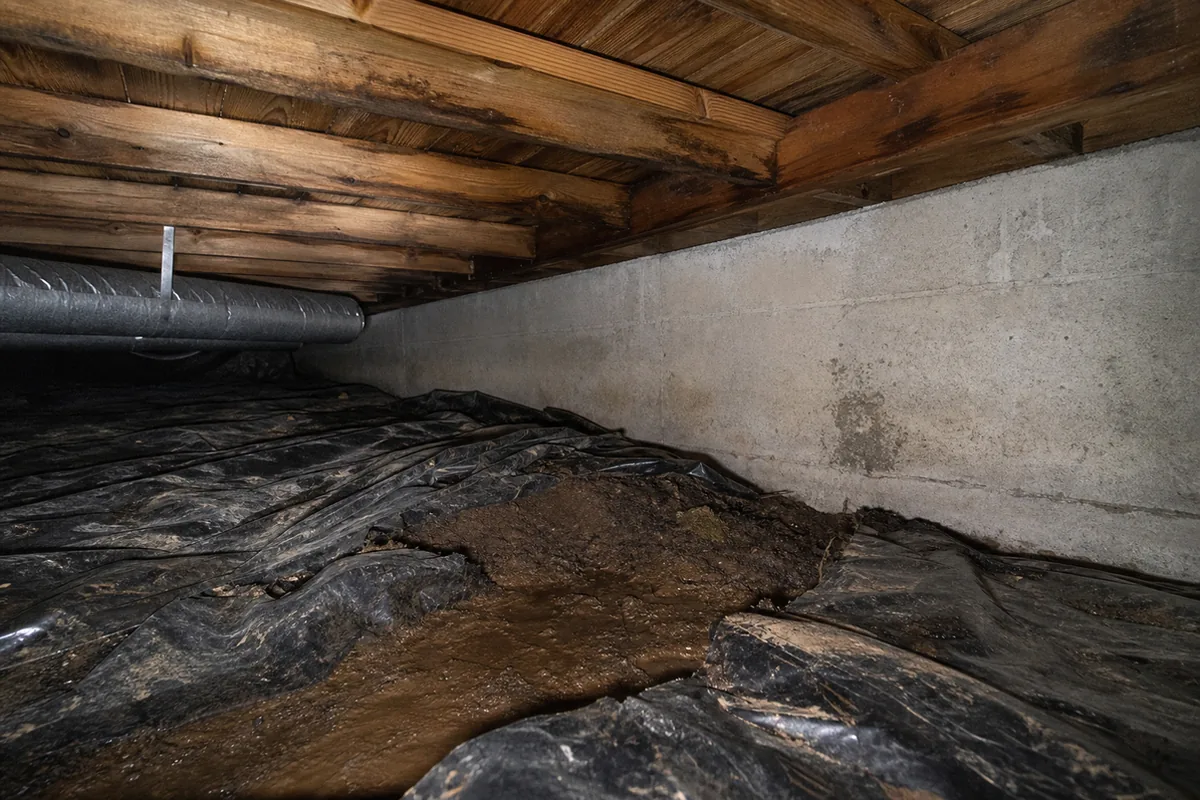
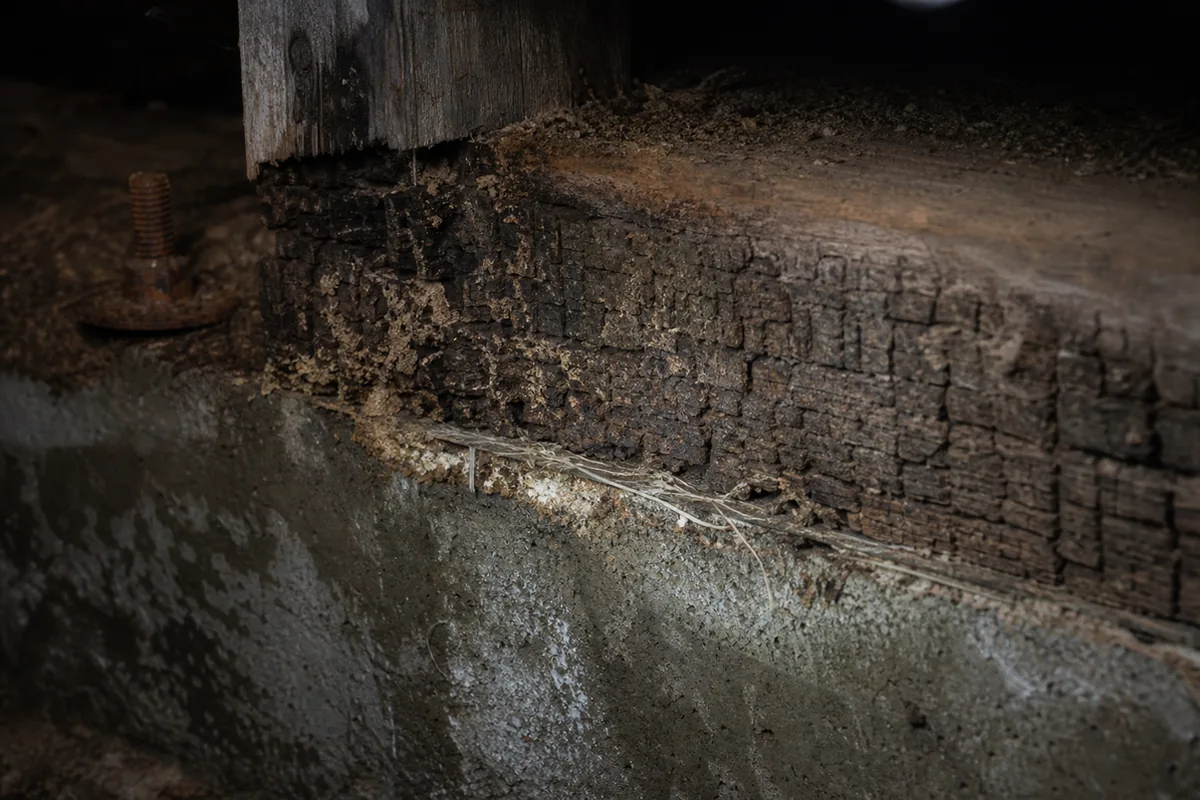
On a North of Montana Spanish that presented as move-in ready, the floors had a soft spot near the back of the house that you could feel more than see. Underneath, in the crawlspace, the story was written on the joists. The wood was dark and damp, the vapor barrier was torn and pushed aside, and one of the mudsills had the crumbly, cubed look of fungal decay. The home smelled fine. The structure under the floor was slowly being taken apart by water.
This is the quiet Santa Monica problem. So much of the city’s older housing sits on raised foundations, from the 1920s homes north of Montana to the bungalows in Ocean Park, and the marine layer keeps the ground and the air under those homes damp for long stretches. The house shows beautifully at eye level. The moisture works underneath, out of sight.
This guide is for the agent who wants to understand what is happening below the floor before the buyer’s inspector crawls under. Here is why coastal moisture matters, what it does to a raised-foundation home, and how to keep a deal moving when it turns up.
Why this matters for the agent
Here is what is at stake. Wood-destroying fungus, what people loosely call dry rot, needs moisture to grow, and once it is established it eats the structural wood that holds the floor up. Joists, subfloor, mudsills, and posts are exactly the components that a damp crawlspace threatens. Left long enough, that is not a cosmetic repair. It is structural.
For your transaction, subfloor moisture and decay can move from a small note to a real number fast, and it is the kind of finding that rattles a buyer because it sounds like foundation trouble. An agent who understands it can frame it accurately: usually a moisture-management and wood-repair problem, sometimes larger, always worth a specialist’s eyes. The agent who is caught flat-footed watches a buyer spiral over a word like “rot.” We have seen calm, informed handling save deals that panic would have killed.
What the marine layer does to a raised-foundation home
A raised foundation lifts the house off the ground on a perimeter wall and interior posts, leaving a crawlspace underneath. That design has real advantages, and it depends on one thing: the space under the house has to stay dry enough. Building code requires crawlspace ventilation or an approved conditioned-crawlspace design for exactly this reason, and a ground-cover vapor barrier is there to keep soil moisture from rising into the space.
Santa Monica’s climate works against all of that. The marine layer holds humidity for long stretches, the coastal soil stays damp, and cool under-floor air lets moisture condense on wood and metal. When the vents are blocked, the vapor barrier is torn or missing, or a plumbing drip adds water on top of the ambient damp, the crawlspace stays wet. Wet wood invites fungal decay and wood-destroying insects, and it corrodes the metal connectors and ductwork down there too. The result is a home that looks perfect upstairs and is quietly deteriorating below.
This coastal moisture pattern is not unique to the crawlspace. It shows up as bluff-top moisture intrusion behind stucco farther down the coast, and inland it takes the form of ground moisture rising through a slab where the water table sits high.
What agents should tell every buyer
When a buyer is touring older Santa Monica homes, give them these points before they write.
- A raised-foundation home has a crawlspace that needs to stay dry, and near the coast that is not automatic. Ask whether the home has had any moisture or subfloor work.
- Soft or bouncy spots in the floor, especially near bathrooms, kitchens, or the back of the house, are worth flagging for a close look underneath.
- Dry rot is a moisture problem first. Fixing the wood without fixing the water source just buys time. The right repair addresses both.
- A musty smell, sticking doors, or cupped hardwood can all point to moisture under the house, not just cosmetic wear.
- This is usually a manageable repair, but the scope depends on how long it has been wet. A specialist sizes it, not a guess.
- The home inspection identifies the moisture and the affected wood. A structural or wood-repair specialist confirms the scope. Line them up. Our what every inspection includes page shows how far we go under the house.
A buyer who hears this from you reads the crawlspace section of the report as information, not a catastrophe.
Red flags during showings
You can catch the early signs without going under the house. Watch for these.
- Soft, springy, or sloping spots underfoot, especially near wet rooms and exterior walls.
- A musty or earthy smell that is strongest near floor level or in a closet over the crawlspace.
- Cupped, stained, or lifting hardwood, or tile grout cracking in a line.
- Doors and windows that stick at the bottom, which can follow floor movement.
- Blocked, painted-over, or missing foundation vents around the perimeter.
- Efflorescence or staining on the base of the perimeter foundation wall.
If we see these, we document them and go under the house to confirm before we tell the buyer where it stands.
The negotiation playbook
When subfloor moisture or decay surfaces, the deal usually moves one of a few ways.
The first path is seller-repairs to a specialist scope. The seller addresses the moisture source and the damaged wood, permitted where required, before closing, and provides documentation. This is cleanest when the problem is localized. Push for it when the decay is confined and the fix is well defined.
The second path is a credit with a real estimate. The buyer takes a closing credit sized to a wood-repair or structural specialist’s written scope and completes the work after closing. This works when the buyer is comfortable managing it. Size the credit to the specialist’s number, and remember that decay can extend past what is visible until the area is opened up, so a cushion is reasonable.
The third path is the source-first agreement. Sometimes the smart move is to fix the water source now, a drainage issue, a plumbing leak, a missing vapor barrier, and re-evaluate the wood after it dries. We are honest that repairing wood while the crawlspace is still wet is money poorly spent. Fix the water, then the wood.
The fourth path is walk-away. On occasion the decay is widespread, the mudsills and multiple joists are involved, and the repair is larger than the buyer planned for. A buyer is allowed to decide that. We document what we found and when, and the decision is theirs and their specialist’s.
How the inspection actually catches it
The crawlspace is one of the most useful parts of an inspection on an older Santa Monica home, and we go into it when it is safely accessible. Under the house we document the joists, the subfloor, the mudsills, and the posts, look for staining, fungal decay, and insect damage, check the vapor barrier and the ventilation, and note any active plumbing drips or standing water. What we find down there often explains what we felt upstairs.
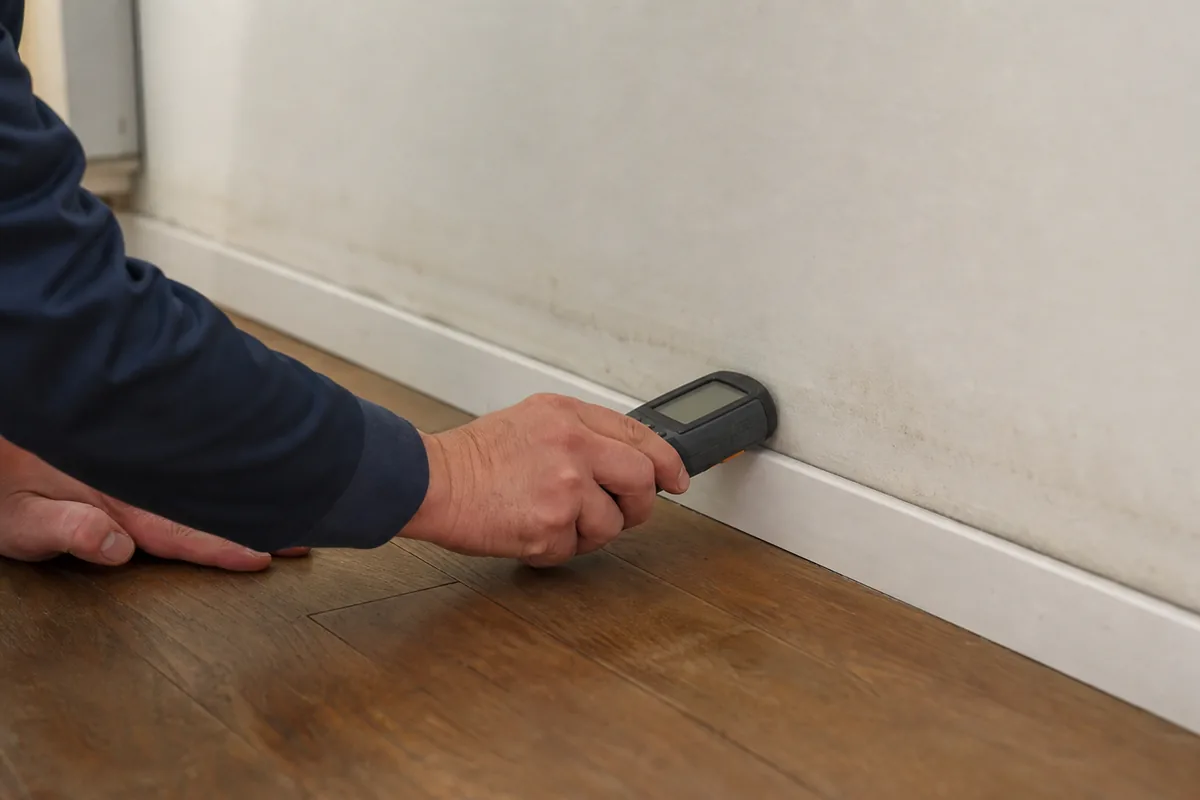
We also use thermal imaging and moisture meters to find damp areas behind walls and at floor level that the eye cannot see, which is how a small leak gets caught before it becomes a rotted joist. Our guide on why infrared scanning matters in California homes covers how that works. What we do not do is make the repair or open up finished areas. We document what is there and hand the buyer a clear picture and the right specialist. If we see something worth flagging, it goes in the report, and our how to read a home inspection report guide helps the buyer weigh it.
Schedule a Santa Monica inspection →
Quick FAQ
Is dry rot the same as a foundation problem? Usually no. Dry rot is fungal decay of the wood caused by moisture, and it affects the joists, subfloor, and mudsills rather than the concrete foundation itself. It can feel like a foundation issue underfoot, which is why it needs a proper look. A specialist distinguishes wood repair from any structural concern.
Does every raised-foundation home near the coast have this? No. Plenty of raised-foundation homes stay dry because the ventilation works, the vapor barrier is intact, and there are no leaks. The point is that the coast raises the odds, so the crawlspace deserves a real inspection rather than an assumption.
Can moisture under the house affect the buyer’s health? Persistent dampness under a home can support mold growth, which is a reason to address the moisture source rather than just the wood. We document what we observe and recommend the moisture be resolved, and a specialist can advise further if the buyer has concerns. Our inspection FAQ covers how we report moisture findings.
How expensive is this to fix? It depends entirely on how far the decay has spread and what is driving the moisture, so we do not put a number in the report. We recommend a wood-repair or structural specialist provide a written scope, and any negotiation should be based on that. Every finding lands in the inspection report with photos and location.
Is it a dealbreaker? Rarely on its own. Coastal crawlspace moisture is common and manageable when caught. The goal is to find the water source, size the wood repair off a real estimate, and set expectations, not to fear an older home.
The honest summary
Santa Monica’s older homes carry their character upstairs and their risk downstairs. The marine layer keeps raised-foundation crawlspaces damp, and damp wood eventually decays. It is one of the most common serious findings we make on the Westside, and it is also one of the most manageable when it is caught early and handled in the right order: fix the water, then the wood. None of it should scare a buyer off a beautiful older home. It should send them under the house first.
Related reading
- HVAC Condensation in Solana Beach. The same marine-layer humidity condensing on cold ductwork inside the house instead of on cold framing below it, a companion coastal-moisture mechanism at a different location.
- Ground Moisture and a High Water Table in Camarillo. Groundwater rising from below a site, a different moisture source from humid air condensing on cold surfaces.
- Wood-Destroying Organisms and the California WDO Report in Monrovia. What the termite report covers and how it differs from the home inspection’s documentation of fungal decay.
- What’s Behind the Siding: An Imperial Beach Housewrap and WRB Guide. A different coastal moisture mechanism, behind the wall cladding above grade rather than below the floor.
- What a Home Inspection Says (and Doesn’t) About Mold in National City. This crawlspace moisture condition is exactly the kind of mold-risk source that article references, without duplicating the technical mechanism covered here.
We will inspect the crawlspace honestly, tell your buyer exactly what is happening below the floor, and point them to the right specialist. That is the job. We also cover nearby Culver City, Pacific Palisades, Malibu, and the wider Los Angeles market.
See what every inspection includes → · Explore Santa Monica home inspections →
- Wood Siding on San Francisco Homes. The same marine moisture working through the wall rather than up from the crawlspace.