An industry update from Inspection.re, premium home inspections across California.
The sellers had done the work. New Class A roof two summers ago, the space under the back deck cleared and topped with gravel, the old wood side gate replaced with metal. When the listing agent asked whether they had their wildfire discount, they said yes, of course, we did all of it.
They had not applied for anything. Nobody had told them they needed to. That is a composite of a conversation that happens on foothill listings every week rather than a specific job, but the confusion in it is real.
Six insurance laws took effect on January 1, 2026. The regulation that actually creates the discounts is older than all of them and did not change. The gap between what the new laws do and what people believe they do is where escrow gets surprised.
Six laws took effect January 1, 2026, and only two reach the house
Four of the six are claims and market laws. Two touch the physical building.
The Department of Insurance published the set as effective January 1. AB 1, the Insurance and Wildfire Safety Act by Assembly Member Damon Connolly, sets a review schedule for the state’s mitigation discount rules. AB 888, the California Safe Homes Act by Assembly Member Lisa Calderon, creates a grant program for fire-safe roofs and mitigation within five feet of a home. AB 226, by Assembly Members Lisa Calderon and David Alvarez, gives the California FAIR Plan new ways to finance claim payments; the Department calls it the FAIR Plan Stability Act.
The other three concern what happens after a loss. SB 429, the California Wildfire Public Model Act by Senator Dave Cortese, authorizes grants to establish a public wildfire loss catastrophe model. SB 495, the Eliminate The List Act by Senator Ben Allen, requires insurers to pay 60 percent of contents coverage, capped at 350,000 dollars, to total-loss wildfire survivors without an item-by-item inventory, and gives more than 100 days to submit proof of loss. SB 547, by Senators Sasha Renee Perez and Susan Rubio, extends non-renewal protections to commercial policies, homeowners associations, condominiums and nonprofits.
Only AB 1 and AB 888 say anything about the roof, the vents or the first five feet of ground. We see the weight of that across the wildland interface markets we work, from Sierra Madre and Malibu to Wildomar, Poway and the hillside neighborhoods of Orinda. Our guide to defensible space as a financing problem covers what happens when a buyer cannot get a standard policy.
Safer from Wildfires is ten actions, not one certificate
There is no state wildfire certification for a house. There are ten separate actions, and each one separately qualifies for a discount.
The discount machinery lives in Title 10 of the California Code of Regulations, Section 2644.9, and binds admitted insurers and the FAIR Plan. The Department describes it as a ground-up approach with three layers of protection: the structure, the immediate surroundings, and the community.
Five actions sit at the structure: a Class A fire rated roof, which can be asphalt shingles, concrete, brick, masonry tiles or metal; ember and fire resistant vents using noncombustible metal mesh between one sixteenth and one eighth of an inch; noncombustible materials for the first six inches up the exterior walls; enclosed eaves of noncombustible or ignition resistant materials; and upgraded multi-paned windows, or shutters.
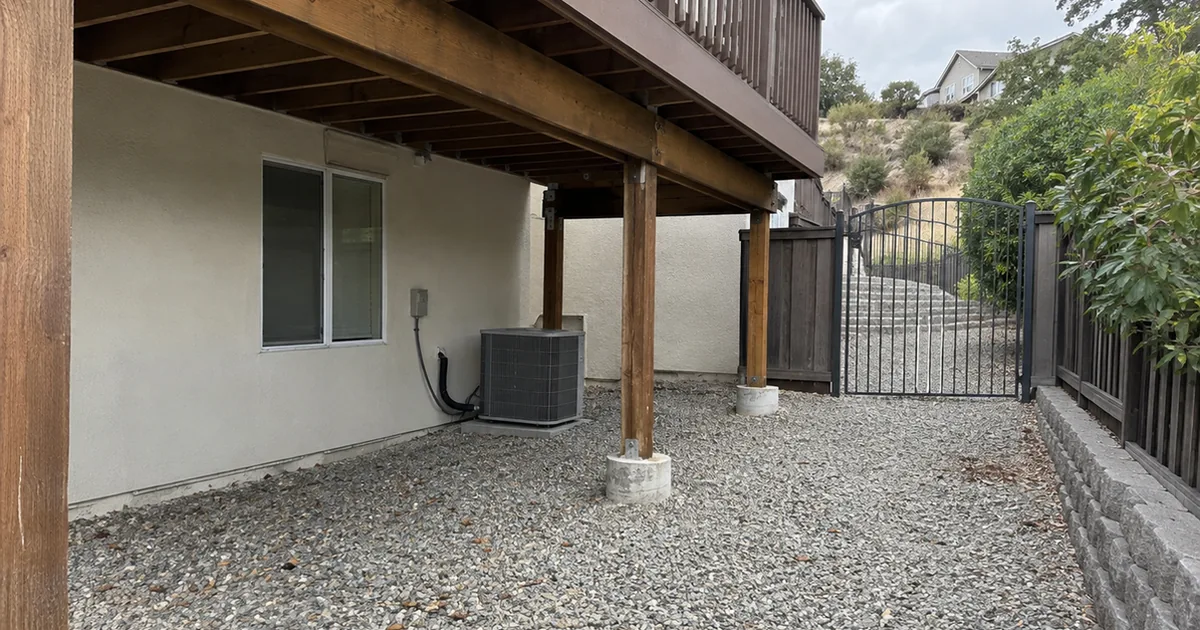
Three sit in the immediate surroundings: a five-foot ember resistant zone using stone or decomposed granite, with metal fencing replacing wood where a fence attaches to the house; vegetation, weeds and debris cleared from under decks, where concrete, gravel or bare soil are permitted; and combustible sheds and outbuildings moved to at least 30 feet, a category that includes gazebos, accessory dwelling units, dog houses and playhouses.
Two sit at the community level: compliance with state and local defensible space law, and participation in Firewise USA or a Fire Risk Reduction Community, which can be as small as 8 dwelling units or as large as 2,500.
The Department puts it simply. Every action under Safer from Wildfires will qualify you for an insurance discount, and by doing more, you can save more. That is the part agents most often get backwards: partial work is not wasted, and there is no threshold to clear before anything counts.
What the state does not do is set the amount. Each insurer files its own rating plan, so the same metal fence can be worth different credits at two carriers, and any guidance quoting a single statewide percentage is describing something that does not exist. On older housing the structure layer is the hard part, because open eaves, single-pane windows and wood siding running to the dirt are what gives a century-old house its character, a tension our guide to hardening a historic home works through.
What AB 1 actually did, and what it did not
AB 1 did not create a discount in 2026. It created a calendar.
The bill is titled Residential property insurance: wildfire risk, it is Chapter 472 of the Statutes of 2025, it was approved by the Governor on October 9, 2025, and it adds Article 5, commencing with Section 2095, to the Insurance Code. It requires the Department to review its Safer from Wildfires regulations on January 1, 2030, and every five years after, to consider adding building hardening measures.
The process is specified in detail. The Department must consult the Office of Emergency Services, the Department of Forestry and Fire Protection, the Public Utilities Commission, and the Office of Planning and Research; hold at least one public meeting; release a preliminary and then a final list for comment; and initiate rulemaking within 30 days of publishing the final list. The first review must consider construction materials from the Office of the State Fire Marshal’s Building Materials Listing, or materials compliant with Chapter 7A of the California Building Standards Code.
That matters over the long run, because the discount list stops being frozen and starts being revisited. It is not a 2026 benefit. Summaries describing AB 1 as expanding discounts this year are reading an outcome into a review cycle that has not run.
AB 888 puts money behind the roof and the first five feet
AB 888 is the one that can pay for the work, when it is funded.
It is Chapter 536 of the Statutes of 2025, it was approved and filed on October 10, 2025, and it adds Section 2033 to the Insurance Code. Its stated goals are reducing wildfire losses, improving insurability in vulnerable communities, and home hardening. The money sits in a new Sustainable Insurance Account within the Insurance Fund and becomes available on legislative appropriation or on receipt of federal or other grants.
Funding priorities run in descending order: roof replacement meeting Safer from Wildfires standards, then creation of a five-foot noncombustible zone around the structure, then communitywide mitigation projects.
An individual applicant must meet three conditions at once: the property is covered by an admitted insurer or the FAIR Plan, it sits in a high or very high fire hazard severity zone, and household income does not exceed the county low-income limit. Cities, counties and special districts may also apply, which is how the third priority gets used. Grantees must produce contractor receipts, an attestation that the work was done, and documentation of any insurance incentives received. The Department must publish performance reports by January 1, 2027, and every two years after. There is no sunset date.
The grant program arrived before the rule it pays for
This is the part almost nobody has noticed, and it deserves care.
AB 888 ranks a five-foot noncombustible zone as its second funding priority. That is the same ground the state’s Zone 0 ember resistant defensible space regulation would govern. The Board of Forestry and Fire Protection approved the final draft of that regulation on August 19, 2026, on an 8 to 0 vote.
As of this writing it is not yet law. It is pending review at the Office of Administrative Law. We will not state an effective date or a phase-in schedule, because none has been set that we can verify, and much of what circulates about Zone 0 timing is guesswork dressed as reporting. Check the status at the Board of Forestry rather than at a blog, and check whether a local jurisdiction has adopted something of its own on a different clock.
The result is unusual: the incentive arrived ahead of the requirement. A seller who hardens the first five feet is doing something that qualifies for a discount today, that may be grant-eligible if the program is funded, and that is likely to be required eventually. That is a reasonable argument for doing it now, not an argument for telling a client the law already requires it.
Our roundup of the 2026 California laws touching inspections and disclosure places the defensible space rules alongside the rest of the year, and the AB 130 residential building code freeze explains why local hardening requirements have largely stopped moving while state-level ones continue.
AB 226 is about paying claims, not about getting covered
AB 226 does not make the FAIR Plan easier to get, cheaper, or broader. It makes it more able to pay.
It is Chapter 473 of the Statutes of 2025, it was approved and filed on October 9, 2025, and it adds Section 10100.3 to the Insurance Code. It lets the FAIR Plan ask the California Infrastructure and Economic Development Bank, known as IBank, to issue bonds to finance all or any portion of the costs of claims or to increase liquidity and claims-paying capacity, and lets IBank loan those proceeds to the plan. It separately allows line of credit agreements for the same purposes.
A repayment mechanism is attached. If the FAIR Plan cannot meet its obligations, it shall assess members in the amounts and at the times necessary to timely pay in full all obligations, and it may secure these agreements by a statutory lien on collateral including premiums, revenues, receivables and assessments.
Read plainly, it is a financing statute. Nothing in it changes what a FAIR Plan policy covers, what it costs, or who can get one.
What to tell a seller who wants the discount
Six things, in the order they matter.
-
Start from what is already true about the house. On a home with a newer roof and newer windows, two or three of the ten actions may already be satisfied by work somebody else paid for years ago.
-
The discount is per action, so partial work counts. Clearing under a deck is worth something even if the eaves stay open.
-
Ask the carrier what documentation it wants before the work starts. Photographs taken during the work beat photographs reconstructed after.
-
Check whether AB 888 is actually funded and accepting applications. A statute creating a program is not a program with money in it.
-
The fire hazard severity zone comes from CAL FIRE mapping and the local jurisdiction, and belongs in the natural hazard disclosure. No inspector assigns one.
-
Get insurance quotes during the contingency period. Learning in week four that a property only qualifies for the FAIR Plan is a different conversation than learning it in week one.
What we can and cannot tell you about a house
We document condition. We do not certify compliance.
An Inspection.re inspection records the components the ten actions are about, as observable facts. Roof covering type and condition, including whether prior repairs used a different material. Vent type, and whether mesh is present, intact, and not painted over or packed with debris. Whether eaves are open or enclosed. What the bottom six inches of exterior wall is made of, which on a stucco house is a weep screed question. Window glazing. Deck framing and what is stored underneath. The distance and construction of sheds and outbuildings, which is often the one nobody looked at.
Here is the boundary, and we hold it firmly. We do not certify defensible space, sign carrier mitigation forms, or determine a fire hazard severity zone. We do not promise that any finding produces a discount, because the carrier decides that against its own filed plan.
Our inspection scope page covers what is and is not included, the frequently asked questions answer the process questions clients ask first, and a sample inspection report shows how findings and stated limitations appear. Send a buyer our guide to reading a California inspection report before the inspection date rather than after.
Quick answers
Does a home inspection qualify my client for a wildfire discount? No. The discount comes from the carrier, against its own filed rating plan, for actions the homeowner has taken. An inspection documents current condition, which helps an owner decide what to do and what to claim. It is not a verification the carrier accepts in place of its own process.
Is Zone 0 the law right now? Not as of this writing. The Board of Forestry approved the final draft on August 19, 2026, and it is pending at the Office of Administrative Law. Check the Board before relying on any date, and check whether the local jurisdiction has its own requirement on a separate timeline.
If the house already has a Class A roof, is that the whole discount? No, it is one of ten actions. The roof is the most expensive item and a good place to already be, but the vents, eaves, wall base, windows, five-foot zone, deck underside, outbuilding distance and the two community items are all separate.
Does AB 226 mean the FAIR Plan will be easier to get? No. AB 226 lets the FAIR Plan finance claim payments through IBank bonds and lines of credit, backed if needed by assessments on member insurers. Eligibility, pricing and coverage are unchanged.
Who decides whether a property is in a high or very high fire hazard severity zone? CAL FIRE maps the zones and the local jurisdiction adopts them. That designation drives AB 888 eligibility, defensible space obligations and much carrier behavior. It is not an inspection finding.
The honest summary
The 2026 package is real, but most of it governs what happens after a fire rather than before one. The two laws that touch the house behave differently than the headlines suggest: AB 1 sets a review that starts in 2030, and AB 888 creates a grant program whose money depends on appropriation. Underneath both, the thing that produces a discount today is the same Safer from Wildfires regulation that was already there, working action by action rather than certificate by certificate.
For an agent that resolves into something simple. The hardening work is worth doing on its own merits, before listing rather than during escrow. The paperwork question belongs with the carrier, early and in writing. And the condition of the roof, vents, eaves, walls and the ground within five feet is knowable before any of those conversations start. For the hazard that follows a fire once the slopes are bare, see our guide to post-fire debris flow and site drainage, and for a separate 2026 change that gets miscalled a defect, our guide to the removed R-410A installation deadline.
Ready to know what you are working with? Schedule an inspection with Inspection.re, or call 1-888-88-INSP-9. Same-day report, pay at closing. We work the wildland interface statewide, including Rancho Santa Fe.