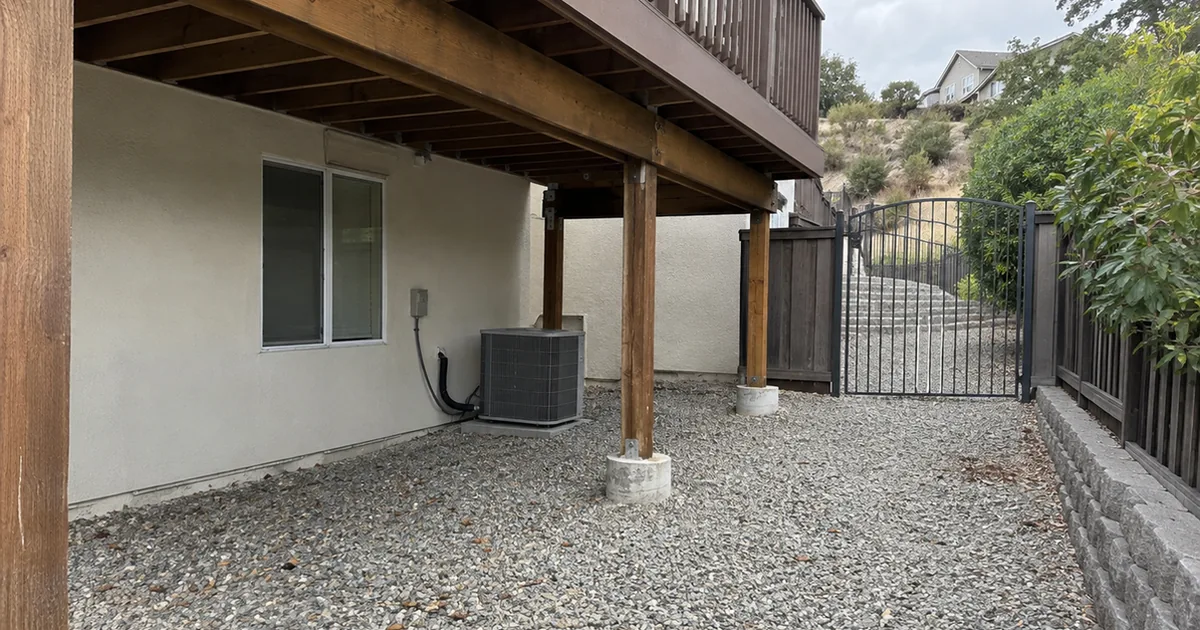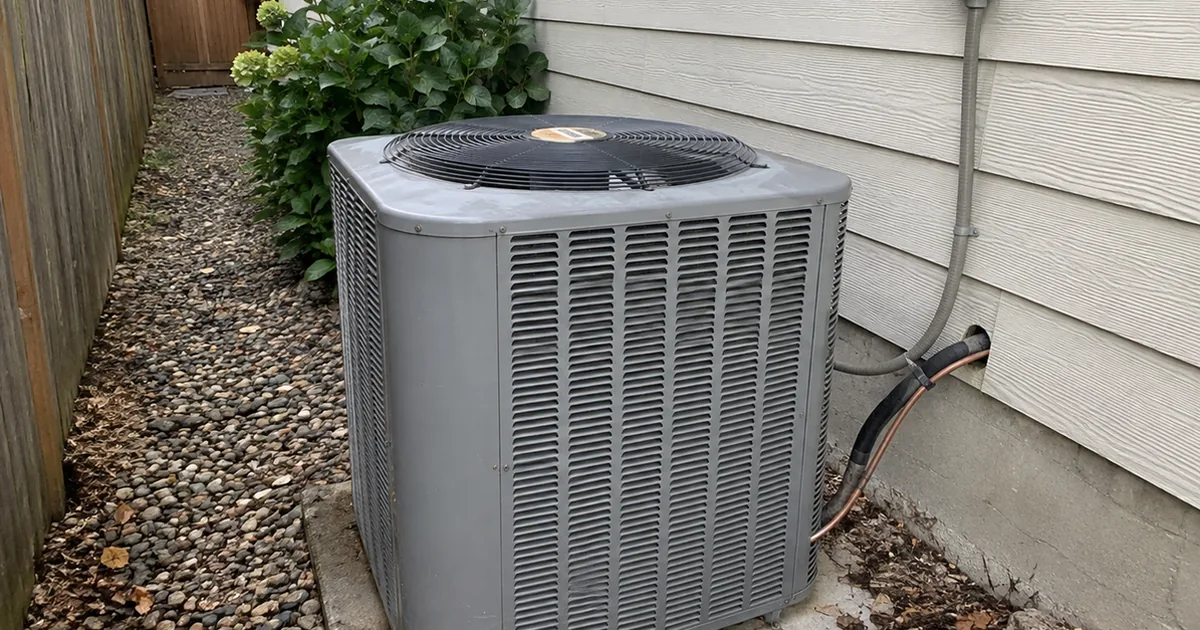
We inspected a property on a half-acre lot in the western foothills of Wildomar, near the Tenaja corridor. Older home, late 1980s county build, on the edge of where the residential streets give way to Cleveland National Forest land. The sellers had lived there for over a decade. Nice people. The home showed well. Fresh interior paint, updated kitchen, newer HVAC condenser on a clean pad.
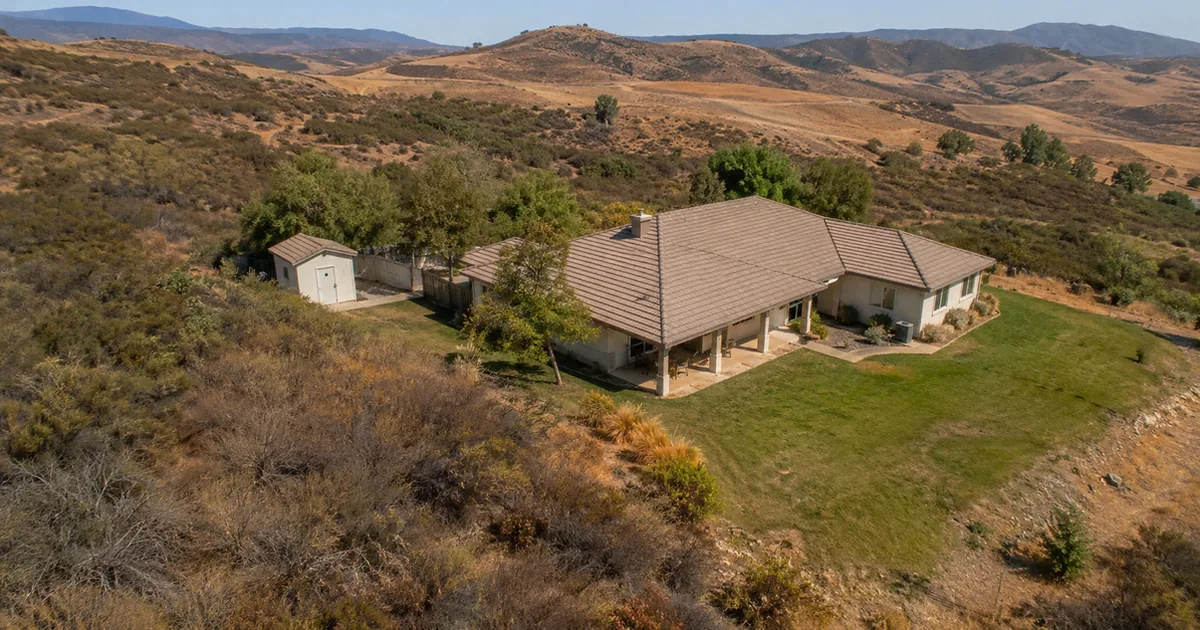
The problem was outside. Native brush grew right up to the south-facing wall, touching the stucco in two places. A woodpile sat against the garage, four feet from the house. The attic vents were original metal mesh with openings wide enough to pass a pencil through. The eaves were open, unboxed, with exposed rafter tails. A wood fence connected the detached barn to the house with no fire break.
We documented all of it. The drone scan showed the full property from above, and the vegetation encroachment was even more obvious at altitude. From street level you see a pretty house. From 30 feet up you see a house surrounded by fuel.
The buyer’s agent called us after the report. She had never worked a deal in a fire zone before and did not realize the property sat in a Very High Fire Hazard Severity Zone. She did not know that California law requires defensible space documentation before closing. And she did not know that the buyer’s insurance quote, which had not come back yet, was about to be the real problem.
This article is for every agent working Wildomar, especially the western edge. If you are showing properties near La Cresta, Tenaja, or the hillside lots above Clinton Keith Road, the fire zone question is not academic. It will shape the deal.
Schedule a Wildomar inspection · Same-day report · Defensible space documented · Pay-at-closing available
Why Wildomar fire zones matter more now than five years ago
Insurance is the short answer.
Since 2021, insurers have canceled roughly 400,000 homeowner policies statewide. The California FAIR Plan has seen enrollment jump 43% in fifteen months. The January 2025 LA fires generated around $40 billion in insured claims and accelerated every carrier’s pullback from fire-zone properties.
Wildomar sits in the middle of this. The city borders Cleveland National Forest on the west and San Mateo Wilderness to the south. CAL FIRE’s 2025 maps classify significant portions of western Wildomar as High or Very High Fire Hazard Severity. The Tenaja Fire in 2019 burned 1,939 acres and forced evacuation of over 400 homes. The Wildomar Fire burned 700 acres near La Cresta. These are not distant risks.
A buyer who cannot get standard homeowner insurance cannot close a conventional loan. The deal dies or gets restructured around a FAIR Plan policy that costs more and covers less. Defensible space compliance is now a financing question, not just a safety question.
What AB 38 requires before closing
California Assembly Bill 38, effective July 1, 2021, added a defensible space disclosure to every residential sale in a High or Very High Fire Hazard Severity Zone.
The seller must provide documentation of a compliant defensible space inspection before closing. If the property fails, the seller either brings it into compliance or the buyer agrees in writing to achieve compliance within one year. The documentation goes into the transaction file alongside the TDS and the NHD.
For Wildomar properties on the western and southern edges, this is not optional. If the seller has not obtained a defensible space inspection, it becomes a contingency item. Agents who catch this early keep the timeline on track. Agents who discover it at week three lose days they cannot get back.
We flag AB 38 status in every Wildomar inspection report when the property is in a designated zone. We document every condition a certifying inspector will evaluate, so you know what needs to happen before you call the fire department for the official sign-off.
What defensible space actually means on a Wildomar lot
California Public Resources Code Section 4291 requires 100 feet of defensible space around structures in fire-prone areas. The space breaks into two zones.
Zone 1 runs from the structure out to 30 feet. The lean zone. No combustible vegetation within five feet of exterior walls. No woodpiles against the siding. Trees trimmed so lowest branches are six feet off the ground. No continuous canopy connecting to the house. Grass cut to four inches or less.
Zone 2 extends from 30 feet out to 100 feet. Fuel reduction zone. Tree crowns at least ten feet apart. Dead vegetation removed. Brush thinned so fire cannot climb from ground cover into the canopy. On slopes, spacing increases because fire moves faster uphill.
On that Wildomar inspection, the sellers had maintained Zone 2 reasonably well. Zone 1 was the problem. Years of landscaping had blurred the line between garden and wildland. Nobody had thought about it as a fire-safety issue. It was just their yard.
Schedule a Wildomar inspection
What Chapter 7A means for the house itself
Defensible space is about the land. Chapter 7A of the California Building Code is about the house. It sets construction standards for exterior wildfire exposure in fire zones. Newer homes built after the code took effect should comply. Older homes often do not.
The items we check on every Wildomar fire-zone inspection:
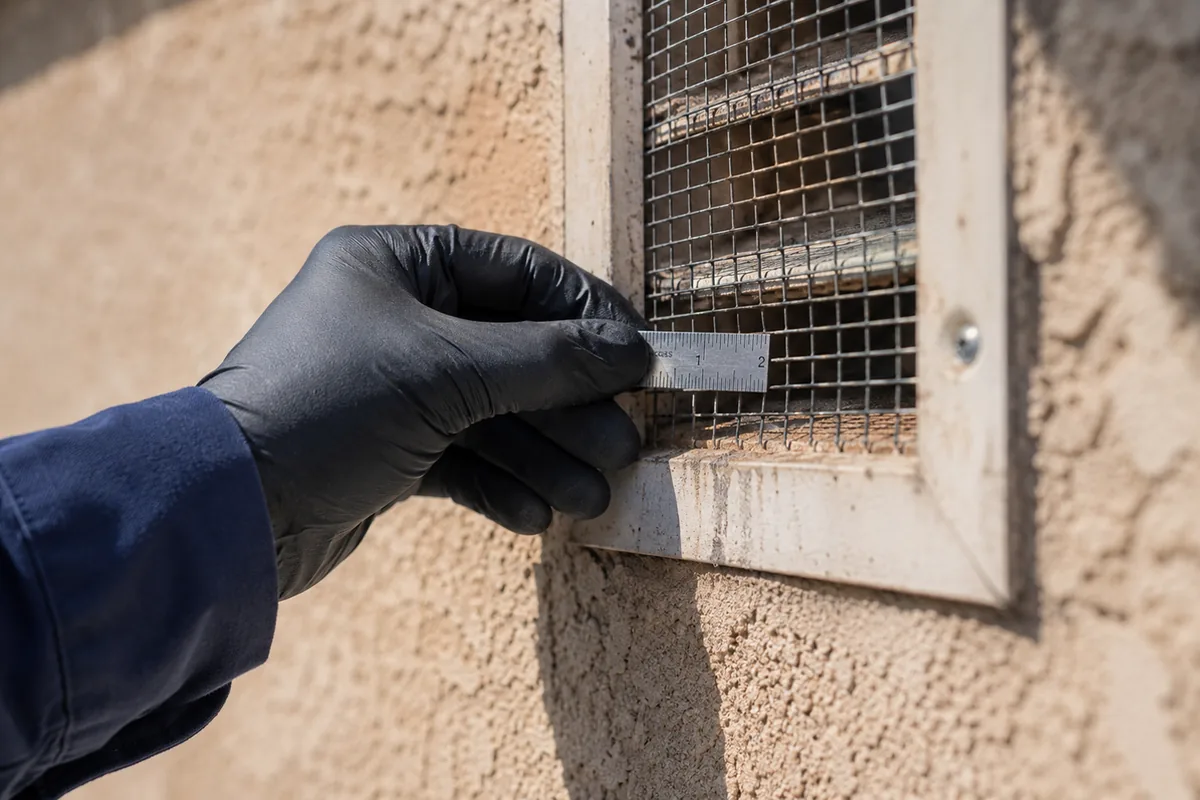
Vent screening is the biggest one. Embers from a wildfire can travel a mile or more ahead of the flame front. They enter the home through vents. Attic vents, crawlspace vents, soffit vents. Chapter 7A requires noncombustible metal mesh with openings between 1/16-inch and 1/8-inch. Older homes routinely have 1/4-inch mesh or larger. The home we inspected had original 1980s vent covers with openings you could fit a fingertip through.
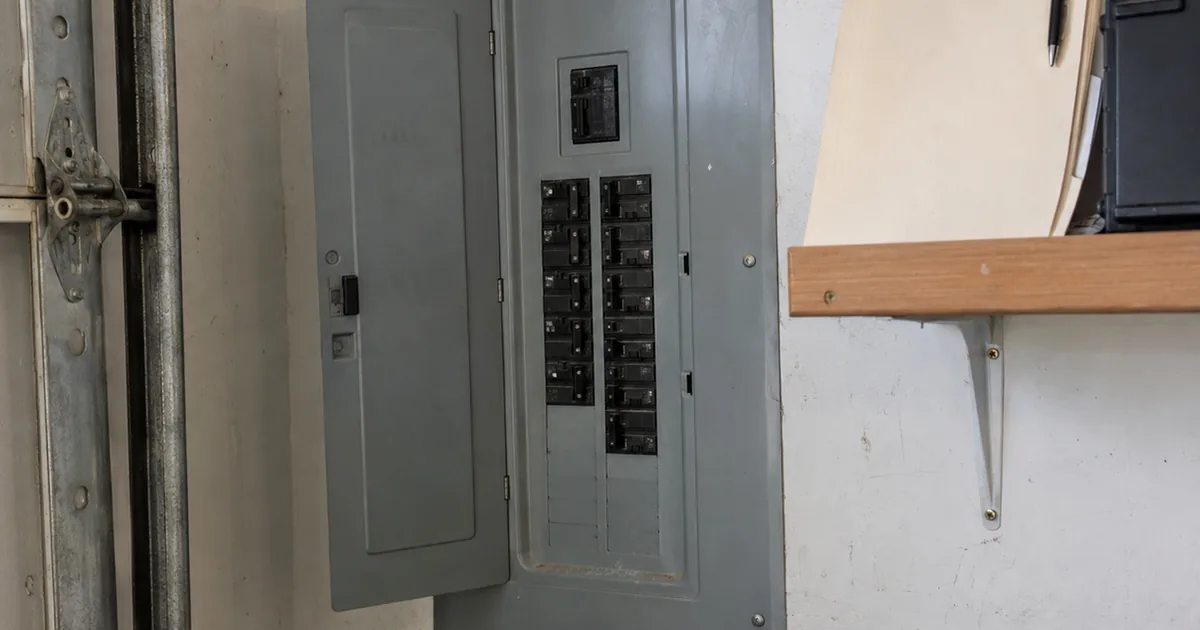
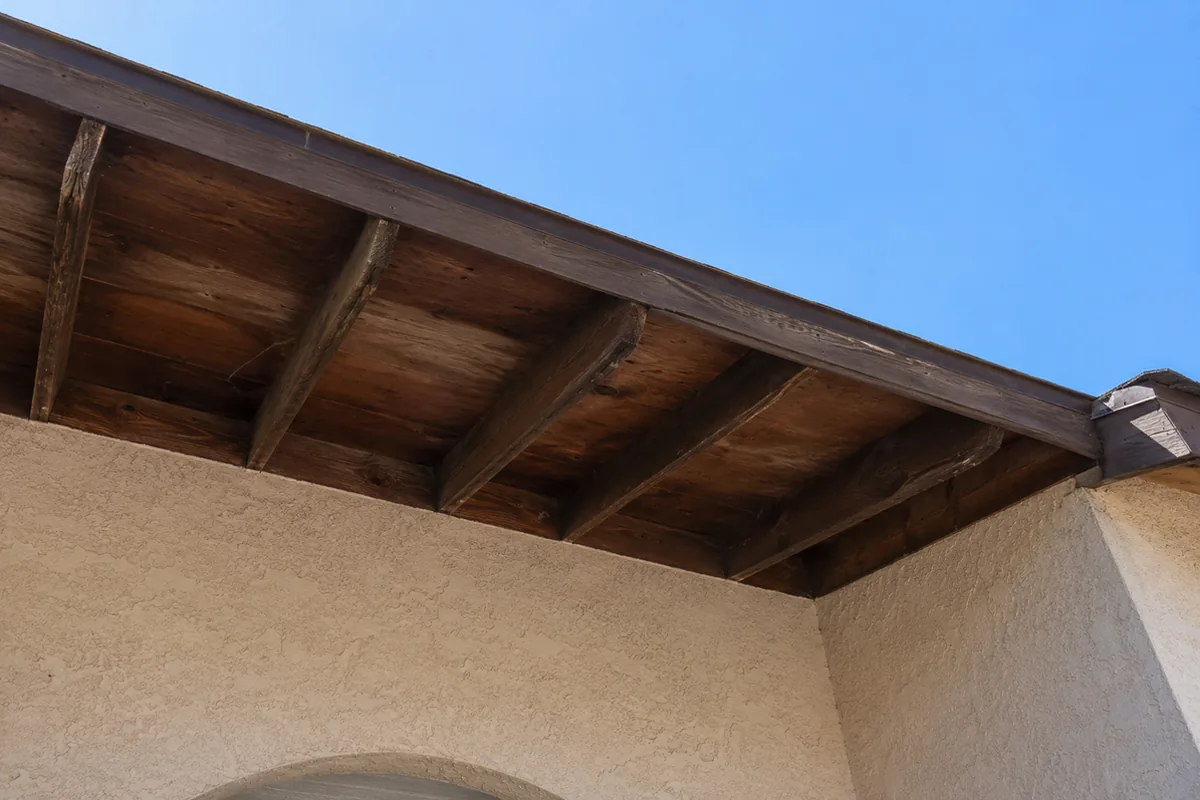
Eave construction matters. Open eaves with exposed rafter tails give embers a surface to lodge against. Boxed eaves with noncombustible material is what Chapter 7A calls for. (Older Wildomar homes may also have Federal Pacific or Zinsco panels in the same vintage.)
Roof covering class. Class A fire-rated materials are the standard. Concrete and clay tile qualifies. Composition shingles vary. Wood shake does not.
Windows. Dual-pane tempered glass resists radiant heat far better than single-pane. We note window type, especially on the wildland-facing side of the home.
Decks and fencing. A wood deck attached to the house is a fuel source. A wood fence connecting an outbuilding to the house is a fuse. We saw both on that Wildomar property. The fence ran from the barn to the garage wall with no fire break.
What agents should tell every buyer in a Wildomar fire zone
Here is what your buyer needs to hear, ideally before they write the offer.
-
Get insurance quotes before removing contingencies, not after. A property in a Very High FHSZ may only qualify for the FAIR Plan, and those premiums can run two to four times a standard policy.
-
The NHD will flag the fire severity zone. Preview it with the buyer. This should not be news they learn at signing.
-
AB 38 requires the seller to provide defensible space documentation. If the seller has not done this, it adds time to escrow. Build it into the timeline.
-
The inspection flags defensible space and Chapter 7A items. Use the report to negotiate credits or seller remediation before closing.
-
Retrofit costs for vent screening, eave enclosure, and vegetation clearance are usually low-to-mid four figures. Real costs, but not deal-killers if everyone sees them coming.
-
Defensible space is not a one-time fix. Vegetation grows back. The buyer maintains it every year, and the insurance carrier may inspect annually.
Red flags you can spot during a showing
You do not need a license or special equipment to see these. Five minutes outside the house will tell you whether fire safety is going to be a conversation.
Vegetation touching or within five feet of exterior walls. Shrubs growing against the siding. Ivy climbing the stucco. Trees with branches overhanging the roof. Any of these means Zone 1 is not maintained.
Woodpile, lumber, or stored combustibles against the house or garage. Common on rural lots and equestrian properties. Easy to miss when you are focused on the interior.
Open eaves. Stand at a corner and look up. If you can see the underside of the roof sheathing and the rafter tails, the eaves are open. That is an ember entry point.
Fence or structure connecting an outbuilding to the house. Barns, sheds, detached garages connected to the house by a wood fence. The connection is the problem. Metal fencing or a gap of at least five feet is the fix.
Dry, brown, or dead vegetation in the yard or on the slope behind the property. If it has not rained recently and the vegetation is dead, the fuel load is high. This is especially visible in Wildomar during the late summer and early fall months.
How negotiation plays out on fire-zone deals
Three paths we see most often.
Seller brings the property into compliance before closing. Cleanest outcome. Vegetation clearance, vent screen replacement, and eave boxing can usually be completed in one to two weeks. Agents who present this as a checklist of specific items rather than a vague demand for “fire safety” get better results.
Buyer accepts the property with a written agreement to achieve compliance within one year. AB 38 allows this. It keeps escrow on schedule, but it shifts the cost to the buyer. Make sure the buyer understands what the work involves before agreeing.
Credit at closing to cover remediation. The seller credits the buyer for estimated remediation costs. This works when the buyer has a contractor lined up and the credit is documented by a bid, not a guess.
The deals that get stuck are the ones where fire-zone implications surface late. The deals that close are the ones where the agent anticipated the defensible space question before the inspection report landed.
Schedule a Wildomar inspection · Same-day report · What’s included
How the inspection catches what a walkthrough misses
We run every Wildomar fire-zone property through a sequence a standard visual inspection does not cover.
The drone gives us the overhead view. Vegetation clearance is hard to evaluate from ground level. From 30 feet up, we can see every spot where brush or tree canopy connects to the structure, and we photograph it for the seller conversation.
The thermal scan catches things like missing attic insulation at the eave line, which is both an energy issue and a fire-resistance issue. A properly insulated and enclosed eave is harder for embers to penetrate. (For more on how infrared works on California inspections, see our infrared scanning guide.)
We document vent mesh size, eave construction, roof covering, deck attachment, fencing connections, and defensible space conditions in every zone. The report gives you a line-by-line list for AB 38 compliance. Hand it to a contractor and get a bid the same week.
We are not the fire department. We do not issue the official defensible space certification. We give you the complete picture before the certification inspection happens, so there are no surprises.
Frequently asked questions
Does every Wildomar property need a defensible space inspection before sale?
Only properties in a High or Very High Fire Hazard Severity Zone. Not all of Wildomar qualifies. The Farm and Sycamore Creek, newer master-planned tracts in the east, generally are not in designated zones. Properties west of I-15 toward La Cresta and Tenaja are more likely to qualify. The NHD report confirms the designation for any specific property.
Can the buyer’s insurance fall through after the inspection?
Yes. A buyer who gets a quote based on the listing address may find it withdrawn once the carrier reviews fire zone status. Get insurance quotes early, before removing contingencies.
What does it cost to bring a property into compliance?
Depends on lot size, vegetation, and the structure. Vegetation clearance on a half-acre runs a few thousand dollars. Vent screen replacement is a few hundred per vent. Eave boxing is a few thousand for a typical single-story. A full retrofit can reach the low five figures. We list every item so you can get contractor bids.
Is this the same as the AB 38 inspection?
No. The AB 38 inspection is performed by the local fire authority, CAL FIRE, or a designated third party. Our report documents the same conditions but does not substitute for official certification. Think of it as the preparation step. Fix what needs fixing, then schedule the official inspection knowing it will pass.
What this means for your next Wildomar deal
The fire zone question in Wildomar is not going away. Insurance carriers are pulling back from fire-prone areas across California, and the properties that cannot demonstrate defensible space compliance and fire-resistant construction are the ones that lose coverage first. The same tightening market drives the earthquake-bracing and coverage questions on manufactured homes, which we cover in our Oceanside manufactured-home guide.
Preview the NHD. Know whether the property is in a designated zone before you write the offer. Build the AB 38 timeline into escrow. Get an inspection that documents every fire-safety item so you have a roadmap instead of a surprise. For the wider 2026 picture, including the new Zone 0 ember-resistant rules and how AB 38 fire-hardening disclosures fit the rest of the year’s changes, see our 2026 California laws guide for realtors.
We inspect Wildomar properties every week. The western foothills, La Cresta, Tenaja, the rural lots along the forest edge. Some of the most interesting properties in Riverside County. Also the ones that need the most careful fire-zone documentation.
If you also work nearby Menifee, the common defect there is not fire but expansive clay soil causing foundation cracks across the master-planned tracts. Read the Menifee foundation and expansive clay guide for the agent breakdown. For Fallbrook agents running rural escrows with well, septic, and fire-zone concerns on the same parcel, our Fallbrook well and septic guide covers the sequencing and negotiation playbook, and our Fallbrook well, septic and propane systems guide covers how each private system fails and the showing red flags.
For agents working Malibu, where fire-zone exposure meets a city-regulated septic system, our Malibu septic at point of sale guide covers the OWTS operating permit that can shape a coastal deal as much as the fire insurance. And for the hazard that follows a wildfire once the slopes are bare, our La Cañada Flintridge post-fire debris flow and drainage guide covers how foothill lots below burned canyons take on mud, rock, and drainage risk.
A missing spark arrestor is only one piece of a chimney’s fire exposure. Many San Fernando Valley homes hide a factory-built metal fireplace and chimney chase behind what looks like brick, and it ages and fails on its own schedule, separate from the vegetation and vent-mesh items covered here. Our Encino prefab fireplace and chimney guide walks through what that system is and why the spark arrestor matters more on a hillside lot in a fire zone.
One reason the hardening rules keep tightening while other residential requirements have gone quiet: wildfire hardening and wildland-urban interface standards were deliberately carved out of California’s freeze on new residential building standards. Our guide to the AB 130 residential code freeze covers what stopped and what did not.
The insurance side of this got its own legislative package. Six laws took effect January 1, 2026, and our guide to California’s 2026 wildfire insurance laws walks through what AB 1, AB 888 and AB 226 actually do, why the Safer from Wildfires discount works action by action rather than as a single certificate, and why the grant money for the first five feet arrived before the rule requiring it.