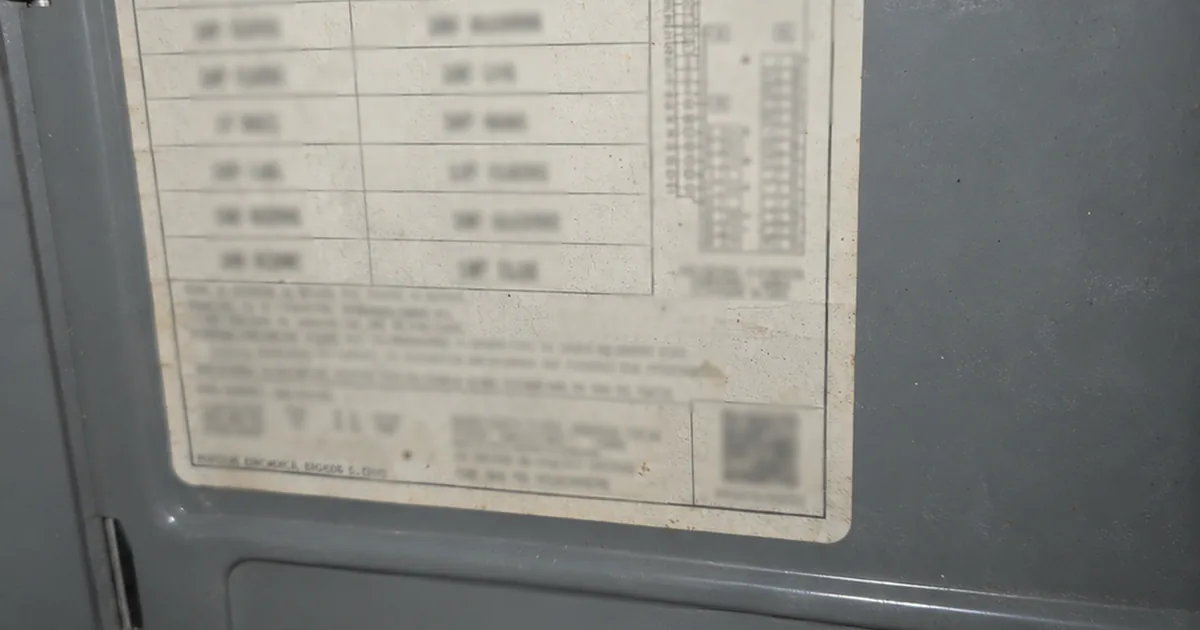
A panel cover is off during an inspection. The label inside the door shows a recognizable brand and a date code. The buyer asks, “Is that one of the recalled ones?” Nobody in the room can answer from the label alone.
That is a composite of situations, not one house.
This guide is about checking two specific electrical recalls against what is installed. It is not a list of every recall ever issued, and it is not legal advice.
The recall stays in the wall when the house sells
A recalled breaker does not become safe because the property changed owners. A recalled panel does not leave with the seller. If the part was never replaced, it remains part of the electrical system after closing.
The Siemens and Murray recall announced by the Consumer Product Safety Commission on September 23, 2010, is a useful example. It covered about 2.2 million Siemens and Murray 15 through 50 amp single and double pole circuit breakers, load centers, and meter combinations.
A house built or remodeled around 2010 can still have one of those breakers or enclosures. The age of the transaction does not resolve the question. The date code and the installed equipment do.
The hazard described in that recall was specific. A spring clip can break during normal use, causing “a loss of force to maintain a proper electrical connection.” That can lead to excessive temperature, arcing, or thermal damage, with a potential fire. The notice reported one spring clip breaking during installation. No injuries were reported.
The recalled breaker date codes were 0610 and 0710. They were printed on a label on the side of the breaker. The recalled load centers and meter combinations had date codes stamped on the inside of the metal box. The affected enclosure dates ran from June 23, 2010, to August 25, 2010.
The remedy was a free inspection by an electrician and free replacement.
That is different from the older equipment discussed in this buyer guide to FPE and Zinsco panels. A known problem with an older brand is not the same fact as a CPSC recall match. The mechanism, equipment, and remedy must be identified before anyone writes a repair request.
A home inspection report describes the panel, not the recall history
A home inspection is a visual and non-invasive inspection. Under the InterNACHI Residential Standards of Practice, the electrical section has the inspector look at the service panel, overcurrent devices, and wiring methods.
That inspection describes what was observed. Checking a manufacturer recall database is a separate task.
The distinction matters because a report can document a panel condition without answering whether a particular breaker falls within a manufacturer recall. The report may show the brand. It may show the interior of the panel. It may include a photograph of the label on the inside of the door. It may not contain a recall determination.
Read the panel section of your own report. Ask the inspector whether the label and date code were recorded. If the inspector photographed the panel interior, that image may provide the raw material for the later check.
The dead front cover is the metal cover behind the panel door. Removing it exposes energized components and is not a buyer task. The inspector removes that cover only where it is safe to do so. You should not remove a panel cover yourself.
Look at the label on the outside of the door. Ask for the inspector’s photos of the interior. A same-day report with panel interior photos can make this check possible without asking a buyer to open electrical equipment. An inspection report sample and service details show how those observations may be presented.
An inspection also does not prove that a component was never replaced. We cannot tell from a photo whether a recalled breaker was ever swapped unless the available information shows that clearly. A current-looking panel can contain an older breaker. An older-looking panel can contain a replacement part.
These two CPSC recalls identify equipment in different places
The Siemens and Murray recall depends on the breaker date code or the date code stamped inside the load center or meter combination. The Schneider Electric recall uses a date code and catalog number located inside the panel door or on the cover.
The Schneider Electric, also called Square D, QO Plug-On Neutral load centers recall was announced by the CPSC on June 16, 2022. It covered about 1.4 million units in the United States and another 289,000 in Canada. The units were manufactured between February 2020 and January 2022. The date codes listed in the notice ran from 200561 to 220233.
The hazard was also stated plainly: “The load center can overheat, posing thermal burn and fire hazards.” The notice reported one loose wire incident. No injuries were reported.
The catalog numbers are inside the panel door. Examples listed in the notice include CQO116L100PGRB, QO130M200PRB, and QOC30UFWG, along with many other catalog numbers. A brand match alone does not identify a recalled unit.
| Recall | Announced | What failed | Where the date code is | Remedy |
|---|---|---|---|---|
| Siemens and Murray breakers, load centers, and meter combinations | September 23, 2010 | A spring clip can break, causing loss of force to maintain a proper electrical connection, with possible excessive temperature, arcing, thermal damage, and fire | Breaker date code on the side label; load center and meter combination date code stamped inside the metal box | Free inspection by an electrician and free replacement |
| Schneider Electric, Square D, QO Plug-On Neutral load centers | June 16, 2022 | The load center can overheat, posing thermal burn and fire hazards | Inside the panel door or on the cover | Free repair or replacement through Schneider Electric |
The two examples also show why a single exterior photograph may not settle the issue. The Siemens breaker code is on the side of the breaker. The Siemens enclosure code is stamped inside the metal box. The Square D catalog number is inside the panel door, and the date code may be inside the door or on the cover.
That is a documentation problem, not a reason to guess.
The ten-minute check starts with the inspector’s photograph
Start with the brand, catalog number, and date code. Do not start with a general internet search for the panel brand.
-
Get the panel brand from the inspector’s photograph or from the label on the panel door. If the photograph shows the catalog number, record the full string. The difference between a general product family and a specific catalog number matters.
-
Get the date code. For the Siemens and Murray breaker recall, look for 0610 or 0710 on the label on the side of the breaker. For the Siemens and Murray load center or meter combination, look for the date code stamped inside the metal box. For the Schneider Electric Square D QO Plug-On Neutral recall, look inside the panel door or on the cover.
-
Search the CPSC recall notices by brand name. Search Siemens and Murray for the 2010 notice. Search Schneider Electric or Square D for the 2022 notice.
-
Match the catalog number and the date code. A brand match means nothing by itself. Even a matching product family is not enough if the catalog number or date code falls outside the notice.
-
If the equipment matches the recall notice, contact the manufacturer using the information in that notice. Each notice states a free remedy, though a notice from 2010 may no longer have an open program, so ask the manufacturer whether it is still available. The Siemens and Murray notice provided free inspection by an electrician and free replacement. The Schneider Electric notice provided free repair or replacement through Schneider Electric.
-
Have a licensed electrician confirm the condition and the match. The electrician can identify what is installed and whether the recalled component remains in service.
Do not open the panel to find the information. The buyer should not remove the dead front cover. Ask the inspector for the interior photos. If the needed label or code was not photographed, ask how the inspector can safely document it or have a licensed electrician examine it.
A same-day report with photos can be useful because the label and date code are easiest to check while the inspection record is still in front of you. A Matterport 3D tour with tagged findings can also help you return to the panel location and connect the finding to the written report. Neither format, by itself, turns an inspection into a recall search.
A brand match is not a recall match
A panel marked Siemens is not automatically a recalled Siemens panel. A Murray breaker is not automatically one of the breakers in the 2010 notice. A Square D label is not automatically a recalled QO Plug-On Neutral load center.
The notice controls the match. For the Siemens and Murray breakers, the relevant date codes are 0610 and 0710. For the Schneider Electric load centers, the notice lists date codes from 200561 to 220233 and specific catalog numbers.
The opposite mistake is also common. A panel may have a recalled enclosure, but a breaker inside it may have been replaced. A manufacturer or electrician may have completed the remedy before the current sale. A photograph may show the current part without showing its replacement history.
We cannot tell from the photo whether the breaker was ever swapped unless the record, markings, or other evidence establishes that. Ask the seller for documentation if a prior repair is claimed. If the documentation is absent, ask a licensed electrician to confirm what remains installed.
A recall match is also not automatically a price renegotiation. The manufacturer notice may provide a free repair or replacement. The buyer’s contract, inspection contingency, and negotiations are separate matters. Do not turn a recall notice into a demand for an unrelated credit without identifying the actual equipment and the requested correction.
For other panel concerns, such as older equipment or a double-tapped breaker, use the condition described in the report. A California agent guide to older electrical panels and the discussion of double-tapped breakers address different findings. They do not replace the date-code check for these recalls.
Ask for the missing label while the inspection contingency is open
Ask about the panel photographs when the inspection report arrives. The inspection contingency runs on its own clock, so waiting until the end of the transaction can leave less time for a second review, manufacturer contact, or electrician visit.
Your first request can be narrow:
“Please provide the panel interior photograph showing the manufacturer label, catalog number, and date code, or confirm that a licensed electrician will document those items.”
That request asks for information before anyone decides whether the equipment matches a recall. It also avoids telling the seller that the panel is recalled when the available evidence only shows a brand.
Read the California inspection contingency timeline before setting that request aside. If the equipment matches a notice, the next step may be a manufacturer remedy or electrician confirmation. Those steps still need to fit within the contract deadlines.
The report may already contain what you need. If not, ask the inspector whether the missing information can be documented safely. Do not ask the buyer to remove the panel cover for a better photograph.
The same process applies if the seller says the recall was fixed. Ask what was replaced, who performed the work, and what documentation exists. Then have the current installation confirmed. The repair verification guide covers the separate question of checking completed work before closing.
A repair request should identify the equipment, not just the brand
An agent’s repair request or request for information should identify the notice, the equipment marking, and the requested confirmation. A usable one-line request is:
“Please provide documentation showing whether the installed [manufacturer, catalog number, and date code] matches the CPSC recall notice, and if it does, provide the manufacturer’s free repair or replacement through a licensed electrician before close of escrow.”
That sentence does not claim a match before the catalog number and date code are checked. It does not ask for a made-up allowance. It points the parties toward the remedy stated in the notice.
If the equipment cannot be identified from the existing photographs, use this version:
“Please provide a safe inspection by a licensed electrician to document the manufacturer, catalog number, and date code inside the panel door and confirm whether the installed equipment matches the CPSC recall notice.”
The phrase “safe inspection” matters. The buyer is not the person to remove the dead front cover. The panel should be opened only by a qualified person where it is safe to do so.
For questions about checking a contractor’s license, see how to check a California contractor license. The immediate point here is simpler: recall identification comes from the markings and the notice, while installation and condition should be confirmed by a licensed electrician.
An infrared image can sometimes show a hot breaker connection, but thermal imaging only shows a surface temperature and needs load. It does not identify a CPSC recall by itself. The thermal imaging guide explains that limit.
The right answer is a documented match or no match
The practical answer is not “the brand looks familiar.” It is one of two documented results.
The equipment matches the notice when the manufacturer, relevant catalog number or equipment type, and date code fall within the recall information. In that case, contact the manufacturer named in the notice and arrange the listed free remedy. Have a licensed electrician confirm the current installation.
The equipment does not match when the available markings fall outside the notice, or when the product is not one of the listed types. Keep the report and photographs with the transaction file. If the markings are unclear, the answer is not “no recall.” The answer is that the equipment has not yet been identified well enough.
This is why the panel photograph matters. The label on the inside of the door may show the catalog number. The date code may be stamped inside the box. The breaker date code may be on a side label. Those details are small, but they are the difference between a recall check and a brand guess.
Inspection.re inspectors are InterNACHI-certified, and inspection services include the panel observations made during the inspection. See what an inspection covers and what needs a specialist for the boundary between inspection findings and specialist work.
A recall check is also not limited to electrical equipment. The CPSC publishes notices about other home products, including the issues discussed in this smoke and carbon monoxide detector update. Each notice still has its own product identification and remedy.
A charger added to the panel brings its own checks: breaker rating, charger setting and GFCI.
Get the photo, record the code, and ask the right person
Do three things differently on the next transaction.
First, ask for the panel interior photograph when the inspection report arrives. Record the brand, catalog number, and date code. Do not remove the panel cover yourself.
Second, compare all three details with the CPSC notice. A brand match alone is not enough. If the date code or catalog number is missing, request safe documentation by the inspector or a licensed electrician.
Third, if the equipment matches, contact the manufacturer for the free remedy and have a licensed electrician confirm the current installation. Keep the notice, photographs, and repair documentation with the file.
Inspection.re provides inspection services in Los Angeles, San Diego, Temecula, and Irvine. Review what is included, the inspection FAQ, and the inspection report information before scheduling.