Two Wires, One Lug: A Cerritos Double-Tapped Breaker Guide for Agents
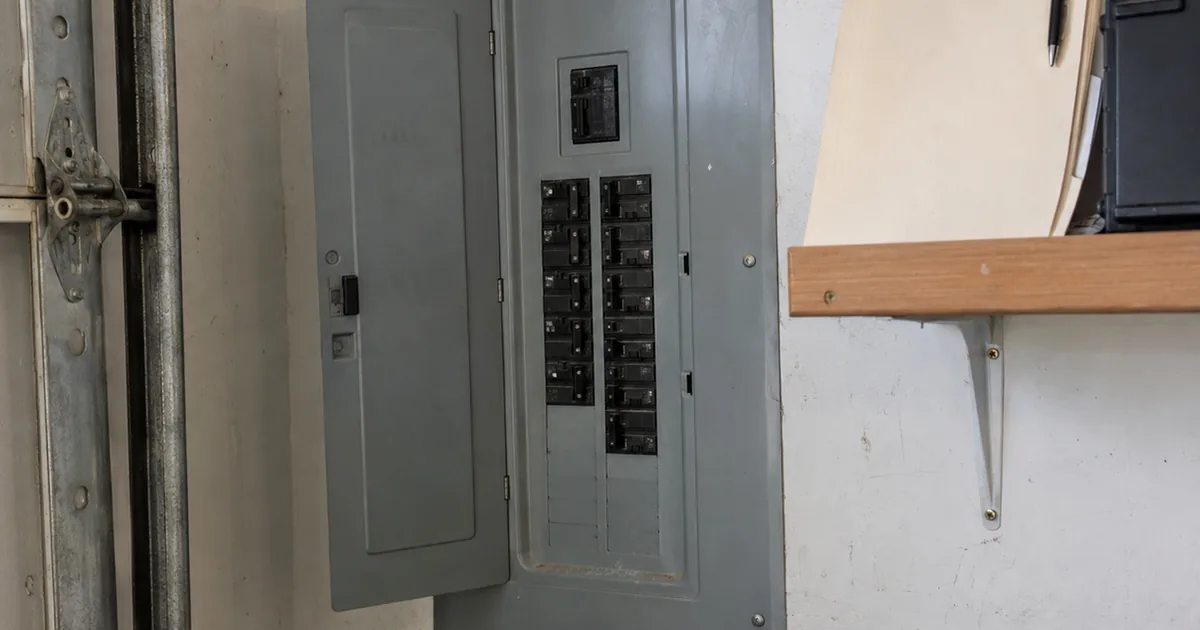
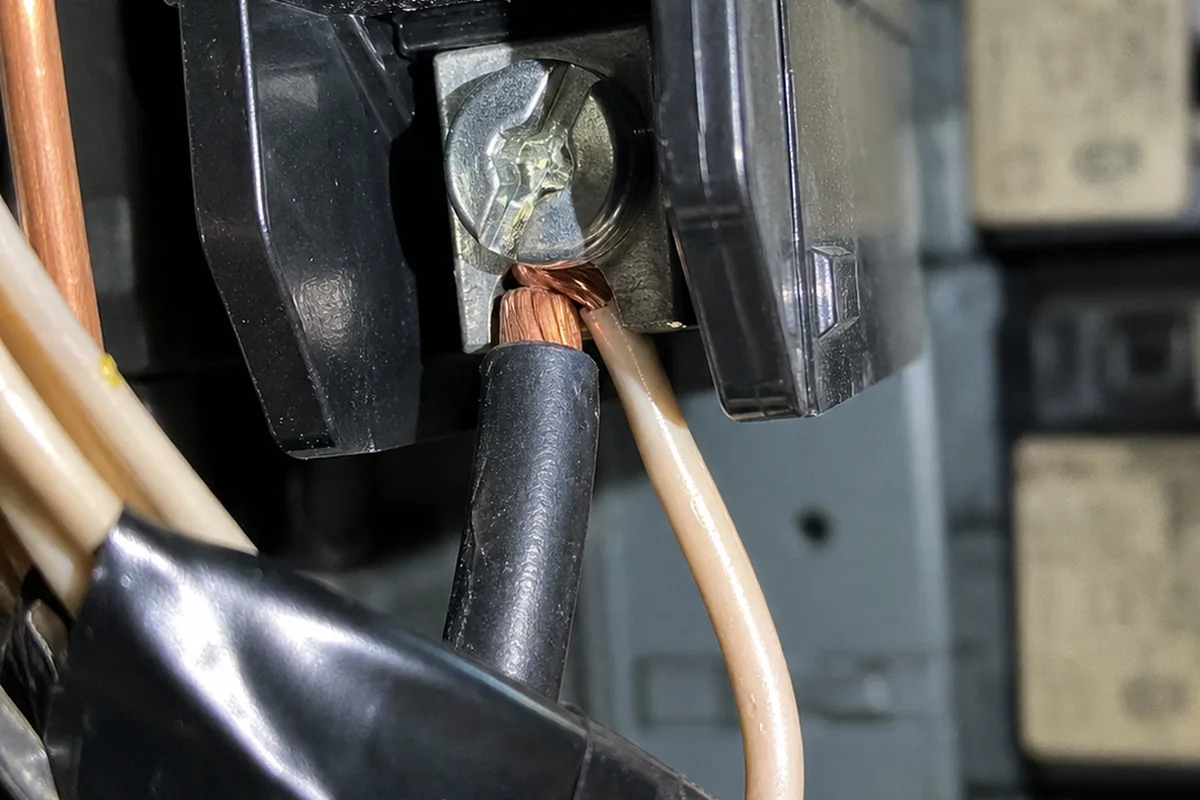
The house was a Cerritos tract home from the ABC Unified boom years, the kind of floor plan you have walked a dozen times, and it had been remodeled well. New kitchen, new baths, a converted garage bay turned into a home office. The panel was original to the house. When we pulled the cover, one of the 15-amp breakers near the bottom of the row had two black conductors pressed under a single screw lug stamped for one wire only. Both conductors showed the shallow flat-sided crimp mark that happens when a lug is not wide enough for two and the installer torqued it down anyway.
We measured, photographed, and documented it the way we do every panel finding. We are keeping the address private and describing the condition generically, because this is not a one-house problem in Cerritos. It is what happens when a city full of well-kept 1960s and 70s tract homes gets decades of remodels layered onto electrical panels that were sized for a smaller house.
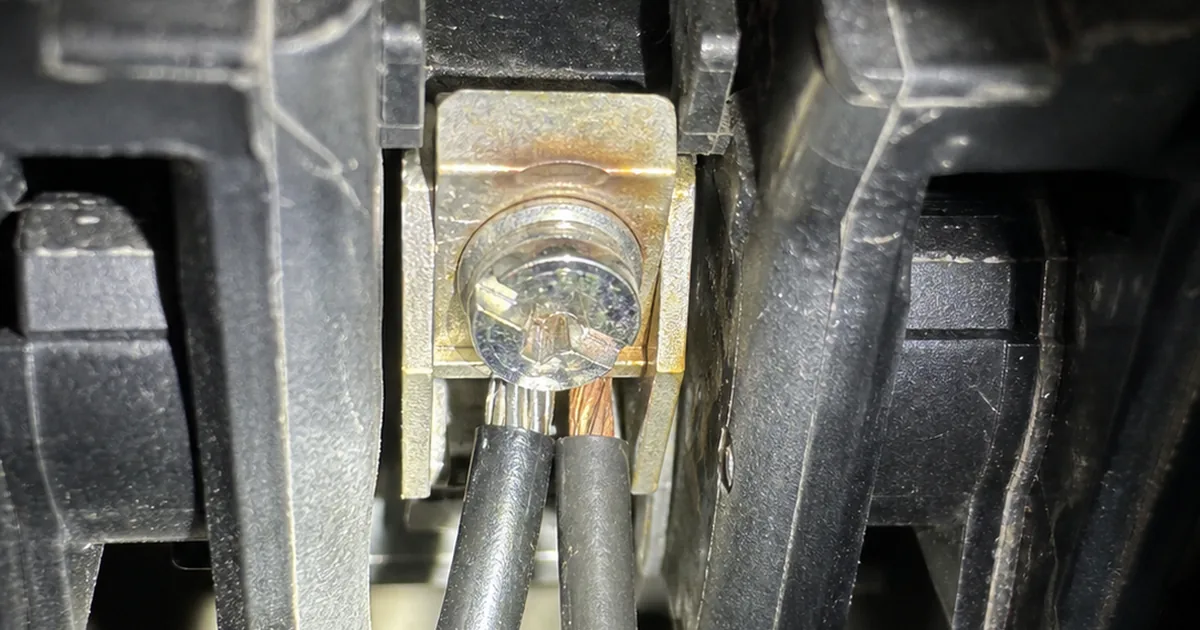
That is the shape of this finding. A panel built for one era of appliances and one era of circuits gets asked to carry a second era of remodeling, and somewhere along the way, an extra circuit gets tucked under an existing breaker instead of getting its own slot.
This guide is for the agent working Cerritos and the neighboring Gateway Cities, including Artesia, Lakewood, and Norwalk, where the same tract construction and the same pattern of heavy remodeling under strong school-district demand produces the same panel conditions. Here is what a double-tapped breaker is, why Cerritos panels get it so often, and how to work it into escrow without derailing the deal.
Why this matters for the agent
Here is what is at stake. A double-tapped breaker is not automatically a fire. Most sit quietly for years without incident. But it is a real overcurrent-protection defect, and it shows up plainly once a panel cover comes off, which means it is going to surface in the report whether the seller knew about it or not.
Cerritos makes this an agent issue because the city’s whole selling point compounds it. Homes here draw buyers because of the ABC Unified School District, and that demand has kept remodeling activity high for decades. A tract home built in 1965 gets a new kitchen in the 1990s, a converted garage in the 2000s, and a couple of dedicated circuits in the 2010s, and each project touches the same panel. Sometimes a licensed electrician added a subpanel or a properly sized breaker. Sometimes it was a Saturday handyman fix, and the fastest way to add a circuit was to land the new wire under the nearest occupied lug. We do not know which one happened just by looking at the remodel. We know once we open the panel.
What a double-tapped breaker actually is
A double tap is two conductors landed under a single breaker terminal that the manufacturer listed for one wire only. The breaker’s own listing, printed on the label or documented in the manufacturer’s instructions, tells you whether that terminal is rated for one conductor or two. Most single-pole breakers in a residential panel are rated for one. When a second wire gets forced under the same lug, the screw pressure that is supposed to clamp one conductor evenly now has to split its grip across two, and the fit is rarely even.
The physical problem is straightforward once you have seen it. One of the two wires usually ends up with better contact than the other. The looser one heats up under load because a loose connection has more electrical resistance, and heat at a connection point is how insulation degrades and how arcing starts. It does not always trip the breaker, which is part of what makes it dangerous. The breaker still protects against a true overload on the circuit it thinks it is protecting. It was never listed to referee two independent circuits sharing one path, and it cannot tell you that the connection under its own lug is loose.
Code requires breakers listed for double-tapping or none at all. Some breaker models are manufactured with a listed two-conductor terminal, usually marked accordingly, and in those cases two wires under one lug is fine because the terminal was engineered for it. The problem is not two wires under a lug in general. The problem is two wires under a lug that was never designed to hold them, which is what we find in most double taps we open in older panels.
Worth drawing a line here, because agents sometimes lump every panel finding together. A double tap is an installation-quality and overcurrent-protection defect, wrong conductors under a listed lug. That is different from aluminum branch wiring, which is about the wire material itself. It is different from an obsolete panel brand like Federal Pacific or Zinsco, covered in our Escondido guide to those panel brands, an age-and-manufacturer problem, not a modification problem. And it is different from a missing GFCI or AFCI device, covered in our Redlands guide to outlet protection gaps, a device that should be there and is not. A double tap can exist in a brand-new panel with full GFCI coverage. It is about how the panel was modified over time, one wire, one lug, one bad decision at a time.
Why Cerritos panels get this so often
Cerritos was built out fast in the 1960s and 70s as a master-planned community organized around what became the ABC Unified School District, and that district reputation has never really faded. It still pulls buyers who want the schools more than they want a specific house, and that demand has kept remodeling activity steady here longer than in a lot of comparable tracts nearby. A house that might sit untouched for twenty years somewhere else gets a second and third round of updates in Cerritos because the resale math supports it.
Kitchens get redone. Bathrooms get redone. Garages get converted into offices or extra bedrooms. Every one of those projects wants power somewhere it was not originally provided, and the panel is where that power has to come from. When the work is permitted, a licensed electrician typically adds capacity properly, a new breaker slot, a subpanel, sometimes a full upgrade if the load calls for it. When the work skips the permit, the panel is more likely to get a shortcut, and a double tap is one of the most common shortcuts we find.
We are not saying every remodeled Cerritos home has this problem. Most panels we open are clean. But the pattern holds across the city: nice, updated surfaces and an original 1960s or 70s panel underneath are not in conflict here. They are the normal condition. The Van Nuys guide on unpermitted additions and garage conversions covers the permit side of this same pattern, and the two findings often travel together.
What agents should tell every buyer
Give the buyer these points before the inspection, especially on any Cerritos listing with visible remodel history.
- A remodeled house does not mean a remodeled panel. Ask when the panel was last touched, not just when the kitchen was redone.
- If the seller mentions any electrical work done without a permit, flag it as a reason to look closely at the panel.
- A double tap is usually not visible without removing the panel cover. It is not something a buyer can check during a walkthrough. This is what the inspection is for.
- The fix is often inexpensive, a licensed electrician relocates one of the two conductors to its own breaker or a listed terminal. This is not automatically a full panel replacement.
- If the panel shows one double tap, ask whether it shows others. Where one shortcut happened, we frequently find a second.
- Get an electrician’s assessment before assuming the cost. We flag the finding. We do not diagnose every wire in the house.
Red flags during showings
None of these require opening the panel, and an agent can watch for them on a normal walkthrough.
- A visibly newer breaker or two mixed into an otherwise original-looking panel row, suggesting circuits were added after the original install.
- A dedicated circuit for a newer appliance, like a garage mini-split, with no obvious matching breaker slot when the panel directory is checked.
- A panel directory that is incomplete, handwritten in different pens over time, or missing entries for rooms you know were added.
- Any mention from the seller of DIY electrical work or an add-on that was “just a quick tie-in.”
- A garage conversion or added room that clearly postdates the house but has no visible subpanel or new circuit path back to the main panel.
- A panel that looks crowded, more breakers jammed into the box than the row was designed to hold comfortably.
The negotiation playbook
When a double tap surfaces in a Cerritos inspection, the deal usually goes one of four ways.
The first and most common path is a small electrician repair credit. A licensed electrician relocates the extra conductor to its own breaker, or replaces it with one listed for two conductors if the terminal allows it. This is often a same-day fix, and most deals absorb it without much friction.
The second path is a broader panel evaluation. If we find more than one double tap, or other age-related conditions alongside it, we recommend an electrician assess the whole panel rather than patching one breaker. That conversation sometimes grows into a panel upgrade discussion, especially if the house is also adding an EV charger or heat pump load.
The third path is seller repair before closing. Because the fix is usually quick, sellers sometimes just get it done rather than negotiate a credit. We always ask the listing agent whether the seller wants first crack at it.
The fourth path is the buyer accepts it with documentation and handles it after closing. On a minor, isolated double tap with no other panel concerns, this is reasonable for a buyer with an electrician lined up post-close. Put it in writing either way. We do not want an informed decision turning into a surprise six months later.
How the inspection actually catches it
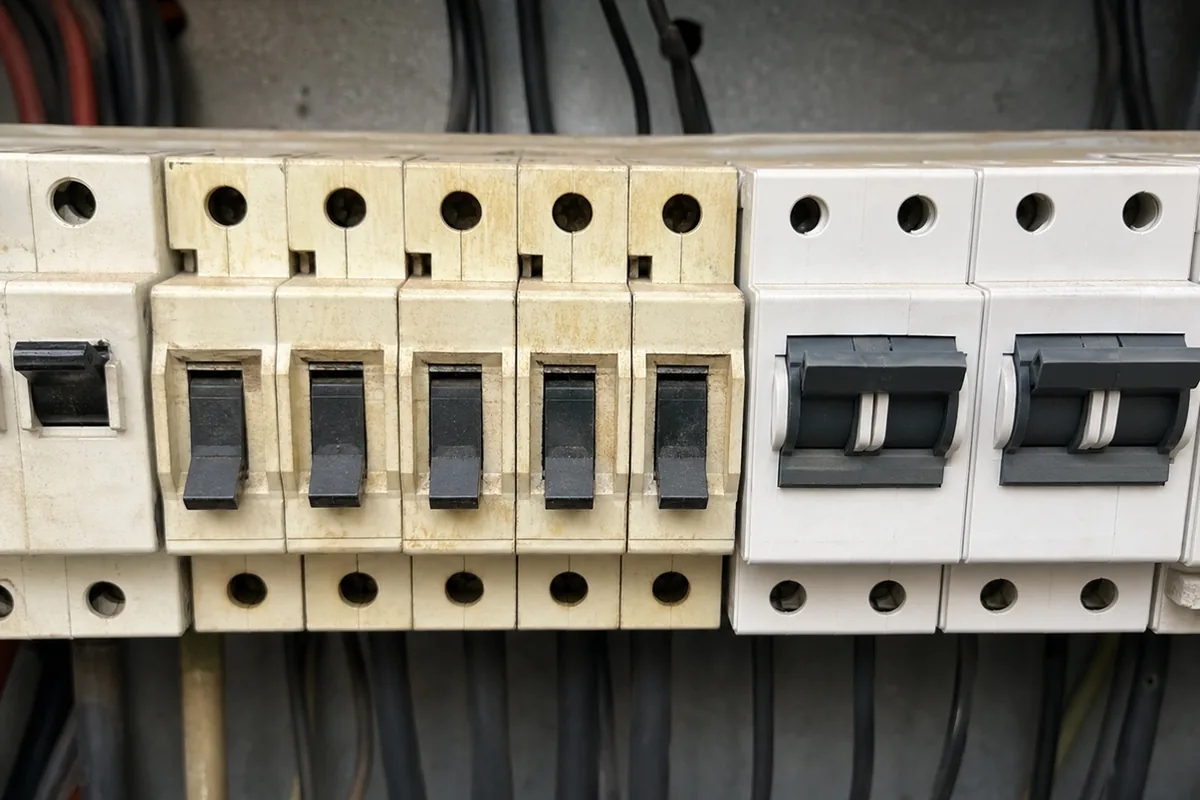
We remove the panel cover on every inspection where access allows it, and we look at every breaker terminal, not just the ones that look obviously overloaded. A double tap can hide behind a completely ordinary-looking breaker. We check the physical fit at the lug, whether both conductors are seated evenly, whether the terminal shows the flattened or splayed insulation that comes from being pinched under a shared screw.
We cross-reference what we see against the panel’s own listing. If the breaker is stamped or documented for a two-conductor terminal, we note that it is compliant even though it looks unusual to an untrained eye. If it is not, we document it as a double tap and photograph the terminal directly.
We also check thermal behavior with the tools we carry when the panel is live and safe to test. A loose connection under load generates measurable heat before it generates a visible problem, and that reading adds real evidence rather than a guess based on appearance alone. If we find a condition we cannot fully evaluate on-site, we say so and refer it to a licensed electrician rather than speculating about what is behind the wall.
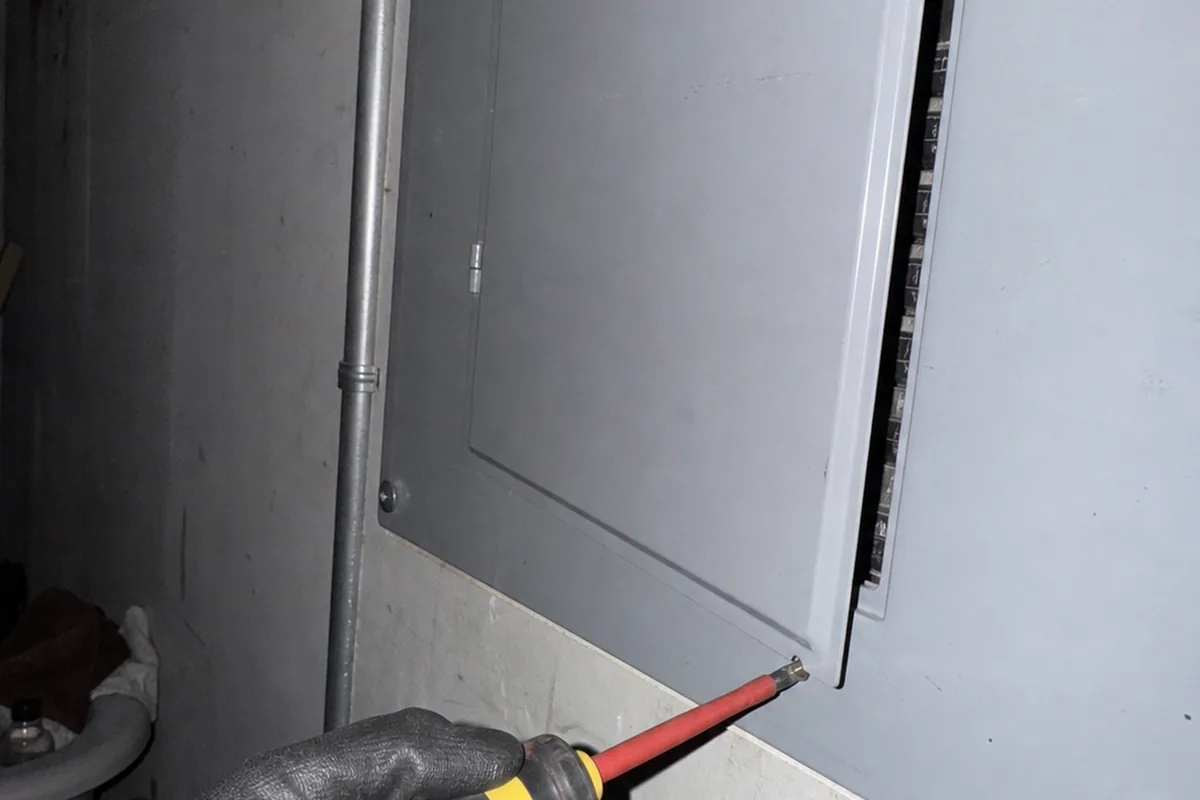
What we do not do is rewire anything, pull permits retroactively, or estimate a full panel upgrade down to the dollar. That is licensed electrician work, and we say so plainly in the report. Our guide on how to read a home inspection report walks through how a finding like this gets written up and where it sits in the report’s priority order.
Quick FAQ
Is a double-tapped breaker a fire hazard? It can become one, though most sit for years without incident. The risk comes from an uneven connection generating heat under load. We document it as a defect that needs correction, not an emergency, but we do not downplay it either.
Does finding one double tap mean the whole panel needs replacing? Not necessarily. Many are a one-breaker fix, moving a conductor to its own slot. Replacement becomes the right conversation when there are multiple double taps, other age-related conditions, or the panel is out of capacity for current loads.
How much does fixing a double tap usually cost? A single relocation is typically a modest electrician service call, often the smallest line item in a Cerritos repair negotiation. Get an actual quote before assuming a number, because access and panel condition both affect the price.
Can a homeowner just remove the extra wire? No. That circuit is live and feeding something in the house. It has to be relocated to its own properly sized breaker or terminal by a licensed electrician, not disconnected and abandoned.
Is this the same thing as an old Federal Pacific or Zinsco panel? No. Those are panel-brand and age problems, unrelated to modification history, and we cover them separately in our Escondido guide. A double tap can happen in any brand of panel, old or new.
Will every inspection catch this if the panel cover is removed? Removing the cover and inspecting every breaker terminal is standard practice for us. If access is blocked or unsafe, we say so in the report rather than guessing at what is behind the cover.
The honest summary
Cerritos keeps getting remodeled because the schools keep pulling buyers in, and that is a good problem for a city to have. It is not a good problem for an original 1960s or 70s panel that has absorbed decades of added circuits without always getting a matching upgrade. A double-tapped breaker is one of the clearest signs a panel took on more than it was built for, and it is usually an easy, inexpensive fix once someone finds it.
We will pull the cover, check every terminal, and tell your buyer plainly what is under the lugs. Most of the time it is clean. When it is not, we will say so, photograph it, and point toward the electrician conversation instead of guessing at the cost ourselves. That is the job.
Schedule a Cerritos inspection → · See what every inspection includes → · Read our FAQ →
Related reading
- Older Electrical Panels in Culver City. A broader look at aging panel conditions in a comparable tract-era market.
- Aluminum Branch Wiring in El Cajon. A wire-material defect, different from a modification defect but often discussed in the same panel conversation.
- Federal Pacific and Zinsco Panels in Escondido. A panel-brand and age hazard, distinct from how a panel was later modified.
- AFCI and GFCI Outlet Protection Gaps in Redlands. A missing-device hazard, distinct from an overcurrent-protection installation defect.
- Unpermitted Additions and Garage Conversions in Van Nuys. The permit-history angle that often travels alongside panel shortcuts like this one.
- Main Electrical Service Disconnect Accessibility in Signal Hill. A location-and-access question, distinct from this guide’s installation-quality defect inside the panel.
- Generator and Transfer Switch Safety in Hemet. A different electrical topic, backup power and the isolation hardware that keeps a generator from backfeeding the utility grid, worth knowing about since both can surface during the same panel inspection. For the 2026 disclosure duty that puts an electrical advisory in front of the buyer in writing, see California’s new electrical inspection notice.