A buyer’s inspection happens on a warm October afternoon. The thermostat calls for heat. The furnace fires. Warm air comes through the registers. The report says it “operated normally.”
Three weeks after closing, the first cold night arrives. The buyer smells something, or an alarm sounds, and asks, “Didn’t the inspector check this?”
That is a composite of situations, not one house. The furnace may have started and run. The inspection still may not have included an internal heat exchanger inspection, combustion analysis or a carbon monoxide test.
This guide is about that boundary. It is not a carbon monoxide safety manual or an HVAC repair guide. It does not replace the separate guide to an old 1930s gravity furnace, which focuses on age and that particular furnace design.
A home inspection runs the furnace but does not open the heat exchanger
The answer is in the inspection standard. Under section 3.4 of the InterNACHI Residential Standards of Practice, the inspector shall inspect the heating system using normal operating controls. The standard does not require the inspector to inspect the interior of flues or chimneys, fire chambers, heat exchangers or combustion air systems.
That is the line buyers need to see.
An inspector can operate the thermostat and observe the furnace’s response. The inspector can report visible conditions around the equipment. The inspector can identify a disconnected flue pipe or staining around the burner compartment. The inspector does not have to open the heat exchanger and inspect its interior.
A furnace can pass every visible check and still have a crack the inspector cannot see.
The standard also does not require the inspector to determine the uniformity, temperature, flow, balance, distribution, size, capacity, BTU or supply adequacy of the heating system. A report that says the furnace operated does not mean the system was measured for every heating performance factor.
This is why the phrase “operated normally” needs to be read in context. It describes what happened during the inspection using the available controls. It does not certify every internal component.
The report’s “not inspected” lines matter for the same reason. This explanation of inaccessible and excluded areas shows why a limitation in the report is not a hidden repair diagnosis. It tells you where the inspection stopped.
A warm October afternoon can produce only a short furnace test
A warm-day inspection may not provide a long heating cycle. The InterNACHI standard does not require the inspector to activate heating, heat pump or other heating systems when ambient temperatures or other circumstances are not conducive to safe operation or may damage the equipment.
The report should tell you what happened. Was the furnace operated? Was it run briefly? Was it not run because of the outdoor temperature? Was power, gas or access unavailable?
Ask those questions before treating the report as a winter performance test.
“We run it through a normal cycle” means the inspector uses the thermostat and observes the equipment’s operation during the inspection. It does not mean the furnace has been operated for hours under a cold-weather load. It does not mean the interior of the heat exchanger has been examined.
A buyer reading a warm-weather report should look for the actual observation, not just the summary sentence. The operating conditions matter. A furnace that starts quickly and produces warm air during a short test has demonstrated that response under those conditions. It has not demonstrated how it will perform through a cold week.
The same issue applies when the equipment cannot be reached or operated. If a panel is blocked, the gas is off, the power is off or the inspector cannot safely activate the system, the report should identify that limitation. A furnace that was not run is not a furnace that passed.
This report-reading guide explains how to separate an observation, a limitation and a recommendation. That distinction becomes important before the contingency deadline, not after it.
The inspector records visible clues around the furnace
The report can tell you what the inspector observed at the burner compartment, venting, controls and flue. Those observations are useful. They are not proof that every internal part is intact.
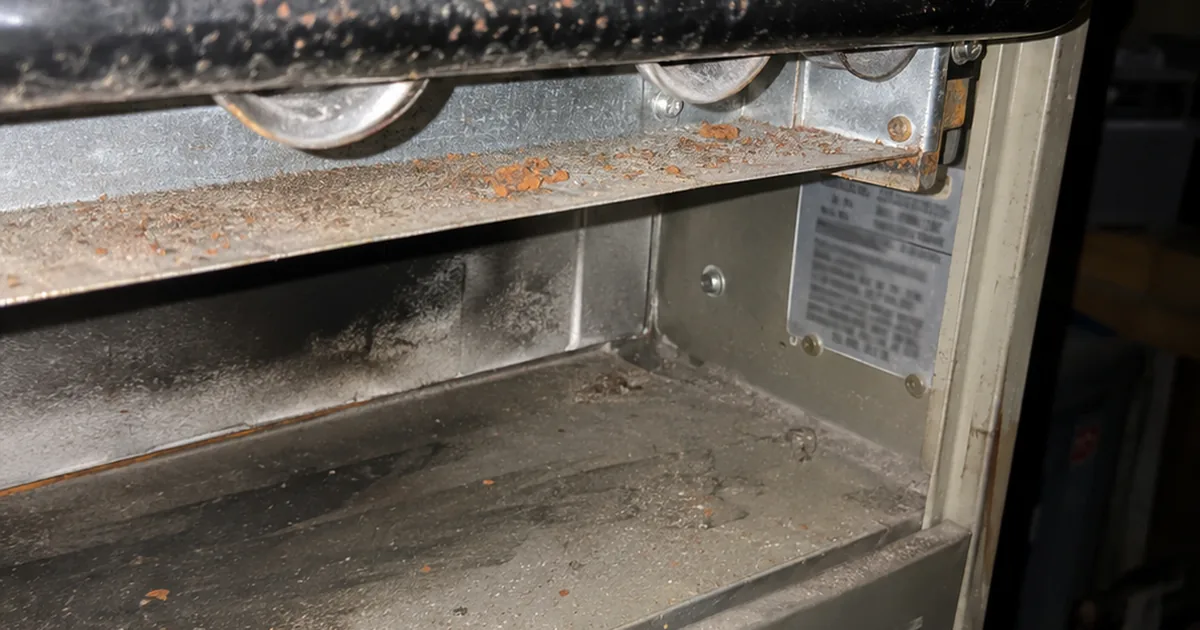
An inspector may observe whether the furnace starts and runs through its normal cycle using the thermostat. The burners may light, and the flame may appear steady during the observation. The report may also describe visible rust, soot, scorch marks or staining around the burner compartment, the jacket or the registers.
The inspector may check whether the flue pipe is connected, sloped and sealed at its joints. A disconnected or loose flue is a visible condition that deserves action. So does corrosion or a joint that is not properly connected.
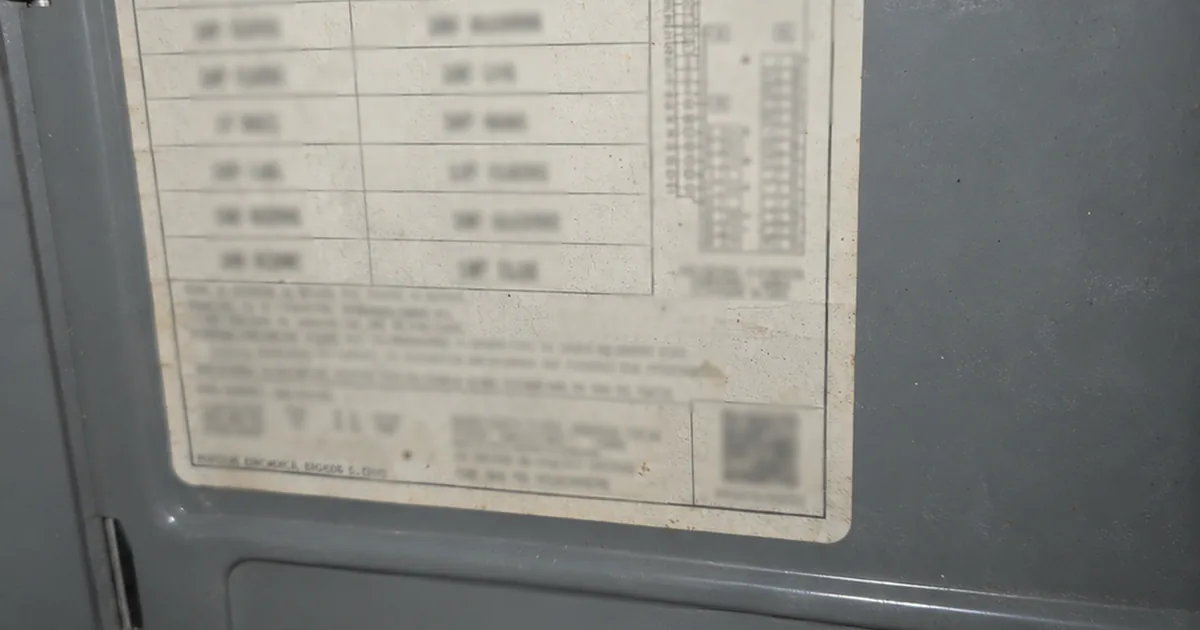
The filter and blower compartment may be visible enough to describe in reasonable terms. The data plate may show the furnace’s age. A service record may be available in the home, attached to the equipment or provided by the seller.
These are the five practical questions to ask when you read the furnace section:
- Did the furnace start and run through a normal cycle?
- Did the burners light, and did the flame look steady?
- Were rust, soot, scorch marks or staining visible?
- Was the flue connected, sloped and sealed at the joints?
- Was the data plate readable, and was a service record available?
Each answer adds information. None of them changes the inspection’s scope.
An inspection with a same-day report and photos gives the buyer a record of what was visible that day. Inspection.re inspectors are InterNACHI-certified. Inspection.re may also provide a Matterport 3D tour with tagged findings. A FLIR infrared camera may be used on the building. It shows surface temperature. It does not see inside a heat exchanger.
A clean report line does not prove the heat exchanger is intact
The report cannot tell you whether a crack exists inside the heat exchanger unless that area is separately examined by someone performing that work. The standard does not require the inspector to inspect the heat exchanger, fire chamber, combustion air system or interior of flues and chimneys.
The report also does not determine carbon monoxide levels in the living space. Section 2.2 of the InterNACHI standard says the inspector is not required to determine the presence of airborne hazards or air quality. Section 3.7 requires reporting the absence of smoke and carbon monoxide detectors.
Those are different tasks.
A home inspection report is not an air-quality test. It is not a carbon monoxide test. A note that a detector was absent is a report item. It is not a measurement of the air.
The same boundary applies to the question, “Will this furnace make it through the winter?” The inspector can report the furnace’s age, visible condition, operation during the inspection and available service history. The report cannot predict the life of an internal component.
That is why “operated normally” should not be rewritten in a repair request as “the furnace is safe.” The first statement describes an observed operation. The second makes a conclusion the inspection did not establish.
The specialist guide for home inspections and specialist evaluations covers this division. The home inspector’s observation remains useful. The HVAC technician’s scope is different.
The report’s details point to the next decision
The right response depends on what the report shows. Do not treat every furnace note as the same. A recent data plate, a service record and no visible defects create a different decision than soot around the burner compartment or a flue that is disconnected.
| What the report shows | What it suggests | What to do before the contingency ends |
|---|---|---|
| The furnace ran normally, the data plate shows a recent furnace, no visible issues were noted and a service record is available | The visible inspection did not identify a furnace concern | Keep the service record and schedule annual professional service |
| The furnace ran normally, but the furnace is old or no service record is available | The inspection has limited history for the equipment | Ask for service history and consider a technician visit |
| Visible rust, soot, scorch or staining appears around the burner compartment, jacket or registers | A visible condition needs a closer HVAC evaluation | Request an HVAC evaluation before removing the inspection contingency |
| The furnace was not run because of temperature, access, power or gas conditions | The furnace’s operation remains unknown | Have it run or obtain an HVAC evaluation before the contingency ends |
| Venting is disconnected, corroded or loose | The flue connection needs correction | Have a licensed contractor correct it before closing |
| No carbon monoxide alarm was noted in the report | An alarm gap is a reportable item | Install carbon monoxide alarms in the locations recommended by CPSC |
The table is a decision tool, not a diagnosis. “Recent” and “old” must be read from the data plate and the report, not guessed from the cabinet’s appearance. A furnace that looks clean may still have no service history. A furnace with visible rust may need a technician to determine what the condition means.
The inspection contingency gives the buyer a time period for investigation and decisions. This timeline guide explains why a request should be made while that period is open.
Ask for a written HVAC scope, not just “service the furnace”
A request for “furnace servicing” is too vague. It may produce a routine maintenance visit without answering the buyer’s actual question.
Ask for an HVAC evaluation that includes a heat exchanger inspection and a combustion and venting check. Ask the technician to put the findings in writing. The request should identify the furnace and state that the evaluation is being requested before the inspection contingency ends.
The request can say:
Please have a qualified HVAC contractor evaluate the furnace before the inspection contingency ends. Ask the contractor to inspect the heat exchanger and check combustion and venting conditions. Please provide written findings, including any observed defects, safety concerns, recommended corrections and whether further evaluation is needed.
That wording does not direct the technician to reach a preferred result. It identifies the areas the home inspection does not cover.
Use the right contractor. This California contractor license guide explains the license-class question to ask before referring a buyer to a contractor. The home inspector and the HVAC contractor do not perform the same service.
The timing matters just as much as the wording. If the report says the furnace was not run, ask for the furnace to be operated or evaluated while the contingency is still open. If the report shows scorch marks, soot, staining or defective venting, make the request promptly. Do not wait until the buyer has removed the contingency and closed escrow.
Agents can put the report language directly into the request. Identify the data plate age, the exact visible condition, whether the furnace ran, and the limitation stated by the inspector. “The furnace needs servicing” hides the issue. “The furnace was not operated because the gas was off, and the buyer requests a written HVAC evaluation before contingency removal” does not.
CPSC recommends annual furnace service and correctly placed CO alarms
After closing, CPSC says to have the heating system professionally inspected and serviced every year.
CPSC also says to inspect chimneys and flues for blockages, corrosion, partial and complete disconnections, and loose connections. That guidance addresses conditions a buyer should not ignore simply because the furnace ran during the home inspection.
CPSC recommends battery-operated carbon monoxide alarms, or carbon monoxide alarms with battery backup, on every level of the home and outside sleeping areas. CPSC does not recommend installing carbon monoxide alarms in kitchens or above fuel-burning appliances.
The alarm location matters. So does the distinction between an alarm and a home inspection. This CPSC smoke and carbon monoxide alarm update covers alarm notices and placement concerns.
Section 3.7 of the InterNACHI standard requires the inspector to report the absence of smoke and carbon monoxide detectors. That report item gives the buyer a clear correction to make. It does not mean the inspector performed a carbon monoxide test.
The first cold week exposes the inspection boundary
The first cold week is a useful time to think about the furnace, but the inspection itself remains a limited observation. It can show that the system started, the burners lit, the flame looked steady, warm air came through the registers and visible components appeared in a certain condition. It cannot, by itself, establish that the heat exchanger has no crack, that combustion gases are within a measured range or that the furnace will operate through the winter.
The practical answer is direct. Read the furnace section before the contingency ends. Confirm whether the furnace ran and under what conditions. Look at the data plate, burner compartment, flue, filter and service record. Treat visible rust, soot, scorch marks, staining, disconnected venting or an untested furnace as reasons for a specific HVAC request.
Inspection.re’s California home inspection report page describes the report format and findings. The FAQ answers common questions about the inspection scope. Buyers who want to see what is included can review the service details.
Inspection.re serves buyers and agents in Los Angeles, San Diego, Temecula and Riverside. Get the furnace run status in writing. If the report shows a limitation or visible warning sign, order the HVAC evaluation before the inspection contingency ends.