We inspected a home in Hidden Meadows, Escondido earlier this year. Mid-1970s ranch, single story, well-kept. The seller had owned it for two decades. The disclosure was clean. The buyers were excited, the agents on both sides were relaxed, and from the curb the place looked move-in ready.
Then we pulled the dead-front cover off the electrical panel in the garage.
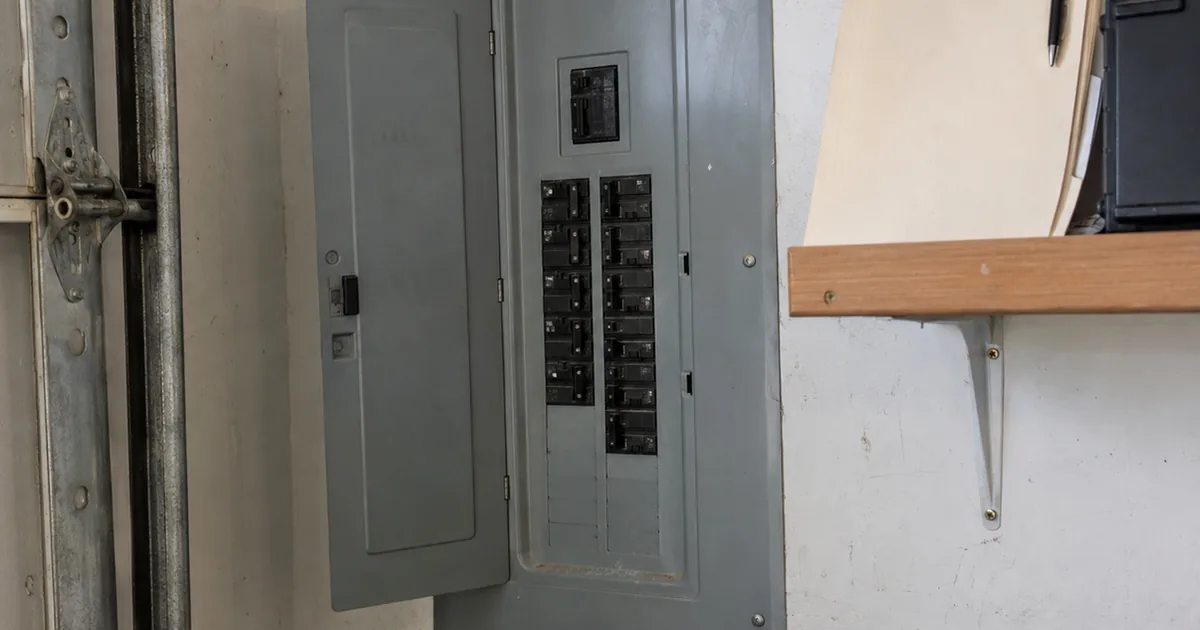
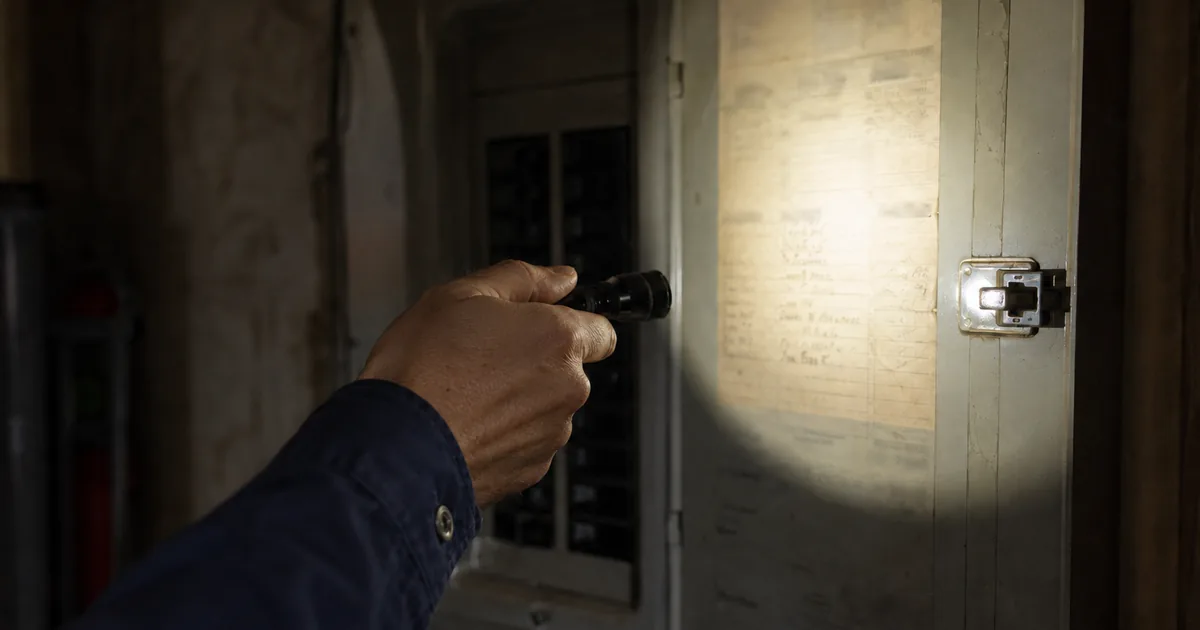
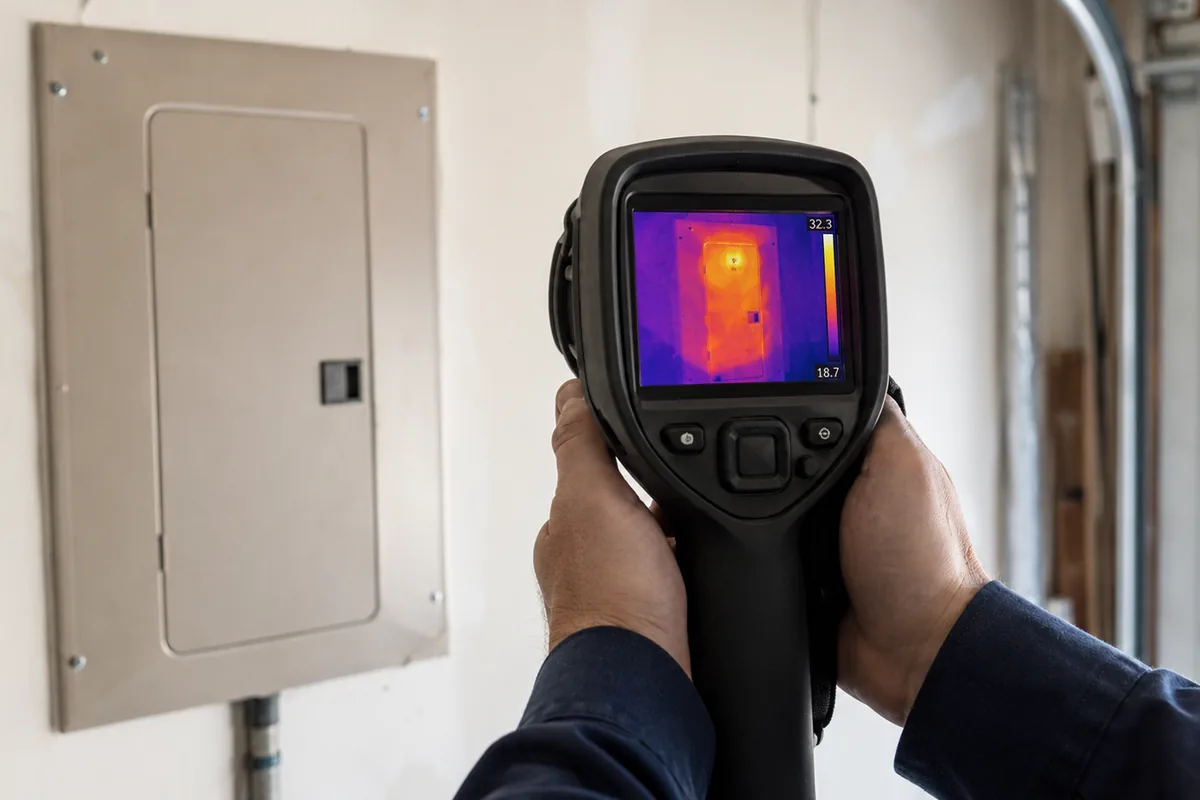
Stab-Lok branded breakers. Federal Pacific Electric. Two of them double-tapped, with one of those carrying a load it was never rated for. Some discoloration around a breaker terminal that suggested chronic heat. The panel directory was handwritten in pencil and half wrong. The thermal scan we ran against the closed panel before opening it had already shown a hot spot on the bus bar, about fifteen degrees above the rest of the breakers, which is the read we expect when an FPE Stab-Lok panel has been quietly cooking for years.
The buyer was the first person in the transaction who learned what they were buying. The listing agent was the second.
Schedule an Escondido inspection · Same-day report · $300 off applied automatically · Pay-at-closing available
Why this matters for the agent
A Federal Pacific or Zinsco panel is not a defect you can paper over with a credit and a clean closing. It is a safety issue with a documented history, a recognized insurance problem, and a real chance of changing how the deal closes.
Three things are usually on the line. First, the buyer’s homeowner insurance carrier may refuse to write the policy once they learn the home has an FPE Stab-Lok or Zinsco panel. Some carriers will write the policy with a higher premium and a remediation deadline. Some will not write it at all. Second, the lender may flag the panel during the appraisal walk and require remediation before funding. Third, the buyer who learns about the panel and closes anyway is taking on a fire risk that the seller’s disclosure did not flag. That last one is where future litigation comes from.
If you work Escondido, especially in neighborhoods built between 1962 and 1980, you are going to encounter these panels regularly. Hidden Meadows, parts of Old Escondido, older Country Club homes, and the 1970s build wave throughout the city are all in scope. The agents who know what to look for and how to handle the negotiation come out ahead.
What FPE and Zinsco actually are
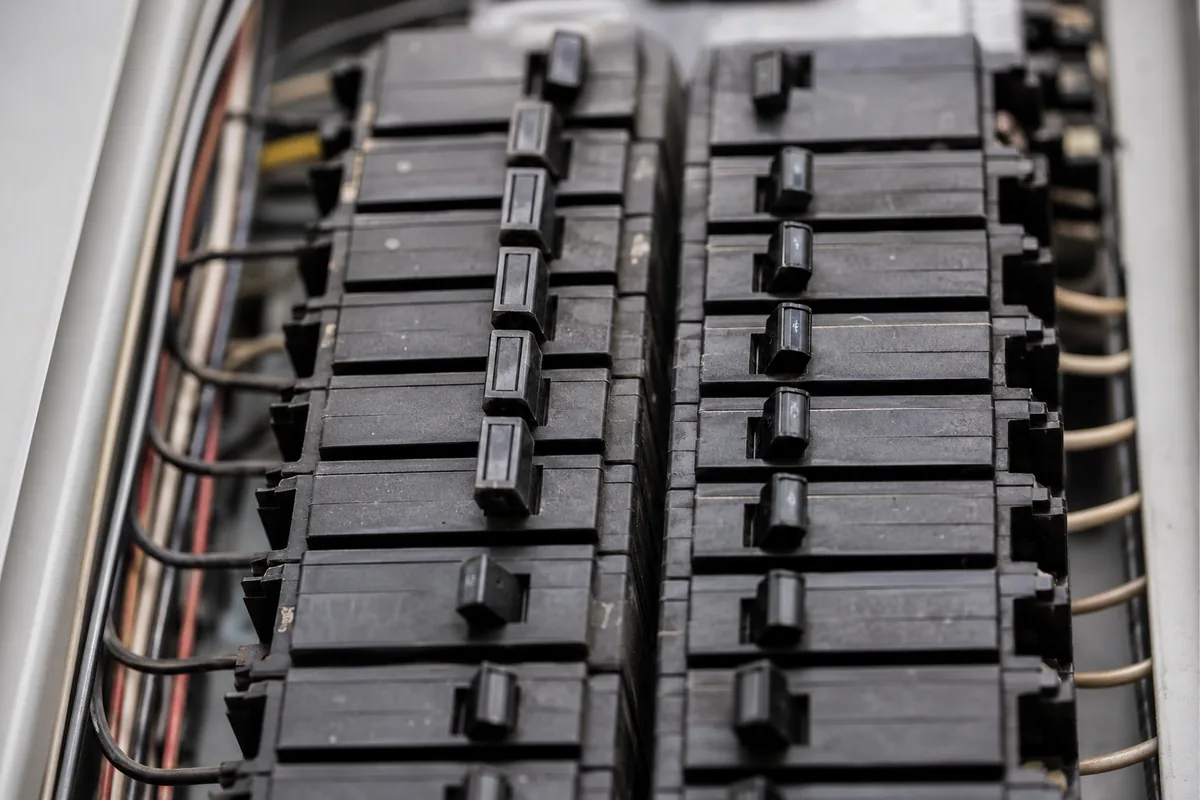
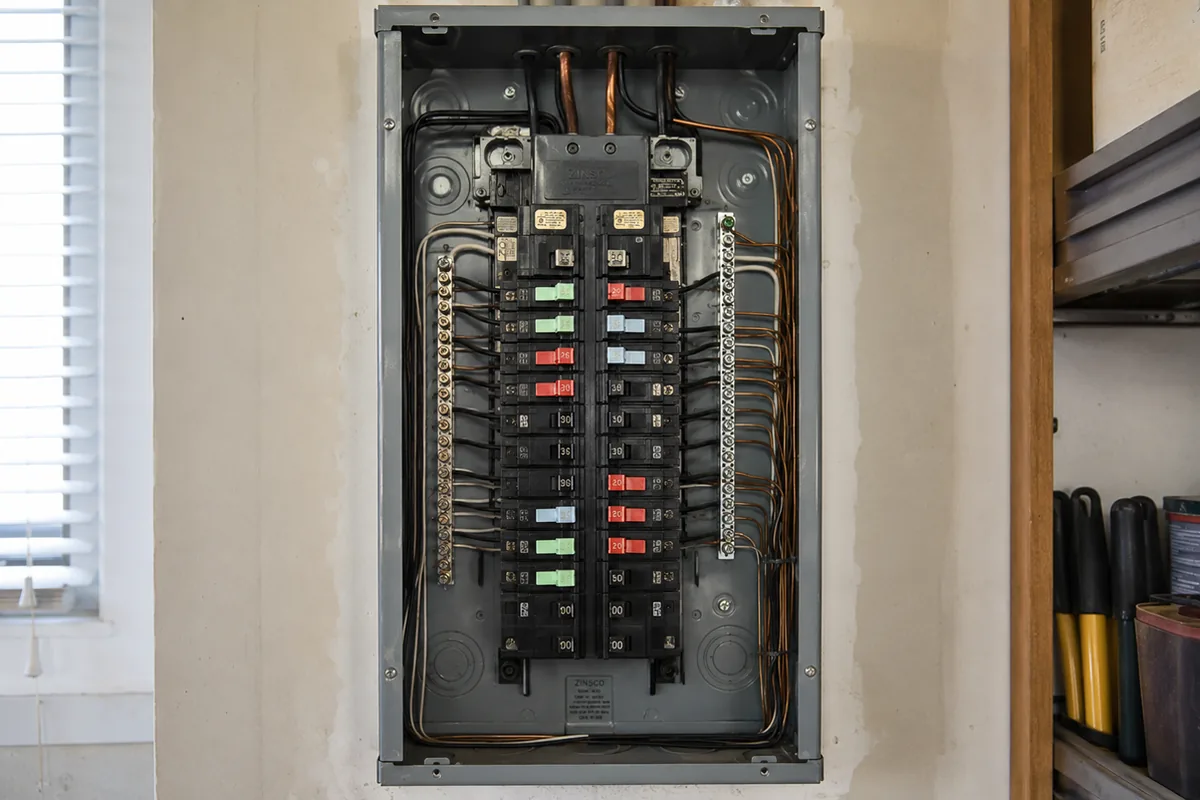
Federal Pacific Electric and Zinsco are two electrical panel manufacturers whose breakers and bus-bar assemblies were widely installed in American homes from roughly the late 1950s through about 1980. FPE branded their breakers Stab-Lok. Zinsco panels are usually identified by a blue and silver label inside the cover, with an embossed Magnetrip label across the panel face.
Both companies are out of the residential electrical business today. FPE’s Stab-Lok line lost its UL listing in the early 1980s after a long investigation into the breakers not tripping under fault conditions. A 2002 New Jersey class-action settlement (Aronson v. Federal Pacific Electric) included court findings that the company misrepresented test results during the original UL listing. Zinsco has a similar story with a different mechanism, where the breakers and bus bar wear and corrode in ways that make trip behavior unreliable.
The panels themselves are not always unsafe today, especially if the home has light electrical loads and the panel has never been pushed hard. But the failure mechanism is real, the recognition by insurers and inspectors is widespread, and the conservative position is replacement.
Why these panels fail (the part most agents skip)
A circuit breaker has one job: trip when current exceeds its rating. When a breaker fails to trip, the wiring downstream of it can heat past the temperature its insulation is rated for, and the insulation can ignite. That is the failure mode behind almost every fire incident attributed to FPE Stab-Lok or Zinsco hardware.
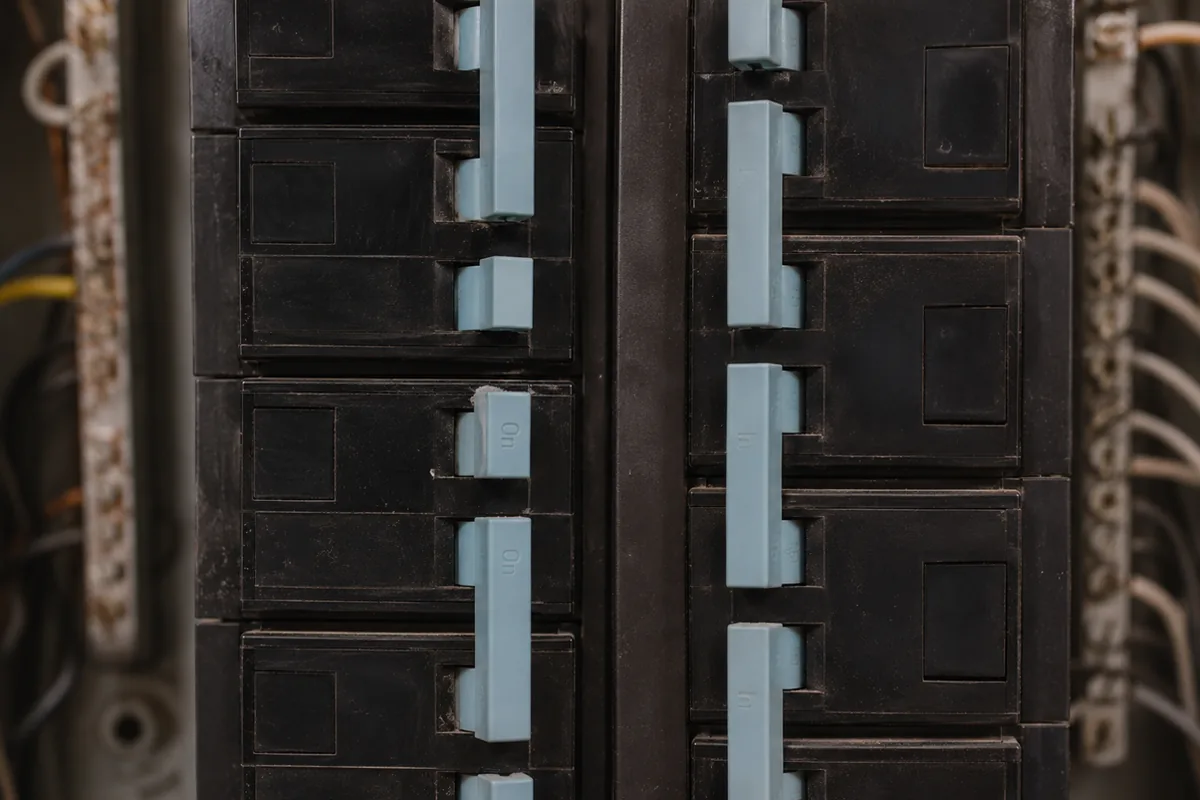
In FPE Stab-Lok breakers, the failure is mechanical. The latching mechanism inside the breaker can stick. When the latch sticks, the breaker stays closed under an overcurrent condition that should have opened it. Older Stab-Lok breakers also have a bus-bar connection that can lose contact under thermal cycling, which produces the hot spots we see on thermal scans like the one we ran in Hidden Meadows.
Zinsco panels fail differently. The aluminum bus bars corrode at the points where breakers stab on. Corrosion increases resistance. Resistance produces heat. Heat further degrades the breaker-to-bus interface. Eventually the breaker can melt to the bus bar, which means it cannot trip and cannot be replaced without replacing the bus structure itself.
Neither failure is loud or obvious. The home runs fine until it does not. That is why these panels need a deliberate inspection rather than a glance.
What agents should tell every buyer in older Escondido homes
A short list buyers writing offers on 1960s, 1970s, or pre-1980 Escondido homes should hear from you before they go into escrow.
- The electrical panel could be FPE, Zinsco, Pushmatic, or Challenger. None of those four are panels you want to inherit. The panel make is verifiable on the inspection report.
- If the panel is one of those four, plan on a four-figure replacement at a minimum, and possibly more if the service entrance also needs upgrading from the older meter-main configuration to modern panelboard standards.
- Ask the buyer’s homeowner insurance carrier whether the panel will affect underwriting. Get the answer in writing. Some carriers ask the question on the binder application, some only ask after the inspection.
- Plan for the possibility that the inspection turns up a credit-or-walk situation. Have the buyer pre-qualified for a slightly higher repair budget than the offer assumed.
- If the seller has disclosed any prior electrical work, ask whether it was permitted, whether the panel was replaced or just the breakers, and whether the existing panel directory matches the breakers actually present.
If you want a one-page version of this list to text to your buyers in the pre-offer window, ask us. We will send it.
Red flags during showings (no special tools required)
You do not need a thermal camera to flag a candidate panel at a showing. Look for these and add them to your walk-through mental checklist on any home built before about 1985 in Escondido.
- The panel cover has a Federal Pacific, FPE, Stab-Lok, Federal Electric, Federal Pioneer, or Federal NOARC label. Any of those means Stab-Lok.
- The panel cover has a blue and silver Zinsco sticker, or the panel face has an embossed Magnetrip label.
- The breaker handles look unusual. Stab-Lok handles are narrower than modern breakers, often colored with thin colored stripes for the trip rating.
- The panel directory inside the door is handwritten, faded, contradictory, or missing entirely. This is a strong signal that no recent electrician has worked the panel.
- Burning-plastic smell anywhere near the panel, even faint. This is rare but unambiguous, and it means stop the showing and call us.
- Rust on the panel cover, water staining on the wall behind the panel, or any visible moisture damage. Water plus electrical equipment is a separate problem layer on top of the FPE or Zinsco issue.
- Recent paint over the panel cover or the surrounding wall. Sellers sometimes paint to cover a label or to delay the visual identification. Look closely.
None of these prove the panel is unsafe. All of them are reasons to make the inspection contingency real and to read the inspector’s report on the electrical system carefully.
Schedule an Escondido inspection
The negotiation playbook when an FPE or Zinsco panel surfaces in escrow
There are four paths most of these deals end up on. Knowing them in advance helps you steer.
Path one: seller replaces before closing. Less common because sellers do not love managing an electrician and a permit during their own escrow timeline. When it happens, the buyer gets a permitted replacement with current-code service entrance and grounding work included, and the inspection clears clean on a re-inspection. Make sure the re-inspection happens, that the work is permitted, and that the permit final is in hand before closing.
Path two: seller credits the buyer to handle it after closing. This is the most common outcome. The credit should be sized to a real bid from a licensed electrician, ideally two bids, with the work scoped to include the panel, the service entrance if required, and any grounding remediation the inspector flagged. Push for written bids before the credit number is finalized. The bid is the document that anchors the negotiation.
Path three: buyer walks under the inspection contingency. This happens, especially with first-time buyers who are not ready to take on a four or five-figure repair on top of moving costs. The earnest money is protected under the inspection contingency and the buyer moves to the next property. Your job as the buyer’s agent is to make sure they know walking is an option and what triggers it.
Path four: deal closes anyway with no remediation. The worst of the four because the buyer takes on the safety risk and the insurance complication and the seller faces no consequence for not disclosing what they should have known. If the buyer wants the home and the seller will not budge, document the buyer’s informed decision in writing and recommend they replace the panel within the first 90 days of ownership.
A fifth path exists, which is the deal closing with a hold-back in escrow for the work, completed by the buyer’s contractor on a defined timeline post-closing. This is a clean structure when the seller is willing to engage but does not want to manage the work themselves. Worth proposing when paths one and two stall.
How a thermal scan catches it on a closed panel
A standard home inspection checks the electrical panel by removing the dead-front cover, looking for visible defects, and listing the breakers against the panel directory. That works for things you can see. It does not catch a panel that is running hot under load because the bus-bar connection is degraded.
What thermal imaging adds is a temperature read across the closed panel face before the cover comes off. A bus bar running fifteen or twenty degrees hotter than the surrounding breakers is a signal the connection is degraded, the breaker contact is loose, or the panel is undersized for the present load. Combined with the visual ID of FPE or Zinsco hardware, the thermal anomaly converts a soft recommendation into a documented finding.
This is what we mean when we say infrared scanning is standard on every Inspection.re job rather than an add-on. The whole point of the premium package is that the inspection finds what is actually there. We wrote up a related case in Lake Elsinore where a Tuscany Hills slab leak showed up the same way, on the thermal scan before the visible symptoms.
Quick FAQ for buyers and agents
Is a Federal Pacific or Zinsco panel always unsafe? Not always, and not in every house. The failure mechanism is real but probabilistic. The conservative position, which most home inspectors, insurers, and electrical contractors share, is replacement. Insurance underwriting and resale considerations push hard toward replacement even when the present-day condition appears fine.
Can the inspector just say it is fine if it looks fine? We can document the visible condition, including whether the panel shows any heat under the thermal scan and whether the breakers and bus connections look intact. We are not licensed to declare the panel safe for continued service. A licensed electrician is the right party for that determination, and even most electricians recommend replacement on these brands as a matter of policy.
What does a panel replacement typically cost in Escondido? The four-figure range for a straightforward 200-amp panel replacement on a permitted service. More if the service entrance, mast, or meter-main configuration also needs upgrading, or if the buyer wants additional circuits added at the same time. Get two written bids before the negotiation.
Will homeowner insurance refuse to write the policy? Some carriers will. Some will write the policy with a higher premium and a remediation deadline. Some will write it without comment. The variability is the problem. Buyers should call their target carrier early in escrow rather than waiting to be surprised at the binder stage.
Does this issue come up much in Escondido specifically? Yes, because Escondido’s housing stock has a strong 1960 to 1985 cohort, and that is exactly the FPE and Zinsco install era. Hidden Meadows, parts of Old Escondido, the older Country Club homes, and 1970s tracts throughout the city all sit in the affected window.
The honest summary for agents
If you work Escondido and you write offers on homes built before about 1985, you are going to see these panels. The ones that get caught during the inspection contingency are negotiations. The ones that get caught six months after closing, with a melted breaker or a small electrical fire, are lawsuits. Your buyer is much better served by the first scenario.
The inspection that finds these things is not the cheapest one on Yelp. It is the one with thermal imaging running on the panel before the cover comes off, a 3D scan documenting the panel location and the visible labels, and a same-day report so you have the proof in hand before the contingency clock runs out.
Schedule an Escondido inspection or see our full inspection scope before you book. Common questions are answered in the FAQ. If you also work Wildomar, where these same panel brands show up alongside fire-zone complications, read our Wildomar defensible space guide. For the older electrical hazard at the other end of San Diego County, see our Coronado knob-and-tube guide. For the aluminum branch wiring hazard in the same 1960s-70s era homes in East County, see our El Cajon aluminum wiring guide. For the hidden plumbing hazard in 1980s-90s North County homes, see our Vista polybutylene piping guide. And for the rural North County properties where these panels share the parcel with a private well and septic system, our Fallbrook well, septic and propane guide covers how those systems fail and what to check at a showing. For how an undersized original service and a fuse panel play out on a high-value historic estate, see our San Marino undersized electrical service guide. For how these same panel brands and mixed wiring show up across the Westside, see our Culver City older electrical panels guide. For a panel-modification defect rather than a panel-brand one, where two conductors end up under one lug after years of remodels, see our Cerritos double-tapped breaker guide. And for how an aging panel reads alongside knob-and-tube and galvanized pipe inside a pre-1940 preservation district, see our guide to historic Old Towne Orange. For a separate electrical topic entirely, backup power and the isolation hardware that keeps a portable or standby generator from backfeeding the utility grid, see our Hemet generator and transfer switch safety guide. And for a location-and-access question rather than a panel-brand one, whether the main service disconnect can actually be reached in an emergency, see our Signal Hill main disconnect accessibility guide. And for the written notice California now puts in front of every covered buyer starting January 1, 2026, telling them an electrical inspection may be advisable, see our guide to the new electrical disclosure under Civil Code 1102.6i.