A buyer is under contract on a two-story home delivered as factory-built modules last year. Another buyer is looking at a backyard ADU craned into place as one box.
The seller’s packet says, “Built to state code. HCD approved.”
The buyer asks whether that means there is nothing left to inspect.
No. The insignia covers how the home was built in the plant. The foundation, the set, the connections between modules, the utility hookups, and everything site-built after delivery are where we spend our time.
Two September 29 laws change which codes apply and who can inspect installation
AB 1815 and AB 2058 were approved by Governor Gavin Newsom on September 29, 2026, and both take effect January 1, 2027, with one exception for private installation inspections.
AB 1815, authored by Assemblymember Buffy Wicks, is titled “Factory-built housing: building standards and local requirements.” It is Chapter 782 of the Statutes of 2026.
AB 2058, authored by Assemblymember John Harabedian, is titled “California Factory-Built Housing Law.” It is Chapter 783 of the Statutes of 2026.
Both appeared in the Governor’s September 29 housing release under “Modernize how California builds housing.” The release describes the laws as creating consistent statewide building-code treatment for qualifying factory-built structures and streamlining factory-built housing inspections and fees.
Neither law has an urgency clause. That is why the general effective date is January 1, 2027.
AB 2058’s private installation-inspection option does not begin on that date. HCD must first adopt regulations for private quality assurance agencies that perform installation inspections. Those regulations are due by January 1, 2029.
Both laws declare housing a matter of statewide concern. They apply in charter cities too.
The laws add rules to California’s Factory-Built Housing Law, found in Health and Safety Code section 19960 and following.
Factory-built housing is not the same as a HUD-code manufactured home
Factory-built housing under California law is state-regulated modular construction built to the California Building Standards Code and approved by the Department of Housing and Community Development.
A HUD-code manufactured home is different. Manufactured homes were the subject of SB 996, a separate law signed September 30, 2026. That law is discussed in our article about the SB 996 manufactured home chassis law.
The distinction matters when you read a listing, a purchase contract, or a seller’s disclosure. “Factory-built,” “modular,” and “manufactured” are not interchangeable terms for this purpose.
Under existing Health and Safety Code section 19980, factory-built housing sold to first users in California must bear an HCD insignia of approval.
Section 19981 says factory-built housing bearing that insignia “shall be deemed to comply with the requirements of all ordinances or regulations” of a city, county, or district that apply to construction of housing. A local agency may not require plan submittal for the factory-built portion just to check whether that portion complies.
That does not mean the whole property is outside inspection. Section 19981 also says the insignia-bearing housing cannot be modified before installation without HCD approval. A modification during installation requires approval from the local enforcement agency.
The insignia tells you that the factory-built portion went through the HCD approval system. It does not tell you that the foundation is sound, that the modules were joined correctly, or that the site-built deck was built correctly.
For a broader look at inspections on new construction, see whether a new California home still needs a home inspection.
AB 1815 puts qualifying factory-built structures under the state code
AB 1815 prevents a local government from imposing building standards on a qualifying factory-built housing structure that exceed or differ from the mandatory standards in the California Building Standards Code.
The new definition is specific. A “factory-built housing structure” is a residential building where at least two-thirds of the new or converted square footage is residential, and at least 30 percent of the residential portion is built using factory-built housing.
That threshold matters for projects that combine factory-built and site-built work. The recast definition of factory-built housing reaches a residential building, a dwelling unit, a building component, a building assembly, or a building system, not only a complete home delivered in modules.
That recast definition covers construction manufactured so that “all concealed parts or processes of manufacture cannot be inspected before installation” without disassembly, damage, or destruction.
Plainly, the walls may be closed at the factory. The wiring, plumbing, insulation, and framing inside those walls may not be available for a visual inspection after delivery.
The law adds a definition for “building assembly.” This means assembled construction materials, components, subsystems, or subassemblies designed for use in factory-built housing. Listed appliances are excluded.
The new state-code rule also applies to energy and green building requirements. A city or county may not impose local amendments to Title 24, Part 6, or Part 11 that exceed the state mandatory minimums for a qualifying factory-built housing structure.
A local energy or green reach code that would apply to a site-built home does not automatically follow a qualifying factory-built structure.
None of this exempts the home from every local permit or inspection. The project still has a site, and the foundation, connections, grading, and site-built portions still matter.
The state code itself is also changing in other ways. Our article on California’s building standards code freeze under AB 130 explains that separate issue.
Cities still control zoning, setbacks, fire zones, and site work
Local governments keep control over zoning and several site-related requirements.
Existing section 19993 reserves local requirements for use zones, snow load, wind pressure, local fire zones, building setbacks, side and rear yards, site development, property line requirements, and architectural and aesthetic review.
Those local requirements must stay in line with what the city imposes on other residential buildings of similar size, so a modular home cannot be singled out.
AB 1815 does create a narrow exception for local climatic, geological, or topographical conditions. A city or county may modify the applicable code when the modification is reasonably necessary because of those conditions.
The law expressly names wildfire risk and flood risk, without limiting the list to those two.
The local government must make an express finding. That finding must be a public record and must be filed with the California Building Standards Commission. The modification is not effective until it is filed.
There is also a presumption in favor of a determination that facilitates the use of factory-built housing and allows a project to qualify as a factory-built housing structure.
That presumption can be overcome only by a written finding, supported by a preponderance of the evidence, that the project conflicts with a state building standard or creates a specific, adverse impact on public health or safety.
For buyers, the practical point is simple. A city cannot add building requirements merely because the structure was built in a factory. But the city still controls the lot, the zoning, the setbacks, the local fire zone, the site work, and the design review that section 19993 preserves.
Nobody may tear open a factory-built module to inspect it
AB 2058 prohibits a local enforcement agency or quality assurance agency from disassembling, damaging, or destroying factory-built housing while inspecting its installation.
That rule follows from the way factory-built housing is constructed. Some concealed parts or manufacturing processes cannot be inspected before installation without disassembly, damage, or destruction. The walls are closed at the factory.
Under AB 2058, neither a local building official nor a quality assurance agency may open those walls just to look inside.
A home inspection is non-invasive as well. We do not open finished walls to inspect concealed construction.
Thermal imaging can still provide a screening clue. FLIR infrared may show a moisture or insulation pattern that deserves more attention. It does not prove either.
This is one reason records matter. Ask for the installation permit and the final from the local building department. Once the private option exists, ask which agency inspected the installation.
The report should distinguish what was visible from what was concealed. A closed wall is not a confirmed defect. It is a limitation that should be stated plainly.
The private installation inspection option waits for HCD regulations
The first user will eventually be able to choose between the local enforcement agency and a qualified private quality assurance agency for installation inspection.
That choice is not available yet.
A quality assurance agency is a private organization that meets HCD regulations to perform in-plant inspections of manufacturing and, under AB 2058, onsite installation inspections.
The new regulations must address standards, qualifications, procedures, oversight, reporting, suspension, and revocation. HCD must adopt them by January 1, 2029.
After that occurs, the “first user,” which is the term used by the statute, chooses either the local enforcement agency or the quality assurance agency. The private agency acts on behalf of and under the supervision of HCD.
The first user pays for the quality assurance agency’s installation inspections.
The private agency must coordinate with the local enforcement agency to the extent practicable, so the city or county does not disappear from the project.
Until HCD adopts the regulations, the local building department must offer installation inspection. The private option and the related fee rules in section 19992.1 do not operate before that point.
This distinction should appear in a buyer’s questions to the seller and builder. “Was it inspected privately?” may not have a meaningful answer for a 2026 or early 2027 installation. Ask which inspection system was available when the installation occurred.
Remote video inspections are a separate 2026 change, covered in our AB 1738 update on remote permit inspections and the original explainer on how remote inspections work for solar and heat pumps.
Installation and permitting fees are capped at half the ordinary amount
AB 2058 caps several fees at 50 percent of the equivalent fee for non-factory-built housing, subject to a written finding exception.
For local installation inspection, the fee is capped at 50 percent of the equivalent fee for non-factory-built housing. A local agency may charge more only if it adopts a written finding supported by substantial evidence of its reasonable cost.
That installation inspection cap is tied to the HCD regulation date. It does not operate until the private installation-inspection regulations are adopted.
If a quality assurance agency performs the installation inspection, the local agency charges no installation inspection fee. The local agency may still charge for site work unrelated to installation, including grading, foundations, and landscaping.
The separate permitting fee rule is not tied to the HCD regulation date. New section 19992.2 caps permitting fees for a factory-built housing structure at 50 percent of the equivalent fee for non-factory-built housing.
The same written-finding exception applies.
Buyers feel these caps through the project budget, not a check of their own, and they do nothing to the cost of foundations, grading, or other site work.
A home inspection still starts with the foundation and module connections
An HCD insignia does not replace a home inspection because the most important buyer questions often concern work completed after the modules left the factory.
We locate and photograph the HCD insignia when it is accessible. We do not verify its authenticity, and we look for it rather than assume where it sits.
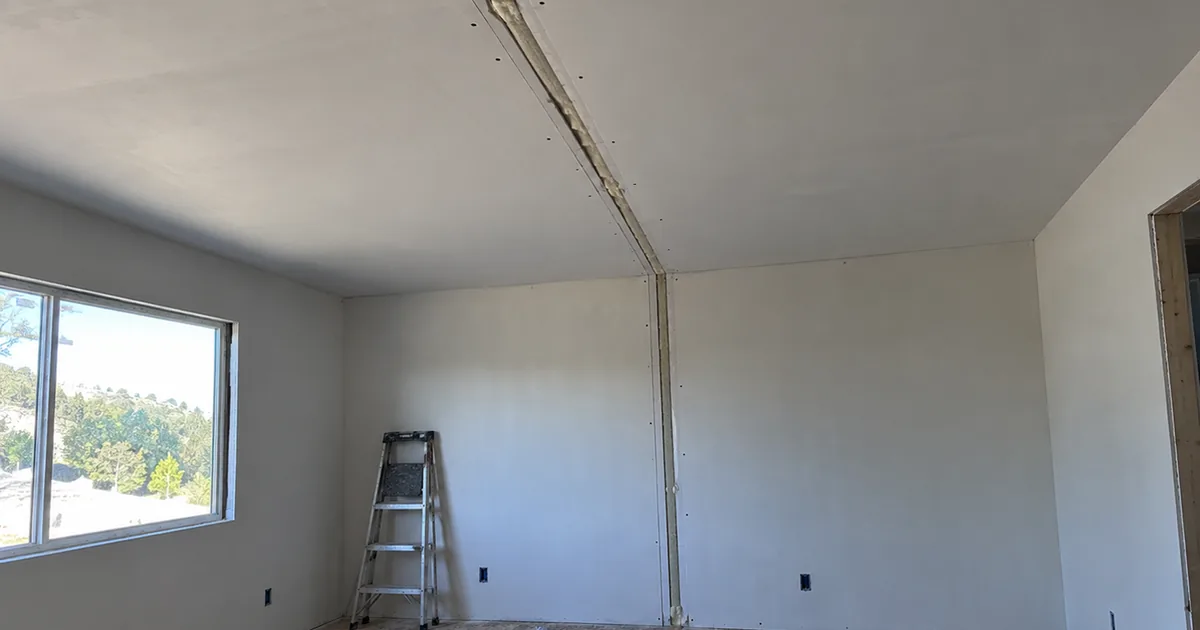
We look closely at the marriage lines, also called mate lines, between modules. Drywall cracks or ceiling seams may appear at the joint. Floor transitions may show movement or an uneven connection. At the roof, the ridge joint flashing deserves attention.
Crossover connections are another focus. Plumbing, electrical, and duct connections made on site between modules may be visible only in the attic or crawlspace.
The foundation and anchorage are site-built work under local inspection. This is where settlement and moisture problems show up. The home may have been closed and finished at the plant, but it still depends on the foundation and anchorage at the property.
Site-built additions are ordinary construction under local code. That includes a garage, porch, deck, or stairs. Those portions should be inspected as their own construction, not assumed to carry the same approval as the factory-built modules.
Closed walls stay closed during our inspection, and the report says so where it matters.
Inspection.re reports are delivered the same day with photographs. Inspectors are InterNACHI-certified. Available options include 3D Matterport, LIDAR floor plans, drone roof imagery, and FLIR infrared. Drone imagery can be useful for checking the ridge where modules meet.
You can review what is included in a home inspection before scheduling. We inspect new homes from Oakland and San Jose to Riverside and Los Angeles.
Five questions buyers ask about AB 1815 and AB 2058
Is a modular home the same as a manufactured home? No. Factory-built modular housing is built to the California Building Standards Code and approved by HCD. HUD-code manufactured homes are a different category, addressed by SB 996. Many backyard units arrive modular, and the AB 956 two-ADU law signed the same day sets where they can go.
Does an HCD insignia mean I can skip a home inspection? No. The insignia addresses the factory-built portion. A home inspection still examines the foundation, anchorage, module joints, crossover connections, utility hookups, roof ridge joint, and site-built additions. The insignia’s authenticity is not verified during the inspection.
When do these laws take effect? The general effective date for both laws is January 1, 2027. The private installation-inspection option and the related section 19992.1 fee rules wait until HCD adopts regulations. Those regulations are due by January 1, 2029.
Can a city still require fire-zone construction? Yes. Local fire zones remain among the requirements reserved to local jurisdictions. AB 1815 also permits local code modifications reasonably necessary because of local climatic, geological, or topographical conditions, including wildfire risk and flood risk, if the required finding is made and filed.
Who inspects the installation now? The local enforcement agency, usually the city or county building department, must offer installation inspection. After HCD adopts the required regulations, the first user may choose a quality assurance agency acting on behalf of and under HCD supervision. The private agency option is not available before those regulations.
For more questions about inspections and reports, see the home inspection FAQ. Buyers of a newly built factory-built home should also know the deadlines for new-home defect claims in California.
Ask for the permit, confirm the inspection path, and inspect the work completed on site
Treat the HCD insignia as one record, not as a complete condition report.
Before removing an inspection contingency, ask for the installation permit and final from the local building department. Photograph the HCD insignia when it is accessible. Ask which agency inspected the installation. For installations after the private option becomes available, ask whether the first user selected the local enforcement agency or a quality assurance agency.
Look at the foundation, anchorage, marriage lines, roof ridge joint, crossover connections, utility hookups, attic, crawlspace, and site-built additions. Include the porch, deck, stairs, and garage. Do not assume a factory-built label covers work built after delivery.
Schedule a non-invasive home inspection even when the seller’s packet says “HCD approved.” It cannot open the walls. It can still find site-built defects, moisture, connection issues, settlement clues, and records that need follow-up.
You can request an Inspection.re report with same-day delivery and photographs. Call 1-888-88-INSP-9 to schedule.
This is not legal advice. For a buyer, the concrete change is to separate three questions: whether the factory-built portion was approved, whether the installation was inspected, and whether the completed property is in acceptable condition. Get the records for the first two. Arrange an inspection for the third.