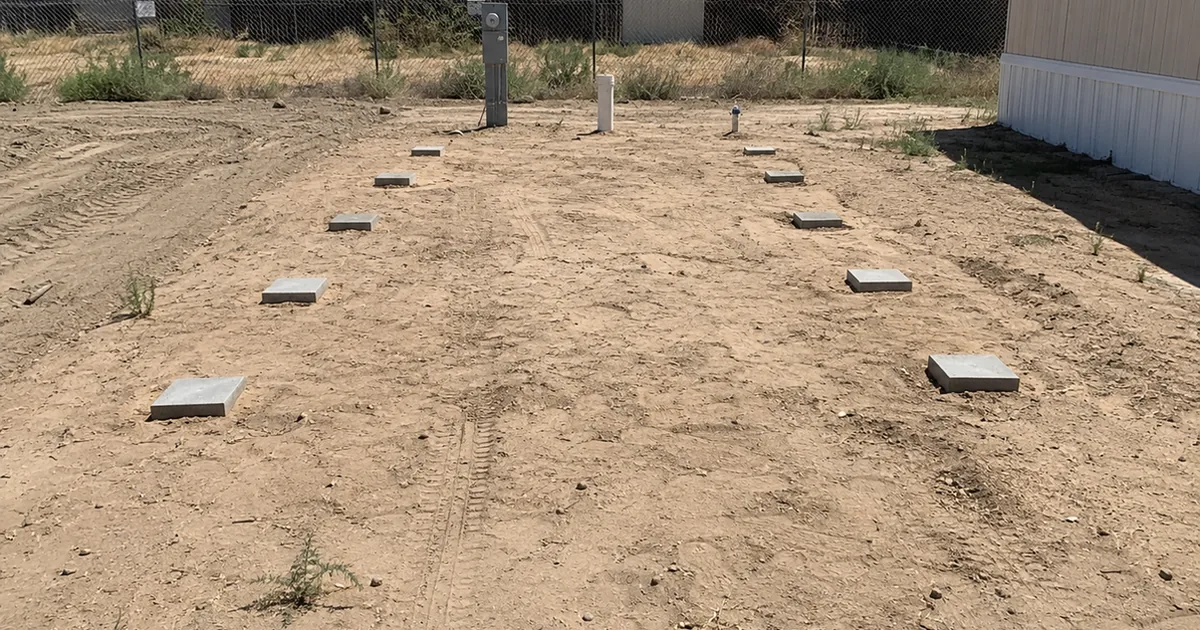
A seller of a manufactured home on its own lot in an inland California town sends the agent a news link. The headline says a new law lets manufactured homes be titled as real property.
The agent asks us whether the buyer’s conventional loan problem just went away.
This is a composite of questions we get, not one property. The answer is no. Not from SB 996 as signed. The version that became law is narrower than the version described in most spring and summer coverage.
SB 996 changes definitions beginning January 1, 2027
SB 996 is a conformity bill, not a new titling process.
Senator Steve Padilla introduced the bill. Governor Newsom signed it on September 30, 2026. The Secretary of State chaptered it the same day as Chapter 995, Statutes of 2026. Its chaptered title is “Manufactured housing: conformity.”
As an ordinary statute, it takes effect January 1, 2027.
The bill passed the Senate 37-0 on May 26, 2026. The Assembly passed it 77-1 on August 25, 2026. The Senate concurred in the Assembly amendments 39-0 on August 27, 2026.
Those votes tell you that the bill had broad support. They do not tell you that the bill created a new way to convert a manufactured home from personal property to real property.
The chaptered bill text at leginfo controls. The title, the Legislative Counsel’s Digest, and the final statutory language matter more than an earlier press release or an online headline.
The announced titling bill became a narrower conformity bill
The version described in Senator Padilla’s May 26 press release was different from the version signed by the Governor.
The press release was titled “California State Senate Passes Legislation to Expand Home Financing Options.” It described an opt-in process that would let manufactured homeowners title their homes as real property.
That release cited figures from Pew Charitable Trusts. It said personal-property, or chattel, loan rates were 8 to 12 percent, compared with conventional mortgage rates of about 5 to 7 percent. It also said a $100,000 mortgage would save a typical borrower roughly $49,000 compared with home-only financing over the life of the loan.
Those figures belong to the press release’s description of the earlier proposal. They do not turn the chaptered statute into a titling law.
When the Assembly Housing Committee heard the bill on July 1, 2026, its title was “Manufactured housing: classification as real property.” The bill was amended in Assembly Appropriations on August 13, 2026, and again on the Assembly floor on August 20, 2026.
The final title is “Manufactured housing: conformity.” Its Legislative Counsel’s Digest does not describe a real-property titling opt-in.
Online coverage written in spring and summer still describes the earlier titling version. Read the chaptered text, not the headline.
California’s existing route to real property remains Health and Safety Code Section 18551. Before a manufactured home is installed on a foundation system, the owner or a licensed contractor gets a building permit from the enforcement agency. After installation, the enforcement agency issues a certificate of occupancy.
Within five business days of that certificate, the enforcement agency records a document stating that the home has been affixed to the real property. The title and registration are surrendered to the Department of Housing and Community Development for cancellation. Once installed in compliance with the statute, the home is “deemed a fixture and a real property improvement.”
In practice, that recorded document is HCD form 433A. HCD describes the 433A as evidence that the enforcement agency inspected the installation and issued a certificate of occupancy. Once recorded, it gives constructive notice to anyone later dealing with the property.
SB 996 does not amend Section 18551.
We saw how much that document can matter in our Oceanside manufactured home inspection article, where missing earthquake bracing and a missing 433A changed the financing conversation. A new definition does not replace that records question.
California now uses the federal definition of manufactured home
SB 996 changes the definition used in two California statutes.
Commercial Code Section 9102(a)(53) and Health and Safety Code Section 18007(a) now define “manufactured home” as a structure “constructed on or after June 15, 1976, with or without a foundation system,” with “the same meaning as defined in Section 5402 of Title 42 of the United States Code.”
June 15, 1976, is the start date of the federal HUD code. Homes built before that date are generally called mobilehomes under separate definitions.
The old California definition included a permanent chassis. It also included size thresholds. The structure had to be at least 8 body feet wide or 40 body feet long in traveling mode, or at least 320 square feet when erected.
The new California definition points to the federal definition instead. That is why the bill is called conformity. California’s definition now tracks the federal one.
This change answers a classification question. It does not answer a title question. A manufactured home can meet the definition and still require a separate review of its registration, installation records, and real-property status.
The build date matters in the field. A data plate or label can tell you whether the home was built on or after June 15, 1976. We photograph those items when they are accessible. A data plate is often inside a kitchen cabinet or a bedroom closet.
Congress dropped the chassis requirement, and HCD has work to do
The federal 21st Century ROAD to Housing Act became law in July 2026. The California Senate Office of Research’s July 2026 federal update describes Section 301, the Housing Supply Expansion Act, as repealing a requirement from a 1974 law that manufactured homes be built on a permanent chassis.
A permanent chassis is the steel frame and axles used to transport the home.
The federal change reduces costs, increases design flexibility, and removes potential obstacles to financing a home as a permanent structure, according to the Senate Office of Research update. The update also says many manufactured homes sit on permanent foundations and are never moved again.
The same section establishes HUD’s primary jurisdiction over manufactured home standards, including construction, safety, and energy efficiency.
The Senate Office of Research memo cites Census Bureau 2024 data showing new manufactured homes at roughly $79 to $87 per square foot, compared with about $169 per square foot for site-built single-family homes. Those figures exclude land.
The memo also cautions that California land and site costs dominate. The net benefit depends on where the home is placed.
California’s new Health and Safety Code Section 18025.7 gives HCD a deadline. By July 1, 2027, HCD must “review, revise, and adopt regulations to permit the construction, installation, sale, and occupancy of a manufactured home built without a permanent chassis in parity with those applicable to a manufactured home built with a permanent chassis.”
Those regulations are exempt from the Administrative Procedure Act rulemaking process. HCD must report to the Legislature on their status by July 1, 2027.
Until HCD writes those installation rules, nobody can tell a buyer exactly what a chassis-less manufactured home will sit on or how it will be inspected at installation. That is the practical gap in the new law.
The installation rules may also change separately from California’s regular code cycle. We track that distinction in our article on the California residential building code freeze.
We inspect manufactured homes the same way we inspect site-built homes, plus the under-home support system. Our reports include photographs and arrive the same day. See what every inspection includes.
A park-space home stays in the same legal position for now
SB 996 does not change the position of a manufactured home on rented space in a park.
New Health and Safety Code Section 18025.8 directs HCD to report to the Legislature by July 1, 2029. The report must address statutory and administrative changes needed to “regulate, finance, title, tax, and protect homeowners in divided-tenure and leasehold homeownership arrangements.”
That includes arrangements where the occupant owns a manufactured home, mobilehome, or commercial modular separately from the land beneath it.
HCD must contract with outside parties for the work. Those parties must consult county assessors and recorders, the California Department of Tax and Fee Administration and the State Board of Equalization, local enforcement agencies, planning agencies, and affected stakeholders.
The listed stakeholders include community owners, residents, lenders, consumer advocates, and title and escrow professionals.
The plain meaning is simple. A home on a rented space in a park is still in the same legal position it was in. A report is due in 2029. No change applies to a buyer this year just because SB 996 became law.
A park-space transaction still calls for a close review of the space lease, the home’s registration, and the financing terms. The new law does not replace those documents.
Buyers should check the same physical and record issues
The inspection answer is the same as before SB 996. Check the build date, the support system, the visible condition under the home, and the records that establish how the home is held.
The build date and HUD label or data plate come first. Whether the home was built on or after June 15, 1976, determines which definition applies. We photograph the data plate and labels when they are accessible.
Foundation status and registration status are different questions. A home can sit on piers and still be personal property. The recorded 433A or HCD registration is a title and escrow records question. An inspector does not certify that status.
Under the home, we look at support piers, tie-downs, earthquake bracing, the underbelly, the crossover duct, skirting, ventilation, and visible moisture conditions. We report what we can see, and the belly wrap hides a lot.
A tie-down strap that has gone slack is something we photograph, not something we adjust. If the crawl entry is blocked by skirting, we say so in the report rather than guess.
We do not certify a foundation for a lender or record a 433A. We report the physical conditions visible at the time of inspection.
Inspection.re inspectors are InterNACHI-certified. Our reports are delivered the same day with photographs. FLIR infrared can flag moisture patterns at the marriage line or under windows as a screening clue, not proof.
Our inspection report page shows how the under-home section is laid out. Buyers can also check our inspection FAQ before scheduling.
The physical inspection and the title review work together, but they do different jobs. The inspection describes what is visible. Title and escrow determine what was recorded and how the home is classified for the transaction.
Agents should put six questions in the transaction file
The bill does not remove the records work from the agent, buyer, lender, title officer, or escrow team.
-
Read the chaptered SB 996, not the spring headlines. The signed bill does not create a titling opt-in.
-
Ask whether a 433A was recorded or whether the home is still registered with HCD. Order that information from title early.
-
Match the loan product to the home’s actual status before the contingency runs. Do not assume that a foundation, a new definition, or a headline answers the lender’s question.
-
Confirm the build date from the data plate. The June 15, 1976, date affects which definition applies.
-
For a park-space home, read the space lease. SB 996 changes nothing there until at least HCD’s 2029 report and any later law.
-
For a newly built chassis-less home after HCD’s rules exist, ask for the installation permit and certificate of occupancy.
We regularly see manufactured homes in Oceanside, Hemet, Palm Springs, and Perris. Our Oceanside service area includes manufactured home inspections where the physical condition and the paperwork can affect the transaction in different ways.
Brand-new homes raise separate defect deadline questions. Defect rules for new manufactured homes are their own subject. Our article on California new-home construction defect time limits addresses that topic.
Five questions buyers keep asking about SB 996
Does SB 996 let me retitle my manufactured home as real property?
No. The 433A route under Health and Safety Code Section 18551 is unchanged. SB 996 does not create a new titling opt-in.
When does SB 996 take effect?
The definition changes take effect January 1, 2027. HCD’s chassis-less installation rules are due by July 1, 2027.
Can I buy a manufactured home without a steel chassis in California now?
Federal law dropped the chassis requirement in July 2026. HCD has until July 1, 2027, to adopt parity rules for construction, installation, sale, and occupancy. Check with the dealer and the local enforcement agency.
Does SB 996 help a home in a mobilehome park?
Not yet. The law orders a study and report due July 1, 2029. It does not change the park-space arrangement for a buyer this year.
Will a home inspection tell me if the home is real property?
No. That is a title and records question. We report the physical support system and visible conditions under the home. Our general FAQ covers scheduling and scope.
SB 996 changes definitions, not titling today
SB 996 is a definitions-and-homework bill. It lines California up with the federal chassis change and gives HCD deadlines for installation rules and a later divided-tenure report.
It does not change titling today. The 433A process under Health and Safety Code Section 18551 still matters, and a home inspection still cannot answer the title question.
This is not legal advice.
For your next manufactured home transaction, ask title for the 433A or HCD registration before the loan contingency runs. Photograph the data plate. Have the support system inspected, including the piers, tie-downs, earthquake bracing, underbelly, duct, skirting, ventilation, and visible moisture conditions. Read the space lease if the home is in a park.
Call us at 1-888-88-INSP-9 to book an inspection. You can also review our 2026 California laws roundup for agents and revisit the Oceanside manufactured home inspection example before the next file lands on your desk.
A different September 30 signing changes what a missing gas meter means: AB 2313 and the gas line electrification offer.
Factory-built modular homes are a different category under a different law. Here is what AB 1815 and AB 2058 change for factory-built housing.