A buyer in Audie Murphy Ranch asked us to look at a single-story home that, on paper, had nothing wrong with it. Clean listing, recent paint, tidy yard. The kind of file an agent expects to close without drama.
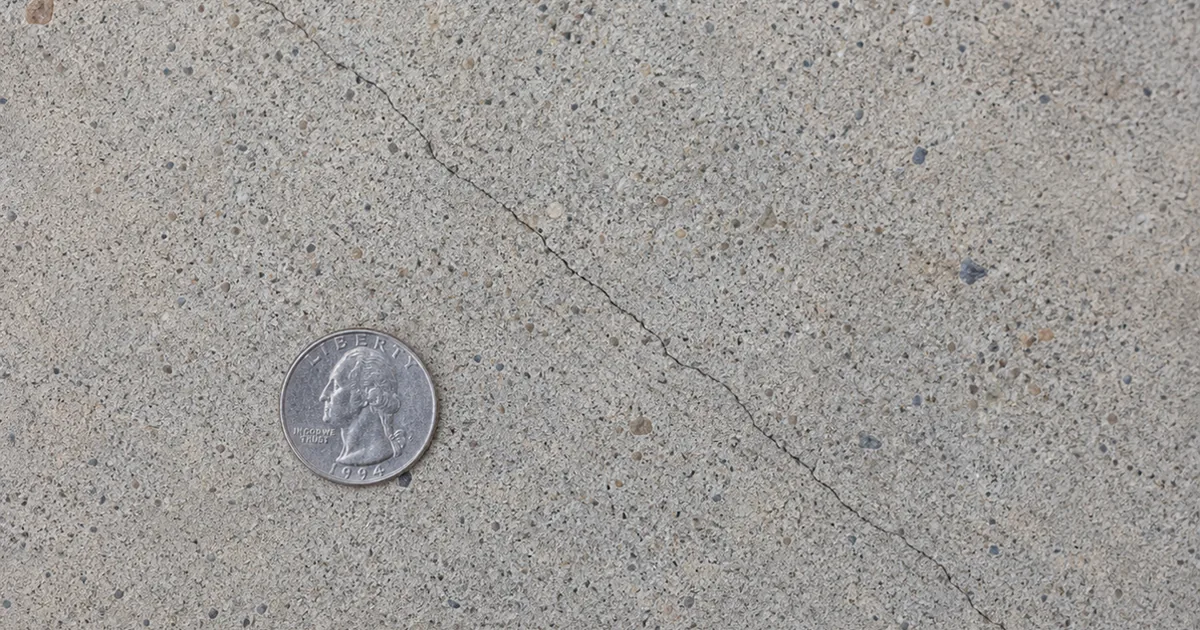
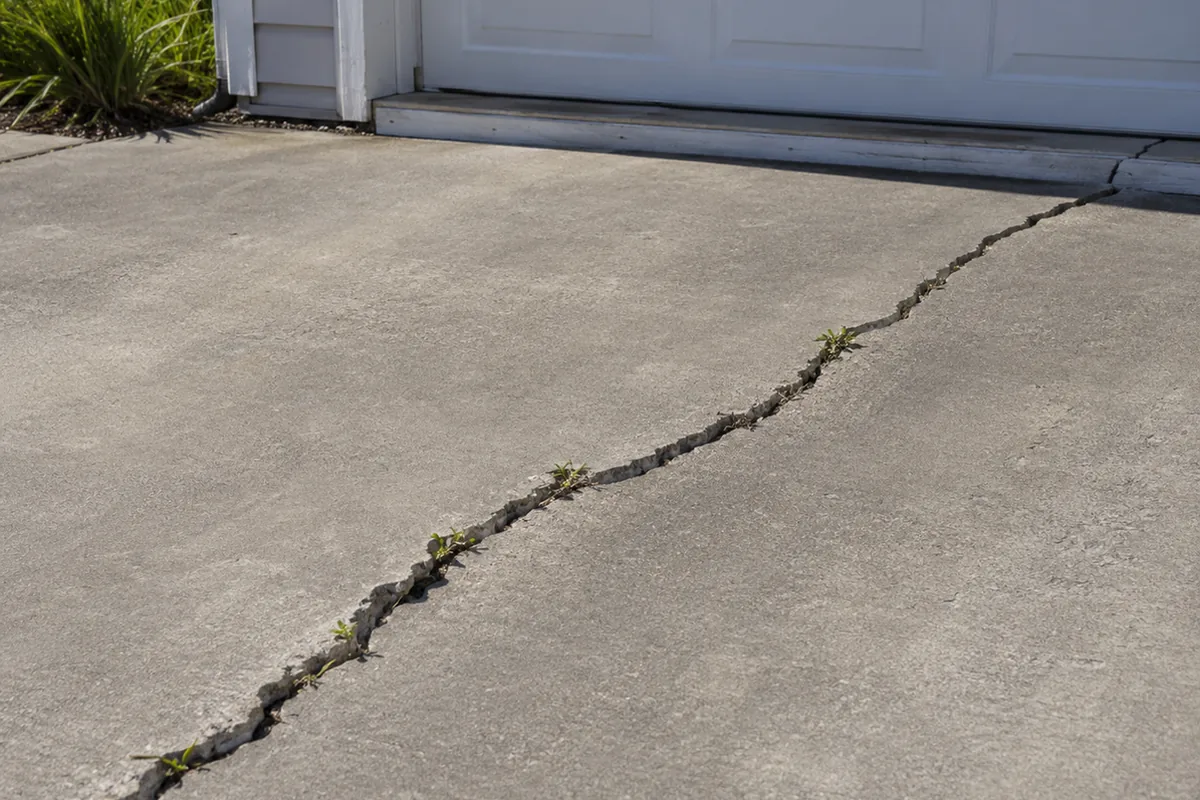
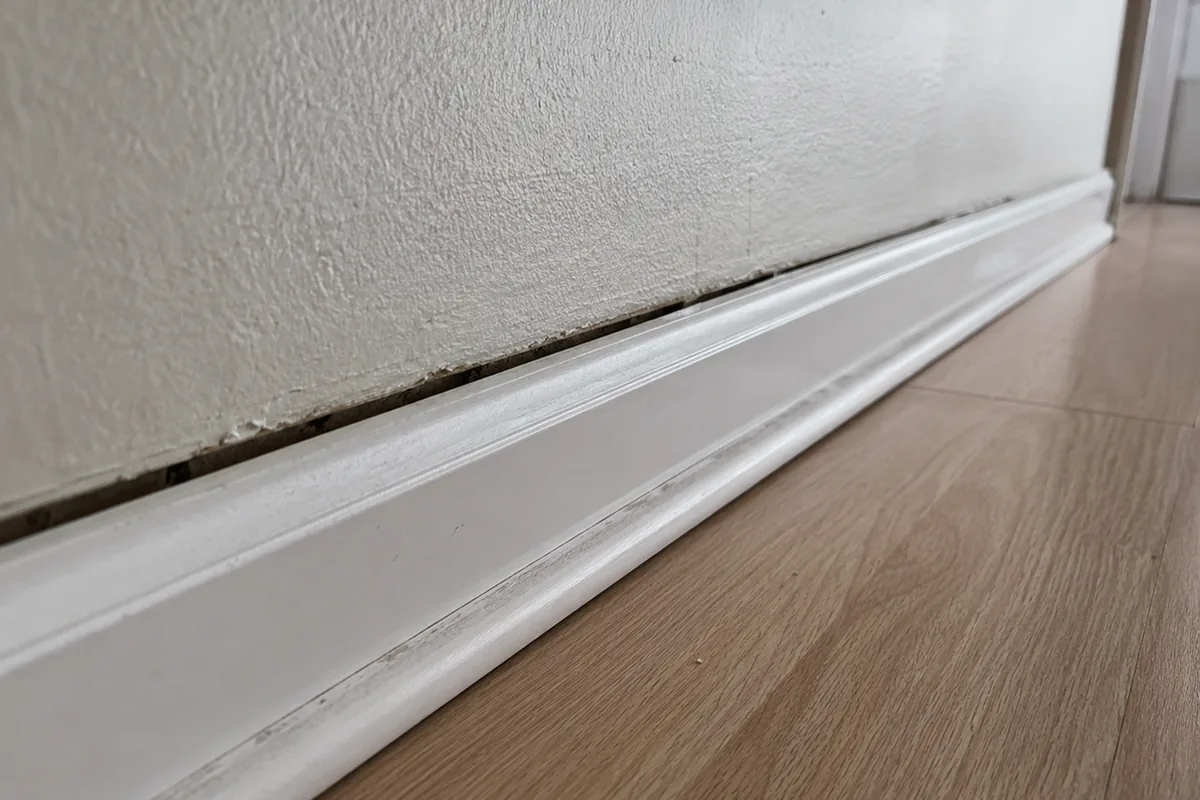
Then we got to the hallway. A door near the center of the house would not latch. The buyer pushed it shut and it drifted back open. Down at the floor, the baseboard had pulled away from the wall by about the width of a pencil on one end and sat tight on the other. Out front, a diagonal crack ran across the driveway slab and kept going under the garage door line.
None of that is exotic for a home that has been through a decade of Menifee winters and summers. It is what expansive clay does here, and it is the kind of thing that decides whether a buyer walks in with their eyes open or finds out the hard way two summers later.
Schedule a Menifee inspection · Same-day report · Pay-at-closing available
Why this matters for the agent
Here is what was at stake on that deal, and on most comparable ones. Foundation movement is the single line item most likely to blow up a transaction late, after the buyer is emotionally committed and the appraisal is already back. It reads as scary, the repair numbers are real, and it sits in a gray zone where a small crack and a structural problem can look identical to an untrained eye.
If you understand what expansive clay is actually doing under a Menifee home, you can tell the difference between cosmetic settlement that every house in the tract has and active movement that needs a structural engineer. That is the difference between a smooth close and a buyer who bolts. We have seen agents lose deals to a hairline crack that meant nothing, and we have seen buyers waive a foundation contingency on a home that needed fifteen thousand dollars of work. Both are avoidable.
What expansive clay soil actually is
Expansive clay is soil that changes volume with moisture. It swells when it gets wet and shrinks when it dries out. In a climate like Menifee’s, where the ground takes on water during the winter rains and then bakes through a long dry summer, that soil is in motion under the house for months at a time.
The specific culprit across much of Menifee is the Bonsall series, a clay-rich soil that geologists in the Inland Empire treat as one of the most movement-prone in the region. Menifee carries some of the heaviest concentrations of it anywhere in the Inland Empire, and its clay minerals can swell several percent in volume between a wet winter and a dry summer. It alternates across the rolling terrain here with Greenfield sandy loam and Arlington-series soils, so two homes a few streets apart can sit on very different ground. Elevation is part of the story too. Ridgetop lots sometimes catch a pocket of better-drained soil, while the graded pads down in the lower areas tend to sit on the worst of the clay. That patchiness is why one tract shows foundation issues and the one next door does not.
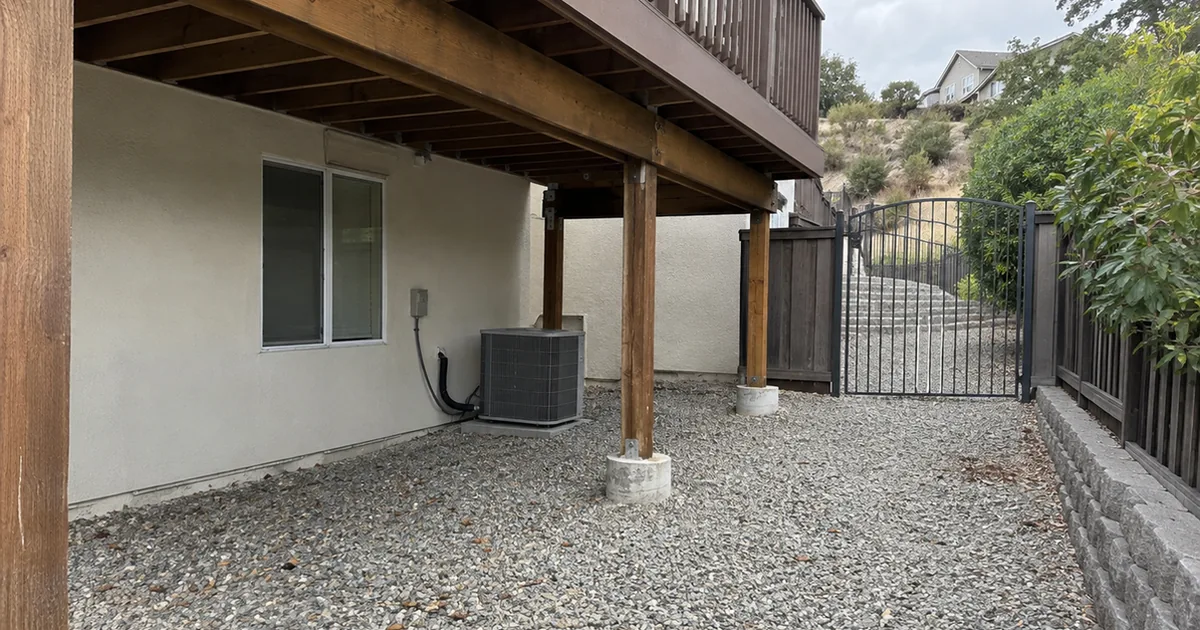
A standard residential slab does not flex with the soil. When the clay underneath swells in one area and shrinks in another, the slab is asked to bridge across ground that is no longer flat. Concrete is strong in compression and weak in tension, so it cracks where it gets pulled. The cracks you see in the driveway, the patio, and sometimes the interior slab are the visible end of that process.
Why Menifee homes are exposed to it
Menifee sits on a mix of alluvial soils washed down from the surrounding hills, and pockets of that material are heavy clay. The city has grown fast on top of it. Master-planned communities like Audie Murphy Ranch and Heritage Lake have kept adding new neighborhoods, with builders such as Brookfield, Meritage, and D.R. Horton putting up tract after tract on graded pads.
Grading matters here. When a builder cuts and fills a hillside lot to make a flat pad, the fill soil and the native soil can behave differently under the same house. Add the older side of Menifee, the original Sun City stock built decades ago for a 55-and-over community, and you have a market where foundation behavior ranges from brand-new slabs still going through their first wet-dry cycles to fifty-year-old foundations that have already moved as far as they are going to move.
The newer homes are usually built on post-tension slabs, which we will come back to, because they change how an inspection has to be done. The older homes were not, and they tell their story through decades of seasonal cracking.
Not sure which kind of foundation a listing has? We identify it on every Menifee inspection. See what is included.
What agents should tell every buyer
When a buyer is looking in Menifee, a few things are worth saying out loud before the inspection, so nothing in the report lands as a surprise.
Some cracking is normal here. Almost every slab home on clay shows hairline cracks in the driveway and garage over time. A crack alone is not a structural finding. The pattern, width, and whether it is still moving are what matter.
The soil moves seasonally, so the house moves seasonally. A door that sticks in February and frees up in August is following the clay. That is different from a door that has stuck permanently and will not return.
New construction is not immune. A two-year-old home on graded clay can show first-cycle movement. The builder warranty may cover it, which is a reason to document it now rather than later.
Drainage is the cheapest defense. Water pooling against the foundation feeds the swelling cycle. Downspouts dumping at the slab edge, flat or negative grading, and broken irrigation all make expansive soil worse and are fixable for very little money.
A foundation finding is a question for an engineer, not a guess. If our inspection flags active movement, the next call is a licensed structural or geotechnical engineer, not a foundation-repair salesperson offering a free estimate.
Red flags an agent can spot at a showing
You do not need any equipment to catch the early warning signs. Walk the house with these in mind.
- Doors and windows that stick, especially toward the center of the home, or doors that will not latch and drift open.
- Diagonal cracks running from the corners of door frames and windows, the classic stair-step direction of foundation stress.
- Cracks in the slab you can see at the garage, patio, or any exposed concrete, particularly cracks wider than about an eighth of an inch.
- Floors that feel sloped or bouncy as you walk a straight line across a room. Trust your feet.
- Gaps where the baseboard separates from the wall or floor, tight on one end and open on the other.
- Fresh patching or paint over a single interior corner, which can mean a crack was covered rather than corrected.
- Wide cracks in the yard during the dry months, sometimes an inch or more across, a direct sign the soil is shrinking hard.
Any one of these on its own is usually nothing. Two or three of them clustered in the same part of the house is a reason to slow down and get it looked at properly.
How this plays out in escrow
There are a few ways a Menifee foundation finding can go once it is on the report, and the right one depends on what the engineer says, not on how alarming the crack looks.
Path one: cosmetic. The inspection notes cosmetic cracking and seasonal movement consistent with expansive soil, with no sign of active structural distress. The move is usually to document it, recommend the buyer keep drainage in good shape, and proceed. No price change needed. Most Menifee homes land here.
Path two: needs an engineer. There is enough evidence of movement that a structural engineer should weigh in before the contingency period ends. This is where timing matters. Get the engineer out fast, because their report drives everything after it. If it confirms active movement, the buyer has real negotiating room and a number to back it up.
Path three: confirmed structural. A confirmed problem with an engineer’s repair scope. Expansive-soil foundation repair in California commonly runs from around five thousand dollars for targeted work into the fifteen-thousand-and-up range for significant underpinning or slab stabilization. The buyer can ask for a credit at closing, ask the seller to complete the repair with permits before close, or walk. On a financed deal, a closing credit is often cleaner than a last-minute repair the seller rushes.
Path four: new construction warranty. For homes inside the builder warranty window, document the movement formally and route it through the builder’s warranty process. The buyer should not pay to fix first-cycle movement on a home they just bought.
Want the foundation question answered before your contingency clock runs out? Schedule a Menifee inspection or ask about paying at closing.
How the inspection actually catches it
A real foundation assessment is more than looking at cracks. We walk the interior with the moisture and the movement in mind, check door and window operation room by room, and look at floor flatness across the main living spaces. Where there is access, we look at the slab edge, the exposed concrete, and the way water is meant to leave the property, because drainage is half the story with expansive soil.
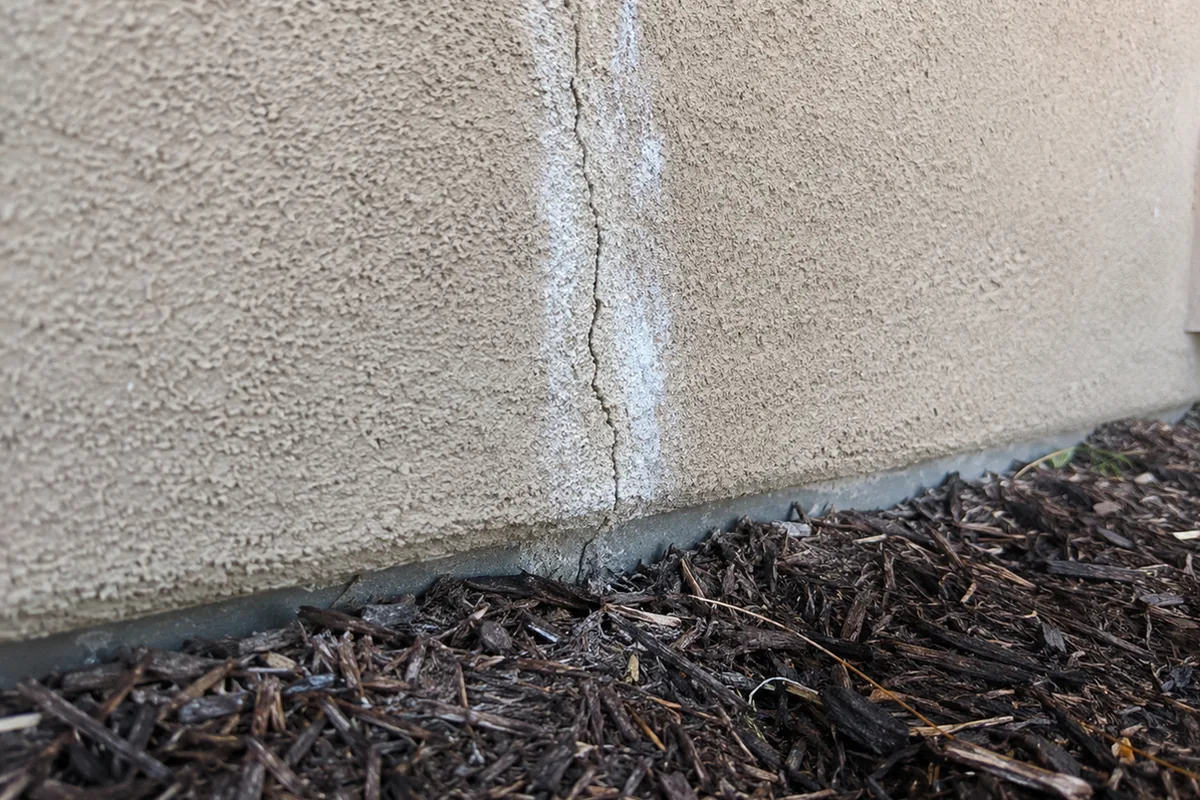
Outside, the exterior tells its own part of the story. We check where cracks in the stucco meet the weep screed at the base of the wall and whether that screed is buried in soil or mulch. A buried weep screed traps moisture against the wall and accelerates both stucco failure and the swelling cycle underneath. It is a common finding on Menifee tract homes where landscaping has been built up against the foundation over the years.
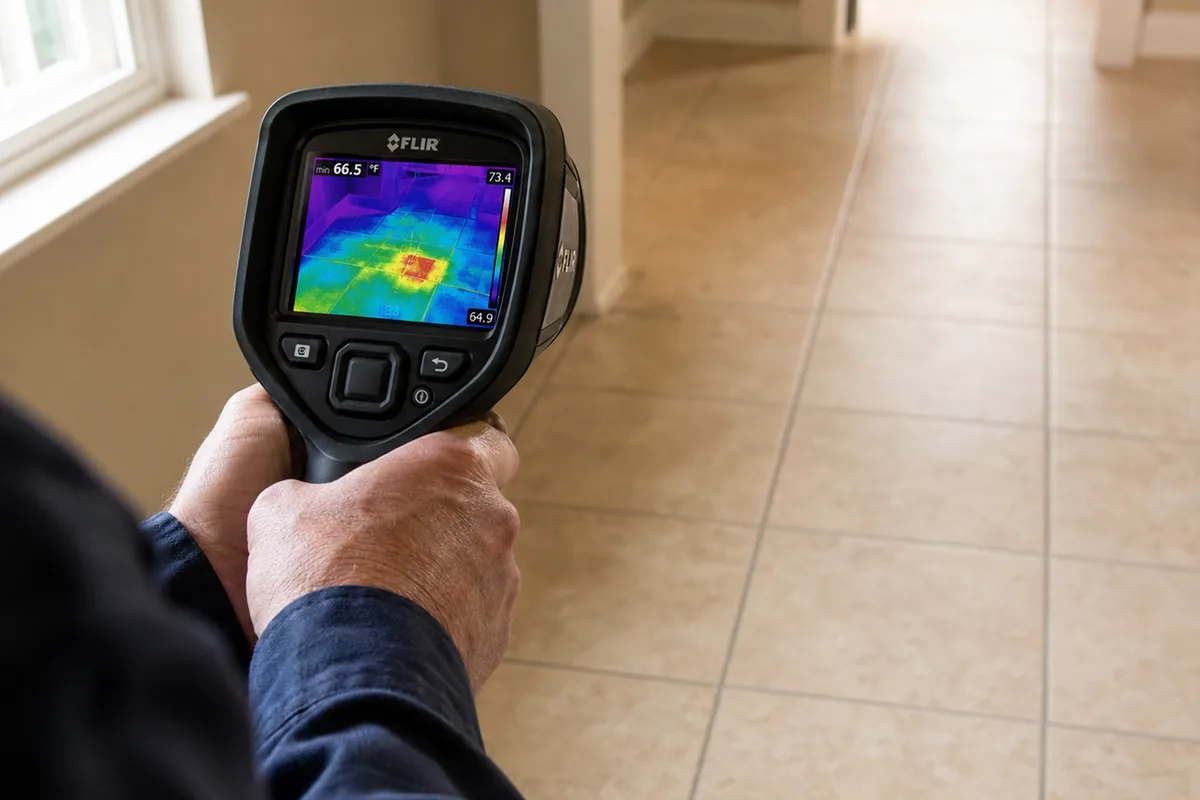
Thermal imaging earns its place here. A slab leak feeding water under a clay pad makes the movement worse, and an infrared scan can show the warm or cool signature of water moving under the floor before there is any visible stain. That is the kind of thing a flashlight-only inspection misses.
One thing matters more in Menifee than in a lot of markets, and it is the reason we identify the foundation type on every job. Most newer Menifee homes are built on post-tension slabs, which have steel cables run through the concrete and tensioned after the pour. Those cables are under enormous load. You never cut, core, or drill into a post-tension slab without locating the cables first, and a homeowner who hangs the wrong anchor can do real damage or get hurt. If we find a post-tension slab, we say so directly and we tell the buyer what it means for any future work. We document what we found and where. The engineering call, if one is needed, is the engineer’s job, and we will say plainly when it is time to make it.
Quick questions agents ask us
Is every cracked slab in Menifee a problem? No. Most slab cracking on expansive clay is cosmetic and shared by the whole tract. Width, pattern, and whether the crack is still active are what separate a normal crack from a structural one.
Does a post-tension slab mean the house is better protected? Generally yes. Post-tension slabs are designed to handle expansive-soil movement better than a standard slab. The trade-off is that you cannot cut into them without locating the cables, so future remodels and anchor installs need care.
Can drainage really make a difference? Yes, and it is the cheapest lever a buyer has. Keeping water away from the foundation reduces the swelling cycle. Fixing downspouts and grading often costs a few hundred dollars and protects a much larger investment.
Who should evaluate a foundation finding? A licensed structural or geotechnical engineer. A home inspection tells you whether there is a question worth asking. The engineer answers it. We do not pretend an inspection replaces an engineer’s stamp.
Is new construction safe from this? Not entirely. A new Menifee home on graded clay can show movement during its first wet-dry cycles. The upside is the builder warranty, which is exactly why documenting it early matters.
The honest version
Expansive clay is not a reason to avoid Menifee. It is a reason to buy with your eyes open. Most homes here sit on it and do fine, the warning signs are readable once you know them, and the difference between a normal crack and a real problem is knowable before the contingency period ends. The deals that go badly are the ones where nobody asked the question until it was too late to act on the answer.
If you have a Menifee listing or a buyer in escrow, we will tell you which kind of foundation finding you are looking at and what it actually means for the deal. If we see something worth flagging, it goes in the report in plain language. Compare what we cover against other inspectors on our sample report page.
Related reading
- Lake Elsinore slab leak caught by thermal camera: a Tuscany Hills inspection found an active hot-water slab leak under tile the seller never knew about. Same Inland Empire housing stock, different defect.
- Murrieta tile roof underlayment failures: the other hidden defect in the next city over. Perfect-looking tile hiding failed underlayment underneath.
- Wildomar wildfire defensible space: if your buyer is also looking at Wildomar fire-zone properties, this is the inspection finding that kills deals there.
- Do you need a home inspection on new construction?: Menifee has a lot of new builds, and first-cycle clay movement is exactly why a new-construction inspection matters here.
- How to read a home inspection report: what the foundation section of your report means and how to use it in negotiation.
- Generator and Transfer Switch Safety in Hemet: a backup-power electrical topic from a neighboring Inland Empire city, unrelated to foundation movement but relevant to the same PSPS-exposed region.
- Murrieta and the Elsinore Fault – the seismic side of buying in Southwest Riverside County: Alquist-Priolo disclosure, water heater strapping, and cripple wall retrofits.
- Efflorescence and Spalling on Concrete and Masonry in La Mesa: surface material deterioration on concrete and masonry, distinct from this guide’s soil-driven foundation movement.
- Rancho Cucamonga post-tension slab foundations – the engineered slab common on newer expansive-soil tracts, its no-cut rule, and how it fails.
- Irvine graded-pad settlement – how the same expansive clay behaves under Irvine’s cut-and-fill hillside pads, and how to read the stucco.
- Corona orchard land foundation settlement – the Inland Empire’s other expansive-soil story, where homes built over old citrus groves see differential settlement from buried root channels and uneven fill.
- San Bernardino earthquake and liquefaction: the same valley soil read for seismic settlement and the retrofits older homes need.
- Camarillo high water table and ground moisture: when shallow groundwater, not clay, is driving the foundation and flooring symptoms.
- Simi Valley landslides and earth movement: the hillside version of a soil-movement problem and how it routes to a geotechnical engineer.
- Santa Monica marine-layer crawlspace moisture: the coastal counterpart, where humidity rather than clay drives moisture and dry rot under a raised foundation.
- La Cañada Flintridge post-fire debris flow and drainage: the foothill version, where a burned slope and its drainage, not swelling clay, drive the site-and-foundation risk.
- Driveway and Flatwork Trip Hazards in Lakewood. When the concrete moves because of tree roots rather than soil chemistry.
We also inspect in Lake Elsinore, Murrieta, Wildomar, Temecula, and across the Inland Empire and North San Diego County.
Book a Menifee home inspection or schedule directly · Same-day report · Pay-at-closing available Clay is one kind of moving ground. Organic peat soil is another, and it behaves nothing like this: it loses volume permanently as it oxidizes rather than cycling with the seasons. Our Rio Vista home inspection page covers what that means in the Sacramento River Delta, where reclaimed islands sit well below sea level behind levees.
- Footings and Foundation Reinforcement at Room Additions in Santee. When the foundation’s own construction, not the soil beneath it, is what allows an addition to move independently of the house.