When the Air Itself Is the Leak: A Solana Beach HVAC Condensation Guide for Agents
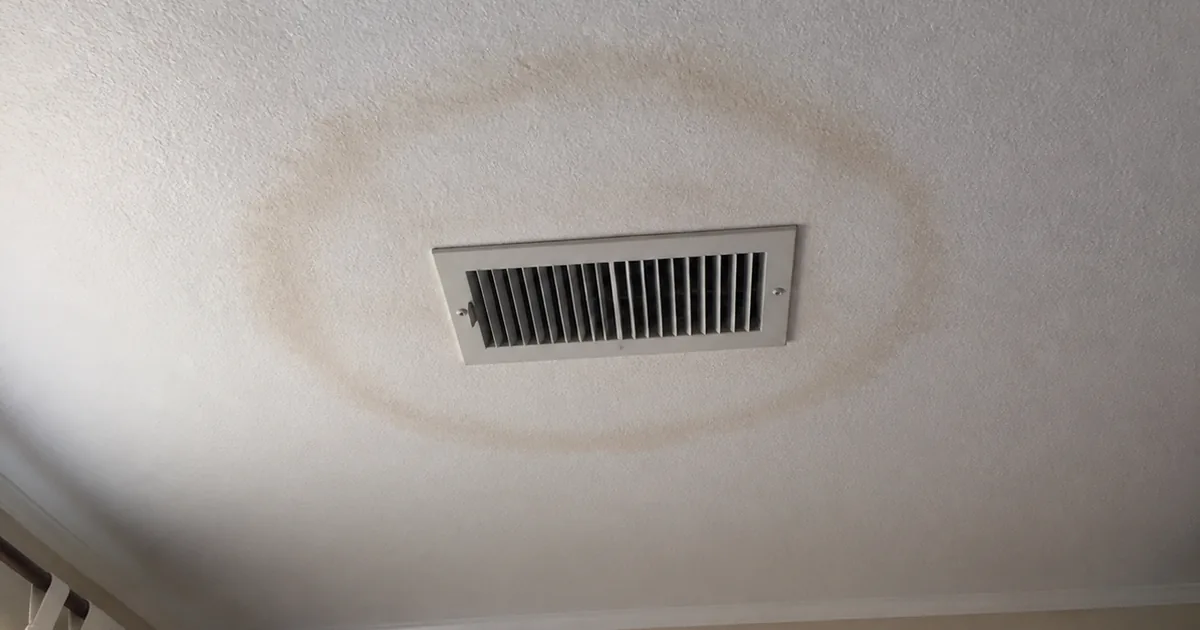
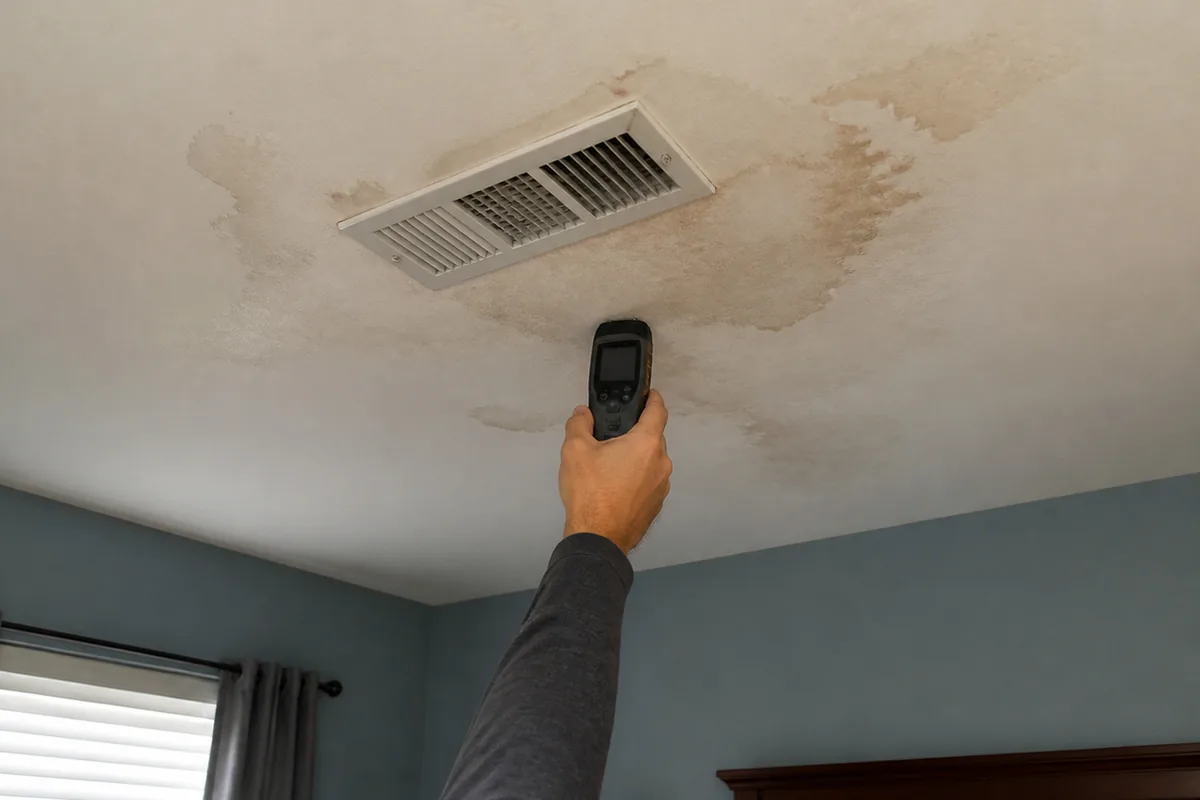
The ceiling stain was faint, a soft brown ring maybe eight inches across, centered directly on the supply register in a bedroom near the coast. No roof leak above it, no plumbing line anywhere nearby, no obvious explanation from the attic access. The register itself, once removed, told the story. Behind it, the metal boot connecting to the duct above was cold to the touch and beaded with moisture, the same way a glass of ice water sweats on a humid afternoon. The stain was not a leak in the plumbing sense at all. It was condensation, water forming directly out of the air inside the house, dripping quietly onto drywall for months before anyone noticed the ring.
We are describing this as a composite of a pattern we see repeatedly in Solana Beach, not one identified property or job. The coastal marine layer that makes this stretch of North San Diego County pleasant to live in also creates a specific, checkable condensation risk on cooling equipment and ductwork that inland buyers rarely have to think about.
This guide is for the agent working Solana Beach and the surrounding North County coastal communities we also serve, including nearby Encinitas and Carlsbad, where the same marine-layer humidity meets the same cold ductwork and equipment. Here is the physics in plain terms, where it actually shows up in a house, what an inspector documents, and how the fix categories differ from just painting over a stain.
Why this matters for the agent
Solana Beach sits directly on the coast, and its climate carries the marine layer, the cool, moist air that rolls in off the ocean, especially overnight and in the morning hours, for much of the year. That humid air is comfortable to live in, but it creates a real physical condition inside a house: whenever that humid air meets a surface cold enough to be below its dew point, water condenses directly onto that surface, the same way it forms on a cold glass on a warm day.
Inside a house, the coldest surfaces are almost always part of the air conditioning system, the ductwork carrying chilled air, the metal boots and registers at the ends of that ductwork, and the refrigerant line running between the outdoor condenser and the indoor coil. In a low-humidity inland climate, this rarely becomes a visible problem because the air meeting those surfaces is too dry to reach its dew point. In Solana Beach’s marine-layer air, the humidity is often high enough that ordinary, otherwise well-installed HVAC equipment sweats, and that sweating shows up as staining, damp insulation, or a musty smell in specific, predictable locations.
The physics, in plain terms
Warm, humid air holds water vapor invisibly. When that air contacts a surface colder than its dew point, the temperature at which the air can no longer hold all its water vapor, the excess condenses out as liquid water directly on that surface. A cold soda can sweating on a warm day is the same mechanism at a smaller scale.
An air conditioning system exists specifically to move heat out of a house, which means its ductwork and components on the supply side run cold, often 20 to 30 degrees below the surrounding air temperature, whenever the system is running. If that cold surface is not adequately insulated and sealed against the humid air around it, condensation is not a defect in the equipment itself, it is a predictable physical outcome of cold metal or poorly insulated duct sitting inside warm, humid air.
Where this actually shows up in a house
The mechanism is the same everywhere it appears, but the visible symptom depends on which part of the system is exposed to humid air without enough insulation.
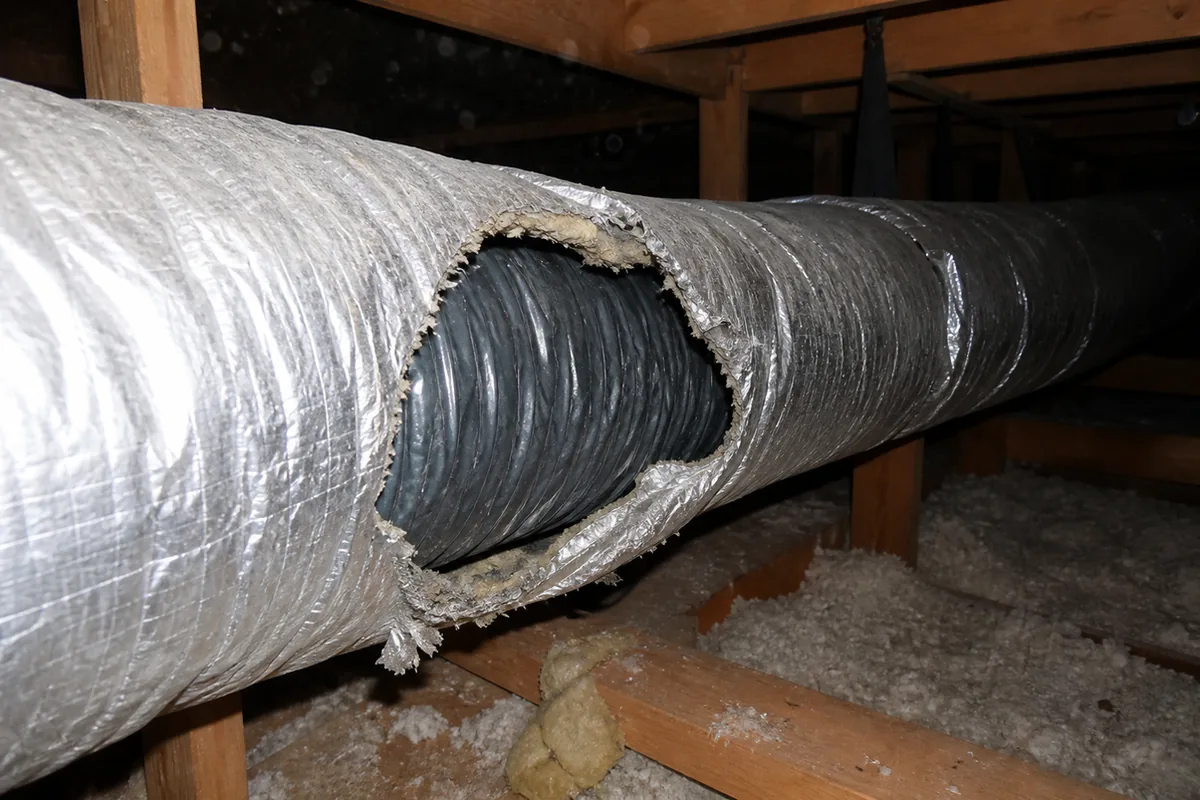
- An uninsulated or poorly sealed supply duct running through a hot, humid attic. Attic air in a coastal climate can carry real humidity, especially overnight, and a duct run with thin, gapped, or missing insulation sweats along its length, eventually dripping onto attic insulation or the ceiling drywall below.
- A metal register boot or grille sweating and staining the ceiling around it. The register is the coldest, least-insulated point in the whole duct run, a bare metal fitting set directly into drywall, and it is often the first place condensation becomes visible as a ring-shaped stain.
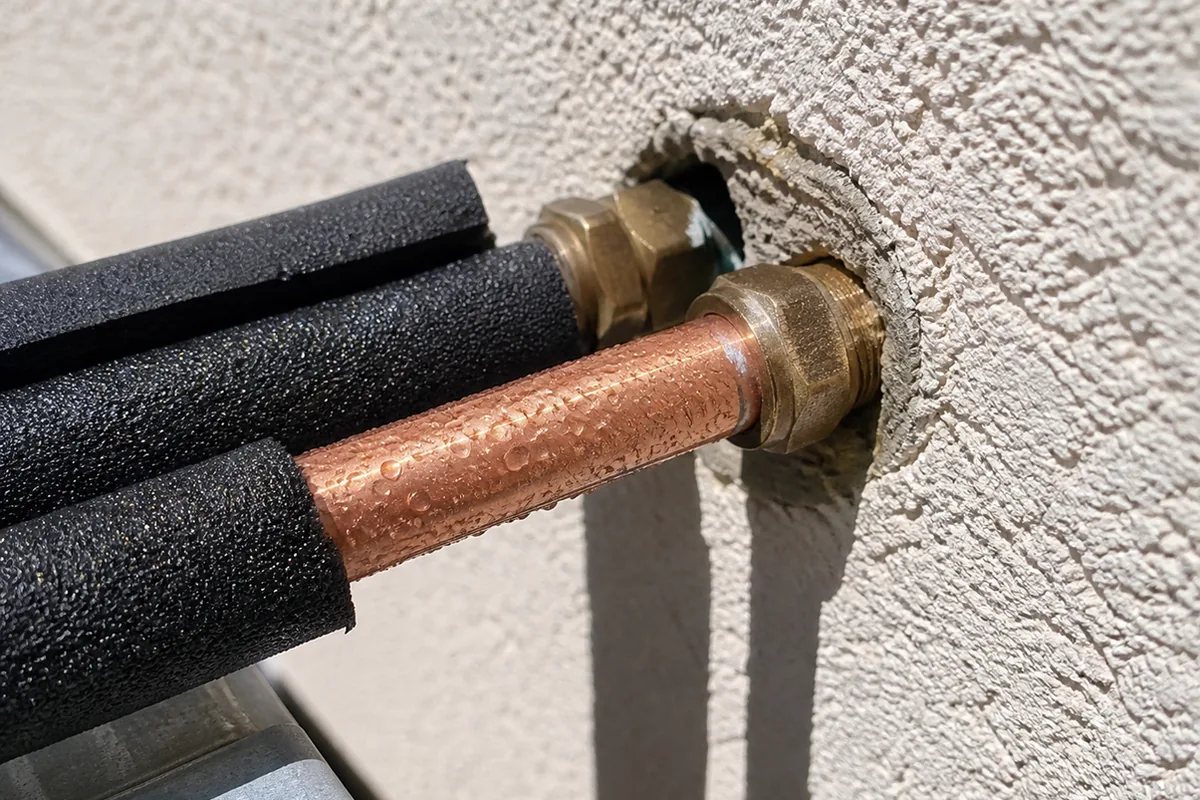
- A poorly insulated or damaged refrigerant line set. The line running between the outdoor condenser and the indoor coil carries cold refrigerant and needs continuous foam insulation along its full length. Gaps, compression, or missing insulation at fittings and bends produce localized sweating and, over time, staining or drip damage at that specific point.
- A bathroom or kitchen with inadequate exhaust ventilation. This is a related but separate contributor. When a bathroom or kitchen cannot vent its own humidity to the outside effectively, that moisture load adds to the general humidity in the house, making condensation on any cold HVAC surface nearby more likely and more frequent.
What an inspector actually documents
We do not open sealed ductwork or disassemble refrigerant lines during a standard inspection, and we are explicit about that boundary with every buyer. What we document is the visible evidence that points toward an active or ongoing condensation problem worth a licensed HVAC contractor’s further look.
- Staining rings around registers or along visible duct runs. A soft, roughly circular or linear stain centered on a register or following the path of a duct above a ceiling is a strong, specific signal, distinct from the more random pattern of a roof or plumbing leak.
- Damp or moldy-looking insulation on ductwork. Where duct insulation is visible, in an attic or a garage, we look for wrapping that is compressed, torn, missing at seams, or visibly damp or discolored.
- A musty smell in specific rooms or near supply registers. A persistent musty odor concentrated near HVAC components, rather than throughout the house, points toward sustained moisture at that specific location.
- The presence or absence of duct insulation and any vapor barrier wrap. We note whether accessible ductwork is insulated at all, and whether the outer vapor barrier, the layer that keeps humid air from reaching the cold duct surface in the first place, is intact or torn.
- Condition of the refrigerant line insulation at the condenser and where it enters the house. Gaps or missing foam sleeve sections at this line are a specific, checkable item on every inspection.
None of these observations diagnose the exact cause on their own. A stained register could point to a duct insulation gap, an oversized or improperly balanced system, or an exhaust-ventilation problem elsewhere in the house. Our role is to document the pattern reliably enough that a buyer knows to bring in an HVAC contractor before removing contingencies, not to diagnose or correct the system ourselves.
Fix categories, not just a stain
A ceiling stain from HVAC condensation is easy to paint over and easy to misread as an old, resolved leak. It is worth an agent knowing the actual fix categories, because they are different jobs with different costs, and a fresh coat of paint addresses none of them.
Duct insulation and sealing is the most common fix, adding or replacing insulation wrap along an exposed or under-insulated duct run and sealing gaps in the vapor barrier so humid air cannot reach the cold duct surface directly.
Improved attic ventilation reduces the ambient humidity the ductwork sits inside in the first place. This is a broader thermal-envelope topic, and for the full ventilation discussion, including soffit intake, ridge exhaust, and insulation depth, we route buyers to our Woodland Hills attic insulation and ventilation guide rather than repeating that scope here. In this article, attic ventilation matters specifically as one input into how much condensation forms on a duct run passing through that space.
Mechanical exhaust fans, sized and vented properly, address the bathroom or kitchen humidity-load contributor, a fan that actually moves enough air and terminates outside the building rather than dumping into the attic reduces the overall moisture the HVAC system has to contend with.
Refrigerant line insulation repair or replacement is a smaller, targeted fix specific to that one component, usually inexpensive on its own, but worth confirming it was actually done rather than just wrapped over an existing wet section.
None of these are a caulk-and-paint job. A stain repainted without addressing the underlying insulation or ventilation gap will return, often within the same rainy or humid season.
What agents should tell every buyer
- A ceiling stain near an HVAC register is not automatically a roof or plumbing leak, and it is worth checking the duct and register above it before assuming either.
- Solana Beach’s marine-layer humidity makes this a real, checkable condition here that a buyer moving from a drier inland market may not expect to ask about.
- The fix depends on which component is sweating, duct insulation, attic ventilation, exhaust fans, or refrigerant line wrap, and each is a different job at a different cost.
- This is distinct from a below-floor moisture problem or a roof leak, and confusing the three can send a buyer chasing the wrong contractor.
- A repainted stain with no insulation or ventilation work behind it is very likely to return.
Red flags during showings
- A soft, roughly circular or linear staining pattern on a ceiling centered on or following an HVAC register or duct run.
- Visible gaps, tears, or missing sections in duct insulation wrap in an attic or garage.
- Damp, compressed, or discolored insulation anywhere along a visible duct run.
- A musty smell concentrated near a supply register or in a room with poor bathroom or kitchen exhaust ventilation.
- Missing or deteriorated foam insulation on the refrigerant line set at the condenser or where it enters the house.
- A bathroom or kitchen exhaust fan that vents into the attic instead of outside the building.
The negotiation playbook
When an HVAC condensation finding surfaces in a Solana Beach escrow, the deal usually moves down one of a few paths.
The first path is a straightforward duct-insulation repair, appropriate when the finding is limited to a gap or torn section of wrap along an otherwise sound system, since resealing and re-wrapping is a modest, well-defined job.
The second path is a licensed HVAC contractor’s evaluation before close, warranted whenever staining is active, extensive, or paired with a musty smell, so the buyer understands the actual scope before removing contingencies rather than after.
The third path is an exhaust-ventilation upgrade, appropriate when the moisture load is coming primarily from an under-vented bathroom or kitchen rather than the HVAC system itself.
The fourth path is a credit or informed acceptance, appropriate when the finding is limited to a small, dry, old-looking stain with no active moisture and the buyer is comfortable monitoring it after closing.
How the inspection actually catches it
We check every accessible supply register, visible duct run, and refrigerant line set on every Solana Beach inspection, and we look at ceilings and attic spaces for staining or damp insulation that points to condensation rather than a roof or plumbing source.
Where we find staining, damp insulation, or a musty smell concentrated near HVAC components, we document it and recommend a licensed HVAC contractor evaluate the specific cause, since confirming which component is condensing and correcting it is outside our scope.
Our what’s included page covers the full HVAC scope of every Solana Beach inspection.
Quick FAQ
Is this the same as Santa Monica’s marine-layer moisture article? No. Our Santa Monica marine-layer crawlspace guide covers humid outside air condensing on cold crawlspace surfaces and framing below the floor, a below-floor phenomenon. This article covers condensation on HVAC equipment and ductwork inside the conditioned living space, driven by the cooling system itself rather than ground-level humidity.
Is this the same as Camarillo’s high water table article? No. Our Camarillo high water table guide covers groundwater rising from below a site. This article has nothing to do with groundwater. The moisture here comes directly out of the air, condensing on a cold surface.
Does this overlap with attic insulation and ventilation in Woodland Hills? Only partly, and deliberately kept brief here. Our Woodland Hills attic insulation and ventilation guide covers the thermal envelope broadly. This article mentions duct insulation and attic ventilation only in the specific context of reducing condensation on cold HVAC surfaces, and routes the fuller ventilation discussion there.
Can a bad AC condensate drain line cause the same kind of stain? It can, but it is a different mechanism, a clogged or unsloped drain line overflowing a condensate pan, rather than water condensing directly on a cold surface. Both can produce a similar ceiling stain, which is exactly why the underlying cause needs a contractor’s direct look rather than a guess from the stain alone.
Should a buyer walk away over a condensation finding like this? Rarely on its own. Most condensation findings are a modest insulation or ventilation correction. The negotiation usually turns on how extensive the staining is and whether it points to a longer-running moisture problem.
The honest summary
Solana Beach’s coastal marine layer makes HVAC-driven condensation a real, checkable condition here in a way that many inland buyers never have to think about. Most of what we find is correctable with proper duct insulation, better attic ventilation, or an adequately vented exhaust fan. A smaller share points to a system that has been sweating long enough to leave real drywall or framing damage behind it.
We check every register, duct run, and refrigerant line on every Solana Beach inspection, and we tell you plainly whether the system is managing the coastal humidity or adding to it.
See what every inspection includes → · Read our FAQ → · Explore Solana Beach home inspections →
Related reading
-
Marine-Layer Crawlspace Moisture in Santa Monica. Below-floor humid-air condensation on framing, a companion coastal-moisture mechanism at a different location in the house.
-
High Water Table and Ground Moisture in Camarillo. Groundwater rising from below a site, a different moisture source entirely from condensation out of the air.
-
Attic Insulation and Ventilation in Woodland Hills. The broader thermal envelope discussion this article deliberately keeps brief.
-
Why Infrared Scanning Matters in California Homes. How thermal imaging can help locate hidden condensation and moisture behind a finished ceiling. For the regulatory side of the same equipment, our guide to the R-410A installation deadline removal covers the two generations of cooling equipment now sitting side by side in California housing and how to tell them apart from the data plate.
-
What’s Behind the Siding: An Imperial Beach Housewrap and WRB Guide. An unrelated exterior-envelope mechanism worth knowing as a companion coastal-moisture topic.
-
AB 1684: Your HOA Can’t Ban the AC. Once an HOA can no longer block a cooling unit, where its condensate lands is still the owner’s responsibility.
Heat pump replacements add their own condensate lines, and a new state law changes how those jobs are permitted: SB 222 and heat pump permits.