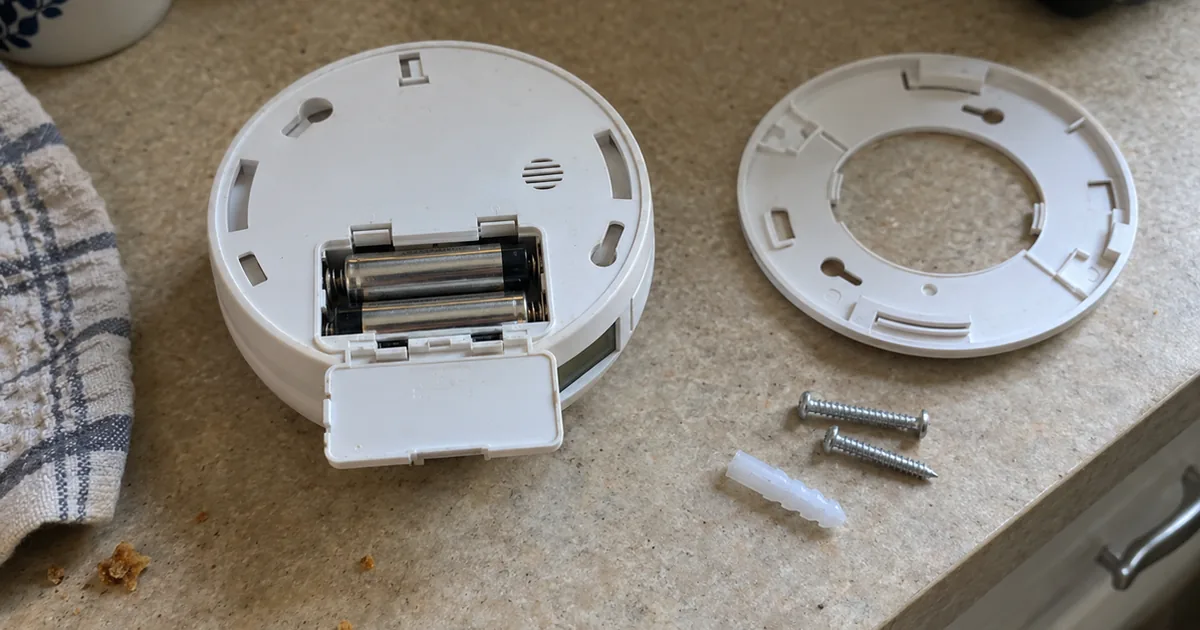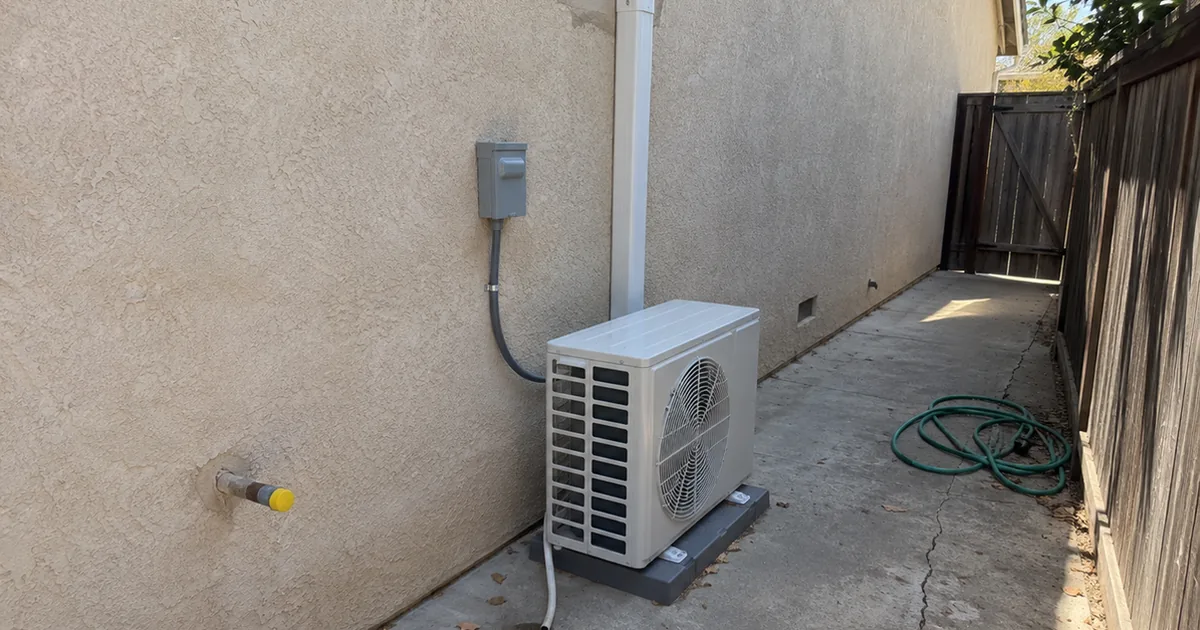
A seller lists a house after replacing the gas furnace and air conditioner with a heat pump outdoor unit on the side yard. The gas water heater in the garage is gone too. A heat pump water heater is in its place.
The buyer asks for the permit final. The seller says the installer told them permits “take forever and cost a fortune.” The water heater was never permitted.
This is a composite of situations we see, not one property. Starting in 2027 and 2028, California law takes away most of that excuse.
This is not legal advice.
SB 222 takes effect January 1, 2027, but its main duties arrive later
Senator Scott Wiener wrote SB 222 and calls it the Heat Pump Access Act. Senators Allen, Becker, and Stern are coauthors. The Governor approved it, and it was filed on September 28, 2026, as Chapter 738, Statutes of 2026.
The statute is not an urgency bill. It takes effect January 1, 2027. The working deadlines come later:
- July 1, 2027 for asynchronous inspections.
- January 1, 2028 for the one-permit rule.
- July 1, 2028 for real-time online permitting for qualifying swapouts.
SB 222 adds Civil Code Section 4737 to the Davis-Stirling Act and adds Government Code Sections 51297.50 through 51297.59 for local permitting.
The covered equipment is a “residential heat pump water heater or heat pump HVAC system.” The law defines that equipment as a single heat pump water heater or single heat pump HVAC system serving one residential dwelling unit.
This is a retrofit and replacement law. It does not apply to new residential construction under Government Code Section 51297.59.
The Legislature declared SB 222 a matter of statewide concern. That means it applies to charter cities too. The Senate passed it 29-8 on January 26, 2026. The Assembly passed it on August 24, 2026.
Senator Wiener told the Senate that “the permitting process for heat pumps is deeply broken, making homeowners suffer long waits, high fees, and needless hoops just to install a heat pump.” He tied the bill to California’s goal of installing 6 million heat pumps by 2030.
The Senate floor analysis describes a wide gap between jurisdictions. In some places, a water heater replacement permit can take as little as 48 hours and cost a minimal fee. In others, the process involves “significant back-and-forth” and costs several thousand dollars.
Every city and county must offer asynchronous heat pump inspections by July 1, 2027
Beginning July 1, 2027, every city and county must adopt and offer asynchronous inspections for covered heat pump installations.
The contractor and building inspector do not have to be present at the same time. The inspector may call the contractor or use real-time video during the inspection.
That does not mean every inspection will be approved without the contractor present. If the inspector finds an issue and the contractor must be there to perform tests or cure the installation, the inspector may require another inspection with both people present. The same applies when the contractor must be on site to let the inspector into an area that needs inspection.
A city or county may continue offering traditional in-person inspections. It may also offer remote inspections instead of asynchronous inspections.
SB 222 is separate from AB 1738, Chapter 271, signed September 18, 2026. AB 1738 allows local agencies to offer remote video inspections for listed project types, including heat pumps, solar, and reroofs, with the program phased in during 2028. What AB 1738 changes for remote permit inspections covers that separate law, and our earlier AB 1738 explainer covers where video inspection falls short.
SB 222 is narrower in subject and earlier in timing. It applies to heat pumps and adds inspection, permit, fee, and HOA rules.
A city may require up to one nondiscretionary permit by January 1, 2028
“On or before January 1, 2028,” a city or county may require “up to one nondiscretionary permit” for a covered installation. The permit must be administratively approved.
A separate permit may still be required for a panel replacement or structural work performed as part of the heat pump job.
More than one permit is allowed only if the building official makes written findings, based on substantial evidence, of a specific adverse impact on public health or safety that cannot feasibly be mitigated.
The law also limits what local governments may add to the process. Permitted local standards include:
- Setbacks of no more than 3 feet in side yards and backyards, or 10 feet in front yards.
- Site plan information relevant to the installation or setback. No site plan may be required for a swapout.
- Reach codes that encourage zero-emission equipment or efficiency.
- Other standards adopted by ordinance when substantial evidence shows a specific adverse health or safety impact, using the lowest-cost option.
- Noise standards for inverter-based heat pumps. Those standards cannot be less than 15 decibels higher than a statutory maximum for non-inverter equipment.
- Workforce labor standards, including prevailing wage and apprentices.
A swapout means the new heat pump water heater, or the HVAC air handler and outdoor coil, goes in the same location as the old water heater or air handler and condenser.
A job is not a swapout if it modifies, replaces, or installs more than 25 linear feet of ductwork. It is also not a swapout if it changes a package unit to a split system or changes a split system to a package unit.
A qualifying plug-in window unit needs no permit or inspection
A city or county cannot require a permit or inspection for a plug-in ready window air conditioner or window heat pump when all five conditions are met:
- The equipment is rated at 120 volts or less.
- It is self-contained.
- It needs no dedicated circuit.
- It needs no electrical panel upgrade.
- It needs no drainage or structural modification.
Miss one condition and the exemption does not apply. The practical dividing line is often electrical work. The moment the installation needs a new circuit or panel upgrade, it is outside this exemption.
The exemption does not reach heat pump water heaters or ducted and split heat pump HVAC systems. Those installations remain subject to the permitting and inspection rules in SB 222.
Most heat pump permits will cost no more than $150 or $200
SB 222 caps the permit fee at $150 for a residential heat pump water heater and $200 for a residential heat pump HVAC system.
A city or county may charge more only after making a written finding and adopting a resolution or ordinance supported by substantial evidence of reasonable cost. A higher fee must be a regular fixed amount for the appliance type. It must be publicly listed. The city or county cannot add charges above that listed fee.
Third-party technology fees for processing are not covered by the cap.
By July 1, 2028, cities and counties must offer online, automated permitting that issues a permit in real time to a licensed contractor for a swapout requiring no new electrical panel and no structural work.
For a heat pump HVAC system, the contractor must certify under penalty of perjury that the equipment was sized using a load calculation. The calculation must follow ACCA Manual J, the SMACNA Residential Comfort System Installation Standards Manual, or the California Mechanical Code. The contractor must provide the calculation to the local authority on request.
If a city requires a CF1R energy compliance form, it cannot request duplicate information beyond the applicant name and address.
Cities and counties must post their requirements, documents, and all fees online. They must accept electronic applications and electronic signatures.
There are population exemptions. A city with fewer than 5,000 people is exempt from the online permitting, website posting, and fee cap sections. A county with fewer than 150,000 people, including each city within that county, is also exempt from those sections.
The asynchronous inspection duty has no population exemption.
A city or county applying for California Energy Commission funding must self-certify compliance.
The law does not eliminate the need for a permit record. It makes the record easier to obtain, gives qualifying contractors a faster route, and puts a public limit on the ordinary permit fee.
An HOA cannot block a code-compliant heat pump in the separate interest
An HOA governing document, architectural guideline, or policy that prevents replacement of a fuel-gas-burning appliance with a code-compliant electric appliance is void and unenforceable.
A covenant, restriction, or condition in a deed, contract, security instrument, or governing document that effectively prohibits or restricts installation or use of a residential heat pump water heater or residential heat pump HVAC system is also void and unenforceable.
The association cannot prohibit or restrict a member from installing, upgrading, replacing, or using the equipment in the member’s separate interest. It cannot charge a fee for the work. It cannot require a specific contractor or product. It cannot claim a rebate, credit, or commission. It cannot require removal or block a replacement or upgrade.
There are two exceptions. The work may be restricted if it violates federal, state, or local law. It may also be restricted if a required permit was not granted.
The HOA can still hold the member responsible for repairing damage caused by installation, operation, maintenance, or removal. That includes damage to the common area, exclusive-use common area, or another member’s separate interest.
The bill had organized opposition. The Community Associations Institute California Legislative Action Committee, League of California Cities, California State Association of Counties, California Contract Cities Association, Rural County Representatives of California, and the Cities of Camarillo, Thousand Oaks, and Tulare opposed it.
Their argument, as reported in the Senate floor analysis, was that higher up-front capital cost is a larger barrier than permitting. They said the state should offer incentives instead of new approval requirements.
Supporters included the City and County of San Francisco, the City of San Jose, the City of Berkeley, the Bay Area Air Quality Management District, and manufacturers including A. O. Smith, Carrier, Daikin, and LG.
The split reaches the local markets where buyers and agents work. The cities of Thousand Oaks and Camarillo opposed the bill, while San Francisco, San Jose, and Berkeley supported it. The same rules will apply to home inspections in Thousand Oaks and the Camarillo homes we inspect as to older San Francisco houses, San Jose tract homes, and Berkeley properties.
AB 1684 is a related HOA law. Civil Code Section 4738 separately bars HOA bans on code-compliant cooling systems beginning in 2027. See AB 1684 and HOA air conditioning rules.
A home inspection does not replace the permit record or the load calculation
A permit inspection and a home inspection answer different questions.
The permit inspection checks the installation against code for the building department. A home inspection reports observed condition and operation for the buyer.
The InterNACHI Standards of Practice state that the inspector inspects “the heating system, using normal operating controls” and “the cooling system, using normal operating controls.” The standard does not require the inspector to “determine the uniformity, temperature, flow, balance, distribution, size, capacity, BTU, or supply adequacy” of either system.
The inspector is not required to determine “compliance with codes or regulations.” A home inspector does not redo the contractor’s Manual J load calculation. That is why the contractor certification and permit record matter.
For water heaters, the InterNACHI standard calls for inspection of “the water heating equipment, including the energy source, venting connections, temperature/pressure-relief (TPR) valves, Watts 210 valves, and seismic bracing.” The inspector describes “the capacity of the water heating equipment, if labeled.”
On a heat pump retrofit, we photograph where the outdoor unit sits relative to property lines and windows. We photograph the condensate line and where it discharges. A heat pump water heater produces condensate, unlike most gas tank heaters.
We also photograph seismic strapping, the TPR discharge line, line-set wall penetrations and their sealing, and visible evidence of a new circuit or panel work. Our report does not stand in for the local permit record.
These details show why a clean-looking installation is not the same thing as a documented installation. Read water heater installation problems we find in Thousand Oaks before treating a new tank as a finished answer. Check undersized electrical service in older San Marino homes when the heat pump appears alongside older electrical equipment. Review HVAC condensation problems in Solana Beach when the drain line ends in an unusual location. Refrigerant equipment also changes over time, as explained in the R-410A refrigerant change.
Inspection.re uses InterNACHI-certified inspectors, same-day reports with photos, and a 3D Matterport scan that records where the equipment sits. FLIR infrared scanning is used as a screening clue only, not proof of a defect. See a sample inspection report and what every inspection covers.
The Bay Area air district’s zero-NOx water heater rule and AB 2313 on gas service line alternatives are related electrification stories, but they are separate from the permit and HOA rules in SB 222.
Agents should ask six questions before inspection contingency removal
- Ask for the permit and the final sign-off for any heat pump water heater or heat pump HVAC system installed since the gas equipment came out.
- Ask whether the job was a same-location swapout or included duct changes over 25 feet or a package-to-split change.
- For HVAC, ask the installer for the load calculation, using Manual J or an equivalent method.
- Ask whether a panel upgrade or new circuit was part of the job and whether that had its own permit.
- In an HOA, ask for any architectural file or violation letter about the equipment.
- Read the inspection notes on condensate, strapping, wall penetrations, and the outdoor unit location.
Start these questions before contingency removal. The timing rules are covered in how the inspection contingency timeline works.
Quick FAQ
When does SB 222 take effect?
The statute takes effect January 1, 2027. Asynchronous inspections begin July 1, 2027. Real-time online permits for qualifying swapouts are required by July 1, 2028.
How much can a city charge for a heat pump permit?
The cap is $150 for a residential heat pump water heater and $200 for a residential heat pump HVAC system, unless the city adopts findings showing a higher reasonable cost.
Does SB 222 apply to new homes?
No. It applies to retrofit and replacement installations, not new residential construction.
Can my HOA stop me from replacing a gas water heater with a heat pump?
Generally no, unless the work violates federal, state, or local law, or a required permit was not granted.
Does a home inspection confirm the heat pump is sized right?
No. The standard does not require sizing or capacity determination. Ask for the load calculation. See our FAQ.
The honest summary
SB 222 makes permitting cheaper, faster, and more predictable. An unpermitted heat pump will be harder to excuse after 2028.
It does not make a bad installation good. It does not size the equipment for you.
Ask for the record. Read the inspection notes. To book an inspection that photographs every piece of heat pump equipment and where it drains, call Inspection.re at 1-888-88-INSP-9.
In a condo garage the electrification question is often a charger, not a heat pump: SB 1267 and the duties a buyer inherits with a seller’s EV charger.