An industry update from Inspection.re, premium home inspections across California.
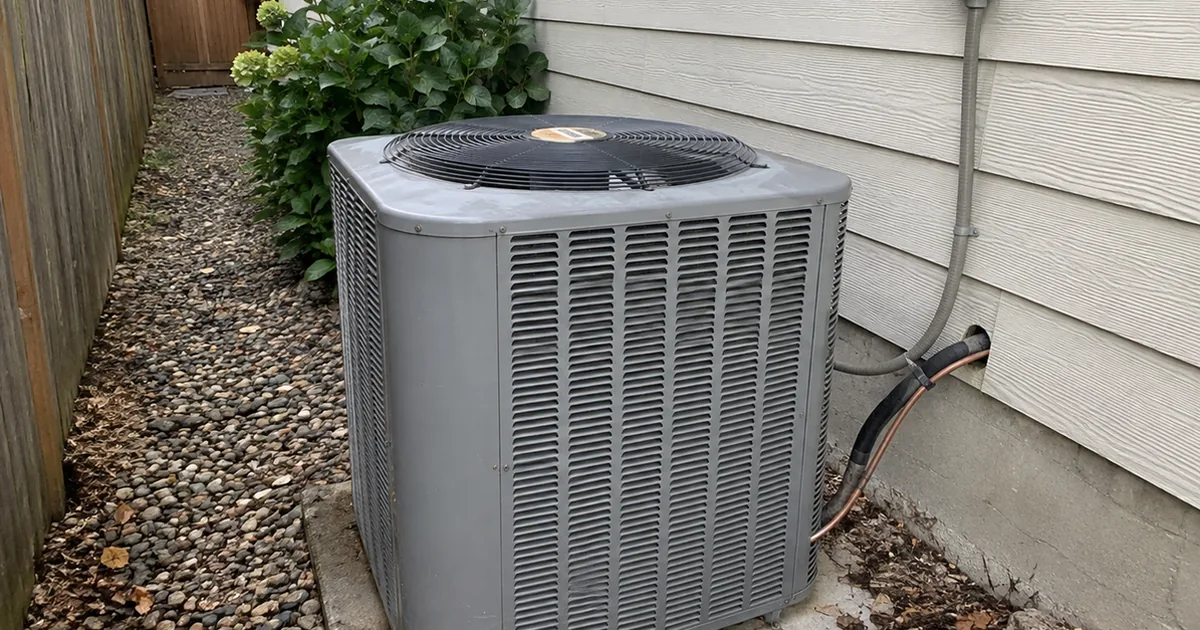
The condenser in the side yard still had the manufacturer sticker on the fan grille. It was an R-410A system, brand new, installed seven months into 2026. The buyer’s agent had read somewhere that R-410A was banned after January 1, 2026, and wanted to know whether the sellers had installed something illegal and whether it was a repair request.
They had not, and it was not. That is a composite of a question we now get regularly rather than a specific job, but the confusion is everywhere right now and it is costing people negotiating position on both sides.
Here is what actually happened. The January 1, 2026 installation deadline that every HVAC article from 2024 and 2025 cited was removed by EPA before it ever bit. What did not get removed is the rule that changed what new equipment gets built with, and that one is very much still in force.
The installation deadline everyone cited is gone
EPA removed it in a final rule issued on May 26, 2026.
The agency’s own current guidance on restrictions by sector now states the position plainly for residential and light commercial air conditioning and heat pumps: no installation compliance date for systems where all specified components were manufactured or imported prior to January 1, 2025.
That is the whole answer to the question above. A system built or imported before 2025 that has been sitting in a distributor’s warehouse can be installed today, and next year, and after that. There is no federal clock running out on it. A new R-410A installation in 2026 is not a code violation, not a defect, and not by itself a reason to write a repair request.
The reason so much published material says otherwise is that the deadline was real for about two and a half years before it was withdrawn. Anything written between late 2023 and early 2026 describes a rule that has since changed, and almost none of it has been updated.
What did not change, and this is the part that matters
Manufacture and import stopped. That happened on January 1, 2025, and it is still in force.
Under EPA’s Technology Transitions rule, issued as a final rule on October 24, 2023 under the American Innovation and Manufacturing Act, residential and light commercial air conditioning and heat pump equipment may not be manufactured or imported using a refrigerant with a global warming potential above 700. The compliance date for that restriction was January 1, 2025.
R-410A is above that limit. So as of the start of 2025, new production for this equipment class moved to refrigerants below 700, which in practice means R-454B and R-32.
That is a supply-side rule, and its effect is gradual rather than sudden. Equipment already built kept moving through the distribution chain. Equipment built after the cutoff uses the new refrigerants. The two streams have been running side by side ever since, which is exactly why a 2026 install can be either one.
The practical weight of this lands hardest in the parts of California where cooling equipment works hardest and gets replaced most often. In the desert markets we serve around Palm Springs and Indio, and in the inland valleys around Perris, condensers are replaced on a shorter cycle than almost anywhere else, so the share of houses carrying post-2024 equipment is climbing faster there.
How the rule got here, in four steps
The sequence explains why the published guidance is such a mess.
October 24, 2023: EPA issues the final Technology Transitions rule, restricting higher global warming potential refrigerants across several equipment categories, with compliance beginning January 1, 2025.
December 26, 2023: EPA issues an interim final rule to address stranded inventory. It allows equipment manufactured or imported before January 1, 2025 to be installed until January 1, 2026. This is the origin of the deadline everybody quotes.
September and October 2025: EPA proposes a reconsideration. The agency’s announcement of the proposal said it would preserve current flexibilities for residential and light commercial air conditioning and heat pumps manufactured or imported before January 1, 2025, by allowing them to continue to be installed indefinitely.
May 26, 2026: EPA issues the final reconsideration rule. The installation deadline for this equipment class comes out.
Four separate actions, three of which are still cited as current somewhere. If you are reading anything about refrigerant deadlines, check its date before acting on it, and check it against EPA’s own sector guidance.
What A2L actually means at the equipment
R-454B and R-32 are both classified A2L, which is a lower flammability class. That classification drives real changes in how the equipment is built.
A2L systems are engineered around the refrigerant class rather than simply charged with something different. Indoor equipment is typically built with refrigerant detection and mitigation logic, so the air handler can sense a leak and respond, usually by running the blower to disperse it. The equipment carries labeling identifying the refrigerant and the class. Charge quantity limits, and the airflow and room volume assumptions behind them, are part of how the system was listed.
None of that makes the equipment dangerous in a house. It does mean the safety case is built into the specific listed combination of components. The practical version for an agent: on an A2L system the equipment is a matched, listed assembly, and substituting parts across it is not a small decision.
You cannot put the new refrigerant in the old system
This is the single most common mistake we hear repeated, and it is worth being blunt about.
R-454B is not a drop-in replacement for R-410A. Neither is R-32. An existing R-410A system that develops a leak does not get topped off with the new refrigerant. It gets repaired and recharged with what it was designed and listed for, or the equipment gets replaced.
Nothing in the federal rules makes it unlawful to own, operate, service, repair or recharge an existing R-410A system, and existing supply including reclaimed refrigerant remains available for servicing. What changed is what may be newly manufactured, and for a while, what could be newly installed.
So an older R-410A system is not stranded and is not scheduled for forced removal. Anyone telling a buyer the air conditioner has to be replaced because of a refrigerant ban is either misinformed or selling something.
Two generations of equipment are now sitting in the same neighborhood
At a 2026 California listing, the outdoor unit can be any of three things, and they inspect differently.
It can be an older R-410A system installed years ago, which is most of the housing stock and is unaffected by any of this. It can be a pre-2025 R-410A system installed recently out of remaining inventory, which is lawful and increasingly common as distributors clear stock. Or it can be a post-2024 A2L system, which is what a new system built today will be.
For a buyer the differences are about the future rather than the present. An A2L system is what the market is moving to, so parts and technician familiarity follow it over time. A newly installed R-410A system is new equipment with a full service life ahead of it, bought into a refrigerant no longer being made for this class, which is a supply question over a fifteen to twenty year horizon rather than a problem today.
Neither is a defect. Both are facts a buyer is entitled to know before removing a contingency, and the data plate is where they come from.
The mismatched system problem got more expensive
Mixing an old indoor coil with a new outdoor unit was always a bad idea. It is a worse one now.
The classic version is a condenser that failed, got replaced, and got paired with whatever evaporator coil was already in the air handler. The system runs, more or less. Capacity and efficiency are not what either component was rated for, the metering device may be wrong for the pairing, and the warranty position is usually poor.
With the refrigerant change, that failure mode picks up a second dimension. A mismatch can now cross refrigerant generations, and on the A2L side the safety features are part of the listed combination rather than bolted on afterward. When we find an outdoor unit and an indoor coil whose model numbers do not go together, we say so and recommend an HVAC contractor evaluate the pairing.
This is a different subject from the defect mechanisms we cover elsewhere, and the distinction is worth keeping straight. Salt-air corrosion of condenser coils is about what the coastal environment does to the metal. Central air conditioning defects in inland tract housing is about how the equipment fails in service. Undersized and mismatched return air is a distribution problem, and HVAC condensation and drainage is a moisture problem. Those are all defect mechanisms. This is a question about which generation of equipment is there and whether its pieces belong together, which is a different question and produces a different conversation in escrow.
What an inspection documents, and what it does not
We read the data plate and the installation. We do not touch the refrigerant.
On every inspection where cooling equipment is present, we record what the equipment tells us. The refrigerant type, stamped on the data plate rather than guessed from the age of the house. The manufacture date, taken from the serial number. Model numbers on the outdoor unit and the indoor coil, so a mismatch is visible. Whether A2L labeling is present. The line set and its insulation, the condensate drain and any secondary pan and float switch, clearances around the outdoor unit, the disconnect, and the electrical supply.
We run the system through a normal cooling cycle when conditions allow and note the supply and return temperature difference, with the honest caveat that a temperature split is a screening observation and not a diagnosis.
Here is what we do not do, and we say it in the report rather than leaving it implied. We do not weigh the refrigerant charge, perform leak detection, or certify compliance with EPA’s refrigerant rules. We do not open the sealed system, and on A2L equipment that is a licensed technician’s work with its own handling requirements. If what we see suggests the charge is wrong or the system is not performing, we recommend an HVAC contractor evaluate it, and we say why.
Our inspection scope page sets out what is and is not included, the frequently asked questions cover the process questions clients ask first, and a sample inspection report shows how equipment findings like these are written up, limitations included. If a buyer is unsure how to weigh a recommendation against a defect, send them our guide to reading a California inspection report.
What to tell a buyer or a seller
Five things, in the order they come up.
-
A new R-410A system installed in 2026 is lawful and is not a defect. If a buyer’s agent asks for it to be replaced on refrigerant grounds, the answer is that EPA removed that deadline in May 2026.
-
Get the data plate photographed during the inspection rather than relying on the listing description. Refrigerant type and manufacture date are both on it, and both are facts rather than opinions.
-
An existing R-410A system can be serviced and recharged. Nothing requires its removal. Budget for it the way you would budget for any equipment of its age.
-
If the outdoor unit is much newer than the indoor coil, ask what was actually replaced and when. That is where mismatches hide, and it is a question a contractor can answer in one visit.
-
On a new-construction or recently re-equipped home, expect A2L, expect the labeling, and expect any future repair to be done by someone set up for that refrigerant class. That is normal, not a red flag. Our guide to inspecting newer construction covers why a recently built house still warrants a full inspection. In cohort markets like Oakley, original cooling equipment across whole subdivisions reaches replacement age at once, which is exactly when the refrigerant question arrives.
Quick answers
Is R-410A banned? No. Manufacture and import of this equipment class using refrigerant above 700 global warming potential stopped on January 1, 2025, and R-410A is above that. Equipment already built can still be installed with no federal deadline, and existing systems can be owned, serviced, repaired and recharged.
The seller installed a new R-410A system this year. Should I object? Not on refrigerant grounds. EPA removed the installation deadline in its final rule of May 26, 2026, and its current sector guidance states there is no installation compliance date for systems whose specified components were manufactured or imported before January 1, 2025. Judge the system on installation quality, sizing, matching and condition, the same as any other.
Can my R-410A system be converted to the new refrigerant? No, not as a drop-in. R-454B and R-32 are not substitutes you charge into an R-410A system. The equipment is designed and listed around a specific refrigerant, and on A2L equipment the safety features are part of that listing. A leaking system gets repaired and recharged with what it was built for, or replaced.
Will an A2L system cost more to service? We will not quote numbers we cannot support. A2L equipment requires technicians and tooling set up for that class, and early in a transition the pool of both is smaller. Ask a local contractor what they charge and whether they work on A2L equipment.
Does the inspection tell me if the charge is correct? No. We do not weigh the charge or perform leak detection, and no general home inspection does. We document the equipment, run a cooling cycle when conditions allow, note the temperature difference as a screening observation, and recommend a contractor evaluation if something looks off.
The honest summary
The short version is that one deadline went away and a different one is permanent.
The installation deadline is gone. EPA removed it on May 26, 2026, and a pre-2025 R-410A system can be installed today with no federal cutoff. Treat any article that says otherwise as out of date, including a great deal of material that is still ranking well.
The manufacturing restriction is still there. Since January 1, 2025, new cooling equipment in this class has been built with refrigerants below 700 global warming potential, which means A2L equipment with its own labeling, detection and mitigation design, and service requirements.
For an agent the practical consequence is small but real. The air conditioner at a listing is now a question with three possible answers instead of one, the data plate is where the answer lives, and the mismatch question is worth asking out loud. None of it should kill a deal, and all of it is easier to handle before the contingency period closes than after.
For a separate 2026 change that agents are also getting wrong, see our guide to California’s new wildfire insurance laws, where the confusion runs the other way and people assume the work alone earns the discount.
Want the equipment documented properly before you write or accept an offer? Schedule an inspection with Inspection.re, or call 1-888-88-INSP-9. Same-day report, and you can pay at closing. We inspect across California, including Carlsbad and the coastal markets where cooling equipment lives a harder life than its data plate suggests.