The Louver That Got Painted Shut: A Norwalk Backdrafting and Combustion Air Guide for Agents
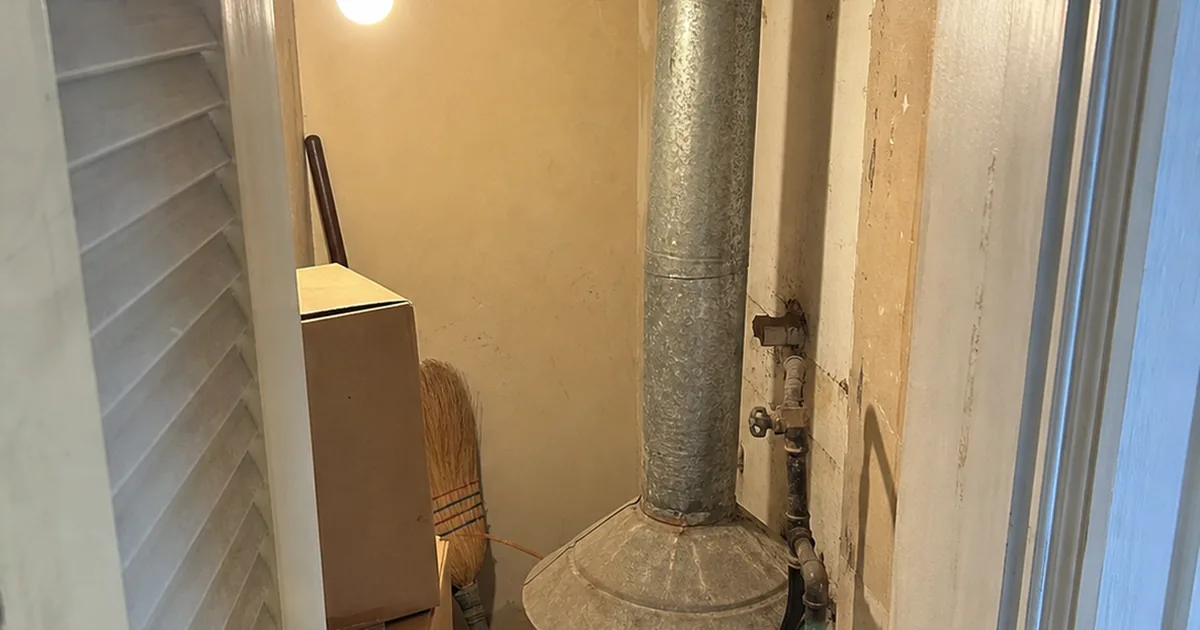
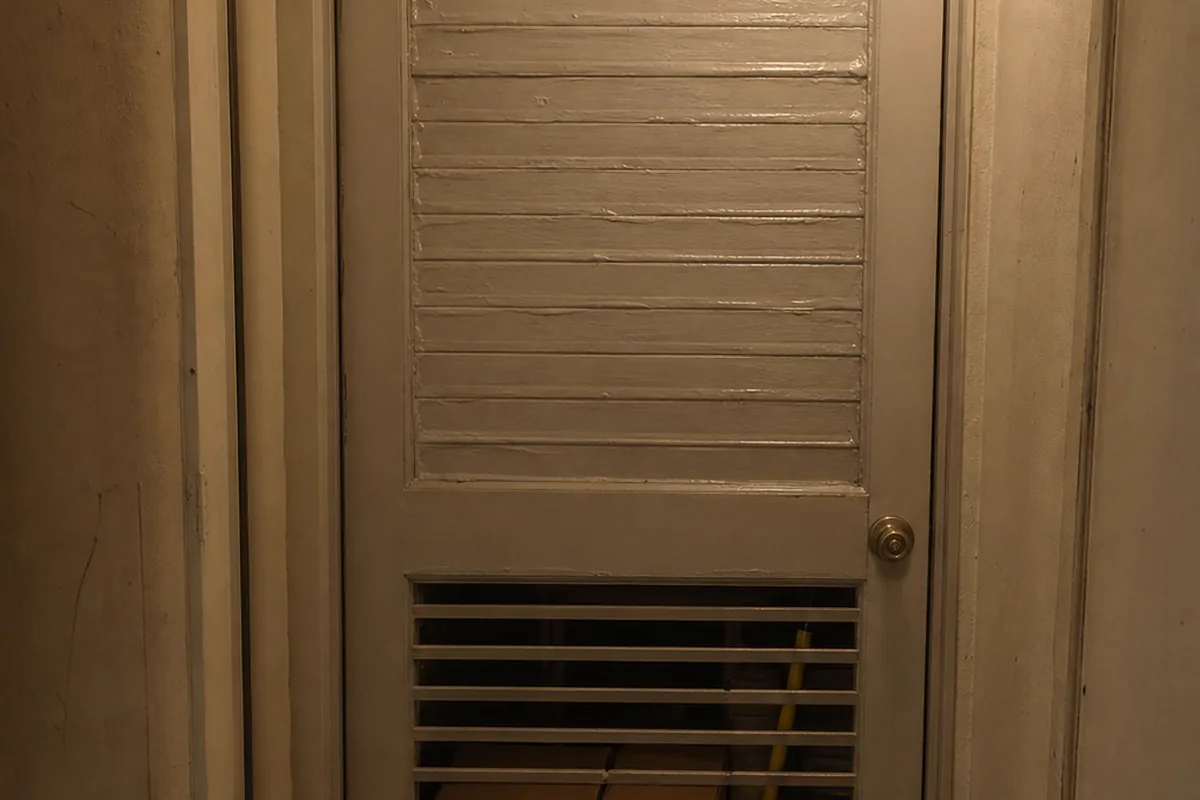
The house was a well-kept 1958 tract home a few blocks off Firestone Boulevard, second owner, original gas furnace still running in a hallway closet next to the original 40-gallon water heater. Nothing about either appliance looked neglected. But the closet’s louvered door, the one designed to let combustion air into that small space, had been painted over twice and had maybe a third of its openings actually passing air. A newer kitchen range hood, two bathroom exhaust fans added over the decades, and a whole-house set of replacement windows and weatherstripping had all tightened the house up since 1958, each one a reasonable upgrade on its own. Together they had turned the house into a box that pulls air harder than that painted-shut louver could supply it. When we ran a spillage test at the water heater’s draft hood with the bathroom fans and the range hood running, the flue gas rolled back out of the hood instead of rising up the flue.
We are describing this as a composite of a pattern we see repeatedly across Norwalk’s original 1950s and 60s tract stock, not one identified property or job. It is common enough in this specific market, long-tenure homes with original natural-draft appliances, that every agent working here should understand it before it turns up in a report.
This guide is for the agent working Norwalk and the surrounding communities we also serve, including nearby Downey, Bellflower, and Whittier, where the same long-tenure, original-systems housing stock produces the same combustion air pattern. Here is what backdrafting and spillage actually are, why they are common on Norwalk’s original appliances, and how a finding usually plays out in escrow.
Why this matters for the agent
Most buyers have never heard the words “backdraft” or “spillage,” and if they have, they assume it is about the furnace not lighting, not about carbon monoxide leaking into the house from an appliance that is otherwise running fine. That gap matters because this is not a failure a buyer can hear or smell early. A natural-draft appliance can pass its ignition test and heat the house perfectly well while its flue gas is not actually leaving the building the way it is supposed to.
Norwalk adds a specific reason this comes up more here than in a newer tract city. A large share of the housing stock dates to the 1950s and 60s, sold once or twice in seventy years, with original natural-draft furnaces and water heaters still doing the job they were installed to do. That is consistent with the same long-tenure, well-maintained-but-not-replaced pattern already documented on this city’s original-systems housing. A natural-draft appliance from that era was designed around a house that leaked air freely at every window, door, and outlet. Seventy years of reasonable upgrades, replacement windows, weatherstripping, insulation, a range hood, bathroom fans, a dryer, have made the house tighter without anyone updating how the furnace and water heater get their combustion air.
What natural draft actually relies on
A natural-draft gas appliance, an older furnace or a standard atmospheric water heater, has no fan pushing exhaust up the flue. It relies entirely on buoyancy: hot flue gas is lighter than the surrounding air, so it rises up the vent and out the roof termination on its own, the same principle as smoke rising from a candle. That only works if two conditions hold. First, the flue itself has to be unobstructed and rising continuously, no sags, no blockages, no disconnected sections. Second, and this is the part that gets missed, the space around the appliance has to have enough incoming air, called combustion air or makeup air, to replace what the appliance is burning and to replace whatever exhaust fans elsewhere in the house are pulling out.
When a house depressurizes, meaning the air pressure inside drops slightly below the pressure outside, air has to come from somewhere to equalize it. If there is not enough deliberate makeup air available, through a properly sized louver, a duct to outside, or general house leakage, the path of least resistance can become the flue itself, pulled backward down through the draft hood instead of exhaust gas going up and out. That is backdrafting when it happens continuously, and spillage when it happens briefly at ignition or under a specific exhaust condition before settling out.
What causes the negative pressure in the first place
- Exhaust fans running simultaneously. A kitchen range hood, especially a higher-capacity one, one or two bathroom fans, and a clothes dryer can together exhaust more air than a house’s incidental leakage can replace, especially in a tightened-up house.
- A fireplace with the damper open. A wood-burning fireplace is itself a large, unregulated exhaust path pulling house air up the chimney, and it competes directly with a furnace or water heater’s flue for the same limited makeup air.
- Stack effect on a two-story or a hot attic day. Warm air rising and escaping high in the house pulls replacement air in low, and in a tight house that replacement air can come down a flue instead of through a window or door.
- A closed or undersized combustion-air opening. Many original mechanical closets and utility closets were built with a louvered door or a duct to a crawlspace or attic sized for the era’s leakier houses. Decades of paint, added shelving, stored boxes, or a remodel that solid-cored the door removes or shrinks that opening without anyone treating it as a life-safety item.
- Decades of tightening without adding makeup air. Replacement windows, added weatherstripping, blown-in attic insulation, and general home tightening all reduce the incidental air leakage the original 1950s design assumed would be present, without anyone recalculating whether the furnace closet still has enough air.
Schedule a Norwalk inspection →
What actually goes wrong
- A painted-shut, blocked, or undersized combustion-air louver. The single most common finding in an original mechanical closet: the intended opening is present on paper but not functionally passing air.
- Storage stacked against the appliance closet’s air path. Boxes, cleaning supplies, or a stored ladder blocking a floor-level or high-level vent opening into the closet.
- A solid-core replacement door on what was a louvered closet. A remodel that swapped in a standard interior door for appearance, cutting off the appliance’s air supply entirely.
- Rust or staining at the draft hood or flue connector. A visible sign that flue gas has been rolling back out of the draft hood rather than rising, often the clearest low-cost clue available on a visual inspection.
- A disconnected, sagging, or corroded-through flue connector. Even with adequate combustion air, a flue that has come apart at a joint or sags instead of rising continuously will not draft properly.
- Melted plastic, scorching, or heat discoloration near a flue or appliance. A sign of sustained heat exposure from gas rolling back into the space instead of exhausting.
- New exhaust equipment added without reassessing makeup air. A kitchen remodel with a large-capacity range hood, or added bathroom fans, installed with no thought given to the furnace and water heater sharing the same air.
What agents should tell every buyer
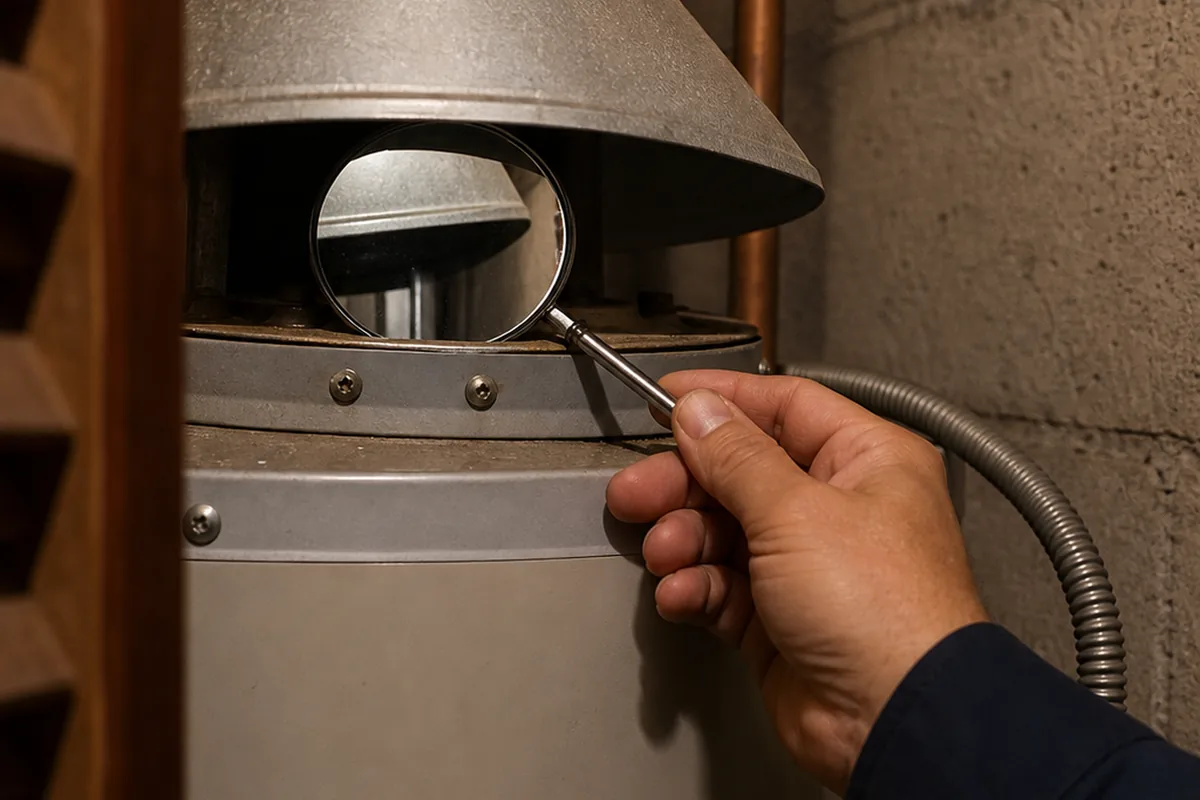
- A home inspector checks for backdrafting and spillage using a simple visual and mirror or smoke-pencil test at the draft hood, run after operating exhaust fans and the dryer to simulate real household conditions. This is not the same as a certified combustion analysis with calibrated gas analyzer equipment.
- Rust, staining, or corrosion at a draft hood or flue connector is a real, visible clue and worth asking about even before a full inspection.
- A blocked, painted-over, or undersized combustion-air louver on an original mechanical closet is one of the most common and least expensive things to correct on this list, but it is a genuine carbon monoxide risk, not a cosmetic item.
- If a seller has added a large kitchen range hood, additional bathroom fans, or sealed up the house with new windows and insulation since the appliances were installed, that combination is worth asking about directly, because none of those upgrades individually looks like a red flag.
- This is a life-safety finding, not a performance complaint. A backdrafting furnace can heat the house just fine while still posing a carbon monoxide risk.
- Correcting this is usually a licensed HVAC technician’s job, sizing and cutting a proper makeup-air opening or duct, not something a buyer should attempt on their own with a bigger louver bought at a hardware store.
Red flags during showings
- Rust, dark staining, or corrosion on a metal draft hood or the flue pipe leaving it.
- A furnace or water heater closet door with its louvers painted shut, missing, or blocked by storage.
- A solid interior door on what looks like it was originally a mechanical or utility closet.
- Scorching, melted plastic, or discoloration on anything near a flue connector or draft hood.
- A disconnected or visibly sagging section of flue pipe between the appliance and the wall or roof penetration.
- A working carbon monoxide alarm that is expired, missing its battery, or simply absent near the appliance closet or attached garage.
The negotiation playbook
When a backdrafting or spillage finding surfaces in a Norwalk escrow, the deal usually moves down one of a few paths.
The first path is opening up a blocked combustion-air louver, appropriate when the fix is simply restoring an existing opening that has been painted over or blocked by storage. This is typically inexpensive and quick.
The second path is a licensed HVAC evaluation and a properly sized makeup-air solution, appropriate when the original opening is genuinely undersized for the appliances and exhaust equipment now present, or when a remodel removed the opening entirely. This is a real line-item cost, not a DIY project.
The third path is appliance and flue repair, warranted when the flue connector itself is disconnected, corroded through, or sagging, independent of the combustion-air question, since both conditions can exist on the same appliance.
The fourth path is a credit or informed acceptance, appropriate when the finding is a borderline spillage result under a worst-case exhaust-fan test rather than continuous backdrafting, and the buyer wants to proceed with a plan to have HVAC evaluate it after closing.
How the inspection actually catches it
We check the mechanical or utility closet on every Norwalk inspection for a functional combustion-air path first, whether that is a louvered door, a duct to outside, or another approved opening, and note anything blocking it. Where a natural-draft furnace or water heater is present, we run a spillage test at the draft hood using a mirror or smoke pencil, checking both at ignition and after running the kitchen exhaust fan, bathroom fans, and dryer together to simulate the worst realistic household condition.
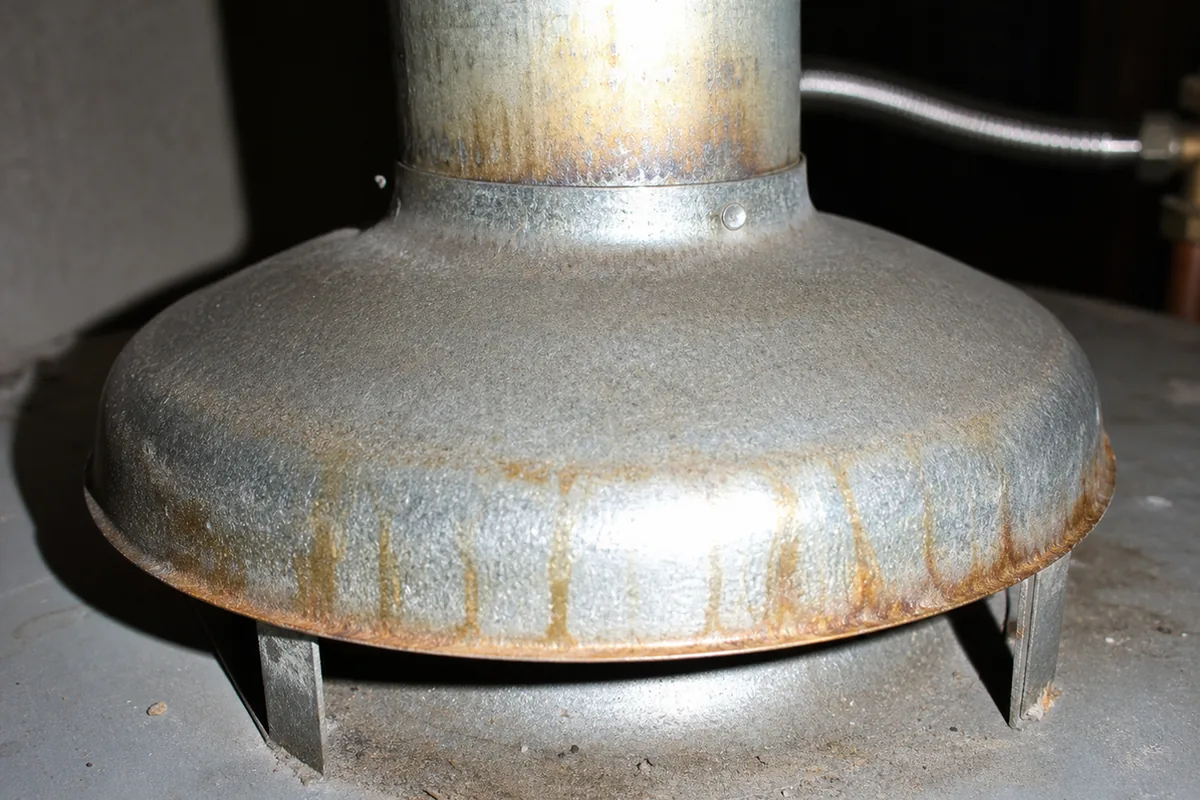
We look for physical evidence independent of the live test too: rust or staining at the draft hood, scorching near the flue connector, and the physical condition of the flue itself, continuous rise, no disconnected joints, no sagging sections. We photograph and document the combustion-air opening’s actual size and condition, not just its presence on the floor plan.
We do not perform a certified combustion analysis with a calibrated gas analyzer, and we do not size or install a corrected makeup-air opening ourselves. That is licensed HVAC technician work, the same specialist boundary we describe in our tankless water heater venting guide. Where we find backdrafting, spillage, a blocked combustion-air path, or visible flue deterioration, we say so plainly in the report and recommend the appropriate specialist evaluation. Our what’s included page covers the full HVAC and combustion-safety scope of every Norwalk inspection.
Quick FAQ
Is this the same thing as a smoke or carbon monoxide alarm not working? No. Our Ontario smoke and CO alarm compliance guide covers whether the alarm device itself is present, working, and correctly located. This guide is about the actual mechanical defect, insufficient combustion air and a compromised flue, that can produce carbon monoxide in the first place. A property can have a fully compliant alarm and still have a backdrafting appliance underneath it.
Is this the same as the older gravity “octopus” furnace issue? No. Our Alhambra gravity furnace guide covers an obsolete gravity-fed heating system type generally, its ducting, age, and general serviceability. Backdrafting and spillage can affect any natural-draft gas appliance, including a modern standard-efficiency furnace or water heater, not just an old gravity system.
Could this be caused by CSST gas line issues instead? No, unrelated. Our Yorba Linda CSST bonding guide covers electrical bonding of flexible gas tubing against lightning-induced surge, a completely different mechanism from combustion air and venting.
Does this only happen with the furnace and water heater running at the same time as exhaust fans? Often, yes, that is the worst-case condition an inspector tests for deliberately. But a severely undersized combustion-air opening or a badly compromised flue can produce spillage or backdrafting even without every exhaust fan running.
Is a carbon monoxide alarm enough protection on its own? A working, correctly placed CO alarm is an important backstop, but it is not a substitute for fixing the underlying combustion-air or venting defect. The alarm tells you something has already gone wrong; the goal is preventing it from happening at all.
The honest summary
Norwalk’s long-tenure original natural-draft furnaces and water heaters were built for houses that leaked air far more freely than they do today. Decades of reasonable tightening, without anyone recalculating whether the mechanical closet still gets enough makeup air, is how a well-maintained appliance ends up pulling its own exhaust back into the house. None of this means every original furnace in Norwalk is unsafe. It means the combustion-air path deserves a real look on any house of this age, not an assumption that the appliance running fine means the venting is fine too.
We check every natural-draft gas appliance’s combustion-air path and run a spillage test on every Norwalk inspection, and we tell you plainly whether it passes, whether it is borderline, or whether it warrants a licensed HVAC technician’s evaluation before you close.
See what every inspection includes → · Read our FAQ → · Explore Norwalk home inspections →
Related reading
- Smoke and CO Alarm Compliance in Ontario. The alarm device itself, distinct from the combustion-air and venting defect covered here.
- Gravity Furnace and Aging Heating Systems in Alhambra. An obsolete system type generally, a different scope from the draft and venting mechanism covered here.
- CSST Gas Line Bonding in Yorba Linda. A separate fuel-gas topic, electrical bonding against surge rather than combustion air.
- Tankless Water Heater Venting in Rancho Santa Fe. Another appliance-venting topic on a different equipment type, useful context on the specialist boundary between inspection and licensed HVAC work.
- Unvented Gas Fireplaces and Heaters in Chatsworth. A different category of appliance entirely, one that was never designed to vent at all rather than one failing to vent.