What an Alarm Does Not Tell You: Carbon Monoxide in Concord Homes
On a Concord inspection of a 1960s or 1970s tract house, the carbon monoxide questions start before we reach the alarm. We look at the furnace, the water heater and its vent connector, the range, the fireplace, and the garage. The alarm is the last line. The source is what we are looking for.
We operate the furnace and water heater with their normal controls. We look for rust, soot, scorch marks, loose flue joints, and stored boxes crowding the equipment. A quiet alarm does not settle any of those questions, and we do not let it.
This guide is for the agent working Concord and the neighboring cities we also serve, including Walnut Creek, Pleasant Hill, and Martinez. It is about the sources behind the alarm. Where alarms go and when they expire is in our Ontario alarm guide. Reading the back label is in the CPSC alarm warnings piece. We are deliberately not repeating either one here.
Why a clean alarm line does not settle a Concord inspection
A clean alarm line means the device has not sounded under the conditions present at that spot and that time. It does not mean the house is clean.
Concord’s Housing Element needs assessment, a draft posted by the state housing department using 2019 Census data, counts 48,096 housing units. The largest group, 24,138 units or 50.2 percent, was built from 1960 to 1979. Another 11,699, or 24.3 percent, went up from 1940 to 1959. The document puts about 76.4 percent of the stock at more than 40 years old and says more than 94 percent was built before 2000. About 60.2 percent of the units were one-unit detached houses, and the same document says Pacific Gas and Electric (PG&E) provides gas and electric service to Concord homes and businesses.
Age does not prove a carbon monoxide problem. It does tell you why the source map matters: in houses that old, equipment may have been replaced into original venting and windows and weatherstripping may have changed how air moves. The housing document does not count gas appliances or attached garages, so we give you no numbers on those.
For the escrow side, California’s Health and Safety Code asks the owner of a dwelling with a fossil-fuel appliance, a fireplace, or an attached garage to install a carbon monoxide device. The device is cheap to satisfy. The sources behind it are where the cost and risk sit.
The CDC says more than 400 Americans die each year from unintentional carbon monoxide poisoning not linked to fires, more than 100,000 visit an emergency department, and more than 14,000 are hospitalized. People who are asleep can die before they have symptoms. If we see a warning sign, we say so directly.
Where carbon monoxide comes from in a gas-heated house
Carbon monoxide comes from fuel that does not burn completely, so any fuel-burning appliance, fireplace, or engine can be a source.
Walk the house in order. The furnace sends combustion gases through a heat exchanger and a flue. The water heater does the same job on a smaller scale, often in a closet or garage where the vent connector is easy to overlook. The range and oven burn gas in the kitchen. The fireplace, whether wood or gas logs, produces carbon monoxide when combustion or venting goes wrong. The attached garage adds engines. Then there is everything people carry in: a generator, a grill, a propane heater, a camp stove.
The federal numbers show why the list is broad. The CPSC carbon monoxide fact sheet says more than 200 people die each year from carbon monoxide produced by non-automotive consumer products, including malfunctioning furnaces, ranges, water heaters, room heaters, generators, fireplaces, and charcoal. In 2020 generators were the largest single category at 92 deaths, and portable heaters came second at 33. Contra Costa Health’s carbon monoxide page adds gas dryers and pool or spa heaters.
Locally, the Contra Costa County Fire Protection District (ConFire) handles fire services in Concord, per the city’s public safety page. Its Carbon Monoxide Safety sheet says to have fuel-burning heating equipment and chimneys professionally inspected every year before cold weather.
One oven detail surprises people. CPSC says not to cover the bottom of a natural gas or propane oven with aluminum foil, because the foil blocks combustion air and can produce carbon monoxide.
Where the failures repeat, source by source
The failures repeat in six places, and only some of them are things an inspector can see.
- A heat exchanger can crack or rust through, or a burner can go dirty. That is internal, and it is a technician’s call.
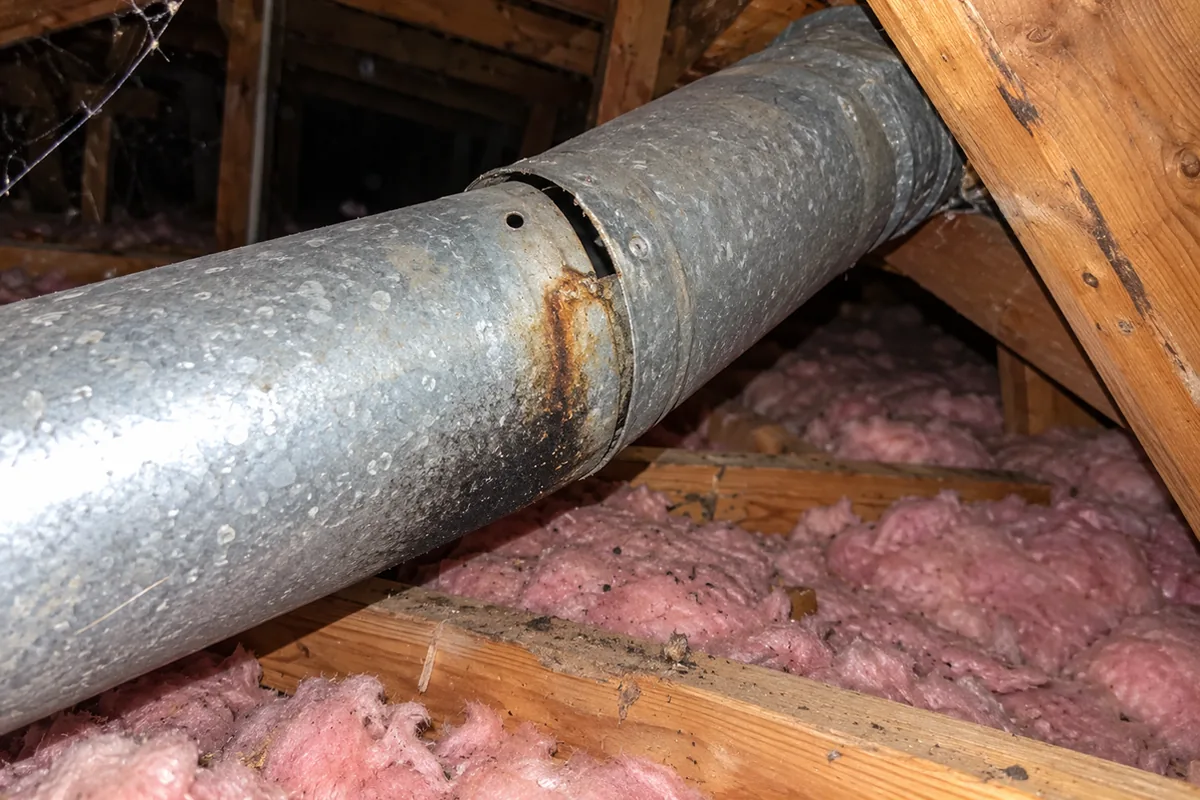
- A flue or vent connector can come loose, sag, rust, or separate. CPSC says the annual service should check chimneys and flues for blockages, corrosion, and partial or complete disconnections. The CDC says horizontal vent pipes on appliances such as a water heater should rise slightly toward the outdoors so loose joints do not leak.
- A chimney can be blocked, or a fireplace can be used with the damper closed. Backdrafting belongs here as one cause among several. The mirror and smoke-pencil mechanics are in our Norwalk backdrafting guide.
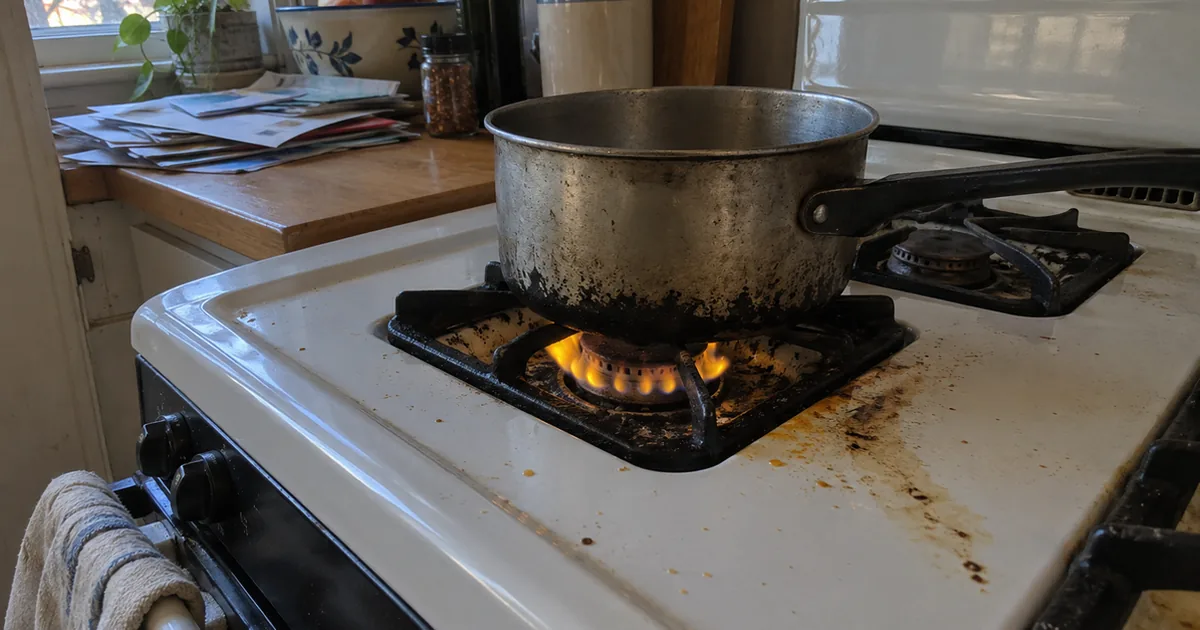
- A range or oven can be used as a heater, or have foil over the oven floor. A lazy yellow flame or soot around a burner can signal incomplete combustion.
- A car can idle in the attached garage, or a generator, grill, or propane heater can come indoors. CPSC also warns that renovation tarps and debris can block appliance vents and chimneys.
- Paint, solvents, gasoline, and boxes can crowd a furnace or water heater closet. PG&E’s gas safety page says not to store them in the same room as a gas appliance, and that furnaces need a constant supply of fresh air.
A vent connector does not need to be fully disconnected to matter. A loose joint, a rust hole, or a sag can change where the flue gas goes.
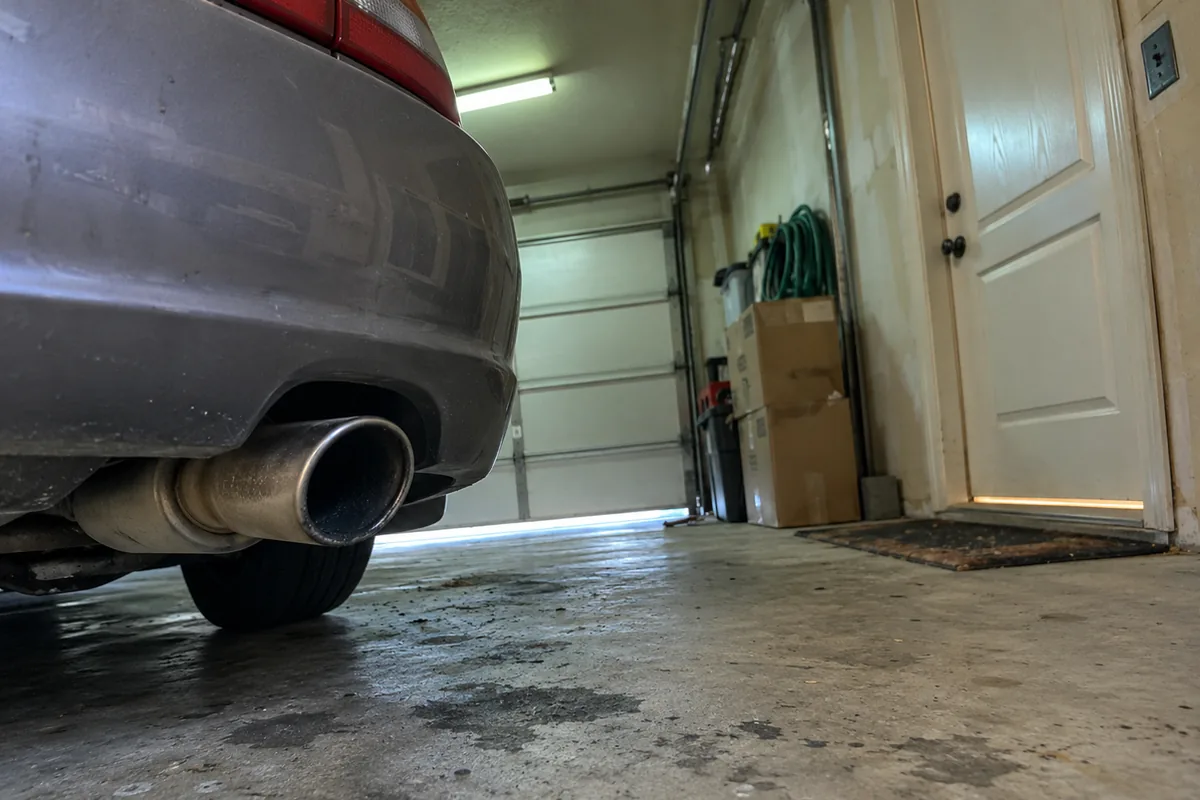
An attached garage works the same way. ConFire’s sheet says to remove a vehicle from the garage immediately after starting it and never to run one indoors, even with the door open. The CDC says the same about a garage attached to a house.
What we can see, and where a technician with a combustion analyzer takes over
We report what is visible and operating. Measuring combustion and looking inside a heat exchanger is a licensed technician’s job.
That line comes from the InterNACHI Residential Standards of Practice, last revised in October 2022. For heating, the inspector inspects the system using normal operating controls and reports one that did not operate. The inspector is not required to inspect, measure, or evaluate the interior of flues or chimneys, fire chambers, heat exchangers, or combustion air systems. The standard also does not require lighting pilot flames, evaluating combustion air adequacy, or testing for gas leaks, and it does not require inspecting household appliances such as a range. For fireplaces, it does not require judging the adequacy of the draft or a smoke test. We don’t pretend a home inspector is a heating technician.
| Source | What we look at | What needs a technician |
|---|---|---|
| Furnace | Operation, burner compartment, flue connector, rust, soot, scorch | Heat exchanger and combustion analysis |
| Water heater | Burner area, vent connector, closet, visible rust or soot | Internal flue, combustion air, gas leak testing |
| Range and oven | Visible soot, foil, use as a heater, a plainly visible flame | Carbon monoxide output and appliance testing |
| Fireplace and chimney | Accessible portions and visible conditions | Draft, smoke testing, internal chimney review |
| Attached garage | Storage, visible soot, exhaust risk, alarm presence | Source investigation after an alarm or suspected exposure |
| Alarm | Presence or absence | Sensor accuracy, replacement by the manufacturer’s date |
On a Concord inspection we run the furnace and water heater, look at the burner compartments and flue connectors, check the closets and the garage for stored items and a carbon monoxide alarm, and look at the accessible parts of the fireplace. Absent alarms go in the report. If we see rust, soot, a loose joint, or a furnace that will not run, we recommend a licensed technician and say why.
We do not carry a combustion analyzer on the inspection and we do not test carbon monoxide output. A technician uses an analyzer to measure what the appliance is putting into the flue. That is different work. Our scope guide explains the general boundary, and the contractor license guide helps match a finding to the right trade. Our InterNACHI-certified inspectors deliver a same-day report with photos and a Matterport 3D tour with tagged findings. A FLIR infrared camera reads surface temperature. It does not see inside a heat exchanger or measure carbon monoxide.
What a carbon monoxide alarm proves, and what it does not
A working alarm proves only that carbon monoxide had not reached the level it was built to sound at, in that place, at that moment.
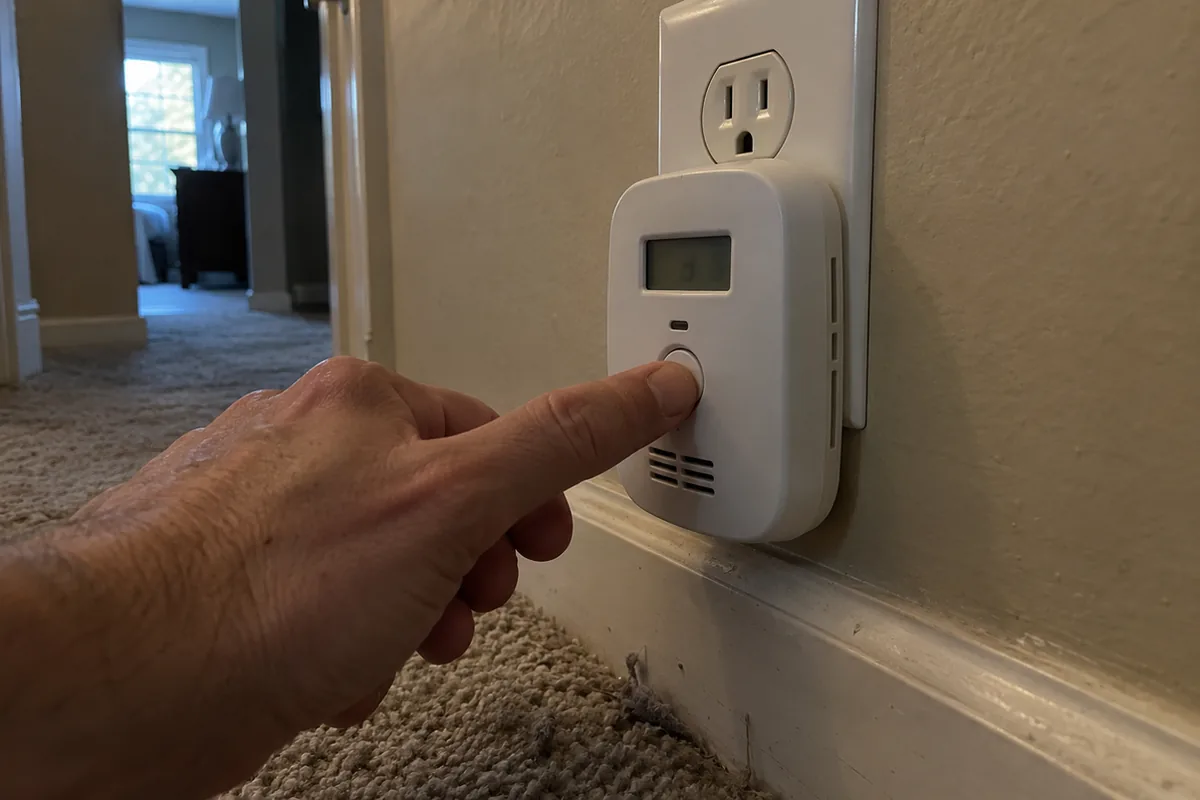
CPSC says alarms are designed to sound before potentially life-threatening levels are reached. It also says an alarm “can provide some added protection, but it is no substitute for proper use and upkeep of appliances that can produce CO.” The test button has a narrow job. It tests whether the circuitry works, not the accuracy of the sensor.
CPSC says most people have no symptoms from prolonged exposure to roughly 1 to 70 parts per million, and that above 70 symptoms become more noticeable. At sustained levels above 150 to 200 parts per million, disorientation, unconsciousness, and death are possible. A slow, low-level problem may never sound the alarm, and headache, fatigue, nausea, and dizziness look like the flu without a fever. A quiet hallway alarm tells you nothing about a vent problem or garage source that has not reached it.
The CDC suggests a detector with a digital readout, which can show the highest level recorded. That is useful to hand a technician, but it does not replace servicing the appliance.
If an alarm sounds, CPSC says not to look for the source. Go outside, call 911 or the fire department, and stay out until responders say it is safe. If it sounds again within 24 hours of your return, leave again and call a qualified appliance technician to investigate all the fuel-burning equipment. The inspector is not who you call at 2 a.m.
What agents should tell every buyer
Tell every buyer these six things before the contingency ends and before move-in.
- The alarm is the last line, not the inspection. It does not inspect the furnace, water heater, fireplace, range, or venting.
- A furnace line that says “operated” does not say the heat exchanger or combustion was checked. Our furnace limits guide explains that boundary.
- PG&E offers free in-home gas appliance safety checks, scheduled at pge.com/pilotlights. CPSC and the CDC advise annual professional service of every fuel-burning appliance.
- Never run a car in an attached garage, and never heat the house with the oven or run a grill indoors.
- Look at what is stored around the furnace and water heater closets.
- If an alarm sounds, or anyone has flu-like symptoms that clear when they leave the house, get out and call 911 first. Call a technician after responders clear the danger.
Red flags during showings
These are visible signs that deserve a question before anyone calls them cosmetic.
- Soot or brown staining above or around a range, a furnace door, a water heater, or a fireplace opening.
- Rust, scorch marks, or melted material near a flue connector.
- A flue pipe that sags, has a gap, or has a loose joint.
- A vehicle-exhaust smell or a soot film in the attached garage or at the door to the house.
- A lazy yellow or white flame at a burner. PG&E’s 2021 safety release says a blue flame indicates complete combustion and a lazy yellow or white one is a warning sign.
- Foil over an oven floor, or towels and a space heater near a range that looks used for heat.
- Paint, solvents, and boxes crowding an appliance closet.
- A carbon monoxide alarm that is missing, painted over, or chirping.
A showing is not a combustion test. If something looks wrong, do not make the buyer stand there diagnosing it.
The negotiation playbook
When a carbon monoxide question comes up in a Concord escrow, it usually follows one of four paths.
The first is a technician’s combustion and heat exchanger check before the contingency ends, recommended whenever the report shows a warning sign or a furnace that did not run. Timing is in our contingency timeline guide.
The second is repair of a visible flue or vent defect by a licensed contractor before close. A loose or rusted connector is not a wait-and-see item.
The third is a seller credit with a post-close technician visit, when the report shows an age concern but no visible defect. The credit does not turn the inspection into a combustion analysis. It gives the buyer a next appointment.
The fourth is accept and document, when nothing visible raised a flag. Schedule the PG&E check and keep the records together.
That is not a call we make from the hallway.
Quick FAQ
Does a working carbon monoxide alarm mean the furnace is safe? No. It means the alarm has not sounded under the conditions at that spot and time. It does not evaluate the heat exchanger, the combustion, or the flue.
Will the inspection find a cracked heat exchanger? Not by itself. The standard does not require an inspector to inspect a heat exchanger’s interior. A qualified technician can.
Is my gas range a carbon monoxide risk? It can be if it is misused or burning poorly. PG&E and CPSC both say never to heat the home with a range or oven. We report visible soot, foil on the oven floor, or obvious misuse, but we do not test a range’s carbon monoxide output.
Who do I call if my alarm sounds in Concord? Go outside and call 911 or the fire department. ConFire handles fire services in Concord. For a gas odor, PG&E says to leave, then call 911 and PG&E. Call a qualified appliance technician after responders address the danger.
Is the free PG&E gas safety check the same as an inspection? No. PG&E describes it as an in-home check of gas appliances, including water heaters, furnaces, and ovens. It does not replace a home inspection or a technician’s combustion analysis.
The honest summary
The useful record has three parts: the alarm, the visible inspection findings, and a technician’s answer when the question is internal.
For the agent, the move is simple. Ask what could be producing carbon monoxide, ask what the inspection could actually see, and send the buyer to a technician when the report names a warning sign or a furnace that did not run.
See what every inspection includes · Read our FAQ · Explore Concord home inspections
Related reading
- Smoke and CO Alarm Compliance in Ontario. Where alarms go and when they expire, not the appliances behind them.
- 2026 CPSC Alarm Warnings: Read the Back of the Detector. Device labels and warnings, not furnace or vent conditions.
- Backdrafting and Combustion Air in Norwalk. The spillage test and a blocked combustion air path.
- What an Inspector Can Tell You About a Furnace. Why “operated normally” is not a heat exchanger check.
- Unvented Gas Fireplaces and Heaters in Chatsworth. Appliances that were never designed to vent.