Unvented Gas Fireplaces and Heaters: What a Chatsworth Agent Needs to Know
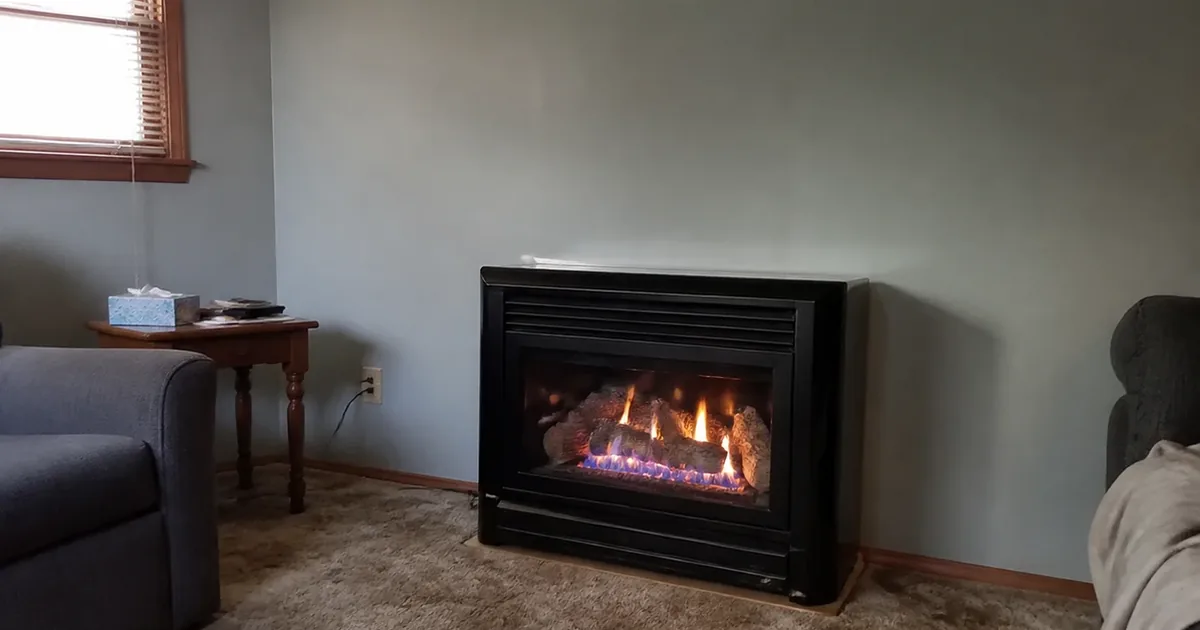
A buyer walking a converted den at the back of a Chatsworth ranch-style home noticed a gas fireplace insert glowing blue and orange against the far wall, no hearth extension in front of it, no visible chimney or flue running up through the roofline anywhere nearby. The listing agent had called it a cozy bonus feature. It was actually a ventless gas appliance, the kind that burns fuel and sends everything that combustion produces, heat, moisture, and combustion byproducts including carbon monoxide, directly into the room rather than up and out through a flue. Whether it belonged in that room at all, whether the room had the air volume the appliance’s rating called for, and whether its only safety mechanism was even working, were all real questions a general walkthrough could not answer with a glance.
We are describing this as a composite of a pattern we see across Chatsworth’s older ranch-style and rustic single-story homes, not one identified property or job. Chatsworth’s rocky Santa Susana foothill terrain and its stock of mid-century and later single-story houses, many with a converted den, family room, or added space at the back of the house, is exactly the kind of market where a supplemental unvented gas fireplace insert or a portable or fixed unvented propane heater shows up as an add-on comfort feature, making this a real and checkable condition rather than a hypothetical one.
This guide is for the agent working Chatsworth and the surrounding communities we also serve, including Northridge, Woodland Hills, and Porter Ranch, where a supplemental gas appliance in a converted room comes up often enough during a sale that agents deserve a clear, honest answer about what “unvented” actually means before it becomes a surprise on a walkthrough. Here is what makes an appliance unvented by design, why that is a fundamentally different category of risk than a natural-draft appliance losing its draft, the real installation and use-pattern defects an inspector actually sees, and what falls to an HVAC or gas technician rather than a general inspection.
Why this matters for the agent
Chatsworth’s housing stock includes a real share of older ranch-style and rustic single-story homes tucked against the Santa Susana hillside, along with equestrian parcels and larger lots where a den, family room, or converted garage space became a supplemental living area over the years. A room like that, especially one added or converted without a full HVAC extension, is a natural candidate for a homeowner to add a gas fireplace insert or a propane heater for comfort without running new ductwork or gas piping to a central system.
The problem is that “unvented” and “ventless” get marketed as a convenience feature, no chimney to build, no flue to maintain, install it and it heats the room. What that framing leaves out is that an appliance with no vent connection to the outside has exactly one safety mechanism standing between normal operation and a room full of combustion byproducts: an oxygen-depletion sensor, or ODS, built into the unit. An agent who understands that distinction can set the right expectation with a buyer before the appliance becomes a point of confusion during escrow, instead of a buyer assuming a working-looking fireplace is automatically a safe one.
What makes an appliance “unvented” or “ventless” by design
An unvented or ventless gas appliance, whether a fireplace insert, a log set, or a portable or wall-mounted heater, burns natural gas or propane and releases essentially all of what that combustion produces directly into the living space rather than exhausting it outside through a flue or vent pipe. That includes heat, which is the intended output, but it also includes water vapor as a normal combustion byproduct, and it includes carbon monoxide if the appliance is not burning cleanly or is oversized for the room it sits in.
The appliance’s only defense against a dangerous buildup is the ODS, a sensor that is designed to detect falling oxygen levels in the room and shut the gas valve before conditions become unsafe. That single sensor is doing the entire job a vent and a chimney would otherwise do on a conventional appliance. When it works and the appliance is properly sized and installed in an appropriate space, the risk is manageable. When it is missing, disabled, or the appliance is installed somewhere it should not be, the appliance has no other layer of protection at all.
Why this is a different category of risk than a backdrafting appliance
It is worth being direct about a distinction that gets blurred in casual conversation. A natural-draft appliance, a standard water heater or furnace with a draft hood and a vent connector running to a flue, is designed to vent its combustion byproducts outside every time it runs. When house depressurization or a blocked flue causes that appliance to spill combustion gases back into the room instead, that is backdrafting, a failure of a system that was supposed to work.
An unvented appliance is a completely different category. It was never designed to vent at all. There is no flue to become blocked, no draft to fail, because there was never a draft in the first place. The entire safety model rests on the ODS and on the appliance being installed in a space appropriate for its size, not on any exhaust pathway. Confusing the two leads to the wrong conversation with a buyer: a backdrafting appliance needs its venting path diagnosed and restored, while an unvented appliance needs its installation location, room volume, and sensor function evaluated on its own separate terms.
The real installation and use-pattern defects an inspector actually sees
The most common defect is placement. Many jurisdictions restrict unvented heaters from bedrooms and bathrooms specifically because those are enclosed spaces where a person may be sleeping or unaware of a slow oxygen-depletion condition, and because bathroom humidity and confined volume compound the risk. Finding one installed in either room is a real, documentable condition, not a technicality.
Room volume relative to the appliance’s BTU rating is the second common issue. An unvented appliance sized for a large open living area but installed in a small converted den or an enclosed sunroom can outpace the room’s ability to safely absorb the combustion byproducts it produces, even with the ODS functioning normally. An inspector cannot run the manufacturer’s BTU-to-cubic-foot calculation on the spot, but a visibly small, enclosed room paired with a large unvented unit is worth flagging for a closer look.
Moisture is the third pattern, and often the easiest to document visually. Because an unvented appliance releases water vapor directly into the room every time it runs, chronic condensation on nearby windows, a persistently damp smell concentrated near the appliance, or visible staining on an adjacent wall or ceiling can be a direct sign of an unvented appliance running more than the room’s ventilation can handle.
The fourth pattern is the ODS itself, whether it is present, appears intact, and whether the unit has any obvious sign of being bypassed or disabled, a modification that removes the appliance’s only built-in safety mechanism entirely.
What agents can expect on the report. When we find an unvented gas appliance during a Chatsworth inspection, we document its type, its apparent location relative to the room’s use, apparent BTU rating where visible on a data plate, and any visual evidence of moisture or soot nearby. We do not attempt to calculate BTU-to-room-volume ratios or test ODS function ourselves. That is a job for an HVAC or gas technician with the right tools, and we say so plainly on the report rather than guessing at a pass or fail.
See what every Chatsworth inspection includes →
What agents should tell every buyer
- “Unvented” and “ventless” mean the appliance releases all of its combustion byproducts, including moisture and potentially carbon monoxide, directly into the room, relying only on an oxygen-depletion sensor as its safety mechanism.
- This is a different category of risk than a backdrafting furnace or water heater, which is designed to vent and is failing to. An unvented appliance was never designed to vent at all.
- Many jurisdictions restrict unvented heaters from bedrooms and bathrooms due to confined-space carbon monoxide buildup risk. Finding one in either room is worth a direct conversation with the seller.
- Chronic window condensation or a damp smell concentrated near the appliance can be a visible sign of an undersized room relative to the appliance’s BTU output.
- A general inspection documents the appliance’s location, apparent rating, and visible moisture evidence, but does not perform BTU-to-room-volume calculations, code compliance verification, or ODS function testing.
- A buyer relying on an unvented appliance as a primary heat source in a converted room deserves a direct recommendation to have an HVAC or gas technician evaluate the installation before move-in.
Red flags during showings
- An unvented gas fireplace insert or heater installed in a bedroom or bathroom.
- A large unvented unit in a visibly small, enclosed converted room with limited window area.
- Persistent window condensation or fogging near the appliance, especially on a room that otherwise shows no other moisture issues.
- A musty or damp smell concentrated specifically near the unit rather than throughout the house.
- Any visible sign of a missing grille, tampering, or a bypassed safety sensor on the appliance itself.
- A converted den, garage space, or sunroom heated only by a portable or fixed unvented unit with no other heat source.
The negotiation playbook
When an unvented combustion appliance surfaces in a Chatsworth escrow, the path usually depends on where it is and how it is being used.
The first path is no action at all, appropriate when the unit is properly located in an open living area with generous room volume and functions with an intact, apparent ODS, treated as a supplemental comfort feature the buyer understands.
The second path is relocation or removal, appropriate when the unit sits in a restricted space like a bedroom or bathroom, where the safer and often simpler outcome is removing or relocating the appliance rather than trying to make the room compliant around it.
The third path is a technician evaluation before close, warranted whenever room volume looks tight relative to the unit’s apparent size, or whenever the moisture and odor evidence suggests the appliance is being run more than the space handles well, so the buyer has an actual answer on BTU sizing and sensor function rather than a guess.
The fourth path is a credit or informed acceptance, appropriate once a technician’s findings are in hand and the buyer understands exactly what condition they are accepting and what it would cost to correct.
How the inspection actually catches it
We walk every accessible room looking for supplemental combustion appliances, gas fireplace inserts, log sets, and portable or wall-mounted heaters, and we note whether each has a visible vent connection to the exterior or appears to be an unvented design.
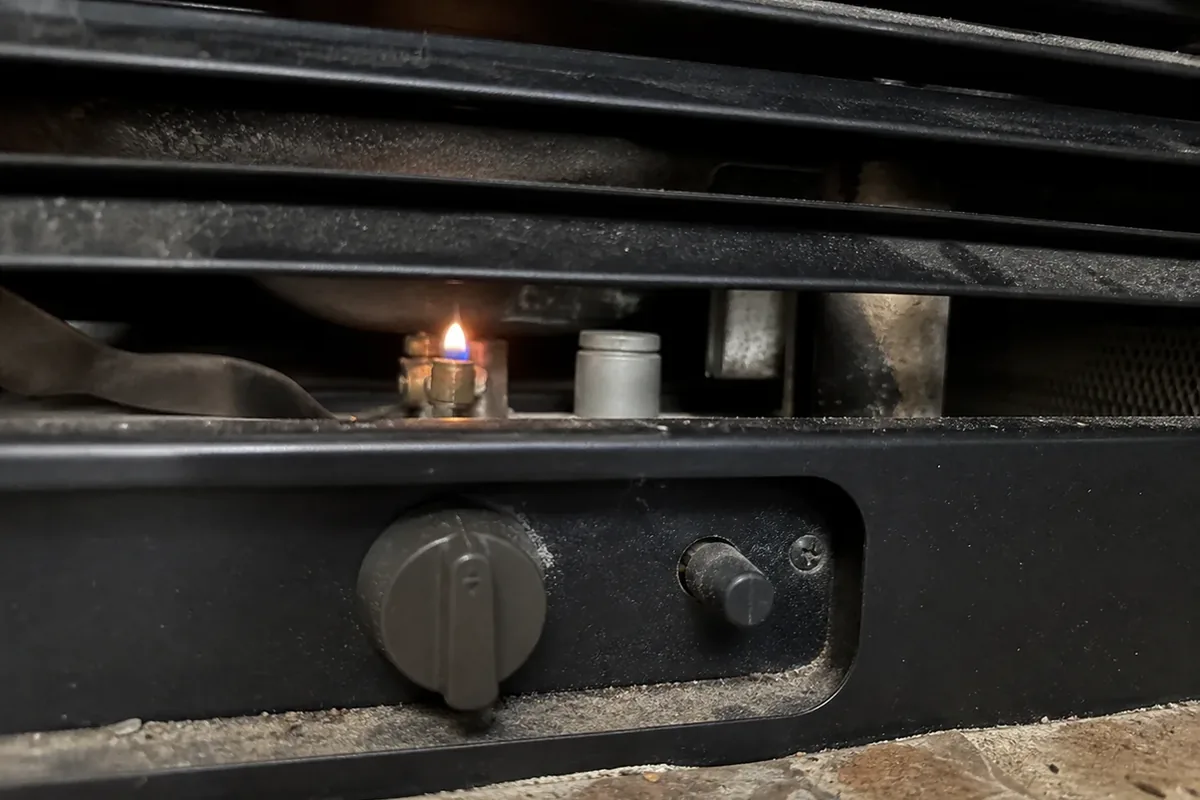
Where we find an unvented appliance, we document its location relative to the room’s function, bedroom, bathroom, or general living space, and note the room’s apparent size and ventilation.
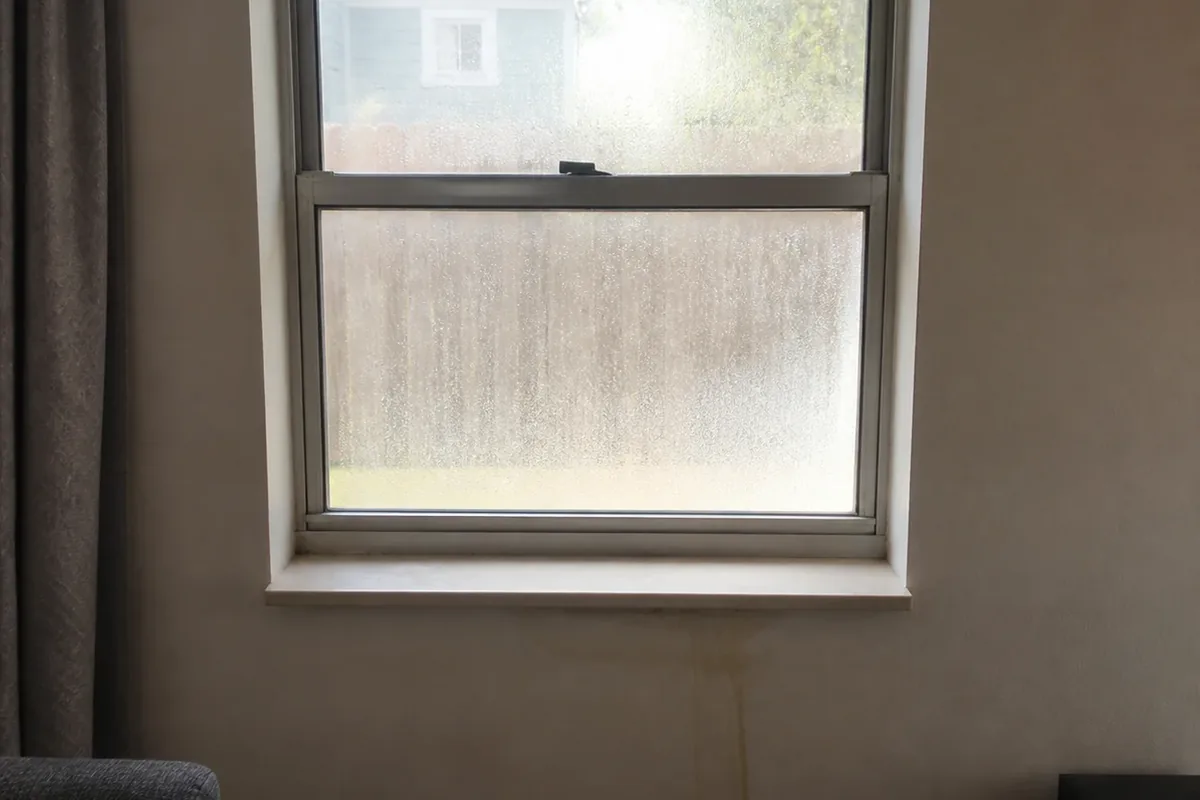
Where the location, room volume, or visible moisture evidence raises a question the inspection cannot resolve, we say so plainly and recommend an HVAC or gas technician for BTU sizing, code review, and ODS function testing.
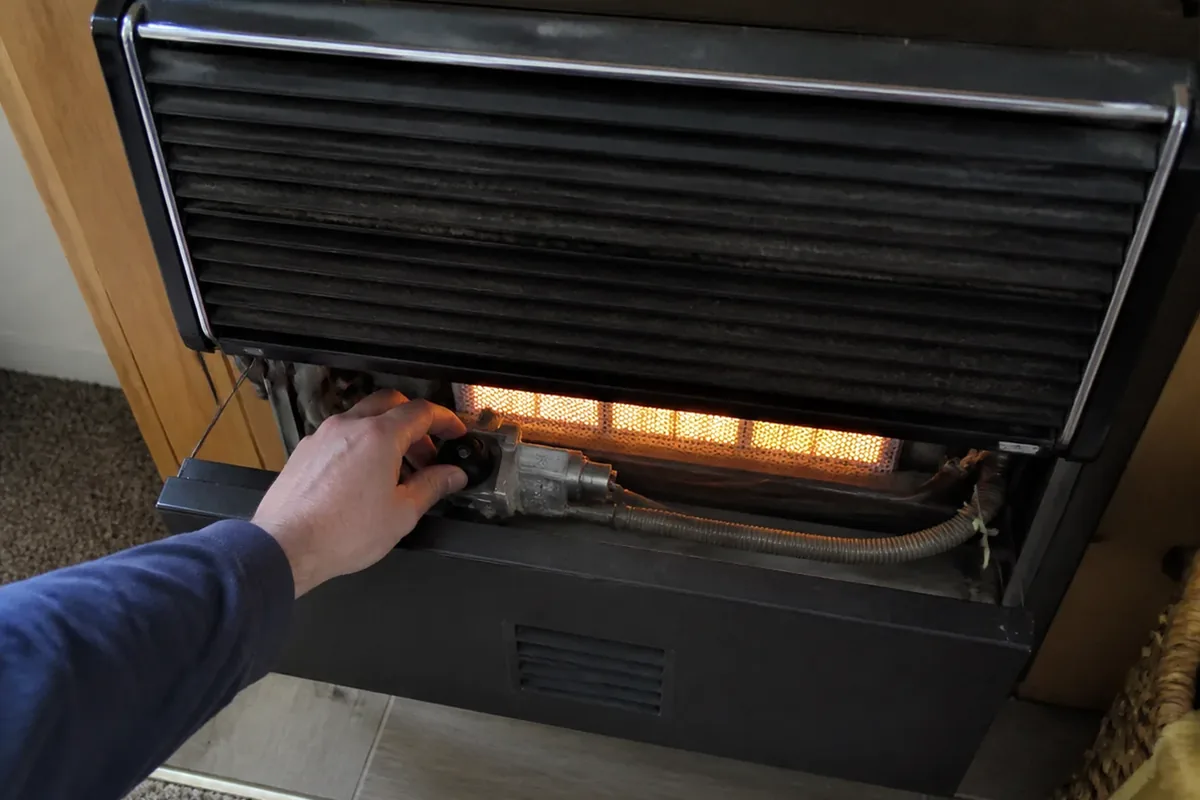
Our what’s included page covers the full mechanical-systems scope of every Chatsworth inspection, including infrared imaging that can help identify heat and moisture patterns not otherwise visible to the eye.
Quick FAQ
Is an unvented gas fireplace the same issue as a furnace that is backdrafting? No. A backdrafting furnace or water heater is a natural-draft appliance designed to vent outside that is failing to, usually due to house depressurization or a blocked flue. An unvented appliance was never designed to vent at all and relies solely on an oxygen-depletion sensor as its safety mechanism, a completely different category of risk.
Does Inspection.re test the oxygen-depletion sensor or calculate BTU-to-room-volume ratios? No. We document the appliance’s type, apparent location, apparent rating, and any visible moisture or soot evidence. Sensor function testing and BTU sizing calculations are performed by an HVAC or gas technician as a separate, specialized evaluation.
Is this the same topic as Norwalk’s backdrafting article, Hemet’s generator article, or Yorba Linda’s CSST bonding article? No. Norwalk’s article covers natural-draft appliances losing their draft due to house depressurization, a different mechanism entirely. Hemet’s article covers backup power and transfer switches, unrelated to combustion venting. Yorba Linda’s article covers gas line bonding against lightning-induced electrical arcing, an electrical safety topic, not a combustion-byproduct topic. This article is specifically about appliances with no vent design at all.
Are unvented heaters illegal in California? Restrictions vary by appliance type, location within the home, and local jurisdiction, and codes are updated over time. We do not assert a specific code section as settled fact. An agent or buyer with a specific concern should confirm current requirements with the local building department or a licensed HVAC contractor.
Should a buyer walk away over an unvented appliance in a converted room? Rarely on its own. Most situations resolve with relocation, removal, or a straightforward technician evaluation. The real question is where the appliance sits, how large the room is relative to its rating, and whether its safety sensor appears intact.
The honest summary
An unvented gas fireplace insert or heater is not automatically a defect, but it is a genuinely different category of appliance than the natural-draft equipment most buyers picture when they hear “gas fireplace,” and it deserves to be evaluated on its own terms. We document what we can see, the appliance’s location, its apparent sizing relative to the room, and any visible moisture or odor evidence, and we tell a Chatsworth buyer plainly when the installation calls for an HVAC or gas technician’s evaluation before move-in.
We walk every accessible room on every Chatsworth inspection looking for exactly this kind of supplemental appliance, and where the evidence calls for a specialist, we say so rather than guessing.
See what every inspection includes → · Read our FAQ → · Explore Chatsworth home inspections →
Related reading
- Backdrafting and Combustion Air in Norwalk. A natural-draft appliance failing to vent due to house depressurization, a different mechanism than this article’s appliances that were never designed to vent at all.
- Generator and Transfer Switch Safety in Hemet. Backup power equipment and electrical transfer switches, an unrelated appliance category referenced here only for contrast.
- Why Infrared Scanning Matters in California Homes. How thermal imaging can help surface heat and moisture patterns around supplemental appliances.
- Attic Insulation and Ventilation in Woodland Hills. A companion Northwest Valley guide on how a home’s thermal envelope shapes real-world heating and cooling load.