The Yellow Gas Line Nobody Bonded: A Yorba Linda CSST Guide for Agents
The house was a hillside estate in one of the Yorba Linda golf communities, immaculate, maybe fifteen years old, with the kind of outdoor setup the area is known for. A built-in barbecue island, a pool and spa with a gas heater, a fire pit on the terrace, and a standby generator on a pad beside the garage. Every one of those runs on gas, and when I traced the lines back, most of them were the flexible yellow tubing that has quietly replaced black iron pipe in homes like this one. It snaked up through the garage ceiling and out to each appliance, neat and modern.
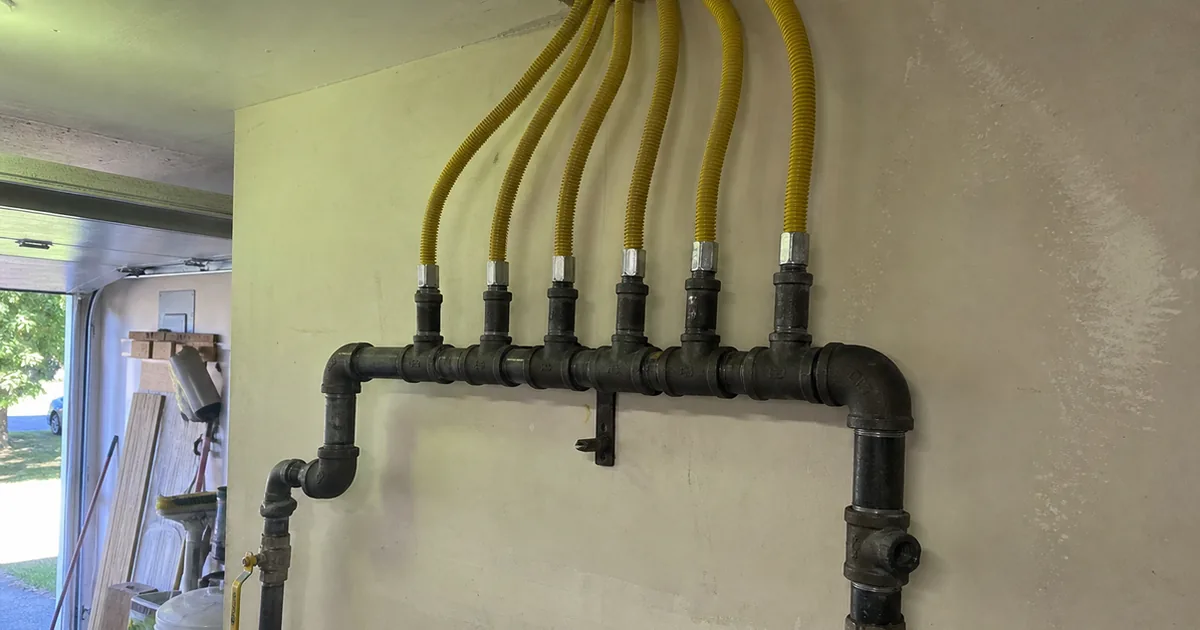
What none of it had was a bonding clamp. There was no heavy copper wire tying the gas piping to the home’s electrical grounding system, not at the meter, not at the manifold, not anywhere I could find. To a buyer standing in that garage, nothing looked wrong. The gas worked, the pool was warm, the generator started. But that flexible yellow line has a thin wall, and without a bond it is one nearby electrical surge away from being punctured, and a punctured gas line is a fire.
That is the trouble with this finding. A missing gas bond is one of the more serious safety items we write up on Yorba Linda’s newer and re-piped homes, and the same era of construction and re-piping runs through neighboring Anaheim and Fullerton too. It is completely invisible unless you know that the yellow tubing needs a wire on it and go looking for the wire.
Why this matters for the agent
Here is what is at stake, and like the other findings that actually matter, it is about safety rather than money. Flexible gas tubing that is not bonded can be perforated by an electrical arc, and a hole in a pressurized gas line inside a house is exactly the event nobody wants. The bond is a cheap piece of wire and a clamp. Its absence is a fire risk that sits in the walls and the attic doing nothing until the day it does everything.
Yorba Linda makes this an agent’s issue for a specific reason: the housing here is exactly the kind that has this tubing everywhere. The city spans the 1970s to today, with a lot of 1990s-through-2000s construction and no shortage of re-pipes and additions, which is precisely the era and the activity that put flexible tubing into homes. On top of that, this is an estate market full of added gas appliances, pool and spa heaters, outdoor kitchens, fire features, and standby generators, and those add-ons are frequently run in flexible tubing by whoever installed the appliance, with no thought to the bond. An agent who knows to look for the bonding clamp is protecting the buyer from a genuine fire hazard, and protecting themselves from putting their name on a home with an unsafe gas installation that looked perfect.
What CSST is, and what the bond does
The flexible yellow tubing has a name, corrugated stainless steel tubing, usually shortened to CSST. It showed up in American homes in the 1990s and became common because it is far easier to install than rigid black iron pipe. Instead of cutting and threading straight sections, an installer can run a continuous flexible line through the framing to each appliance, the way you would run a wire. It is a legitimate, widely approved product. The issue is not that it exists, it is that it has to be handled correctly, and one step gets skipped constantly.
The step is bonding. CSST has a thin stainless wall, much thinner than black iron pipe, and that thin wall can be perforated by an electrical arc. The classic scenario is a lightning strike on or near the house that energizes the home’s metal systems. If the gas piping is not bonded to the electrical grounding system, the surge can jump, arc, to the CSST and burn a pinhole through it, releasing gas at an ignition source. This is not theoretical. It was documented enough that the codes and the manufacturers added an explicit bonding requirement.
What the bond does is simple. It ties the gas piping system directly to the home’s electrical grounding electrode system with a heavy copper wire, so that if a surge hits, the energy has a safe path to ground instead of arcing through the tube wall. For standard yellow CSST the rule, in place since around 2009 in the model codes and in the manufacturers’ own instructions, is a dedicated bonding conductor, generally at least six-gauge copper, clamped to the gas pipe, usually on the rigid black-iron section near where the CSST system begins, and run to the electrical service ground. A newer generation of CSST with an arc-resistant black jacket has additional built-in protection, but even those products carry bonding requirements per their instructions. The home inspector’s job is to find the tubing, look for the bond, and flag it when the bond is not there.
What actually goes wrong in Yorba Linda
The failures repeat, and once you have seen them you cannot stop seeing them.
No bond at all is the headline. The CSST is there, running through the garage and attic to the appliances, and there is simply no dedicated bonding clamp and conductor anywhere on the gas system. This is the single most common version of the finding, and it shows up in original construction and in re-pipes alike.
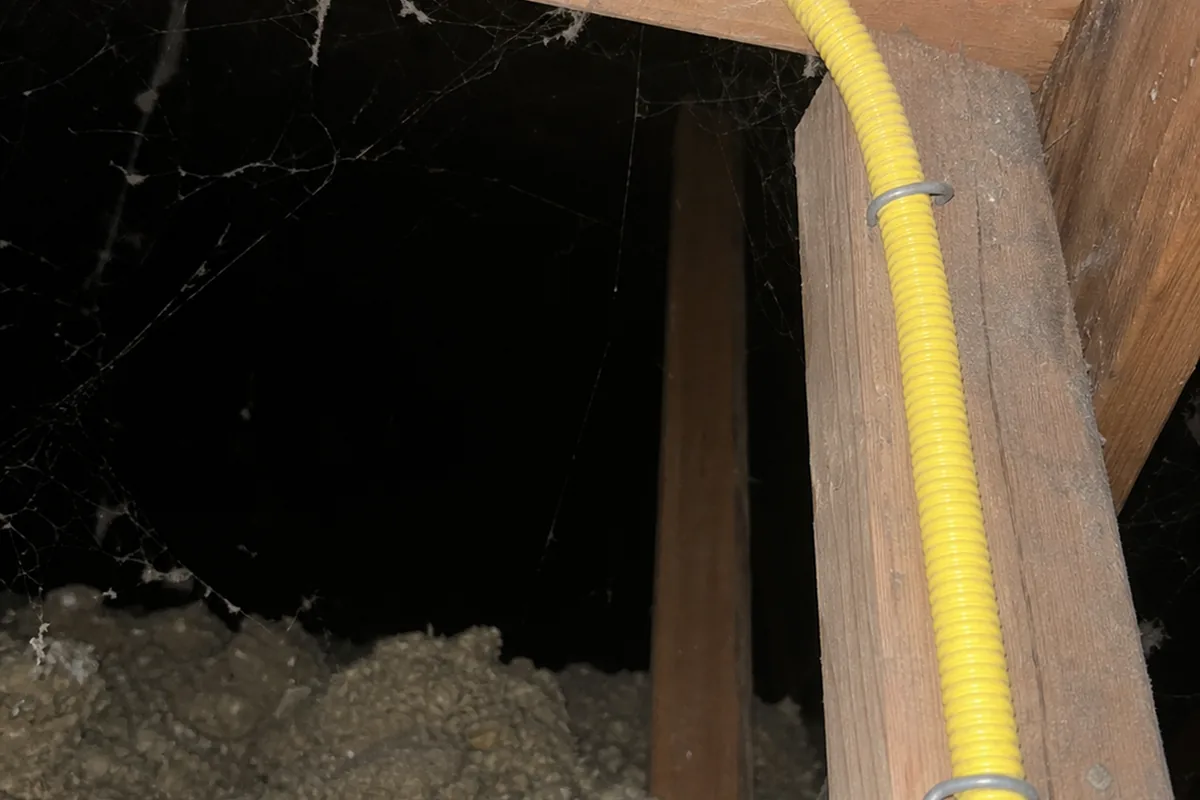
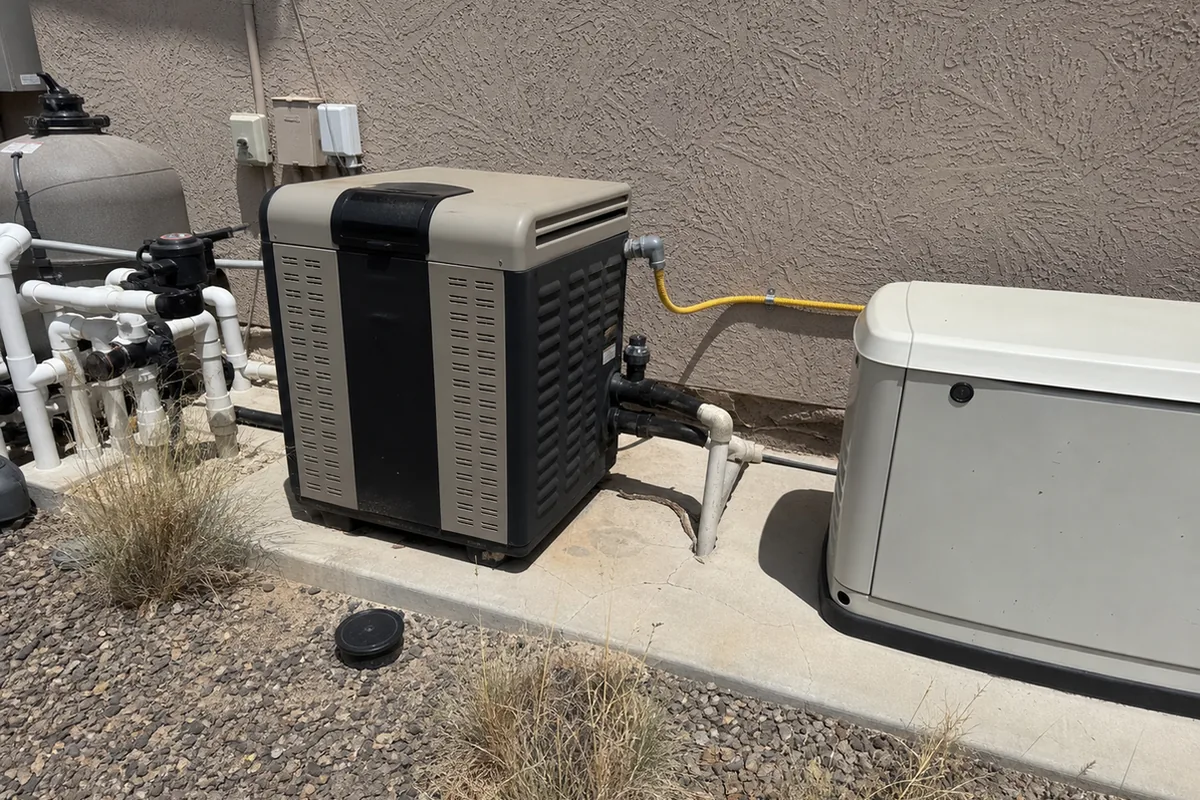
The added appliance is the second, and it is the one this market produces constantly. A pool or spa heater, an outdoor kitchen, a fire pit, or a standby generator gets installed years after the house is built, and the installer runs flexible tubing to it without touching the bond, or without confirming the existing system was ever bonded. Every gas add-on on an estate property is a place to check.
The improper or undersized bond is the third. Sometimes there is a wire, but it is too small, or it is clamped to the wrong place, or it is relying on a connection that was never meant to serve as the gas bond. A bond that is not done to the standard may not do its job when it matters.
CSST in the wrong place is the fourth. Flexible tubing run where it can be damaged, in contact with sharp metal edges or other systems, or used outdoors or underground in ways the product is not listed for. Physical damage to that thin wall is its own hazard, separate from the arc question.
The flexible appliance connector confusion is the fifth. The short corrugated connectors at a range, a dryer, or a water heater are a different product from a CSST distribution system, but they get abused too, run through the back of a cabinet or a wall where they are not allowed, over-extended, or left as brittle old brass connectors that crack. We note these where we see them, and we keep them distinct from the CSST bonding question.
One boundary worth stating. The safe installation of a gas water heater, its strapping, its venting, its shutoff and connector, is a related but separate subject, and it belongs with the water-heater discussion rather than here. This article is about the CSST distribution system and whether it is bonded. The mechanism here is electrical, an arc through an unbonded line, not a wildfire issue, even though the consequence is fire.
Schedule a Yorba Linda inspection →
What agents should tell every buyer
When a buyer is under contract in Yorba Linda, give them these points before the inspection.
- If you see flexible yellow gas tubing in the garage or attic, look for a heavy copper wire clamped to the gas pipe. That wire is the bond, and it is supposed to be there.
- Count the gas appliances, then think about the add-ons. Every pool heater, outdoor kitchen, fire feature, and generator is a place flexible tubing may have been run without a bond.
- A missing bond is a safety finding, not a cosmetic one. Treat it that way in the conversation.
- Newer does not mean bonded. Plenty of fifteen- and twenty-year-old homes here have CSST and no bond.
- The fix is cheap. A bonding clamp and a copper conductor installed by a qualified electrician or plumber is a small job.
- Do not let it get waved off. Because it is invisible and the gas works fine, this is the finding most likely to be dismissed, and it is one of the ones that matters most.
A buyer who hears this looks at the yellow tubing as a system that needs a wire, which is exactly what it is.
Red flags during showings
Some of this you can spot yourself, and the rest is what the inspection confirms. Watch for these in Yorba Linda homes.
- Flexible yellow tubing running through the garage ceiling, the attic, or along framing to gas appliances.
- No visible heavy copper bonding wire and clamp on the gas piping near the meter or the manifold.
- Several gas appliances added after the build, a pool or spa heater, a built-in barbecue, a fire pit, a generator, each fed by flexible tubing.
- A gas line that has clearly been extended or re-routed during a remodel.
- Flexible tubing in contact with sharp edges, other metal, or run outdoors where it is exposed.
- Short corrugated appliance connectors disappearing into a wall or the back of a cabinet.
If we see these, we document them and tell the buyer what they mean.
The negotiation playbook
When a CSST bonding finding surfaces in Yorba Linda, the deal usually moves one of a few ways.
The first path is seller-corrects-it, and it should be the default. Installing a proper bonding clamp and conductor is an inexpensive job for a licensed electrician or plumber, and there is almost never a good reason for a seller to refuse a small safety correction. This is the cleanest outcome and the one to push for.
The second path is a credit, used where the work is a little larger, for example where multiple added appliances need to be checked and tied in, or where the existing bond is improper and the gas system needs to be gone over properly. The number is still modest. Take the credit and get it done before move-in.
The third path is the whole-system review. On an estate with a pool heater, an outdoor kitchen, a fire pit, and a generator, the right move is sometimes to have a qualified trade verify the bonding and the condition of the entire gas distribution system rather than chase one clamp. The buyer should know the scope before the contingency period closes, and on a large property with many gas add-ons that is money well spent.
The fourth path is when the tubing itself is damaged or improperly installed, not just unbonded. If flexible tubing is chafing on metal, run where it should not be, or physically compromised, that is a repair, not just a bond, and it needs a licensed installer promptly. We will say so plainly, because a compromised gas line is not a finding to defer.
How the inspection actually catches it
This is a finding that rewards knowing what to look for, which is most of the job. We identify CSST when it is present, in the garage, the attic, and at the appliances, and we look for the dedicated bonding conductor and clamp on the gas system.
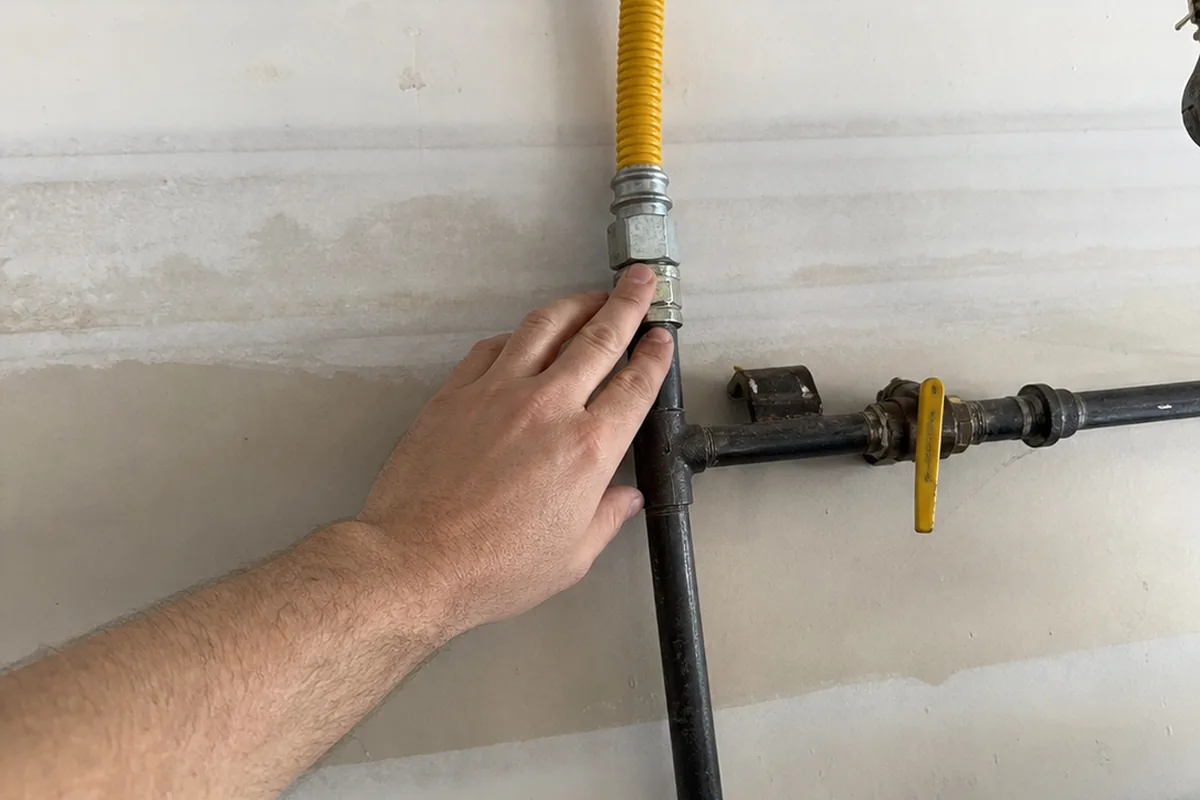
We check the obvious places a bond belongs, near the meter and where the rigid pipe transitions to the flexible system, and we note when it is absent, undersized, or clamped somewhere that will not serve. We follow the gas to the added appliances, because the pool heater and the generator are where an unbonded run hides.
We read the tubing for physical problems too, contact with sharp edges, exposure, and improper routing, and we keep the CSST distribution question separate from the short appliance connectors and from the water-heater installation, which is its own subject. Because this is a safety item that is easy to dismiss precisely because the gas works, we write it up in plain language and near the top of the report, which is what our guide on how to read a home inspection report is about. The reason a newer home still earns a real inspection is exactly this kind of hidden finding, which is why we cover it in our new-construction inspection guide as well.
What we do not do is bond the line ourselves or certify the gas system. A home inspector identifies the tubing, reports whether the bond is present and looks right, and tells the buyer to bring in a licensed electrician or plumber to correct it. When the bond is missing, we say so directly, because this is one finding where being clear matters more than being tactful.
Quick FAQ
What is CSST and how do I recognize it? CSST is corrugated stainless steel tubing, the flexible gas line that largely replaced rigid black iron pipe starting in the 1990s. It is most often a yellow jacketed tube, though a newer arc-resistant version has a black jacket, and you will see it running through garages and attics to gas appliances.
Why does CSST need to be bonded? Because its thin wall can be perforated by an electrical arc, most notably from a lightning strike on or near the house. Bonding ties the gas piping to the electrical grounding system so a surge has a safe path to ground instead of arcing through the tube and causing a gas leak and fire. The requirement has been in the codes and the manufacturers’ instructions since around 2009.
The gas works fine. Is a missing bond really a problem? Yes, and that is exactly why it gets dismissed. The bond does nothing during normal operation, so its absence is invisible until an electrical surge finds the unbonded line. It is a low-cost fix for a real fire risk, which is a trade worth making every time.
Is this expensive to correct? Usually not. A proper bonding clamp and a copper conductor installed by a qualified electrician or plumber is a small job. The larger version is verifying the bonding and condition of an entire gas system on an estate with many added appliances, which is still modest and worth doing.
Is this the same as the water-heater gas connection? No. The safe installation of a water heater, its strapping, venting, shutoff, and connector, is a separate subject that belongs with the water-heater discussion. This article is about the CSST distribution system and whether it is properly bonded.
The honest summary
Yorba Linda builds the kind of homes that run on gas in a dozen places, the pool heater, the outdoor kitchen, the fire pit, the generator, and a lot of that gas travels through flexible yellow tubing that looks modern and tidy and is completely legitimate, as long as it is bonded. The bond is a wire and a clamp. When it is missing, and it very often is, the tubing that looks perfect is one electrical surge away from a hole in a gas line.
This belongs to the same family of quiet safety findings as a deck guard that looks fine and is not, invisible until the day it matters; our Chino Hills guardrail and stair safety guide covers the other one. This is the finding that is not about money. It is a cheap piece of copper standing between a house full of gas appliances and a fire nobody saw coming. We will find the tubing, look for the bond, follow the gas to every added appliance, and tell your buyer in plain words whether the system is bonded the way it is supposed to be. The correction is cheap. The protection is not something to negotiate away. That is the job.
See what every inspection includes → · Read our FAQ → · Explore Yorba Linda home inspections →
Related reading
- The Cheapest Thing That Stops a Closing: An Ontario Smoke and CO Alarm Guide: another cheap, easy-to-miss safety item tied directly to the sale itself.
- Who Owns That Wall: A Mission Viejo Tract Slope and Retaining Wall Guide: a structural finding on an estate lot with its own ownership question attached.
- Chino Hills Guardrail and Stair Safety Guide: the other quiet safety finding that looks fine until it is tested.
- How to Read a Home Inspection Report in California: what the findings mean and how to prioritize them.
- Backdrafting and Combustion Air in Norwalk: a different fuel-gas safety topic, combustion air and venting rather than bonding, on the same category of appliance.
- Generator and Transfer Switch Safety in Hemet: a separate electrical topic, backup power and the isolation hardware that keeps a generator from backfeeding the grid, rather than gas-line bonding.
- Generator and Transfer Switch Safety in Hemet: a separate backup-power topic on the same estate-market gas appliance list, electrical isolation hardware rather than gas-line bonding.