Two clients, same week. One is in escrow on a 1980s slab-on-grade tract house in a Thousand Oaks neighborhood. The other is on a 1990s house in inland San Diego County. Both ask the inspector the same question at the end of the walk-through: “Did you check for radon?”
The honest answer to both is no. A home inspection cannot see radon. The decision about whether to add a test should not be the same for both houses.
Radon is a radioactive gas from uranium in soil and rock. It enters through the foundation. You cannot see it or smell it.
The EPA action level is 4 pCi/L
EPA says to fix a home at 4 picocuries per liter, or pCi/L, which equals 150 Bq/m3, or more. EPA also says to consider fixing a home with a result between 2 and 4 pCi/L.
The average indoor radon level in the United States is about 1.3 pCi/L. Average outdoor air is about 0.4 pCi/L. Those averages are useful for scale, not for deciding whether a particular house is safe.
EPA estimates that radon causes about 21,000 lung cancer deaths each year in the United States, based on its 2003 risk assessment. EPA calls radon the number one cause of lung cancer among non-smokers.
Nationally, EPA estimates that nearly one in 15 homes has radon at or above 4 pCi/L.
That number does not predict the result at a particular address. Radon levels vary from house to house. Two homes next door to each other can test differently because of foundation openings, soil conditions, ventilation, pressure differences and how the lowest level is used.
A standard inspection does not measure airborne radon
A standard home inspection does not measure radon because radon requires a separate measurement over time with a device.
The InterNACHI Standards of Practice do not require the inspector to determine the presence of airborne hazards, including radon. A visual inspection can identify cracks, openings, crawlspace conditions and foundation types. It cannot identify a gas that has no visible or detectable odor.
This is one reason it helps to separate what a home inspection covers from what needs a specialist. Radon is a separate test performed by a separate radon professional. Inspection.re does not perform radon testing.
The California Transfer Disclosure Statement asks the seller whether they are aware of environmental hazards and names radon gas among them. That question concerns what the seller knows. It is not a test result.
The California Department of Real Estate disclosure booklet also notes that when the purchaser receives the state environmental hazards booklet, the seller and agents are not required to explain those hazards further unless they have actual knowledge. The booklet cites Civil Code Section 2079.7. A seller who never tested for radon may have nothing to disclose about a measured level.
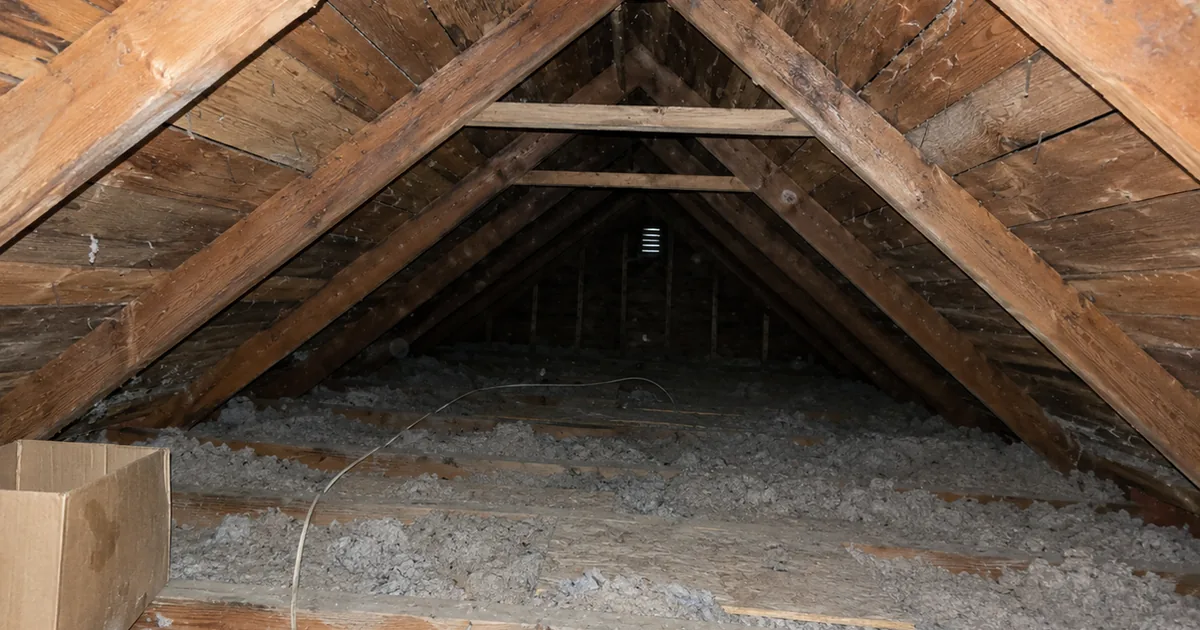
The inspection still gives you useful information for a radon professional. The report identifies whether the house has a slab, crawlspace or basement. That foundation type changes where a test is placed and how mitigation would work.
Every Inspection.re report is delivered the same day, typically within 6 to 8 hours. It includes a Matterport 3D tour with tagged findings and a LIDAR floor plan. A radon tester or mitigation contractor can review the lowest living level and foundation type before arriving. Inspection.re inspectors are InterNACHI-certified.
The report can also record crawlspace access, vapor barrier conditions and moisture observations. Those details help a mitigator scope work later. They do not replace the radon test.
Only Santa Barbara and Ventura are EPA Zone 1
EPA’s radon zone map places only Santa Barbara and Ventura counties in Zone 1 in California.
The map was built in 1993. Zone 1 means a predicted average screening level above 4 pCi/L. Zone 2 means 2 to 4 pCi/L. Zone 3 means below 2 pCi/L.
Most other California counties are Zone 2 or Zone 3 on that map.
EPA says the map should not be used to decide whether an individual house needs testing. EPA recommends testing all homes regardless of zone. The map is still the best first sort for where a test is more likely to come back high.
That distinction matters. A Zone 3 label is not a reason to skip testing when the result can affect a contract decision. A Zone 1 label is not proof that a particular house has elevated radon.
A purchaser looking at a house in Thousand Oaks has a different first question from a purchaser looking at a house in San Diego, even though the test itself remains the only way to answer the question for either property.
Monterey Formation and granite help explain the map
California geology helps explain why some areas deserve earlier attention, but geology cannot provide the indoor reading.
The California Geological Survey, in a report prepared for the state health department, identifies rocks with above-average uranium. They include the Monterey Formation, asphaltic rocks, marine phosphatic rocks, granitic rocks, felsic volcanic rocks and certain metamorphic rocks.
The Monterey Formation runs along the coast from around Drakes Bay south to the Oceanside area. Its exposures include Newport Bay, the Palos Verdes Hills, the Santa Monica Mountains, and areas near Santa Barbara, Lompoc and Santa Maria.
Its average uranium concentration is 11.1 parts per million. Sierra Nevada and Peninsular Ranges granite averages 2 to 4 parts per million.
That is a geological difference, not a house-specific result. Uranium in rock and soil can contribute to radon potential. Whether radon enters a particular house depends on the site and the structure.
The California Geological Survey states that its radon maps cannot be used to determine the indoor radon level of a particular home. Geology raises the odds. Only a test answers the question.
For a house in Malibu or elsewhere along the Santa Monica Mountains, one of the Monterey Formation exposures CGS names, that is a reason to discuss testing early. It is not a result.
Ventura County has measured high zones near Thousand Oaks
Ventura County has enough measured data to make radon testing a reasonable early discussion in several communities.
California Geological Survey Special Report 194, published in 2006, rates zones by the share of buildings expected to have radon at or above 4 pCi/L. The High zone is 30 percent. The Moderate zone is 20.3 percent. The Low zone is 3.7 percent.
The High and Moderate zones cover 12.9 percent of the county’s area. They contain 47.2 percent of the sites measured at or above 4 pCi/L.
About 35,845 residents, roughly 4.8 percent of the county, are estimated to live in homes at or above 4 pCi/L.
Measured readings ranged from below 0.2 to 28.6 pCi/L.
The 2006 update expanded the higher zones near Thousand Oaks, Oak Park and the southeast corner of the county.
In Simi Valley, Camarillo, and Thousand Oaks, a radon test is a reasonable add-on to discuss before the investigation contingency clock runs. It is not an exotic request. It is a separate test with a defined timeline.
Sierra foothills readings reached 40.4 pCi/L
The Sierra foothills study produced the other major measured hot spot described by the California Geological Survey.
In CGS Special Report 242, the state health department placed two-day charcoal detectors in 412 homes in Amador, Calaveras and Tuolumne counties. The study also included 66 voluntary tests, for 478 homes in all.
Readings ran from below 0.5 to 40.4 pCi/L. The highest reading was in a basement.
CGS uses this zone scale:
| CGS zone | Share of homes at or above 4 pCi/L |
|---|---|
| High | 20 percent or more |
| Moderate | 5 to 19.9 percent |
| Low | Under 5 percent |
In that study area, the High zone covered 22.0 percent of the land. The Moderate zone covered 52.3 percent.
CGS recommends testing basements regardless of zone. A basement is the lowest regularly usable level in many houses, and its contact with soil makes placement particularly relevant.
CGS has also mapped radon potential for other areas, including southern Los Angeles County, Palos Verdes, Orange County, San Luis Obispo, Monterey, San Mateo, Santa Cruz, western Santa Clara, western Placer, western El Dorado, western Nevada County, western Tulare and the Lake Tahoe area.
Those mapped areas are not all the same. The practical point is narrower. If a house has a basement, or a lived-in lowest level dug into a hillside, put testing on the first-day discussion list even when the county map is not Zone 1.
A 48-hour test can fit inside a 17-day contingency
A 48-hour test can fit inside California’s default 17-day property investigation contingency if you order it early and set the house conditions before the device arrives.
California’s standard purchase agreement form prints a default period of 17 days after acceptance for the investigation of the property. The actual contract period controls. The schedule below is a planning example, not a rule. Review the California inspection contingency timeline and the signed agreement.
EPA’s guide gives three short-term real-estate testing options. You can use two tests at the same time and place. You can use two back-to-back tests with identical devices in the same spot. Or you can use a continuous radon monitor. Each short-term option runs for at least 48 hours.
EPA says to fix the home if the average is 4 pCi/L or more.
| Contingency day | Step |
|---|---|
| Days 1 to 3 | Order the test with the home inspection. Schedule closed-house conditions with the seller, including 12 hours before the test and the full test period. |
| Days 3 to 6 | Run the test for at least 48 hours on the lowest regularly usable level. |
| Days 6 to 8 | Receive the results. At or above 4 pCi/L, request a mitigation estimate. |
| Days 8 to 14 | Negotiate a repair, credit or post-mitigation retest provision. |
| Before day 17 | Remove or act on the contingency with the result in hand. |
For a test lasting 2 to 4 days, the house should be closed for at least 12 hours before the test begins and during the whole test. Windows stay shut. Doors stay shut except for normal entry. Fans that bring in outside air stay off.
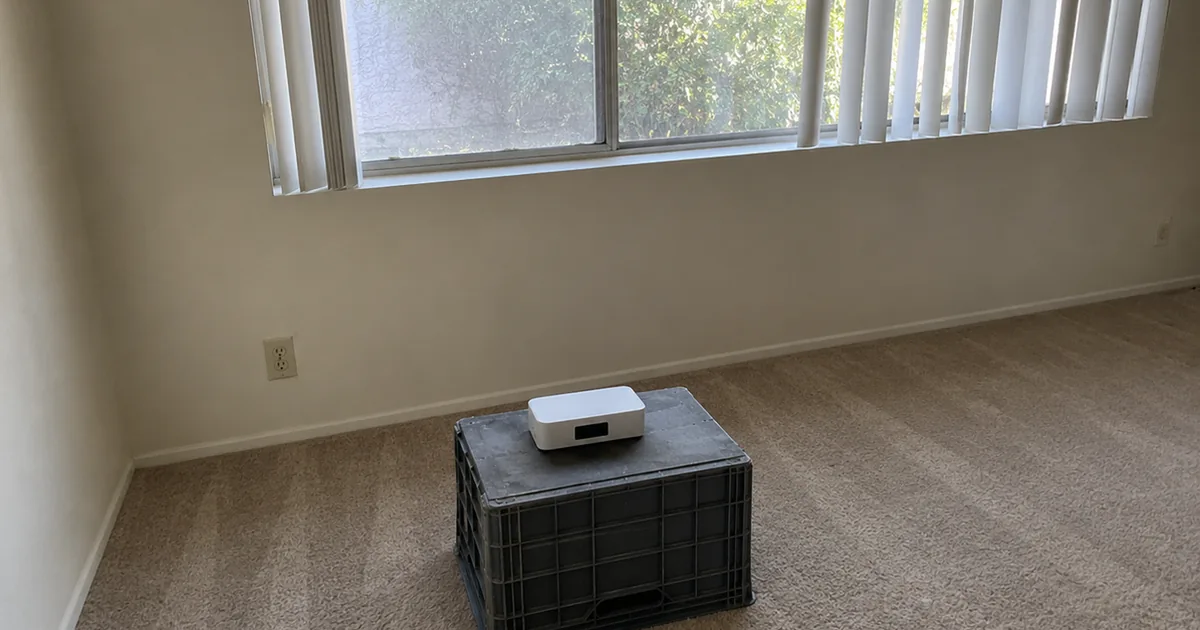
The device belongs on the lowest level that could be used regularly, whether finished or unfinished. It should not be in a closet, stairway, hallway, crawlspace, kitchen, bathroom, laundry room or furnace room. Place it at least 20 inches above the floor, away from drafts, high heat, high humidity and exterior walls.
Continuous monitors record readings throughout the test. EPA’s guide lists interference controls that can include frequent readings, motion detectors, barometric pressure and temperature logs, tamper-proof window seals and a signed non-interference agreement.
The contract should identify who performs the test, where the device will be placed, what kind of test will be used, when it will occur, who receives the results, who pays for the test and who pays for mitigation.
A result just over 4 is not a verdict about the contract. EPA’s guide notes that if two short-term tests average 4.1 pCi/L, there is about a 50 percent chance that the year-round average is below 4 and a 50 percent chance that it is above. The result is a reason to negotiate and investigate further.
Do not wait until day ten to order the test. The test may need 48 hours, the result may need review, and the parties may need time to price and document mitigation.
Mitigation differs between slabs and crawlspaces
Radon mitigation is contractor work, and the system depends on the foundation.
EPA’s Consumer’s Guide to Radon Reduction identifies sub-slab depressurization as the most common and usually the most reliable method for houses built on slabs or other solid foundations. Often, one suction point is enough. Some systems reduce radon levels by up to 99 percent.
For a raised foundation with a crawlspace, EPA says submembrane suction is the most effective reduction method. The contractor places a plastic sheet over the crawlspace soil, seals it as appropriate, and connects it to a pipe and fan.
Depressurizing an open crawlspace generally works less well and uses more energy.
EPA does not recommend sealing cracks alone as a radon fix. Sealing may be part of the work, but it is not the whole system.
The exhaust pipe vents above the roof, at least 10 feet above the ground, and at least 10 feet from openings or 2 feet above them.
A mitigation system needs a retest within 30 days of installation, but not sooner than 24 hours after the fan starts. The retest should run 2 to 7 days under closed-house conditions, ideally with an independent tester. EPA recommends retesting at least every two years.
EPA’s current guides give no dollar figure. They state that the cost is about the same as other common home repairs. Do not put a made-up allowance into the contract.
The mitigation contractor’s license question is separate from the inspection. Before hiring, check the contractor’s license class and status the same way you would for any other referral in the report.
The inspection report still helps. Foundation observations, crawlspace access, vapor barrier conditions and moisture findings give the mitigator information for submembrane work. The report is not a mitigation design.
If the crawlspace has moisture or vapor barrier concerns, review the details in this crawlspace moisture and vapor barrier guide. Radon mitigation and moisture correction may involve different work, even when both contractors need access to the same space.
Put the test on day one when the house or county raises the odds
In Ventura or Santa Barbara County, put a radon test on the list with the home inspection on day one. Do the same for a house with a basement or a lived-in lowest level dug into a hillside.
Elsewhere, decide on day one, not day ten. EPA says to test regardless of zone, and a 48-hour test is the shortest test period to schedule inside the investigation contingency.
Ask the radon professional which of the three EPA real-estate options they use. Get the closed-house conditions in writing with the seller. Confirm where the device will be placed and who will receive the result.
Do not ask the standard inspector to provide a radon number. Order the separate test.
Sellers can test before listing. A result turns an unknown into a number you can disclose. The timing and tradeoffs are covered in this pre-listing inspection guide.
For another example of why air testing has its own method, compare radon with mold air testing versus surface testing. Different hazards require different devices, locations and time periods.
After the inspection arrives, use how to read a California home inspection report to find the foundation, crawlspace and lowest-level observations. You can review what every Inspection.re inspection includes, read the inspection FAQ, and see a sample inspection report.
If the property is in Thousand Oaks, schedule the inspection early enough to leave room for the separate 48-hour radon test before the 17-day period expires.