What a French Drain Actually Does: A Lemon Grove Hillside Guide for Agents
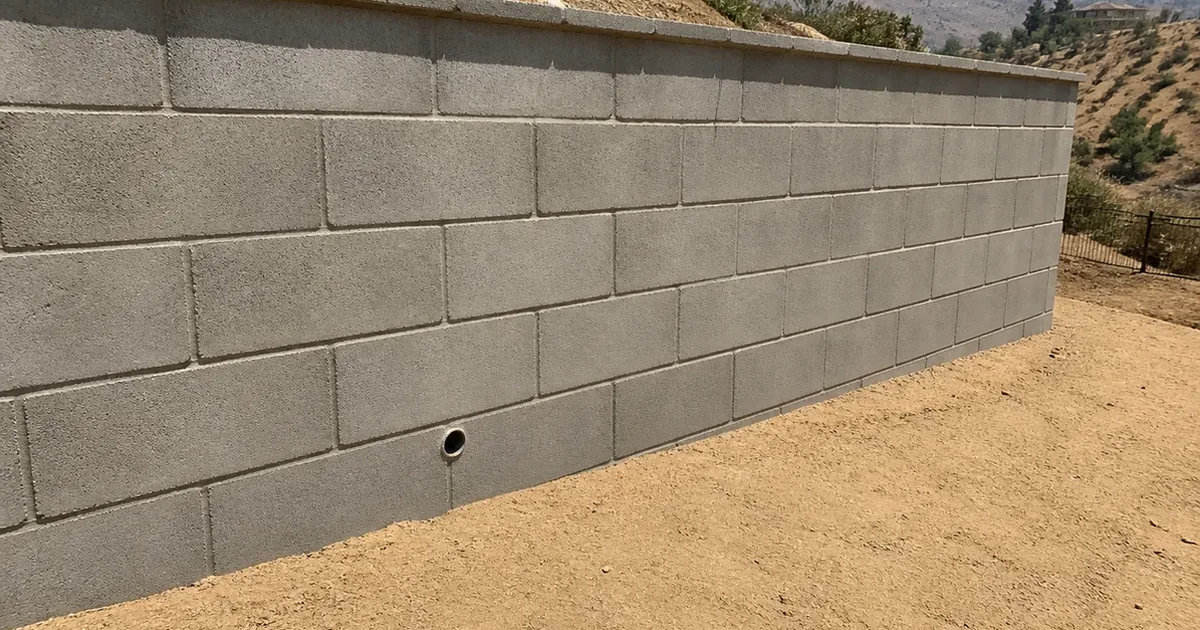
The retaining wall behind the house looked solid from the patio, clean block, no visible cracking, nothing a buyer would flag on a walkthrough. At the base of the slope above it, though, the soil stayed dark and soft three days after the last rain, and a weep hole set into the wall’s lower course showed no staining, no mineral trail, nothing to suggest water had ever moved through it. Somewhere behind that wall, water was finding a way down the hillside, and it was not finding the drain that was supposed to be waiting for it.
We are describing this as a composite of a pattern we see across Lemon Grove’s hillside lots, not one identified property or job. Lemon Grove sits in San Diego County’s East County hill country, and a meaningful share of its homes are built on graded slopes with retaining walls, cut-and-fill pads, and hillside seepage that a subsurface drainage system, most commonly a French drain, is supposed to manage before it ever reaches the house.
This guide is for the agent working Lemon Grove and the surrounding communities we also serve, including San Diego, National City, and Chula Vista, where hillside grading and retaining walls are common enough that this is worth understanding before a showing, not after an inspection report raises it. Here is what a French drain actually is, where it typically shows up on a Lemon Grove lot, the real failure signs an inspector can document, and the limits of what a visual inspection can confirm about a system that is, by definition, buried.
Why this matters for the agent
Lemon Grove’s housing stock sits across rolling hill terrain east of San Diego, and a large share of its lots were graded decades ago to create buildable pads on slopes that were never flat to begin with. That grading created cut slopes, fill slopes, and retaining walls, and it created a real, ongoing water-management problem: groundwater and hillside seepage move through soil on a slope the same way they always have, and a house sitting on a graded pad now sits in the path of that water unless something intercepts it first.
A French drain is the most common answer to that problem. It is not decorative, and it is not the same thing as shaping the yard so rainwater runs away from the house. It is a below-grade system built specifically to intercept water moving through the soil itself, before it ever reaches a foundation, a retaining wall, or a below-grade patio. When it works, a buyer never knows it exists. When it fails or was never installed where the site actually needed it, the water finds its own path, and that path is usually toward the house.
What a French drain actually is and how it works
A French drain is a perforated pipe buried in a gravel-filled trench, wrapped in a filter fabric that lets water in while keeping fine soil and silt out. The trench is dug with a slight, deliberate slope, and the whole system is gravity-fed: water enters through the perforations along the pipe’s length, travels downhill inside the pipe, and exits at a daylight discharge point, an outlet at a lower point on the property, or ties into a storm drain system. Nothing about it is pressurized and nothing about it pumps. If the slope is wrong, or the outlet is blocked, the system simply stops working, quietly, with no alarm and no visible sign at the point of failure itself.
That is the core difference between a French drain and surface grading. Surface grading shapes the top layer of the ground so rainwater that lands on it runs away from the house rather than pooling against it. A French drain does something different: it manages water that is already moving through the soil, underground, whether or not it is raining that day. On a hillside lot, both problems can exist at once, and both need to be checked, but they are not the same system and a fix for one does not address the other.
Where a French drain is typically used on a Lemon Grove hillside lot
On the graded hillside lots common through Lemon Grove, a French drain typically shows up in a handful of specific locations. Behind a retaining wall, a drain relieves the hydrostatic pressure that builds up as water saturates the soil the wall is holding back, tying into the weep holes built into the wall’s lower courses so that pressure has somewhere to go instead of pushing against the wall face. Along the uphill side of a house that was cut into a slope, a drain intercepts water moving downhill through the soil before it can reach the foundation, running parallel to the house at a point above and behind it. Around a below-grade patio or a window well, a drain keeps water that collects in that low pocket from building up against the wall or the window itself.
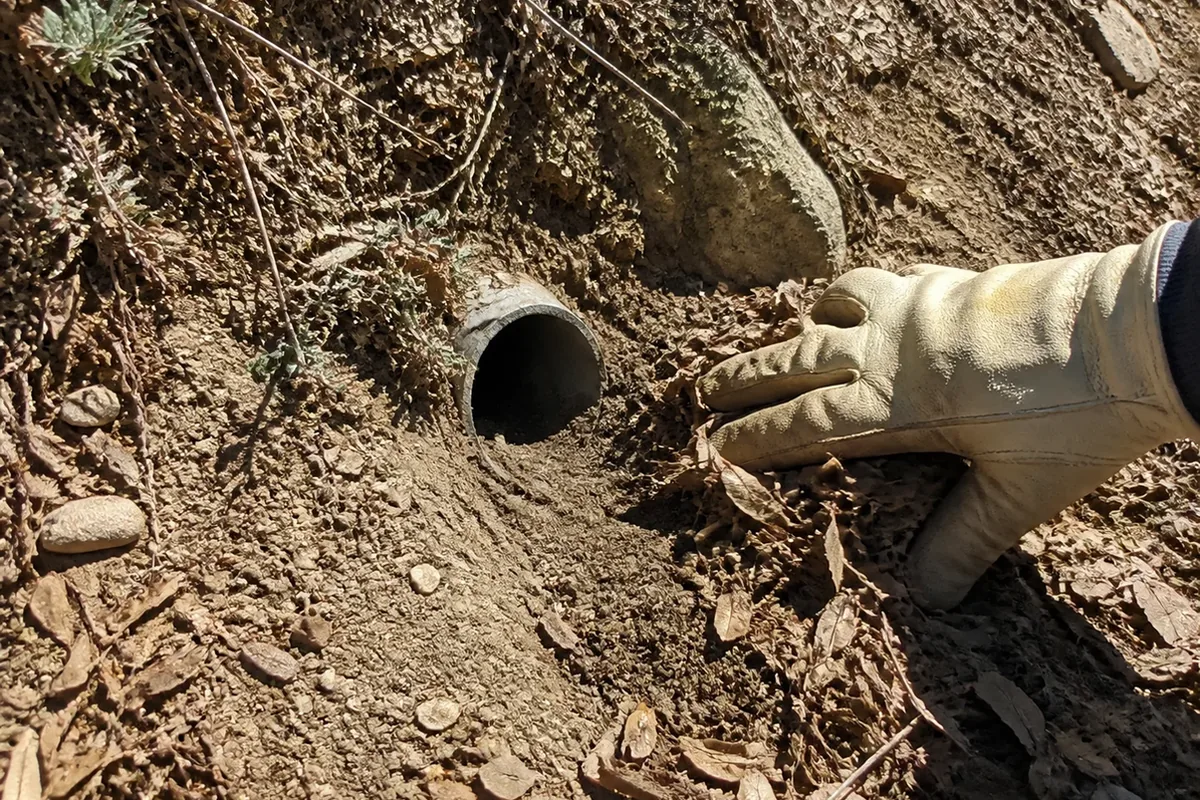
Each of these is a specific, checkable installation with a specific job, and each has its own daylight discharge point somewhere downhill where the water is supposed to reappear, visibly, on the surface.
The real failure signs an inspector can actually document
Because the pipe itself is buried, an inspector cannot look directly at a French drain and confirm it is intact. What we can document is the secondary evidence, the outcomes a working or failing system leaves behind on the surface, and that evidence is genuinely useful.
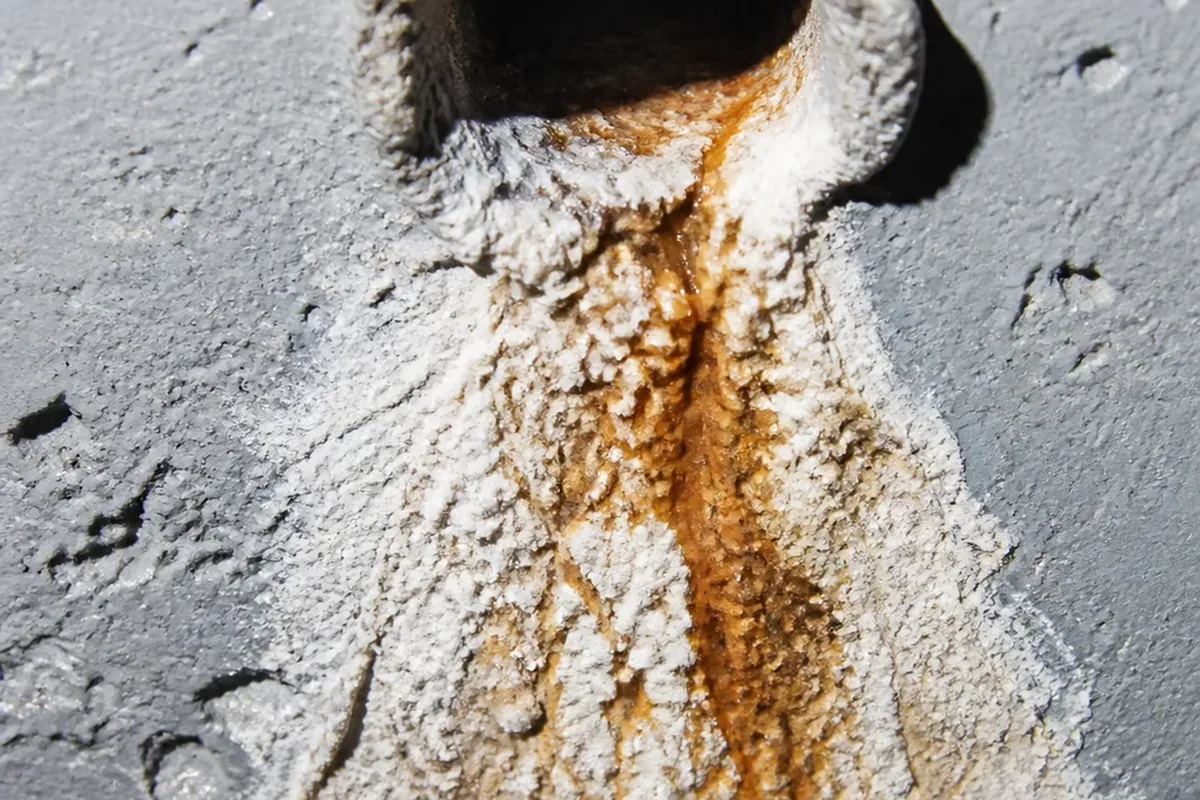
A retaining wall weep hole with no visible drainage evidence, no staining trail, no mineral deposit, no worn or darkened patch beneath it, is one of the more reliable signs that little or no water has ever moved through that wall’s drainage system, which can mean either that the system is working so well there has been nothing to relieve, or, more often on an older hillside lot, that the drain behind the wall was never properly connected or has since failed. Standing water or persistent wet, soft soil at the base of a slope well after a dry stretch is a strong sign that water is emerging somewhere it should not be, rather than reaching a discharge point as designed. A daylight discharge point that is buried under years of accumulated soil, crushed by foot traffic or vehicle weight, or simply missing where the site plan or grading would suggest one should exist, tells us the system has no working exit even if the buried pipe itself is intact. Efflorescence, the white mineral deposit left behind as water evaporates, or ongoing staining at a retaining wall that should be relieved by a functioning drain is a visible sign that water is finding its own path through or around the wall rather than through the drainage system built to handle it.
None of these signs, on their own, tell us exactly what is happening in the buried trench. Taken together, on a hillside lot with a retaining wall and a documented history of any of these conditions, they tell a buyer whether the site’s drainage story is one of quiet, working infrastructure or one worth pricing into an offer.
The limits of a visual inspection matter here too. We say this plainly because it matters to how a buyer should read a report: the pipe itself is buried and cannot be directly verified without excavation or a camera scope run through an accessible cleanout, and most residential French drains do not have one. A home inspection documents secondary evidence and outcomes, standing water, staining, a buried or missing discharge point, weep hole condition, not the physical condition of the pipe, the gravel bed, or the filter fabric underground. Where the visible evidence suggests a real problem, a licensed drainage contractor or civil engineer with a camera scope is the next step, not a guess about what is happening below grade.
This is also why documenting the absence of a problem matters just as much as documenting a defect. A retaining wall with a clean, dry weep hole and no staining after real rain is a genuinely good sign, even though it does not prove the drain behind it is perfect.
What agents should tell every buyer
- A French drain is a below-grade, gravity-fed system that intercepts water moving through the soil, fundamentally different from surface grading, which only manages water on top of the ground.
- On a Lemon Grove hillside lot, a French drain typically sits behind a retaining wall, along the uphill side of a home cut into a slope, or around a below-grade patio or window well.
- Because the pipe is buried, an inspection documents outcomes, staining, standing water, discharge point condition, not the pipe itself.
- A dry, unstained weep hole after real rain is a reasonably good sign. A wet, staining, or actively weeping weep hole is worth a drainage contractor’s evaluation before removing contingencies.
- This is not the same topic as the retaining wall itself. A French drain is the water-management system that protects a wall; whether the wall’s structure is sound is a separate question.
- A buried, crushed, or missing daylight discharge point means the system has nowhere for water to go even if the underground portion is otherwise intact.
Red flags during showings
- A retaining wall weep hole with no visible drainage history, no staining, no mineral trail, on a hillside lot where one would be expected.
- Standing water or persistently soft, dark soil at the base of a slope well after the last rain.
- A daylight discharge point that is buried, paved over, crushed, or simply cannot be located where the grading suggests one should exist.
- Efflorescence or ongoing water staining on a retaining wall, especially spreading or worsening staining rather than an old, dry mark.
- A below-grade patio or window well that holds water rather than draining it away within a reasonable time after rain.
- Any recent regrading, hardscape addition, or landscaping change that could have buried or blocked an existing drain outlet without the current owner realizing it.
The negotiation playbook
When a drainage finding surfaces in a Lemon Grove hillside escrow, the deal usually moves down one of a few paths.
The first path is no action at all, appropriate when weep holes are dry and unstained, slopes drain normally after rain, and there is no visible sign of hillside seepage reaching the house or its retaining walls.
The second path is a licensed drainage contractor’s evaluation before close, warranted whenever standing water, active weeping at a wall, or a missing discharge point shows up, so the buyer knows whether the fix is a simple cleared outlet or a more involved new drain installation.
The third path is a credit or repair negotiation once a contractor has scoped the actual problem and priced it, since a French drain repair or new installation on a hillside lot ranges widely depending on access, length of run, and whether excavation near a retaining wall is involved.
The fourth path is informed acceptance, appropriate when a finding is real but limited, such as a single blocked outlet with an otherwise dry site, and the buyer is comfortable addressing it on their own timeline.
How the inspection actually catches it
We identify the site’s grading pattern, retaining walls, and any below-grade features before we start, since that tells us where a French drain would logically be installed on a Lemon Grove hillside lot even before we find physical evidence of one.

We then walk every retaining wall and weep hole, check for staining, efflorescence, and standing water at the base of slopes, and trace visible drainage lines to their daylight discharge points wherever they are accessible, documenting condition with photography.
Where we find standing water, active staining, or a discharge point we cannot locate, we say so plainly and recommend a licensed drainage contractor with camera-scope capability rather than guessing at what is happening below grade.
Our what’s included page covers the full site-drainage scope of every Lemon Grove inspection, including infrared imaging that can help flag moisture patterns at a foundation or retaining wall.
Quick FAQ
Is this the same as the Tarzana grading and drainage article? No. That article covers surface water, water visible on the ground: negative grading, downspouts discharging at the foundation, silted area drains, and hardscape pitched toward the house. This article covers subsurface drainage, water moving through the soil itself, which is a different mechanism managed by a different system.
Is this the same as the Lake Balboa roof drainage article? No. That article covers roof-to-ground water management, gutters and downspouts. A French drain has nothing to do with the roof; it manages groundwater and hillside seepage moving through the earth.
Is this the same as the Poway or Mission Viejo retaining wall articles? No. Those articles cover the wall structure itself, wall types, failure signs like bulging or leaning, and in Mission Viejo’s case, HOA ownership questions. This article covers the drainage system that relieves water pressure behind or around a wall, a companion topic, not a competing one. A wall can be structurally sound with a failed drain, or vice versa, and both should be checked.
Can a buyer verify a French drain is actually working before removing contingencies? Not with certainty from a visual inspection alone. We document the secondary evidence, weep hole condition, standing water, discharge point condition, which tells a buyer a great deal about the likely state of the system, but a camera scope or excavation is the only way to confirm the buried pipe’s actual condition.
How much does a French drain repair or new installation typically cost? It varies widely with the length of run, depth, soil type, and access, especially near an existing retaining wall. We do not estimate repair costs; a licensed drainage contractor should price the specific scope after evaluating the site.
The honest summary
A French drain is quiet infrastructure. When it works, nobody thinks about it. On a Lemon Grove hillside lot, where grading, retaining walls, and hillside seepage are simply part of the terrain, whether that system is doing its job is worth knowing before a buyer removes contingencies, not after the first real rainy season in a new home.
We document every weep hole, slope base, and discharge point we can access on every Lemon Grove inspection, and we tell you plainly whether what we found looks like working drainage or a system worth a contractor’s closer look.
See what every inspection includes → · Read our FAQ → · Explore Lemon Grove home inspections →
Related reading
-
Grading and Drainage in Tarzana. Surface water management, a different mechanism from this article’s subsurface focus, useful as a companion for the full picture of a property’s water management.
-
Retaining Walls and Hillside Drainage in Poway. The wall structure itself, a companion topic to this article’s focus on the drainage system that protects it.
-
Tract Slope Retaining Walls in Mission Viejo. Association-owned slope walls and the HOA ownership question, relevant background for any hillside tract property.
-
Roof Drainage and Gutters in Lake Balboa. Roof-to-ground water management, a different system from below-grade subsurface drainage but part of the same overall site water strategy.
-
When the Flood Map Under Your House Changes. A subsurface drain solves a site water problem. It does not change a mapped status or a lender’s flood insurance requirement.