The Fitting Nobody Asks About: A Winnetka Toilet Flange and Subfloor Guide for Agents
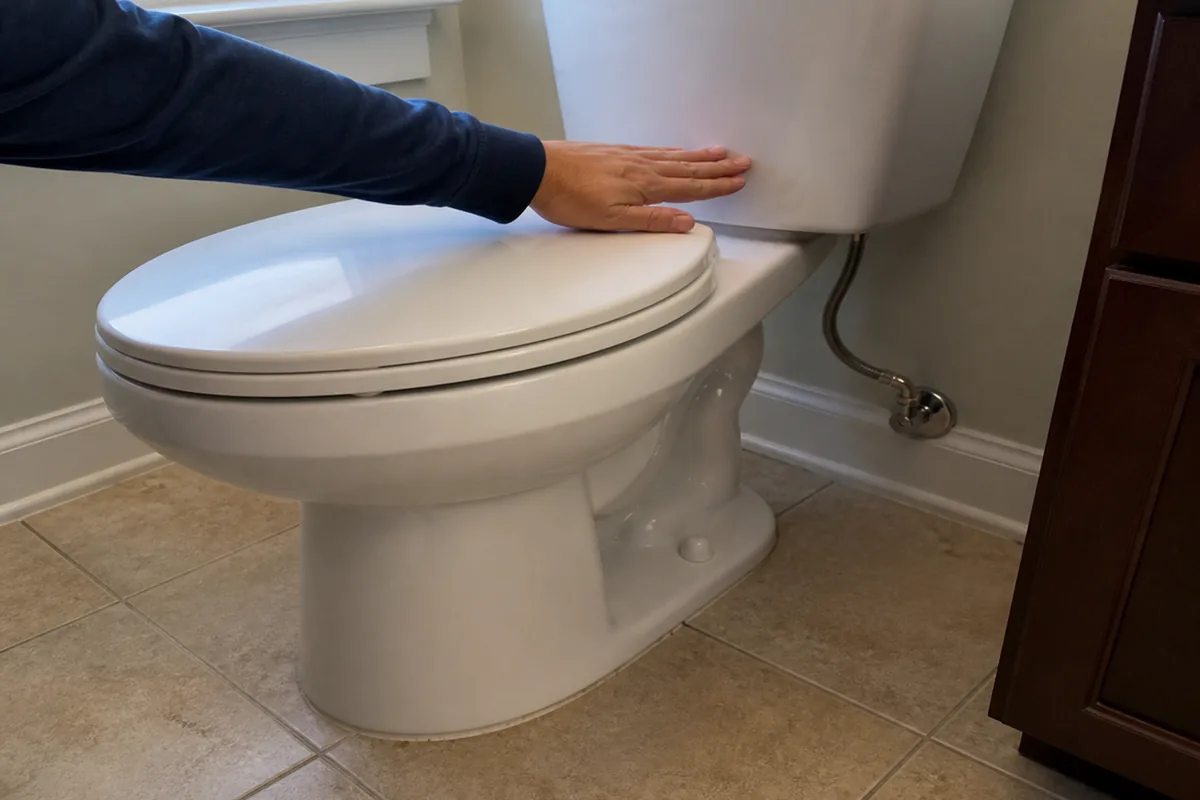
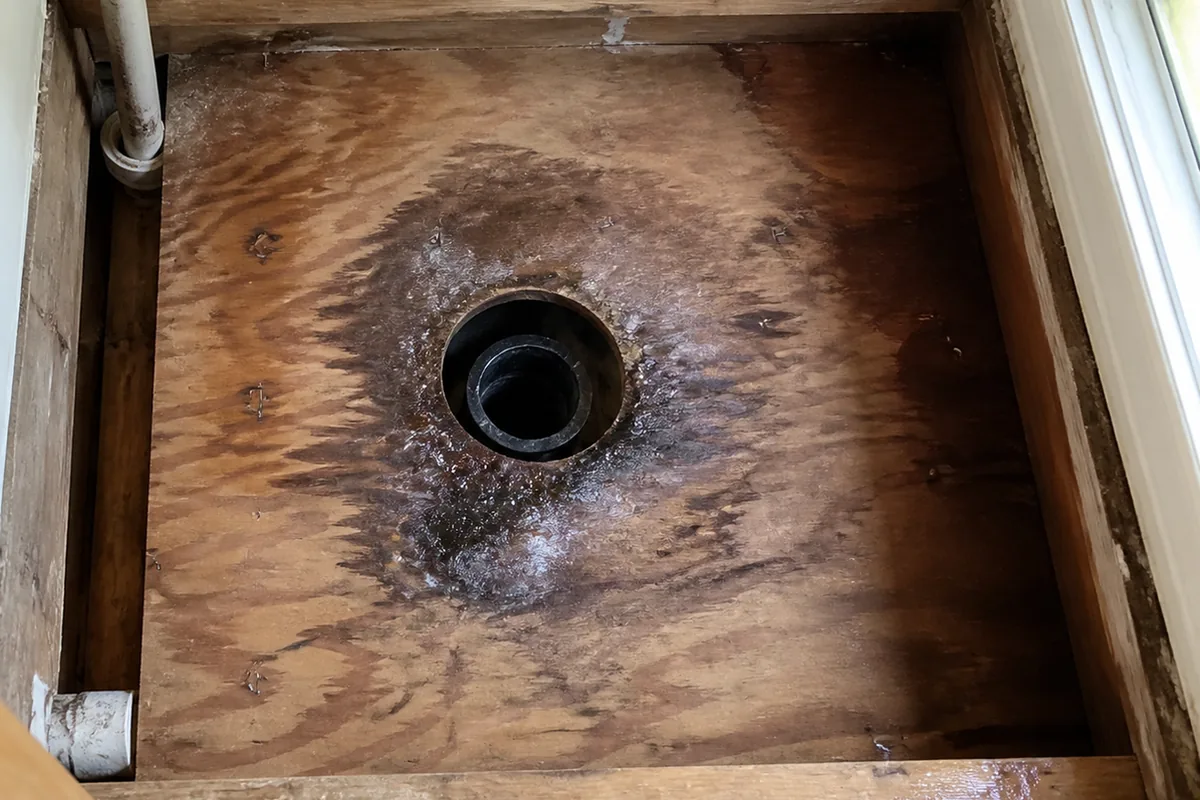
The toilet in the hall bathroom looked fine from the doorway. New floor tile, fresh caulk run in a clean bead around the entire base, nothing to suggest a problem. A gentle hand on the tank told a different story. The toilet rocked, just slightly, front to back, the kind of movement that does not show up in a listing photo and that a seller may not even notice after living with it for years. Pulling the toilet later confirmed what the rock predicted: the wax ring seal had been broken for a long time, and the subfloor underneath was soft and darkened in a ring around the drain opening.
We are describing this as a composite of a pattern we see repeatedly in Winnetka’s older bathrooms, not one identified property or job. This specific fixture connection gets remodeled around, tiled over, and caulked shut more than almost anything else in a house of this age, and it is worth understanding on its own terms before a buyer ever gets to escrow.
This guide is for the agent working Winnetka and the surrounding San Fernando Valley communities we also serve, including nearby Canoga Park, Reseda, and West Hills, where the same 1950s and 1960s tract bathrooms have been through the same decades of flooring changes. Here is why the toilet flange matters in Winnetka specifically, what it actually does, how it fails, how an inspector checks it, and what actually fixes it.
Why this matters for the agent
Winnetka’s housing stock is overwhelmingly 1950s and 1960s post-war tract construction, and a bathroom in a house that age has almost never kept its original flooring. Most have been re-tiled, re-vinyled, or re-linoleumed at least once, often two or three times across different owners. Every one of those flooring jobs raises the finished floor height by whatever thickness the new material and its underlayment add, and the toilet flange, the fitting that connects the toilet to the drain pipe below the floor, does not move with the floor. It stays at the height it was originally set.
That mismatch is the single most common plumbing-fixture issue we document in Winnetka bathrooms, and it is largely invisible until someone actually checks for it. A buyer walking through a showing sees a toilet that looks stable and a floor that looks new. Neither observation tells them anything about whether the connection underneath is still sealed.
What the flange actually does, and how it fails
A toilet flange is a fitting, typically PVC, ABS, or cast iron on older installations, that sits at the top of the drain pipe below the toilet. It does two jobs. First, it provides the mounting surface for the wax ring, the soft seal that closes the gap between the bottom of the toilet and the top of the drain pipe so that water and sewer gas cannot escape at that joint. Second, it anchors the toilet itself, through two bolts that thread into slots on the flange, so the toilet sits solid on the floor and cannot rock, twist, or shift when someone sits down or stands up.
When both jobs are done correctly, the toilet is rigid, the seal is unbroken, and every flush moves cleanly into the drain with nothing escaping at the base. When either job fails, the toilet becomes a slow, quiet source of moisture and gas leakage exactly where it is hardest to see, at the underside of the base, against the floor.
How decades of re-flooring create a low flange
Here is the mechanism specific to a house like the ones in Winnetka. The flange was set once, at the time of original construction, matched to the finished floor height that existed then. Every subsequent flooring project, a new layer of vinyl over the old, a mortar bed and tile over that, another layer of luxury vinyl plank over the tile years later, raises the floor around the flange without raising the flange itself.
The result is what plumbers call a low flange, sitting below the new finished floor surface instead of flush with it. A wax ring is designed to compress and seal against a flange at or near floor level. When the flange sits an inch or more below the floor, a standard ring cannot bridge that gap reliably, and the seal ends up thin, uneven, or incomplete around the circumference.
A related but separate failure is a cracked or broken flange, most often caused by the rocking motion described above. A toilet that was never properly anchored, or whose bolts have loosened over years of use, rocks slightly with every use, and that repeated flexing eventually cracks the plastic ring, sometimes at the bolt slots, sometimes around the full circumference. A broken flange cannot hold a seal no matter how the floor height lines up, and it usually cannot hold the toilet rigid either.
The stacked-wax-ring shortcut
When a low flange shows up during a re-tiling job, the fast, cheap fix is to stack two or three wax rings to bridge the gap instead of correcting the flange height properly. It can hold for a while, but a stacked wax ring is unstable over time, it can shift or fail at the seam between rings, and it does nothing to address the anchoring if the flange itself is cracked or worn. We see this shortcut often enough in Winnetka’s remodeled bathrooms that it is worth naming directly: it is a real installation defect, not a legitimate fix, even though it is common.
Why the subfloor is the real cost
A broken or inadequate seal does not usually announce itself with a visible flood. It leaks small amounts, water and sewer gas escaping with each flush, often not enough to pool visibly on the finished floor. That repeated moisture lands directly on the subfloor, the plywood or oriented strand board layer beneath the finish, at the one spot least able to dry out, hidden under the toilet base itself.
Over time, that moisture softens, darkens, and eventually rots the subfloor. Because the area is covered by the toilet, the damage is invisible during a normal walkthrough. It becomes obvious only when the floor feels spongy underfoot near the toilet, or when the fixture is pulled for another reason. A sufficiently rotted subfloor also cannot properly support the flange’s anchoring, which compounds the rocking that caused the original crack. Left long enough, the repair scope grows from a flange and wax ring, a modest job, to cutting out and replacing a section of subfloor, a materially larger one.
How a home inspector actually checks this
We do not pull toilets during a standard inspection, and we are explicit about that boundary with every buyer. What we do is check for the signs that point toward a flange or seal problem worth a licensed plumber’s further look.
- Gently rocking the toilet. With a hand on the tank or bowl, a light front-to-back and side-to-side push tells us whether the toilet is rigid or has movement at the base. Any perceptible rock is a flag.
- Checking the subfloor at the base for staining or softness. Where flooring allows a visual check near the toilet base, discoloration, a slightly raised or uneven tile line, or a soft spot underfoot are all signs worth documenting.
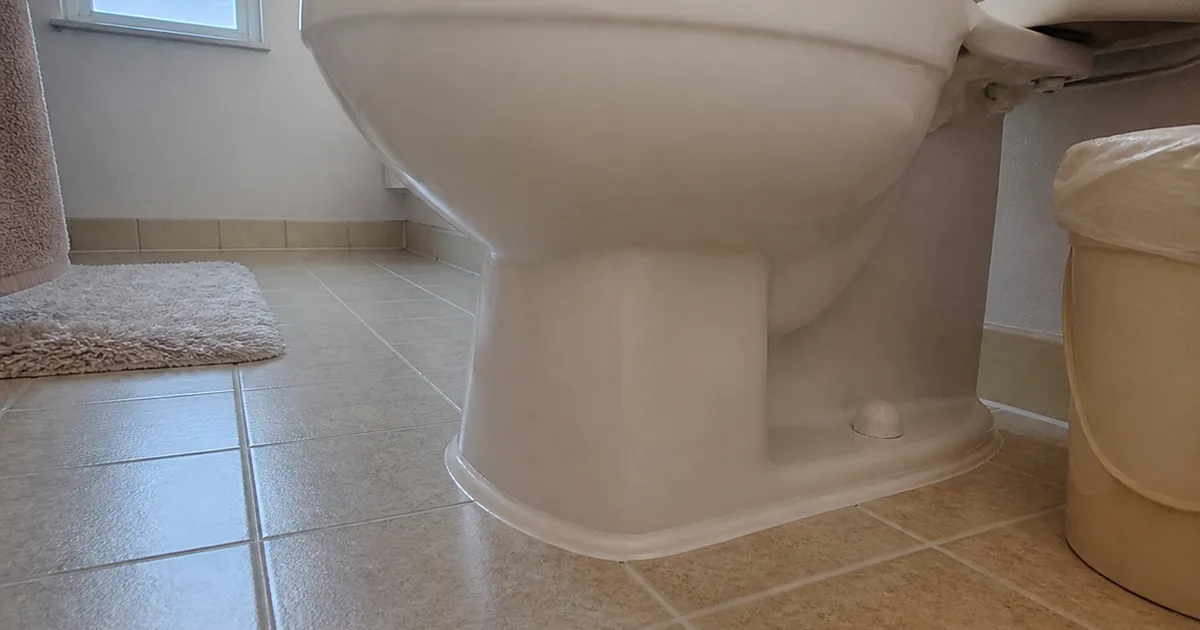
- Looking at how the base is caulked. A bead of caulk run continuously around the entire base of the toilet, sealing it to the floor on all sides, is a specific red flag. Manufacturers and plumbing codes typically call for a gap left open at the back of the toilet base precisely so that a leak would show itself as visible water rather than being trapped and hidden. A fully caulked base can mean someone sealed in a leak rather than fixing it, or masked a rocking toilet rather than re-securing it.
- Looking for an unusually tall or uneven toilet base. If a toilet was recently reset and sits noticeably higher than expected, or the base has an odd stepped profile at the floor, it can indicate a stack of wax rings or spacers used to bridge a low-flange gap rather than a proper extender.
- Noting any sewer-gas odor near the fixture. A faint but persistent odor at the base of a toilet, distinct from a general bathroom smell, is consistent with a broken seal even when no visible movement or moisture is apparent.
None of these checks require pulling the fixture, and none of them are a substitute for a plumber’s direct inspection once a flag is raised. Our role is to surface the pattern reliably enough that a buyer knows to ask before removing contingencies, not to diagnose or repair the connection ourselves.
What actually fixes it
The correct fix depends on what is actually wrong, and it is worth an agent knowing the difference so a repair estimate makes sense.
A low flange from stacked flooring layers is corrected with a flange extender or spacer kit, a fitting designed specifically to raise the effective sealing surface to match the new floor height without stacking wax rings. These kits are sized to the actual measured gap and installed by a plumber in a straightforward job that does not require reworking the drain pipe itself.
A cracked or broken flange requires replacing the flange, a larger job because it usually means cutting back the finish flooring around the toilet enough to access and replace the fitting at the top of the drain pipe, then resetting the toilet with a new wax ring sized correctly for the corrected height.
Subfloor rot, if present, has to be addressed before either of the above fixes matters. A new flange and a fresh wax ring seated on a soft, rotted subfloor will not hold long, and the repair scope grows to include cutting out and replacing the damaged section of subfloor, typically plywood or OSB, before the toilet goes back in.
In every case, the fix is a licensed plumber’s scope, not a caulk gun’s. A bead of silicone around the base does not touch the seal, the anchoring, or the subfloor underneath, and re-caulking a rocking toilet without addressing the flange only delays the point at which the damage becomes visible.
What agents should tell every buyer
- A rocking toilet, even a slight one, is worth mentioning before escrow, because it usually means the seal below is already compromised.
- A toilet base caulked all the way around with no gap is not automatically a problem, but it is worth asking the seller or their agent whether the toilet has been reset or worked on recently.
- Decades of re-flooring in an older bathroom raise the finished floor without raising the flange, which is exactly the setup for this issue in a house like the ones common in Winnetka.
- The visible symptom, a rocking toilet or a caulked-shut base, is rarely the real cost. The subfloor underneath is where the money actually goes if the leak has been running for years.
- This is a plumber’s fix, a flange extender or a flange replacement, not a caulk-and-hope repair, and knowing which one applies changes the estimate meaningfully.
Red flags during showings
- Any perceptible rock or movement when gently testing a toilet by hand.
- Caulk run in a complete, unbroken bead around the entire base of a toilet, with no gap left anywhere.
- A toilet base that sits unusually tall, uneven, or stepped relative to the surrounding floor.
- Soft, spongy, or discolored flooring in the immediate area around a toilet base.
- A faint but persistent sewer-gas odor near a toilet with no other obvious source.
- Evidence of a recent toilet reset, such as fresh caulk or grout only around that one fixture, with no explanation offered.
The negotiation playbook
When a flange or subfloor finding surfaces in a Winnetka escrow, the deal usually moves down one of a few paths.
The first path is a straightforward plumber’s correction, appropriate when rocking is present but the subfloor tests solid nearby, since a flange extender and a fresh wax ring is a modest, well-defined job.
The second path is a licensed plumber’s further evaluation before close, warranted whenever staining, softness, or odor suggests active or historical leakage, so the buyer knows the actual scope before removing contingencies rather than after.
The third path is a subfloor repair estimate from a licensed contractor, appropriate once rot is confirmed, since this scope is larger and worth pricing precisely rather than assuming.
The fourth path is a credit or informed acceptance, appropriate when the finding is limited to a minor rock with no confirmed moisture damage, and the buyer is comfortable having it corrected shortly after closing.
How the inspection actually catches it
We check every toilet in a Winnetka inspection by hand, testing for movement at the base, examining how the base has been caulked, and looking for any visible staining or unevenness in the surrounding floor.
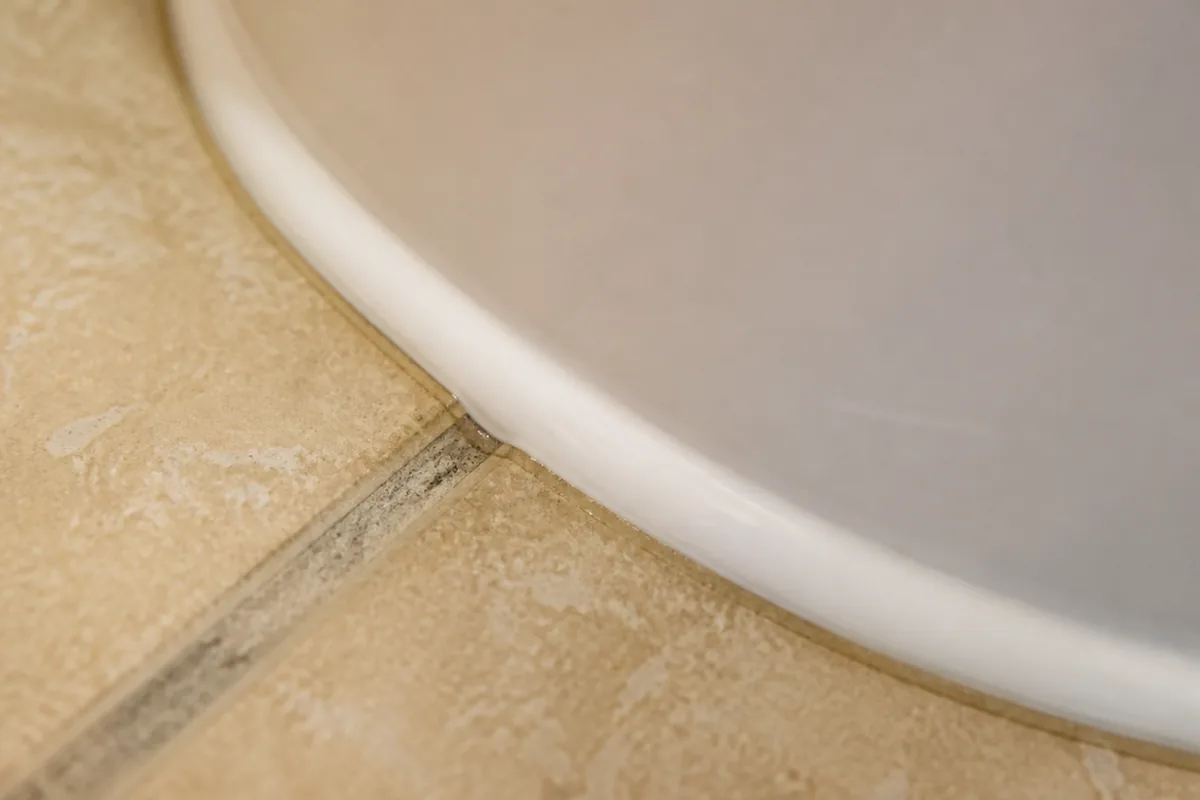
Where we find a rock, a suspicious caulk pattern, or a soft spot in the surrounding floor, we document it and recommend a licensed plumber evaluate the flange and seal directly, since confirming a wax ring failure or subfloor rot requires pulling the fixture, which is outside our scope.
Our what’s included page covers the full plumbing-fixture scope of every Winnetka inspection.
Quick FAQ
Is this the same as the plumbing pipe-material articles in the registry, like galvanized pipe or polybutylene? No. Those articles cover the water supply piping material throughout a house. This article covers a single fixture connection, the fitting that seals and anchors a toilet to its drain, and the subfloor damage a failed seal can cause. Different mechanism, different location in the plumbing system.
Can a buyer just re-caulk the toilet and move on? Caulk does not address the seal below the floor or the anchoring at the flange. Re-caulking a rocking toilet can mask the problem from view without fixing anything, and in some cases traps a leak against the subfloor rather than letting it show itself.
Is a rocking toilet always a sign of subfloor damage? Not always. Some rocking comes from loosened bolts alone, correctable without any subfloor issue. But rocking is common enough across genuine flange and subfloor problems that it always deserves a closer look rather than an assumption either way.
How is this different from Porter Ranch’s water pressure article? Different system entirely. Our Porter Ranch water pressure guide covers whole-house supply pressure and the pressure-reducing valve. This article covers a single drain-side fixture connection and the fitting under one toilet.
Should a buyer walk away over a flange finding like this? Rarely on its own. Most flange findings are a modest plumber’s correction. The negotiation usually turns on whether the subfloor has already been damaged, which is worth confirming before removing contingencies.
The honest summary
Winnetka’s decades of bathroom remodels have left plenty of toilets sitting on a flange that no longer matches the finished floor around it, and a fully caulked base can hide exactly the kind of movement that points to a broken seal. Most of what we find is correctable with a flange extender and a fresh wax ring. A smaller share points to subfloor damage that has been building quietly for years.
We check every toilet by hand on every Winnetka inspection, and we tell you plainly whether the connection underneath looks solid or whether it is worth a plumber’s further look before you close.
See what every inspection includes → · Read our FAQ → · Explore Winnetka home inspections →
Related reading
- Water System Pressure and the PRV in Porter Ranch. A different plumbing system, whole-house supply pressure rather than a single fixture connection, worth understanding as a companion topic.
- Shower Pan and Tile-Shower Assembly Leaks in Aliso Viejo. Another interior fixture-moisture topic, a different assembly and a different failure mechanism.
- Wood-Destroying Organisms and the California WDO Report in Monrovia. How the WDO report treats fungal decay in structural wood, relevant background for a subfloor damaged by a chronic leak.
- Why Infrared Scanning Matters in California Homes. How thermal imaging can help locate hidden moisture at a floor or wall.