We inspected a 1920s craftsman bungalow near the Bungalow Heaven district in Pasadena earlier this year. Original character throughout, refinished floors, a kitchen that had clearly been redone once in the last decade. The sellers loved the house and it showed. Both agents expected a quiet inspection.
Then we ran the water and opened the crawlspace.
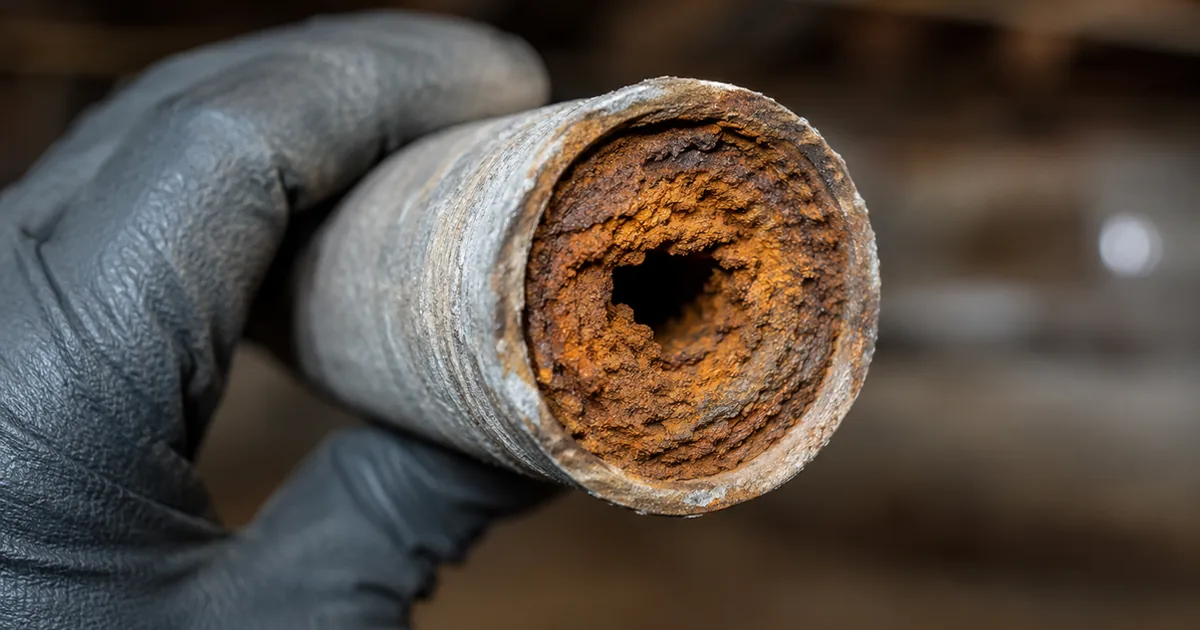
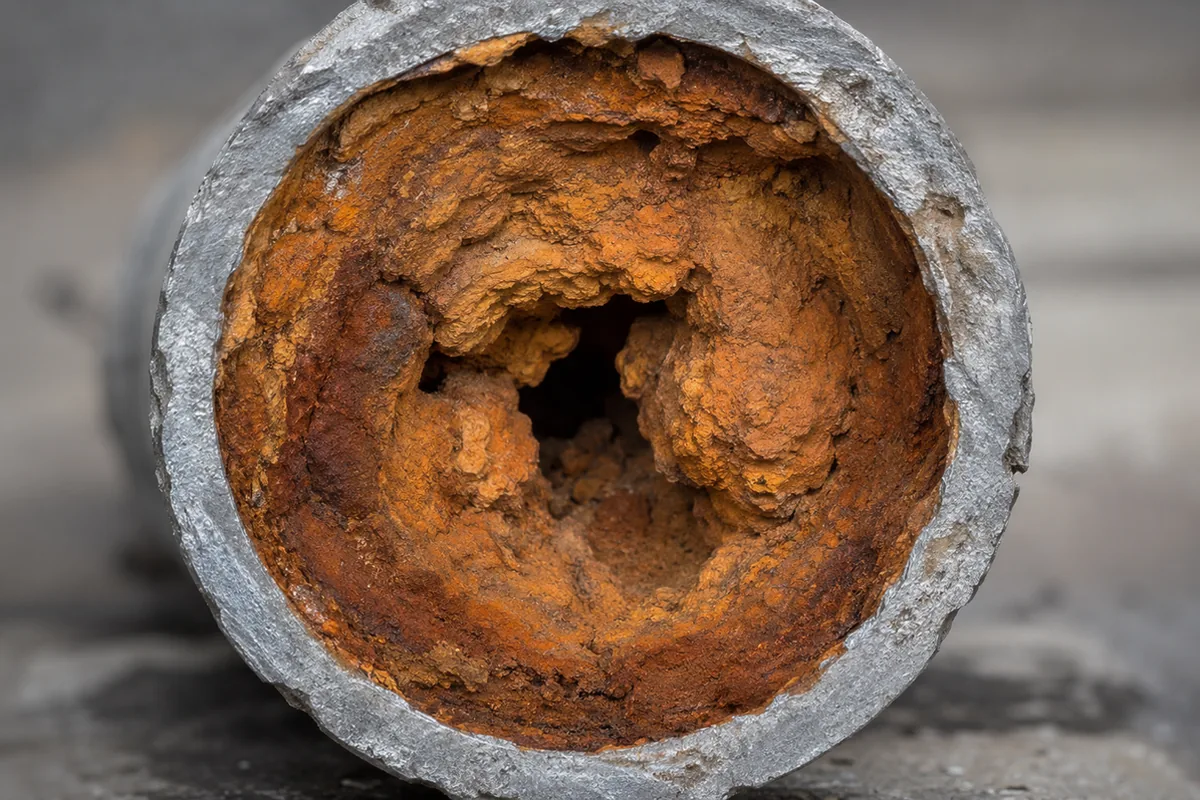
The hot side at the upstairs bathroom took a slow ten seconds to come up to pressure, and what came out had a brown tint that cleared after a minute. Under the house, the original galvanized supply lines were furred with rust at every threaded joint, and a section we could see in cross-section at an old repair was about two-thirds closed with scale. The cast iron drain below the main bathroom had the flaking, rusted skin that tells you the inside is worse than the outside. The thermal scan picked up a cool, damp signature along one wall where a supply joint had been weeping behind the plaster long enough to matter.
The buyer was the first person in the transaction to understand what the plumbing was actually doing. The listing agent was the second.
Here is how that one resolved. We documented the choked galvanized supply, the rusted cast iron, and the damp wall on the same-day report, and we told the buyer plainly that the drains needed a plumber’s camera scope before anyone signed off. The scope confirmed a cracked section under the main bathroom. The buyer’s agent took two repipe bids back to the seller and closed with a credit plus an escrow hold-back for the drain work, completed after closing. The house still traded. The plumbing was old, but the finding turned a future flood into a line item in escrow.
Schedule a Pasadena inspection · Same-day report · Pay-at-closing available
Why this matters for the agent
Aging galvanized supply and cast iron drains are not a defect you can wave off with a small credit and a clean closing. In a pre-1940 Pasadena home, this is often a whole-house repipe and a partial drain replacement, which is a five-figure conversation, not a weekend fix.
Three things tend to be on the line. First, the cost. A full repipe and drain work in an old Pasadena home, especially one in a landmark district with finish work to protect, lands in the upper four figures to well into five. Second, the hidden damage. Galvanized joints weep behind plaster and cast iron leaks under slabs and in crawlspaces, so the pipe problem often comes with a moisture or rot problem the disclosure never mentioned. Third, the timing. A buyer who learns the scope during the contingency negotiates. A buyer who learns it when a drain backs up six months in is angry, and sometimes litigious.
If you work Pasadena’s historic neighborhoods, you will see this constantly. The craftsman bungalows of Bungalow Heaven were built mostly between 1905 and 1925, and the surrounding pre-1940 stock is the same vintage. That is original galvanized and cast iron territory unless someone has already repiped. These same homes often carry knob-and-tube wiring, so the plumbing finding rarely arrives alone. The postwar tracts are a different story. Areas like Hastings Ranch, built from the early 1950s, mostly went in on copper supply, so this topic really belongs to the pre-1940 districts: Bungalow Heaven, Madison Heights, Garfield Heights, and the older streets around the Playhouse District and Prospect Park.
What galvanized and cast iron plumbing actually are
Galvanized steel supply pipe is steel coated in zinc, used for the water lines that feed a home’s fixtures in construction from the early 1900s into the 1950s. Cast iron is the heavy drain, waste, and vent piping that carried everything away. Both were the standard of their day, and both have a finite service life that pre-1940 homes have now run well past.
Galvanized supply has a working life of roughly 40 to 70 years before corrosion takes over. Cast iron drains run about 50 to 75 years, sometimes more, depending on what flowed through them and the soil around them. A 1920s Pasadena bungalow is a century old. Even with careful upkeep, original pipe of either type is living on borrowed time.
The reason this matters in Pasadena specifically is that the housing stock is genuinely old and often genuinely original. A home that has kept its craftsman character may also have kept its original plumbing, and the same preservation instinct that protects the woodwork can quietly leave a buyer with pipe that is decades past its design life.
Why these pipes fail (the part most agents skip)
Galvanized and cast iron fail from the inside, which is why they look fine right up until they do not.
In galvanized supply, the zinc coating is sacrificial. It protects the steel for a few decades and then it is gone, and after that the bare steel corrodes from the water side out. Rust builds inward in layers, a process called tuberculation, and the bore of the pipe slowly closes. That is the cause of the weak flow and the brown-tinted water at the upstairs fixtures, because the upper and farthest runs choke first. The threaded joints corrode fastest, and that is where the slow weeps and the pinhole leaks start.
Cast iron drains fail by a different chemistry. Waste flowing through the pipe gives off hydrogen sulfide gas, the gas oxidizes at the crown of the pipe, and the result is sulfuric acid that eats the iron from the inside. The pipe rusts from the inside out until the bottom channel thins, cracks, and starts leaking into the crawlspace or under the slab. A home inspector cannot see the inside of a drain, which is why the honest answer on a questionable cast iron system is a plumber’s camera scope, not a guess.
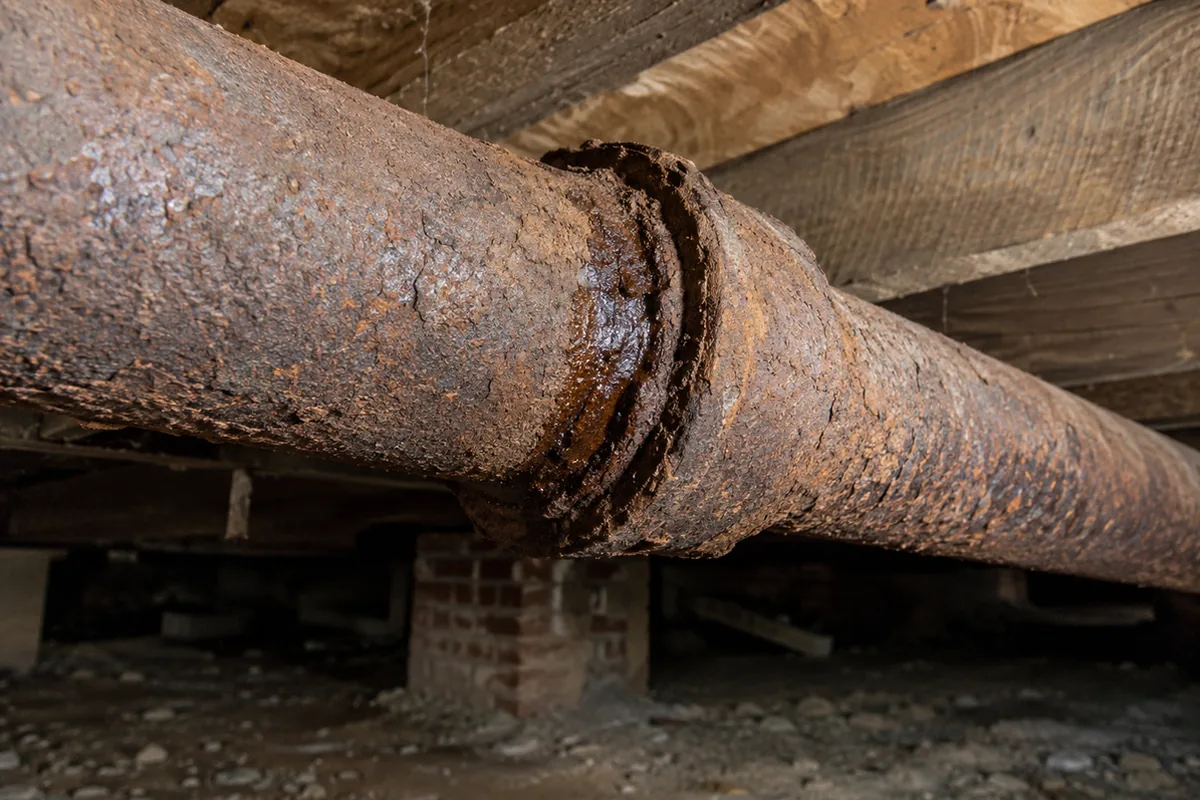
Neither failure announces itself. The home runs fine until a joint lets go behind the plaster or a drain cracks under the bathroom, and by then the repair includes the finish work too.
What agents should tell every buyer in older Pasadena homes
A short list buyers writing offers on pre-1940 Pasadena homes should hear from you before they go into escrow.
- The supply and drain lines may be original galvanized and cast iron. We check flow, water color, visible pipe condition, and moisture, and we recommend a camera scope of the drains when the visible condition warrants it.
- If the pipe is original, plan for a repipe and possible drain replacement. That is a five-figure budget on most of these homes, so have the buyer pre-qualified above what the offer assumed.
- Ask whether any prior repipe was partial. Many old homes have a kitchen or one bath updated while the rest of the house is still on original pipe. Partial work is common and easy to mistake for a full repipe.
- In a landmark district like Bungalow Heaven, factor in that opening walls and floors to repipe has to respect the home’s protected finishes, which can add cost and time.
- If the seller discloses prior plumbing work, ask what was replaced, whether it was permitted, and whether the drains under the slab or in the crawlspace were included or left alone.
If you want a one-page version of this list to text to your buyers in the pre-offer window, ask us and we will send it.
Red flags during showings (no special tools required)
You do not need a moisture meter to flag a candidate home at a showing. Add these to your walk-through on any pre-1940 Pasadena house.
- Weak flow when you run two fixtures at once, or a hot side that takes a long time to come up to pressure. Choked galvanized supply is the usual cause.
- Brown or rusty water at first draw, especially on the hot side or at upstairs fixtures. Run a tap and watch the first few seconds.
- Visible pipe in the basement, crawlspace, or garage that is threaded steel with rust blooming at the joints. That is galvanized telling on itself.
- Slow drains, gurgling, or a sewer smell in a bathroom, which can point to a cast iron drain that is scaling shut or already cracked.
- Fresh patches of drywall or plaster low on a wall, or new flooring in one room only, which sometimes marks where a leak was repaired without solving the pipe behind it.
None of these prove the system has failed. All of them are reasons to make the inspection contingency real and to read the plumbing section of the report closely. LA-area buyers should also check our home inspection checklist for the full pre-inspection prep list.
Schedule a Pasadena inspection
The negotiation playbook when old plumbing surfaces in escrow
There are four paths most of these deals end up on. Knowing them in advance helps you steer.
Seller repipes before closing is the cleanest and the least common, because a full repipe is disruptive and slow, and few sellers want to manage it during their own escrow. When it happens, insist the work is permitted, that it covers supply and the failing drains rather than the easy runs only, and that it is inspected before closing.
Seller credits the buyer to handle it after closing is the most common outcome. Size the credit to real bids from a licensed plumber, ideally two, scoped to a full repipe and whatever drain work the camera scope justifies. On a landmark-district home, make sure the bid accounts for protecting and restoring protected finishes. The written bid anchors the number. The same four-path negotiation structure applies to aluminum branch wiring in 1960s-70s homes and to foundation movement on expansive clay in the Inland Empire.
Buyer walks under the inspection contingency happens, especially when the camera scope turns a suspected repipe into a repipe plus a drain replacement plus finish restoration. The earnest money is protected under the contingency. Your job as the buyer’s agent is to make sure they know walking is an option and what triggers it.
Deal closes with no remediation is the riskiest, because the buyer inherits an aging system that will fail on its own schedule, often with water damage attached. If the buyer wants the home anyway, document their informed decision in writing and help them plan the repipe as a first-year project. An escrow hold-back for the work, completed by the buyer’s plumber on a set timeline after closing, is a clean structure when the seller will engage but does not want to run the job.
How the inspection actually catches it
A quick visual inspection that glances at the under-sink connections will miss most of this, because the story is in the flow, the water, the joints you have to crawl to see, and the inside of the drains. Catching it takes a deliberate look.
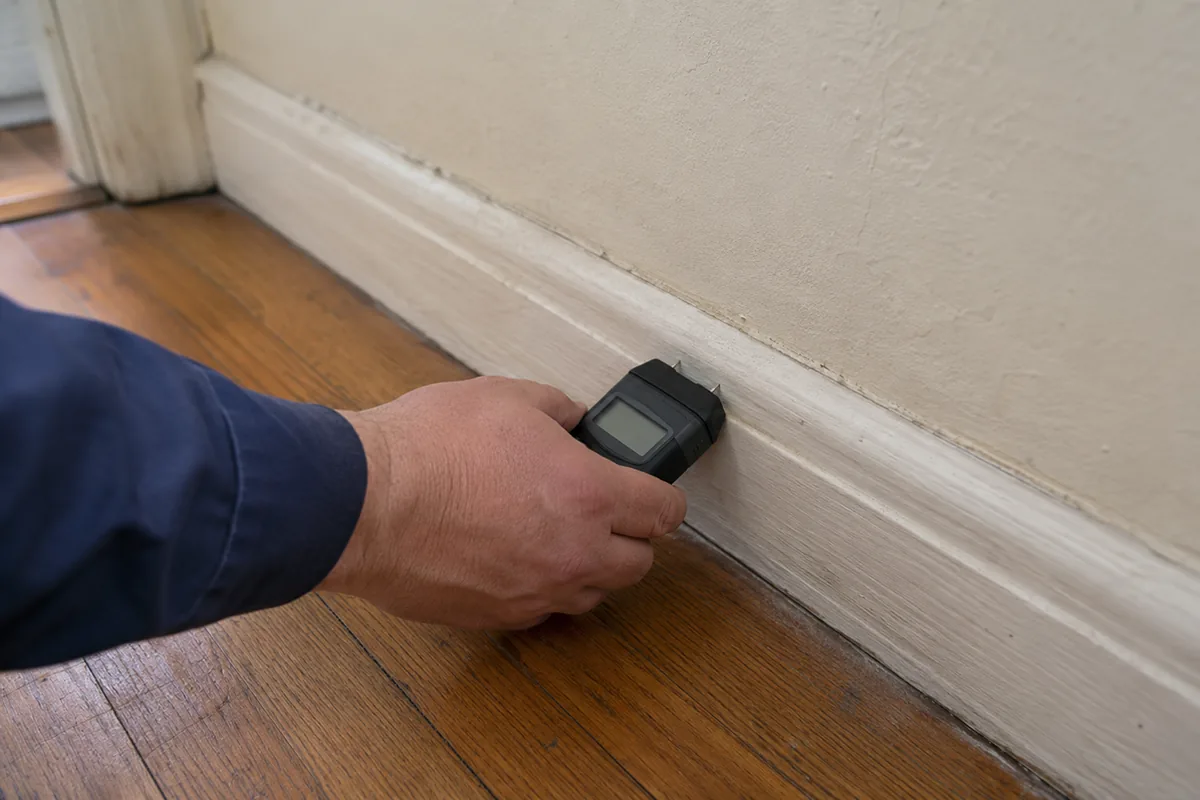
We run fixtures and read the flow and the water color, we trace and photograph the visible supply and drain pipe in the crawlspace and the garage, and we identify galvanized and cast iron by material rather than assuming. Then we run thermal imaging along walls, ceilings, and floors to find the cool damp signatures of a joint that has been weeping behind the finish, and we back the camera up with a moisture meter at the suspect spots. When the visible drain condition is questionable, we tell the buyer plainly that the right next step is a plumber’s camera scope, because no honest inspector claims to see the inside of a cast iron drain.
Combined, the flow read, the material identification, the thermal scan, and a clear scope recommendation turn a vague worry into a documented finding you can take into the negotiation. This is what we mean when we say infrared is standard on every Inspection.re job rather than an add-on. We caught a hidden moisture problem the same way on a coastal wall, written up in our Encinitas bluff moisture guide.
Quick FAQ for buyers and agents
Is original galvanized or cast iron always a problem? Not always today, but both are past their design life in a pre-1940 home. The question is rarely whether they will need replacement, only when, and a buyer is better off pricing that in during escrow than discovering it after a failure.
Can the inspector tell me the drains are fine? We can report the visible condition, the flow, and any moisture we find, and we can flag the signs that a drain is failing. We cannot see inside a cast iron pipe, so when the condition is questionable the right call is a plumber’s camera scope, and we will say so.
What does a repipe cost in an old Pasadena home? A full supply repipe generally runs in the upper four figures to low five figures, and cast iron drain replacement can add five figures more depending on length and access. Landmark-district finish protection adds to both. Get two written bids before the negotiation.
Does a partial update count? Often not in the way buyers assume. A redone kitchen or one updated bath can leave the rest of the house on original pipe. Ask what was actually replaced and whether the under-slab or crawlspace drains were included.
Does this come up much in Pasadena specifically? Yes, in the pre-1940 districts. Bungalow Heaven, Madison Heights, and the older craftsman streets are full of homes built between roughly 1905 and 1930, which is original galvanized and cast iron vintage unless a prior owner repiped. The 1950s postwar tracts like Hastings Ranch usually started on copper, so they are not where this shows up.
The honest summary for agents
If you work Pasadena’s historic neighborhoods and you write offers on pre-1940 homes, you are going to meet original galvanized supply and cast iron drains. The cases caught during the inspection contingency are negotiations. The cases caught later, with a burst joint behind the plaster or a cracked drain under the bathroom, are water-damage claims and sometimes lawsuits. Your buyer is far better served by the first.
The inspection that finds it is not the cheapest one on Yelp. It is the one that runs the water, crawls the space, reads the joints, runs thermal imaging on the walls, and tells the buyer plainly when a drain needs a camera scope, with a same-day report so you have the proof in hand before the contingency clock runs out.
Schedule a Pasadena inspection or see our full inspection scope before you book. Want to see what the finished report looks like? Here is a sample inspection report. Common questions are answered in the FAQ.
Related reading
- Coronado knob-and-tube wiring guide – the other original-system hazard in pre-1940 homes, and what it does to insurance
- Encinitas bluff moisture intrusion guide – how thermal imaging catches hidden moisture behind walls, the same tool we use on weeping joints
- El Cajon aluminum branch wiring guide – the electrical hazard in 1960s-70s homes, and the escrow playbook when it surfaces
- Why infrared scanning matters in California homes – how we find the damp signatures galvanized joints leave behind plaster
- Home inspection checklist for Los Angeles buyers – what LA-area buyers should expect and prepare for
- Old wiring and pipes in Long Beach historic homes – how knob-and-tube and galvanized supply together hit insurance and escrow in the pre-1940 coastal stock
- How to read a home inspection report in California – what buyers and agents should focus on in the report
- Chula Vista polybutylene piping guide – the supply-line hazard at the other end of the age range, in late-1980s and early-1990s tracts
- Santa Ana clay sewer laterals and root intrusion guide – the buried-drain hazard in the same pre-1980 stock, the sewer-scope step that finds it, and the escrow playbook
- Asbestos in Anaheim mid-century homes guide – the popcorn-ceiling, floor-tile, and duct-wrap materials common in the same era of homes, and when they matter
- Alhambra gravity octopus furnace guide: the original 1930s heating system still running in the same vintage of San Gabriel Valley home, and why it is a safety question
- San Marino undersized electrical service guide: the panel-and-service upgrade these older estates need, the electrical companion to original plumbing
- New Arcadia luxury spec-build defects guide: why even a flawless-looking new build in the same market still fails its inspection on the things behind the wall
- Sierra Madre fire-hardening guide for historic homes: the roof, vent, eave, and Zone 0 ember-zone work that protects the same era of foothill home from wildfire
- Corona orchard land foundation settlement guide: what happens below grade in old citrus-grove soil, the foundation companion to failing pipe above it
- Old Towne Orange pre-1940 systems guide: the same galvanized supply and original systems inside a preservation district, where the Mills Act and historic review shape the fix
- Porter Ranch water pressure and regulator guide: the system-pressure side of plumbing, the force that wears out supply lines whatever the pipe is made of
We also inspect across Greater Los Angeles: Los Angeles, Long Beach, Santa Monica, Beverly Hills, Malibu, Culver City, West Hollywood, and across California. Same premium package, same same-day report. In Malibu, where the same aging plumbing connects to a private septic system the city regulates at sale, see our Malibu septic guide. In West Hollywood’s older condo buildings, where original plumbing meets SB 326 balcony compliance, see our West Hollywood balcony guide.
Book a Pasadena home inspection or schedule directly · Same-day report · Pay-at-closing available · See what is in the box on our sample report page
- Galvanic corrosion at dissimilar metal joints in Hermosa Beach – what happens at the junction when new copper is threaded straight onto the old galvanized during a partial repipe Galvanized supply piping turns up wherever the stock is genuinely old, including the nineteenth century core described in Suisun City home inspections.