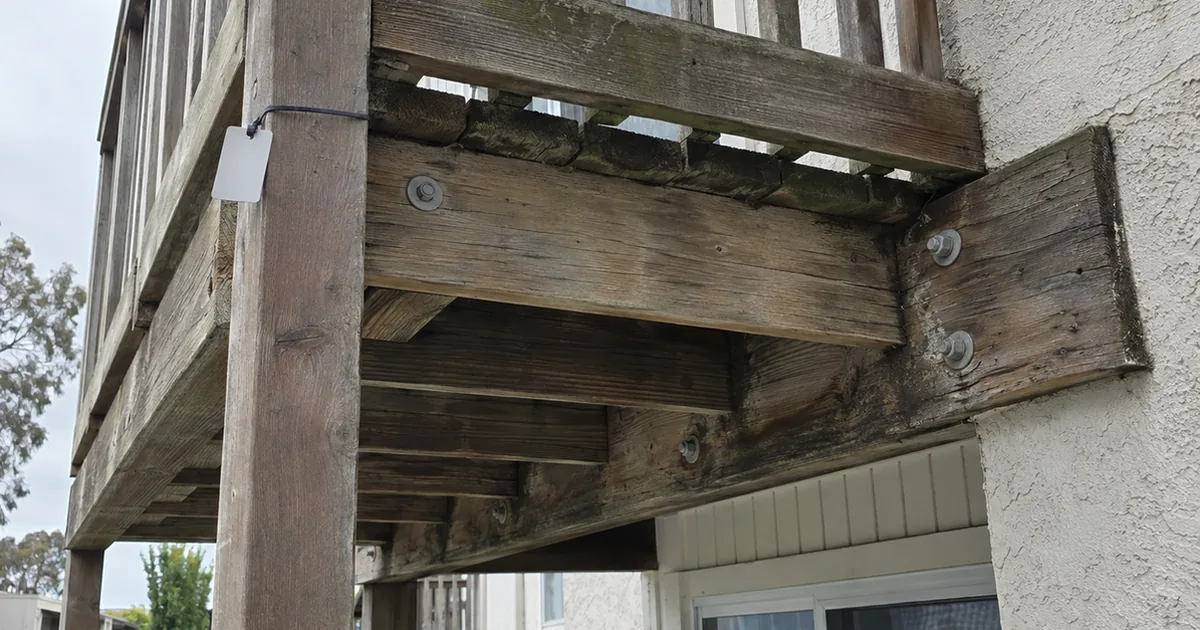
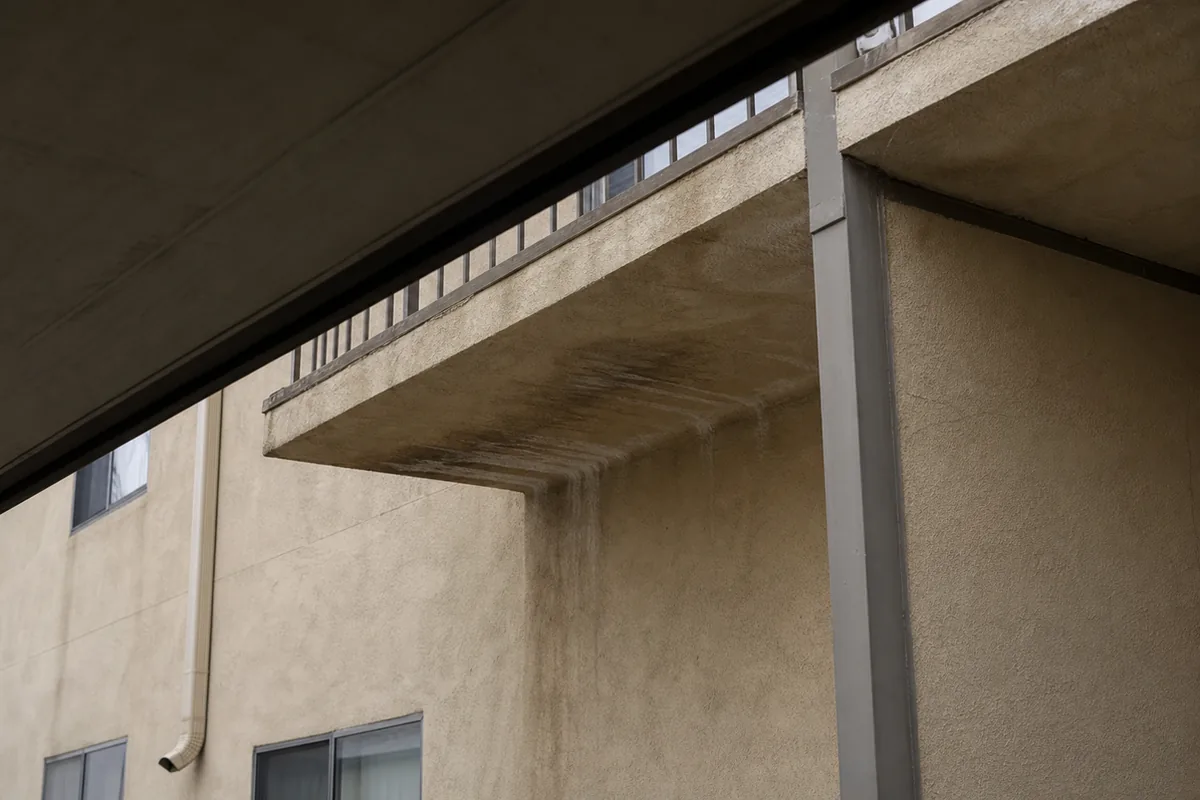
On a unit tour in one of West Hollywood’s older courtyard buildings, the balcony looked fine from the living room. From underneath, in the carport, the story was different. A dark stain ran down the stucco soffit where the deck met the wall, and the edge of the waterproofing had lifted just enough to let water sit in the framing. That balcony was not the buyer’s to fix. It was the association’s. And whether the association had dealt with it under SB 326 was the question that mattered.
West Hollywood is a condo market. Much of the housing is older multifamily, the courtyard buildings the city is known for, plus mid-century structures converted to ownership later. That means most of your buyers are purchasing a unit in a building with shared, elevated structures: balconies, walkways, stair landings, sometimes a rooftop deck. California now has a specific law for those structures, and it lands squarely in your condo transactions.
This guide explains SB 326 in plain terms, what it requires of the HOA, and what you should be asking for before your buyer removes a contingency.
Why this matters for the agent
Here is what is at stake on a West Hollywood condo deal. The elevated structures in a condo building are common elements, maintained by the association, not by the individual owner. When one fails, it fails quietly, behind waterproofing and stucco, until the framing is rotten. The 2015 Berkeley balcony collapse that killed six people is why the state acted. SB 326 is the response for condominiums.
For your buyer, the practical question is not whether they can fix the balcony. They cannot, it is not theirs. The question is whether the association has inspected its elevated elements, what the inspection found, and whether there is a special assessment or a repair project coming that will land on your buyer as a new owner. An agent who reads the HOA’s SB 326 report before the contingency clears is protecting the buyer from inheriting someone else’s deferred repair. That is real value.
What SB 326 actually requires
SB 326 added Section 5551 to the California Civil Code, inside the Davis-Stirling Act that governs common interest developments. It applies to condominium associations. It does not apply to planned developments where owners maintain their own structures, so the building type matters.
The law requires the association to inspect the load-bearing components and associated waterproofing of its exterior elevated elements. Those are balconies, decks, stairways, walkways, and elevated landings that are more than six feet above ground and supported in substantial part by wood or wood-based products. A licensed structural engineer or architect performs the inspection, examines a statistically significant sample of the elements, and reports on their condition and remaining useful life. The report goes to the association and feeds its reserve planning.
The first inspection was originally due by January 1, 2025. AB 2579 extended that initial deadline to January 1, 2026, after the industry flagged a shortage of qualified inspectors. After the first inspection, the law requires another at least every nine years. So by the time you are reading this, a compliant West Hollywood condo association should either have its SB 326 report in hand or be able to show it is in progress.
SB 326 versus SB 721, so you do not mix them up
Agents conflate these two laws constantly, so here is the clean version. SB 326 covers condominiums governed by an HOA, and that is the one that shows up in your for-sale condo deals. SB 721 is the parallel law for rental apartment buildings with three or more units, with its own inspector qualifications and a six-year cycle.
If your buyer is purchasing a condo, you care about SB 326 and the HOA’s report. If your client owns or is buying a rental building, SB 721 applies instead. They share a purpose and a history, but they are different statutes with different paperwork. Do not accept an SB 721 rental report as proof of SB 326 compliance for a condo association.
What agents should tell every buyer
Before your buyer writes on a West Hollywood condo, walk them through these.
- The balconies, walkways, and stair landings are common elements. The buyer will not own them or control their repair. The association does.
- Ask for the association’s SB 326 inspection report as part of the HOA document review. If it exists, read what it found and what it recommended.
- If the report flags repairs, find out whether the work is funded from reserves or headed for a special assessment. A new owner can inherit that assessment.
- If the association has no SB 326 report and cannot show one in progress, treat that as a compliance and reserve risk, not a non-issue.
- The unit inspection and the SB 326 inspection are different. The home inspection looks at the unit and the visible condition of nearby elements. SB 326 is the association’s structural inspection of the elevated elements across the building.
- Review the reserve study alongside the SB 326 report. Elevated-element repairs are expensive, and an underfunded reserve plus a flagged balcony is a combination worth understanding before closing.
A buyer who hears this from you reads their HOA packet differently, and they remember who told them.
Red flags during showings
You can spot the warning signs from the ground and the unit. Watch for these.
-
Dark staining or efflorescence on the stucco soffit beneath a balcony or walkway, visible from a carport or the courtyard below.
-
Soft, spongy, or sloping deck surfaces, or a deck coating that is cracked, blistered, or lifting at the wall.
-
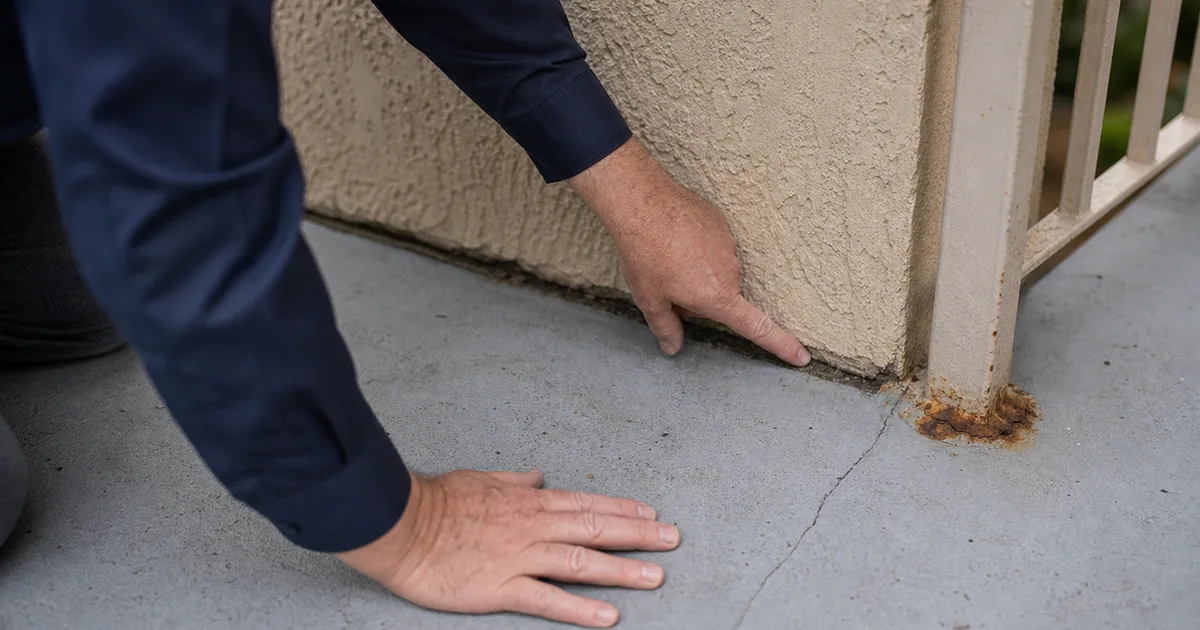
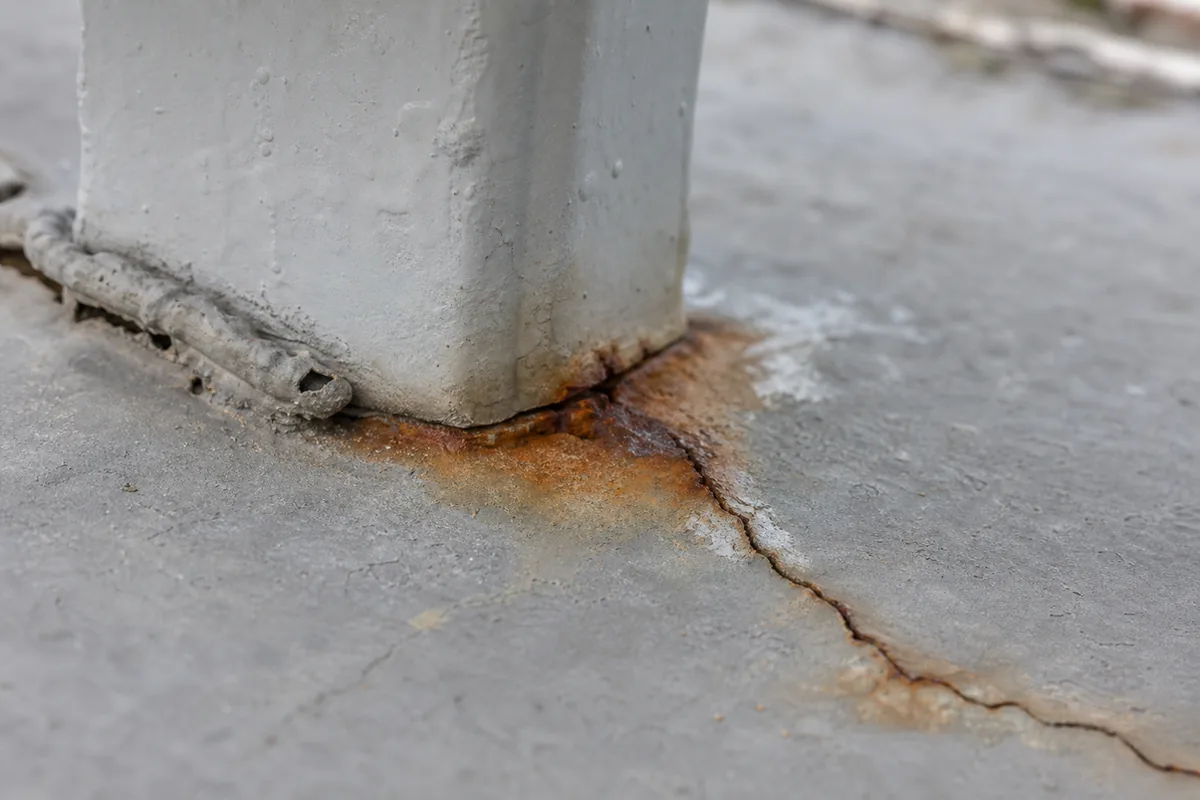
Rusted railing posts where they penetrate the deck, which is a classic water-entry path into the framing.
-
Ponding water or stains at the door threshold where the balcony meets the unit.
-
Fresh paint or patching only on the underside of one balcony, which can mean a spot repair over a larger problem.
-
An association that cannot produce an SB 326 report or a reserve study on request.
If we see these on a unit inspection, we document them and tell the buyer to pull the association’s SB 326 report before they clear the contingency.
The negotiation playbook
When an elevated-element issue surfaces on a condo deal, the deal tends to move one of a few directions.
The first path is the funded-repair confirmation. The association’s SB 326 report flags the work, and the reserves cover it with a scheduled project. This is the cleanest outcome. Confirm the funding and the timeline, and the buyer proceeds knowing the fix is handled by the people responsible for it.
The second path is the special-assessment disclosure. The repair is real but the reserves do not cover it, so an assessment is likely. Here the negotiation is between buyer and seller over who absorbs a known, quantified cost. We have seen sellers credit the buyer for a pending assessment, and we have seen buyers accept it with eyes open. Either way, the number should come from the association’s documents, not a guess.
The third path is the missing-report risk. The association has no SB 326 report and no clear plan. This is not a unit-level fix the seller can make, so the lever is information and time. The buyer’s attorney and the HOA document review carry the weight. Some buyers proceed with a price adjustment for the uncertainty, and some decide a non-compliant association is not a risk they want. We do not pretend a unit credit solves an association-level gap.
The fourth path is walk-away. If the building has serious elevated-element damage, an underfunded reserve, and no compliance path, a buyer is allowed to decide the association’s problems are not worth inheriting. We document what we saw and when, and the buyer and their advisors make the call.
How the inspection actually catches it
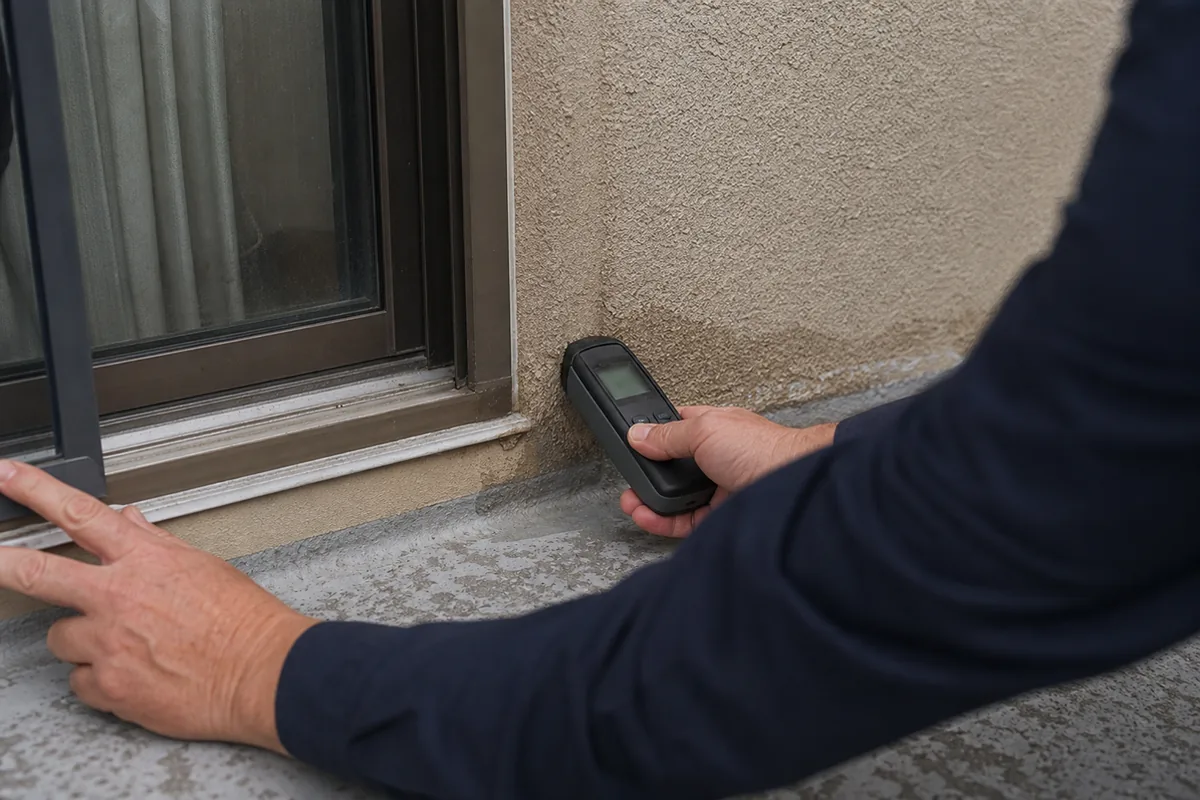
A home inspection on a condo and an SB 326 inspection are different scopes, and we say so plainly. On the unit, we document the balcony or deck the buyer will use, the visible condition of the surface, the railing connections, the threshold, and any staining we can see from below. We use thermal imaging to find moisture that has tracked behind walls and at deck-to-wall transitions, which often points to the same water path SB 326 is built around. For the mechanics of how elevated decks fail, our deck and balcony waterproofing guide walks through it.
What we do not do is replace the association’s SB 326 inspection. That is a licensed structural engineer or architect examining a statistical sample of the building’s elevated elements and reporting on load-bearing condition and useful life. Our role on a condo is to inspect the unit honestly, flag what we see at the elevated elements, and tell the buyer to read the association’s report before they commit. If we see something worth flagging, it goes in the report.
For the broader context on California’s balcony and elevated-element laws, including the newer SB 410 disclosure requirement that now puts the EEE report in the condo seller-disclosure packet, see our 2026 California laws guide for realtors. And for a look at how the same waterproofing failure mode plays out on multi-level beach homes outside the condo context, our Manhattan Beach deck guide covers it from the single-family side. For the structural fastening side of deck failure in estates, see our Rancho Santa Fe deck ledger attachment guide.
Schedule a West Hollywood inspection
Quick FAQ
Does SB 326 apply to my buyer’s condo? If the building is a condominium governed by an HOA, yes, SB 326 and Civil Code 5551 apply to the association’s exterior elevated elements. It does not apply to planned developments where owners maintain their own structures, so confirm the building type.
Whose job is the balcony inspection, the buyer’s or the HOA’s? The association’s. Exterior elevated elements in a condo are common elements, and SB 326 places the inspection and maintenance obligation on the association, not the individual owner.
What should I ask the HOA for? The SB 326 inspection report and the reserve study. Together they tell you whether elevated-element repairs are identified, funded, or headed for a special assessment your buyer could inherit.
When was the inspection deadline? The initial inspection was due by January 1, 2026 after AB 2579 extended the original 2025 date, and then at least once every nine years. A compliant association should have its report or show it in progress.
Is this the same as the home inspection? No. The home inspection covers the unit and the visible condition of nearby elements. SB 326 is the association’s structural inspection of the building’s elevated elements by a licensed engineer or architect.
The honest summary
In a condo market like West Hollywood, the most expensive structural problem in a deal is often not inside the unit at all. It is on a shared balcony or walkway the buyer will never own and cannot fix. SB 326 exists to force associations to find those problems before they fail. Your job is to make sure the report exists, read what it says, and connect it to the reserve study before your buyer removes a contingency.
We will inspect the unit, flag what we see at the elevated elements, and point your buyer to the association’s report. The structural sampling is the engineer’s job under SB 326. We document what we found and tell the buyer where to look next.
See what every inspection includes | Explore West Hollywood home inspections | Read our FAQ | View a sample report | Beverly Hills inspections | Santa Monica inspections