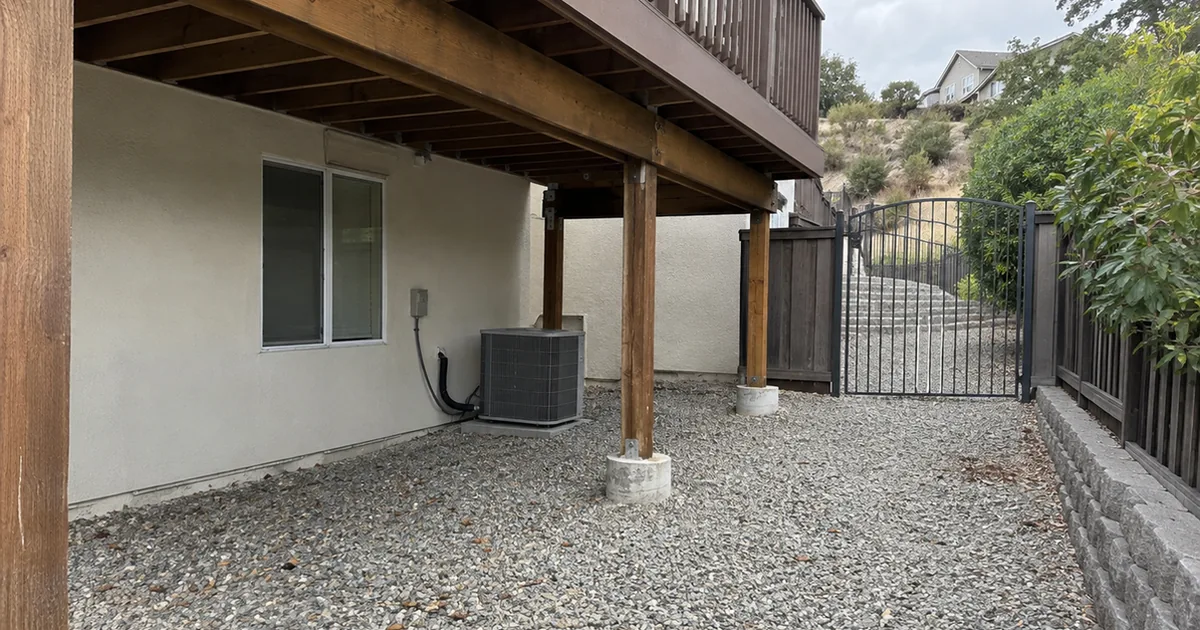
The home was an older one for Murrieta, a raised-foundation house on the western side of town, the kind that predates most of the slab tracts buyers see today. The buyer liked that it had some age and character to it. The inspection is where character meets physics.
In the garage, the water heater stood free, no straps, nothing holding it to the wall. Down in the crawlspace, the short wood walls that carry the house above the foundation, what we call cripple walls, were bare studs with no bracing. And when we pulled the natural hazard disclosure, the property sat inside an Alquist-Priolo earthquake fault zone, because the Elsinore Fault runs right through this part of Murrieta.
None of that means the house is unsafe to buy. It means the house has not been prepared for the one hazard this region is built on top of, and the buyer should know that before they remove a contingency, not after the first jolt.
Schedule a Murrieta inspection · Same-day report · Pay-at-closing available
Why this matters for the agent
Here is what is actually at stake. Murrieta sits beside one of the major active faults in Southern California, and earthquake readiness shows up in a transaction in two separate ways that agents tend to blur together.
The first is paper. If the property falls inside an Alquist-Priolo zone, California law requires that the seller disclose it on the Natural Hazard Disclosure before the sale closes. That is not optional and it is not something to discover late. The second is physical. Whether or not a home is in the zone, the way it is built and retrofitted decides how it behaves in a quake, and several of those items are cheap to fix and expensive to ignore. An agent who understands both halves can keep a deal clean and help a buyer walk in informed. We have seen agents lose deals to a hairline crack that meant nothing, and we have seen buyers waive a foundation contingency on a home that needed fifteen thousand dollars of work. Both are avoidable. Agents working the broader Inland Empire should also understand expansive clay foundation movement in nearby Menifee, because the two findings often overlap in the same transaction.
What the Elsinore Fault means for Murrieta
The Elsinore Fault Zone is one of the largest in the region, and its northern section, the Glen Ivy segment, runs through the Murrieta and Lake Elsinore area. The state has designated Alquist-Priolo earthquake fault zones along parts of that trace, which are the strips of land where surface rupture is considered most likely in a large event.
For a buyer, two things follow from that. A home inside an Alquist-Priolo zone carries a disclosure obligation and, in some cases, restrictions on building across the fault trace. And every home in the broader area, in the zone or not, is exposed to strong ground shaking from the fault, which is what the physical readiness items are about. The fault is not a reason to avoid Murrieta. It is the reason the readiness items exist.
The water heater is the cheapest fix in the whole house
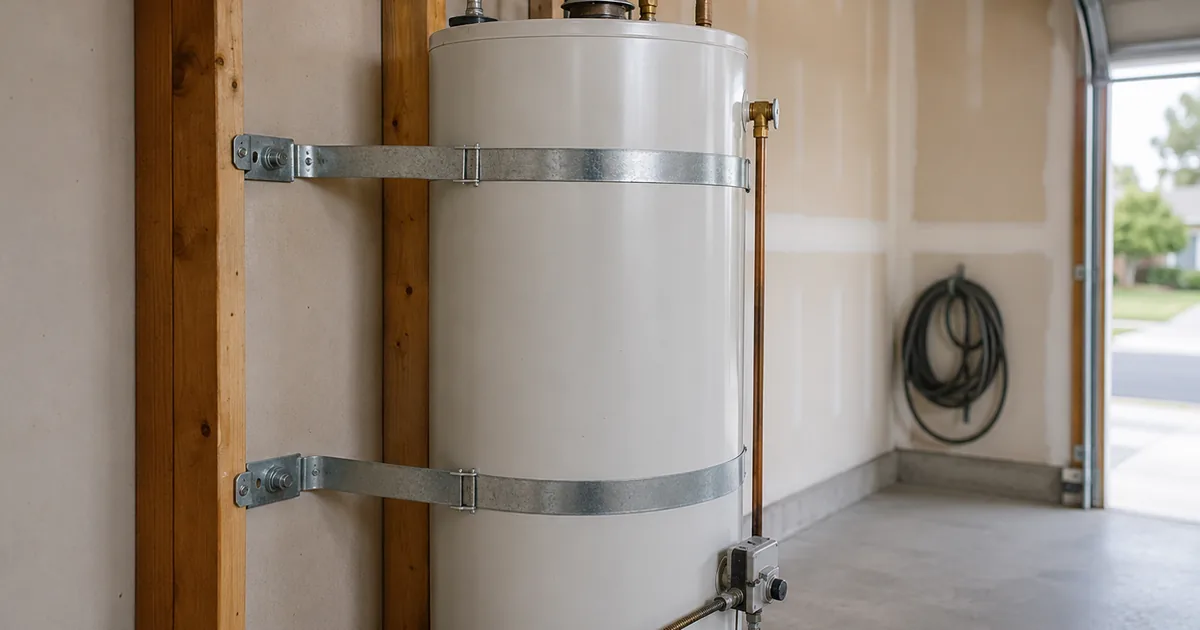
Start with the simplest item, because it is required by law and it is the one we find unaddressed most often. California requires that residential water heaters be braced, anchored, or strapped to resist movement in an earthquake. A water heater that topples can shear its gas line and its water line at the same time, which is how a survivable quake turns into a house fire.
The fix is two straps, upper third and lower third of the tank, anchored into the wall framing, plus flexible connectors. It costs very little and it is the first thing we check. If a Murrieta water heater is standing free with no straps, that goes in the report, because it is both a safety issue and a code item the buyer will want corrected. This is one of the items we cover on every job as part of our full inspection scope.
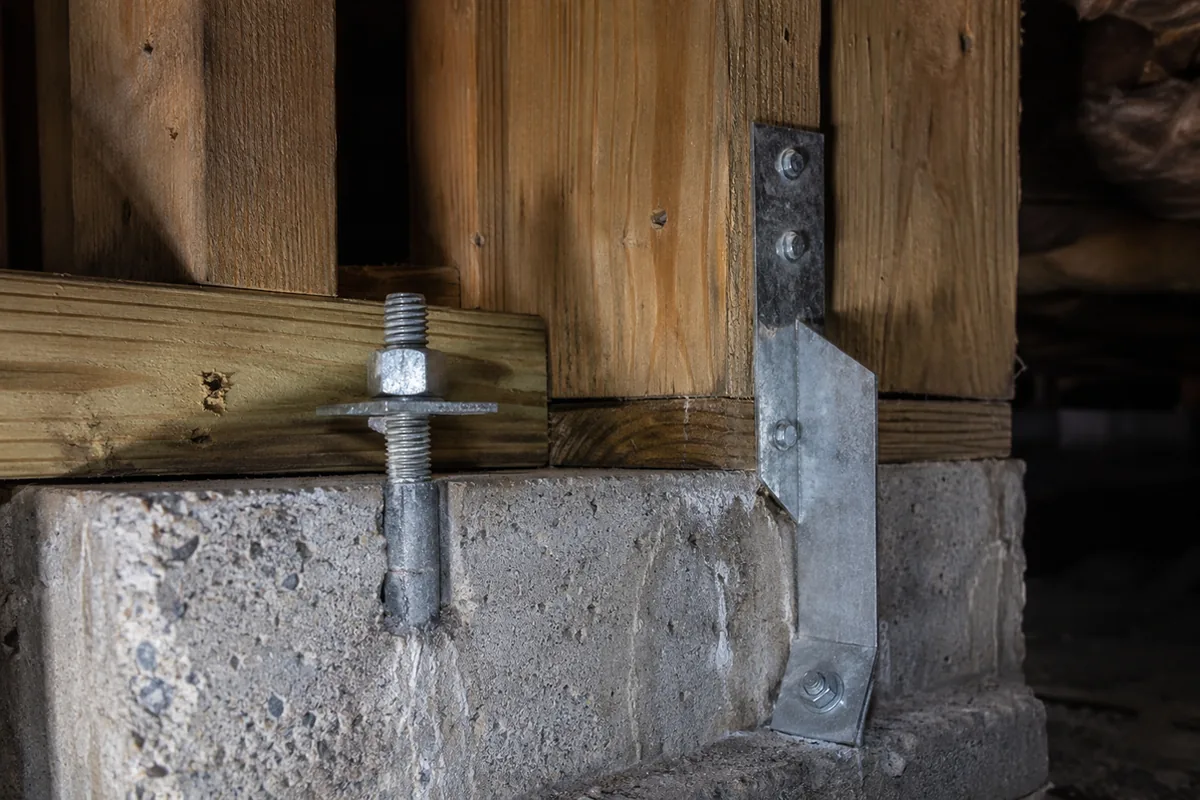
Cripple walls and foundation bolting on older homes
The bigger-ticket seismic item lives under older raised-foundation homes, which is why the best-fit story here is an older Murrieta house, not a new slab tract. Many homes built before modern codes sit on short wood-framed walls between the foundation and the floor. Those cripple walls can collapse sideways in a strong quake, dropping the house off its foundation, unless they are braced.
The standard retrofit has two parts. Bracing means adding plywood or oriented strand board sheathing to stiffen the cripple walls so they cannot rack over. Bolting means anchoring the wood frame down to the concrete foundation so the house cannot slide off. California even runs a grant program, Earthquake Brace and Bolt, that helps eligible homeowners pay for exactly this work. When we are under an older Murrieta home, we look at whether that bracing and bolting is present, because a buyer is going to want to know if the house is tied down or just sitting there.
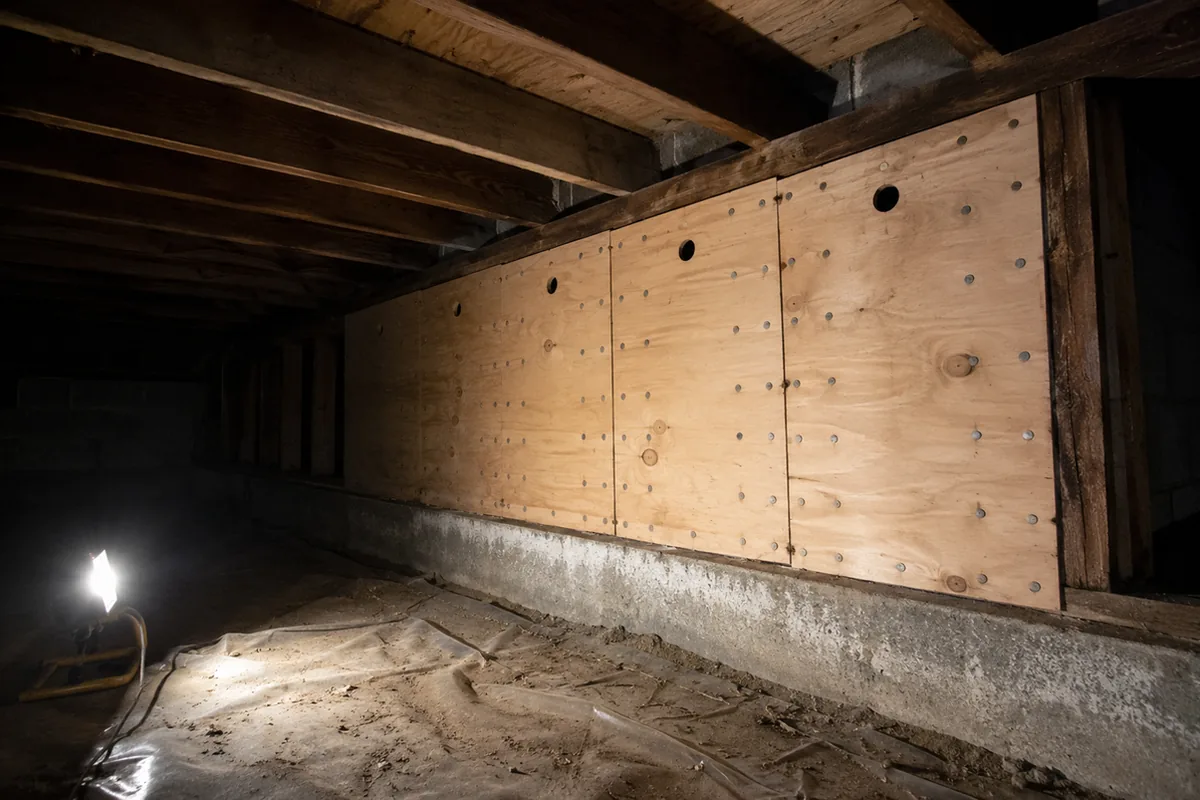
Newer slab-on-grade homes do not have cripple walls, so this item does not apply to most of Murrieta’s tract stock. It is the older, raised-foundation pockets where it matters. For the tile roofs on those newer tracts, the hidden risk is often failed underlayment beneath tiles that look fine from the ground.
What agents should tell every buyer
A few things are worth saying before the inspection so nothing in the report is a surprise.
-
Ask about the fault zone early. Have the buyer or escrow confirm whether the property is inside an Alquist-Priolo zone, because that is a required disclosure and it is better known up front than discovered late.
-
Strapping is law, not preference. If the water heater is not strapped, it needs to be, and it is a cheap correction the parties can sort out in escrow.
-
Older raised-foundation homes carry the real retrofit question. If the home has a crawlspace and predates modern codes, ask whether the cripple walls are braced and the foundation is bolted.
-
Newer homes are not automatically ready. A 1990s or 2000s slab home skips the cripple wall issue, but it can still have an unstrapped water heater and an unsecured masonry chimney.
-
Retrofit is bounded and partly funded. Bracing, bolting, and strapping are known jobs with known costs, and the state Brace and Bolt program can offset part of it. This is a manageable item, not a deal-ender.
Red flags an agent can spot at a showing
You can catch several of these without any tools.
- A water heater standing free in the garage with no visible straps running to the wall.
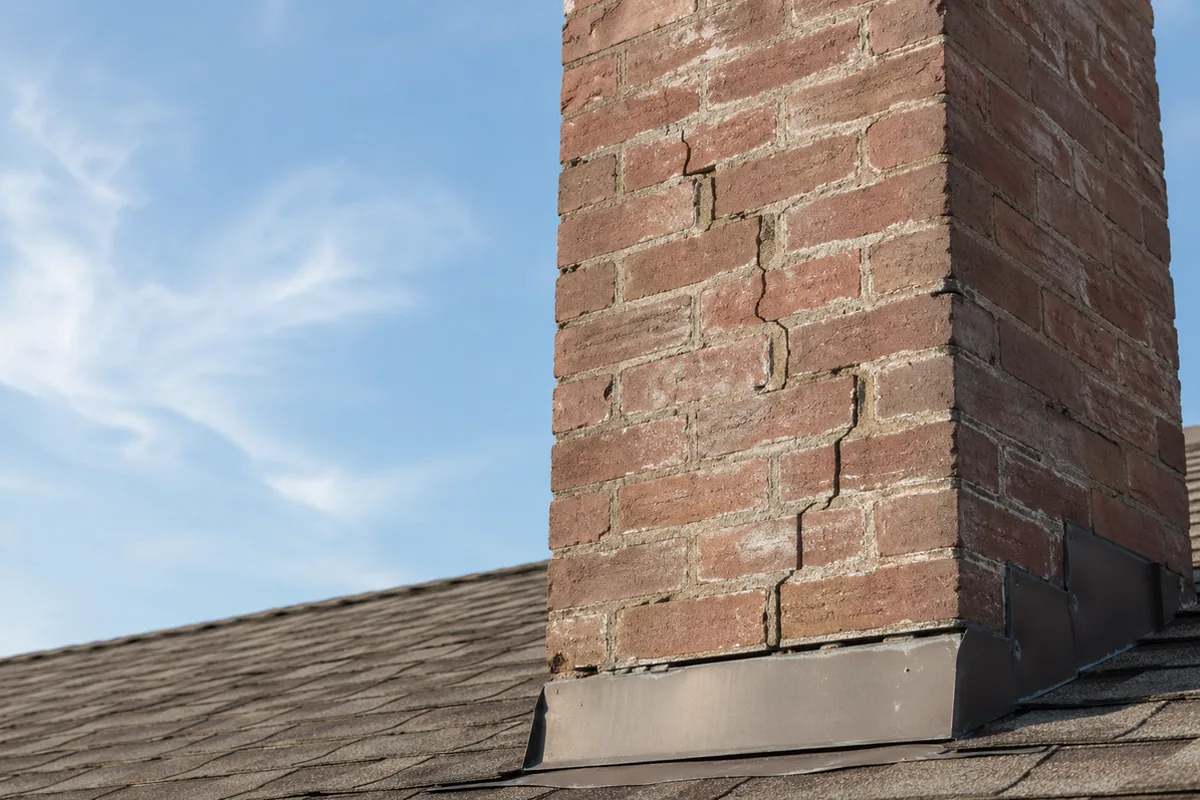
- A tall, unreinforced masonry or brick chimney, especially one with cracks at the roofline or separation from the house.
- An older home with a crawlspace access hatch, which signals a raised foundation and the cripple wall question.
- Visible foundation cracks or a house that looks like it has shifted at the floor line.
- No automatic gas shutoff valve at the gas meter, which is an optional but smart upgrade in a fault-zone city.
- Additions or conversions that look like they skipped permits, since unpermitted work often skips the seismic details too.
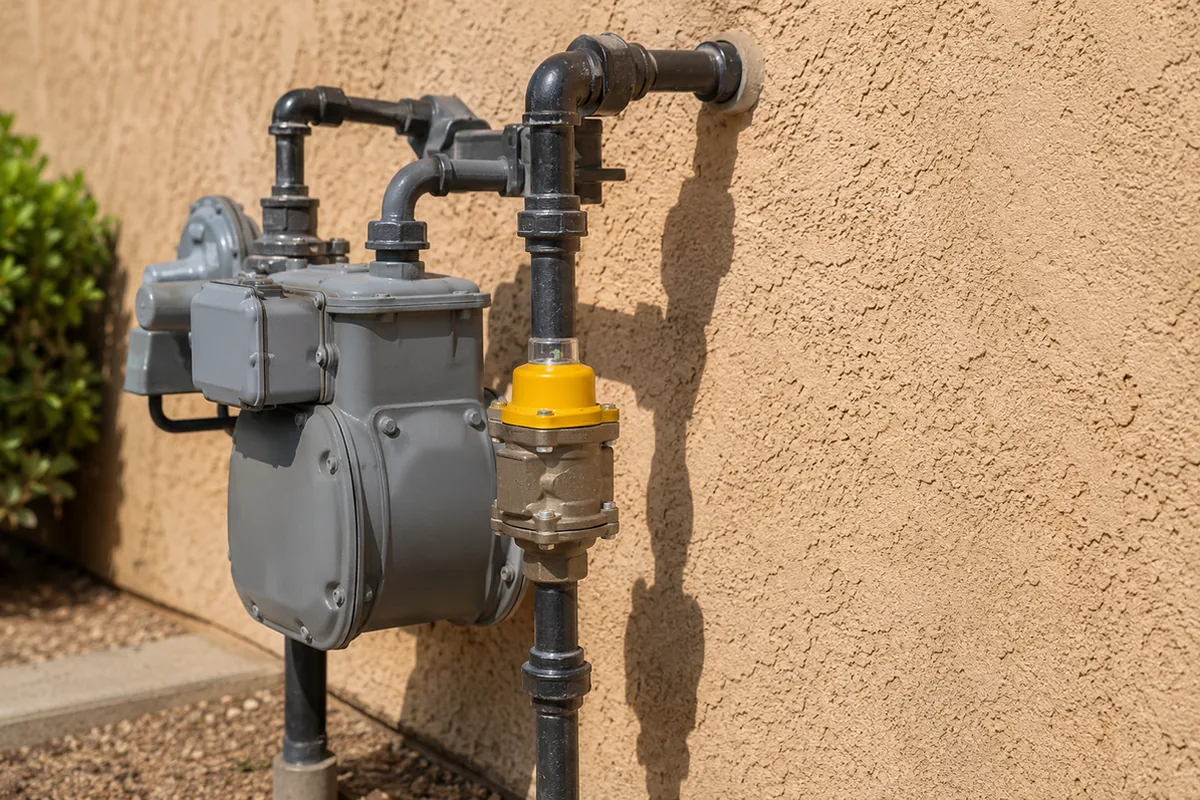
Any one of these is worth a closer look. The water heater and the chimney are the two most visible, and they tell you a lot about whether anyone has thought about earthquakes on this property. If you want a full pre-inspection walk-through checklist, our FAQ page covers what buyers and agents should look for before the inspector arrives.
Schedule a Murrieta inspection
How this plays out in escrow
Once the seismic items are on the report, the deal usually moves along one of a few paths, and the right one depends on the item.
For the water heater, the fix is small enough that it is normally handled as a repair request or a minor credit. There is rarely a reason to fight over it. Get it strapped and move on.
For an unsecured masonry chimney, the path depends on severity. A cracked or leaning chimney can be braced, retrofitted, or in some cases removed and rebuilt in a lighter material. This one is worth an estimate, because the range is wide.
For cripple wall bracing and foundation bolting on an older home, the buyer should price the retrofit and decide. Often the cleanest move is a closing credit so the buyer can have the brace-and-bolt work done on their own schedule, possibly with help from the state grant program. A motivated seller may complete the retrofit before close instead. Either way, document it, because a tied-down house is worth more and insures better than one that is not. The same four-path negotiation structure applies to aluminum branch wiring in 1960s-70s homes and to galvanized plumbing in pre-1940 stock.
The Alquist-Priolo disclosure itself is not negotiated, it is delivered. The job there is simply to make sure it actually happens, on time, as part of the natural hazard package.
How the inspection actually catches it
A real inspection looks at all of this in plain sight and under the house. In the garage and utility areas we check the water heater bracing and the gas connections. On the exterior we look at the chimney for cracks, lean, and separation. Where there is safe access to a crawlspace, we look at the cripple walls for bracing and at the sill connection for anchor bolts and hold-downs, because that is where the retrofit either exists or does not.
We are clear about our limits. A home inspection is not an engineering analysis of how the structure will perform in a specific earthquake, and we do not pretend it is. What we do is tell you what is present and what is missing: strapped or not, braced or not, bolted or not, in the zone or not. If the readiness items are absent, that goes in the report in plain language, and the next call on the structural questions is a licensed structural engineer. We run thermal imaging on every job, which picks up moisture intrusion and electrical hot spots that compound the structural picture.
We document what we found and where, with photos and the Matterport scan attached. The buyer leaves knowing whether the house has been prepared for the fault it sits beside. Want to see what the finished report looks like? Here is a sample inspection report.
Quick questions agents ask us
Does being in an Alquist-Priolo zone make a home unsellable? No. It triggers a required disclosure and, in some cases, building restrictions across the fault trace. Plenty of homes inside these zones sell normally. The key is disclosing it properly and on time.
Is water heater strapping really required? Yes. California requires residential water heaters to be braced, anchored, or strapped against earthquake movement. An unstrapped heater is both a safety risk and a correction the buyer will reasonably ask for.
Do newer Murrieta homes need a retrofit? Usually not the cripple wall retrofit, because slab homes have no cripple walls. They can still need a strapped water heater and a secured chimney, so they are not automatically in the clear.
What does a brace-and-bolt retrofit cost? It varies with the home, and California’s Earthquake Brace and Bolt program can offset part of it for eligible homeowners. Price it during the inspection period so the number is real before contingencies come off.
Can a home inspection tell me if the house will survive a quake? No. We report what readiness measures are present or missing. The engineering judgment about structural performance is a licensed structural engineer’s job, and we will say plainly when it is time to bring one in.
The honest summary for agents
The Elsinore Fault is part of buying in Murrieta, not a reason to avoid it. The work is to know two things before contingencies come off: is the property in an Alquist-Priolo zone, and has the home been prepared with the basic readiness items. Both are answerable inside the inspection period. The water heater is a cheap fix, the disclosure is a piece of paper, and the older-home retrofit is a bounded, partly funded job. The deals that go badly are the ones where nobody asked until the ground answered for them.
If you have a Murrieta listing or a buyer in escrow, we will tell you in plain language what is strapped, braced, bolted, and disclosed, and what is not. Sellers facing a seismic finding should also read our 5 things to fix before listing for the seller-side perspective on handling inspection findings.
Book a Murrieta home inspection or schedule directly · Same-day report · Pay-at-closing available · See what is in the box on our sample report page
Related reading
- Murrieta tile roof underlayment guide – the hidden defect beneath perfect-looking tile, and what agents need to know before closing
- Menifee expansive clay foundation guide – the other Inland Empire hazard, where clay soil puts foundations in motion
- El Cajon aluminum branch wiring guide – the electrical hazard in 1960s-70s homes, and the four-path escrow playbook
- Pasadena galvanized and cast iron plumbing guide – the hidden plumbing hazard in older California homes
- Canyon Lake metal roofing guide – standing-seam and exposed-fastener roof defects near the same Elsinore Fault Zone
- Why infrared scanning matters in California homes – how thermal imaging catches hidden moisture and electrical hot spots
- How to read a home inspection report in California – what buyers and agents should focus on in the report
- San Bernardino earthquake faults and liquefaction guide – the seismic story one county over: two converging faults, liquefiable valley soil, and cripple-wall retrofits in escrow
- Glendale unreinforced masonry chimney guide – the single most earthquake-vulnerable part of an older foothill home, and the removal-and-rebuild fix
- Temecula home inspection guide: the buyer’s overview for the city next door, where the same seismic and disclosure items come up
- Thousand Oaks water heater safety guide: a closer look at the same appliance strapping requirement raised here, plus the TPR discharge line and venting rules that go with it
We also inspect across the Inland Empire: Temecula, Lake Elsinore, Wildomar, Menifee, Canyon Lake, and across California. Same premium package, same same-day report. For a coastal hillside with its own documented ground-movement history, see our La Jolla Mount Soledad landslide guide, and for a terraced decomposed-granite hillside further south, see our San Marcos hillside guide.
Book a Murrieta home inspection or schedule directly · Same-day report · Pay-at-closing available A mapped surface trace is not the only kind of seismic exposure. For the contrast case, a fault that never broke the ground and therefore has no zone drawn around it, see Vacaville home inspections.