The Sidewalk That Moved: A Lakewood Driveway and Flatwork Trip-Hazard Guide for Agents
The house was a Lakewood Park original, one of the 1950s tract homes on the east side, well kept and freshly painted. The driveway had a clean two-inch offset right at the second joint from the street, where a root from the mature Liquidambar at the parkway had pushed the leading panel up and left a sharp lip. The walkway to the front door had three separate heaved joints, and you could feel the tilt underfoot before you saw the cracks. The seller had ground one of them down a few years earlier and the root had pushed it back up.
We documented six individual trip hazards on the hardscape, measured them, and photographed each one, because in a city where every house and every tree were put in at the same time, this is not unusual. We are keeping the address private and the details composite, because this is a common condition here, not a single problem house.
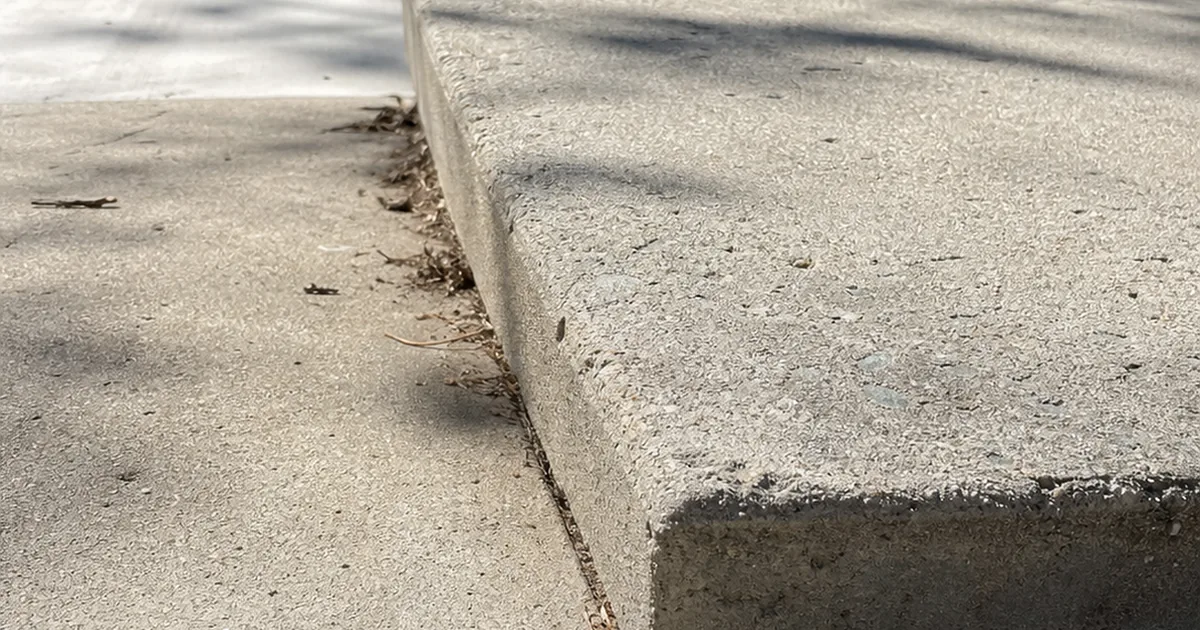
That is the shape of this finding. Concrete that was poured seventy years ago is being moved by trees that were planted seventy years ago, and the result is a property with trip hazards that a seller has lived with so long they have stopped seeing them.
This guide is for the agent working Lakewood and the surrounding Gateway Cities markets, including nearby Downey, Bellflower, and Long Beach, where the same age of concrete and the same mature street trees produce the same conditions. Here is what is actually happening, what the liability looks like, and how to handle it before a buyer closes.
Why this matters for the agent
Here is what is at stake. A trip hazard is a liability issue before it is a repair issue. A vertical offset of half an inch or more at a walkway joint is a fall waiting to happen, and the property owner is responsible for it. That includes the driveway, the front walkway, the patio, and in many jurisdictions the sidewalk in front of the house as well. When a buyer inherits a property with multiple trip hazards, they inherit the liability the same day, and a fall injury on a defective walkway is the kind of claim that homeowner’s insurance pays attention to.
Lakewood makes this an agent’s issue for two reasons that compound each other. The first is uniformity. This is a city where roughly 17,500 homes were built in the span of a few years in the early 1950s, all on slab foundations, all with similar driveways and walkways poured in the same era using the same methods. Every piece of original flatwork in the city is the same age and is failing on the same schedule. The second is the trees. The street trees were planted when the houses were built, and after seventy years of growth, their root systems are under and through every piece of concrete near them. Liquidambar and Ficus, which are common here, are particularly aggressive. The result is a city-wide pattern of heaved and cracked flatwork that is visible on almost every block.
What flatwork is and what moves it
Flatwork is the general term for any flat concrete on the property: the driveway, the front walkway, the side yard walks, the patio, and the garage floor. On a Lakewood tract home, the original flatwork was poured at the same time as the house, usually on compacted fill over the native soil, with control joints scored or tooled in at intervals so that when the concrete cracks, as all concrete does, it cracks at the joints where it is meant to.
That system works as long as what is underneath the slab stays put. What moves it, in order of frequency here, is tree roots, settlement and erosion, and expansive soil. In Lakewood, tree roots are the dominant cause by a wide margin.
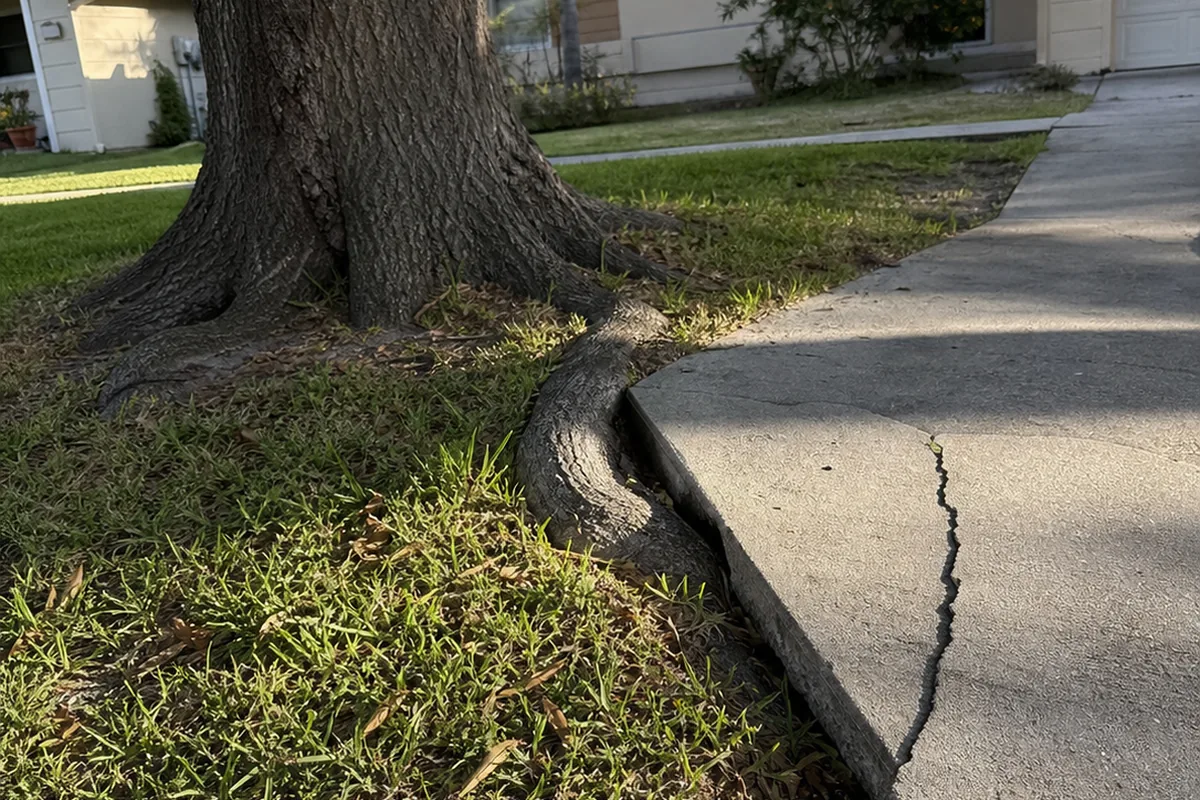
Tree roots follow water and grow outward. They do not respect the boundary between the parkway and the private hardscape. A root that starts under the street tree ends up under the driveway, the walkway, and sometimes the patio. As the root grows in diameter it lifts whatever is on top of it, and because concrete does not bend, the slab tilts, the joint opens, and a vertical offset appears. That offset is the trip hazard, and once it starts it does not reverse.
Two boundaries worth marking. This article is about the concrete hardscape and what tree roots and settlement do to it. It is not about surface water drainage and grading, which is a separate subject dealing with where water goes once it hits the ground. And it is not about expansive clay foundation movement or differential settlement on former orchard land, both of which involve the soil chemistry acting on the foundation itself. Here we are talking about roots lifting slabs.
Schedule a Lakewood inspection →
What agents should tell every buyer
When a buyer is under contract in Lakewood, give them these points before the inspection.
- Walk the entire hardscape before the inspection. Driveways, front walks, side yard paths, and the patio. Look for offsets, tilted panels, and cracks that have opened over time. A trip hazard that the seller walks around out of habit is one the buyer inherits on day one.
- The tree that is lifting the concrete may not be on the property. Street trees are typically in the public parkway but their roots do not respect the property line, and responsibility for the hardscape damage often falls on the property owner regardless.
- A half-inch vertical offset is the general threshold where a trip hazard becomes a real liability concern. Anything over an inch is hard to miss and hard to defend.
- Grinding down a raised joint is a temporary fix. The root that caused it is still growing, and the offset usually returns within a few years.
- Full replacement of a driveway or walkway, including root pruning or a root barrier, is the real fix, and it is priced per square foot. Get a concrete contractor’s bid, not a guess.
- Where the same roots that are lifting the driveway run under or near the foundation, ask whether the foundation shows any related movement. That is a different finding but the same cause.
A buyer who walks the hardscape with these points catches the condition before the inspection even starts.
Red flags during showings
These are visible from the curb. You do not need any tools.
- A driveway panel that is clearly higher than the one next to it, with a sharp vertical edge at the joint.
- A front walkway with cracked or tilted sections, especially near a mature tree.
- A large tree in the parkway or the front yard with visible surface roots running toward the hardscape.
- Concrete that has been ground, patched, or ramped at joints, which means the problem was already known and treated rather than fixed.
- A patio with cracked panels lifting at the edges, especially where a tree root path is visible in the lawn or planting bed.
- A garage floor slab that has heaved at the apron where it meets the driveway.
- Missing or crumbled concrete along the driveway edges, which is normal aging but compounds the trip-hazard picture.
If we see these, we measure the offsets, photograph them, and tell the buyer what they are looking at.
The negotiation playbook
When a flatwork and trip-hazard finding surfaces in Lakewood, the deal usually moves one of a few ways.
The first path is a credit for the flatwork replacement. The buyer gets a bid from a concrete contractor for tearing out the affected sections, pruning or cutting the offending roots (or installing a root barrier), and pouring new panels. This is the cleanest outcome and the most common one. The bid is the document that anchors the number.
The second path is a seller-funded repair before closing. Less common here because concrete work takes time and scheduling, but if the seller is willing and the scope is limited, a completed repair removes the liability before transfer.
The third path is the buyer accepts the condition with full knowledge and plans the work after closing. On a property where the trip hazards are modest and the buyer’s priority is elsewhere, this is sometimes the practical choice. Document the informed decision. Do not let it become something that gets forgotten.
The fourth path is the deal includes a broader scope. When the roots that lifted the driveway also run under the foundation, the trip hazard becomes part of a larger structural and drainage conversation rather than a standalone concrete repair. In that case, the structural engineer’s evaluation drives the scope, not the concrete bid alone.
How the inspection actually catches it
This is one of the most visible findings we document, and one of the most frequently overlooked by sellers who have lived with it for years. We walk the entire hardscape, every joint, every edge, and every panel, and measure the vertical offset at each trip hazard with a straight reference. We photograph each offset with a scale reference in frame and note its location on the property.
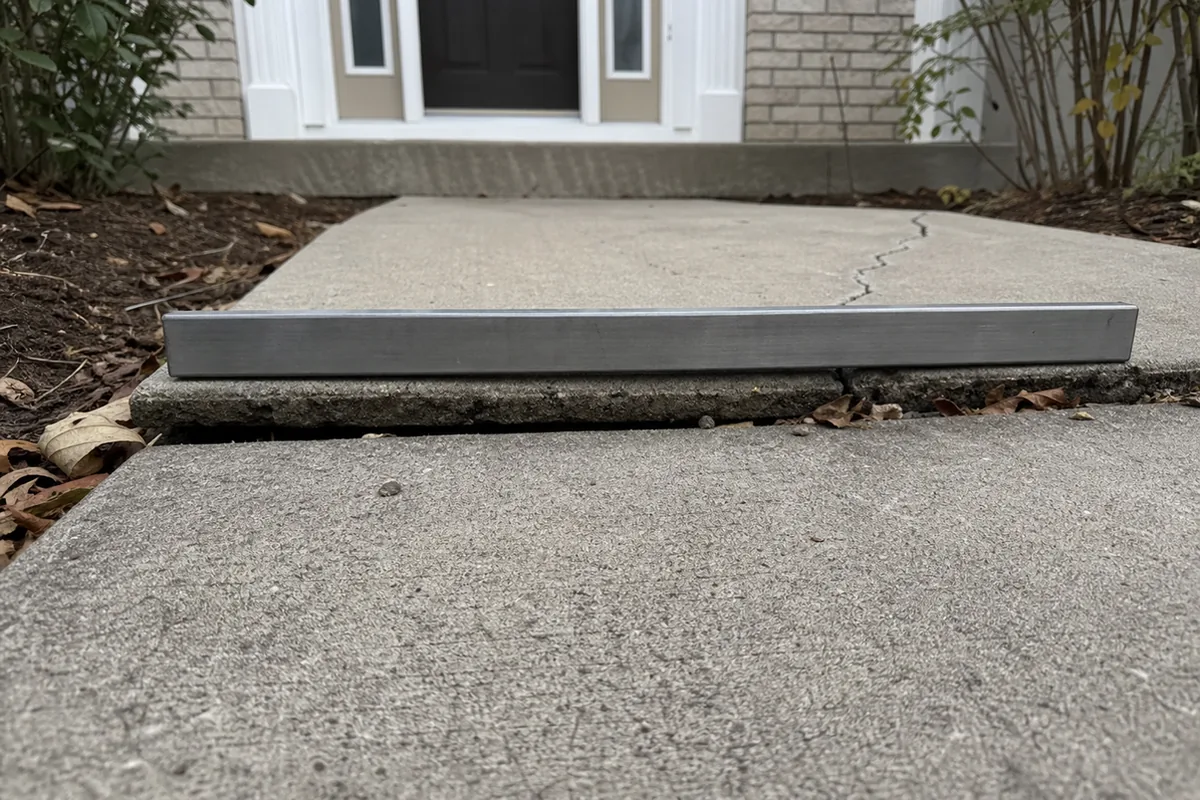
We look at the source. Where a mature tree is the obvious cause, we note the tree, its location, and the direction the roots appear to be running. Where the cause is settlement or erosion rather than roots, we note that as well, because the repair is different. We check whether the same root system appears to reach the foundation, because that is a different and more serious finding.
We note the condition of the concrete itself, not just the offsets. Spalling, crumbling edges, and wide open cracks that go beyond normal aging all go in the report, because they affect the scope and cost of the eventual repair.
What we do not do is cut roots, estimate root growth, or determine whether a tree is healthy or in decline. That is an arborist’s scope, and when a mature tree’s roots are causing significant structural damage, we say plainly that an arborist and a concrete contractor should both be consulted. Our guide on how to read a home inspection report explains how referrals like that are flagged in writing.
Quick FAQ
Is a cracked driveway a structural problem or a cosmetic one? It depends on what caused the crack and whether the slab has moved. A hairline control-joint crack in flat concrete is normal aging. A panel that has been lifted two inches by a tree root is structural movement, and the offset is a liability. We document both and tell you which is which.
Who is responsible for the sidewalk in front of the house? In most jurisdictions the property owner is responsible for maintaining the sidewalk adjacent to their property, even though the city owns it. A trip-hazard injury on a public sidewalk can still produce a claim against the homeowner. This is worth verifying with the city before closing.
Can the tree be removed instead of the concrete replaced? Sometimes, but mature street trees in the parkway typically require city permission to remove, and many are protected. Root pruning or a root barrier is the more common approach, and it should be done by an arborist in coordination with the concrete contractor to avoid killing the tree or weakening it structurally.
How much does a driveway replacement cost? It varies by square footage, access, and whether root work is involved. As a general reference, concrete replacement in this area runs in the range of several dollars per square foot plus demolition and haul-off. A full Lakewood driveway replacement including root barriers can be a mid-four-figure to low-five-figure project. Get a contractor’s bid.
Does this affect the foundation? It can. The same roots that lift a driveway can run under a slab foundation, and the same settlement that tilts a walkway can affect the house. We check for that separately and refer it to a structural engineer when we see it.
The honest summary
Lakewood was built all at once, paved all at once, and planted all at once, and after seventy years the trees are winning. Driveways, walkways, and patios across the city are being lifted and cracked by root systems that have had decades to grow, and the sellers who have lived with them for years have often stopped noticing the offsets. The buyer stepping onto the property for the first time, or their parents, or a delivery driver, notices.
We will walk every piece of concrete on the property, measure the offsets, photograph them, note the trees that are causing them, and tell your buyer plainly what they are inheriting. The concrete is not hard to fix. The question is whether it was priced into the deal or discovered after closing. That is the job.
See what every inspection includes → · Read our FAQ → · Explore Lakewood home inspections →
Related reading
- Where the Water Goes in Tarzana. Surface water drainage and grading, a different exterior subject that often compounds the flatwork picture.
- Expansive Clay Foundation Movement in Menifee. When the soil itself moves the foundation, a different mechanism from root heave.
- Differential Settlement on Former Orchard Land in Corona. Foundation movement from soil conditions rather than tree roots.
- How to Read a Home Inspection Report in California. How exterior findings like trip hazards are prioritized alongside structural and system defects.
- Firestops and Fire Blocking in Paramount. A concealed structural fire-safety topic from a neighboring Gateway city, unrelated to flatwork but useful context on inspection depth.