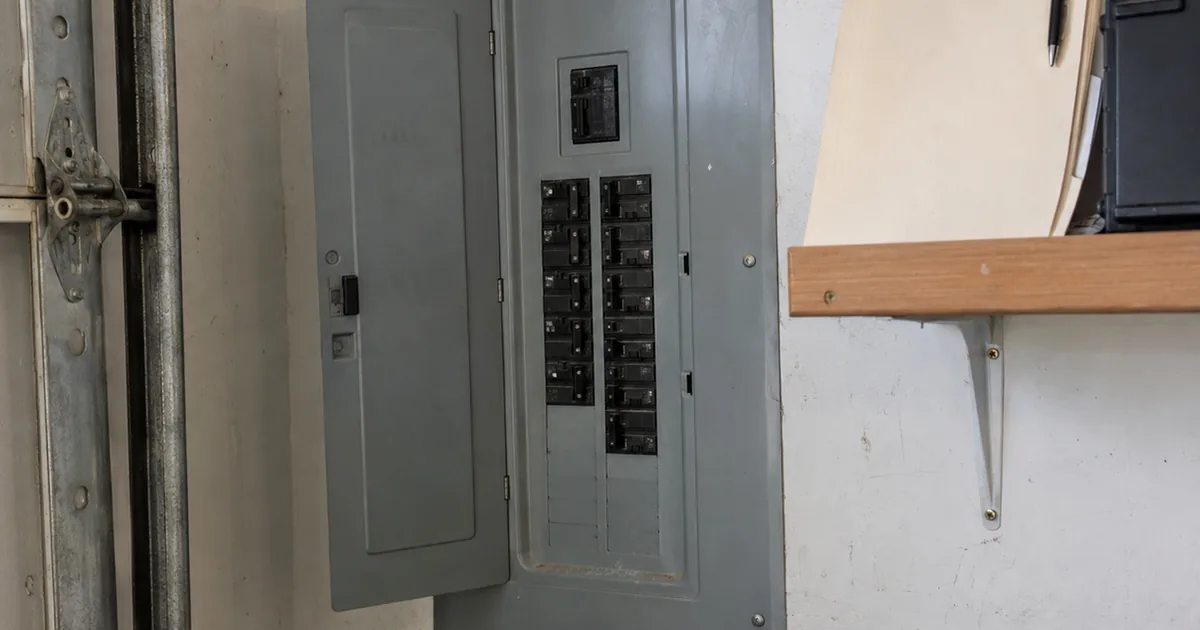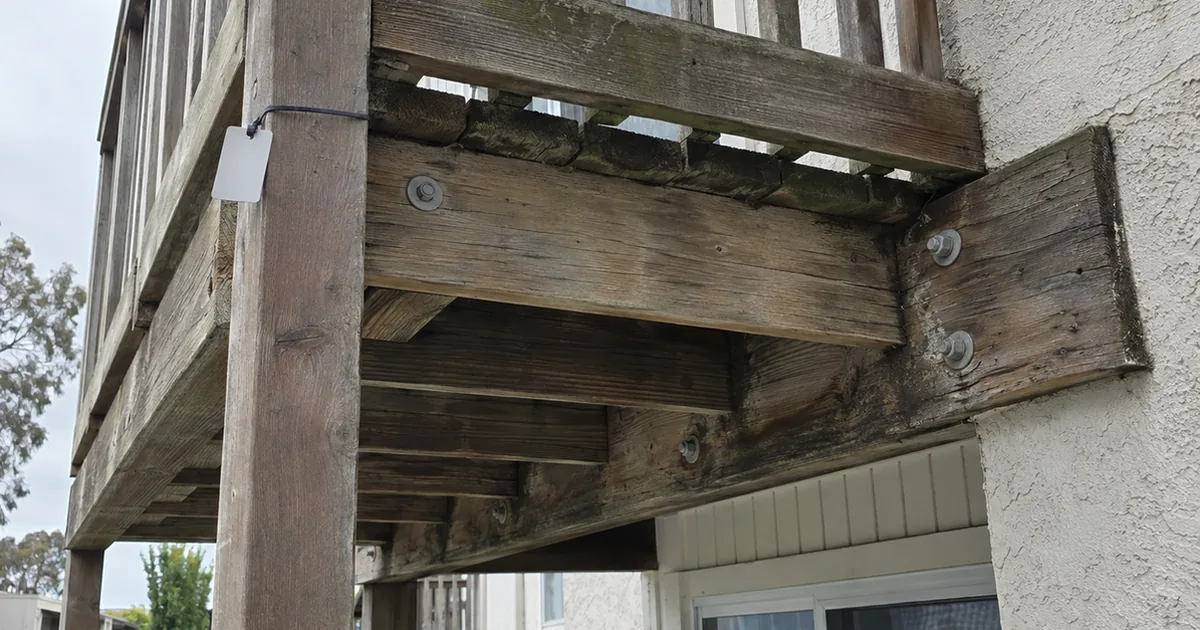
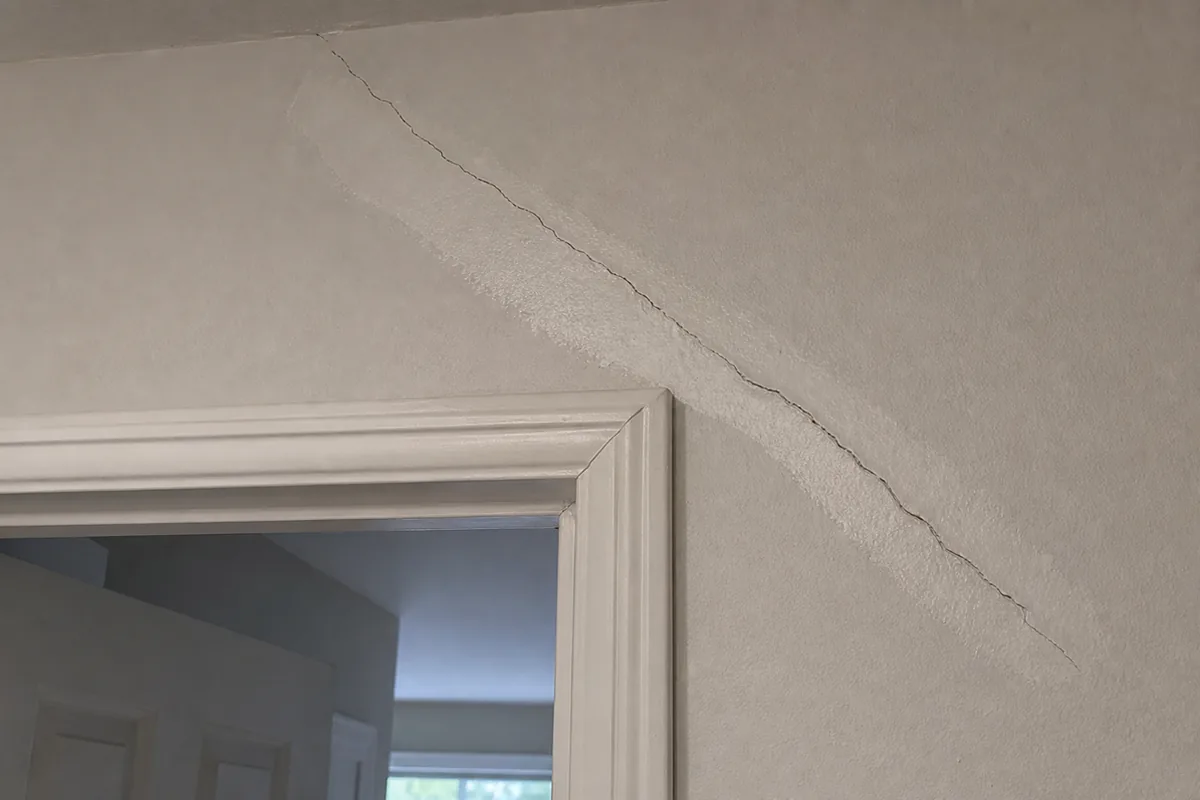
The seller was honest about it: the crack above the patio door had been patched twice. Each time it was filled, painted, and forgotten, and each time it came back, a little wider, running the same diagonal line. The home was a lovely hillside house in Simi Valley with a view over the valley, sitting on a graded pad cut into the slope. When the inspector walked the exterior and the interior together, the pattern told the story the patching had hidden: this was not a cosmetic crack. Something under the house was moving.
We are keeping the address private and the details composite, because in Simi Valley this is the question that matters most on a hillside lot, and it is the one most easily painted over. The hills here carry old landslides, and a lot of the hillside housing was built by carving and filling those slopes into level pads. Most of those homes are fine. Telling the fine ones from the moving ones is the entire job.
Here is how that one resolved, and what it should change about how you handle a Simi Valley hillside home.
Schedule a Simi Valley inspection · Same-day report · Pay-at-closing available
Why this matters for the agent
Simi Valley sits in a basin ringed by the Santa Susana Mountains and the Simi Hills, filled with hundreds of feet of alluvial sediment, and its hillside neighborhoods were built largely by regrading natural slopes into terraced, cut-and-fill lots. The surrounding hills carry widespread ancient and active landslide deposits. That combination, old landslides plus engineered grading, means a hillside home here can sit on ground that is stable, or on ground that is slowly moving, and the difference is not always visible at a glance.
The risk for the agent is that earth movement is the most expensive thing a hillside home can hide and the easiest to mask. A seller can patch the cracks, shim the doors, and repour a section of flatwork, and the house shows beautifully. A buyer who closes without understanding the slope can inherit a five- or six-figure geotechnical problem. A buyer who has the movement evaluated buys with real information. The agent who knows to look, and to route it to a geotechnical engineer, is the one who keeps that from becoming a lawsuit.
What hillside earth movement actually is
A few different things get lumped together as the hillside moving, and it helps to separate them.
A landslide is mass movement of a slope, which can be a slow, deep-seated creep over years or a sudden failure. Many Simi-area hills contain ancient landslide deposits that can reactivate, especially when water and grading change the balance. Settlement is the compaction of fill: when a pad is built by cutting the high side and filling the low side, the fill can settle over time, and a house that straddles the cut-fill line can crack where the two move differently. Slope creep and expansive soil add slower, seasonal movement. And drainage ties them all together, because water is what most often turns a stable slope into a moving one.
The key idea for a buyer is that these are ground problems, not house problems. The cracks, the sticking doors, and the separating flatwork are symptoms; the cause is under the foundation, which is why a home inspection flags it and a geotechnical engineer diagnoses it.
Why it fails (the part most agents skip)
The thing that catches people is that the house can look freshly maintained and still be moving, because the symptoms are easy to cosmetically repair and the cause is invisible.
Earth movement shows up as a pattern, not a single flaw: diagonal cracks at the corners of doors and windows that follow the direction of movement, cracks that have been repaired and reopened, floors that slope or feel out of level, doors and windows that stick or have been re-trimmed, separation between the house and the patio, walkway, or pool deck, retaining walls that lean or crack, and drainage that runs the wrong way. Any one of these can be ordinary; together, trending in one direction, they point to the ground.
The reason it is so costly is that you cannot fix the ground from inside the house. Stabilizing a moving hillside pad can mean caissons, retaining structures, subdrains, and regrading, the kind of work that a geotechnical engineer scopes and that runs well into five or six figures. That is exactly why catching it before closing, rather than after, is the whole game.
What agents should tell every buyer
Tell them that on a Simi Valley hillside lot, the slope is part of what they are buying, and it deserves the same scrutiny as the roof or the foundation. Framed that way, a careful look at movement is normal due diligence, not paranoia.
Tell them to read the repairs, not just the finishes. Ask the listing side directly about any history of foundation work, crack repair, drainage work, or geotechnical reports, and treat patched-and-repainted cracks as a reason to look closer, not a sign the problem is solved. A prior geotechnical report, if one exists, is gold.
Tell them where the inspection hands off. A home inspector documents the symptoms and the pattern across the whole property; a geotechnical engineer evaluates the slope, the fill, and the cause and says what it will take to stabilize it. Setting that expectation keeps everyone calm and points the decision at the right expert. For how a related foundation question runs through a deal, our post-tension slab guide follows the same flag-then-specialist pattern, and our retaining-wall and hillside guide covers the drainage and wall side of the same picture.
Red flags during showings
You can read a moving hillside home before the inspector confirms it, if you look at the whole property as a system.
Walk the perimeter and the flatwork. Cracks and separation where the house meets the patio, driveway, walkways, or pool deck, and flatwork that has been re-poured in sections, point to ground that is shifting under the improvements.
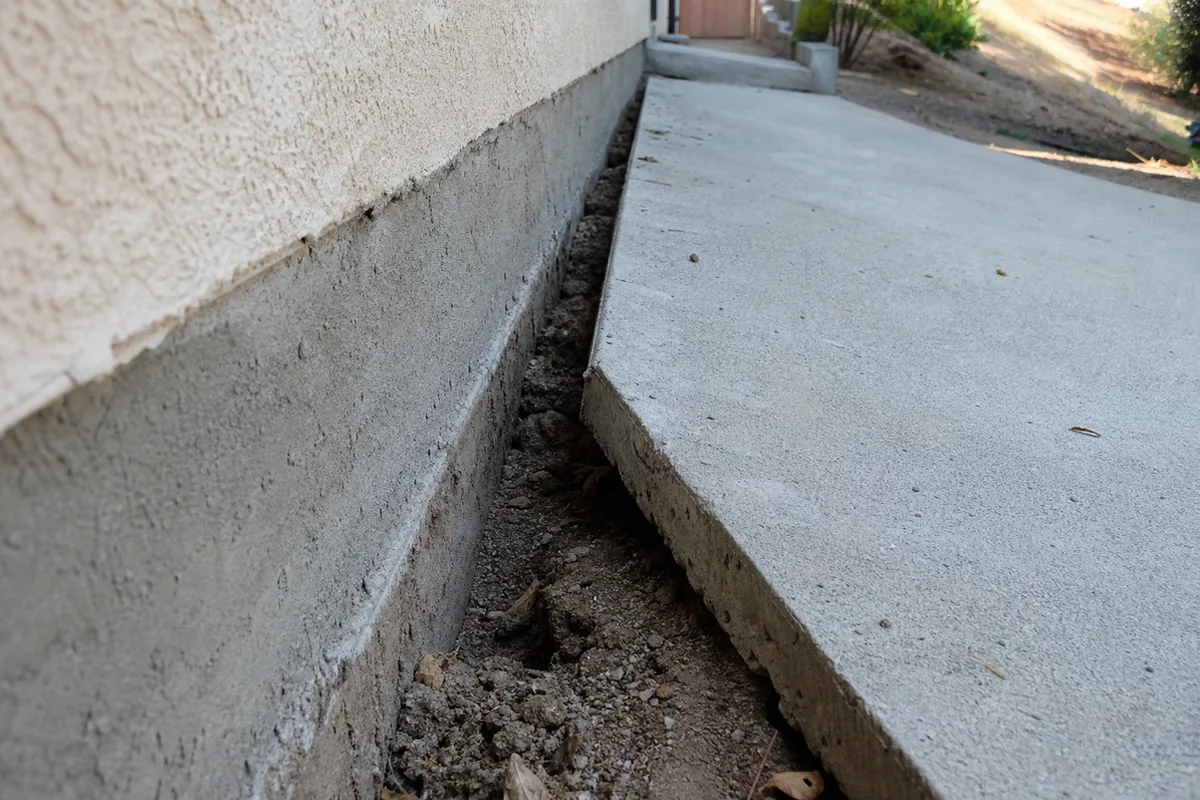
Read the cracks for direction and history. Diagonal cracks radiating from door and window corners, stair-step cracks in stucco or block, and cracks that have clearly been patched and reopened are the classic signs. A single hairline is nothing; a consistent diagonal pattern is something.
Feel the floors and try the openings. Floors that slope or bounce, doors and windows that stick or have been planed and re-trimmed, and gaps that open at the tops or bottoms of door frames all suggest the structure is being racked.
Look at the slope and the drainage. Leaning or cracked retaining walls, a hillside above or below the house with hummocky or bulging ground, and drainage that points toward the house or the slope rather than away are the upstream causes worth noting.
The negotiation playbook
When an inspection flags a pattern of movement, there are four ways the deal tends to go.
The first path is the geotechnical evaluation before any number. Because the home inspection identifies the symptoms but only a geotechnical engineer can diagnose the cause and scope the fix, the right first move is almost always a short extension for that evaluation. It is the single most important step, and it turns a frightening unknown into a defined engineering question.
The second path is the seller repair or stabilization. If the engineer identifies a fixable cause, drainage correction, a subdrain, a retaining or underpinning solution, the seller can complete it before closing, with the engineer’s scope defining the work.
The third path is the credit. If the buyer would rather control the work, a price reduction or credit sized to the engineer’s estimate lets them stabilize the property on their terms. On a real movement problem, that number can be large, which is exactly why it needs the engineer, not a guess.
The fourth path is the informed walk. Some movement problems are deep, active, and expensive enough that the right decision is to walk while the contingency protects the deposit. That is a legitimate outcome, and it is far better reached during due diligence than discovered after the next wet winter.
How the inspection actually catches it
A home inspection of a Simi Valley hillside home reads the whole property, not just the rooms. We document the crack patterns inside and out and note their direction and any signs of prior repair, check the floors for slope and the doors and windows for racking, and walk the exterior for separation between the house and the flatwork, pool deck, and walkways. We examine the retaining walls and the site drainage, because water is so often the trigger, and we use thermal imaging to find related moisture, as our infrared scanning guide explains.
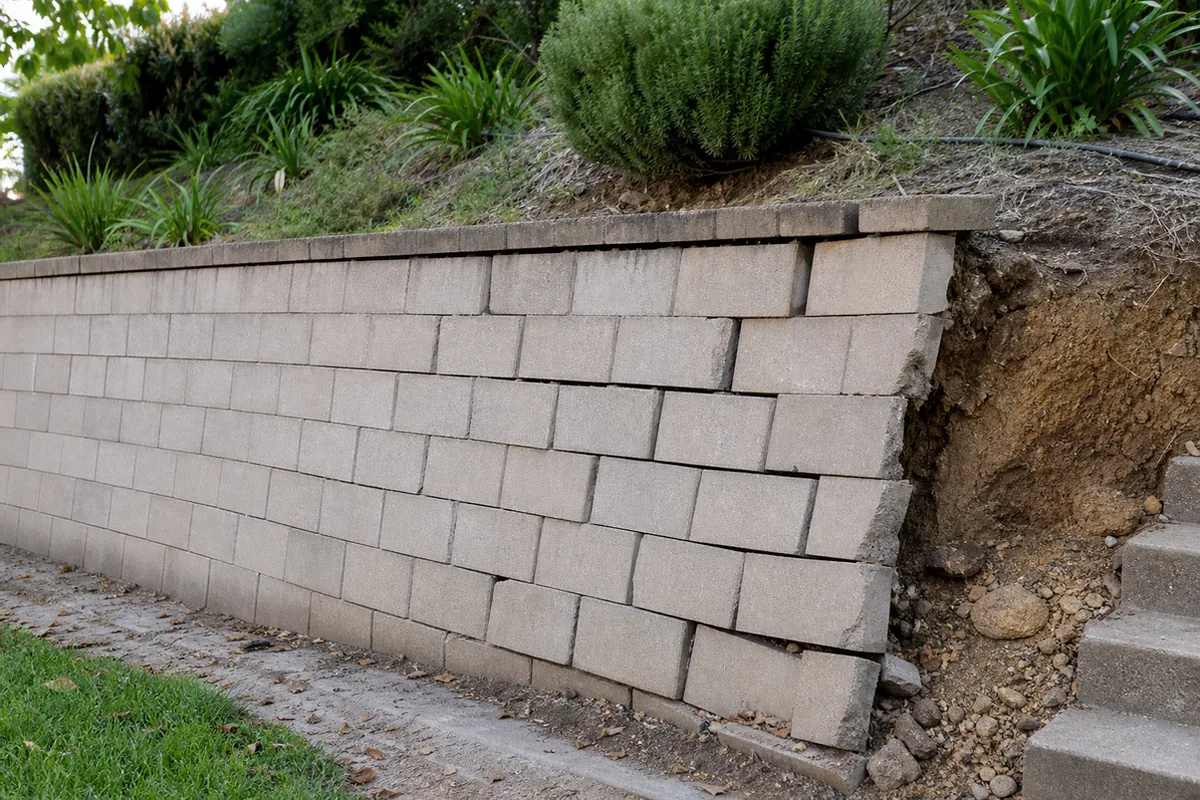
Then we flag clearly when the pattern points to earth movement and a geotechnical engineer should evaluate the slope, so the most expensive question in a hillside purchase gets the right expert before closing rather than after.
Quick FAQ for agents
Is every Simi Valley hillside home moving? No. Most are stable. But the hills carry old landslides and much hillside housing sits on cut-and-fill grading, so movement is a real possibility that deserves a careful look. The inspection tells the stable ones from the suspect ones.
Can a home inspector confirm a landslide? No. We document the symptoms and the pattern and flag when a geotechnical engineer should evaluate the slope and fill. Diagnosing the cause and scoping the fix is geotechnical work.
Why is movement so expensive to fix? Because you cannot fix the ground from inside the house. Stabilizing a moving pad can require caissons, retaining structures, subdrains, and regrading, which a geotechnical engineer scopes and which can run into five or six figures.
Are patched cracks a red flag? They can be. A crack that was repaired and reopened, especially in a consistent diagonal pattern, suggests ongoing movement rather than a one-time settling. We note repair history.
How long does it take to inspect? A normal two-to-four-hour inspection, reading the whole property for the pattern. The report comes the same day, with any recommendation for a geotechnical evaluation clearly flagged.
The honest summary for agents
Simi Valley’s hillside homes were carved into slopes that carry old landslides, and the most important question on one of those lots, whether the ground is moving, is also the easiest to paint over. Your value as the agent is reading the whole property for the pattern, treating patched cracks as a prompt rather than a fix, and routing any real sign of movement to a geotechnical engineer before closing. That is what turned a crack that kept coming back into a geotechnical evaluation, a defined scope, and a buyer who made a clear-eyed decision instead of inheriting a moving hillside.
Related reading
- Where the Water Goes in Tarzana: An Agent’s Guide: the drainage and grading side of the same hillside picture, one valley over.
- The Camarillo Home Where the Moisture Came Up Through the Floor: the other Ventura County ground question, where water rises instead of the slope moving.
- Post-Tension Slab Foundations in Rancho Cucamonga: An Agent’s Guide: how a related foundation question is flagged and handed to a specialist.
- Retaining Walls and Hillside Drainage in Poway: An Agent’s Guide: the drainage and wall side of the same hillside picture.
- San Bernardino Earthquake and Liquefaction: An Agent’s Guide: when the ground moves because of seismic settlement rather than an old landslide.
- Menifee Foundation Cracks and Expansive Clay Soil: the flatland version, where the soil swells and shrinks under the slab instead of sliding.
- Why Infrared Scanning Matters in California Homes: how thermal imaging finds the moisture that so often triggers movement.
- Post-Fire Debris Flow and Hillside Drainage in La Cañada Flintridge: the foothill version, where a burned slope above the lot moves as mud and rock rather than a slow landslide.
- Corona Orchard Land Foundation Settlement: a third way the ground moves under a house, where expansive soil in former citrus-grove land drives differential settlement instead of a hillside sliding.
- Driveway and Flatwork Trip Hazards in Lakewood. Concrete movement from tree roots on flat lots, a different cause from hillside earth movement.
See what every inspection includes, how to read your inspection report, and our inspection FAQ. For city-specific pages, start with Simi Valley, Thousand Oaks, and Camarillo. For a coastal hillside with its own documented slide history, see our La Jolla Mount Soledad landslide guide.
If you have a Simi Valley hillside home in escrow, we can read the whole property for the signs of earth movement and tell you clearly when it is time to bring in a geotechnical engineer. For a terraced decomposed-granite hillside with its own multi-tier retaining wall and drainage questions, see our San Marcos hillside guide.
Schedule a Simi Valley Inspection → · Call 1-888-88-INSP-9
- Beam and Post Deterioration in Oakland. What carries a downslope house structurally, and where the structural engineer takes over from the inspection.