Standing Seam or Exposed Fastener: A Canyon Lake Metal Roofing Guide for Agents
From the street, the roof read as clean, uniform panel runs, the kind of roof that looks like it should not need much attention for another twenty years. A closer walk of the eaves told a different story. A run of exposed-fastener panels near the garage wing carried a dozen screws with the rubber gasket washers shrunk down to hard, cracked rings, several with a faint rust halo bleeding out around the shaft. None of it was visible from the ground, and none of it showed up as a stain on the ceiling below, yet it was exactly the kind of finding a buyer needs before removing contingencies on a lake-view custom home.
We are describing this as a composite of a pattern we see on Canyon Lake’s metal roofs, not one identified property or job. Metal roofing shows up here more than in most Inland Empire markets, and it fails in ways that are genuinely different from the composition-shingle and tile roofs an agent may be used to hearing about.
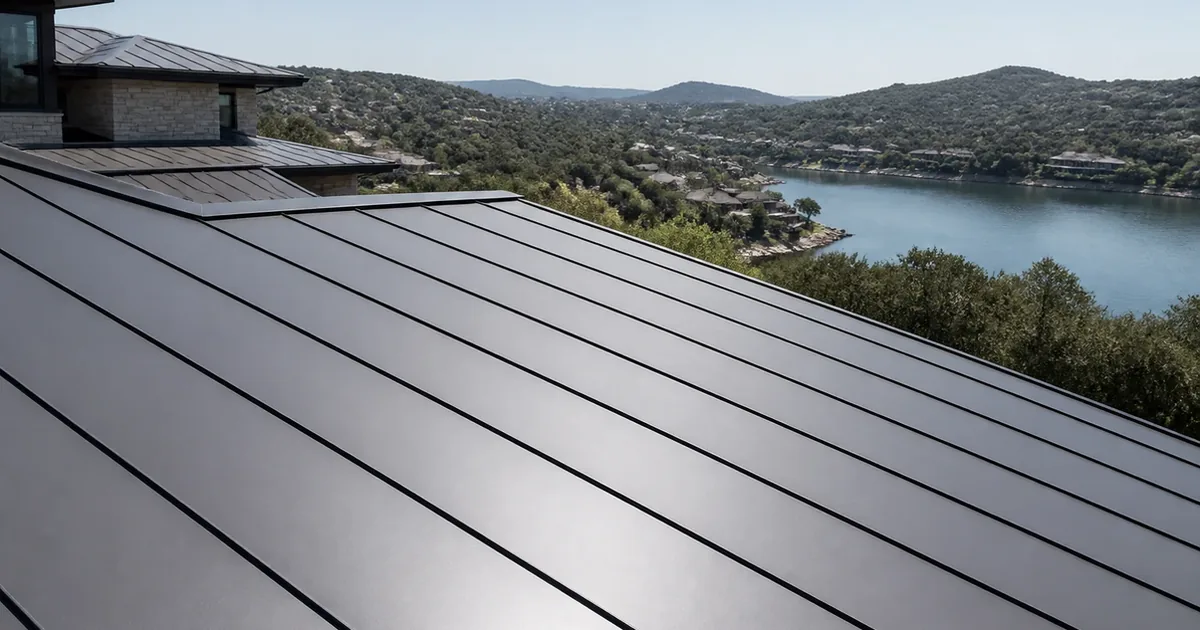
This guide is for the agent working Canyon Lake and the surrounding communities we also serve, including Lake Elsinore, Menifee, and Wildomar, where a growing share of custom and rebuilt homes are choosing metal over composition shingle or tile. Here is why the roof material itself changes what an inspection looks for, the two systems most homes actually have, what genuinely goes wrong on each, and what a buyer should expect from an inspector’s report.
Why this matters for the agent
Canyon Lake is a gated custom-estate market built around a private lake, and it draws a housing stock that ranges from 1970s and 1980s originals to newer rebuilds and infill on waterfront and hillside lots. Metal roofing shows up disproportionately in that upper tier, chosen for its long service life, fire resistance, and the clean architectural look that fits a custom hillside or waterfront home. That makes it a genuine, common premium roofing choice in Canyon Lake in a way it is not in most surrounding tract markets, where composition shingle and tile dominate almost entirely.
A metal roof is not simply a more durable version of a shingle roof. It is a different system with a different set of failure points, and an agent who treats a metal-roof inspection finding the way they would treat a cracked shingle is going to misjudge both the severity and the fix. Oil-canning, for instance, looks alarming to an untrained eye and often is not a functional problem at all, while a scratched factory coating can look cosmetic and become a real corrosion starting point over years. Knowing which is which changes the conversation with a buyer.
The two systems inspectors actually see
Nearly every residential metal roof in Canyon Lake falls into one of two categories, and they do not fail the same way.
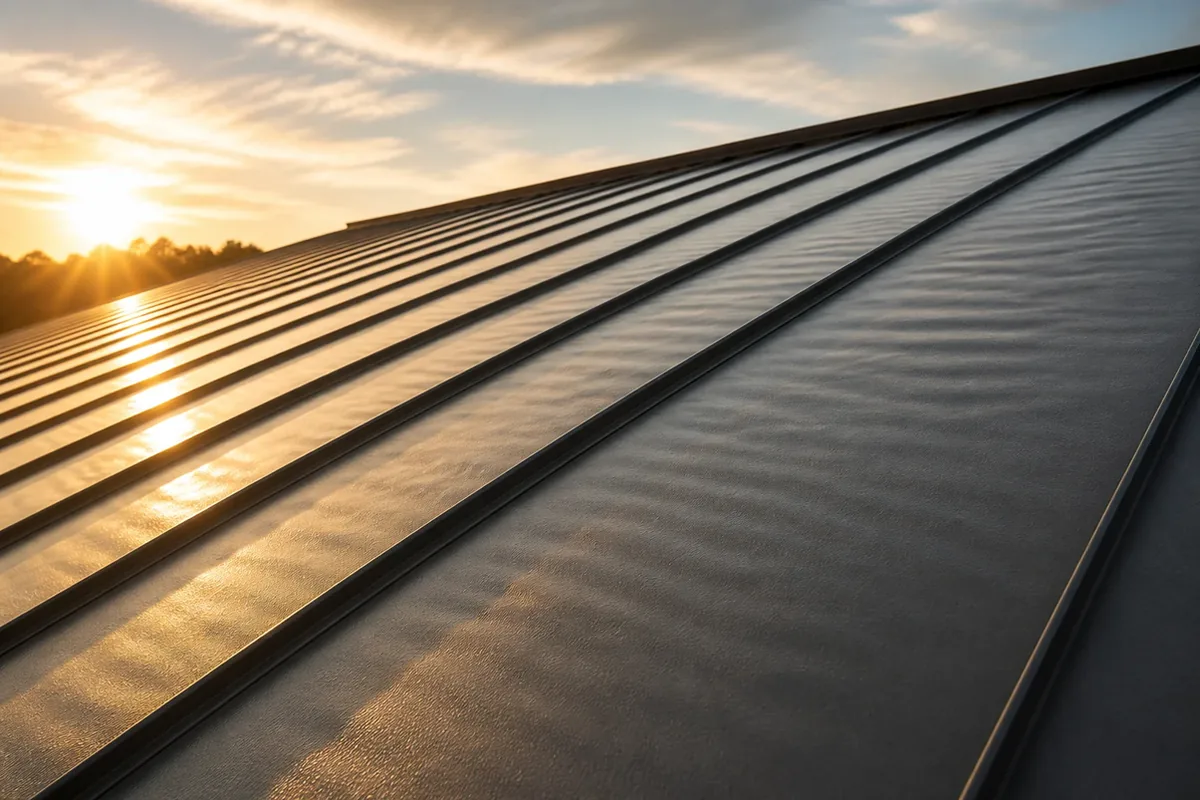
Standing-seam panels are long, flat metal panels joined at raised vertical seams, with the panel fastened to the roof deck through concealed clips hidden inside those seams rather than through screws driven into the panel face. The concealed-clip design is deliberate: it lets the panel expand and contract with temperature swings without tearing itself apart at the fastener, and it means there are no exposed screw penetrations anywhere on the visible roof surface for water to find. Standing-seam is the higher-cost, longer-service-life system, and it is the one most associated with a clean, architectural custom-home look.
Exposed-fastener panels, sometimes called corrugated or ribbed panel systems, are the more affordable, more common alternative. The panel is screwed directly through its face into the roof purlins or deck, and each screw carries a rubber gasket washer under its head that compresses to seal the penetration. It is a simpler, faster installation, and it is common on garages, additions, sheds, and older or more budget-conscious homes throughout Canyon Lake, sometimes alongside a standing-seam main roof.
Telling the two apart from the ground is straightforward: standing-seam shows smooth panel faces with raised seams and no visible fastener heads anywhere; exposed-fastener shows a visible row of screw heads running down every panel, usually with a slightly ribbed or corrugated profile. An agent walking a listing can make this call before an inspector ever shows up, and it is worth doing, because the two systems’ real defects are genuinely different.
What actually goes wrong on a metal roof
Oil-canning: usually cosmetic, often mistaken for a defect
Oil-canning is the wavy, rippled appearance that shows up in the flat areas of a standing-seam panel, most visible at a low sun angle raking across the roof. It comes from the panel’s own thermal expansion and contraction working against the natural give of a thin flat metal sheet, and it is, in most cases, a cosmetic condition rather than a functional one. It does not usually mean the panel is leaking or failing. The problem is that oil-canning looks dramatic to a buyer walking a listing at the wrong time of day, and an agent who does not know the term can end up fielding a panicked question about a roof that is actually performing fine. We document oil-canning when we see it and note explicitly whether it appears purely cosmetic or is accompanied by actual panel distortion, buckling, or a seam that has pulled apart, which is a different and more serious finding.
Exposed-fastener backout and gasket failure
This is the single most common real leak point on an exposed-fastener metal roof, and it is a wear item rather than an installation defect in most cases. The rubber gasket washer under each screw head is what actually seals the penetration, and rubber shrinks, hardens, and cracks with years of sun and temperature cycling. As the gasket degrades, the screw can also work its way slightly loose from thermal cycling of the panel around it, a process called backout. A backed-out screw with a failed gasket creates a direct, if small, water path straight through the panel face. On an exposed-fastener roof with hundreds of fasteners, this is a maintenance item that accumulates over the life of the roof rather than a one-time failure, and it is exactly the kind of finding that is easy to miss from the ground and easy to document from up close.
Improper clip spacing and panel buckling on standing-seam
A standing-seam panel is engineered to move. If the clips that anchor the panel to the deck are spaced incorrectly, installed with the wrong fastener, or if a panel was installed without allowing room for that expansion and contraction, the panel cannot move the way it was designed to, and the result can be forced oil-canning that goes beyond the normal cosmetic range, visible buckling, or in more serious cases a seam that pulls apart or lifts under a temperature swing. This is an installation-quality issue rather than a wear item, and it is worth flagging distinctly from ordinary oil-canning for that reason.
Galvanic corrosion where dissimilar metals meet
Galvanic corrosion happens when two different metals are in direct contact in the presence of moisture, and one of them corrodes preferentially to protect the other. On a metal roof, this shows up most often where a dissimilar-metal flashing, a copper vent stack flashing against a steel or aluminum panel, or steel fasteners driven into an aluminum panel, creates exactly that contact. The less noble metal in the pairing corrodes faster than it would on its own, sometimes visibly within a few years, well ahead of the roof’s expected service life. It is a detail-level defect, usually confined to a penetration or a flashing transition rather than the field of the roof, but it is a real and material-specific failure mode that a shingle or tile roof simply does not have.
Scratched or compromised factory coating
Metal roofing panels are protected by a factory-applied coating, and that coating is the roof’s actual corrosion barrier, not the metal underneath it. A scratch from foot traffic, a dropped tool during another trade’s work, or a poorly executed repair can expose bare metal at that point, and once the coating is broken, that spot becomes a starting point for corrosion that will spread outward over time even though the surrounding panel looks fine. This is easy to underestimate because a scratch looks minor and cosmetic on the day it happens.
What a home inspector can verify, and what needs a roofing specialist
We can visually document fastener condition and gasket integrity across an exposed-fastener roof, panel seam condition and any buckling or separation on standing-seam, obvious corrosion at dissimilar-metal contact points, coating damage and any bare-metal exposure, and how the panels terminate at edges, ridges, and penetrations like vent stacks and skylights. All of that is within the scope of a visual roof inspection, and on a metal roof we photograph and document it closely because so much of it is easy to miss without getting up close.
What we cannot verify from a standard inspection is the structural adequacy of the panel-to-deck attachment beneath the visible surface, or whether an installation met a specific manufacturer’s warranty requirements, since both of those require pulling panels or reviewing installation documentation that is outside a visual inspection’s scope. Where we see a pattern that suggests a systemic clip-spacing or attachment problem rather than an isolated cosmetic issue, we recommend a licensed roofing contractor experienced with metal systems evaluate it directly.
What agents should tell every buyer
- Metal roofing is a genuinely different system from composition shingle or tile, and its real defects, fastener backout, gasket failure, galvanic corrosion, are different from what a buyer may have heard about on other roof types.
- Oil-canning, the wavy appearance in flat panel areas, usually is not a functional defect on its own. It is worth understanding before it becomes a source of unnecessary alarm during a showing.
- Exposed-fastener roofs have hundreds of individual screw penetrations, and gasket wear is a normal, expected maintenance item on a roof of any real age, not automatically a sign of poor installation.
- A scratch in the factory coating looks cosmetic but is a real corrosion starting point, worth documenting and monitoring even when it looks minor.
- Telling standing-seam from exposed-fastener at a glance, smooth panels with no visible screws versus a visible row of fastener heads, helps set expectations before the inspection even happens.
- A roofing specialist’s evaluation is worth requesting specifically when an inspection finds panel buckling, seam separation, or a pattern of corrosion beyond an isolated spot, rather than for ordinary oil-canning or scattered gasket wear.
Red flags during showings
- A visible seam that has pulled apart or lifted anywhere on a standing-seam roof.
- A cluster of rusted or backed-out screws on an exposed-fastener roof, rather than a few scattered ones.
- Visible corrosion staining trailing from a vent stack, flashing, or any point where two different metals meet.
- A scratch or gouge exposing bare metal, especially anywhere water tends to pool or run.
- Panel buckling or distortion that goes well beyond the normal wavy oil-canning appearance.
- Any area where a roofer’s or another trade’s foot traffic has visibly damaged the panel surface.
The negotiation playbook
When a metal-roof finding surfaces in a Canyon Lake escrow, the deal usually moves down one of a few paths.
The first path is no action at all, appropriate when the only finding is ordinary oil-canning with no buckling, seam separation, or accompanying leak evidence, since it is a cosmetic condition rather than a defect.
The second path is a maintenance item noted for the buyer’s future reference, appropriate for scattered gasket wear or a handful of aging fasteners on an exposed-fastener roof that has years of service life left, priced as routine upkeep rather than a repair.
The third path is a roofing contractor’s evaluation before close, warranted whenever corrosion, panel buckling, or a systemic pattern of fastener failure shows up, so the buyer knows the actual scope and likely cost before removing contingencies.
The fourth path is a credit or informed acceptance, appropriate when a finding is real but limited and well understood, and the buyer is comfortable addressing it on their own timeline after closing.
How the inspection actually catches it
We identify which system a Canyon Lake roof actually has before we start, since standing-seam and exposed-fastener need a different close inspection approach, then walk and photograph the panel surface, seams, fasteners, and every penetration and edge termination.
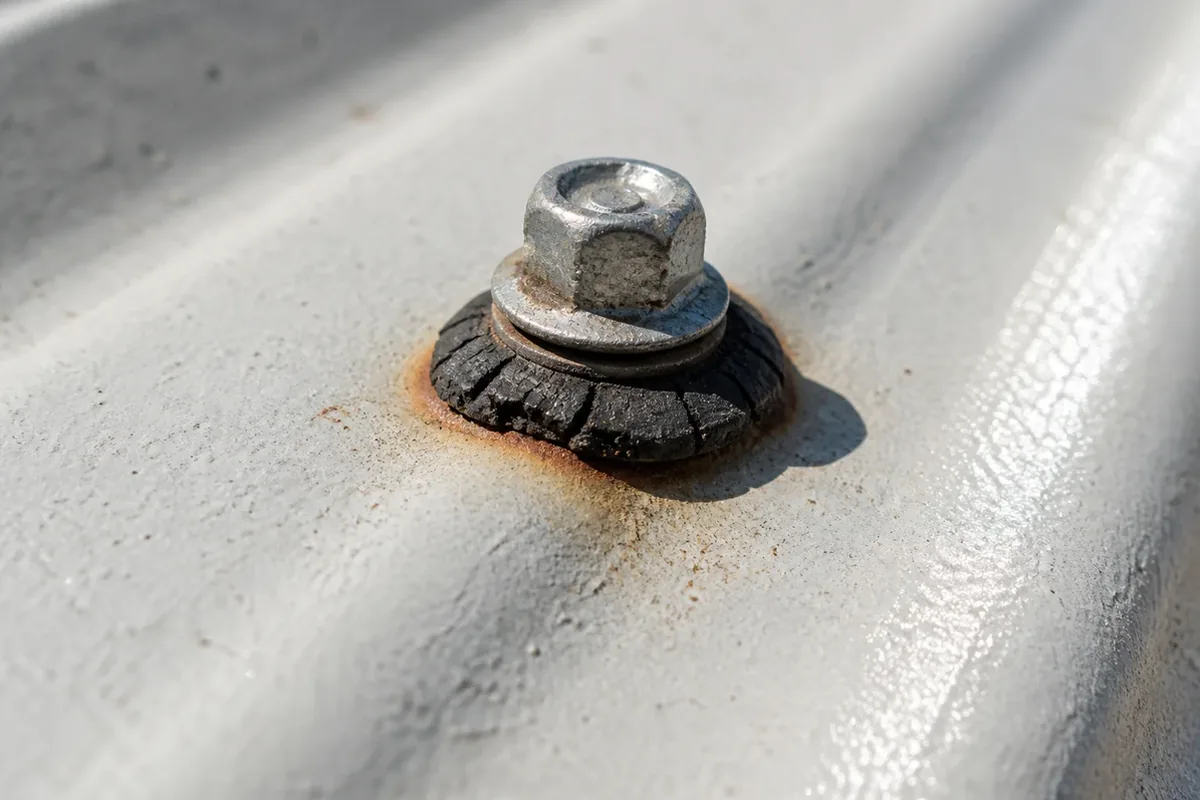
Where we find fastener backout, gasket failure, coating damage, or evidence of galvanic corrosion, we document it with close photography and note whether the pattern is isolated or systemic, since that distinction drives what happens next in the transaction.
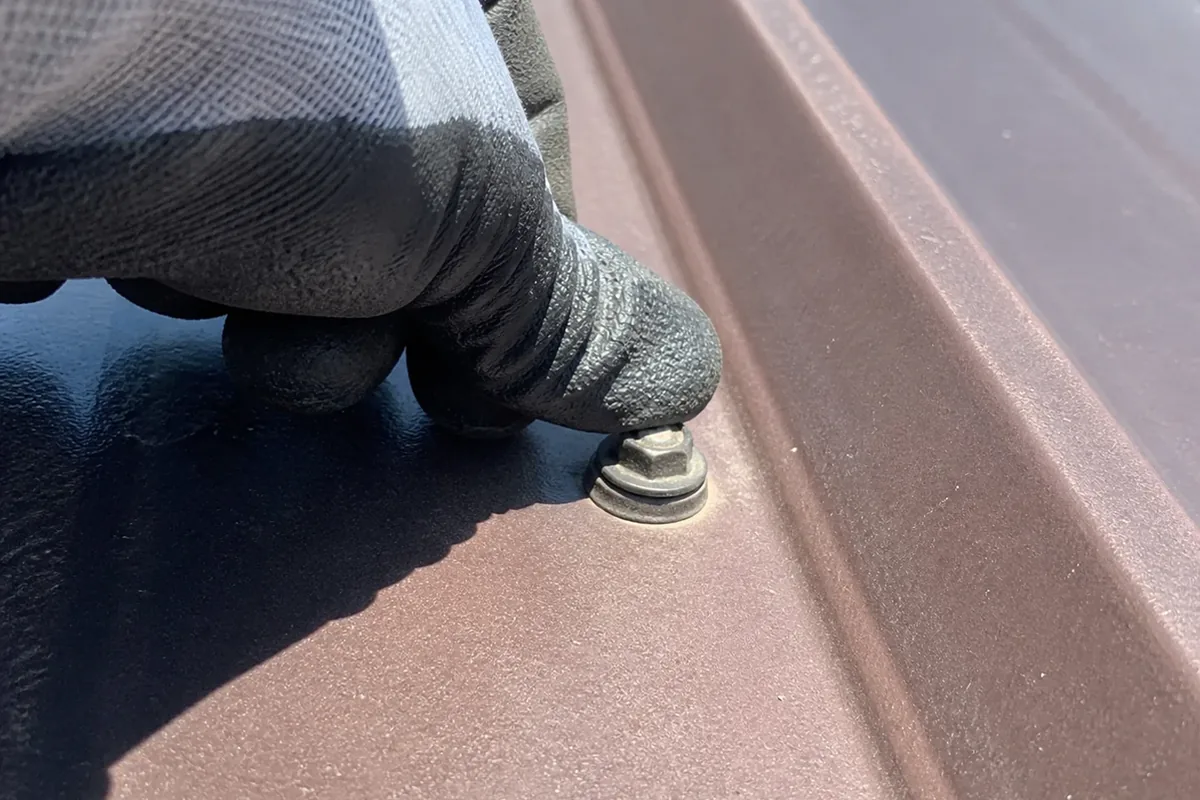
Our what’s included page covers the full roof-system scope of every Canyon Lake inspection, including the drone roof flight that lets us document a large or steep metal roof surface without walking every panel.
Quick FAQ
Is this the same as the tile-roof underlayment articles for Riverside and Murrieta? No. Those articles cover tile roofing and the underlayment beneath the tiles, a completely different material and a different failure mode centered on underlayment degradation under decades of tile coverage. This article covers metal panel systems and their fastener, seam, and coating-level defects.
Is this the same as the Northridge composition-shingle-layers article? No. That article covers asphalt composition shingles and the specific problem of stacking new shingle layers over old ones during a re-roof. Metal roofing is an entirely different material with none of the layering issue that article addresses.
Does oil-canning mean the roof needs to be replaced? Almost never on its own. Oil-canning is typically a cosmetic result of thin metal responding to temperature change. We flag it as a defect only when it comes with actual buckling, seam separation, or a confirmed leak.
How long does a metal roof actually last in Canyon Lake’s climate? Well installed and maintained, both standing-seam and exposed-fastener metal roofs are generally long-lived systems, often decades longer than composition shingle. Actual service life depends heavily on installation quality, coating condition, and how consistently gasket and fastener maintenance has been kept up, which is exactly what an inspection documents.
Should a buyer walk away over a metal-roof finding like this? Rarely on its own. Most metal-roof findings are maintenance items or isolated defects with a defined fix. The negotiation usually turns on whether the finding is isolated or systemic, which is worth confirming with a roofing contractor before removing contingencies.
The honest summary
Canyon Lake’s custom-estate market has a genuine, meaningful share of standing-seam and exposed-fastener metal roofs, and each system carries its own specific, real defects that have nothing to do with the composition-shingle and tile findings covered elsewhere. Oil-canning usually is not the problem it looks like. Gasket wear, fastener backout, galvanic corrosion, and coating damage usually are, and each has a defined fix once it is properly identified.
We identify the roof system and check every relevant failure point by hand and by drone on every Canyon Lake inspection, and we tell you plainly whether what we found is routine maintenance or worth a roofing contractor’s further look before you close.
See what every inspection includes → · Read our FAQ → · Explore Canyon Lake home inspections →
Related reading
- Tile-Roof Underlayment in Riverside. A different roofing material and a different failure mode, useful as a comparison for why the roof material itself changes what an inspection is looking for.
- Retaining Walls and Hillside Drainage in Poway. Relevant background for Canyon Lake’s own hillside and waterfront lots, a different system but a shared hillside-terrain context.
- Elsinore Fault Seismic Readiness in Murrieta. Canyon Lake sits near the same Elsinore Fault Zone; this article covers the seismic-readiness items that matter alongside the roof on a Canyon Lake inspection.
- Why Infrared Scanning Matters in California Homes. How thermal imaging can help document heat and moisture patterns on a large roof surface.
- Wood Shake Roofs in Bonsall. A different roofing material’s own deterioration and layering defects, useful for comparing how failure mode changes with the covering material.
- What a Drone Actually Sees on a Roof. Fastener rows, seams and panel condition photographed square-on from directly overhead.
- SB 1301 and roof-based nonrenewals. The 2028 notice, evidence and roof-age rules for residential policies.