We inspected a manufactured home in one of Oceanside’s 55-plus communities, a few miles inland near the San Luis Rey River. Double-wide, well kept, updated inside. New laminate floors, a remodeled kitchen, fresh paint, a tidy little porch. The buyer was downsizing, paying mostly cash, and expected a quick, clean report. From the living room, the home gave them every reason to.
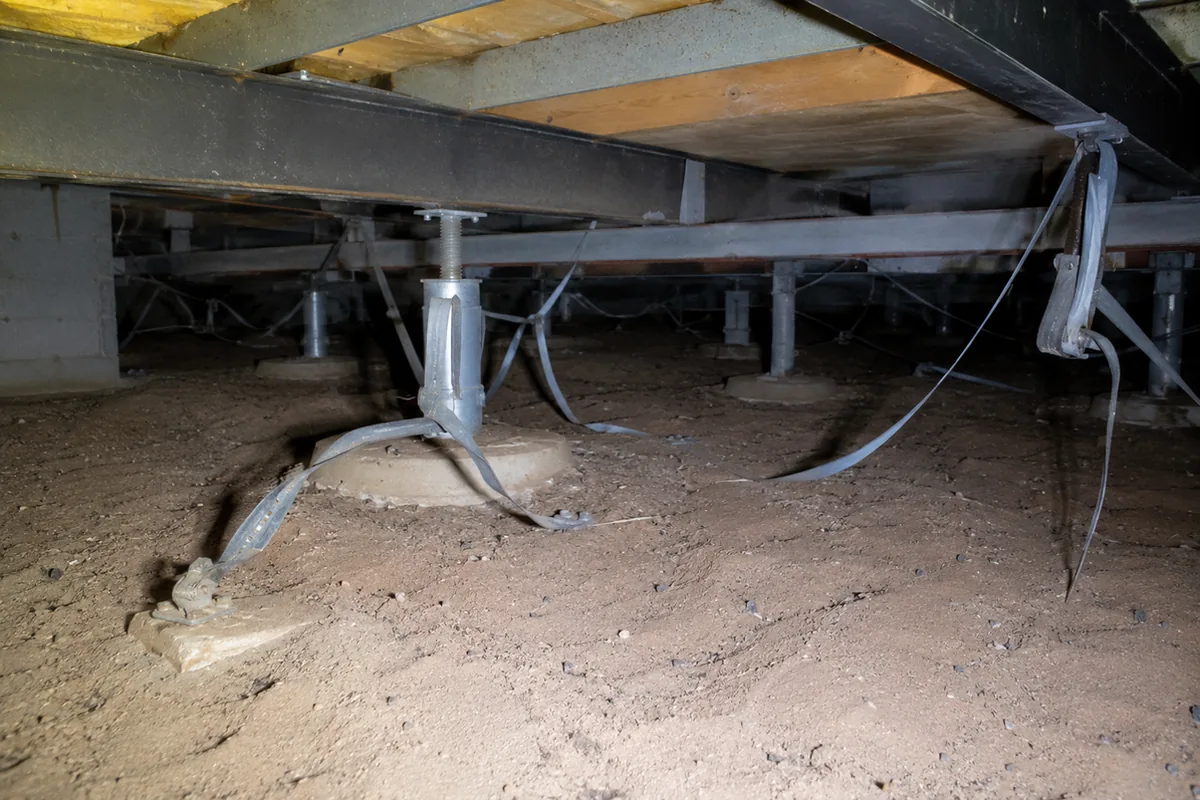
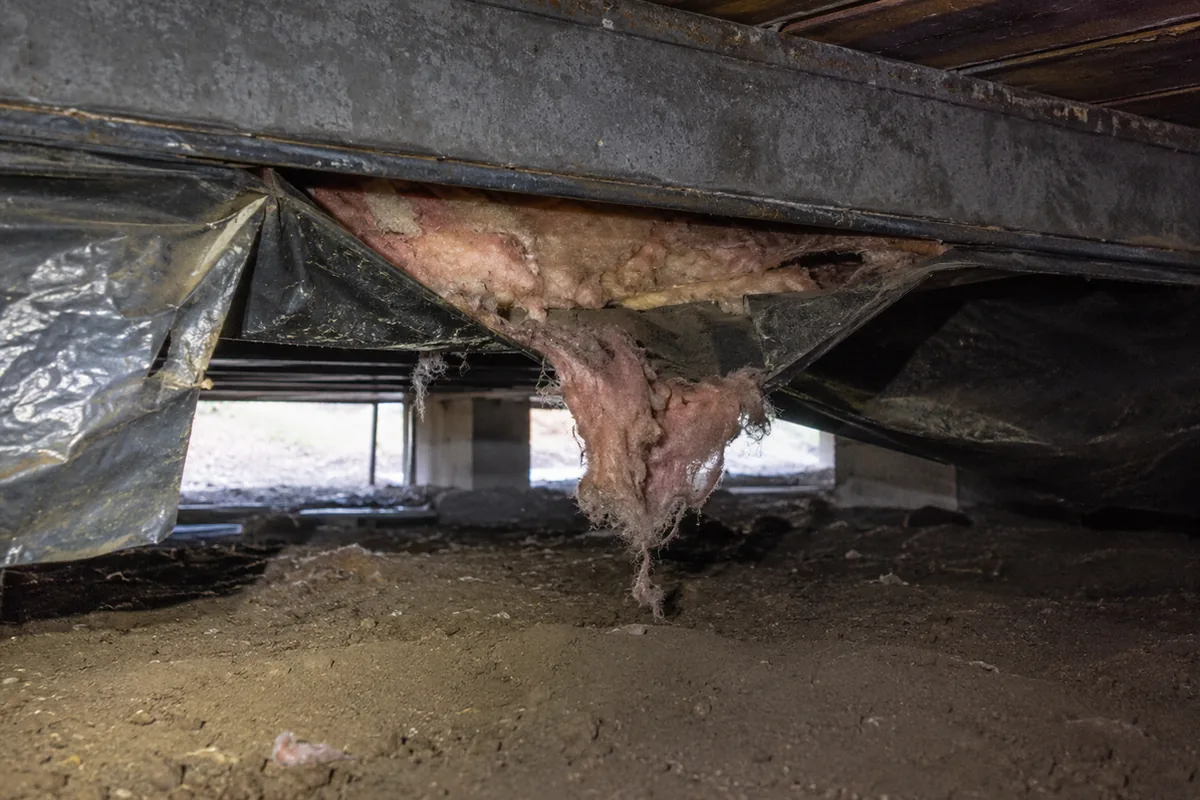
The story was underneath. We went below the home, where the real inspection of a manufactured house happens, and found three things that mattered. The earthquake bracing was inadequate for a California seismic zone, with anchors that were loose and a couple that had pulled. The vapor barrier, the belly wrap that keeps ground moisture and rodents out of the floor system, was torn open and dragging in two places. And the home was sitting on a pier-and-jack setup, still registered as personal property, with no 433A recorded to make it real estate.
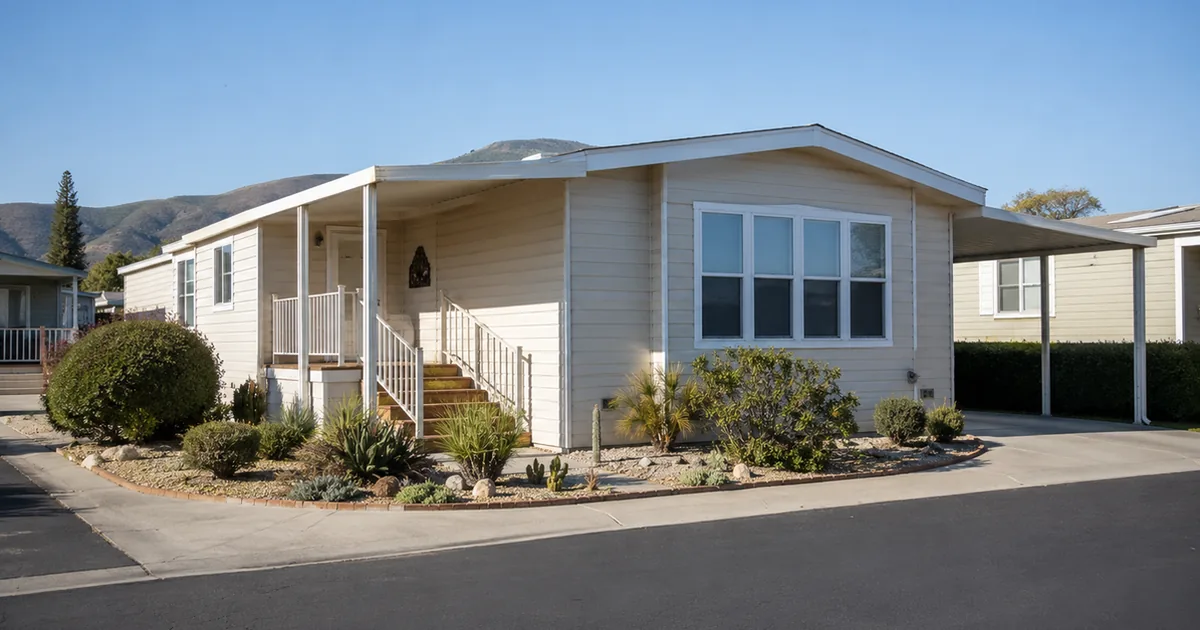
That last one was the surprise that reshaped the deal. The buyer was not paying all cash after all, they were financing part of it, and their lender did not want a chattel loan. Without a recorded 433A foundation certification, the home was not real property and would not qualify for the conventional financing they had lined up. Nobody in the transaction had raised it, because from the inside the home looked like any other house.
This article is for agents working Oceanside, which has one of the largest concentrations of manufactured-home and 55-plus communities in coastal North County. Ocean Hills Country Club, Rancho San Luis Rey, Emerald Lake Village, Laguna Vista, the El Camino parks, and dozens of others. A manufactured home is a great value in an expensive market, but it is a different inspection and a different transaction, and the things that decide the deal are almost never visible from the living room.
Schedule an Oceanside inspection · Same-day report · Manufactured-home experience · Pay-at-closing available
Why this matters for the agent before anything else
Financing is the reason a manufactured home can fall apart in escrow when a site-built home would close. The classification of the home decides everything.
In California, a manufactured home is personal property, the same legal category as a vehicle, until a 433A foundation certification is recorded with the county. It does not matter how solidly the home is set, strapped, or braced. Until that 433A is on record, the home is chattel, and chattel financing carries higher rates and shorter terms than a conventional mortgage. Once the 433A is recorded and the home is affixed to a permanent foundation, it becomes real property, eligible for conventional financing and taxed as real estate. A buyer who is pre-approved for a normal mortgage can find that the home they are buying does not legally qualify for it.
That is why this surfaces during the inspection contingency, not after. If the foundation and registration status come up while the buyer still has their contingency, everyone has options: the seller can record a 433A, the buyer can switch to the right loan product, or the parties can renegotiate. If it surfaces a week before closing when the lender’s underwriter catches it, the deal stalls or dies. We have seen both. The agents who know to ask the question early are the ones whose buyers close.
Manufactured, not mobile: the dividing line is 1976
The single most important fact about an older manufactured home is when it was built. Mid-1976 is the line.
Homes built after June 1976 are constructed to the federal HUD code and carry a red-and-silver HUD certification label on the exterior, plus a data plate inside. These are “manufactured homes,” and they are far easier to finance and insure. Homes built before mid-1976 are true “mobile homes,” built before the federal standard existed. Many lenders will not finance a pre-1976 home at all, and many insurers will not write one, or will charge heavily for it. In a 55-plus community with original 1960s and early-1970s coaches still in place, this is a live question on a real share of the inventory.
We document the HUD label and data plate, or their absence, on every manufactured-home inspection, because that one detail can determine whether the home is financeable before anyone looks at its condition.
What we actually inspect on a manufactured home
A manufactured home shares a lot with a site-built house, the roof, the electrical panel, the plumbing fixtures, the HVAC, the appliances. But the parts that are unique to manufactured housing are where the findings live, and most of them are under the home.
The foundation and support system. Pier-and-jack supports versus a permanent foundation is the financing question above, but it is also a condition question. We check for settled or shifted piers, missing or improvised shims, and signs that the home has moved.
Earthquake bracing. California sits in a high seismic zone, and the state has a certified Earthquake Resistant Bracing System program for exactly this reason. A manufactured home that is not properly anchored and braced can slide or topple off its supports in a quake. We document the anchoring, the bracing, and loose or failed components, and flag where an ERBS evaluation or upgrade is warranted. This is both a safety item and, increasingly, an earthquake-insurance item, part of the same tightening insurance market we cover for fire-zone homes in our Wildomar defensible space guide.
The underbelly and vapor barrier. The belly wrap under the floor keeps ground moisture, pests, and outside air out of the floor system. We find it torn, sagging, or missing all the time, and a compromised belly leads to floor rot, mold, rodent intrusion, and failing insulation. This is one of the most common and most overlooked findings.
The marriage line. On a multi-section home, the seam where the halves join is a frequent leak path at the roof ridge and along the floor. We look for staining, separation, and prior repairs.
Skirting, crossover ducts, and under-home plumbing. The skirting needs ventilation and access. The crossover duct that connects the HVAC between sections often hangs damaged or disconnected under the home, quietly bleeding conditioned air. The plumbing runs under the floor where freeze and physical damage happen.
The roof and exterior. Many manufactured homes have low-slope or metal roofs that need periodic resealing, and add-ons like awnings, carports, and porches that may or may not have been permitted. We document roof condition and flag unpermitted-looking additions.
What agents should tell every manufactured-home buyer
-
Ask the foundation and registration question before writing the offer. Is there a recorded 433A? Is the home on a permanent foundation or pier-and-jack? Is it titled as real property or registered with the state as personal property? The answer determines what financing is even possible.
-
Confirm the loan product matches the home. A conventional mortgage needs real property and usually a permanent foundation. If the home is chattel, the buyer needs a chattel or specialty manufactured-home loan, with different terms. Line this up early.
-
Check the build year against the HUD line. Pre-1976 mobile homes are hard to finance and insure. Get the buyer’s lender and insurer to confirm they will work with the specific home before contingencies are removed.
-
Budget for earthquake bracing. If the home lacks a proper ERBS, retrofitting it is a real cost and a real safety upgrade. It also affects earthquake-insurance availability and pricing.
-
Understand the space rent and the park. In a land-lease 55-plus community, the buyer owns the home but rents the space. Space rent, rent-control status, park rules, and the age restriction itself are part of the deal and outside the home inspection, but they belong in the same conversation.
Red flags you can spot during a showing
You do not need to crawl under the home to sense the risk. A few things at a normal showing tell you whether the foundation and condition questions are going to matter.
No visible HUD label, or an obviously older coach. If the home reads as 1960s or early-1970s and there is no red-and-silver HUD plate by the exterior door, assume a pre-1976 financing and insurance problem until proven otherwise.
Soft, sloping, or bouncy floors inside. A floor that gives or slopes points to belly, support, or moisture problems underneath, exactly the areas a cosmetic remodel never touches.
Skirting that is damaged, sealed shut, or hiding the under-home. If you cannot see any access panel and the skirting is buttoned up tight, the area most likely to hold findings is the area nobody has looked at.
Staining along the marriage line or at the ceiling ridge. On a double-wide, water stains down the center of the home point to a seam leak.
Add-ons that look homemade. Porches, awnings, and room additions that do not match the factory construction may be unpermitted, which becomes the buyer’s problem after closing.
How the deal usually plays out
Seller records a 433A and the home becomes real property. When the home is already on a qualifying permanent foundation, recording the 433A can convert it to real estate and unlock conventional financing. This takes time and a permit, so it works when escrow has room.
Buyer switches to the right loan. If the home stays personal property, the buyer moves to a chattel or specialty manufactured-home loan. The terms are different, so the buyer needs to know before they are committed.
Credit for bracing and under-home repairs. Earthquake bracing, belly-wrap repair, and support corrections are documented with a contractor’s bid and credited at closing, or repaired by the seller before close with a re-inspection.
Deal restructures or ends. A pre-1976 home that no lender will finance, or a foundation issue neither party will resolve, can end the deal. The agent who raised the foundation and build-year questions before the offer is the one whose buyer did not waste an escrow on a home they could never finance.
How the inspection catches what the living room hides
The whole point of a manufactured-home inspection is that the important parts are out of sight. The interior can be flawless while the support system, the belly, and the bracing tell a completely different story.
We go under the home. That is where we document the foundation type, the anchoring and earthquake bracing, the belly wrap, the crossover duct, and the under-floor plumbing. The drone handles the roof, including the low-slope and metal surfaces and the marriage-line ridge that are unsafe to walk and hard to see from the ground. The thermal scan finds moisture in the floor and walls, missing insulation, and the cool track of a disconnected crossover duct bleeding conditioned air into the crawl space. For more on how infrared surfaces what a visual check misses, see our infrared scanning guide.
We are not the lender and we do not record the 433A or certify the foundation for financing. What we do is tell the buyer and the agent exactly what the home is, how it is supported, how it is braced, and what condition the hidden systems are in, in time to do something about it. On a manufactured home, that documentation is the difference between a smooth close and a financing surprise a week before the deadline.
Schedule an Oceanside inspection · What’s included · FAQ
Frequently asked questions
Is a manufactured-home inspection different from a regular home inspection?
Yes. It covers everything a site-built inspection covers, the roof, electrical, plumbing, HVAC, and appliances, plus the parts unique to manufactured housing: the foundation and support system, the earthquake bracing, the belly wrap and underbelly, the marriage line, the crossover duct, and the skirting. Most of the unique findings are under the home.
What is a 433A and why does it matter?
A 433A is the California foundation certification that, once recorded with the county, converts a manufactured home from personal property to real property. Without it, the home is chattel no matter how it is set, which limits the buyer to chattel financing at higher rates. With it, the home can qualify for a conventional mortgage. It is one of the first things to confirm on any Oceanside manufactured-home purchase.
Can you inspect homes in Ocean Hills, Rancho San Luis Rey, and the other 55-plus communities?
Yes. Oceanside’s 55-plus and manufactured-home communities are a regular part of our work. We inspect the home and document the foundation, bracing, and under-home condition. Space rent, park rules, and the age restriction are separate from the inspection but worth confirming in the same window.
Should I worry about earthquake bracing?
In California, yes. A manufactured home that is not properly anchored and braced can come off its supports in a quake. We document the anchoring and bracing and flag where a state-certified Earthquake Resistant Bracing System should be evaluated or installed. It is a safety and an insurance consideration.
Do you inspect pre-1976 mobile homes?
We inspect homes of all ages, but we will be direct about the financing and insurance reality. Pre-1976 mobile homes, built before the federal HUD code, are hard to finance and insure, and that fact can matter more than the home’s condition. We flag the build year and the HUD label status clearly.
The honest summary for agents
Oceanside’s manufactured-home and 55-plus communities are some of the best values in coastal North County, and some of the most misunderstood transactions in the market. The home can show beautifully and still hinge on a foundation certification, a build year, or a piece of bracing that nobody looked at.
The agents whose deals close are the ones who treat the manufactured-home questions as questions to answer before the offer: how it is supported, how it is titled, when it was built, and how it is braced. Then they get an inspection that goes under the home and reports what is actually there, in time to act on it.
We inspect Oceanside manufactured homes the same week you call, and we cover site-built and coastal homes across nearby Carlsbad and San Diego too. The report tells your buyer what they are really buying, from the HUD plate to the belly wrap, so the only surprises are the good kind. For the raised-foundation version of the same under-home question on coastal site-built homes, where the marine layer drives subfloor moisture and dry rot, see our coastal crawlspace moisture and dry rot guide. For the structural connection behind an elevated deck on a San Diego County hillside estate, a different under-structure question, see our Rancho Santa Fe deck ledger attachment guide.