A buyer comparing two similar condos picks the one with the lower monthly dues.
The reserve study for that building is in the document package. It shows the projected reserve balance dropping below zero inside its 30-year window.
Under AB 2050, that projection is no longer just a warning in a binder starting January 1, 2032. It becomes the starting point for required reserve transfers and, in some cases, a reserve funding special assessment.
This is a composite of a pattern we see across California condo purchases. It is not one identifiable property or client. The lower dues can be the more expensive choice later.
AB 2050 becomes a statute in 2027, but its funding rules wait until 2032
AB 2050 is Assemblymember Jessica Caloza’s reserve account bill, and its new funding rules do not operate until January 1, 2032.
The bill was coauthored by Assemblymembers Dixon and Zbur. Governor Newsom approved it, and the Secretary of State filed it on September 29, 2026. It is Chapter 796, Statutes of 2026. Its official title is “Common interest developments: reserve accounts.”
The bill takes effect as a statute on January 1, 2027. That date does not make the new reserve funding rules operative. AB 2050 amends, repeals, and adds Civil Code Section 5550, and it adds Civil Code Section 5552. The new provisions become operative on January 1, 2032. Until then, the existing version of Section 5550 remains in effect.
The bill contained alternate, double-jointed versions of Section 5550. Those versions would have operated only if SB 1238 had also been enacted. SB 1238 was vetoed on September 20, 2026. The alternate text does not operate. The plain AB 2050 version controls.
That also means the alternate language adding exterior elevated elements to the definition of major components does not operate. Exterior elevated elements include balconies and decks inspected under Civil Code Section 5551.
For the existing disclosure package and the effect of the SB 1238 veto, see this California HOA reserve disclosure update.
Existing law requires the study, not the money
AB 2050 closes the gap between identifying future repairs and putting money aside for them.
Today, Civil Code Section 5550 requires the board to cause a reasonably competent and diligent visual inspection of accessible areas of the major components the association must repair, replace, restore, or maintain. That inspection occurs at least once every three years as part of a reserve study if the current replacement value of those major components is at least one-half of the association’s gross budget, excluding the reserve account. The board reviews the study annually.
But the Senate Judiciary Committee analysis states the gap plainly: existing law requires associations to complete reserve studies, “it does not require that the HOA actually fund its reserves.”
The bill’s legislative findings say common interest developments are responsible for ongoing repair, maintenance, and replacement of major common area components “including, but not limited to, roofs, paving, mechanical systems, and critical infrastructure.” The findings also state that underfunded reserve accounts create a severe risk to the physical integrity of common interest developments and place an undue, unexpected financial burden on homeowners through the increased likelihood of sudden and steep special assessments.
The author’s statement to the Legislature made the same point from her district. She stated that 70 percent of associations there are 20 years or older and 73 percent are condominiums. She also stated: “While state law requires associations to conduct reserve studies and plan for major repairs, it does not require them to fund those future obligations.”
The bill states that reserve money is intended for repair, restoration, replacement, or maintenance of major components, or related litigation, “and not for routine operations or any other unauthorized purpose,” consistent with existing Civil Code Section 5510.
The Senate Judiciary analysis estimates about 51,700 common interest developments in California.
The 2032 reserve study must show the minimum contribution
Starting January 1, 2032, the reserve study must identify the minimum reserve contribution level needed to keep the projected reserve account balance from falling below zero over the following 30 years.
That is a new required item in every study under the new Section 5550. The study must state:
“The minimum reserve contribution level to prevent the projected association reserve account balance from falling below zero over the following 30 years.”
The study must also include a statement informing the association that beginning January 1, 2032, state law will require certain actions if the reserve balance is projected to fall below zero over a 30-year period. Those actions include transferring a minimum of 15 percent of gross annual budget and, under specified conditions, levying a reserve funding special assessment.
The annual process changes too. Existing law says the board reviews the reserve study annually. The new wording places the duty on “the association.” The association must “review and update this study annually” and implement adjustments to the association’s funding of the reserve account.
The replacement-value trigger also changes. The existing trigger excludes the reserve account from the association’s gross budget. The new trigger no longer excludes it.
The Department of Real Estate expects to update its Subdivision forms, Operating Cost Manual, and Reserve Study Guidelines because of AB 2050. The Senate Appropriations analysis identifies those updates.
A buyer reading a reserve study before 2032 can already find the same underlying warning signs. The legal duty to transfer the money comes later. The remaining-life estimates, cost estimates, and funding plan are already part of the document package.
A negative 30-year projection triggers the 15 percent transfer
Every association must fund its reserve account each year at no less than the minimum level in its most recent study, and if the reserve balance is projected to fall below zero at any point over the next 30 years, it must transfer at least 15 percent of its gross annual budget into reserves each year until the projection no longer falls below zero.
The trigger is not limited to a balance that is already negative. It is a projection across the following 30 years. A reserve balance can be positive today and still produce the statutory response if the study shows it falling below zero later in the window.
This is why the reserve study in the document package matters to a buyer purchasing between 2026 and 2031. The buyer is buying into the association that will have to meet the rule in 2032. The current study already identifies who is exposed, even though the new funding provision is not operative yet.
A reserve funding special assessment comes after the budget cannot meet the minimum
If the association cannot fund the minimum reserve contribution through its gross annual budget, it must levy a reserve funding special assessment under the new Section 5552.
The statute says the association “shall levy a reserve funding special assessment” subject to the same provisions as a standard special assessment under Section 5605. If that assessment is not enough because of the cap on special assessments without a vote, the membership votes on approving an amount above the cap.
Civil Code Section 5605 limits the board’s authority in the ways described in the committee analyses. The board may raise regular assessments up to 20 percent over the prior year’s amount without member approval. It may levy special assessments up to 5 percent of the current fiscal year’s budgeted gross expenses in aggregate without approval from a majority of a quorum of members. Emergency special assessments are a separate category.
Money collected through a reserve funding special assessment goes into the reserve account and counts as reserve funds.
The association cannot levy a reserve funding special assessment more than once every nine years.
The Senate amendments changed this sequence. An earlier version would have required an assessment in whatever amount was needed to reach the minimum within nine fiscal years. The amendments removed that version and replaced it with the 15 percent transfer first, followed by a capped special assessment, followed by a member vote above the cap when needed.
The visual inspection now connects roof condition to future dues
The reserve study’s visual inspection of accessible areas supplies the remaining useful life numbers that drive the funding plan.
A reserve study and a home inspection use the same grammar. Component. Remaining life. Replacement. The document types do different jobs.
The reserve study is a funding document, not a condition report. Starting in 2032, its funding plan must include the minimum reserve contribution level that prevents the projected balance from falling below zero over 30 years.
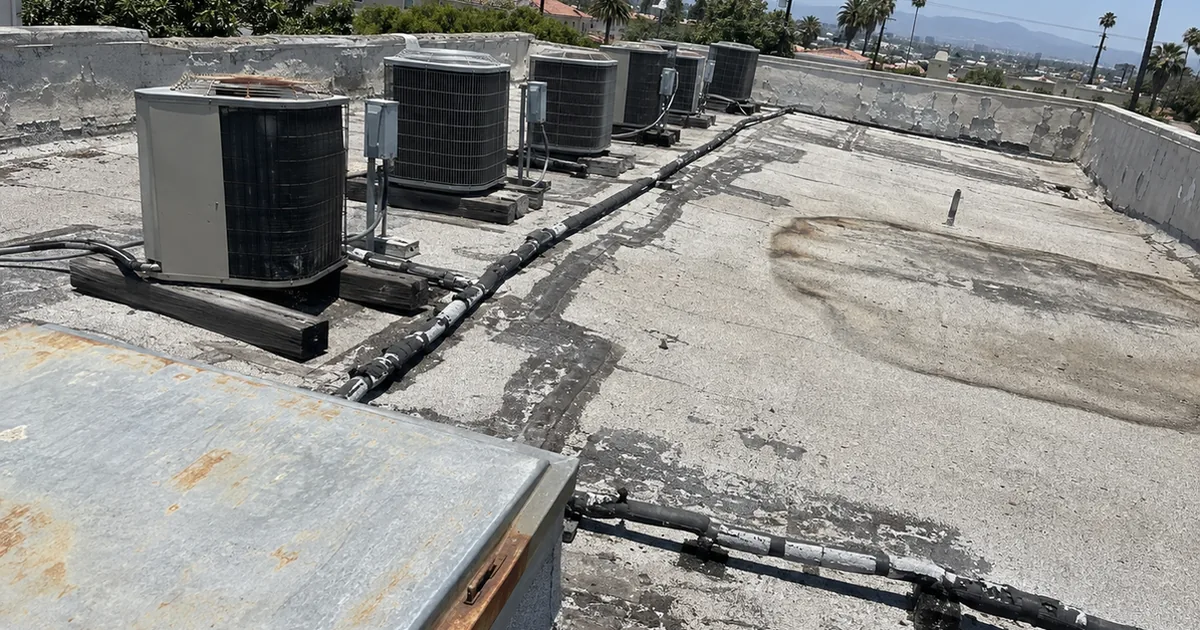
A shorter remaining life for a roof or paving component means the reserve study has to account for the replacement sooner. That can mean a larger minimum contribution. Mechanical systems work the same way. The condition and expected life of shared components become direct inputs into future dues and any reserve funding assessment required by the projection.
“Major components” also includes gas, water, and electrical service to the extent the association is responsible for those lines under Civil Code Section 4775.
This is where the reserve study and the unit inspection meet, without becoming the same inspection. The California home inspection report guide explains the same component and remaining-life language from the unit inspection side.
Balconies sit on a separate track. The Section 5551 rules are covered in this balcony inspection deadline guide, and a waterproofing issue in a condo city such as West Hollywood has its own inspection context, covered in this West Hollywood balcony guide.
Supporters and opponents disagree about who pays and when
Supporters described AB 2050 as a way to make associations fund obligations that already appear in reserve studies, while opponents focused on new assessments imposed without state oversight.
The Community Associations Institute California Legislative Action Committee sponsored the bill. The sponsor framed its position as pay now or pay later.
The author and sponsor also told the Legislature that Fannie Mae and Freddie Mac look for at least 10 percent of an association’s budget allocated to reserves and are expected to raise that to 15 percent as early as 2027. They stated that units in associations falling short can have trouble getting conventional financing.
The opposition coalition included the Center for California Homeowner Association Law, the Consumer Federation of California, and Housing and Economic Rights Advocates. Their objection was direct: “With no state oversight, AB 2050 would let HOAs collect a new type of assessment on top of regular, special, and emergency assessments homeowners already pay.”
The Senate Judiciary analysis acknowledged the trade-off. It stated that the bill “will certainly remove some of this flexibility for HOAs” and will likely contribute to increases in HOA dues. It also noted that deferred maintenance pushes costs onto future owners.
Other 2026 HOA legislation appears in the AB 1684 air-conditioning rights update and the SB 908 window replacement permit update. Each law has its own subject.
A condo inspection covers the unit and visible shared conditions, then stops
A condo inspection reports what is visible from accessible locations and does not determine whether the association is adequately funded.
On a condominium, the boundary between the unit and the common area is set by the governing documents, not by the inspector. We inspect the unit and report common-area conditions we can see from accessible locations as observations.
That can include a roof where visible, exterior walls, stairs, drainage, and the balcony or deck surface serving the unit. It can include infrared observations at shared walls and ceilings. It can include drone roof images where the roof is visible.
Inspection.re inspectors are InterNACHI-certified. Reports are delivered the same day with photos. Available inspection tools include 3D Matterport tours, FLIR infrared, drone roof images, and LIDAR floor plans.
We do not evaluate reserves. We do not audit a reserve study. We do not perform a Section 5551 balcony inspection. Those are separate scopes.
A visible roof condition can support a question about the reserve study’s roof remaining-life estimate. It does not allow the inspector to certify the reserve balance, rewrite the funding plan, or decide whether the association is underfunded.
For agents and buyers, use these six steps before the contingency closes:
- Ask for the most recent full reserve study, not only the summary.
- Find the 30-year projected balance and determine whether it ever goes below zero.
- Read the funding plan for planned increases and the stated minimum contribution level.
- Compare the remaining-life numbers for the roof, paving, and mechanical systems against what the unit inspection and visible conditions show.
- Read board minutes for discussion of those components, repairs, funding, or assessments.
- Book the unit inspection regardless. Review the accessible roof, exterior, stairs, drainage, balcony or deck surface serving the unit, shared walls, and ceilings within the inspection scope.
You can review what every Inspection.re inspection includes, our frequently asked questions, and how the inspection report is laid out. Inspection.re serves condo buyers in places including Irvine, Aliso Viejo, San Francisco, Emeryville, and Long Beach.
Quick answers about AB 2050 and condo purchases
When does AB 2050 start? The bill takes effect as a statute January 1, 2027, but the new Section 5550 and Section 5552 provisions become operative January 1, 2032.
Does it raise my dues in 2027? No. AB 2050’s new funding rules are not operative in 2027.
What is a reserve funding special assessment? It is an assessment the association must levy if it cannot fund the minimum reserve contribution through its gross annual budget, subject to the Section 5552 sequence and Section 5605 provisions.
Can a home inspector tell me if the HOA is underfunded? No. An inspector can report visible conditions within the inspection scope. Reserve adequacy belongs to the reserve study preparer, an accountant, or an attorney.
Does AB 2050 apply to balconies? The plain version does not add Section 5551 exterior elevated elements to the definition of major components. That alternate text depended on SB 1238, which was vetoed.
Read the current study as a 2032 exposure report
AB 2050 does not change a condo buyer’s dues in 2026 or 2027. It changes the consequence of a reserve study beginning January 1, 2032.
The current study already gives you the important facts: the remaining useful life of the roof, paving, and mechanical systems; the projected balance over 30 years; the cost estimates; and the funding plan.
On the next condo file, request the full study before the contingency deadline. Mark the projected balance, find every point where it falls below zero, and compare the remaining-life estimates with visible conditions from the inspection. Ask the association or its qualified reserve study professional about funding questions. Do not ask the home inspector to certify reserve adequacy.
For inspection scheduling, call Inspection.re at 1-888-88-INSP-9.
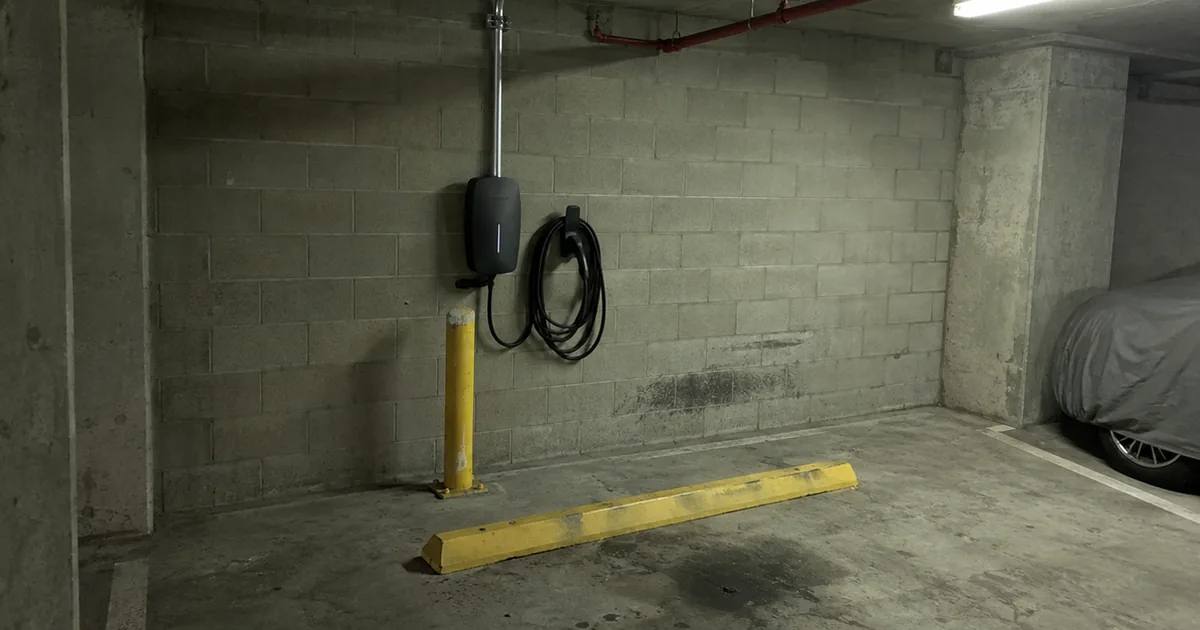
Not every garage cost lands on the reserve: SB 1267 puts a member-owned EV charger’s damage and upkeep on its owner.