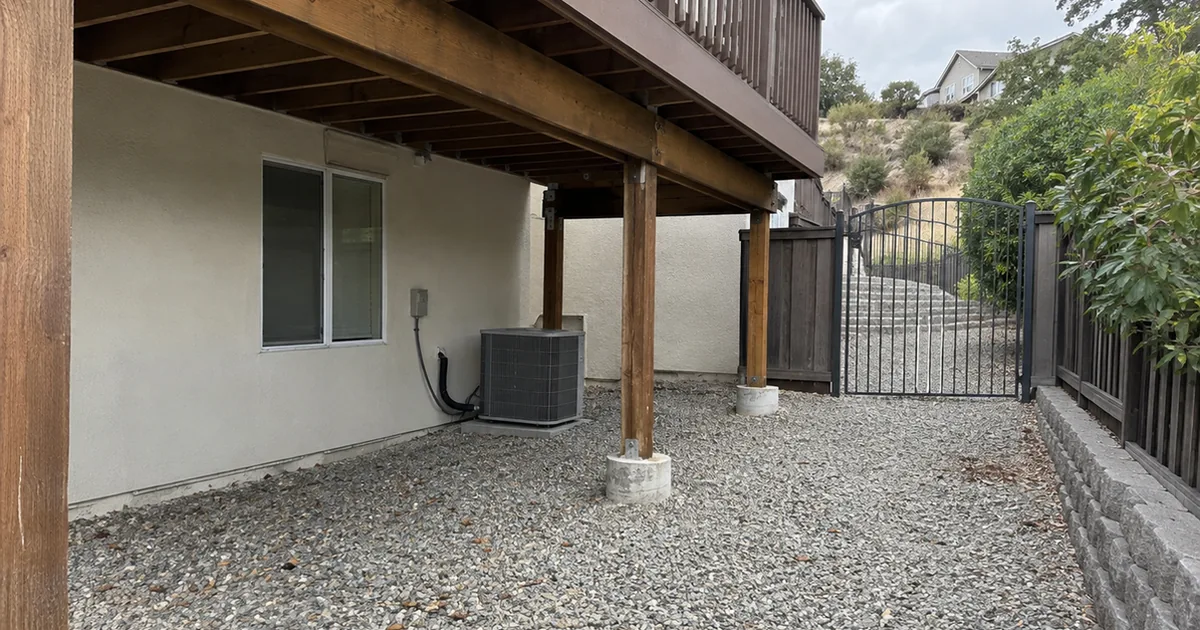
We inspected a coastal Carlsbad home earlier this year. Single-story, mid-block, well-kept yard. The buyers were a young family moving down from Orange County and the listing agent had walked the property a dozen times. The HVAC was on. The thermostat held setpoint. The disclosure was clean.
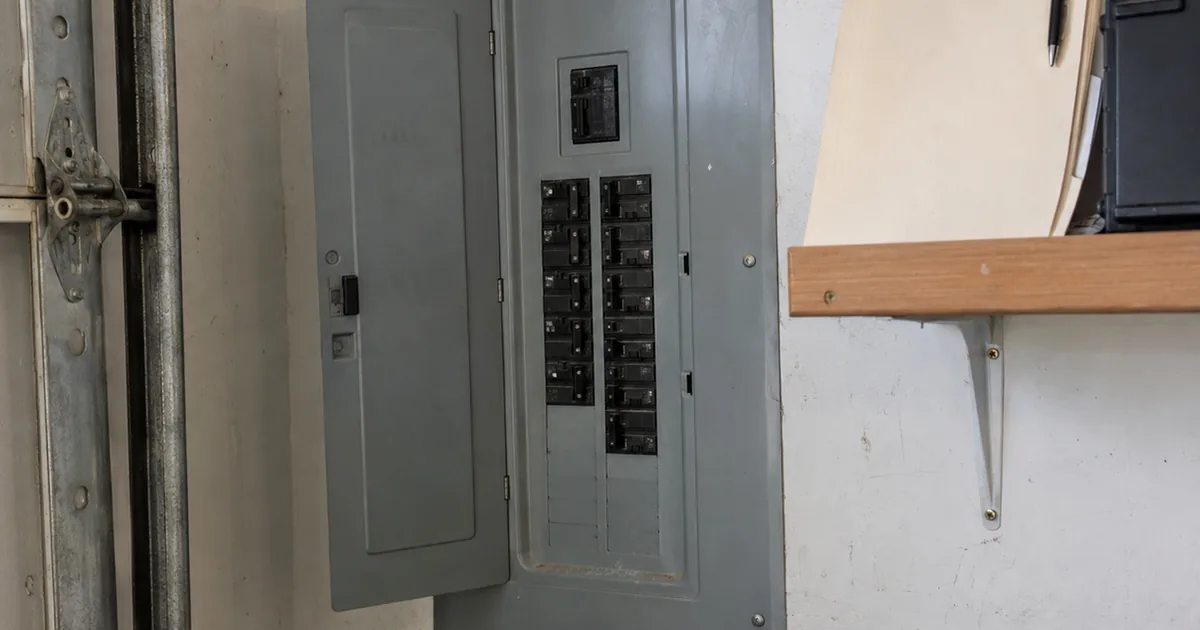
Then we pulled the outdoor disconnect and stepped around to look at the condenser itself.
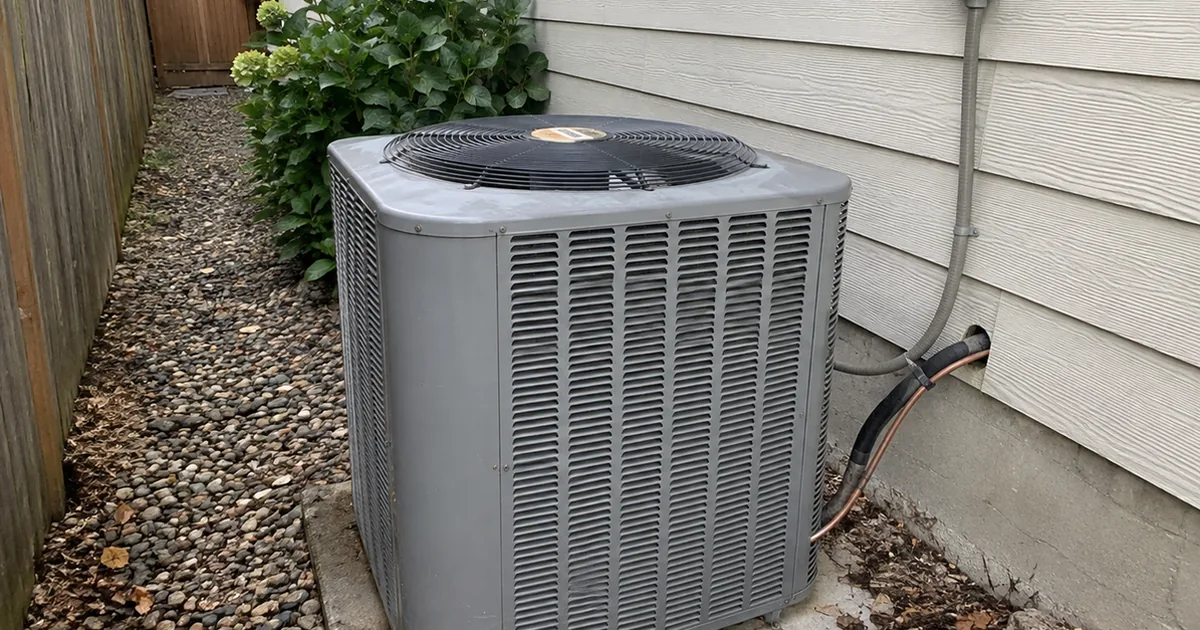
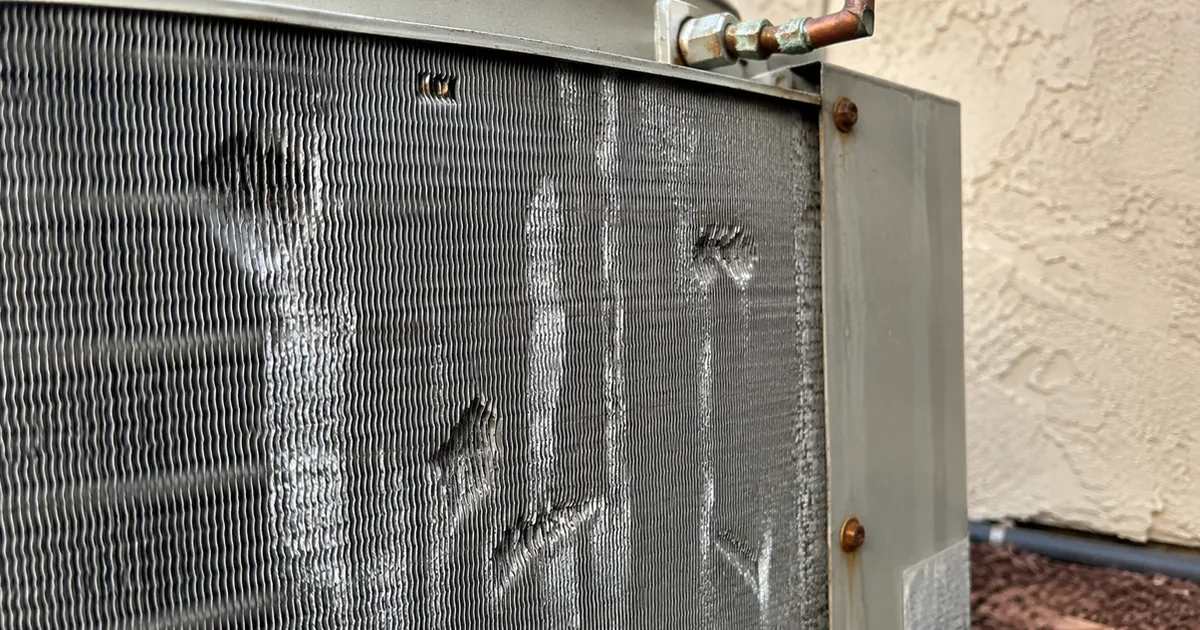
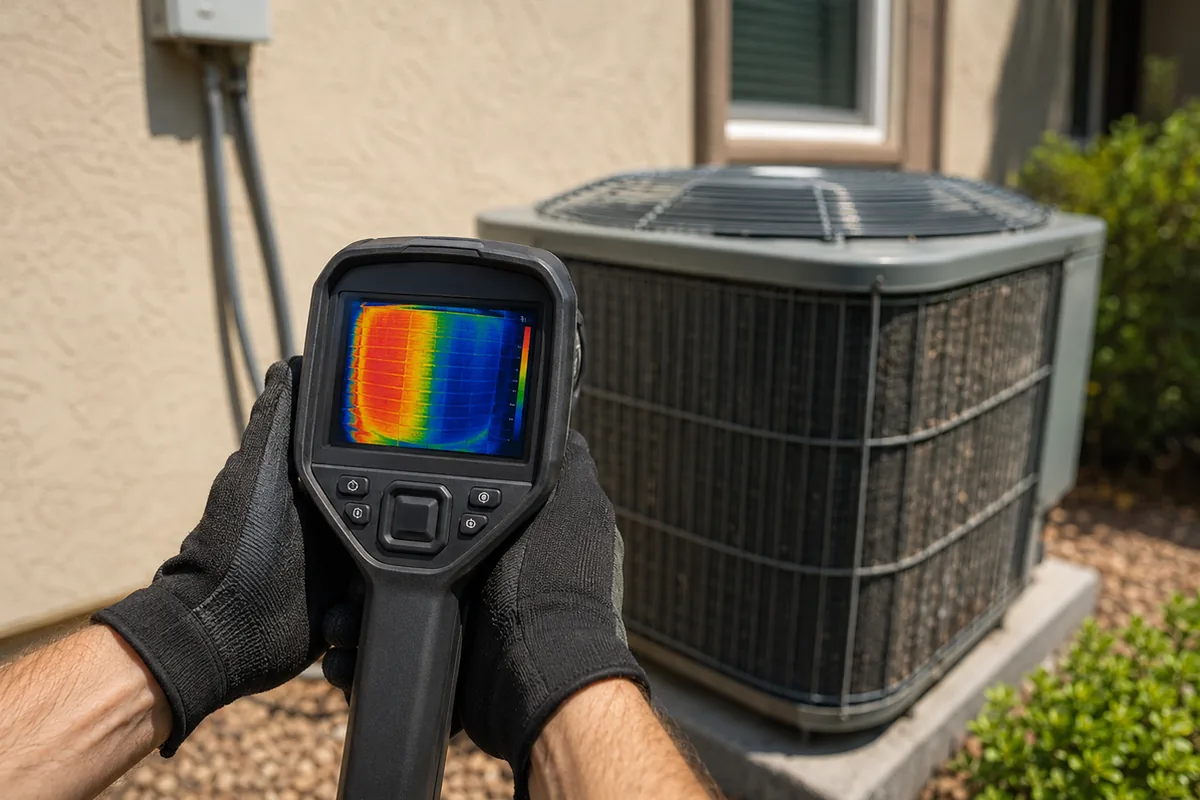
The aluminum fins were pitted through in three places. The copper line set had a faint green stain around the suction line fitting. The cabinet bolts were already wearing the rust signature you usually see on twenty-year-old units in Temecula, except this condenser was less than ten years old. The thermal camera read across the coil showed an uneven temperature profile across the face, which is what a coil reads when airflow is being obstructed by corroded fins folding under their own weight.
The buyers were the first people in the transaction who learned what they were buying. The listing agent was the second.
Schedule a Carlsbad inspection · Same-day report · $300 off applied automatically · Pay-at-closing available
Why this matters for the agent
Here is what was at stake on this transaction, and on every comparable one we have seen in coastal Carlsbad. The condenser itself was probably going to last another three to five years on a slow performance decline, but the next service call would have included a manufacturer warranty conversation that was never going to land the buyer’s way. The compressor on a unit with degraded coils runs hot, draws more current, and shortens its own service life.
The replacement cost is in the five-figure range when you add a new coastal-spec coil, a properly sized condenser, and the labor to recover refrigerant and recharge with R-454B. That is a real number that affects the negotiation if the inspection catches it. It is a real number that affects the buyer’s first-year ownership budget if the inspection misses it.
If you write offers on homes within a mile of the coast in Carlsbad, this is going to show up regularly. Carlsbad Village, the Strand corridor, Ponto Beach, La Costa coastal-facing tracts, and parts of Aviara are all in the band where marine layer and salt deposition do measurable damage to HVAC equipment. The agents who know to look catch it during the contingency period. The agents who do not, get the call from their client eighteen months after closing.
What salt air actually does to an AC condenser
The standard residential AC condenser uses copper refrigerant tubing with aluminum cooling fins. Both metals work great on their own. Put them together with salt in solution and you have a battery. Salt-laden marine air settles on the coil. Morning marine layer condenses on the metal surfaces. The sodium chloride dissolves into a thin saline film. The aluminum becomes the sacrificial anode in a galvanic cell with the copper, and the aluminum starts to dissolve.
This is not an obscure failure mode. It is the reason ASTM has a salt-spray test method specifically for materials destined for coastal use (ASTM B117), and the reason the major HVAC manufacturers (Carrier, Trane, Lennox, Goodman) all offer coastal-spec or marine-grade equipment lines with epoxy-coated coils, all-aluminum tube-and-fin assemblies, and stainless fastener hardware. Within five miles of the ocean, the manufacturers recommend a coastal-spec coil. Within a mile of the ocean, the manufacturers recommend a coastal-spec coil on both the condenser and the indoor evaporator.
The problem in Carlsbad is that most resale homes were installed with standard inland-spec equipment by builders or HVAC contractors who priced the lowest unit that met the load calculation. The corrosion clock starts at install and runs faster the closer the home is to the water. A unit that would last twenty years in Temecula starts visibly degrading at five to seven years in Carlsbad Village.
Why the failure mode is sneaky
The condenser does not stop working when the corrosion starts. It runs. It holds setpoint on a 75 degree day. The homeowner does not call HVAC service because there is nothing to call about.
What is actually happening is gradual. Aluminum fins fold and reduce airflow across the coil. The compressor compensates with longer cycles. Head pressure climbs. The system efficiency falls. The electric bill creeps up but the homeowner attributes that to rising rates. Eventually a refrigerant leak develops at a corroded fitting, the system loses charge, and the compressor short-cycles itself into failure. At that point the conversation is not “repair” but “replace.”
The inspection window is the only window where this gets caught before the buyer takes ownership.
What agents should tell every coastal Carlsbad buyer
A practical list for any buyer writing offers on coastal Carlsbad properties.
The age of the outdoor unit is on the data plate, but the data plate age and the actual condition are different facts. A six-year-old unit in Carlsbad Village can have the same level of coil degradation as a sixteen-year-old unit in Temecula. The inspection report will document both age and condition. Plan to verify both.
The replacement budget for a coastal-spec condenser, evaporator, and labor is meaningful. Have the buyer pre-qualified for a slightly higher repair budget than the offer assumed if the home is within a mile of the coast and the unit is past year six.
The buyer’s homeowner insurance carrier will not directly underwrite the HVAC condition, but appliance and equipment riders are sold by some carriers and bypassed by others. If the buyer wants service-contract or warranty coverage on inherited HVAC, the time to ask is during contingency, not after closing.
If the seller has any prior HVAC service records, ask for them. The pattern of recharges over time tells you whether the unit has been losing refrigerant slowly, which is the classic signature of corrosion-driven leaks.
If the seller has any recent HVAC quotes for replacement, ask for those too. Coastal HVAC contractors in Carlsbad price coastal-spec equipment differently than inland contractors price standard equipment. A current quote anchors the negotiation.
Red flags during showings, no specialty tools required
Walk around to the side or back of any coastal Carlsbad home and look at the outdoor condenser. You are not doing an inspection. You are flagging candidates for a real one.
Look at the aluminum fins on the outside face of the coil. Are they straight and parallel, or are they folded, bent over, missing in patches? A coil with visibly damaged fins is losing airflow capacity, which is the corrosion signature even before you can see the green stains.
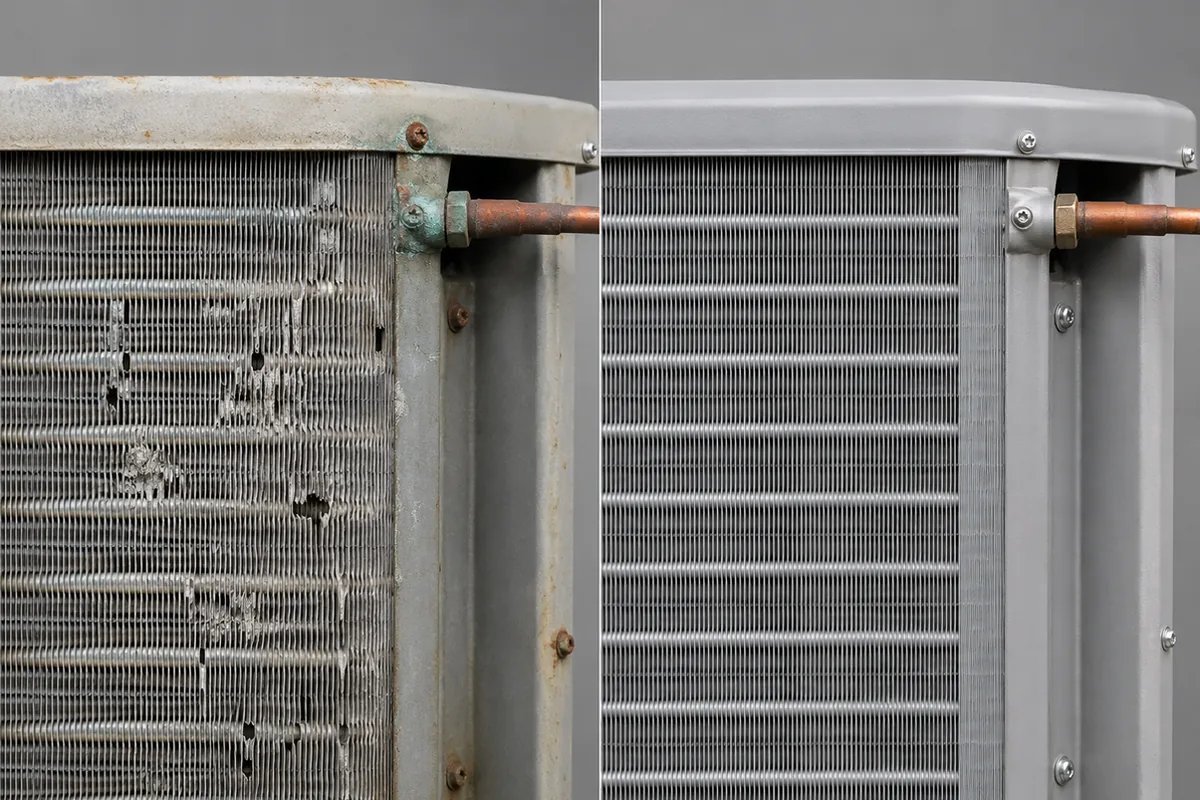
Look at the fasteners holding the cabinet together and the disconnect mounted on the wall behind the unit. Rusted heads, weeping rust trails on the wall, missing bolts. Steel hardware corrodes long before the coil shows it.
Look at the copper refrigerant lines exiting the cabinet. Green or blue-green staining around the fittings is corrosion product from the copper itself. A small amount is normal on older units. A significant amount on a unit younger than ten years is not.
Smell at the cabinet vent. A faintly sweet or chemical smell can indicate a slow refrigerant leak. This is not diagnostic on its own, but it is a reason to flag the unit for the inspector.
Listen for the compressor at startup. A unit that hesitates, hums for a second, then engages is not unusual, but a unit that startles or makes a metallic squeal is worth flagging.
Check the wall behind the condenser for water stains, paint blistering, or stucco efflorescence. Salt deposition on the wall is the same salt that is attacking the unit.
Check the warranty plate or sticker on the cabinet face. If it has been painted over, scrubbed off, or otherwise made unreadable, ask the seller why. A coastal-rated unit will say so on the data plate. A standard inland unit will not.
Schedule a Carlsbad inspection
The negotiation playbook when coastal HVAC corrosion shows up in escrow
There are four paths most of these deals end up on.
Path one: seller replaces before closing with a coastal-spec unit. Less common because sellers do not love managing an HVAC contractor and a permit during their own escrow timeline. When it happens, the buyer gets a properly sized coastal-grade condenser and indoor coil, manufacturer warranty starts fresh at closing, and the inspection clears clean on a re-inspection. Verify the work is permitted with the City of Carlsbad building department, verify the manufacturer warranty registration is in the buyer’s name, and verify the re-inspection happens before close.
Path two: seller credits the buyer to handle it after closing. The common outcome. Size the credit to a written bid from a coastal-experienced HVAC contractor, ideally two bids, scoped to coastal-spec replacement and not the cheapest unit that meets minimum sizing. The bid anchors the negotiation. Push for written bids before the credit number is finalized.
Path three: buyer walks under the inspection contingency. Happens, especially with first-time buyers not budgeting for a five-figure HVAC project on top of moving costs. The earnest money is protected. Your job as the buyer’s agent is to make sure they know walking is an option.
Path four: deal closes with no remediation. The worst of the four. Buyer takes on the cost, seller faces no consequence. If the buyer wants the home and the seller will not budge, document the buyer’s informed decision in writing and recommend replacement within the first eighteen months before the next coastal summer.
A fifth path: deal closes with a hold-back in escrow for the work, completed by the buyer’s contractor post-closing. Clean structure when the seller will engage but does not want to manage the work.
How a thermal scan catches coil degradation before the cover comes off
A standard home inspection checks the condenser by removing the cabinet panel, looking at the coil, and listing visible defects. That works for things you can see. It does not catch a coil that is functionally degraded across an entire face when the corrosion is spread evenly across the fin surface.
What thermal imaging adds is a temperature read across the coil face during operation. A coil running with degraded airflow shows an uneven temperature profile, with hot bands where airflow is being blocked by folded or missing fins and cool bands where airflow is still passing. Combined with the visual ID of corrosion-product staining and pitted fins, the thermal anomaly converts a soft recommendation into a documented finding the buyer can take to a refrigeration contractor for a second opinion.
This is what we mean when we say infrared scanning is standard on every Inspection.re inspection rather than an add-on. We wrote up a related case in Murrieta where the same thermal-first methodology caught a tile roof underlayment failure that visual inspection missed on a 14-year-old Copper Canyon tract home. The pattern is the same: see what is actually there, not what looks fine on the curb.
Quick FAQ for coastal Carlsbad buyers and agents
Is salt air corrosion always a deal-killer? No, and not on every unit. Newer coastal-spec units installed by careful HVAC contractors hold up reasonably well. The conservative position, which most home inspectors and HVAC techs share, is that any inland-spec unit installed within a mile of the coast is on a shortened service-life clock. Inspection documents condition. Buyer decides what to do with the documentation.
Can the inspector just say the AC is fine if it looks fine? We document the visible condition, run a temperature differential reading across the coil during operation, scan with thermal, and note the unit’s data-plate age. We are not licensed to declare the unit safe for a specific number of additional years. A licensed HVAC contractor with refrigeration certification is the right party for a forward-looking service-life estimate. Many will not give one in writing, which is a separate problem the inspection cannot solve.
What does a coastal-spec HVAC replacement actually cost in Carlsbad? The five-figure range for a properly sized coastal-spec condenser, indoor coil, and refrigerant line set with permit and labor. More if the indoor air handler or furnace also needs upgrading or if ductwork is undersized for the new system. Two written bids before negotiation.
Will homeowner insurance cover the corrosion damage? Generally no. Standard homeowner policies exclude wear and tear, corrosion, and gradual deterioration. Equipment-breakdown or appliance riders are sold by some carriers but generally do not retroactively cover an inherited corroded unit. The buyer’s protection is the inspection finding, not the insurance.
Does this issue come up much in Carlsbad specifically? Yes, especially in Carlsbad Village, the Strand, Ponto Beach corridor, and west-facing La Costa and Aviara tracts. The marine layer and onshore winds deposit salt on outdoor surfaces year-round, and the corrosion clock runs faster than most inland markets understand.
The honest summary for agents
If you work coastal Carlsbad and you write offers on homes within a mile of the water, you are going to see corroded HVAC units. The ones caught during the inspection contingency are negotiations. The ones caught a year after closing are unhappy phone calls and, depending on the disclosure, future litigation. Your buyer is much better served by the first scenario.
The inspection that catches these things is not the cheapest one on Yelp. It is the one with thermal imaging running on the condenser during operation, a drone scan documenting the condition of the cabinet from above where ladder access is awkward, and a same-day report so you have the documentation in hand before the contingency clock runs out.
Schedule a Carlsbad inspection or see our full inspection scope before you book. Common questions are answered in the FAQ.
Corrosion is what the coastal environment does to the equipment. Which generation of equipment is there in the first place is a separate question, and it changed recently. Our guide to the removed R-410A installation deadline covers why a new R-410A system installed in 2026 is lawful, what the A2L refrigerants replacing it require, and why a mismatched condenser and coil now matters more than it used to.
The same salt-air clock runs on every coastal market we cover. We inspect beach-adjacent homes in Oceanside, Encinitas, and up the coast in Long Beach and Santa Monica, where the corrosion findings read the same as Carlsbad’s. Coastal exposure drives other hidden defects up the line too: see how it rots roof decks from the inside in our Manhattan Beach deck and balcony waterproofing guide, and the old oil-field methane question under the tracts next door in our Torrance oil well and methane guide. For another countable coastal-tract cost that runs through escrow as a known number, see our Costa Mesa dual-pane window seal failure guide. For the moisture side of the same coastal exposure, where the marine layer rots subfloors under raised foundations, see our Santa Monica marine-layer crawlspace moisture guide. Further up the coast, Newport Harbor’s seawalls and docks carry their own structural and permitting questions, and La Jolla’s Mount Soledad hillsides carry a documented landslide history worth knowing before a hillside offer. Inland from the coast, our Rancho Santa Fe tankless water heater guide covers a different appliance and a different failure mechanism, hard-water scale rather than salt-air corrosion, useful context on how climate and water chemistry each shape appliance longevity differently. Further inland still, our Palm Springs evaporative cooler guide covers a cooling system that only works because the desert air lacks the humidity that drives Carlsbad’s corrosion in the first place. For the same equipment type without the coastal corrosion mechanism, our Perris central air conditioning guide covers refrigerant, airflow, and condensate defects that show up hardest in a hot inland climate rather than a salt-air one. And for a different coastal corrosion mechanism entirely, one driven by the water inside the pipe rather than the air outside the cabinet, our Hermosa Beach galvanic corrosion guide covers what happens where a partial repipe joins new copper directly to original galvanized steel.