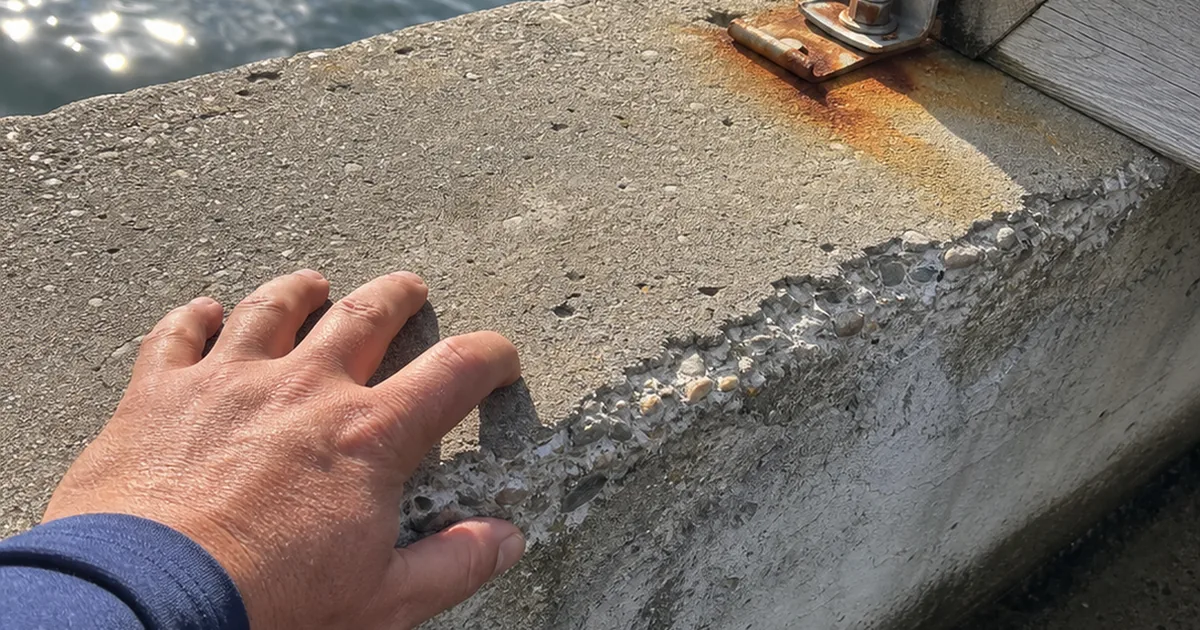
On a bayfront home on one of the harbor islands, the house was immaculate and the buyer was in love. The part nobody had looked at ran along the back of the property at the waterline: a concrete bulkhead with a rust stain bleeding from a tie-back, and a dock gangway bolted into a cap that had started to spall. On an inland home those would be footnotes. On Newport Harbor, the seawall and the dock are some of the most consequential and expensive things on the property.
This is what makes a Newport Beach waterfront purchase different. On Balboa Island, Lido Isle, the peninsula bayfront, Dover Shores, and the harbor islands, the home does not stop at the back wall. It includes a bulkhead or seawall holding the land back from the water, often a dock or pier, and pilings, and a web of permits and agencies that govern all of it. A buyer who treats a bayfront home like a regular house is missing half the asset and half the risk.
Schedule a Newport Beach inspection · Same-day report · Pay-at-closing available
Why this matters for the agent
Here is what is at stake. A seawall or bulkhead is a structure, and when it fails it does not fail cheaply. It holds the buyer’s land in place against the tide, and replacing or repairing one is a major, permit-heavy project. The dock and pier are a second structure with their own condition, their own city inspection, and their own safety requirements. And the ground these sit on is often tidelands, publicly owned land the homeowner uses under a lease, which adds a layer most buyers have never encountered.
For your transaction, the waterfront structures can be the difference between a smooth close and a five-figure surprise. An agent who raises the seawall and dock early, gets the right inspections ordered, and understands the permitting reality looks like a professional who knows the harbor. The one who lets a buyer focus only on the house is setting up a hard conversation when the specialist report comes back. We have inspected bayfront homes where the seawall was the headline finding, and the buyers were grateful someone finally looked at it.
If you work Newport Beach’s waterfront neighborhoods, this is part of your inventory whether you have thought about it that way or not.
What the seawall, bulkhead, and dock actually are
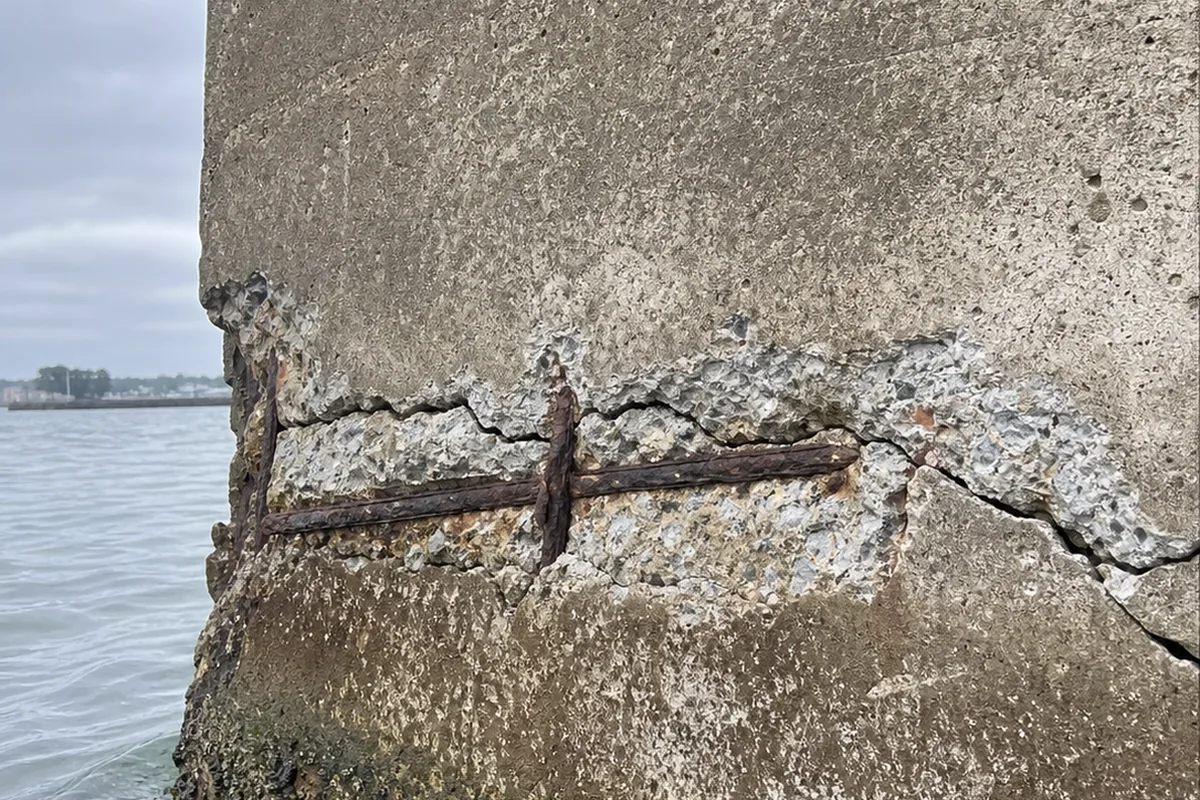
The bulkhead or seawall is the vertical wall along the waterline that retains the property and resists the water and the soil behind it. Most harbor bulkheads are concrete, sometimes with tie-backs anchored into the ground behind them, and they have a design life. Over decades, saltwater, tidal cycling, and soil pressure work on them: concrete spalls and cracks, rebar and tie-back anchors corrode, and the cap can settle or separate. A failing bulkhead is both a structural and a property-line issue, because it is what keeps the land from sliding into the bay.
The dock and pier are the access structures over the water, typically a fixed pier, a gangway, and a floating dock, supported on pilings. The city inspects private docks and issues a letter stating whether the dock meets safety requirements or listing corrections needed. The pilings that support both the dock and sometimes the bulkhead take marine wear and marine borers over time. And because piers and floats extend over public water, their size and position are regulated, including limits like the pierhead line that caps how far a structure can reach into the harbor. All of this is part of what a buyer is acquiring, and none of it is covered by a standard look at the house.
What agents should tell every buyer
When a buyer is considering a Newport Beach waterfront home, give them these points before they write.
- The seawall or bulkhead is a structure that retains the property, and its condition is one of the most important and expensive items on a bayfront home. Get it evaluated.
- The dock and pier are separate structures with their own condition and a city inspection. Ask for the most recent city dock inspection letter and any correction items.
- Much of the harbor sits on tidelands, publicly owned land used under a lease. The buyer should understand the tidelands status and any lease or fees that come with the property.
- Waterfront structures are permit-heavy. Repairs or replacement can require the City, the California Coastal Commission, the State Lands Commission, and the U.S. Army Corps of Engineers, and can take many months.
- The upland owner is commonly responsible for maintaining the seawall and bulkhead, so this is the buyer’s future obligation, not someone else’s.
- The home inspection documents the visible waterfront structures and flags concerns. A marine or structural specialist evaluates the seawall, dock, and pilings. Line them up.
A buyer who hears this from you understands they are buying a house and a piece of working waterfront, and they budget and plan accordingly.
Red flags during showings
You can spot a lot from the dock and the back of the property. Watch for these.
- Spalling, cracking, or exposed rebar on a concrete bulkhead or its cap.
- Rust stains bleeding from tie-back anchors or hardware in the seawall.
- A bulkhead cap that has settled, tilted, or separated from the walkway or patio behind it.
- Soil voids, sinkholes, or settling pavers just behind the seawall, a sign the wall may be losing fill.
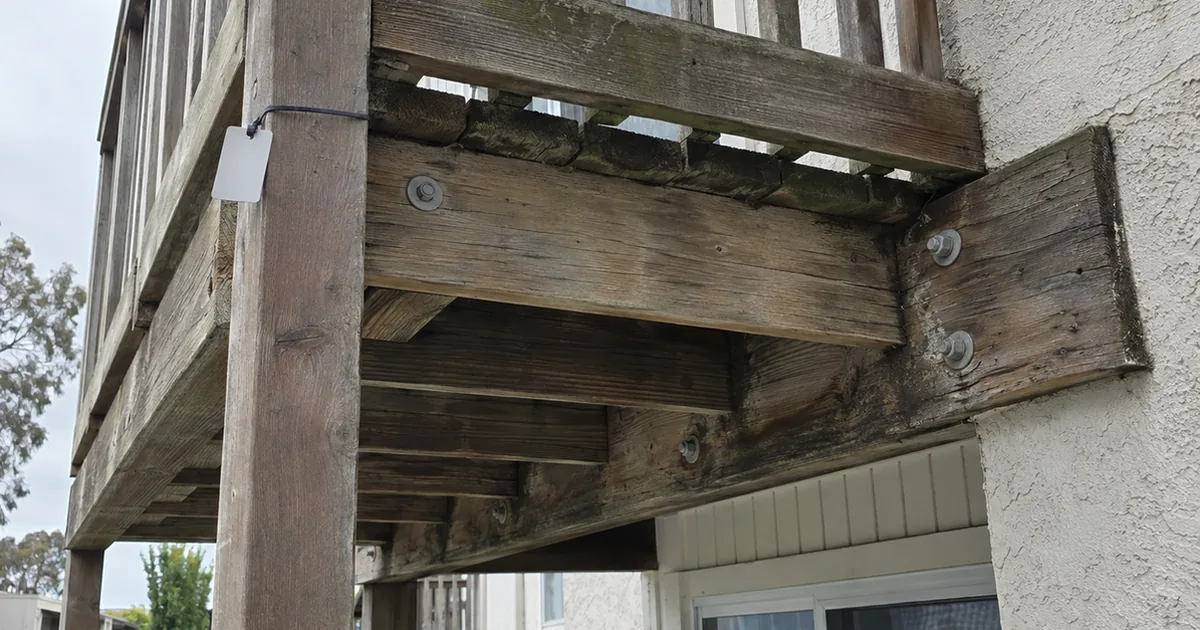
- Dock and gangway wood that is soft, split, or heavily weathered, or a dock that lists or floats unevenly.
- Pilings with heavy marine growth, cracking, or visible deterioration at the waterline.
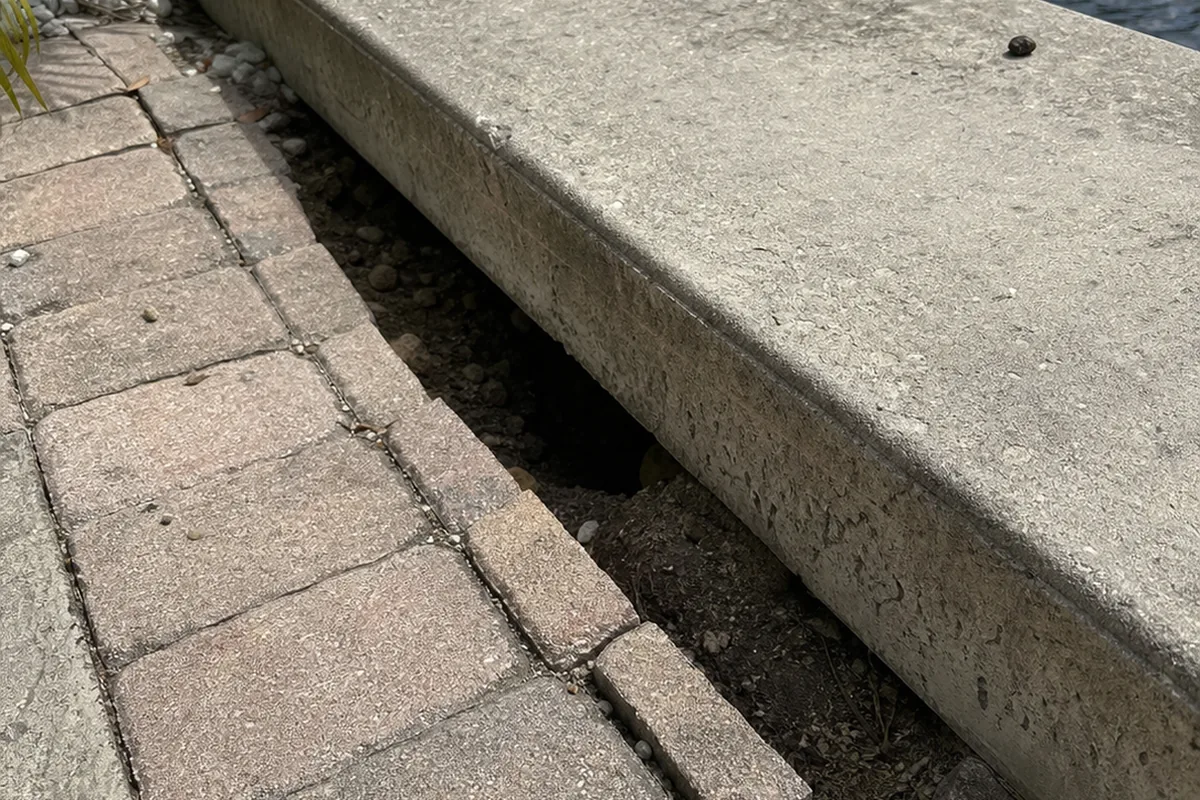
If we see these, we document them and recommend a marine or structural specialist before the contingency clears.
Schedule a Newport Beach inspection
The negotiation playbook
When a waterfront-structure issue surfaces, the deal usually moves one of a few ways.
The first path is the specialist confirmation. A marine or structural engineer inspects the seawall, dock, and pilings and confirms they are sound or need only minor maintenance. The buyer proceeds, and the value of the inspection is a clear picture of the most expensive part of the property.
The second path is the seller-repair. The seller addresses defined items, dock corrections from the city letter, localized bulkhead repair, pile work, before closing. This is cleanest when the scope is bounded and the permits are manageable.
The third path is the credit with a real scope and a timeline. Major bulkhead or seawall work is expensive and permit-heavy, often requiring multiple agencies and many months. Here the negotiation is a real number and a real calendar, and both should come from the specialist and an understanding of the permitting path, not a guess. A credit can work, but the buyer must go in understanding the timeline to actually do the work. The same specialist-first approach applies to hillside slope and retaining-wall questions on a different kind of California waterfront-adjacent lot.
The fourth path is walk-away. Occasionally a seawall is near the end of its life, the replacement is a major multi-agency project, and the buyer decides the cost and timeline are more than they want. That is a legitimate call on a waterfront home. We document what we found and when, and the decision belongs to the buyer and their specialists.
How the inspection actually catches it
A home inspection on a waterfront home covers the house, and we are clear that the marine structures are a specialized scope. What we do is document the visible condition of the seawall or bulkhead and its cap, the dock, gangway, and pilings, and the ground right behind the wall, and we flag the clues that matter: spalling and exposed rebar, corroded tie-backs, a settling cap, soil voids behind the wall, and deteriorated dock and pile conditions. We photograph it clearly so the buyer and their specialist have a starting point.
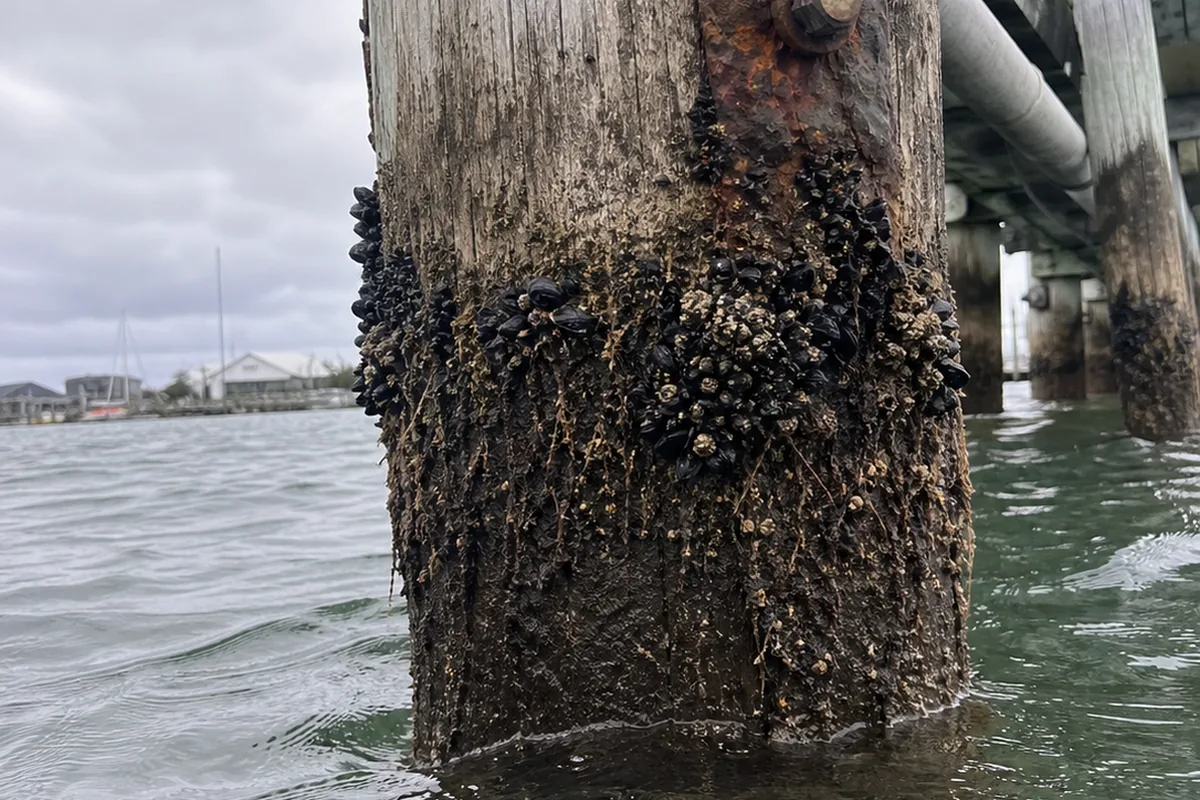
We also use thermal imaging inside the home for the moisture and salt-air effects common on the water, and our salt-air corrosion guide covers how coastal exposure shortens equipment life. What we do not do is perform the marine structural evaluation, certify the seawall, or replace the city’s dock inspection. Those are the marine or structural specialist’s and the city’s roles. We document what we can see, connect it to the city inspection and the permitting reality, and tell the buyer who to call next. If we see something worth flagging, it goes in the report.
Schedule a Newport Beach inspection
Quick FAQ
Is the seawall the buyer’s responsibility? Usually yes. On Newport Harbor, the upland property owner is commonly responsible for maintaining the seawall and bulkhead that retains their land. That makes its condition a direct future cost for the buyer, which is why it deserves a real evaluation before closing.
Does the home inspection cover the dock and seawall? We document their visible condition and flag concerns, but a full evaluation of the seawall, dock, and pilings is a marine or structural specialist’s scope. The city also inspects private docks and issues a letter on whether the dock meets requirements. We help the buyer line those up.
What are tidelands? Much of Newport Harbor sits on tidelands, publicly owned land that homeowners use under a lease. A waterfront buyer should understand the tidelands status of the property and any lease terms or fees, which is a title and disclosure matter beyond the physical inspection.
Why do waterfront repairs take so long? Because they often require several agencies. Seawall, bulkhead, dredging, or dock work can need approvals from the City, the California Coastal Commission, the State Lands Commission, and the U.S. Army Corps of Engineers, and that review can stretch many months. A credit does not shorten the calendar.
How can I tell if a seawall is failing? Warning signs include spalling concrete and exposed rebar, rust from tie-back anchors, a settled or separated cap, and soil voids behind the wall. Those are reasons to bring in a specialist. We document them on the inspection.
The honest summary
A Newport Beach waterfront home is two purchases in one: the house, and the working waterfront that holds it against the bay and connects it to the water. The seawall, the bulkhead, the dock, and the pilings are expensive, permit-heavy, and squarely the buyer’s future responsibility, and they are invisible to anyone only looking at the kitchen. None of that is a reason to fear a bayfront home. It is a reason to look at the water side early, get a marine specialist on the seawall and dock, and understand the tidelands and permitting reality before the contingency clears.
We will document the waterfront structures honestly, connect the buyer to the city inspection and the right specialist, and make sure the most expensive part of the property is not the part nobody looked at. That is the job.
Schedule a Newport Beach inspection or see our full inspection scope before you book. Want to see what the finished report looks like? Here is a sample inspection report. Common questions are answered in the FAQ. For a different California hillside lot condition, read our La Jolla hillside landslide guide, and see why infrared scanning matters on any home with a moisture question.