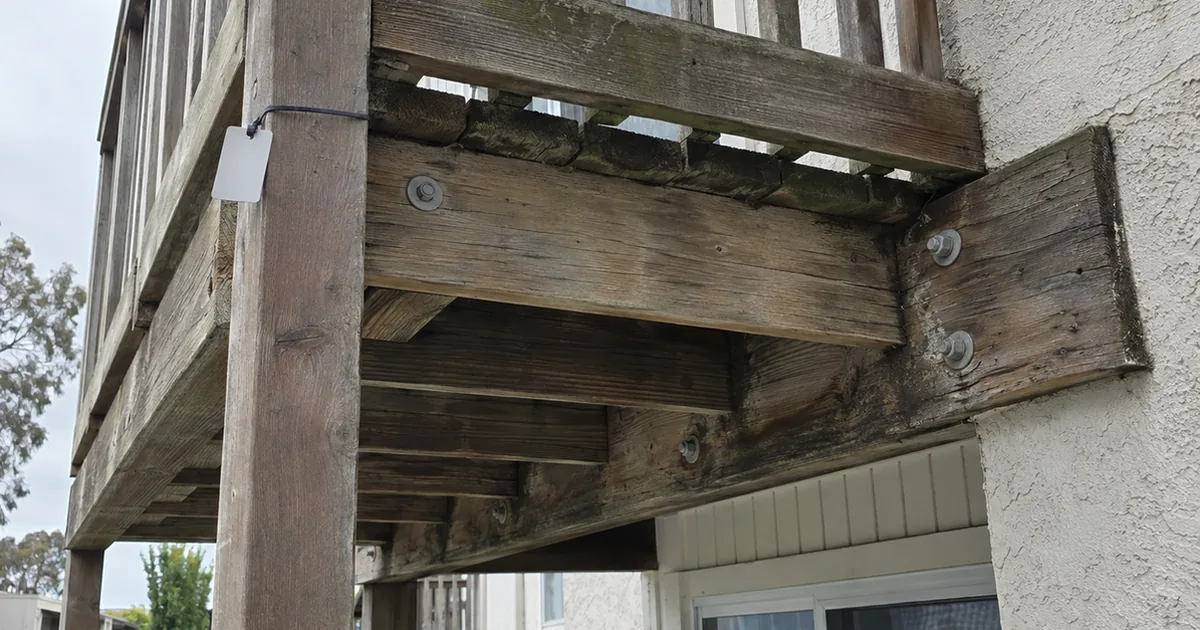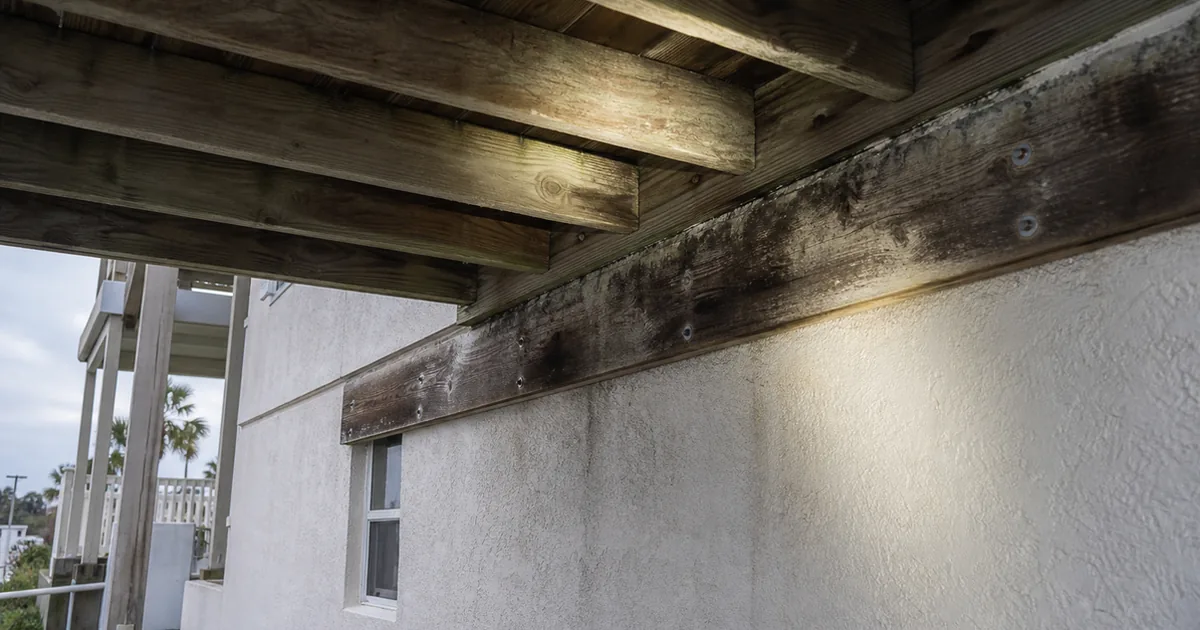
The home was a showpiece: a four-level Sand Section house a block from the water, with a roof deck that framed a clean view of the Pacific. The deck looked flawless, tidy tile, glass railing, a built-in bench. When the inspector got underneath it, into the level below, the story changed. There was dark staining along the wall where the deck met the house, the wood at that connection was soft to the probe, and the ceiling below showed the faint map of water that had been getting in for a while.
We are keeping the address private and the details composite, because in Manhattan Beach this is the issue, not an issue. These are tall homes built for the view, and the decks and balconies that deliver that view are the single most common place water gets into the structure. The deck looked perfect from above. It was failing from below.
Here is how that one resolved, and what it should change about how you handle a multi-level beach home.
Schedule a Manhattan Beach inspection · Same-day report · Pay-at-closing available
Why this matters for the agent
Manhattan Beach is a city of vertical homes. On small lots, houses are built up three and four levels for light and ocean views, and that means roof decks, cantilevered balconies, walkways, and the waterproofing systems that protect every one of them. Those elevated elements are wonderful to sell and they are also the part of the house most exposed to water, which is the leading cause of structural failure in decks and balconies.
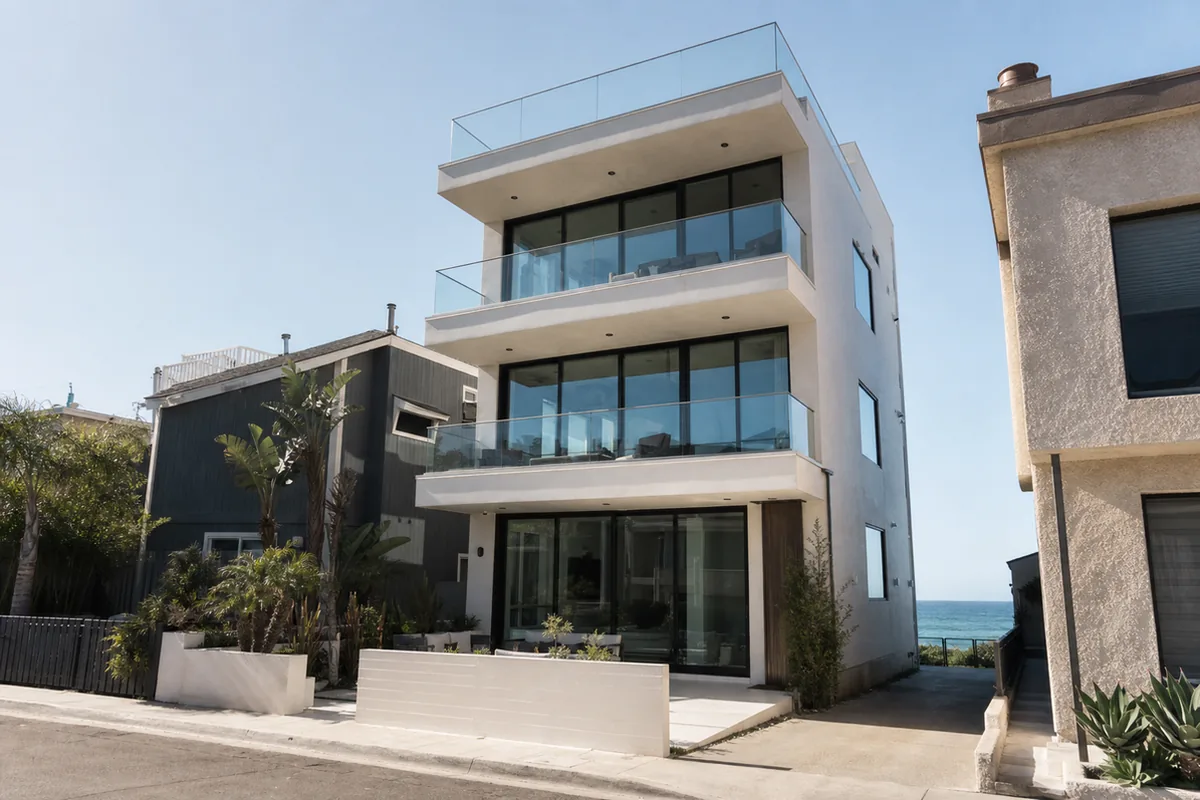
The risk for the agent is two-sided. First, the damage hides: a deck rots from the top down behind its waterproofing, invisible from above, sometimes for years. Second, this is now a legal issue as well as a defect. After a 2015 balcony collapse in Berkeley killed six people from hidden dry rot, California enacted inspection laws for these exact elements on multifamily and condo buildings. An agent who treats decks and balconies as a headline item, not a detail, protects the buyer and the deal. One who waves at the pretty view deck and moves on is missing the most likely expensive surprise in the house.
What an exterior elevated element actually is
The laws gave this a name: an exterior elevated element, or EEE. It means the load-bearing components and the associated waterproofing of any structure that extends out from the building and sits more than six feet above the ground, decks, balconies, landings, stairways, walkways, guardrails, and the like, where the framing is wood.
The key idea is that the structure and its waterproofing are one system. A deck is not just the surface you stand on; it is the membrane or coating under that surface, the flashing where it meets the wall, the ledger board bolted to the house, and the joists carrying the load. Water is supposed to stay on top of, and shed off, that waterproofing layer. When the layer fails, water gets into the wood, and because it is sealed in behind the finish, it does not dry, it rots.
Why it fails (the part most agents skip)
The reason this gets missed is that the failure is upside down from how people look at a deck. Everyone evaluates the top: the tile, the decking boards, the railing, the finish. The failure is underneath and behind, where nobody looks.
Water gets in at the predictable weak points: the connection where the deck meets the wall, where flashing is the only defense; penetrations for posts, drains, and railings; cracks in a surface coating; and low spots where water ponds instead of draining. Once it is past the waterproofing, it soaks the ledger and joists, and wood that stays wet rots. The Berkeley collapse happened because the joists supporting a balcony had been rotting for years behind an intact-looking exterior, with nothing requiring anyone to look. That is the entire danger: the part that fails is the part you cannot see, and it can fail structurally, not just cosmetically.
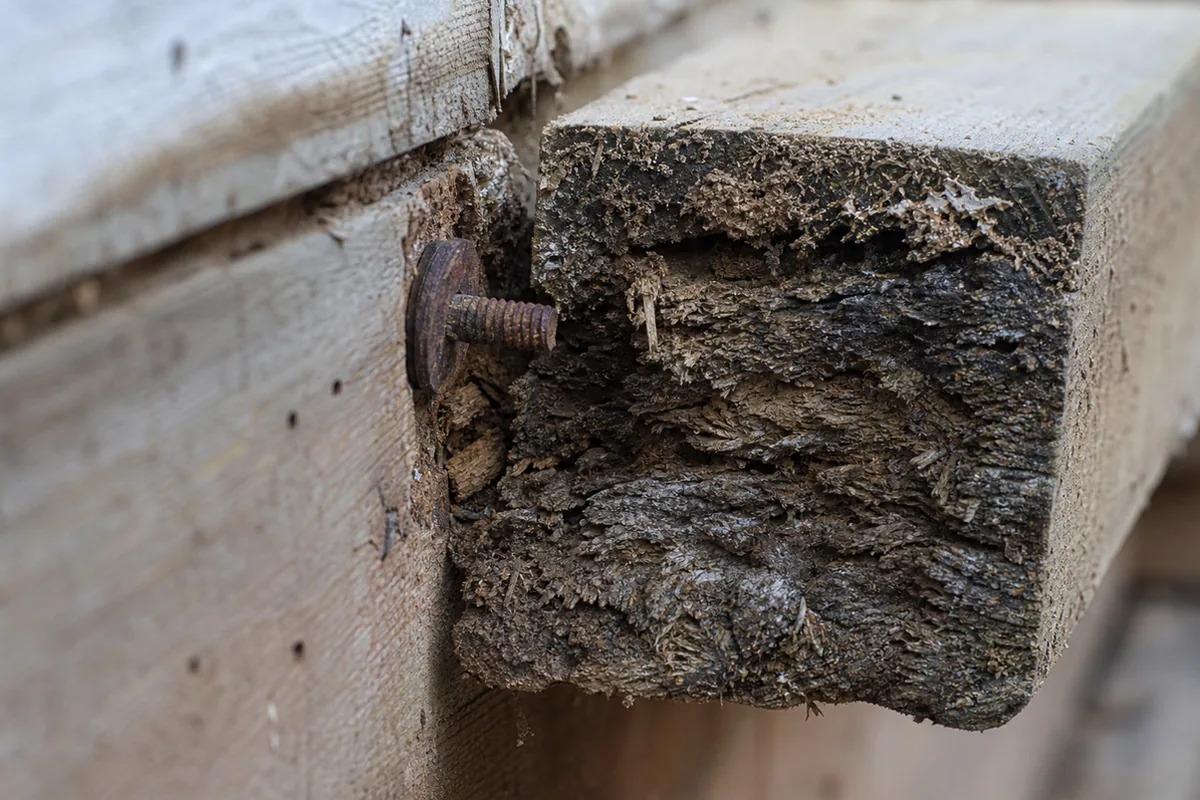
At the coast, it is worse. Salt air, marine moisture, and constant sun cycling degrade waterproofing faster, and a beach home covered in decks simply has more of these connections to go wrong.
What agents should tell every buyer
Tell them the deck is a structural system, not a surface, and that a beautiful deck can be rotting underneath. On a multi-level Manhattan Beach home, the decks and balconies deserve as much attention as the roof and the foundation, because they are that important and that commonly compromised.
Tell them about the law, because it frames the whole topic. SB 721 requires inspections of these elements on buildings with three or more multifamily units, on a recurring cycle, and SB 326 requires them for condominium associations, every nine years. A single-family beach home is not mandated to comply, but the defect the laws target is exactly what an inspection should look for on any home with elevated decks. On a condo or income property, the agent should also confirm the building’s EEE inspection status.
Tell them what the inspection can and cannot do without destruction. A home inspector evaluates the decks visually and with moisture and thermal tools and flags the warning signs; confirming the extent of hidden rot can require a specialist to open a section. Setting that expectation keeps the conversation grounded. For how another coastal defect runs through a deal, our salt-air corrosion guide follows the same pattern.
Red flags during showings
You can spot the decks that need a hard look before the inspector arrives.
Look down and underneath, not just at the view. From the level below a deck or balcony, check the ceiling and the wall where the deck attaches for staining, bubbling paint, or a sagging line. That is where a failing deck shows itself first.
Check the deck-to-wall connection. The joint where the deck meets the house is the highest-risk spot. Caulk smeared over that joint, missing or improvised flashing, or staining there is a warning.
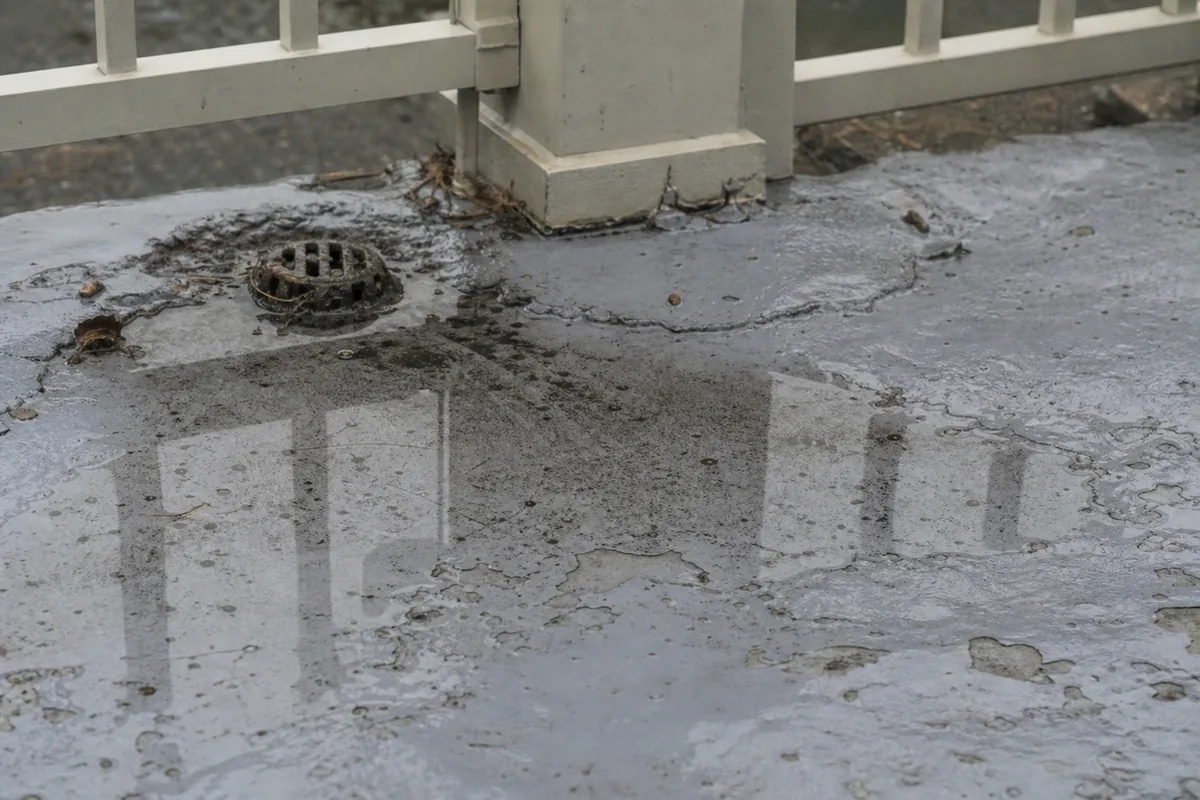
Look at the surface and the drainage. Cracks in a tile or coating surface, ponding water or water stains after rain, and a deck that drains toward the house rather than away all point to water getting where it should not.
Test the feel and the railings. Spongy spots underfoot, soft wood at posts, and a guardrail that moves when you push it can indicate rot in the structure below. On a railing more than six feet up, that is a safety issue, not a quibble.
The negotiation playbook
When an inspection flags a deck or balcony with water intrusion, there are four ways the deal tends to go.
The first path is the specialist evaluation. Because a home inspection identifies the warning signs but the full extent of hidden rot often needs a section opened, the right first move is frequently a short extension for a deck or waterproofing specialist to evaluate and scope. That replaces a worry with a number.
The second path is the seller repair. When rot or a failed waterproofing system is confirmed, asking the seller to repair the deck, the waterproofing, and any compromised structure before closing is reasonable, and on a safety-related guardrail or structural element it is more than reasonable.
The third path is the credit. If the buyer would rather control the work, a price reduction or closing credit sized to the specialist’s scope lets them rebuild the deck system on their terms after closing.
The fourth path is the condition of a clean EEE report on multifamily and condos. On an income property or a condo, the deal can hinge on the building’s compliance with SB 721 or SB 326; getting the current EEE inspection report, and any required repairs, is part of due diligence.
How the inspection actually catches it
A real inspection of a Manhattan Beach home treats the decks and balconies as primary structures. We examine each elevated element from above and, crucially, from below where access allows, looking at the deck-to-wall connection, the flashing, the surface and drainage, the railings, and the framing and ledger we can see. We probe accessible wood for softness and run a thermal camera to find moisture tracking behind finishes and below decks, which our infrared scanning guide explains. We document the warning signs clearly and tell you when the finding warrants a deck or waterproofing specialist opening a section to confirm the extent. The premium inspection is the difference between buying a sound house and buying a rot repair you did not know about.
Quick FAQ for agents
Why are decks such a big deal here? Manhattan Beach homes are built up for views, so they are full of roof decks and balconies, and elevated wood decks are the leading place water gets into a house. The damage hides behind the waterproofing.
Do SB 326 and SB 721 apply to a single-family home? No. They apply to multifamily buildings (SB 721) and condominium associations (SB 326). But the defect they target is exactly what an inspection should examine on any home with elevated decks, and on condos and income properties the building’s compliance matters.
Can the inspection find hidden rot? We find the warning signs visually and with moisture and thermal tools and flag them clearly. Confirming the full extent can require a specialist to open a section, which we will tell you when it is warranted.
Is a failing deck a safety issue? It can be. A guardrail or balcony more than six feet up that is structurally compromised is a safety hazard, which is exactly why the state created the inspection laws after the Berkeley collapse.
What does a repair involve? Rebuilding the waterproofing system, the flashing at the wall, and any rotted structure. A specialist scopes and prices it; it is a defined project, not an open-ended fear.
The honest summary for agents
Manhattan Beach sells the view, and the deck is how the view gets delivered, which makes the deck the most important and most commonly compromised thing in a lot of these homes. A perfect-looking roof deck can be rotting underneath, out of sight, the same hidden failure that prompted California’s balcony-inspection laws. Your value as the agent is treating the decks and balconies as the structural systems they are, looking underneath, and routing a suspect one to the right specialist before closing. That is what turned a flawless-looking roof deck into a documented, seller-funded waterproofing rebuild and a buyer who got the view without the rot.
Related reading
- Rancho Santa Fe Deck Ledger Attachment: The Structural Connection Buyers Miss. The structural fastening side of deck failure, a different mechanism from surface waterproofing.
- Deck Ledger Attachment in Redondo Beach. The same structural-fastening question on a neighboring South Bay street.
- Shower Pan and Tile-Shower Leaks in Aliso Viejo. The same waterproofing idea indoors, where a failed shower pan rots the structure under intact tile.
- The Torrance Listing With an Old Oil Well in the Back Yard, the South Bay oil-field and methane question next door
- Salt Air Killed a Carlsbad AC at Year 6, why coastal air shortens equipment life
- California’s Balcony Inspection Deadlines: SB 721 and SB 326. The statutes that treat the waterproofing assembly as part of the load-bearing element, and require it to be opened up on a fixed cycle.
- Do You Need a Home Inspection on New Construction in California?, why a rebuilt or new beach home still needs an independent inspection
- Beverly Hills Pool and Spa Safety Guide, how the same thermal scan finds a slow pool-plumbing leak the way it finds a wet deck
- Why Infrared Scanning Matters in California Homes, how thermal imaging finds hidden moisture and electrical hot spots
- West Hollywood Condos and the Balcony Law: SB 326, how the same waterproofing failure plays out in a condo market where the HOA, not the buyer, owns the fix
- Long Beach Knob-and-Tube and Galvanized Pipe Guide, the aging wiring and supply-line hazards in nearby coastal historic homes, and their insurance and escrow impact
- Sierra Madre Fire-Hardening for Historic Homes, how roof, vents, eaves, and the Zone 0 ember zone protect older foothill homes from wildfire
See what every inspection includes, how to read your inspection report, and our inspection FAQ. For city-specific pages, start with Manhattan Beach, Redondo Beach, and Torrance. For the waterfront structures that come with a harbor-front purchase further down the coast, see our Newport Beach seawall and dock guide.
If you have a multi-level Manhattan Beach home in escrow, we can inspect every deck and balcony from above and below and give you the photographed report that makes the next conversation an easy one. The structure and the waterproofing are one question; whether the guard around the deck is actually doing its fall-protection job is a separate one, covered in our Chino Hills guardrail and stair safety guide.
Schedule a Manhattan Beach Inspection → · Call 1-888-88-INSP-9