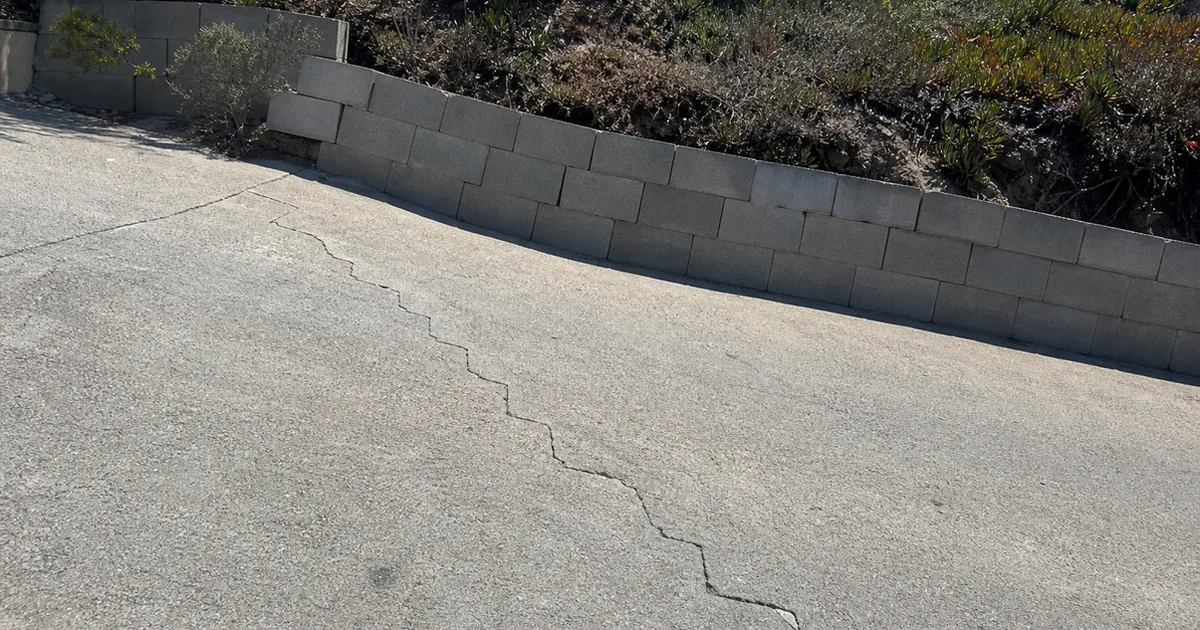
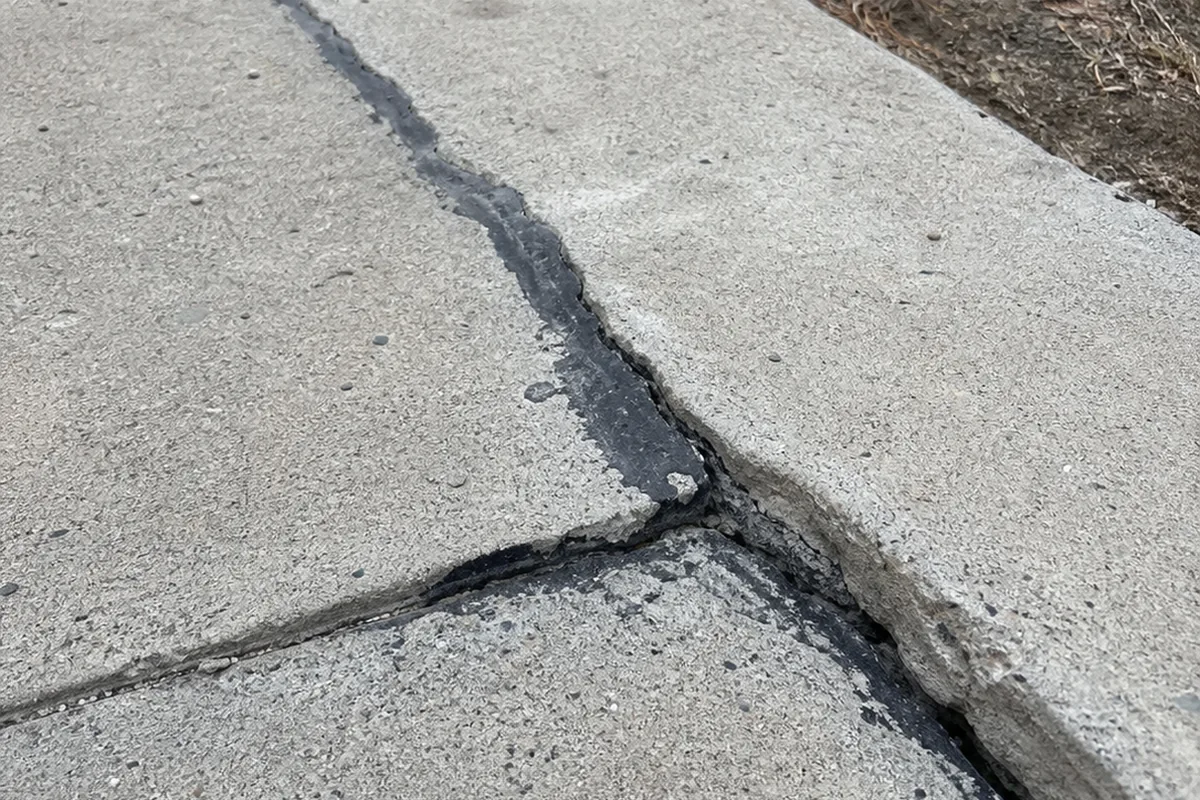
On a home up on the Mount Soledad slopes, the house was gorgeous and the view was the whole point. The clue was down at the driveway, where a diagonal crack had been patched once and had opened again, and a side gate that no longer swung true. Inside, an interior door would not latch. On flat ground those are small things. On a La Jolla hillside with a documented slide history, they are the kind of small things that deserve a very close look.
This is the part of a hillside La Jolla purchase that the view distracts from. The slopes of Mount Soledad are beautiful and expensive, and they also sit on ground that geologists describe as ancient landslide terrain. The area has moved before, more than once, and the homes that ride those slopes depend on stable ground, working drainage, and sound retaining. A buyer who focuses only on the house is looking at half the picture.
Schedule a La Jolla inspection · Same-day report · Pay-at-closing available
Why this matters for the agent
Here is what is at stake. Hillside instability is the highest-consequence lot condition in these neighborhoods, and it is not something a buyer fixes with a small credit. Slow slope movement can rack a foundation, crack flatwork, and distress a home over years, and an episodic slide can do catastrophic, uninsurable damage. It touches disclosure, insurance, and value, and it is invisible if all anyone looks at is the kitchen and the view.
For your transaction, an accurate read keeps the deal grounded. Most hillside homes here are stable and stay that way, and you do not want a buyer spooked off a sound home by ordinary cracks. But when the signs point to real movement, you want a geotechnical engineer on it before the contingency clears, not a discovery after close when a door stops latching or a wall starts leaning. An agent who understands the terrain and gets the right specialist involved looks like a professional who knows La Jolla. The one who treats a Soledad slope like a flat lot is exposed, and so is the buyer.
If you work La Jolla’s hillside neighborhoods, this is part of your inventory whether you have thought about it that way or not.
What the Mount Soledad landslide history actually is
Mount Soledad is, in part, the product of ancient earth movement. Geologists tie its instability to old forces in the ground, related to the Rose Canyon fault that helped shape the mountain, and to weak layers in the soil and rock that can slip when conditions line up. That is not a one-time event. It is a pattern.
The record bears it out. Homes under construction along Desert View Drive were destroyed by a slide in 1961. The area saw movement again in 1989 and 1994. And in October 2007, a large landslide on the Soledad Mountain Road and Desert View area destroyed and damaged homes and tore up more than a hundred yards of street, after cracks in pavement and homes had been appearing for months beforehand. Investigators and geologists pointed to the natural instability of the ground, with water, from irrigation, leaks, and drainage, repeatedly cited as a trigger that lubricates the weak layers and gets slow-moving ground moving faster.
The practical takeaway for a buyer is not that every hillside home is doomed. It is that this specific terrain has a history, that water management is the single biggest controllable factor, and that a hillside home here deserves a look at the ground, the drainage, and the retaining, not just the structure.
What agents should tell every buyer
When a buyer is considering a hillside La Jolla home, give them these points before they write.
- On a Mount Soledad slope, the ground and the drainage are part of the purchase, as much as the house. Ask what is known about the lot’s soil and slope history.
- Water is the trigger. Irrigation, drainage, and any leaks that put water into the hillside are the biggest controllable factor in slope movement, and they deserve scrutiny.
- The area is mapped for geologic hazards, and hillside history is a disclosure matter. Read the natural hazard disclosure and any geologic or soils reports carefully.
- A geotechnical engineer is the right professional for slope and landslide questions. A home inspection flags the signs; the engineer evaluates the hazard.
- Insurance matters. Standard homeowner policies generally do not cover earth movement, so the buyer should understand their coverage and options.
- Retaining walls, graded pads, and drainage systems are structures that need maintenance. Failing or undersized ones are real findings, not landscaping.
A buyer who hears this from you keeps the home they love and goes in understanding the hillside, which is exactly what an agent is for.
Red flags during showings
You can spot a lot of this from the driveway, the yard, and the walls. Watch for these.
- Cracks in the driveway, flatwork, or street that run in a consistent line, or sections that have tilted or offset.
- Retaining walls that lean, bulge, crack, or show separation, especially on the downhill side.
- Doors and windows that stick or will not latch, and interior cracks radiating from their corners.
- Patched cracks that have reopened, a sign the movement is ongoing rather than one-time.
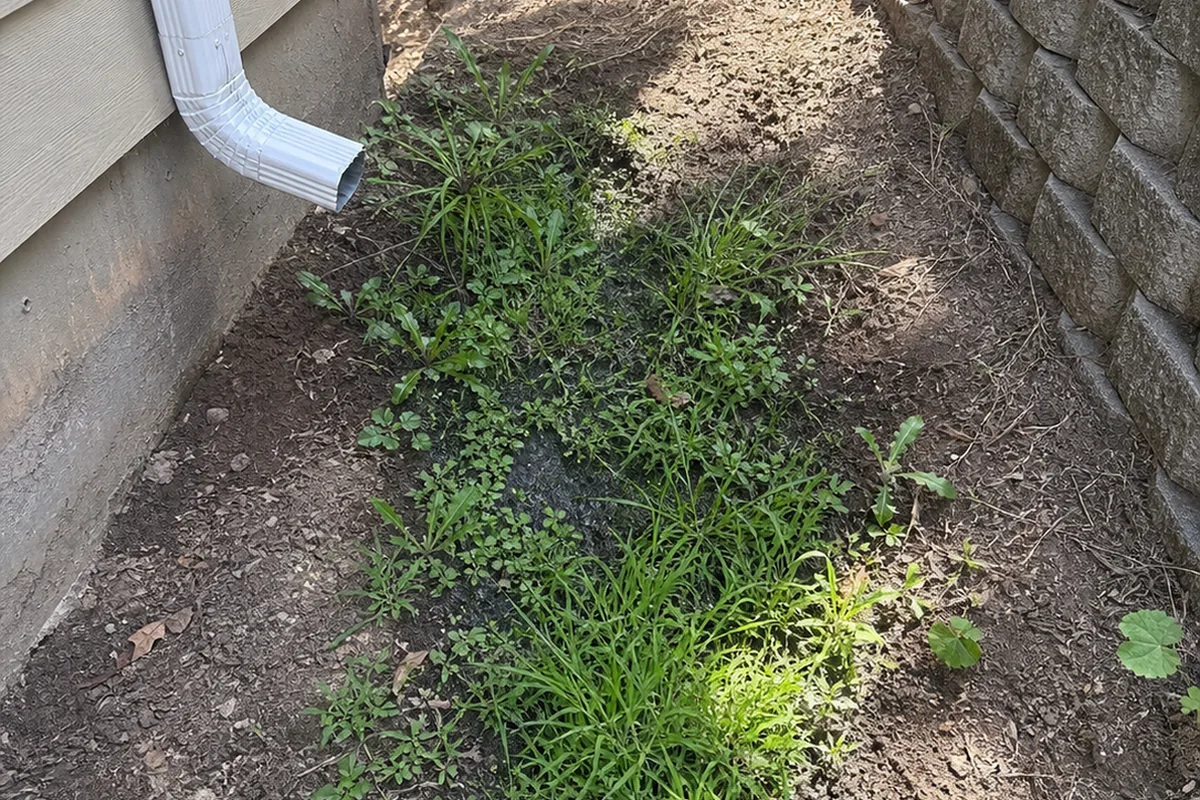
- Wet spots, seeps, or lush unexplained vegetation on a slope, which point to water in the hillside.
- Irrigation running heavily on a slope, downspouts discharging toward the hillside, or drainage that dead-ends into the ground rather than away from the home.
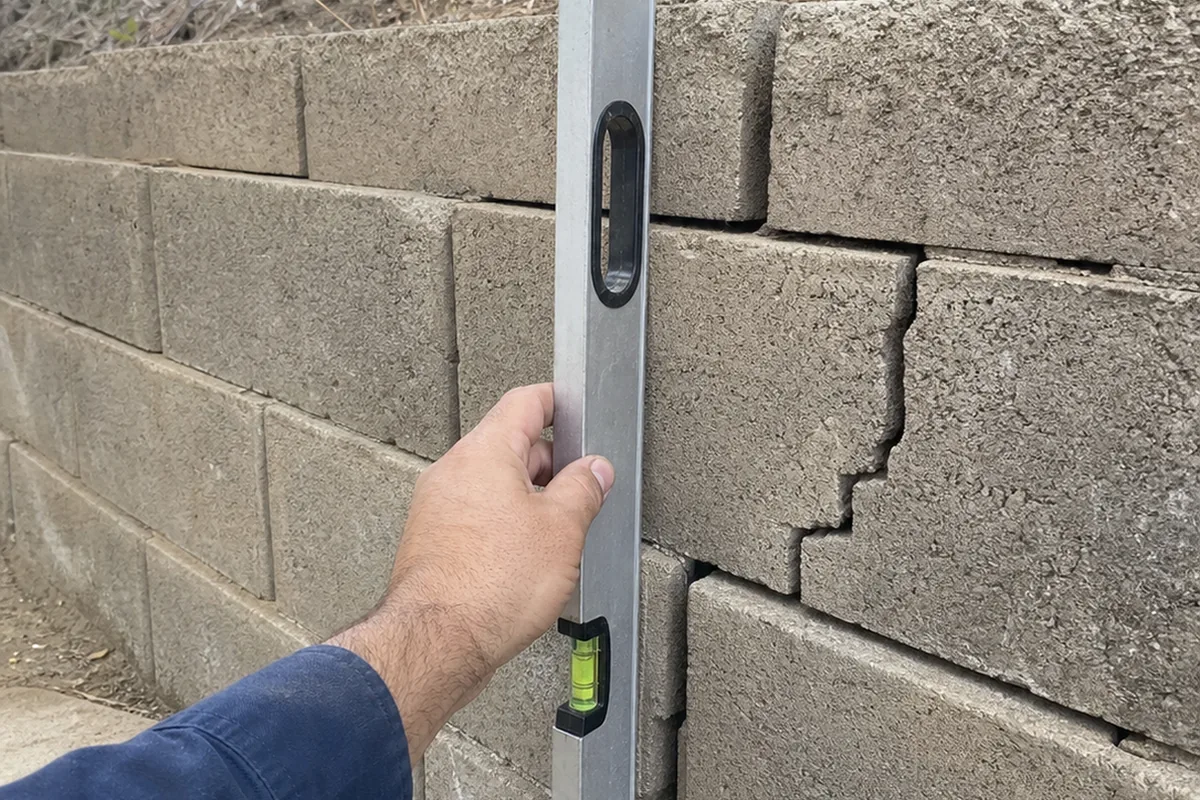
If we see a pattern rather than a one-off, we document it and recommend a geotechnical engineer before the contingency clears.
Schedule a La Jolla inspection
The negotiation playbook
When hillside movement or drainage issues surface, the deal usually moves one of a few ways.
The first path is the specialist confirmation. A geotechnical engineer reviews the lot and concludes the ground is stable and the cracks are cosmetic or old and dormant. The buyer proceeds with confidence, and the value of the inspection was knowing to ask the question on a slope with history.
The second path is the drainage-and-water fix. The movement is tied to water, a leaking irrigation line, downspouts feeding the slope, poor drainage, and the remedy is correcting how water is managed on the lot. This is often the smartest, most sensible work on a hillside home, and it is worth pushing for when the clues point to water. The same water-management-first approach applies to retaining walls and hillside drainage elsewhere in San Diego County.
The third path is the engineered-stabilization scope. The engineer confirms real slope or foundation movement that needs stabilization, and the fix, from drainage systems to retaining or deeper foundation work, becomes a real, engineer-scoped number. A credit or seller repair follows that scope, not a guess. On a hillside, these numbers can be significant, and the buyer should go in with eyes open.
The fourth path is walk-away. Sometimes the history, the signs, and an engineer’s read add up to more risk than a buyer wants to carry, and on ground with a landslide record that is a legitimate decision. We document what we found and when, and the call belongs to the buyer and their engineer.
How the inspection actually catches it
A home inspection is not a geotechnical study, and we say so clearly. What we do on a hillside La Jolla home is read the whole pattern that points to slope and foundation movement: the driveway and flatwork cracks and whether they line up, the retaining walls and any lean or separation, the doors and windows and how they fit, the interior cracks, and above all the drainage, irrigation, and any water finding its way into the slope. One crack is a note. A consistent pattern, paired with water going the wrong way, is a reason to escalate.
We use thermal imaging and moisture tools to find water intrusion and leaks that feed a hillside, which our related retaining walls and hillside drainage guide covers in more depth. What we do not do is analyze the slope, model the landslide risk, or certify the ground. That is the geotechnical engineer’s role, and for anything structural in the retaining or foundation we point to a structural engineer. We document what we can see, connect it to the disclosures, and tell the buyer exactly who to call next. If we see something worth flagging, it goes in the report.
Schedule a La Jolla inspection
Quick FAQ
Is every hillside home in La Jolla a landslide risk? No. Many hillside homes are stable and stay that way. The point is that parts of the Mount Soledad area sit on ground with a documented landslide history, so a hillside home there deserves attention to the slope, drainage, and retaining, and a geotechnical opinion when the signs warrant it, rather than an assumption either way.
What actually triggers movement here? Water is the factor cited again and again. Irrigation, leaks, and poor drainage put water into weak layers in the hillside and can turn slow, tolerable creep into faster movement. Managing water on the lot is the biggest controllable factor, which is why we scrutinize it.
Does a home inspection tell me if the hillside is safe? The inspection documents the visible signs, cracks, retaining condition, drainage, and water, and flags concerns. It does not evaluate slope stability or landslide risk. That is a geotechnical engineer’s analysis, and we refer the buyer there when the findings warrant it.
Will insurance cover a landslide? Generally, standard homeowner policies do not cover earth movement, including landslides. A buyer on a hillside lot should understand their coverage and any specialized options, and treat the mapped hazard and disclosures as part of the decision.
Are cracks always a problem? No. Many cracks are cosmetic or old and dormant. The concern is a consistent pattern, patched cracks that reopen, leaning retaining, and doors that stop latching, especially paired with water going into the slope. The inspection reads the pattern and tells you which you are looking at.
The honest summary
The La Jolla hills are worth what buyers pay for them, and the same slopes that deliver the views have a real, documented history of moving. Most hillside homes are stable, water is the biggest controllable factor, and the difference between a cosmetic crack and a moving hillside is exactly what a careful look and, when needed, a geotechnical engineer are for. None of that should push a buyer off a hillside home. It should send them to look at the ground, the drainage, and the retaining before the contingency clears, not after.
We will read the hillside signs honestly, connect the buyer to the disclosures and the right engineer, and make sure the ground under the view is not the part nobody looked at. That is the job.
Schedule a La Jolla inspection or see our full inspection scope before you book. Want to see what the finished report looks like? Here is a sample inspection report. Common questions are answered in the FAQ. For the same slope-and-drainage read applied to another hillside market, read our Poway retaining walls guide, and see how a different kind of California waterfront lot carries its own structural questions in our Newport Beach seawall and dock guide. For the structural fastening behind an elevated deck on another San Diego County hillside lot, see our Rancho Santa Fe deck ledger attachment guide.